
天津医药 ›› 2026, Vol. 54 ›› Issue (6): 561-569.doi: 10.11958/20260224
• 细胞与分子生物学 • 下一篇
董倩( ), 陈淑华, 张飞△()
收稿日期:2026-01-19
修回日期:2026-02-13
出版日期:2026-06-15
发布日期:2026-06-15
通讯作者:
△E-mail:feizhang03@tmu.edu.cn
作者简介:董倩(1995),女,硕士在读,主要从事肿瘤耐药和转移机制方面研究。E-mail:基金资助:
DONG Qian(), CHEN Shuhua, ZHANG Fei△()
Received:2026-01-19
Revised:2026-02-13
Published:2026-06-15
Online:2026-06-15
Contact:
△E-mail:feizhang03@tmu.edu.cn
董倩, 陈淑华, 张飞. ACE2在结直肠癌耐药中的作用及其预测价值的研究[J]. 天津医药, 2026, 54(6): 561-569.
DONG Qian, CHEN Shuhua, ZHANG Fei. Research on the role of ACE2 in drug resistance of colorectal cancer and its predictive vaule[J]. Tianjin Medical Journal, 2026, 54(6): 561-569.
摘要:
目的 探讨血管紧张素转换酶(ACE)2在结直肠癌化疗耐药中的作用,并评估其作为预测性生物标志物的潜力。方法 收集结直肠癌患者和健康对照者血清,采用酶联免疫吸附试验检测ACE2蛋白水平。通过Western blot和qRT-PCR实验检测结直肠癌细胞系中ACE2的基础及化疗药物(顺铂、5-氟尿嘧啶和紫杉醇)诱导表达。使用小干扰RNA(siRNAs)和慢病毒系统构建ACE2敲减及稳定过表达的细胞模型,通过计算敲减和过表达ACE2的细胞模型对顺铂、5-氟尿嘧啶和紫杉醇的半数抑制浓度(IC50),评估ACE2表达对化疗耐药性的调控作用。分别采用CCK-8实验、平板克隆形成实验和Transwell迁移实验评估敲减和过表达ACE2对细胞增殖及迁移能力的影响。结合临床样本分析与公共数据库数据,探究ACE2表达与结直肠癌患者治疗反应及预后的关联。结果 健康对照者的血清ACE2水平高于结直肠癌患者,化疗耐药组患者的血清ACE2水平高于化疗敏感组(P<0.05)。顺铂、5-氟尿嘧啶和紫杉醇可上调结直肠癌细胞中ACE2的表达(P<0.05)。敲减ACE2能降低对上述化疗药物的IC50值,同时抑制细胞增殖与迁移(P<0.05)。生物信息学分析显示ACE2与多种耐药基因具有相关性,且在Kirsten大鼠肉瘤病毒癌基因同源基因(KRAS)低表达的结直肠癌患者中,高表达ACE2者预后更差(P<0.05)。结论 ACE2表达水平与结直肠癌细胞的增殖、迁移能力及化疗耐药性呈正相关,患者化疗后ACE2水平升高可作为预测化疗耐药的潜在生物标志物。
中图分类号:
| 基因名称 | 引物序列(5'→3') | 产物大小/bp |
|---|---|---|
| ACE2 | 上游:GTGCACAAAGGTGACAATGG | 160 |
| 下游:GGCTGCAGAAAGTGACATGA | ||
| β-actin | 上游:CTGGGTGTTGAAGGTCTC | 216 |
| 下游:CAGAGCAAGAGAGGCATCC |
表1 qPCR引物序列
Tab.1 Primer sequences for qPCR analysis
| 基因名称 | 引物序列(5'→3') | 产物大小/bp |
|---|---|---|
| ACE2 | 上游:GTGCACAAAGGTGACAATGG | 160 |
| 下游:GGCTGCAGAAAGTGACATGA | ||
| β-actin | 上游:CTGGGTGTTGAAGGTCTC | 216 |
| 下游:CAGAGCAAGAGAGGCATCC |
| 引物名称 | 序列(5'→3') |
|---|---|
| siACE2#1 | 上游:GCGAGUGGCUAAUUUGAAATT |
| 下游:UUUCAAAUUAGCCACUCGCTT | |
| siACE2#2 | 上游:GGACAAGUUUAACCACGAATT |
| 下游:UUCGUGGUUAAACUUGUCCTT |
表2 特异性靶向ACE2的siRNA序列
Tab.2 Sequence of siRNA specifically targeting ACE2
| 引物名称 | 序列(5'→3') |
|---|---|
| siACE2#1 | 上游:GCGAGUGGCUAAUUUGAAATT |
| 下游:UUUCAAAUUAGCCACUCGCTT | |
| siACE2#2 | 上游:GGACAAGUUUAACCACGAATT |
| 下游:UUCGUGGUUAAACUUGUCCTT |
| 组别 | n | 年龄/岁 | 化疗反应 | 手术 | 复发 | 转移 | |||||||||
|---|---|---|---|---|---|---|---|---|---|---|---|---|---|---|---|
| 耐药 | 敏感 | ||||||||||||||
| ACE2低表达组 | 47 | 64.00(59.00,72.00) | 6(12.80) | 41(87.20) | 29(61.70) | 1(2.10) | 18(38.30) | ||||||||
| ACE2高表达组 | 46 | 63.50(56.75,67.50) | 38(82.60) | 8(14.70) | 31(67.40) | 0(0.00) | 17(37.00) | ||||||||
| Z或χ2 | 1.181 | 45.492** | 0.329 | 0.989 | 0.018 | ||||||||||
| 组别 | 肿瘤分级 | T分期 | N分期 | M分期 | |||||||||||
| Ⅰ级 | Ⅱ—Ⅲ级 | T1—T2 | T3—T4 | N0 | N1—N3 | M0 | MX | ||||||||
| ACE2低表达组 | 12(25.50) | 35(74.50) | 13(27.70) | 34(72.30) | 29(61.70) | 18(38.30) | 28(59.60) | 19(40.40) | |||||||
| ACE2高表达组 | 14(30.40) | 32(69.60) | 14(30.40) | 32(69.60) | 28(60.90) | 18(39.10) | 28(60.90) | 18(39.10) | |||||||
| χ2 | 0.277 | 0.087 | 0.007 | 0.016 | |||||||||||
表3 ACE2高表达组和低表达组结直肠癌患者的临床病理特征比较
Tab.3 Comparison of clinical and pathological characteristics of colorectal cancer patients between the ACE2 high-expression group and the ACE2 low- expression group
| 组别 | n | 年龄/岁 | 化疗反应 | 手术 | 复发 | 转移 | |||||||||
|---|---|---|---|---|---|---|---|---|---|---|---|---|---|---|---|
| 耐药 | 敏感 | ||||||||||||||
| ACE2低表达组 | 47 | 64.00(59.00,72.00) | 6(12.80) | 41(87.20) | 29(61.70) | 1(2.10) | 18(38.30) | ||||||||
| ACE2高表达组 | 46 | 63.50(56.75,67.50) | 38(82.60) | 8(14.70) | 31(67.40) | 0(0.00) | 17(37.00) | ||||||||
| Z或χ2 | 1.181 | 45.492** | 0.329 | 0.989 | 0.018 | ||||||||||
| 组别 | 肿瘤分级 | T分期 | N分期 | M分期 | |||||||||||
| Ⅰ级 | Ⅱ—Ⅲ级 | T1—T2 | T3—T4 | N0 | N1—N3 | M0 | MX | ||||||||
| ACE2低表达组 | 12(25.50) | 35(74.50) | 13(27.70) | 34(72.30) | 29(61.70) | 18(38.30) | 28(59.60) | 19(40.40) | |||||||
| ACE2高表达组 | 14(30.40) | 32(69.60) | 14(30.40) | 32(69.60) | 28(60.90) | 18(39.10) | 28(60.90) | 18(39.10) | |||||||
| χ2 | 0.277 | 0.087 | 0.007 | 0.016 | |||||||||||
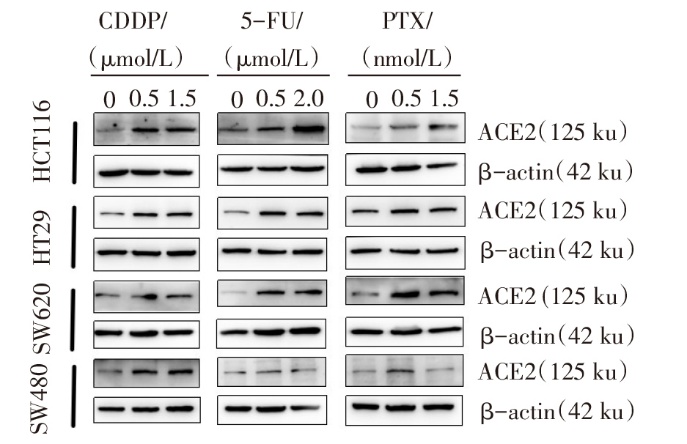
图1 Western blot检测不同浓度及不同化疗药物作用下各细胞系ACE2蛋白表达情况
Fig.1 Western blot assay showing ACE2 expression levels in response to various chemotherapeutic drugs and concentrations across a panel of cell lines
| 组别 | HCT116 | HT29 | SW620 | SW480 |
|---|---|---|---|---|
| CDDP对照组 | 0.09±0.01 | 0.28±0.02 | 0.37±0.02 | 0.31±0.03 |
| CDDP 0.5 μmol/L组 | 0.17±0.01a | 0.65±0.03a | 0.53±0.04a | 0.58±0.04a |
| CDDP 1.5 μmol/L组 | 0.18±0.01a | 0.65±0.04a | 0.54±0.05a | 0.61±0.06a |
| F | 68.570** | 104.800** | 11.790** | 26.140** |
| 5-FU对照组 | 0.63±0.06 | 0.30±0.04 | 0.16±0.02 | 0.26±0.03 |
| 5-FU 0.5 μmol/L组 | 0.99±0.08a | 0.91±0.07a | 0.58±0.06a | 0.41±0.04a |
| 5-FU 2.0 μmol/L组 | 1.32±0.10ab | 0.78±0.08a | 0.57±0.08a | 0.73±0.07ab |
| F | 38.160** | 46.060** | 36.000** | 45.780** |
| PTX对照组 | 0.28±0.03 | 0.61±0.06 | 0.26±0.03 | 0.31±0.03 |
| PTX 0.5 nmol/L组 | 0.56±0.07a | 0.94±0.09a | 0.77±0.10a | 0.58±0.07a |
| PTX 1.5 nmol/L组 | 0.98±0.11ab | 0.82±0.06a | 0.74±0.08a | 0.45±0.12 |
| F | 44.370** | 10.180* | 27.200** | 5.620* |
表4 各细胞系不同化疗药物浓度组ACE2蛋白表达水平比较(n=3,$\stackrel{-}{x}\pm s$)
Tab.4 Comparison of ACE2 protein expression levels between different chemotherapy drug concentration groups of each cell line
| 组别 | HCT116 | HT29 | SW620 | SW480 |
|---|---|---|---|---|
| CDDP对照组 | 0.09±0.01 | 0.28±0.02 | 0.37±0.02 | 0.31±0.03 |
| CDDP 0.5 μmol/L组 | 0.17±0.01a | 0.65±0.03a | 0.53±0.04a | 0.58±0.04a |
| CDDP 1.5 μmol/L组 | 0.18±0.01a | 0.65±0.04a | 0.54±0.05a | 0.61±0.06a |
| F | 68.570** | 104.800** | 11.790** | 26.140** |
| 5-FU对照组 | 0.63±0.06 | 0.30±0.04 | 0.16±0.02 | 0.26±0.03 |
| 5-FU 0.5 μmol/L组 | 0.99±0.08a | 0.91±0.07a | 0.58±0.06a | 0.41±0.04a |
| 5-FU 2.0 μmol/L组 | 1.32±0.10ab | 0.78±0.08a | 0.57±0.08a | 0.73±0.07ab |
| F | 38.160** | 46.060** | 36.000** | 45.780** |
| PTX对照组 | 0.28±0.03 | 0.61±0.06 | 0.26±0.03 | 0.31±0.03 |
| PTX 0.5 nmol/L组 | 0.56±0.07a | 0.94±0.09a | 0.77±0.10a | 0.58±0.07a |
| PTX 1.5 nmol/L组 | 0.98±0.11ab | 0.82±0.06a | 0.74±0.08a | 0.45±0.12 |
| F | 44.370** | 10.180* | 27.200** | 5.620* |
| 组别 | HCT116 | SW620 |
|---|---|---|
| CDDP对照组 | 1.00±0.04 | 1.01±0.13 |
| CDDP 0.5 μmol/L组 | 2.68±0.20a | 1.84±0.13a |
| CDDP 1.0 μmol/L组 | 2.93±0.04a | 0.79±0.08b |
| F | 146.800** | 45.080** |
| 5-FU对照组 | 1.00±0.04 | 1.01±0.13 |
| 5-FU 0.5 μmol/L组 | 2.69±0.02a | 1.75±0.32 |
| 5-FU 1.0 μmol/L组 | 2.96±0.57a | 6.67±1.21ab |
| F | 20.710** | 36.150** |
| PTX对照组 | 1.00±0.04 | 1.01±0.13 |
| PTX 0.5 nmol/L组 | 1.04±0.26 | 2.05±0.13a |
| PTX 1.0 nmol/L组 | 15.71±3.96ab | 2.16±0.40a |
| F | 27.380** | 12.330** |
表5 各细胞系不同化疗药物浓度组ACE2 mRNA表达水平比较(n=3,$\stackrel{-}{x}\pm s$)
Tab.5 Comparison of ACE2 mRNA expression levels between cell lines treated with varying concentrations of chemotherapeutic drugs
| 组别 | HCT116 | SW620 |
|---|---|---|
| CDDP对照组 | 1.00±0.04 | 1.01±0.13 |
| CDDP 0.5 μmol/L组 | 2.68±0.20a | 1.84±0.13a |
| CDDP 1.0 μmol/L组 | 2.93±0.04a | 0.79±0.08b |
| F | 146.800** | 45.080** |
| 5-FU对照组 | 1.00±0.04 | 1.01±0.13 |
| 5-FU 0.5 μmol/L组 | 2.69±0.02a | 1.75±0.32 |
| 5-FU 1.0 μmol/L组 | 2.96±0.57a | 6.67±1.21ab |
| F | 20.710** | 36.150** |
| PTX对照组 | 1.00±0.04 | 1.01±0.13 |
| PTX 0.5 nmol/L组 | 1.04±0.26 | 2.05±0.13a |
| PTX 1.0 nmol/L组 | 15.71±3.96ab | 2.16±0.40a |
| F | 27.380** | 12.330** |
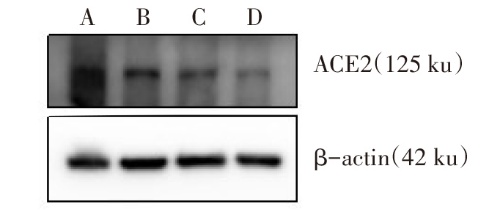
图2 ACE2在4种结直肠癌细胞系中的蛋白表达情况 A—D分别为HCT116、HT29、SW620及SW480。
Fig.2 Protein expression levels of ACE2 in four colorectal cancer cell lines
| 组别 | HCT116 | HT29 | SW620 |
|---|---|---|---|
| siControl组 | 0.79±0.06 | 0.52±0.05 | 0.62±0.06 |
| siACE2#1组 | 0.52±0.06a | 0.18±0.02a | 0.41±0.05a |
| siACE2#2组 | 0.46±0.06a | 0.12±0.01a | 0.37±0.03a |
| F | 16.800** | 95.040** | 15.010** |
表6 ACE2敲减各组在不同细胞系中ACE2蛋白表达水平比较(n=3,$\stackrel{-}{x}\pm s$)
Tab.6 Comparison of ACE2 protein levels in different cell lines between the ACE2 knockdown groups
| 组别 | HCT116 | HT29 | SW620 |
|---|---|---|---|
| siControl组 | 0.79±0.06 | 0.52±0.05 | 0.62±0.06 |
| siACE2#1组 | 0.52±0.06a | 0.18±0.02a | 0.41±0.05a |
| siACE2#2组 | 0.46±0.06a | 0.12±0.01a | 0.37±0.03a |
| F | 16.800** | 95.040** | 15.010** |
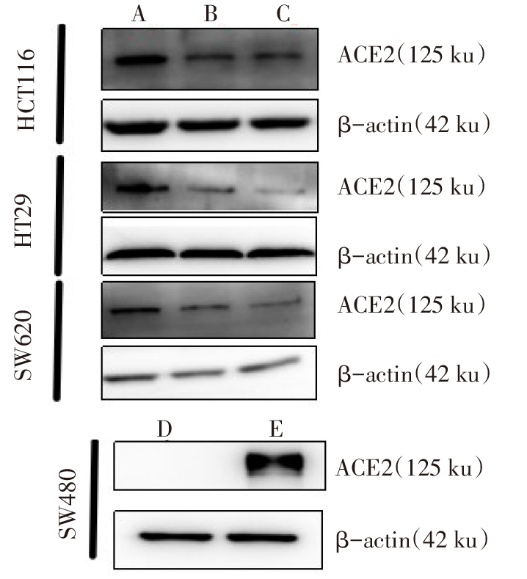
图3 ACE2敲减和过表达效果的Western blot验证 A—E分别为siControl组、siACE2#1组、siACE2#2组、PCDH Control组及PCDH ACE2组。
Fig.3 Western blot validation of ACE2 knockdown and overexpression efficiency
| 组别 | CDDP/(μmol/L) | 5-FU/(μmol/L) | PTX/(nmol/L) |
|---|---|---|---|
| HCT116 siControl组 | 11.44(10.22~12.74) | 20.94(18.39~23.79) | 9.26(6.88~12.37) |
| HCT116 siACE2 #1组 | 5.58(4.70~6.63)a | 12.36(10.32~14.77)a | 4.42(3.13~6.14)a |
| HCT116 siACE2 #2组 | 6.56(5.86~7.35)a | 12.77(11.07~14.71)a | 4.85(3.41~6.88)a |
| F | 29.800** | 31.850** | 10.390* |
| HT29 siControl组 | 18.59(13.98~23.78) | 14.88(9.43~21.36) | 5.53(4.86~6.27) |
| HT29 siACE2 #1组 | 7.33(5.83~9.22)a | 6.45(3.69~9.88)a | 4.25(3.63~4.97)a |
| HT29 siACE2 #2组 | 5.27(3.80~7.31)a | 5.46(3.58~7.83)a | 4.19(3.52~4.98)a |
| F | 210.200** | 49.610** | 5.560* |
| SW620 siControl组 | 15.45(14.06~16.96) | 13.76(11.72~16.00) | 6.93(5.79~8.29) |
| SW620 siACE2 #1组 | 7.21(6.04~8.61)a | 8.16(6.73~9.80)a | 3.76(3.33~4.25)a |
| SW620 siACE2 #2组 | 7.06(6.28~7.91)a | 8.91(7.66~10.31)a | 3.92(3.45~4.46)a |
| F | 509.900** | 21.270** | 26.820** |
| SW480 PCDH Control组 | 2.62(2.35~2.91) | 3.88(3.32~4.53) | 19.56(16.32~23.24) |
| SW480 PCDH ACE2组 | 4.82(4.41~5.26) | 9.88(8.09~12.02) | 65.37(55.04~77.61) |
| t | 11.050** | 6.870* | 5.050* |
表7 敲减或过表达ACE2后结直肠癌细胞对各化疗药物IC50值比较
Tab.7 Comparison of IC50 changes for chemotherapeutic drugs in colorectal cancer cells before and after ACE2 knockdown or overexpression
| 组别 | CDDP/(μmol/L) | 5-FU/(μmol/L) | PTX/(nmol/L) |
|---|---|---|---|
| HCT116 siControl组 | 11.44(10.22~12.74) | 20.94(18.39~23.79) | 9.26(6.88~12.37) |
| HCT116 siACE2 #1组 | 5.58(4.70~6.63)a | 12.36(10.32~14.77)a | 4.42(3.13~6.14)a |
| HCT116 siACE2 #2组 | 6.56(5.86~7.35)a | 12.77(11.07~14.71)a | 4.85(3.41~6.88)a |
| F | 29.800** | 31.850** | 10.390* |
| HT29 siControl组 | 18.59(13.98~23.78) | 14.88(9.43~21.36) | 5.53(4.86~6.27) |
| HT29 siACE2 #1组 | 7.33(5.83~9.22)a | 6.45(3.69~9.88)a | 4.25(3.63~4.97)a |
| HT29 siACE2 #2组 | 5.27(3.80~7.31)a | 5.46(3.58~7.83)a | 4.19(3.52~4.98)a |
| F | 210.200** | 49.610** | 5.560* |
| SW620 siControl组 | 15.45(14.06~16.96) | 13.76(11.72~16.00) | 6.93(5.79~8.29) |
| SW620 siACE2 #1组 | 7.21(6.04~8.61)a | 8.16(6.73~9.80)a | 3.76(3.33~4.25)a |
| SW620 siACE2 #2组 | 7.06(6.28~7.91)a | 8.91(7.66~10.31)a | 3.92(3.45~4.46)a |
| F | 509.900** | 21.270** | 26.820** |
| SW480 PCDH Control组 | 2.62(2.35~2.91) | 3.88(3.32~4.53) | 19.56(16.32~23.24) |
| SW480 PCDH ACE2组 | 4.82(4.41~5.26) | 9.88(8.09~12.02) | 65.37(55.04~77.61) |
| t | 11.050** | 6.870* | 5.050* |
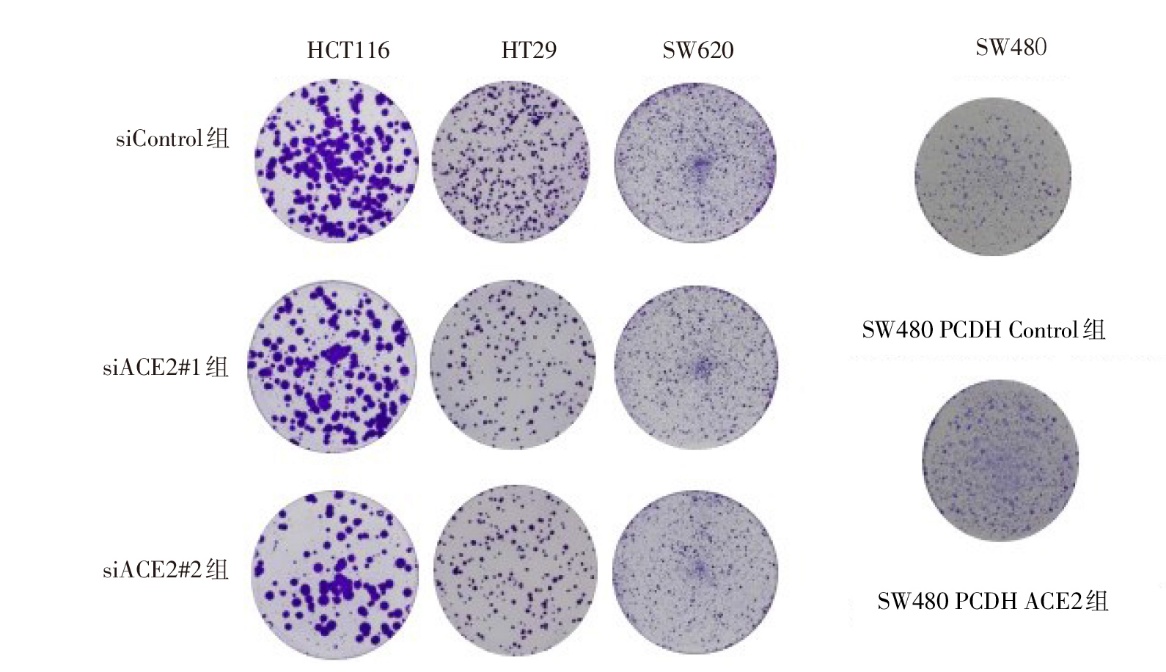
图4 敲减和过表达不同细胞系ACE2细胞模型的平板克隆结果
Fig.4 Plate clone formation results of ACE2 knockdown and overexpression in different cell line models
| 组别 | 24 h | 48 h | 72 h | 96 h | 120 h |
|---|---|---|---|---|---|
| HCT116 siControl组 | 0.48±0.01 | 0.86±0.03 | 2.09±0.08 | 3.35±0.02 | 3.48±0.05 |
| HCT116 siACE2#1组 | 0.50±0.02 | 0.71±0.02a | 1.81±0.02a | 2.88±0.04a | 2.99±0.05a |
| HCT116 siACE2#2组 | 0.50±0.02 | 0.74±0.02a | 1.75±0.02a | 2.83±0.09a | 2.92±0.08a |
| F | 2.400 | 33.400** | 44.690** | 77.840** | 72.530** |
| HT29 siControl组 | 0.52±0.04 | 0.81±0.07 | 2.01±0.06 | 2.27±0.01 | 3.15±0.07 |
| HT29 siACE2#1组 | 0.51±0.01 | 0.57±0.03a | 1.54±0.10a | 1.86±0.05a | 2.55±0.03a |
| HT29 siACE2#2组 | 0.46±0.03 | 0.49±0.02a | 1.22±0.08a | 1.52±0.07a | 2.02±0.10a |
| F | 3.350 | 35.520** | 72.440** | 190.700** | 184.900** |
| SW620 siControl组 | 0.41±0.01 | 0.81±0.02 | 1.90±0.01 | 2.71±0.05 | 3.36±0.05 |
| SW620 siACE2#1组 | 0.40±0.01 | 0.69±0.03a | 1.48±0.03a | 2.00±0.07a | 2.66±0.08a |
| SW620 siACE2#2组 | 0.40±0.01 | 0.67±0.02a | 1.40±0.04a | 1.88±0.03a | 2.59±0.04a |
| F | 4.840 | 48.190** | 78.160** | 202.500** | 131.900** |
| SW480 PCDH Control组 | 0.40±0.01 | 0.91±0.05 | 1.93±0.06 | 2.27±0.04 | 3.00±0.04 |
| SW480 PCDH ACE2组 | 0.40±0.04 | 1.10±0.05 | 2.25±0.06 | 2.73±0.04 | 3.41±0.02 |
| t | 0.360 | 4.850** | 6.190** | 15.040** | 14.900** |
表8 各细胞系ACE2敲减组与过表达组分别与其对照组在各时间点的OD450值比较(n=3,$\stackrel{-}{x}\pm s$)
Tab.8 Comparison of OD450 values between the ACE2 knockdown or overexpression groups of each cell line and their control groups
| 组别 | 24 h | 48 h | 72 h | 96 h | 120 h |
|---|---|---|---|---|---|
| HCT116 siControl组 | 0.48±0.01 | 0.86±0.03 | 2.09±0.08 | 3.35±0.02 | 3.48±0.05 |
| HCT116 siACE2#1组 | 0.50±0.02 | 0.71±0.02a | 1.81±0.02a | 2.88±0.04a | 2.99±0.05a |
| HCT116 siACE2#2组 | 0.50±0.02 | 0.74±0.02a | 1.75±0.02a | 2.83±0.09a | 2.92±0.08a |
| F | 2.400 | 33.400** | 44.690** | 77.840** | 72.530** |
| HT29 siControl组 | 0.52±0.04 | 0.81±0.07 | 2.01±0.06 | 2.27±0.01 | 3.15±0.07 |
| HT29 siACE2#1组 | 0.51±0.01 | 0.57±0.03a | 1.54±0.10a | 1.86±0.05a | 2.55±0.03a |
| HT29 siACE2#2组 | 0.46±0.03 | 0.49±0.02a | 1.22±0.08a | 1.52±0.07a | 2.02±0.10a |
| F | 3.350 | 35.520** | 72.440** | 190.700** | 184.900** |
| SW620 siControl组 | 0.41±0.01 | 0.81±0.02 | 1.90±0.01 | 2.71±0.05 | 3.36±0.05 |
| SW620 siACE2#1组 | 0.40±0.01 | 0.69±0.03a | 1.48±0.03a | 2.00±0.07a | 2.66±0.08a |
| SW620 siACE2#2组 | 0.40±0.01 | 0.67±0.02a | 1.40±0.04a | 1.88±0.03a | 2.59±0.04a |
| F | 4.840 | 48.190** | 78.160** | 202.500** | 131.900** |
| SW480 PCDH Control组 | 0.40±0.01 | 0.91±0.05 | 1.93±0.06 | 2.27±0.04 | 3.00±0.04 |
| SW480 PCDH ACE2组 | 0.40±0.04 | 1.10±0.05 | 2.25±0.06 | 2.73±0.04 | 3.41±0.02 |
| t | 0.360 | 4.850** | 6.190** | 15.040** | 14.900** |
| 组别 | HCT116 | HT29 | SW620 |
|---|---|---|---|
| siControl组 | 193.67±12.26 | 244.67±12.66 | 253.33±10.53 |
| siACE2#1组 | 144.33±6.13a | 120.00±11.58a | 170.33±10.53a |
| siACE2#2组 | 96.67±8.65a | 142.67±11.32a | 134.00±8.83a |
| F | 53.740** | 62.630** | 74.890** |
表9 ACE2敲减组与其对照组的克隆形成计数比较(n=3,个, $\stackrel{-}{x}\pm s$)
Tab.9 Comparison of clone formation counts between the ACE2 knockdown groups of each cell line and their control groups
| 组别 | HCT116 | HT29 | SW620 |
|---|---|---|---|
| siControl组 | 193.67±12.26 | 244.67±12.66 | 253.33±10.53 |
| siACE2#1组 | 144.33±6.13a | 120.00±11.58a | 170.33±10.53a |
| siACE2#2组 | 96.67±8.65a | 142.67±11.32a | 134.00±8.83a |
| F | 53.740** | 62.630** | 74.890** |
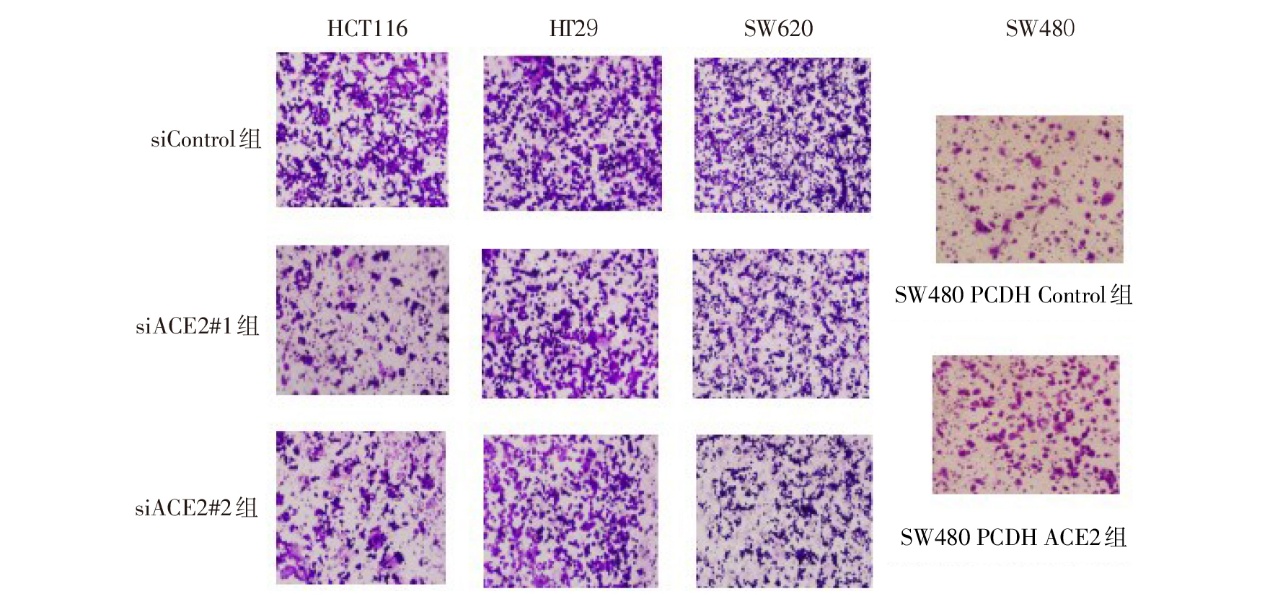
图5 敲减和过表达不同细胞系ACE2细胞模型的迁移情况(结晶紫染色,×200)
Fig.5 Migration assay results of ACE2 knockdown and overexpression in different cell line models (crystal violet staining, ×200)
| 组别 | HCT116 | HT29 | SW620 |
|---|---|---|---|
| siControl组 | 399.33±124.08 | 592.00±11.05 | 617.00±23.04 |
| siACE2#1组 | 103.67±7.04a | 493.67±10.96a | 411.00±10.71a |
| siACE2#2组 | 148.33±7.72a | 395.67±11.90a | 383.67±11.95a |
| F | 495.900** | 150.700** | 123.900** |
表10 ACE2敲减组与其对照组的迁移计数比较(n=3,个,$\stackrel{-}{x}\pm s$)
Tab.10 Comparison of migration counts between the ACE2 knockdown group and the control group
| 组别 | HCT116 | HT29 | SW620 |
|---|---|---|---|
| siControl组 | 399.33±124.08 | 592.00±11.05 | 617.00±23.04 |
| siACE2#1组 | 103.67±7.04a | 493.67±10.96a | 411.00±10.71a |
| siACE2#2组 | 148.33±7.72a | 395.67±11.90a | 383.67±11.95a |
| F | 495.900** | 150.700** | 123.900** |
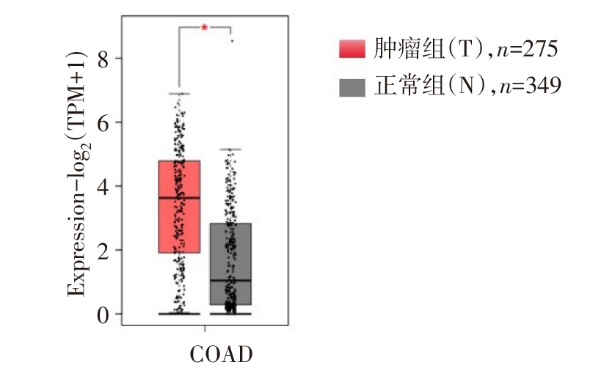
图6 ACE2在结直肠癌与正常组织中的表达差异分析 TPM:每百万转录本读数;纵轴基因表达水平使用log2(TPM + 1)进行对数尺度转换;*P<0.05。
Fig.6 Differential expression of ACE2 in colorectal cancer and normal tissue
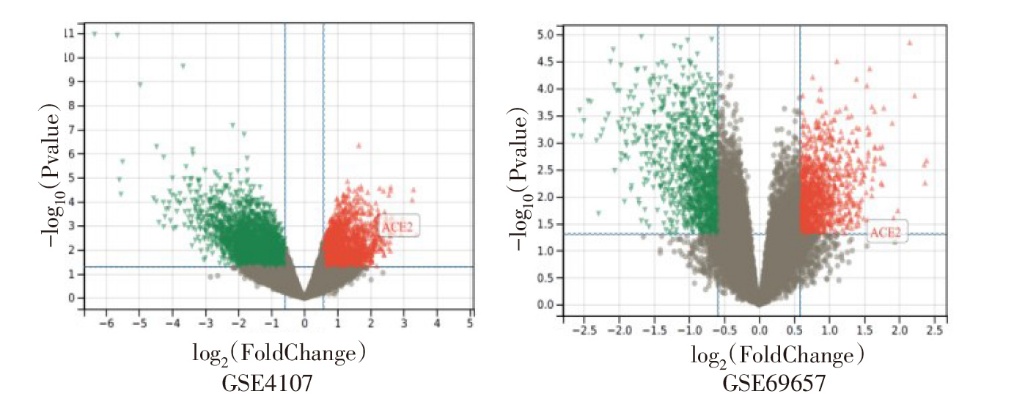
图7 转录组学基因表达水平火山图 图上每个点代表一个基因,红色代表在耐药组中显著上调的基因(log2FC>1,P<0.05),绿色代表在耐药组中显著下调的基因(log2FC<-1,P<0.05),灰色代表无差异,蓝色虚线为界定显著差异的阈值线。
Fig.7 Volcano plot of transcriptome analysis
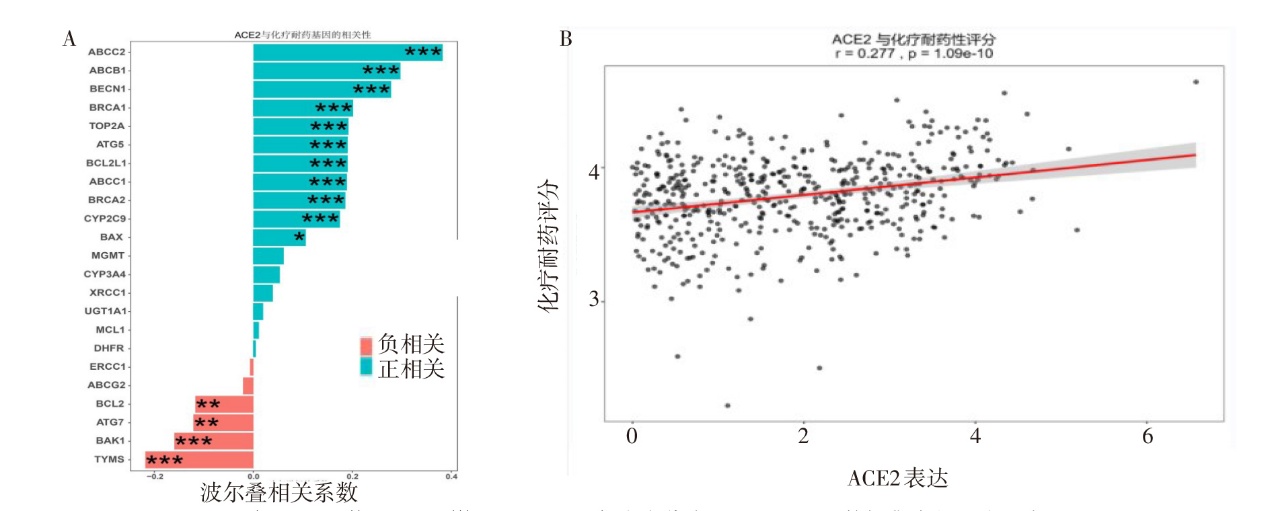
图8 ACE2表达水平与化疗耐药基因及患者化疗耐药评分的相关性分析 A:△P<0.05,**P<0.01,***P<0.001;B:每个点代表TCGA-COAD数据集中的一个患者。
Fig. 8 Correlation analysis of ACE2 expression levels with chemotherapy resistance genes and patient chemotherapy resistance scores
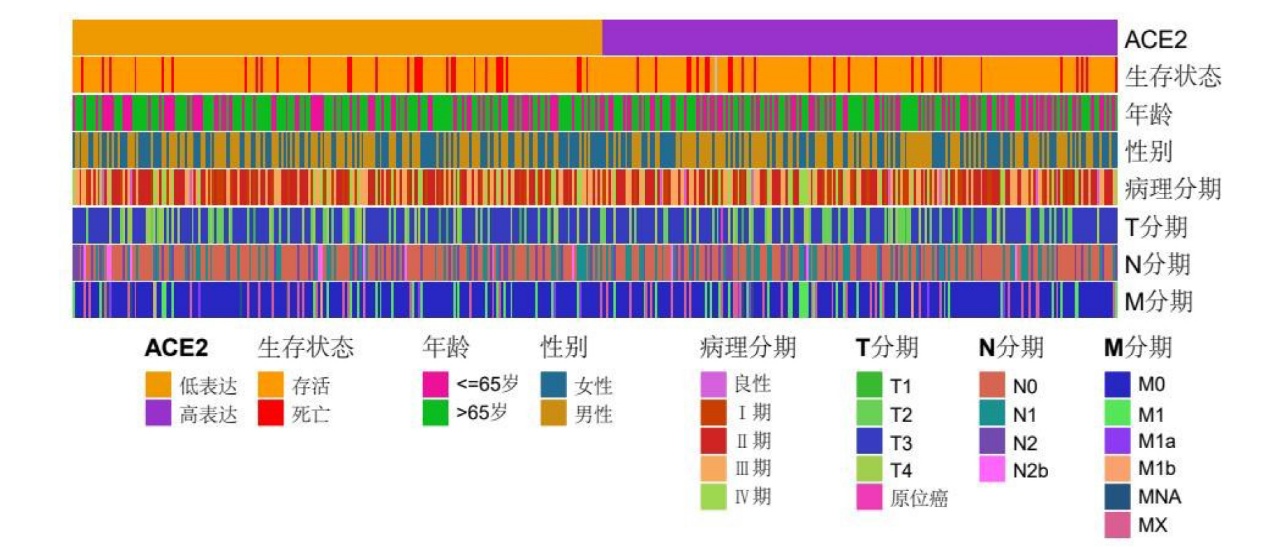
图9 ACE2高表达和低表达结直肠癌患者临床病理特征的华夫图
Fig.9 Waffle chart of clinicopathological characteristics in colorectal cancer patients with high versus low ACE2 expression
| 变量 | HR | HR 95%CI | P |
|---|---|---|---|
| ACE2 | 0.899 | 0.454~1.778 | 0.760 |
| 年龄 | 0.976 | 0.920~1.036 | 0.431 |
| T分期(T4 vs. T3) | 5.880 | 1.629~21.224 | 0.007 |
| N分期 | |||
| N1 vs. N0 | 0.757 | 0.083~6.877 | 0.805 |
| N2 vs. N0 | 4.105 | 0.618~27.26 | 0.144 |
| M分期 | |||
| M0 vs. MX | 1.128 | 0.184~6.928 | 0.896 |
| M1 vs. MX | 1.679 | 0.354~7.974 | 0.514 |
| 性别(男 vs. 女) | 3.102 | 0.512~18.794 | 0.218 |
表11 接受化疗的结直肠癌患者中ACE2与各临床变量对预后影响的多因素Cox生存分析
Tab.11 Multivariable Cox regression analysis of ACE2 and clinical variables for overall survival in patients receiving chemotherapy
| 变量 | HR | HR 95%CI | P |
|---|---|---|---|
| ACE2 | 0.899 | 0.454~1.778 | 0.760 |
| 年龄 | 0.976 | 0.920~1.036 | 0.431 |
| T分期(T4 vs. T3) | 5.880 | 1.629~21.224 | 0.007 |
| N分期 | |||
| N1 vs. N0 | 0.757 | 0.083~6.877 | 0.805 |
| N2 vs. N0 | 4.105 | 0.618~27.26 | 0.144 |
| M分期 | |||
| M0 vs. MX | 1.128 | 0.184~6.928 | 0.896 |
| M1 vs. MX | 1.679 | 0.354~7.974 | 0.514 |
| 性别(男 vs. 女) | 3.102 | 0.512~18.794 | 0.218 |
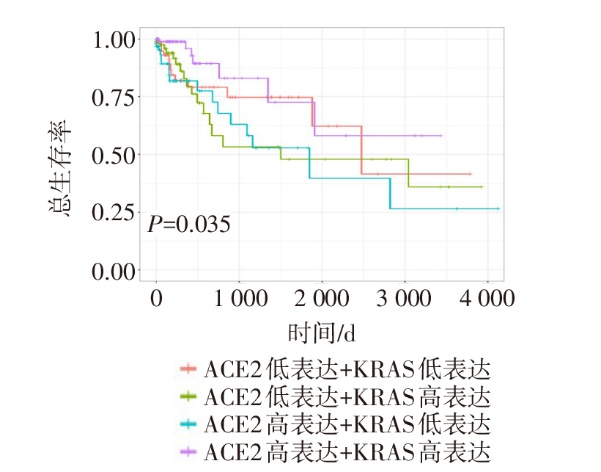
图10 TCGA数据库中基于ACE2与KRAS表达分层的总生存期Kaplan?Meier分析
Fig.10 Kaplan?Meier analysis of overall survival stratified by ACE2 and KRAS expression in the TCGA database
| [1] | BADER M, STECKELINGS U M, ALENINA N, et al. Alternative renin-angiotensin system[J]. Hypertension, 2024, 81(5):964-976. doi:10.1161/HYPERTENSIONAHA.123.21364. |
| [2] | TANG X, LU L, LI X, et al. Bridging cancer and COVID-19:The complex interplay of ACE2 and TMPRSS2[J]. Cancer Med, 2025, 14(7):e70829. doi:10.1002/cam4.70829. |
| [3] | IWAI M, HORIUCHI M. Devil and angel in the renin-angiotensin system:ACE-angiotensin II-AT1 receptor axis vs. ACE2-angiotensin-(1-7)-Mas receptor axis[J]. Hypertens Res, 2009, 32(7):533-536. doi:10.1038/hr.2009.74. |
| [4] | TIKELLIS C, BERNARDI S, BURNS W C. Angiotensin-converting enzyme 2 is a key modulator of the renin-angiotensin system in cardiovascular and renal disease[J]. Curr Opin Nephrol Hypertens, 2011, 20(1):62-68. doi:10.1097/MNH.0b013e328341164a. |
| [5] | BEYERSTEDT S, CASARO E B, RANGEL É B. COVID-19:angiotensin-converting enzyme 2(ACE2)expression and tissue susceptibility to SARS-CoV-2 infection[J]. Eur J Clin Microbiol Infect Dis, 2021, 40(5):905-919. doi:10.1007/s10096-020-04138-6. |
| [6] | XI Y, XU P. Global colorectal cancer burden in 2020 and projections to 2040[J]. Transl Oncol, 2021, 14(10):101174. doi:10.1016/j.tranon.2021.101174. |
| [7] | LI Q, ODURO P K, GUO R, et al. Oncolytic viruses:Immunotherapy drugs for gastrointestinal malignant tumors[J]. Front Cell Infect Microbiol, 2022, 12:921534. doi:10.3389/fcimb.2022.921534. |
| [8] | ZHANG Q, LU S, LI T, et al. ACE2 inhibits breast cancer angiogenesis via suppressing the VEGFa/VEGFR2/ERK pathway[J]. J Exp Clin Cancer Res, 2019, 38(1):173. doi:10.1186/s13046-019-1156-5. |
| [9] | RAGO V, BOSSIO S, LOFARO D, et al. New insights into the link between SARS-CoV-2 infection and renal cancer[J]. Life(Basel), 2023, 14(1):52. doi:10.3390/life14010052. |
| [10] | HASSANI B, ATTAR Z, FIROUZABADI N. The renin-angiotensin-aldosterone system(RAAS)signaling pathways and cancer:foes versus allies[J]. Cancer Cell Int, 2023, 23(1):254. doi:10.1186/s12935-023-03080-9. |
| [11] | AHMADI M, PASHANGZADEH S, MOUSAVI P, et al. ACE2 correlates with immune infiltrates in colon adenocarcinoma:Implication for COVID-19[J]. Int Immunopharmacol, 2021, 95:107568. doi:10.1016/j.intimp.2021.107568. |
| [12] | CHOONG O K, JAKOBSSON R, BERGDAHL A G, et al. SARS-CoV-2 replicates and displays oncolytic properties in clear cell and papillary renal cell carcinoma[J]. PLoS One, 2023, 18(1):e0279578. doi:10.1371/journal.pone.0279578. |
| [13] | KUNVARIYA A D, DAVE S A, MODI Z J, et al. Exploration of multifaceted molecular mechanism of angiotensin-converting enzyme 2(ACE2)in pathogenesis of various diseases[J]. Heliyon, 2023, 9(5):e15644. doi:10.1016/j.heliyon.2023.e15644. |
| [14] | DONG F, LI H, LIU L, et al. ACE2 negatively regulates the Warburg effect and suppresses hepatocellular carcinoma progression via reducing ROS-HIF1α activity[J]. Int J Biol Sci, 2023, 19(8):2613-2629. doi:10.7150/ijbs.81498. |
| [15] | WU D, DING Y, WANG T, et al. Significance of tumor-infiltrating immune cells in the prognosis of colon cancer[J]. Onco Targets Ther, 2020, 13:4581-4589. doi:10.2147/OTT.S250416. |
| [16] | ZUO X, REN S, ZHANG H, et al. Chemotherapy induces ACE2 expression in breast cancer via the ROS-AKT-HIF-1α signaling pathway:a potential prognostic marker for breast cancer patients receiving chemotherapy[J]. J Transl Med, 2022, 20(1):509. doi:10.1186/s12967-022-03716-w. |
| [17] | ZHANG S, KAPOOR S, TRIPATHI C, et al. Targeting ACE2-BRD4 crosstalk in colorectal cancer and the deregulation of DNA repair and apoptosis[J]. NPJ Precis Oncol, 2023, 7(1):20. doi:10.1038/s41698-023-00361-4. |
| [18] | KIM D E, OH H J, KIM H J, et al. Synergistic two-step inhibition approach using a combination of trametinib and onvansertib in KRAS and TP53-mutated colorectal adenocarcinoma[J]. Biomed Pharmacother, 2025, 182:117796. doi:10.1016/j.biopha.2024.117796. |
| [19] | HUANG L, GUO Z, WANG F, et al. KRAS mutation:from undruggable to druggable in cancer[J]. Signal Transduct Target Ther, 2021, 6(1):386. doi:10.1038/s41392-021-00780-4. |
| [1] | 马月湘, 冯展旺, 王千雨, 彭锦雯, 王文颖, 朱镇华, 宾骥. 瑞香素调控Src/FAK通路对鼻咽癌细胞增殖、迁移和上皮间质转化的影响[J]. 天津医药, 2026, 54(8): 790-795. |
| [2] | 李容, 陈艳. 舌下微循环联合ROX-HR指数对脓毒症休克患者预后的预测价值[J]. 天津医药, 2026, 54(8): 815-820. |
| [3] | 张晶, 桂晓玲, 李金鹏, 陈新. 右束支传导阻滞联合血清HMGB1在COPD患者并发肺心病监测中的临床价值[J]. 天津医药, 2026, 54(8): 842-847. |
| [4] | 韦昌芹, 王琳, 蔡文君, 于勇, 徐丽丽. TyG指数联合那不勒斯预后评分对急性胰腺炎严重程度及预后的预测价值[J]. 天津医药, 2026, 54(8): 854-857. |
| [5] | 张渤, 徐伟, 张静, 马肖. GFPT1通过调节PD-L1通路对非小细胞肺癌细胞的影响[J]. 天津医药, 2026, 54(7): 687-692. |
| [6] | 张轶轶, 刘帝亮, 陈飞, 龚媛媛, 王贵生. MTA1、ARL2和VEGF-C在非小细胞肺癌组织中的表达[J]. 天津医药, 2026, 54(7): 705-710. |
| [7] | 胡金宝, 柳文武, 胡志超. 视网膜静脉阻塞患者血清微小RNA表达水平与黄斑水肿程度的相关性[J]. 天津医药, 2026, 54(7): 741-746. |
| [8] | 钱进, 魏夕阳, 徐冲. 血磷、血镁水平与老年COPD急性加重患者病情及预后的关系[J]. 天津医药, 2026, 54(7): 765-770. |
| [9] | 焦宇兵, 雷晓娟, 郭武华. 自发性门体分流对乙型肝炎肝硬化失代偿期患者预后的影响及预测模型构建[J]. 天津医药, 2026, 54(6): 612-617. |
| [10] | 曹阳, 段朋仓, 李梦雨, 史方堃, 胡晨, 邢方圆, 李花莲. 脑小血管病总负荷联合血清8-OHDG、Ficolin-3对老年穿支动脉粥样硬化病预后的预测价值[J]. 天津医药, 2026, 54(6): 618-622. |
| [11] | 张富允, 蒋龙超, 杨学燕. 食管癌患者血清TM4SF1、KLF5、SOX3水平与预后的关系[J]. 天津医药, 2026, 54(6): 623-626. |
| [12] | 黄秀强, 刘倩, 刘鲁荣, 李慕然, 刘艳迪. 人工智能辅助结肠镜在结直肠癌早期及癌前病变诊断中的应用进展[J]. 天津医药, 2026, 54(6): 668-672. |
| [13] | 彭静, 余小倩. 结直肠癌术后患者肠内营养喂养不耐受的影响因素及预警模型的构建[J]. 天津医药, 2026, 54(5): 484-488. |
| [14] | 钱永, 陈沐秀, 郑爽. COX-2在口腔鳞状细胞癌增殖与侵袭中的作用研究[J]. 天津医药, 2026, 54(4): 352-357. |
| [15] | 陈一铭, 戈超, 徐姝琪, 孙威, 戴颖, 徐选福. CYP1B1和PSMD14在结直肠癌中的表达及其对预后的影响[J]. 天津医药, 2026, 54(4): 412-416. |
| 阅读次数 | ||||||
|
全文 |
|
|||||
|
摘要 |
|
|||||
