
Tianjin Medical Journal ›› 2025, Vol. 53 ›› Issue (9): 932-936.doi: 10.11958/20251184
• Clinical Research • Previous Articles Next Articles
LI Shuo( ), ZHANG Yunpeng, HUANG Yan, CAO Meiran, JIA Lanfang, HU Guicai, HUANG Lan△(), DUAN Shuzhong
Received:2025-03-24
Revised:2025-05-14
Published:2025-09-15
Online:2025-09-16
Contact:
△E-mail: LI Shuo, ZHANG Yunpeng, HUANG Yan, CAO Meiran, JIA Lanfang, HU Guicai, HUANG Lan, DUAN Shuzhong. The relationship between the systemic immune-inflammation index and the clinical pathological characteristics of patients with IgA nephropathy[J]. Tianjin Medical Journal, 2025, 53(9): 932-936.
CLC Number:
| 病变部位 | 分级 | 病理表现 |
|---|---|---|
| 系膜增殖(M)病变 | M0 | <4个系膜细胞/系膜区 |
| M1 | ≥4个系膜细胞/系膜区 | |
| 毛细血管内增生性(E)病变 | E0 | 无增生性病变 |
| E1 | 有增生性病变 | |
| 节段硬化与粘连(S) | S0 | 无硬化或粘连 |
| S1 | 有硬化或粘连 | |
| 间质纤维化与小管萎缩(T) | T0 | 纤维化或萎缩≤25% |
| T1 | 25%<纤维化或萎缩≤50% | |
| T2 | 纤维化或萎缩>50% | |
| 新月体(C) | C0 | 无新月体 |
| C1 | 有新月体,且新月体<25% | |
| C2 | 有新月体,且新月体≥25% |
Tab.1 Oxford classification criteria of IgAN
| 病变部位 | 分级 | 病理表现 |
|---|---|---|
| 系膜增殖(M)病变 | M0 | <4个系膜细胞/系膜区 |
| M1 | ≥4个系膜细胞/系膜区 | |
| 毛细血管内增生性(E)病变 | E0 | 无增生性病变 |
| E1 | 有增生性病变 | |
| 节段硬化与粘连(S) | S0 | 无硬化或粘连 |
| S1 | 有硬化或粘连 | |
| 间质纤维化与小管萎缩(T) | T0 | 纤维化或萎缩≤25% |
| T1 | 25%<纤维化或萎缩≤50% | |
| T2 | 纤维化或萎缩>50% | |
| 新月体(C) | C0 | 无新月体 |
| C1 | 有新月体,且新月体<25% | |
| C2 | 有新月体,且新月体≥25% |
| 组别 | n | 性别(男/女) | 年龄/岁 | 身高/cm | 体质量/kg | SBP/mmHg | DBP/mmHg | |||||||||||||||||||
|---|---|---|---|---|---|---|---|---|---|---|---|---|---|---|---|---|---|---|---|---|---|---|---|---|---|---|
| 低SII组 | 175 | 98/77 | 44.00(34.00,54.00) | 168.0(162.0,173.0) | 70.3(62.0,80.0) | 133.00(119.00,147.00) | 84.00(77.00,93.00) | |||||||||||||||||||
| 高SII组 | 175 | 92/83 | 42.00(31.00,54.00) | 166.0(160.0,173.0) | 70.0(63.0,78.5) | 138.00(125.00,154.00) | 86.00(78.00,95.00) | |||||||||||||||||||
| χ2或Z | 0.414 | 1.056 | 0.888 | 0.350 | 2.274* | 1.508 | ||||||||||||||||||||
| 组别 | Hb/(g/L) | PLT/(×109/L) | NEU/(×109/L) | LYM/(×109/L) | NLR | PLR | ||||||||||||||||||||
| 低SII组 | 134.00(123.00,151.00) | 213.00(185.00,247.00) | 3.64(2.89,4.41) | 2.01(1.68,2.45) | 1.78(1.48,2.23) | 102.50(85.29,122.85) | ||||||||||||||||||||
| 高SII组 | 134.00(121.00,150.00) | 261.00(213.00,313.00) | 5.00(4.37,6.18) | 1.70(1.32,2.11) | 3.05(2.51,3.77) | 155.86(130.41,191.78) | ||||||||||||||||||||
| Z | 0.595 | 6.843** | 9.845** | 5.294** | 12.767** | 11.203** | ||||||||||||||||||||
| 组别 | ALB/(g/L) | TG/(mmol/L) | TC/(mmol/L) | Scr/(μmol/L) | UA/(μmol/L) | IgA/(g/L) | ||||||||||||||||||||
| 低SII组 | 39.47(34.49,43.06) | 1.73(1.20,2.79) | 4.67(4.10,5.61) | 94.00(72.80,127.90) | 382.90(316.00,458.00) | 3.26(2.50,4.04) | ||||||||||||||||||||
| 高SII组 | 37.90(32.19,42.90) | 1.91(1.35,2.62) | 5.08(4.26,6.27) | 100.10(77.5,154.70) | 384.00(336.00,446.00) | 3.31(2.46,3.87) | ||||||||||||||||||||
| Z | 1.550 | 1.128 | 3.025** | 2.054* | 0.653 | 0.695 | ||||||||||||||||||||
| 组别 | C3/(g/L) | 24 h尿蛋白/g | M1 | E1 | S1 | T1/2 | C1/2 | |||||||||||||||||||
| 低SII组 | 1.06(0.95,1.22) | 2.08(1.19,4.64) | 148(84.5) | 16(9.1) | 72(41.1) | 67(38.2) | 45(25.7) | |||||||||||||||||||
| 高SII组 | 1.17(1.03,1.31) | 3.67(1.78,7.53) | 150(85.7) | 55(31.4) | 83(47.4) | 82(46.8) | 42(24.0) | |||||||||||||||||||
| Z | 3.878* | 4.059* | 0.090 | 26.874** | 1.401 | 2.629 | 0.138 | |||||||||||||||||||
Tab.2 Comparison of baseline data of IgAN patients between different SII level groups
| 组别 | n | 性别(男/女) | 年龄/岁 | 身高/cm | 体质量/kg | SBP/mmHg | DBP/mmHg | |||||||||||||||||||
|---|---|---|---|---|---|---|---|---|---|---|---|---|---|---|---|---|---|---|---|---|---|---|---|---|---|---|
| 低SII组 | 175 | 98/77 | 44.00(34.00,54.00) | 168.0(162.0,173.0) | 70.3(62.0,80.0) | 133.00(119.00,147.00) | 84.00(77.00,93.00) | |||||||||||||||||||
| 高SII组 | 175 | 92/83 | 42.00(31.00,54.00) | 166.0(160.0,173.0) | 70.0(63.0,78.5) | 138.00(125.00,154.00) | 86.00(78.00,95.00) | |||||||||||||||||||
| χ2或Z | 0.414 | 1.056 | 0.888 | 0.350 | 2.274* | 1.508 | ||||||||||||||||||||
| 组别 | Hb/(g/L) | PLT/(×109/L) | NEU/(×109/L) | LYM/(×109/L) | NLR | PLR | ||||||||||||||||||||
| 低SII组 | 134.00(123.00,151.00) | 213.00(185.00,247.00) | 3.64(2.89,4.41) | 2.01(1.68,2.45) | 1.78(1.48,2.23) | 102.50(85.29,122.85) | ||||||||||||||||||||
| 高SII组 | 134.00(121.00,150.00) | 261.00(213.00,313.00) | 5.00(4.37,6.18) | 1.70(1.32,2.11) | 3.05(2.51,3.77) | 155.86(130.41,191.78) | ||||||||||||||||||||
| Z | 0.595 | 6.843** | 9.845** | 5.294** | 12.767** | 11.203** | ||||||||||||||||||||
| 组别 | ALB/(g/L) | TG/(mmol/L) | TC/(mmol/L) | Scr/(μmol/L) | UA/(μmol/L) | IgA/(g/L) | ||||||||||||||||||||
| 低SII组 | 39.47(34.49,43.06) | 1.73(1.20,2.79) | 4.67(4.10,5.61) | 94.00(72.80,127.90) | 382.90(316.00,458.00) | 3.26(2.50,4.04) | ||||||||||||||||||||
| 高SII组 | 37.90(32.19,42.90) | 1.91(1.35,2.62) | 5.08(4.26,6.27) | 100.10(77.5,154.70) | 384.00(336.00,446.00) | 3.31(2.46,3.87) | ||||||||||||||||||||
| Z | 1.550 | 1.128 | 3.025** | 2.054* | 0.653 | 0.695 | ||||||||||||||||||||
| 组别 | C3/(g/L) | 24 h尿蛋白/g | M1 | E1 | S1 | T1/2 | C1/2 | |||||||||||||||||||
| 低SII组 | 1.06(0.95,1.22) | 2.08(1.19,4.64) | 148(84.5) | 16(9.1) | 72(41.1) | 67(38.2) | 45(25.7) | |||||||||||||||||||
| 高SII组 | 1.17(1.03,1.31) | 3.67(1.78,7.53) | 150(85.7) | 55(31.4) | 83(47.4) | 82(46.8) | 42(24.0) | |||||||||||||||||||
| Z | 3.878* | 4.059* | 0.090 | 26.874** | 1.401 | 2.629 | 0.138 | |||||||||||||||||||
| 组别 | n | 性别(男/女) | 年龄/岁 | 身高/cm | 体质量/kg | SBP/mmHg | DBP/mmHg | |||||||||||||||
|---|---|---|---|---|---|---|---|---|---|---|---|---|---|---|---|---|---|---|---|---|---|---|
| E0组 | 279 | 145/134 | 42.00(32.00,53.00) | 167.0(160.0,173.0) | 70.0(62.0,79.0) | 134.00(122.00,150.00) | 84.00(77.00,93.00) | |||||||||||||||
| E1组 | 71 | 45/26 | 47.00(35.00,59.00) | 168.0(160.0,172.0) | 71.0(64.4,79.8) | 143.00(124.00,156.00) | 89.00(78.00,97.00) | |||||||||||||||
| χ2或Z | 2.969 | 1.847 | 0.181 | 0.910 | 1.899 | 1.308 | ||||||||||||||||
| 组别 | Hb/(g/L) | PLT/×109/L | NEU/(×109/L) | LYM/(×109/L) | NLR | |||||||||||||||||
| E0组 | 136.00(125.00,153.00) | 229.00(192.00,274.00) | 4.27(3.38,5.07) | 1.94(1.53,2.35) | 2.20(1.70,2.93) | |||||||||||||||||
| E1组 | 123.00(110.00,146.00) | 249.00(211.00,301.00) | 4.72(3.84,6.07) | 1.70(1.35,2.11) | 2.98(2.14,4.02) | |||||||||||||||||
| Z | 3.806** | 2.479* | 3.381** | 2.899** | 4.953** | |||||||||||||||||
| 组别 | PLR | TG/(mmol/L) | TC/(mmol/L) | ALB/(g/L) | UA/(μmol/L) | |||||||||||||||||
| E0组 | 121.08(96.44,153.09) | 1.78(1.24,2.61) | 4.91(4.15,5.86) | 39.70(34.22,43.41) | 379.80(327.00,446.00) | |||||||||||||||||
| E1组 | 158.92(121.25,193.42) | 2.05(1.40,2.89) | 5.02(4.06,5.98) | 35.46(29.51,40.20) | 401.00(346.00,468.00) | |||||||||||||||||
| Z | 4.712** | 1.816 | 0.324 | 3.843** | 1.625 | |||||||||||||||||
| 组别 | IgA/(g/L) | Scr/(μmol/L) | C3/(g/L) | 24 h尿蛋白/g | SII | |||||||||||||||||
| E0组 | 3.26(2.51,3.89) | 91.10(72.50,129.90) | 1.10(0.99,1.26) | 2.49(1.23,4.90) | 501.74(358.19,707.69) | |||||||||||||||||
| E1组 | 3.40(2.39,4.30) | 126.10(97.2,195.50) | 1.15(1.02,1.27) | 5.50(3.04,10.09) | 728.25(558.93,919.92) | |||||||||||||||||
| Z | 0.657 | 4.971** | 1.295 | 5.281** | 5.710** | |||||||||||||||||
Tab.3 Comparison of clinical indicators in IgAN patients between different E lesion groups
| 组别 | n | 性别(男/女) | 年龄/岁 | 身高/cm | 体质量/kg | SBP/mmHg | DBP/mmHg | |||||||||||||||
|---|---|---|---|---|---|---|---|---|---|---|---|---|---|---|---|---|---|---|---|---|---|---|
| E0组 | 279 | 145/134 | 42.00(32.00,53.00) | 167.0(160.0,173.0) | 70.0(62.0,79.0) | 134.00(122.00,150.00) | 84.00(77.00,93.00) | |||||||||||||||
| E1组 | 71 | 45/26 | 47.00(35.00,59.00) | 168.0(160.0,172.0) | 71.0(64.4,79.8) | 143.00(124.00,156.00) | 89.00(78.00,97.00) | |||||||||||||||
| χ2或Z | 2.969 | 1.847 | 0.181 | 0.910 | 1.899 | 1.308 | ||||||||||||||||
| 组别 | Hb/(g/L) | PLT/×109/L | NEU/(×109/L) | LYM/(×109/L) | NLR | |||||||||||||||||
| E0组 | 136.00(125.00,153.00) | 229.00(192.00,274.00) | 4.27(3.38,5.07) | 1.94(1.53,2.35) | 2.20(1.70,2.93) | |||||||||||||||||
| E1组 | 123.00(110.00,146.00) | 249.00(211.00,301.00) | 4.72(3.84,6.07) | 1.70(1.35,2.11) | 2.98(2.14,4.02) | |||||||||||||||||
| Z | 3.806** | 2.479* | 3.381** | 2.899** | 4.953** | |||||||||||||||||
| 组别 | PLR | TG/(mmol/L) | TC/(mmol/L) | ALB/(g/L) | UA/(μmol/L) | |||||||||||||||||
| E0组 | 121.08(96.44,153.09) | 1.78(1.24,2.61) | 4.91(4.15,5.86) | 39.70(34.22,43.41) | 379.80(327.00,446.00) | |||||||||||||||||
| E1组 | 158.92(121.25,193.42) | 2.05(1.40,2.89) | 5.02(4.06,5.98) | 35.46(29.51,40.20) | 401.00(346.00,468.00) | |||||||||||||||||
| Z | 4.712** | 1.816 | 0.324 | 3.843** | 1.625 | |||||||||||||||||
| 组别 | IgA/(g/L) | Scr/(μmol/L) | C3/(g/L) | 24 h尿蛋白/g | SII | |||||||||||||||||
| E0组 | 3.26(2.51,3.89) | 91.10(72.50,129.90) | 1.10(0.99,1.26) | 2.49(1.23,4.90) | 501.74(358.19,707.69) | |||||||||||||||||
| E1组 | 3.40(2.39,4.30) | 126.10(97.2,195.50) | 1.15(1.02,1.27) | 5.50(3.04,10.09) | 728.25(558.93,919.92) | |||||||||||||||||
| Z | 0.657 | 4.971** | 1.295 | 5.281** | 5.710** | |||||||||||||||||
| 变量 | β | SE | Wald χ2 | P | OR(95%CI) |
|---|---|---|---|---|---|
| SII | 0.002 | 0.001 | 5.748 | 0.017 | 1.002(1.000~1.004) |
| Scr | 0.006 | 0.002 | 6.958 | 0.008 | 1.006(1.001~1.010) |
| 24 h尿蛋白 | 0.078 | 0.037 | 4.399 | 0.036 | 1.081(1.005~1.163) |
| PLR | 0.003 | 0.004 | 0.595 | 0.441 | 1.003(0.995~1.011) |
| NLR | -0.107 | 0.168 | 0.403 | 0.525 | 0.899(0.647~1.249) |
| Hb | -0.010 | 0.007 | 2.280 | 0.131 | 0.990(0.977~1.003) |
| ALB | -0.008 | 0.025 | 0.096 | 0.757 | 0.992(0.945~1.042) |
| 常数项 | -2.363 | 1.437 | 2.703 | 0.100 | 0.094 |
Tab.4 Logistic regression analysis of influencing factors for E1 lesion in IgAN patients
| 变量 | β | SE | Wald χ2 | P | OR(95%CI) |
|---|---|---|---|---|---|
| SII | 0.002 | 0.001 | 5.748 | 0.017 | 1.002(1.000~1.004) |
| Scr | 0.006 | 0.002 | 6.958 | 0.008 | 1.006(1.001~1.010) |
| 24 h尿蛋白 | 0.078 | 0.037 | 4.399 | 0.036 | 1.081(1.005~1.163) |
| PLR | 0.003 | 0.004 | 0.595 | 0.441 | 1.003(0.995~1.011) |
| NLR | -0.107 | 0.168 | 0.403 | 0.525 | 0.899(0.647~1.249) |
| Hb | -0.010 | 0.007 | 2.280 | 0.131 | 0.990(0.977~1.003) |
| ALB | -0.008 | 0.025 | 0.096 | 0.757 | 0.992(0.945~1.042) |
| 常数项 | -2.363 | 1.437 | 2.703 | 0.100 | 0.094 |
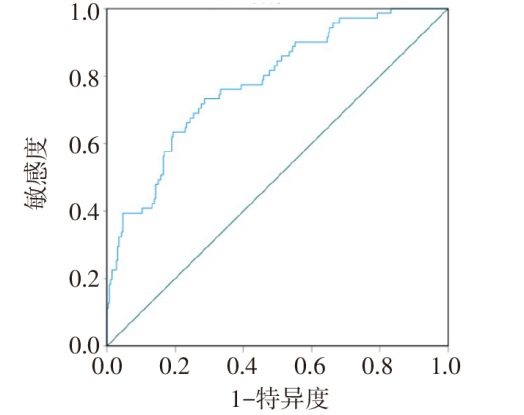
Fig.1 ROC curve of the predictive model for E1 lesion of IgAN patient
| [1] | XIA J, WANG M, JIANG W. New insights into pathogenesis of IgA nephropathy[J]. Int Urol Nephrol, 2022, 54(8):1873-1880. doi:10.1007/s11255-021-03094-0. |
| [2] | 王新念, 翟亚玲, 姚星辰, 等. 微量蛋白尿合并肾功能不全的IgA肾病患者临床病理特点及预后分析[J]. 天津医药, 2021, 49(11):1175-1179. |
| WANG X N, ZHAI Y L, YAO X C, et al. Clinicopathological characteristics and prognostic analysis of IgA nephropathy patients with microalbuminuria and renal insufficiency[J]. Tianjin Med J, 2021, 49(11):1175-1179. doi:10.11958/20211484. | |
| [3] | CHEUNG C K, ALEXANDER S, REICH H N, et al. The pathogenesis of IgA nephropathy and implications for treatment[J]. Nat Rev Nephrol, 2025, 21(1):9-23. doi:10.1038/s41581-024-00885-3. |
| [4] | KIRAC Y, DURANAY M. Investigation of the relationship between neutrophil/lymphocyte,platelet/lymphocyte,IgA/C3,IgA/C4,and C3/C4 ratios and proteinuria in patients with immunoglobulin A(IgA)nephropathy[J]. Cureus, 2025, 17(2):e79060. doi:10.7759/cureus.79060. |
| [5] | CHU B, CHEN Y, PAN J. Prognostic significance of systemic immune inflammation index for ovarian cancer:an updated systematic review and meta-analysis[J]. J Ovarian Res, 2025, 18(1):41. doi:10.1186/s13048-025-01626-1. |
| [6] | SUN H, LIU H, LI J, et al. Analysis of the clinical predictive value of the novel inflammatory indices SII,SIRI,MHR and NHR in patients with acute myocardial infarction and their extent of coronary artery disease[J]. J Inflamm Res, 2024, 17:7325-7338. doi:10.2147/JIR.S479253. |
| [7] | LIU K, YANG L, LIU Y, et al. Systemic immune-inflammation index(SII)and neutrophil-to-lymphocyte ratio(NLR):a strong predictor of disease severity in large-artery atherosclerosis(LAA)stroke patients[J]. J Inflamm Res, 2025, 18:195-202. doi:10.2147/JIR.S500474. |
| [8] | WANG Y, CHEN S, TIAN C, et al. Association of systemic immune biomarkers with metabolic dysfunction-associated steatotic liver disease:a cross-sectional study of NHANES 2007-2018[J]. Front Nutr, 2024, 11:1415484. doi:10.3389/fnut.2024.1415484. |
| [9] | SONG Y D, BAI X M, MA J. The association of systemic immune-inflammation index with lung function, risk of COPD and COPD severity:a population-based study[J]. PLoS One, 2024, 19(6):e0303286. doi:10.1371/journal.pone.0303286. |
| [10] | YANG C H, WANG X Y, ZHANG Y H, et al. SIRI and SII as potential biomarkers of disease activity and lupus nephritis in systemic lupus erythematosus[J]. Front Immunol, 2025, 16:1530534. doi:10.3389/fimmu.2025.1530534. |
| [11] | KAZAN D E, KAZAN S. Systemic immune inflammation index and pan-immune inflammation value as prognostic markers in patients with idiopathic low and moderate risk membranous nephropathy[J]. Eur Rev Med Pharmacol Sci, 2023, 27(2):642-648. doi:10.26355/eurrev_202301_31065. |
| [12] | YAN P, YANG Y, ZHANG X, et al. Association of systemic immune-inflammation index with diabetic kidney disease in patients with type 2 diabetes:a cross-sectional study in Chinese population[J]. Front Endocrinol(Lausanne), 2023, 14:1307692. doi:10.3389/fendo.2023.1307692. |
| [13] | TRIMARCHI H, BARRATT J, CATTRAN D C, et al. Oxford classification of IgA nephropathy 2016:an update from the IgA Nephropathy Classification Working Group[J]. Kidney Int, 2017, 91(5):1014-1021. doi:10.1016/j.kint.2017.02.003. |
| [14] | YUAN Y, LIANG X, HE M, et al. Haemoglobin,albumin,lymphocyte,and platelet score as an independent predictor for renal prognosis in IgA nephropathy[J]. Front Endocrinol(Lausanne), 2024, 15:1339921. doi:10.3389/fendo.2024.1339921. |
| [15] | YANG Z, WANG S, YIN K, et al. MiR-1696/GPx3 axis is involved in oxidative stress mediated neutrophil extracellular traps inhibition in chicken neutrophils[J]. J Cell Physiol, 2021, 236(5):3688-3699. doi:10.1002/jcp.30105. |
| [16] | WANG X R, YUAN L, SHI R, et al. Predictors of coronary artery calcification and its association with cardiovascular events in patients with chronic kidney disease[J]. Ren Fail, 2021, 43(1):1172-1179. doi:10.1080/0886022X.2021.1953529. |
| [17] | LI T, DONG G, ZHANG M, et al. Association of neutrophil-lymphocyte ratio and the presence of neonatal sepsis[J]. J Immunol Res, 2020, 2020:7650713. doi:10.1155/2020/7650713. |
| [18] | QIN Z, LI H, WANG L, et al. Systemic immune-inflammation index is associated with increased urinary albumin excretion:a population-based study[J]. Front Immunol, 2022, 13:863640. doi:10.3389/fimmu.2022.863640. |
| [19] | CARAVACA-FONTáN F, GUTIéRREZ E, SEVILLANO Á M, et al. Targeting complement in IgA nephropathy[J]. Clin Kidney J, 2023, 16(Suppl 2):ii28-ii39. doi:10.1093/ckj/sfad198. |
| [20] | MAHEMUTI N, JING X, ZHANG N, et al. Association between systemic immunity-inflammation index and hyperlipidemia:a population-based study from the NHANES(2015-2020)[J]. Nutrients, 2023, 15(5):1177. doi:10.3390/nu15051177. |
| [21] | WANG J, HE L, YAN W, et al. The role of hypertriglyceridemia and treatment patterns in the progression of IgA nephropathy with a high proportion of global glomerulosclerosis[J]. Int Urol Nephrol, 2020, 52(2):325-335. doi:10.1007/s11255-019-02371-3. |
| [22] | MA L, GILANI A, RUBIO-NAVARRO A, et al. Adipsin and adipocyte-derived C3aR1 regulate thermogenic fat in a sex-dependent fashion[J]. JCI Insight, 2024, 9(11):e178925. doi:10.1172/jci.insight.178925. |
| [23] | GUO W, SONG Y, SUN Y, et al. Systemic immune-inflammation index is associated with diabetic kidney disease in type 2 diabetes mellitus patients:evidence from NHANES 2011-2018[J]. Front Endocrinol(Lausanne), 2022, 13:1071465. doi:10.3389/fendo.2022.1071465. |
| [24] | LI X, CUI L, XU H. Association between systemic inflammation response index and chronic kidney disease:a population-based study[J]. Front Endocrinol (Lausanne), 2024, 15:1329256. doi:10.3389/fendo.2024.1329256. |
| [25] | MIHAI S, CODRICI E, POPESCU I D, et al. Inflammation-related mechanisms in chronic kidney disease prediction,progression,and outcome[J]. J Immunol Res, 2018, 2018:2180373. doi:10.1155/2018/2180373. |
| [26] | ZHAI Y, SUN S, ZHANG W, et al. The prognostic value of the systemic immune inflammation index in patients with IgA nephropathy[J]. Ren Fail, 2024, 46(2):2381613. doi:10.1080/0886022X.2024.2381613. |
| [27] | COPPO R, D'ARRIGO G, TRIPEPI G, et al. Is there long-term value of pathology scoring in immunoglobulin A nephropathy? A validation study of the Oxford Classification for IgA Nephropathy(VALIGA)update[J]. Nephrol Dial Transplant, 2020, 35(6):1002-1009. doi:10.1093/ndt/gfy302. |
| [28] | HODGIN J B, BERTHIER C C, JOHN R, et al. The molecular phenotype of endocapillary proliferation:novel therapeutic targets for IgA nephropathy[J]. PLoS One, 2014, 9(8):e103413. doi:10.1371/journal.pone.0103413. |
| [29] | YEO S C, GOH S M, BARRATT J. Is immunoglobulin A nephropathy different in different ethnic populations?[J]. Nephrology(Carlton), 2019, 24(9):885-895. doi:10.1111/nep.13592. |
| Viewed | ||||||
|
Full text |
|
|||||
|
Abstract |
|
|||||
