
Tianjin Medical Journal ›› 2026, Vol. 54 ›› Issue (1): 78-83.doi: 10.11958/20252176
• Clinical Research • Previous Articles Next Articles
LIN Xinxing1( ), JIANG Yanhong2, HU Shunming3, WANG Jialiang1, LIU Chenlu1, XU Su4,△()
Received:2025-05-29
Revised:2025-10-17
Published:2026-01-15
Online:2026-01-19
Contact:
△ E-mail:LIN Xinxing, JIANG Yanhong, HU Shunming, WANG Jialiang, LIU Chenlu, XU Su. Study of serum copper/zinc ratio and lactate/albumin ratio combined with fecal calprotectin in evaluating the condition and treatment outcome of ulcerative colitis[J]. Tianjin Medical Journal, 2026, 54(1): 78-83.
CLC Number:
| 组别 | n | 性别 (男/女) | 年龄/ 岁 | 吸烟 | 病程/ 月 | BMI/ (kg/m2) |
|---|---|---|---|---|---|---|
| 轻度活动组 | 45 | 27/18 | 33.62±5.16 | 6(13.3) | 24.60±6.09 | 22.64±2.53 |
| 中度活动组 | 61 | 40/21 | 34.11±4.84 | 11(18.0) | 25.08±6.27 | 22.97±2.22 |
| 重度活动组 | 48 | 35/13 | 34.58±5.10 | 9(18.8) | 25.71±7.05 | 23.12±2.09 |
| χ2或F | 1.752 | 0.426 | 0.581 | 0.344 | 0.541 |
Tab.1 Comparison of general information between three groups of patients
| 组别 | n | 性别 (男/女) | 年龄/ 岁 | 吸烟 | 病程/ 月 | BMI/ (kg/m2) |
|---|---|---|---|---|---|---|
| 轻度活动组 | 45 | 27/18 | 33.62±5.16 | 6(13.3) | 24.60±6.09 | 22.64±2.53 |
| 中度活动组 | 61 | 40/21 | 34.11±4.84 | 11(18.0) | 25.08±6.27 | 22.97±2.22 |
| 重度活动组 | 48 | 35/13 | 34.58±5.10 | 9(18.8) | 25.71±7.05 | 23.12±2.09 |
| χ2或F | 1.752 | 0.426 | 0.581 | 0.344 | 0.541 |
| 组别 | n | PAB/(mg/L) | SUA/(μmol/L) | CysC/(mg/L) | |||
|---|---|---|---|---|---|---|---|
| 轻度活动组 | 45 | 210.40±45.04 | 193.89±42.76 | 0.82±0.24 | |||
| 中度活动组 | 61 | 200.68±37.25 | 198.01±48.76 | 0.85±0.20 | |||
| 重度活动组 | 48 | 183.62±35.49a | 198.99±51.24 | 0.86±0.19 | |||
| F或χ2 | 5.630** | 0.150 | 0.573 | ||||
| 组别 | 血清铜/锌比值 | LAR | FC/(μg/g) | ||||
| 轻度活动组 | 1.47(1.11,1.91) | 0.05(0.04,0.06) | 156.60±43.08 | ||||
| 中度活动组 | 2.26(1.77,3.07)a | 0.08(0.06,0.10)a | 236.48±69.29a | ||||
| 重度活动组 | 3.33(2.29,4.58)ab | 0.12(0.08,0.15)ab | 318.63±94.78ab | ||||
| F或χ2 | 56.627** | 84.480** | 58.191** | ||||
Tab.2 Comparison of laboratory indices between three groups of patients
| 组别 | n | PAB/(mg/L) | SUA/(μmol/L) | CysC/(mg/L) | |||
|---|---|---|---|---|---|---|---|
| 轻度活动组 | 45 | 210.40±45.04 | 193.89±42.76 | 0.82±0.24 | |||
| 中度活动组 | 61 | 200.68±37.25 | 198.01±48.76 | 0.85±0.20 | |||
| 重度活动组 | 48 | 183.62±35.49a | 198.99±51.24 | 0.86±0.19 | |||
| F或χ2 | 5.630** | 0.150 | 0.573 | ||||
| 组别 | 血清铜/锌比值 | LAR | FC/(μg/g) | ||||
| 轻度活动组 | 1.47(1.11,1.91) | 0.05(0.04,0.06) | 156.60±43.08 | ||||
| 中度活动组 | 2.26(1.77,3.07)a | 0.08(0.06,0.10)a | 236.48±69.29a | ||||
| 重度活动组 | 3.33(2.29,4.58)ab | 0.12(0.08,0.15)ab | 318.63±94.78ab | ||||
| F或χ2 | 56.627** | 84.480** | 58.191** | ||||
| 变量 | β | SE | Wald χ2 | P | OR | OR 95%CI |
|---|---|---|---|---|---|---|
| PAB | -0.007 | 0.008 | 0.734 | 0.392 | 0.993 | 0.977~1.009 |
| 血清铜/ 锌比值 | 0.781 | 0.249 | 9.821 | 0.002 | 2.183 | 1.340~3.557 |
| LAR | 0.388 | 0.099 | 15.454 | <0.001 | 1.473 | 1.214~1.787 |
| FC | 0.020 | 0.005 | 20.086 | <0.001 | 1.020 | 1.011~1.029 |
| 常数项 | -10.622 | 2.722 | 15.222 | <0.001 | 0.000 | - |
Tab.3 Multivariate Logistic regression analysis of the condition in patients with UC
| 变量 | β | SE | Wald χ2 | P | OR | OR 95%CI |
|---|---|---|---|---|---|---|
| PAB | -0.007 | 0.008 | 0.734 | 0.392 | 0.993 | 0.977~1.009 |
| 血清铜/ 锌比值 | 0.781 | 0.249 | 9.821 | 0.002 | 2.183 | 1.340~3.557 |
| LAR | 0.388 | 0.099 | 15.454 | <0.001 | 1.473 | 1.214~1.787 |
| FC | 0.020 | 0.005 | 20.086 | <0.001 | 1.020 | 1.011~1.029 |
| 常数项 | -10.622 | 2.722 | 15.222 | <0.001 | 0.000 | - |
| 指标 | AUC | 95% CI | 截断值 | 敏感度/ % | 特异度/ % | 约登 指数 |
|---|---|---|---|---|---|---|
| 血清铜/ 锌比值 | 0.803 | 0.731~0.863 | 2.64 | 72.92 | 77.36 | 0.503 |
| LAR | 0.842 | 0.774~0.895 | 0.10 | 66.67 | 88.68 | 0.554 |
| FC | 0.833 | 0.764~0.888 | 270.53 μg/g | 64.58 | 84.91 | 0.495 |
| 指标联合 | 0.949 | 0.902~0.978 | - | 83.33 | 89.62 | 0.730 |
Tab.4 Analysis of the value of serum copper/zinc ratio, LAR and FC in evaluating the condition of UC
| 指标 | AUC | 95% CI | 截断值 | 敏感度/ % | 特异度/ % | 约登 指数 |
|---|---|---|---|---|---|---|
| 血清铜/ 锌比值 | 0.803 | 0.731~0.863 | 2.64 | 72.92 | 77.36 | 0.503 |
| LAR | 0.842 | 0.774~0.895 | 0.10 | 66.67 | 88.68 | 0.554 |
| FC | 0.833 | 0.764~0.888 | 270.53 μg/g | 64.58 | 84.91 | 0.495 |
| 指标联合 | 0.949 | 0.902~0.978 | - | 83.33 | 89.62 | 0.730 |
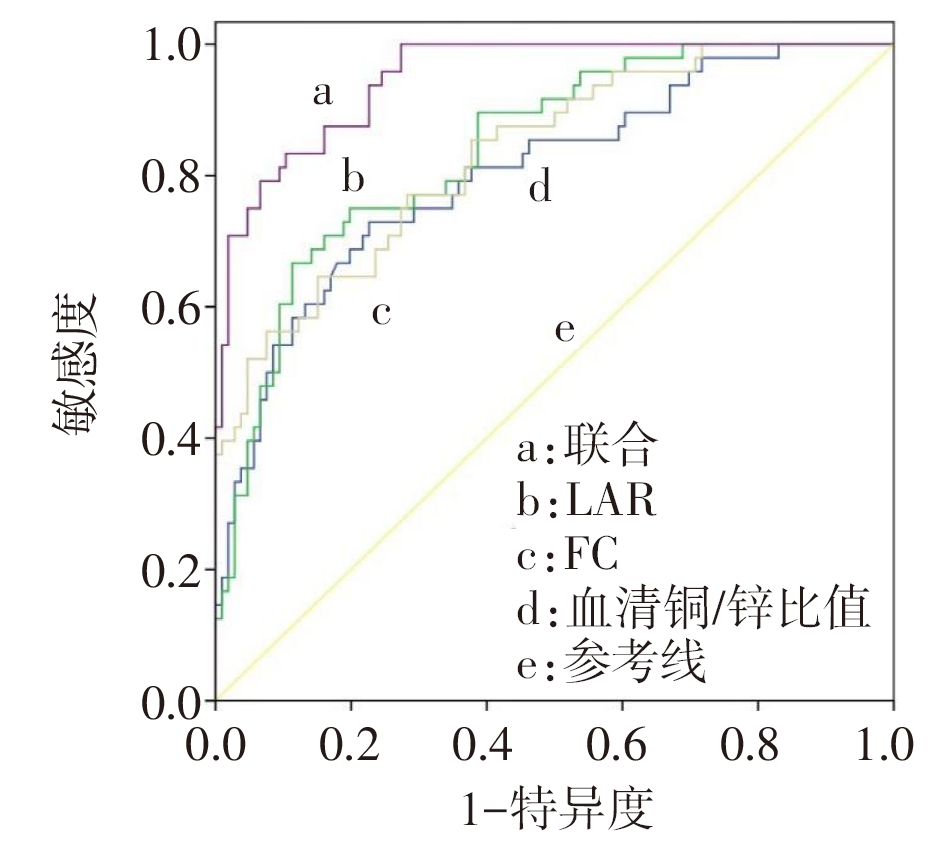
Fig.1 ROC curves of serum copper/zinc ratio, LAR and FC for evaluating the condition of UC
| 组别 | n | 血清铜/锌比值 | LAR | FC/(μg/g) |
|---|---|---|---|---|
| A组 | 106 | 1.90(1.34,2.53) | 0.06(0.05,0.09) | 202.08(148.36,261.78) |
| B组 | 48 | 3.46(2.69,4.93) | 0.12(0.07,0.16) | 332.78(211.42,380.89) |
| Z | 6.608** | 6.058** | 5.141** |
Tab.5 Comparison of serum copper/zinc ratio, LAR and FC levels between UC patients with different treatment outcomes [M(P25,P75)]
| 组别 | n | 血清铜/锌比值 | LAR | FC/(μg/g) |
|---|---|---|---|---|
| A组 | 106 | 1.90(1.34,2.53) | 0.06(0.05,0.09) | 202.08(148.36,261.78) |
| B组 | 48 | 3.46(2.69,4.93) | 0.12(0.07,0.16) | 332.78(211.42,380.89) |
| Z | 6.608** | 6.058** | 5.141** |
| 变量 | β | SE | Wald χ2 | P | OR | OR 95%CI |
|---|---|---|---|---|---|---|
| 血清铜/ 锌比值 | 1.125 | 0.256 | 19.295 | <0.001 | 3.081 | 1.865~5.090 |
| LAR | 0.302 | 0.080 | 14.108 | <0.001 | 1.352 | 1.155~1.583 |
| FC | 0.012 | 0.003 | 13.030 | <0.001 | 1.012 | 1.005~1.019 |
| 常数项 | -9.843 | 1.638 | 36.125 | <0.001 | 0.000 | - |
Tab.6 Multivariate Logistic regression analysis of the treatment outcome of UC
| 变量 | β | SE | Wald χ2 | P | OR | OR 95%CI |
|---|---|---|---|---|---|---|
| 血清铜/ 锌比值 | 1.125 | 0.256 | 19.295 | <0.001 | 3.081 | 1.865~5.090 |
| LAR | 0.302 | 0.080 | 14.108 | <0.001 | 1.352 | 1.155~1.583 |
| FC | 0.012 | 0.003 | 13.030 | <0.001 | 1.012 | 1.005~1.019 |
| 常数项 | -9.843 | 1.638 | 36.125 | <0.001 | 0.000 | - |
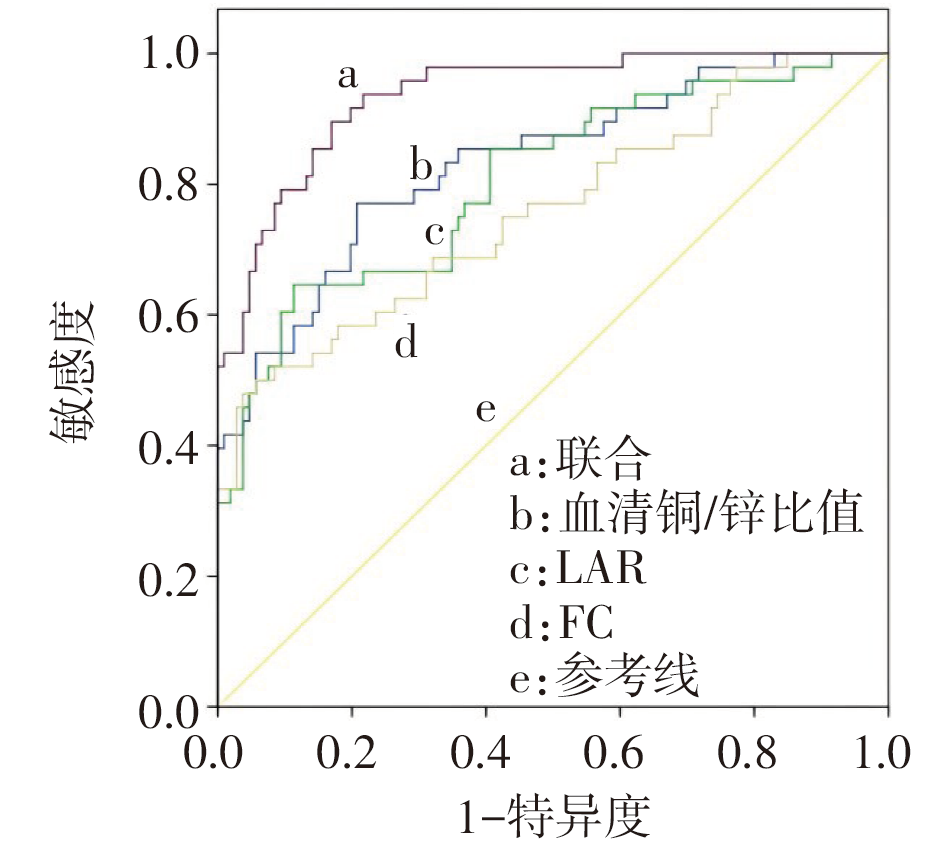
Fig.2 ROC curves of serum copper/zinc ratio, LAR and FC for predicting the treatment outcome (no improvement) of UC
| 指标 | AUC | 95% CI | 截断值 | 敏感度/ % | 特异度/ % | 约登 指数 |
|---|---|---|---|---|---|---|
| 血清铜/锌比值 | 0.833 | 0.764~0.888 | 2.64 | 77.08 | 79.25 | 0.563 |
| LAR | 0.805 | 0.734~0.864 | 0.10 | 64.58 | 88.68 | 0.533 |
| FC | 0.759 | 0.684~0.824 | 333.93 μg/g | 50.00 | 94.34 | 0.443 |
| 指标联合 | 0.936 | 0.885~0.969 | - | 89.58 | 83.02 | 0.726 |
Tab.7 Analysis of the predictive value of serum copper/zinc ratio, LAR and FC for the treatment outcome of UC
| 指标 | AUC | 95% CI | 截断值 | 敏感度/ % | 特异度/ % | 约登 指数 |
|---|---|---|---|---|---|---|
| 血清铜/锌比值 | 0.833 | 0.764~0.888 | 2.64 | 77.08 | 79.25 | 0.563 |
| LAR | 0.805 | 0.734~0.864 | 0.10 | 64.58 | 88.68 | 0.533 |
| FC | 0.759 | 0.684~0.824 | 333.93 μg/g | 50.00 | 94.34 | 0.443 |
| 指标联合 | 0.936 | 0.885~0.969 | - | 89.58 | 83.02 | 0.726 |
| [1] | 中国中西医结合学会. 溃疡性结肠炎中西医结合诊疗专家共识[J]. 中国中西医结合杂志, 2023, 43(1):5-11. |
| Chinese Association of the Integration of Traditional and Western Medicine. Experts consensus on diagnosis and treatment of ulcerative colitis by integrative medicine[J]. Chin J Integr Med, 2023, 43(1):5-11. doi:10.7661/j.cjim.20221027.215. | |
| [2] | WANG Y, OUYANG Q,APDW 2004 Chinese IBD Working Group. Ulcerative colitis in China:retrospective analysis of 3100 hospitalized patients[J]. J Gastroenterol Hepatol,2007, 22(9):1450-1455. doi:10.1111/j.1440-1746.2007.04873.x. |
| [3] | 孙邦英, 姜文, 程红宇, 等. 粪便FC蛋白联合血清CA125、CRP对溃疡性结肠炎患者的预后评估[J]. 分子诊断与治疗杂志, 2023, 15(7):1207-1211. |
| SUN B Y, JIANG W, CHENG H Y, et al. The value of fecal FC protein combined with serum CA125 and CRP in predicting prognosis of patients with ulcerative colitis[J]. J Mol Diagn Ther, 2023, 15(7):1207-1211. doi:10.3969/j.issn.1674-6929.2023.07.028. | |
| [4] | 中华医学会消化病学分会炎症性肠病学组,中国炎症性肠病诊疗质量控制评估中心. 中国溃疡性结肠炎诊治指南(2023年·西安)[J]. 中华消化杂志, 2024, 44(2):73-99. |
| Inflammatory Bowel Disease Group, Chinese Society of Gastroenterology, Chinese Medical Association, Inflammatory Bowel Disease Quality Control Center of China. Chinese clinical practice guideline on management of ulcerative colitis(2023,Xi′an)[J]. Chin J Dig,2024, 44(2):73-99. doi:10.3760/cma.j.cn311367-20240125-00036. | |
| [5] | MACMASTER M J, DAMIANOPOULOU S, THOMSON C, et al. A prospective analysis of micronutrient status in quiescent inflammatory bowel disease[J]. Clin Nutr, 2021, 40(1):327-331. doi:10.1016/j.clnu.2020.05.010. |
| [6] | DJOKO K Y, ONG C L, WALKER M J, et al. The role of copper and zinc toxicity in innate immune defense against bacterial pathogens[J]. J Biol Chem, 2015, 290(31):18954-18961. doi:10.1074/jbc.R115.647099. |
| [7] | 李永凯, 李丹丹, 袁新, 等. 早期乳酸/白蛋白比值对脓毒症预后的预测价值[J]. 中华危重病急救医学, 2023, 35(1):61-65. |
| LI Y K, LI D D, YUAN X, et al. Predictive value of early lactate/albumin ratio in the prognosis of sepsis[J]. Chin Crit Care Med, 2023, 35(1):61-65. doi:10.3760/cma.j.cn121430-20220130-00108. | |
| [8] | 高丹, 王科峰, 卢丽萍. 粪便钙卫蛋白联合血清学抗体检测诊断炎症性肠病的临床应用价值[J]. 中国医科大学学报, 2021, 50(5):425-428. |
| GAO D, WANG K F, LU L P. The diagnostic utility of fecal calprotectin used in combination with an antibody against chronic inflammatory bowel disease[J]. J China Med Univ, 2021, 50(5):425-428. doi:10.12007/j.issn.0258-4646.2021.05.008. | |
| [9] | 中华医学会消化病学分会炎症性肠病学组. 炎症性肠病诊断与治疗的共识意见(2018年,北京)[J]. 中华消化杂志, 2018, 38(5):292-311. |
| Inflammatory Bowel Disease Group, Chinese Society of Gastroenterology, Chinese Medical Association. Consensus on diagnosis and management of inflammatory bowel disease (Beijing,2018)[J]. Chin J Dig, 2018, 38(5):292-311. doi:10.3760/cma.j.issn.0254-1432.2018.05.002. | |
| [10] | IKEYA K, HANAI H, SUGIMOTO K, et al. The Ulcerative colitis endoscopic index of severity more accurately reflects clinical outcomes and long-term prognosis than the Mayo endoscopic score[J]. J Crohns Colitis, 2016, 10(3):286-295. doi:10.1093/ecco-jcc/jjv210. |
| [11] | 羊丹, 徐菁, 陈保银, 等. 溃疡性结肠炎患者血清MUC1、sTREM-1水平与病情严重程度及临床结局的关系[J]. 山东医药, 2021, 61(28):38-41. |
| YANG D, XU J, CHEN B Y, et al. Relationships between serum MUC1 and sTREM-1 levels and severity of illness and clinical outcome in patients with ulcerative colitis[J]. Shandong Med J, 2021, 61(28):38-41. doi:10.3969/j.issn.1002-266X.2021.28.009. | |
| [12] | 朱钰钰, 张丹凤, 李欢, 等. 血清锌、铜/锌比值与慢性肾脏病患者冠状动脉钙化的相关性[J]. 中国动脉硬化杂志, 2022, 30(12):1051-1057. |
| ZHU Y Y, ZHANG D F, LI H, et al. Correlation of blood zinc,copper/zinc ratio and coronary artery calcification in patients with chronic kidney disease[J]. Chin J Arterioscler, 2022, 30(12):1051-1057. doi:10.3969/j.issn.1007-3949.2022.12.007. | |
| [13] | TAKAO T, YANAGISAWA H, SUKA M, et al. Synergistic association of the copper/zinc ratio under inflammatory conditions with diabetic kidney disease in patients with type 2 diabetes:the Asahi Diabetes Complications Study[J]. J Diabetes Investig, 2022, 13(2):299-307. doi:10.1111/jdi.13659. |
| [14] | 罗延年, 席振创, 王锐, 等. 乳酸/白蛋白比值联合NLR构建的列线图对急性呼吸窘迫综合征患者早期预后的预测价值[J]. 解放军医学杂志, 2023, 48(10):1194-1200. |
| LUO Y N, XI Z C, WANG R, et al. The predictive value of nomogram based on lactate-to-albumin ratio combined with NLR for early prognosis of patients with acute respiratory distress syndrome[J]. Med J Chin PLA, 2023, 48(10):1194-1200. doi:10.11855/j.issn.0577-7402.2364.2023.0718. | |
| [15] | 谭悦, 郑长清. 粪便钙防卫蛋白检测在溃疡性结肠炎中的临床应用[J]. 中华消化杂志, 2024, 44(9):644-646. |
| TAN Y, ZHENG C Q. Review on clinical application of fecal calprotectin in ulcerative colitis[J]. Chin J Dig, 2024, 44(9):644-646. doi:10.3760/cma.j.cn311367-20240131-00049. | |
| [16] | 韩玮, 许建明. 钙卫蛋白、乳铁蛋白在溃疡性结肠炎患者中表达的临床研究[J]. 胃肠病学, 2010, 15(4):209-213. |
| HAN W, XU J M. Clinical analysis of expressions of calprotectin and lactoferrin in patients with ulcerative colitis[J]. Chin J Gastroenter, 2010, 15(4):209-213. doi:10.3969/j.issn.1008-7125.2010.04.005. | |
| [17] | 周明生, 俞菊英, 刘军, 等. 联合检测血清白蛋白、C反应蛋白及红细胞沉降率对溃疡性结肠炎患者预后的评估[J]. 中国医师进修杂志, 2010, 33(16):68-69. |
| ZHOU M S, YU J Y, LIU J, et al. Evaluation of the prognosis of patients with ulcerative colitis by combined detection of serum albumin,C-reactive protein,and erythrocyte sedimentation rate[J]. Chinese Journal of Postgraduates of Medicine, 2010, 33(16):68-69. doi:10.3760/cma.j.issn.1673-4904.2010.16.028. | |
| [18] | 刘妃艳, 牛慧丽, 刘冬梅, 等. 粪便钙卫蛋白在结直肠腺瘤性息肉机会性筛查中的价值[J]. 中国临床医生杂志, 2026, 54(1):32-34. |
| LIU F Y, NIU H L, LIU D M, et al. Value of fecal calprotectin in opportunistic screening of colorectal adenomatous polyps[J]. Chin Clin Dr, 2026, 54(1):32-34. doi:10.3969/j.issn.2095-8552.2025.01.009. | |
| [19] | 宋玉君, 袁泽宇, 郭静, 等. 病程和病变范围对粪便钙卫蛋白评估溃疡性结肠炎患者内镜下疾病活动度的效能的影响[J]. 国际消化病杂志, 2024, 44(3):191-195. |
| SONG Y J, YUAN Z Y, GUO J, et al. Influence of disease duration and lesion extent on effectiveness of fecal calprotectin in evaluating endoscopic disease activity and remission in patients with ulcerative colitis[J]. Int J Digest Dis, 2024, 44(3):191-195. doi:10.3969/j.issn.1673-534X.2024.03.011. | |
| [20] | 胡嘉铭, 季梦遥, 田山, 等. 纤维蛋白原/前白蛋白、纤维蛋白原/白蛋白对炎症性肠病活动度诊断价值分析[J]. 中国临床医生杂志, 2022, 50(2):172-176. |
| HU J M, JI M Y, TIAN S, et al. Diagnostic value of fibrinogen/prealbumin and fibrinogen/albumin in inflammatory bowel disease activity[J]. Chin Clin Dr, 2022, 50(2):172-176. doi:10.3969/j.issn.2095-8552.2022.02.015. | |
| [21] | 马电霞, 彭春艳, 谢颖, 等. 人血清白蛋白在炎症性肠病中的诊疗价值及研究进展[J]. 中华消化杂志, 2024, 44(10):709-712. |
| MA D X, PENG C Y, XIE Y, et al. The diagnostic and therapeutic value and research progress of human serum albumin in inflammatory bowel disease[J]. Chinese Journal of Digestion, 2024, 44(10):709-712. doi:10.3760/cma.j.cn311367-20240307-00091. | |
| [22] | 孟祥鹿, 孙际伟, 王欢, 等. MRC结合FC对溃疡性结肠炎活动程度的诊断效能[J]. 天津医药, 2020, 48(7):635-641. |
| MENG X L, SUN J W, WANG H, et al. The diagnostic efficiency of MRC combined with fecal calprotectin in the activity of ulcerative colitis[J]. Tianjin Med J, 2020, 48(7):635-641. doi:10.11958/20192763. | |
| [23] | 张怡婷, 钱香, 任真, 等. 粪便钙卫蛋白联合血液指标在诊断及评估溃疡性结肠炎活动度中的临床价值[J]. 实用医学杂志, 2021, 37(9):1199-1202. |
| ZHANG Y T, QIAN X, REN Z, et al. Clinical value of fecal calprotectin combined with blood indicators in diagnosis and evaluation of activity of ulcerative colitis[J]. J Pract Med, 2021, 37(9):1199-1202. doi:10.3969/j.issn.1006-5725.2021.09.021. | |
| [24] | SCHILLER B, WIRTHGEN E, WEBER F, et al. Fecal calprotectin and platelet count predict histologic disease activity in pediatric ulcerative colitis:results from a projection-predictive feature selection[J]. Eur J Pediatr, 2024, 183(8):3277-3288. doi:10.1007/s00431-024-05554-y. |
| [25] | 檀飞飞, 周中银. 粪便钙卫蛋白与溃疡性结肠炎活动相关性初步研究[J]. 安徽医药, 2023, 27(3):568-571. |
| TAN F F, ZHOU Z Y. A preliminary study on the correlation between fecal calprotectin and ulcerative colitis[J]. Anhui Med J, 2023, 27(3):568-571. doi:10.3969/j.issn.1009-6469.2023.03.032. |
| [1] | YAN Yan, DENG Ziwei, QIU Chengfeng. Predictive value of PCSK9 combined with lactate acid and SOFA score for mortality risk in patients with sepsis [J]. Tianjin Medical Journal, 2025, 53(7): 684-687. |
| [2] | MA Jiajia, ZHANG Yaping, YANG Bin, ZHAO Meiqi, JIANG Lu, HUANG Xiaoyu, FAN Luchang, WANG Fengmei. Mechanism study of ATOX1 promoting biological behavior of hepatocellular carcinoma cells through JAK2/STAT3 pathway [J]. Tianjin Medical Journal, 2024, 52(9): 907-912. |
| [3] | ZHOU Chengji, TANG Yong, JIANG Peng, HU Zhouquan, WEI Wei, WANG Guoan, FU Xiaofei. Role of palmitoyltransferase modified NOD2 in brain injury after cardiopulmonary resuscitation in mice [J]. Tianjin Medical Journal, 2024, 52(8): 804-808. |
| [4] | HOU Weiling, QIAO Yunyang, WU Xiaoyun, SHI Huimin, QU Gaoting, ZHANG Aiqing. Zinc finger protein 281 inhibits high glucose-induced epithelial-mesenchymal transition and extracellular matrix synthesis in renal tubular epithelial cells [J]. Tianjin Medical Journal, 2024, 52(7): 720-726. |
| [5] | XIA Yuwei, QIAO Yunyang, LIU Xuewei, SHI Huimin, QU Gaoting, ZHANG Aiqing, GAN Weihua. Effect of tRF-1:30 on the expression of inflammatory factors in renal tubular epithelial cells induced by high glucose [J]. Tianjin Medical Journal, 2024, 52(6): 561-566. |
| [6] | MAN Jun, GAO Yanyan, SONG Longfei, GAO Fusheng. The effect of lncRNA FEZF1-AS1 targeting regulation of miR-200c-3p on biological behaviors of human lung fibroblasts [J]. Tianjin Medical Journal, 2024, 52(3): 231-236. |
| [7] | GU Yunyun, ZHONG Chongming, YANG Haiyan. Predictive value of uric acid/albumin ratio for coronary heart disease in patients with chronic kidney disease [J]. Tianjin Medical Journal, 2024, 52(11): 1202-1206. |
| [8] | YANG Hu, LEI Jun, YANG Li, PENG Xiaotong. Clinical characteristics and risk prediction model construction of children with Kawasaki disease complicated with pleural effusion [J]. Tianjin Medical Journal, 2024, 52(10): 1089-1094. |
| [9] | YU Kuiyang, LIU Pan, ZHANG Haowen, QIN Tao, HU Mingxing△. Study on the mechanism of LncRNA ZFAS1 targeting miR-373 to induce cisplatin resistance in hepatocellular carcinoma cells [J]. Tianjin Medical Journal, 2022, 50(5): 455-460. |
| [10] | FAN Fei, LEI Bibo. Effects of ketamine and lidocaine on free radical production after tournique-induced ischemiareperfusion injury in patients undergoing knee arthroplasty #br# [J]. Tianjin Medical Journal, 2022, 50(2): 181-185. |
| [11] | MEN Hui, JIN Xiang-lan, ZHAO Shi-jiao, WANG Ying, LI Shi-xin, ZHOU Jing. Correlation between serum albumin level and cognitive impairment after acute ischemic stroke #br# [J]. Tianjin Medical Journal, 2021, 49(6): 613-616. |
| [12] | CHEN Hong-yan, SUN Xing-yu, LI Ya-ling, HE Jin-san, LIU Ling△. The expression and role of IKCa1 in endometrium during peri-implantation [J]. Tianjin Medical Journal, 2021, 49(5): 460-464. |
| [13] | GU Chun-qing, ZHANG Yun-ke, YANG Guang-hua, WU Ji-tao. The relationship between fibrinogen to albumin ratio and early neurological deterioration after rt-PA intravenous thrombolysis in patients with acute ischemic stroke [J]. Tianjin Medical Journal, 2021, 49(12): 1282-1286. |
| [14] | MENG Xiang-lu, , SUN Ji-wei , WANG Huan , DAI Li-mei , ZHAO Shao-li , ZHAO Yu-meng , FENG Ling-ling , WANG Wen-hong△. The diagnostic efficiency of MRC combined with fecal calprotectin in the activity of ulcerative colitis [J]. Tianjin Medical Journal, 2020, 48(7): 635-641. |
| [15] | LIN Peng-yang, HUANG Hui, YANG Hui, LIU Ping, WANG Zhong. The predictive effect of serum alkaline phosphatase and albumin levels on slow coronary blood flow [J]. Tianjin Medical Journal, 2020, 48(3): 191-194. |
| Viewed | ||||||
|
Full text |
|
|||||
|
Abstract |
|
|||||
