
Tianjin Medical Journal ›› 2026, Vol. 54 ›› Issue (5): 455-461.doi: 10.11958/20252449
• Cell and Molecular Biology • Previous Articles Next Articles
LIU Shenhong( ), MA Yuanyuan, ZHANG Limei
Received:2025-07-14
Revised:2025-12-01
Published:2026-05-15
Online:2026-05-13
LIU Shenhong, MA Yuanyuan, ZHANG Limei. Mechanism study of IgE high-affinity receptor binding to NPC2 on regulating DNP-BSA-induced mast cell degranulation and histamine release[J]. Tianjin Medical Journal, 2026, 54(5): 455-461.
CLC Number:
| 基因名称 | 引物序列(5'→3') | 产物大小/bp |
|---|---|---|
| NPC2 | 上游:CCAGCTGAGCAAAGGACAGT | 380 |
| 下游:TCTGCTACAGAGCACCTCCT | ||
| FcεRⅠ | 上游:TAAGGTCTCCTTGAACCCTCCA | 315 |
| 下游:CAACCATGGCACCTGAGGAA | ||
| GAPDH | 上游:AGGTCGGTGTGAACGGATTTG | 123 |
| 下游:TGTAGACCATGTAGTTGAGGTCA |
Tab.1 Primer sequences for qRT-PCR
| 基因名称 | 引物序列(5'→3') | 产物大小/bp |
|---|---|---|
| NPC2 | 上游:CCAGCTGAGCAAAGGACAGT | 380 |
| 下游:TCTGCTACAGAGCACCTCCT | ||
| FcεRⅠ | 上游:TAAGGTCTCCTTGAACCCTCCA | 315 |
| 下游:CAACCATGGCACCTGAGGAA | ||
| GAPDH | 上游:AGGTCGGTGTGAACGGATTTG | 123 |
| 下游:TGTAGACCATGTAGTTGAGGTCA |
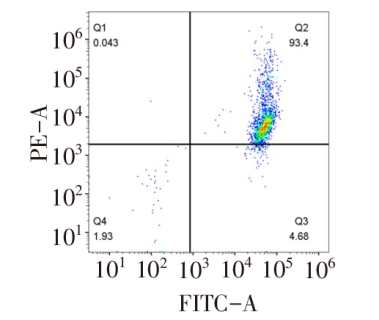
Fig.1 Detection of mast cell surface markers FcεRⅠ and CD117 in mice by flow cytometry
| 质量浓度 | CCL2/(ng/L) | GM-CSF/(ng/L) | IL-4/(ng/L) | |||||||||||||||||||||
|---|---|---|---|---|---|---|---|---|---|---|---|---|---|---|---|---|---|---|---|---|---|---|---|---|
| WT组 | siNPC2组 | t | WT组 | siNPC2组 | t | WT组 | siNPC2组 | t | ||||||||||||||||
| 0 μg/L | 15.23±1.25 | 14.98±1.18 | 0.342 | 8.45±0.72 | 8.23±0.68 | 0.384 | 12.58±1.08 | 12.31±1.02 | 0.314 | |||||||||||||||
| 3 μg/L | 45.67±3.82a | 28.43±2.65a | 6.432** | 32.18±2.85a | 18.76±1.92a | 6.764** | 38.75±3.24a | 22.46±2.18a | 7.225** | |||||||||||||||
| 5 μg/L | 78.92±6.54ab | 42.15±3.87ab | 8.381** | 56.34±4.73ab | 29.82±2.74ab | 8.403** | 65.82±5.47ab | 34.27±3.15ab | 8.657** | |||||||||||||||
| F | 264.318** | 147.925** | 238.647** | 175.384** | 220.735** | 152.418** | ||||||||||||||||||
| DNP-BSA含量 | IL-5/(ng/L) | IL-9/(ng/L) | IL-13/(ng/L) | |||||||||||||||||||||
| WT组 | siNPC2组 | t | WT组 | siNPC2组 | t | WT组 | siNPC2组 | t | ||||||||||||||||
| 0 μg/L | 10.87±0.94 | 10.65±0.89 | 0.294 | 9.63±0.82 | 9.42±0.78 | 0.321 | 11.24±0.97 | 10.98±0.91 | 0.338 | |||||||||||||||
| 3 μg/L | 35.42±2.96a | 20.18±1.87a | 7.539** | 28.54±2.38a | 16.87±1.65a | 7.033** | 33.67±2.81a | 19.52±1.83a | 7.308** | |||||||||||||||
| 5 μg/L | 58.76±4.82ab | 30.45±2.79ab | 8.804** | 47.85±3.92ab | 25.63±2.34ab | 8.430** | 62.38±5.16ab | 32.74±3.02ab | 8.586** | |||||||||||||||
| F | 249.382** | 198.647** | 196.528** | 158.739** | 260.417** | 215.683** | ||||||||||||||||||
| DNP-BSA含量 | TNF-α/(ng/L) | 组胺/% | ||||||||||||||||||||||
| WT组 | siNPC2组 | t | WT组 | siNPC2组 | t | |||||||||||||||||||
| 0 μg/L | 13.76±1.15 | 13.48±1.12 | 0.302 | 5.32±0.43 | 5.18±0.41 | 0.408 | ||||||||||||||||||
| 3 μg/L | 42.35±3.58a | 24.87±2.32 | 7.097** | 28.65±2.54a | 15.73±1.48a | 7.612** | ||||||||||||||||||
| 5 μg/L | 71.29±5.94ab | 37.56±3.45ab | 8.504** | 58.50±4.32ab | 21.41±2.43ab | 12.961** | ||||||||||||||||||
| F | 232.816** | 173.952** | 378.425** | 149.287** | ||||||||||||||||||||
Tab.2 Effects of NPC2 knockdown on DNP-BSA-induced mediator release and histamine release rate in mast cells
| 质量浓度 | CCL2/(ng/L) | GM-CSF/(ng/L) | IL-4/(ng/L) | |||||||||||||||||||||
|---|---|---|---|---|---|---|---|---|---|---|---|---|---|---|---|---|---|---|---|---|---|---|---|---|
| WT组 | siNPC2组 | t | WT组 | siNPC2组 | t | WT组 | siNPC2组 | t | ||||||||||||||||
| 0 μg/L | 15.23±1.25 | 14.98±1.18 | 0.342 | 8.45±0.72 | 8.23±0.68 | 0.384 | 12.58±1.08 | 12.31±1.02 | 0.314 | |||||||||||||||
| 3 μg/L | 45.67±3.82a | 28.43±2.65a | 6.432** | 32.18±2.85a | 18.76±1.92a | 6.764** | 38.75±3.24a | 22.46±2.18a | 7.225** | |||||||||||||||
| 5 μg/L | 78.92±6.54ab | 42.15±3.87ab | 8.381** | 56.34±4.73ab | 29.82±2.74ab | 8.403** | 65.82±5.47ab | 34.27±3.15ab | 8.657** | |||||||||||||||
| F | 264.318** | 147.925** | 238.647** | 175.384** | 220.735** | 152.418** | ||||||||||||||||||
| DNP-BSA含量 | IL-5/(ng/L) | IL-9/(ng/L) | IL-13/(ng/L) | |||||||||||||||||||||
| WT组 | siNPC2组 | t | WT组 | siNPC2组 | t | WT组 | siNPC2组 | t | ||||||||||||||||
| 0 μg/L | 10.87±0.94 | 10.65±0.89 | 0.294 | 9.63±0.82 | 9.42±0.78 | 0.321 | 11.24±0.97 | 10.98±0.91 | 0.338 | |||||||||||||||
| 3 μg/L | 35.42±2.96a | 20.18±1.87a | 7.539** | 28.54±2.38a | 16.87±1.65a | 7.033** | 33.67±2.81a | 19.52±1.83a | 7.308** | |||||||||||||||
| 5 μg/L | 58.76±4.82ab | 30.45±2.79ab | 8.804** | 47.85±3.92ab | 25.63±2.34ab | 8.430** | 62.38±5.16ab | 32.74±3.02ab | 8.586** | |||||||||||||||
| F | 249.382** | 198.647** | 196.528** | 158.739** | 260.417** | 215.683** | ||||||||||||||||||
| DNP-BSA含量 | TNF-α/(ng/L) | 组胺/% | ||||||||||||||||||||||
| WT组 | siNPC2组 | t | WT组 | siNPC2组 | t | |||||||||||||||||||
| 0 μg/L | 13.76±1.15 | 13.48±1.12 | 0.302 | 5.32±0.43 | 5.18±0.41 | 0.408 | ||||||||||||||||||
| 3 μg/L | 42.35±3.58a | 24.87±2.32 | 7.097** | 28.65±2.54a | 15.73±1.48a | 7.612** | ||||||||||||||||||
| 5 μg/L | 71.29±5.94ab | 37.56±3.45ab | 8.504** | 58.50±4.32ab | 21.41±2.43ab | 12.961** | ||||||||||||||||||
| F | 232.816** | 173.952** | 378.425** | 149.287** | ||||||||||||||||||||
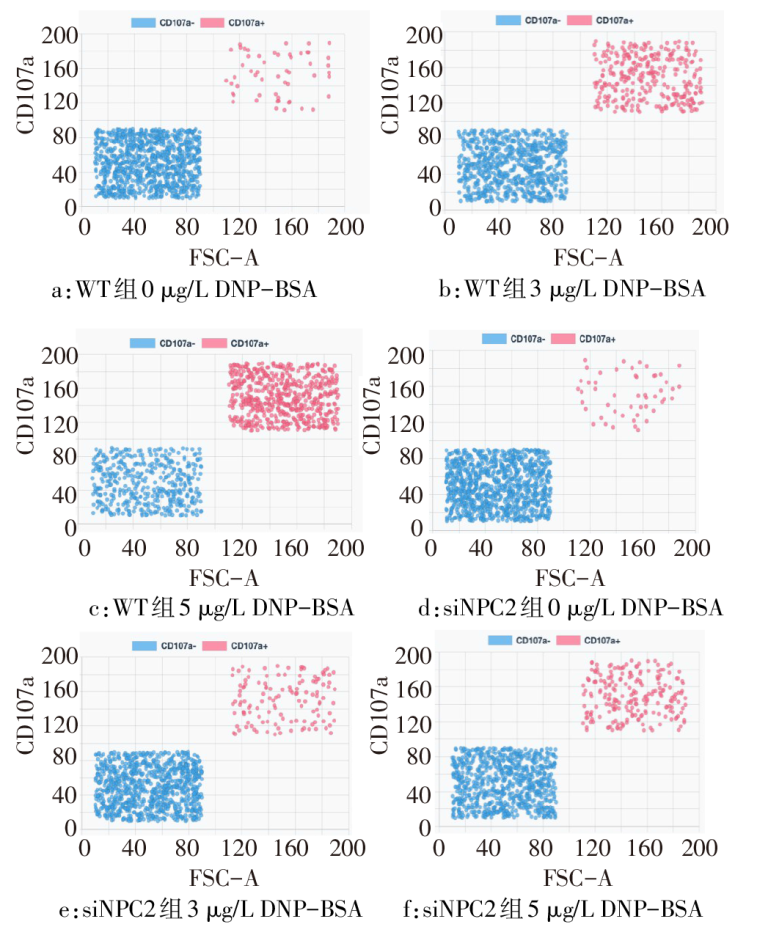
Fig.2 Flow cytometry analysis of NPC2 knockdown on DNP-BSA-induced mast cell degranulation
| 质量浓度 | WT组 | siNPC2组 | t |
|---|---|---|---|
| 0 μg/L | 5.32±0.43 | 5.18±0.43 | 0.408 |
| 3 μg/L | 28.65±2.54a | 15.73±1.48a | 7.612** |
| 5 μg/L | 58.50±4.32ab | 21.41±2.43ab | 12.961** |
| F | 378.425** | 149.287** |
Tab.3 Effect of NPC2 knockdown on DNP-BSA-induced CD107a expression in mast cells
| 质量浓度 | WT组 | siNPC2组 | t |
|---|---|---|---|
| 0 μg/L | 5.32±0.43 | 5.18±0.43 | 0.408 |
| 3 μg/L | 28.65±2.54a | 15.73±1.48a | 7.612** |
| 5 μg/L | 58.50±4.32ab | 21.41±2.43ab | 12.961** |
| F | 378.425** | 149.287** |
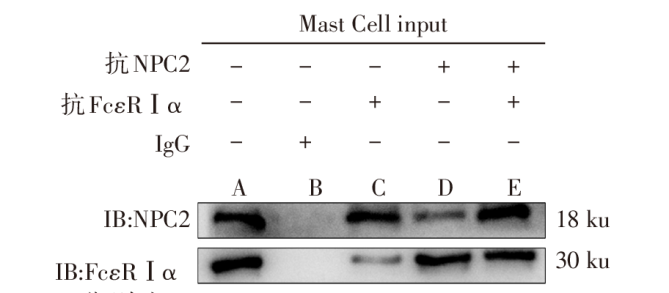
Fig.3 Co-IP assay verified the interaction between NPC2 and FcεRⅠ in mast cells
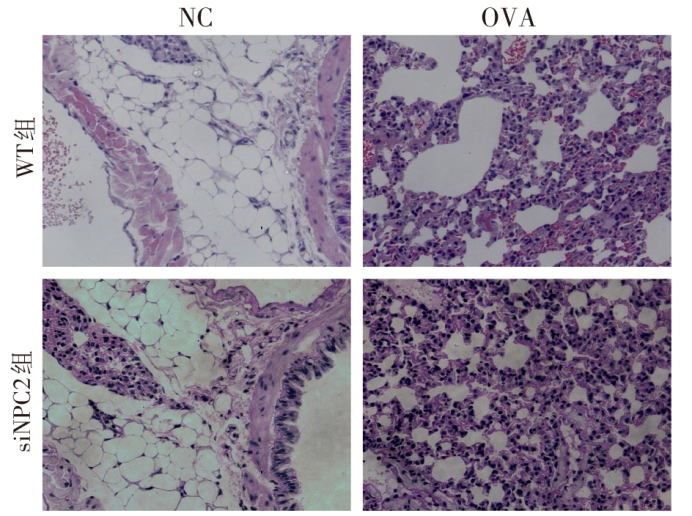
Fig.4 Pathological changes in mouse lung tissue (HE staining,×200)
| [1] | HUANG J, ZHANG J, WANG X, et al. Effect of probiotics on respiratory tract allergic disease and gut microbiota[J]. Front Nutr, 2022, 9:821900. doi:10.3389/fnut.2022.821900. |
| [2] | 中华医学会变态反应学分会, 中国人体健康科技促进会慢性气道疾病专业委员会. 中国过敏性哮喘诊治指南(第二版,2025年)[J]. 中华内科杂志, 2025, 64(11):1026-1054. |
| Chinese Society of Allergy,Chinese Medical Association, Chronic Airway Disease Committee,Chinese Association for the Promotion of Human Health Science and Technology. Chinese guide of diagnosis and treatment of allergic asthma (the second edition, 2025)[J]. Chin J Intern Med, 2025, 64(11): 1026-1054. doi:10.3760/cma.J.c.n112138-20250713-00407. | |
| [3] | 侯晓玲, 皇惠杰, 姜楠楠, 等. 2014—2021年北京市儿童过敏性疾病门诊就诊构成比及变化趋势分析[J]. 中国全科医学, 2024, 27(27):3395-3400. |
| HOU X L, HUANG H J, JIANG N N, et al. Analysis of composition ratio and changing trends of allergic diseases in children in Beijing from 2014 to 2021[J]. Chin Gen Pract, 2024, 27(27):3395-3400. doi:10.12114/j.issn.1007-9572.2024.0006. | |
| [4] | 黄玮, 祖雁文, 史雨晨, 等. Th1/Th2、Th17/Treg与过敏性哮喘急性发作风险及病情严重程度相关性[J]. 检验医学与临床, 2025, 22(3):400-404. |
| HUANG W, ZU Y W, SHI Y C, et al. Correlation between Th1/Th2,Th17/Treg and risk of acute exacerbation and severity of allergic asthma[J]. Lab Med Clin, 2025, 22(3):400-404. doi:10.3969/j.issn.1672-9455.2025.03.022. | |
| [5] | 陈玉迪, 刘琬, 杨敏, 等. 肥大细胞在特应性皮炎发病中的作用及相关治疗进展[J]. 中华临床免疫和变态反应杂志, 2024, 18(2):174-180. |
| CHEN Y D, LIU W, YANG M, et al. Role of mast cells in the pathogenesis of atopic dermatitis and related treatment progress[J]. Chin J Allergy Clin Immunol, 2024, 18(2):174-180. doi:10.3969/j.issn.1673-8705.2024.02.011. | |
| [6] | DANTZER J A, WOOD R A. Anti-IgE and food allergy[J]. J Allergy Clin Immunol, 2025, 155(1):1-11. doi:10.1016/j.jaci.2024.10.020. |
| [7] | PASTORE R, YAO L, HATCHER N, et al. Deficiency in NPC2 results in disruption of mitochondria-late endosome/lysosomes contact sites and endo-lysosomal lipid dyshomeostasis[J]. Sci Rep, 2025, 15(1):325. doi:10.1038/s41598-024-56789-6. |
| [8] | GENG F, GUO D. SREBF1/SREBP-1 concurrently regulates lipid synthesis and lipophagy to maintain lipid homeostasis and tumor growth[J]. Autophagy, 2024, 20(5):1183-1185. doi:10.1080/15548627.2024.2315123. |
| [9] | ZHAO N, DENG G, YUAN P X, et al. TMEM241 is a UDP-N-acetylglucosamine transporter required for M6P modification of NPC2 and cholesterol transport[J]. J Lipid Res, 2023, 64(12):100465. doi:10.1016/j.jlr.2023.100465. |
| [10] | WANG X, ILARRAZA R, TANCOWNY B P, et al. Disrupted lipid raft shuttling of FcepsilonRI by n-3 polyunsaturated fatty acid is associated with ligation of G protein-coupled receptor 120(GPR120)in human mast cell line LAD2[J]. Front Nutr, 2020, 7:597809. doi:10.3389/fnut.2020.597809. |
| [11] | 中华耳鼻咽喉头颈外科杂志编辑委员会鼻科组, 中华医学会耳鼻咽喉头颈外科学分会鼻科学组. 中国变应性鼻炎诊断和治疗指南(2022年,修订版)[J]. 中华耳鼻咽喉头颈外科杂志, 2022, 57(2):106-129. |
| Editorial Board of Rhinology Group of Chinese Journal of Otorhinolaryngology Head and Neck Surgery,Rhinology Group of Chinese Society of Otorhinolaryngology Head and Neck Surgery. Chinese guidelines for diagnosis and treatment of allergic rhinitis(2022,revised edition)[J]. Chin J Otorhinolaryngol Head Neck Surg,2022, 57(2):106-129. doi:10.3760/cma.j.cn115330-20211228-00828. | |
| [12] | 中华医学会呼吸病学分会. 支气管哮喘防治指南(2024年版)[J]. 中华结核和呼吸杂志, 2025, 48(3):208-248. |
| Chinese Thoracic Society. Chinese guidelines for the prevention and treatment of bronchial asthma(2024 edition)[J]. Chin J Tuberc Respir Dis, 2025, 48(3):208-248. doi:10.3760/cma.j.cn112147-20241013-00601. | |
| [13] | 徐桂颖, 李玉, 李雪, 等. 气道类器官研究哮喘中Lkb1调控上皮再生的机制[J]. 天津医药, 2024, 52(1):11-15. |
| XU G Y, LI Y, LI X, et al. Mechanism of Lkb1 regulating epithelial regeneration in asthma studied by airway organoids[J]. Tianjin Med J, 2024, 52(1):11-15. doi:10.11958/20231506. | |
| [14] | ZHANG J, XIE X, MA R, et al. The role of mast cells in allergic rhinitis[J]. PeerJ, 2025, 13:e19734. doi:10.7717/peerj.19734. |
| [15] | WANG J, ZHOU Y, ZHANG H, et al. Pathogenesis of allergic diseases and implications for therapeutic interventions[J]. Signal Transduct Target Ther, 2023, 8(1):138. doi:10.1038/s41392-023-01344-4. |
| [16] | CHUNG K F, DIXEY P, ABUBAKAR-WAZIRI H, et al. Characteristics,phenotypes,mechanisms and management of severe asthma[J]. Chin Med J(Engl), 2022, 135(10):1141-1155. doi:10.1097/CM9.0000000000001990. |
| [17] | DISPENZA M C, BOCHNER B S, MACGLASHAN D W J R. Targeting the FcεRⅠ pathway as a potential strategy to prevent food-induced anaphylaxis[J]. Front Immunol, 2020, 11:614402. doi:10.3389/fimmu.2020.614402. |
| [18] | MCDONNELL J M, DHALIWAL B, SUTTON B J, et al. IgE,IgE receptors and anti-IgE biologics:protein structures and mechanisms of action[J]. Annu Rev Immunol, 2023, 41:255-275. doi:10.1146/annurev-immunol-101921-050215. |
| [19] | STONE K D, PRUSSIN C, METCALFE D D. IgE,mast cells,basophils,and eosinophils[J]. J Allergy Clin Immunol, 2010, 125(2Suppl 2): S73-S80. doi:10.1016/j.jaci.2009.11.017. |
| [20] | SITARSKA D, TYLKI-SZYMAŃSKA A, ŁUGOWSKA A. Treatment trials in Niemann-Pick type C disease[J]. Metab Brain Dis, 2021, 36(8):2215-2221. doi:10.1007/s11011-021-00814-4. |
| [21] | GUO H, ZHAO M, QIU X, et al. Niemann-Pick type C2 deficiency impairs autophagy-lysosomal activity,mitochondrial function,and TLR signaling in adipocytes[J]. J Lipid Res, 2016, 57(9):1644-1658. doi:10.1194/jlr.M067363. |
| [22] | KO E, CHEHADE M. Biological therapies for eosinophilic esophagitis:where do we stand?[J]. Clin Rev Allergy Immunol, 2018, 55(2):205-216. doi:10.1007/s12016-017-8651-2. |
| [23] | ALLEN J E. IL-4 and IL-13:regulators and effectors of wound repair[J]. Annu Rev Immunol, 2023, 41:229-254. doi:10.1146/annurev-immunol-101921-042537. |
| [24] | DOUGAN M, DRANOFF G, DOUGAN S K. GM-CSF,IL-3,and IL-5 family of cytokines: regulators of inflammation[J]. Immunity, 2019, 50(4):796-811. doi:10.1016/j.immuni.2019.03.022. |
| [25] | HOLOWKA D, BAIRD B. Fc(epsilon)RI as a paradigm for a lipid raft-dependent receptor in hematopoietic cells[J]. Semin Immunol, 2001, 13(2):99-105. doi:10.1006/smim.2000.0307 |
| [26] | DRÁBER P, DRÁBEROVÁ L. Lipid rafts in mast cell signaling[J]. Mol Immunol, 2002, 38(16/17/18):1247-1252. doi:10.1016/s0161-5890(02)00071-8. |
| [27] | WILSON B S, PFEIFFER J R, OLIVER J M. FcepsilonRI signaling observed from the inside of the mast cell membrane[J]. Mol Immunol, 2002, 38(16/17/18):1259-1268. doi:10.1016/s0161-5890(02)00072-x. |
| [1] | LU Hongxia, GUO Yanjun, HUANG Han, ZHANG Ting. MiR-421 targeting the MPP7/EGFR/AKT axis to regulate macrophage M2 polarization and alleviating airway inflammation in asthmatic mice [J]. Tianjin Medical Journal, 2026, 54(5): 462-468. |
| [2] | ZHU Yonghong, BA Junfeng. Predictive value of serum total IgE, eosinophils, diamine oxidase and fractional exhaled nitric oxide in allergic rhinitis combined with bronchial asthma [J]. Tianjin Medical Journal, 2025, 53(4): 360-364. |
| [3] | LIU Yanli, XU Wenfu, FANG Hongjuan. Construction and validation of a prediction model for small airway dysfunction in children with bronchial asthma [J]. Tianjin Medical Journal, 2025, 53(3): 277-282. |
| [4] | FAN Huihui, REN Yumei, TIAN Xinlei, ZHANG Kai, LI Xiaoli. Effects of Zhike Pingchuan Formula on airway inflammation and TLR4/TRAF6/NF-κB pathway in bronchial asthma mice [J]. Tianjin Medical Journal, 2024, 52(9): 924-929. |
| [5] | CHEN Wei, ZHAO Mengya, XIAO Fei, LIU Chuanhe. Changes of pulmonary function of pertussis in children aged 5-17 years [J]. Tianjin Medical Journal, 2024, 52(10): 1075-1079. |
| [6] | XU Guiying, LI Yu, LI Xue, LIU Yimeng, CHEN Huaiyong. Study of Lkb1 regulates epithelial regeneration in asthma using airway organoid [J]. Tianjin Medical Journal, 2024, 52(1): 11-15. |
| [7] | WANG Shengcheng, LI Qi, CAI Xiaoyang, TANG Yongjie. Effect and mechanism of tetrandrine on airway remodeling in bronchial asthma mice [J]. Tianjin Medical Journal, 2023, 51(9): 943-947. |
| [8] | PAN Chenhui, WANG Yu, MA Zifeng, WU Dingzhong, ZHANG Shaoyan, QIU Lei, LU Zhenhui. Clinical features and risk factors of chronic persistent asthma small airway dysfunction [J]. Tianjin Medical Journal, 2023, 51(12): 1365-1368. |
| [9] | YUAN Chen, ZHU Zhen-gang. Analysis of clinical characteristics and related factors of fatigue symptoms in asthmatic patients [J]. Tianjin Medical Journal, 2021, 49(8): 833-837. |
| [10] | ZHOU Xuan, TAN Zhi-tuan, REN Yi, CHEN Qiu-li, WU Hong, YU Dao-rui△. Naringenin reduces airway inflammation in asthmatic rats by inhibiting NF-κB signaling pathway [J]. Tianjin Medical Journal, 2021, 49(5): 483-489. |
| [11] | GENG Bei, LI Kuan, , WU Qi, △, LI Shuang-yan, CHEN Huai-yong, , . The effect of G6PD inhibitor on the proliferation of mouse airway Club cells [J]. Tianjin Medical Journal, 2021, 49(4): 359-363. |
| [12] | CHEN Di, DAI Biao, CHEN Ru-hua. The value of microRNA-1 in the diagnosis and prediction of glucocorticoid therapy sensitivity of acute onset of bronchial asthma [J]. Tianjin Medical Journal, 2021, 49(12): 1291-1296. |
| [13] | WANG Meng, Paligu·Maimaitili, LI Hui, LYU Chuan-feng. Effects of rhynchophylline solid lipid nanoparticles on miR-155/p38 MAPK axis in asthmatic mice [J]. Tianjin Medical Journal, 2021, 49(11): 1154-1158. |
| [14] | XIAO Wei-mian, ZHA Xu-shan△, WANG You-fa. Effects of paeonol on expressions of SP, NK1R and mast cell activation in eczema model mice [J]. Tianjin Medical Journal, 2020, 48(9): 824-828. |
| [15] | LIU Li, ZOU Ying-xue△. Advances in the study of type 2 innate lymphocytes in allergic diseases [J]. Tianjin Medical Journal, 2020, 48(9): 908-912. |
| Viewed | ||||||
|
Full text |
|
|||||
|
Abstract |
|
|||||
