
Tianjin Medical Journal ›› 2025, Vol. 53 ›› Issue (10): 1098-1104.doi: 10.11958/20251687
• Review • Previous Articles Next Articles
LI Jiarong1( ), ZHU Xiaomin1, ZHAO Xiaoyun2,△()
Received:2025-04-22
Revised:2025-07-10
Published:2025-10-15
Online:2025-10-12
Contact:
△E-mail:LI Jiarong, ZHU Xiaomin, ZHAO Xiaoyun. Advances in artificial intelligence for airway management of intubated patients[J]. Tianjin Medical Journal, 2025, 53(10): 1098-1104.
CLC Number:
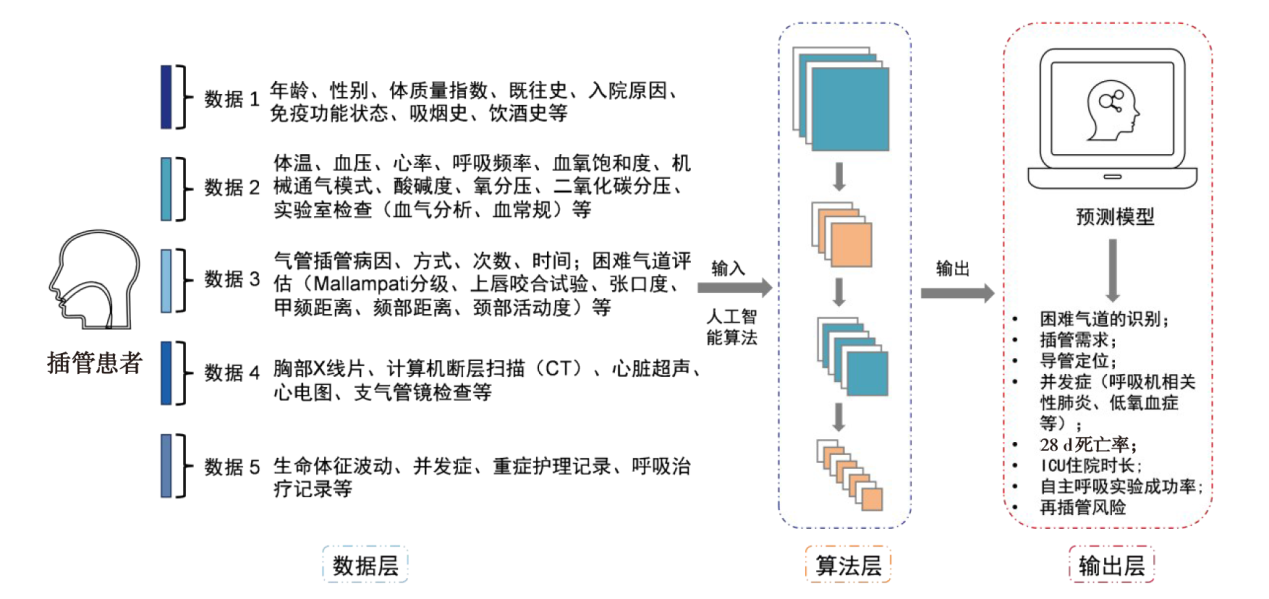
Fig.1 Airway management using artificial intelligence algorithms based on multimodal data
| [1] | 赵美玉, 王明亚, 韩永正, 等. 基于人工智能的气道管理优化策略与实践分析[J]. 重庆医科大学学报, 2025, 50(1):1-5. |
| ZHAO M Y, WANG M Y, HAN Y Z, et al. Optimization strategy and practice analysis of airway management based on artificial intelligence[J]. Journal of Chongqing Medical University, 2025, 50(1):1-5. doi:10.13406/j.cnki.cyxb.003693. | |
| [2] | ELLIS H L, TEO J T. The influence of AI in medicine[J]. Medicine, 2024, 52(12):811-815. doi:10.1016/j.mpmed.2024.09.006. |
| [3] | RANA V, MEHROTRA S, ASTHANA V, et al. Radiological versus traditional parameters for airway assessment:a comparison[J]. Anesth Essays Res, 2022, 16(1):109-114. doi:10.4103/aer.aer_28_22. |
| [4] | WANG Z, JIN Y, ZHENG Y, et al. Evaluation of preoperative difficult airway prediction methods for adult patients without obvious airway abnormalities:a systematic review and meta-analysis[J]. BMC Anesthesiol, 2024, 24(1):242. doi:10.1186/s12871-024-02627-1. |
| [5] | WU J, YAO Y, ZHANG G, et al. Difficult airway assessment based on multi-view metric learning[J]. Bioengineering(Basel), 2024, 11(7):703. doi:10.3390/bioengineering11070703. |
| [6] | CHO H Y, LEE K, KONG H J, et al. Deep-learning model associating lateral cervical radiographic features with Cormack-Lehane grade 3 or 4 glottic view[J]. Anaesthesia, 2023, 78(1):64-72. doi:10.1111/anae.15874. |
| [7] | MADRID-VÁZQUEZ L, CASANS-FRANCÉS R, GÓMEZ-RÍOS M A, et al. Machine learning models based on ultrasound and physical examination for airway assessment[J]. Rev Esp Anestesiol Reanim(Engl Ed), 2024, 71(8):563-569. doi:10.1016/j.redare.2024.05.006. |
| [8] | YARNELL C J, PARANTHAMAN A, REARDON P, et al. An international factorial vignette-based survey of intubation decisions in acute hypoxemic respiratory failure[J]. Crit Care Med, 2025, 53(1):e117-e131. doi:10.1097/CCM.0000000000006494. |
| [9] | RIERA J, BARBETA E, TORMOS A, et al. Effects of intubation timing in patients with COVID-19 throughout the four waves of the pandemic: a matched analysis[J]. Eur Respir J, 2023, 61(3):2201426. doi:10.1183/13993003.01426-2022. |
| [10] | VENTURINI M, VAN KEILEGOM I, DE CORTE W, et al. Predicting time-to-intubation after critical care admission using machine learning and cured fraction information[J]. Artif Intell Med, 2024, 150:102817. doi:10.1016/j.artmed.2024.102817. |
| [11] | MOULAEI K, AFRASH M R, PARVIN M, et al. Explainable artificial intelligence (XAI) for predicting the need for intubation in methanol-poisoned patients:a study comparing deep and machine learning models[J]. Sci Rep, 2024, 14(1):15751. doi:10.1038/s41598-024-66481-4. |
| [12] | NGUYEN M, AMANIAN A, WEI M, et al. Predicting tracheostomy need on admission to the intensive care unit-a multicenter machine learning analysis[J]. Otolaryngol Head Neck Surg, 2024, 171(6):1736-1750. doi:10.1002/ohn.919. |
| [13] | TIGHE P J, BADIYAN S J, LURIA I, et al. Robot-assisted airway support:a simulated case[J]. Anesth Analg, 2010, 111(4):929-931. doi:10.1213/ANE.0b013e3181ef73ec. |
| [14] | HEMMERLING T M, TADDEI R, WEHBE M, et al. First robotic tracheal intubations in humans using the Kepler intubation system[J]. Br J Anaesth, 2012, 108(6):1011-1016. doi:10.1093/bja/aes034. |
| [15] | WANG X, TAO Y, TAO X, et al. An original design of remote robot-assisted intubation system[J]. Sci Rep, 2018, 8(1):13403. doi:10.1038/s41598-018-31607-y. |
| [16] | BIRO P, HOFMANN P, GAGE D, et al. Automated tracheal intubation in an airway manikin using a robotic endoscope: a proof of concept study[J]. Anaesthesia, 2020, 75(7):881-886. doi:10.1111/anae.14945. |
| [17] | 王荣峰, 张倩雲, 丁泓帆, 等. 基于磁导航技术的气管插管装置设计及可行性研究[J]. 中国医疗器械杂志, 2021, 45(1):22-25. |
| WANG R F, ZHANG Q Y, DING H F, et al. Design and feasibility study of tracheal intubation device based on magnetic navigation technology[J]. Chinese Journal of Medical lnstrumentation, 2021, 45(1):22-25. doi:10.3969/j.issn.1671-7104.2021.01.005. | |
| [18] | DENG Z, ZHANG S, GUO Y, et al. Assisted teleoperation control of robotic endoscope with visual feedback for nasotracheal intubation[J]. Robotics and Autonomous Systems, 2024, 172:104586. doi:10.1016/j.robot.2023.104586. |
| [19] | NOVAK R. Spiro robotics:the future of difficult intubation management[EB/OL]. (2024-10-17)[2025-04-19]. https://theanesthesiaconsultant.com/2024/10/17/spiro-robotics-the-future-of-difficult-intubation-management/. |
| [20] | FRITSCH S J, CECCONI M. Setting the ventilator with AI support:challenges and perspectives[J]. Intensive Care Med, 2025, 51(3):593-595. doi:10.1007/s00134-024-07778-w. |
| [21] | BARAHONA J, SAHLI COSTABAL F, HURTADO D E. Machine learning modeling of lung mechanics:Assessing the variability and propagation of uncertainty in respiratory-system compliance and airway resistance[J]. Comput Methods Programs Biomed, 2024, 243:107888. doi:10.1016/j.cmpb.2023.107888. |
| [22] | HÄNDEL C, FRERICHS I, WEILER N, et al. Prediction and simulation of PEEP setting effects with machine learning models[J]. Med Intensiva (Engl Ed), 2024, 48(4):191-199. doi:10.1016/j.medine.2023.09.005. |
| [23] | 郭祖源. 光学相干断层扫描气道形态图像自动识别系统建立及其在慢性阻塞性肺疾病患者随访的应用[D]. 广州: 广州医科大学, 2022. |
| GUO Z Y. Establishment of automatic identification system for airway morphological images of optical coherence tomography and its application in the follow-up of patients with chronic obstructive pulmonary disease[D]. Guangzhou: Guangzhou Medical University, 2022. | |
| [24] | DE HARO C, SANTOS-PULPÓN V, TELÍAS I, et al. Flow starvation during square-flow assisted ventilation detected by supervised deep learning techniques[J]. Crit Care, 2024, 28(1):75. doi:10.1186/s13054-024-04845-y. |
| [25] | AN J Y, HWANG E J, NAM G, et al. Artificial intelligence for assessment of endotracheal tube position on chest radiographs: validation in patients from two institutions[J]. AJR Am J Roentgenol, 2024, 222(1):e2329769. doi:10.2214/AJR.23.29769. |
| [26] | WANG C H, HWANG T, HUANG Y S, et al. Deep learning-based localization and detection of malpositioned endotracheal tube on portable supine chest radiographs in intensive and emergency medicine: a multicenter retrospective study[J]. Crit Care Med, 2024, 52(2):237-247. doi:10.1097/CCM.0000000000006046. |
| [27] | KIM H, YOON H K, LEE H, et al. Predicting optimal endotracheal tube size and depth in pediatric patients using demographic data and machine learning techniques[J]. Korean J Anesthesiol, 2023, 76(6):540-549. doi:10.4097/kja.23501. |
| [28] | LIN Z C, KOO M, CHANG W J, et al. Comparing artificial intelligence-based versus conventional endotracheal tube monitoring systems in clinical practice[J]. Stud Health Technol Inform, 2024, 315:589-591. doi:10.3233/SHTI240230. |
| [29] | ROSENTHAL V D, MEMISH Z A, BEARMAN G. Preventing ventilator-associated pneumonia:A position paper of the international society for infectious diseases,2024 update[J]. Int J Infect Dis, 2025, 151:107305. doi:10.1016/j.ijid.2024.107305. |
| [30] | FRONDELIUS T, ATKOVA I, MIETTUNEN J, et al. Early prediction of ventilator-associated pneumonia with machine learning models:A systematic review and meta-analysis of prediction model performance[J]. Eur J Intern Med, 2024, 121:76-87. doi:10.1016/j.ejim.2023.11.009. |
| [31] | ZHANG G, LUO L, ZHANG L, et al. Research progress of respiratory disease and idiopathic pulmonary fibrosis based on artificial intelligence[J]. Diagnostics(Basel), 2023, 13(3):357. doi:10.3390/diagnostics13030357. |
| [32] | MOHAMMED A, VAN WYK F, CHINTHALA L K, et al. Temporal differential expression of physiomarkers predicts sepsis in critically ill adults[J]. Shock, 2021, 56(1):58-64. doi:10.1097/SHK.0000000000001670. |
| [33] | TE R, ZHU B, MA H, et al. Machine learning approach for predicting post-intubation hemodynamic instability (PIHI) index values: towards enhanced perioperative anesthesia quality and safety[J]. BMC Anesthesiol, 2024, 24(1):136. doi:10.1186/s12871-024-02523-8. |
| [34] | HUANG S, TENG Y, DU J, et al. Internal and external validation of machine learning-assisted prediction models for mechanical ventilation-associated severe acute kidney injury[J]. Aust Crit Care, 2023, 36(4):604-612. doi:10.1016/j.aucc.2022.06.001. |
| [35] | 潘金玉, 舒欣, 孙溦. 气管切开昏迷患者沉默性误吸风险评估指标Delphi法构建与临床实证研究[J]. 陆军军医大学学报, 2023, 45(20):2113-2119. |
| PAN J Y, SHU X, SUN W. Risk assessment items for silent aspiration in coma patients with tracheotomy based on Delphi method and a clinical empirical study[J]. Journal of Army Medical University, 2023, 45(20):2113-2119. doi:10.16016/j.2097-0927.202307067. | |
| [36] | PINTO J, GONZÁLEZ H, ARIZMENDI C, et al. Analysis of the cardiorespiratory pattern of patients undergoing weaning using artificial intelligence[J]. Int J Environ Res Public Health, 2023, 20(5):4430. doi:10.3390/ijerph20054430. |
| [37] | RUBULOTTA F, BLANCH TORRA L, NAIDOO K D, et al. Mechanical ventilation,past,present,and future[J]. Anesth Analg, 2024, 138(2):308-325. doi:10.1213/ANE.0000000000006701. |
| [38] | LIU C F, HUNG C M, KO S C, et al. An artificial intelligence system to predict the optimal timing for mechanical ventilation weaning for intensive care unit patients: A two-stage prediction approach[J]. Front Med(Lausanne), 2022, 9:935366. doi:10.3389/fmed.2022.935366. |
| [39] | WU J, LIU Z, SHEN D, et al. Prevention of unplanned endotracheal extubation in intensive care unit:An overview of systematic reviews[J]. Nurs Open, 2023, 10(2):392-403. doi:10.1002/nop2.1317. |
| [40] | HUR S, MIN J Y, YOO J, et al. Development and validation of unplanned extubation prediction models using intensive care unit data: retrospective, comparative, machine learning study[J]. J Med Internet Res, 2021, 23(8):e23508. doi:10.2196/23508. |
| [41] | XIA M, JIN C, CAO S, et al. Development and validation of a machine-learning model for prediction of hypoxemia after extubation in intensive care units[J]. Ann Transl Med, 2022, 10(10):577. doi:10.21037/atm-22-2118. |
| [42] | VARÓN-VEGA F, TUTA-QUINTERO E, MALDONADO-FRANCO A, et al. Machine learning to predict extubation success using the spontaneous breathing trial, objective cough measurement, and diaphragmatic contraction velocity:Secondary analysis of the COBRE-US trial[J]. J Crit Care Med (Targu Mures), 2025, 11(1):70-77. doi:10.2478/jccm-2025-0009. |
| [43] | CHO T, KANNAN T, PATEL K, et al. Role of heart rate variability in predicting tracheal extubation failure: a systematic review and meta-analysis[J]. Br J Anaesth, 2025, 134(4):1225-1229. doi:10.1016/j.bja.2024.12.030. |
| [44] | PAN Q, ZHANG H, JIANG M, et al. Comprehensive breathing variability indices enhance the prediction of extubation failure in patients on mechanical ventilation[J]. Comput Biol Med, 2023, 153:106459. doi:10.1016/j.compbiomed.2022.106459. |
| [45] | WANG H, ZHAO Q Y, LUO J C, et al. Early prediction of noninvasive ventilation failure after extubation: development and validation of a machine-learning model[J]. BMC Pulm Med, 2022, 22(1):304. doi:10.1186/s12890-022-02096-7. |
| [46] | FROICU E M, CREANGĂ-MURARIU I, AFRĂSÂNIE V A, et al. Artificial intelligence and decision-making in oncology:a review of ethical,legal,and informed consent challenges[J]. Curr Oncol Rep, 2025 doi:10.1007/s11912-025-01698-8. |
| [47] | RODRÍGUEZ VILLAMIZAR P, THILLE A W, MÁRQUEZ DOBLAS M, et al. Best clinical model predicting extubation failure:a diagnostic accuracy post hoc analysis[J]. Intensive Care Med, 2025, 51(1):106-114. doi:10.1007/s00134-024-07758-0. |
| [48] | STERR F, REINTKE M, BAUERNFEIND L, et al. Predictors of weaning failure in ventilated intensive care patients: a systematic evidence map[J]. Crit Care, 2024, 28(1):366. doi:10.1186/s13054-024-05135-3. |
| Viewed | ||||||
|
Full text |
|
|||||
|
Abstract |
|
|||||
