
Tianjin Medical Journal ›› 2026, Vol. 54 ›› Issue (2): 151-157.doi: 10.11958/20252076
• Experimental Research • Previous Articles Next Articles
ZHANG Qingling1( ), LIU Shiqi2, FU Yin3, LI Ji3,△()
Received:2025-06-01
Revised:2025-10-11
Published:2026-02-15
Online:2026-02-12
Contact:
△E-mail:ZHANG Qingling, LIU Shiqi, FU Yin, LI Ji. Regulatory mechanism of xiebai san on LPS-induced acute lung injury in juvenile rats[J]. Tianjin Medical Journal, 2026, 54(2): 151-157.
CLC Number:
| 组别 | SOD/ (U/mgprot) | MDA/ (μmol/gprot) | CAT/ (U/mgprot) |
|---|---|---|---|
| Control组 | 47.04±4.73 | 0.74±0.12 | 22.93±1.72 |
| Model组 | 37.96±6.69a | 1.04±0.13a | 18.60±1.43a |
| AZM组 | 45.98±7.69b | 0.84±0.20 | 21.45±4.23b |
| XBS组 | 47.31±7.77b | 0.45±0.12abc | 15.34±2.22ac |
| Combined组 | 44.35±2.81b | 1.27±0.26bcd | 24.76±2.85bd |
| F | 3.933* | 18.370* | 11.514* |
Tab.1 Comparison of the expression level of oxidative stress factors in lung tissue of rats between the five groups
| 组别 | SOD/ (U/mgprot) | MDA/ (μmol/gprot) | CAT/ (U/mgprot) |
|---|---|---|---|
| Control组 | 47.04±4.73 | 0.74±0.12 | 22.93±1.72 |
| Model组 | 37.96±6.69a | 1.04±0.13a | 18.60±1.43a |
| AZM组 | 45.98±7.69b | 0.84±0.20 | 21.45±4.23b |
| XBS组 | 47.31±7.77b | 0.45±0.12abc | 15.34±2.22ac |
| Combined组 | 44.35±2.81b | 1.27±0.26bcd | 24.76±2.85bd |
| F | 3.933* | 18.370* | 11.514* |
| 组别 | IL-6 | IL-10 | IL-13 | NF-κB |
|---|---|---|---|---|
| Control组 | 91.76±7.81 | 68.71±13.08 | 30.81±1.82 | 527.25±56.14 |
| Model组 | 107.90±3.95a | 105.38±15.73a | 37.42±1.16a | 649.71±74.51a |
| AZM组 | 93.56±6.80b | 84.13±3.68b | 33.17±2.12b | 584.86±28.43 |
| XBS组 | 93.13±8.51b | 84.65±10.05b | 33.03±1.69b | 554.06±27.88b |
| Combined组 | 94.59±5.40b | 83.08±12.41b | 32.31±1.34b | 608.04±36.14ad |
| F | 5.864* | 7.474* | 13.100* | 5.828* |
Tab.2 Comparison of the expression level of serum inflammatory factors between the five groups
| 组别 | IL-6 | IL-10 | IL-13 | NF-κB |
|---|---|---|---|---|
| Control组 | 91.76±7.81 | 68.71±13.08 | 30.81±1.82 | 527.25±56.14 |
| Model组 | 107.90±3.95a | 105.38±15.73a | 37.42±1.16a | 649.71±74.51a |
| AZM组 | 93.56±6.80b | 84.13±3.68b | 33.17±2.12b | 584.86±28.43 |
| XBS组 | 93.13±8.51b | 84.65±10.05b | 33.03±1.69b | 554.06±27.88b |
| Combined组 | 94.59±5.40b | 83.08±12.41b | 32.31±1.34b | 608.04±36.14ad |
| F | 5.864* | 7.474* | 13.100* | 5.828* |
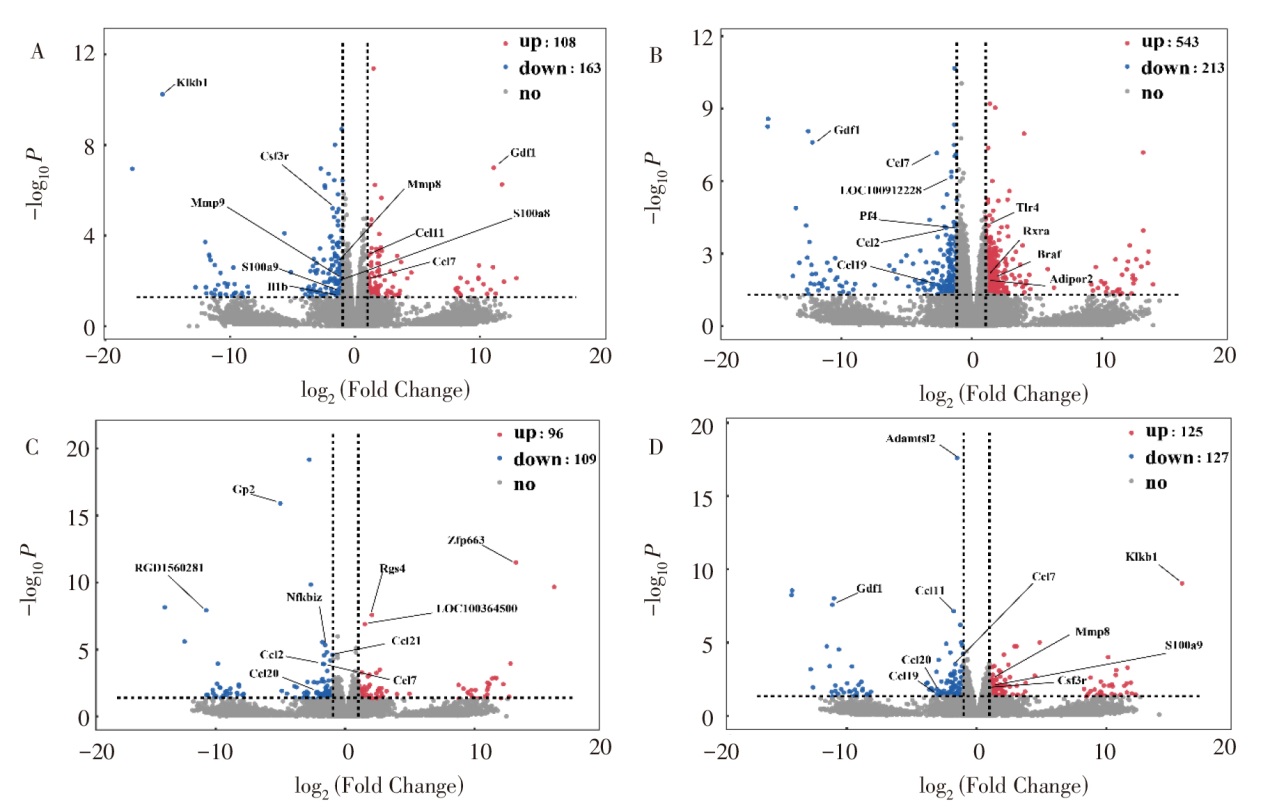
Fig.1 Differential gene expression volcano map
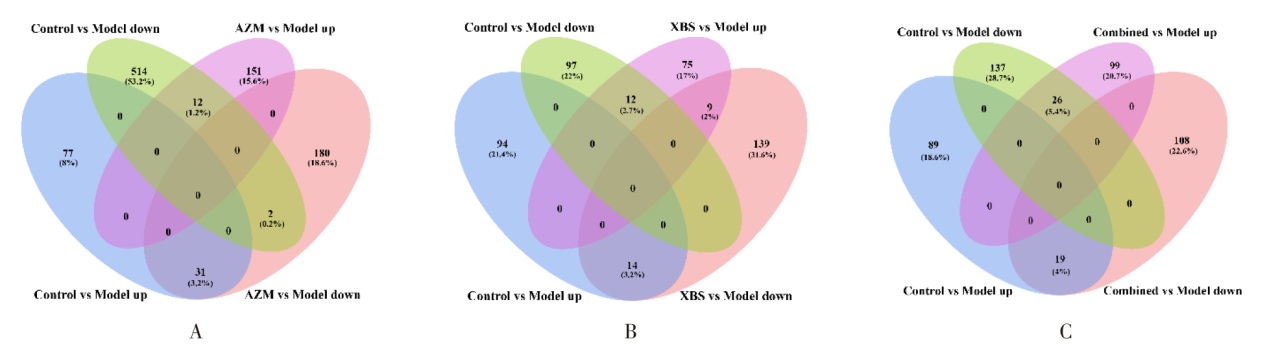
Fig.2 Common differential gene Wayne diagram
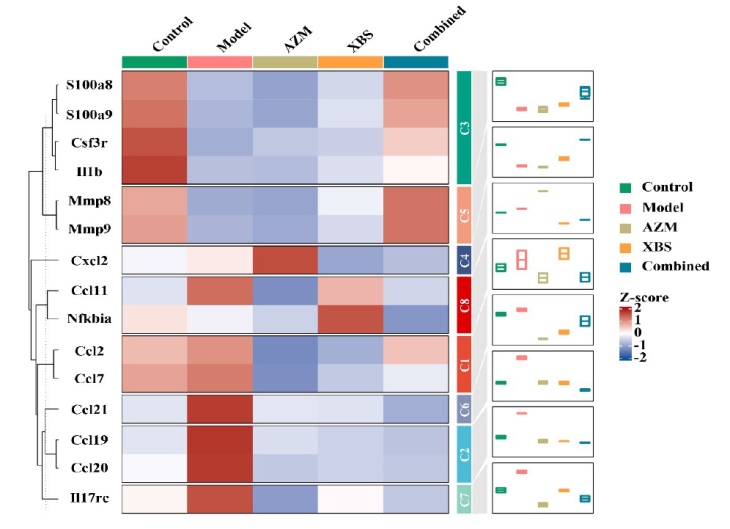
Fig.3 Heat map of common differential gene cluster analysis with high significance
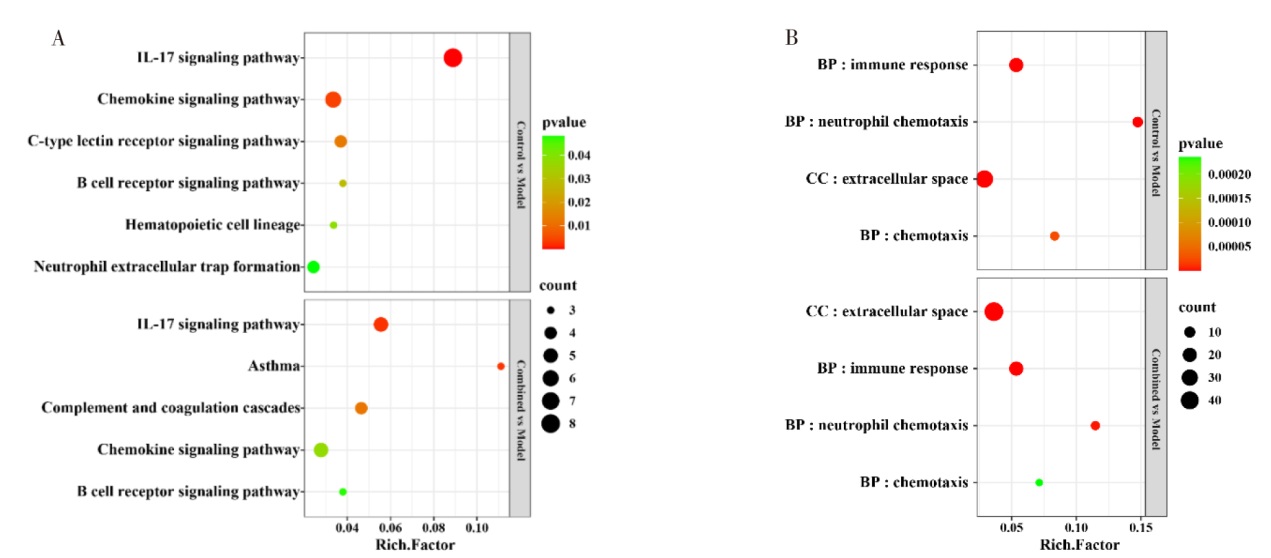
Fig.4 KEGG enrichment analysis of differentially expressed genes and GO enrichment analysis of differentially expressed genes
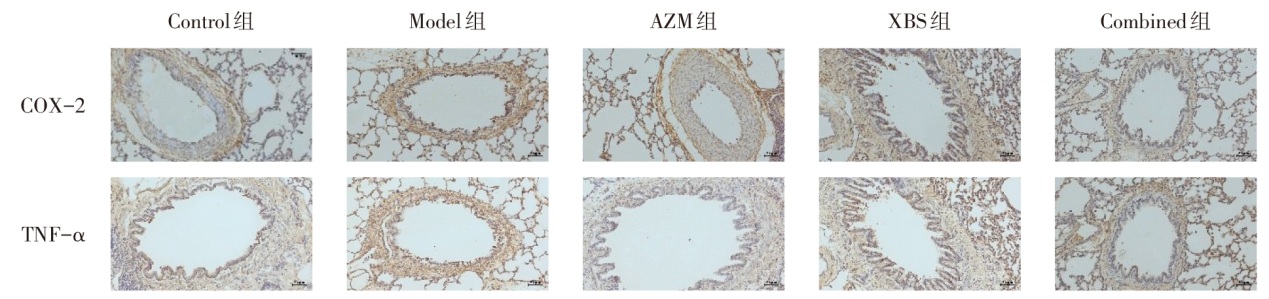
Fig.5 Immunohistochemical analysis of inflammatory factors in rat lung tissue (IHC,×200)
| 组别 | COX-2/(ng/L) | TNF-α/(ng/L) |
|---|---|---|
| Control组 | 17.38±0.20 | 16.42±0.11 |
| Model组 | 27.50±0.58a | 26.34±0.45a |
| AZM组 | 22.25±0.06ab | 18.67±0.05 |
| XBS组 | 23.72±0.36abc | 23.72±0.36a |
| Combined组 | 19.32±0.23abcd | 17.30±0.03b |
| F | 397.069* | 781.689* |
Tab.3 Comparison of expression levels of serum inflammatory factors between the five groups of rats
| 组别 | COX-2/(ng/L) | TNF-α/(ng/L) |
|---|---|---|
| Control组 | 17.38±0.20 | 16.42±0.11 |
| Model组 | 27.50±0.58a | 26.34±0.45a |
| AZM组 | 22.25±0.06ab | 18.67±0.05 |
| XBS组 | 23.72±0.36abc | 23.72±0.36a |
| Combined组 | 19.32±0.23abcd | 17.30±0.03b |
| F | 397.069* | 781.689* |
| [1] | 钱乙宋. 小儿药证直诀[M]. 北京: 人民卫生出版社, 2023:62. |
| QIAN Y S. Pediatric medicine certificate[M]. Beijing: People's Health Publishing House, 2023:62. | |
| [2] | 李玉丽, 易腾达, 谭志强, 等. 经典名方泻白散的源流及古今应用考究[J]. 中国实验方剂学杂志, 2021, 27(4):168-174. |
| LI Y L, YI T D, TAN Z Q, et al. The origin and application of Xiebai Powder[J]. Chinese Journal of Experimental Formulaology, 2021, 27(4):168-174. doi:10.13422/j.cnki.syfjx.20202328. | |
| [3] | LIN P, GAO R, FANG Z, et al. Precise nanodrug delivery systems with cell-specific targeting for ALI/ARDS treatment[J]. Int J Pharm, 2023, 644:123321. doi:10.1016/j.ijpharm.2023.123321. |
| [4] | XU Z, SHI L, WANG Y, et al. Pathological findings of COVID-19 associated with acute respiratory distress syndrome[J]. Lancet Respir Med, 2020, 8(4):420-422. doi:10.1016/S2213-2600(20)30076-X. |
| [5] | HE Y, YANG F, YANG L, et al. Mechanics-activated fibroblasts promote pulmonary group 2 innate lymphoid cell plasticity propelling silicosis progression[J]. Nat Commun, 2024, 15(1):9770. doi:10.1038/s41467-024-54174-5. |
| [6] | FU L, ZHU P, QI S, et al. MicroRNA-92a antagonism attenuates lipopolysaccharide (LPS)-induced pulmonary inflammation and injury in mice through suppressing the PTEN/AKT/NF-κB signaling pathway[J]. Biomed Pharmacother, 2018, 107:703-711. doi:10.1016/j.biopha.2018.08.040. |
| [7] | YANG H H, JIANG H L, TAO J H, et al. Mitochondrial citrate accumulation drives alveolar epithelial cell necroptosis in lipopolysaccharide-induced acute lung injury[J]. Exp Mol Med, 2022, 54(11):2077-2091. doi:10.1038/s12276-022-00889-8. |
| [8] | FU C, DAI X, YANG Y, et al. Dexmedetomidine attenuates lipopolysaccharide-induced acute lung injury by inhibiting oxidative stress,mitochondrial dysfunction and apoptosis in rats[J]. Mol Med Rep, 2017, 15(1):131-138. doi:10.3892/mmr.2016.6012. |
| [9] | 姚素媛, 张庆玲, 王坤然, 等. 泻白散对脂多糖诱导的肺损伤幼龄大鼠炎症及肠道微生态的影响[J]. 中药新药与临床药理, 2025, 36(10):1658-1669. |
| YAO S Y, ZHANG Q L, WANG K R, et al. Effects of xiebai san on inflammation and gut microbiota in lipopolysaccharide-induced lung injury in juvenile rats[J]. Traditional Chinese Drug Research & Clinical Pharmacology, 2025, 36(10):1658-1669. doi:10.19378/j.issn.1003-9783.2025.10.005. | |
| [10] | LIU H, BAI C, XIAN F, et al. A high-calorie diet aggravates LPS-induced pneumonia by disturbing the gut microbiota and Th17/Treg balance[J]. J Leukoc Biol, 2022, 112(1):127-141. doi:10.1002/JLB.3MA0322-458RR. |
| [11] | WU Y, ZHANG Y, TANG X, et al. Synergistic anti-oxidant and anti-inflammatory effects of ceria/resatorvid co-decorated nanoparticles for acute lung injury therapy[J]. J Nanobiotechnology, 2023, 21(1):502. doi:10.1186/s12951-023-02237-y. |
| [12] | VYSAKH A, JAYESH K, JISHA N, et al. Rotula aquatica lour. mitigates oxidative stress and inflammation in acute pyelonephritic rats[J]. Arch Physiol Biochem, 2022, 128(1):92-100. doi:10.1080/13813455.2019.1665073. |
| [13] | XING H, BAI X, PEI X, et al. Synergistic anti-oxidative/anti-inflammatory treatment for acute lung injury with selenium based chlorogenic acid nanoparticles through modulating Mapk8ip1/MAPK and Itga2b/PI3k-AKT axis[J]. J Nanobiotechnology, 2025, 23(1):37. doi:10.1186/s12951-025-03114-6. |
| [14] | SHEU J J, LEE F Y, YUEN C M, et al. Combined therapy with shock wave and autologous bone marrow-derived mesenchymal stem cells alleviates left ventricular dysfunction and remodeling through inhibiting inflammatory stimuli,oxidative stress & enhancing angiogenesis in a swine myocardial infarction model[J]. Int J Cardiol, 2015, 193:69-83. doi:10.1016/j.ijcard.2015.03.044. |
| [15] | YANG W, HE R, QU H, et al. FXYD3 enhances IL-17A signaling to promote psoriasis by competitively binding TRAF3 in keratinocytes[J]. Cell Mol Immunol, 2023, 20(3):292-304. doi:10.1038/s41423-023-00973-7. |
| [16] | ZHENG Y, MOU Z, TAN S, et al. IL-17A enhances the inflammatory response of glaucoma through Act1/TRAF6/NF-κB pathway[J]. Neurochem Int, 2024, 178:105787. doi:10.1016/j.neuint.2024.105787. |
| [17] | WU S, HUANG D, SU X, et al. The prostaglandin synthases,COX-2 and L-PGDS,mediate prostate hyperplasia induced by low-dose bisphenol A[J]. Sci Rep, 2020, 10(1):13108. doi:10.1038/s41598-020-69809-y. |
| [18] | LI W, CHEN P, ZHAO Y, et al. Human IL-17 and TNF-α additively or synergistically regulate the expression of proinflammatory genes,coagulation-related genes,and tight junction genes in porcine aortic endothelial cells[J]. Front Immunol, 2022, 13:857311. doi:10.3389/fimmu.2022.857311. |
| [19] | RUIZ DE MORALES J M G, PUIG L, DAUDÉN E, et al. Critical role of interleukin (IL)-17 in inflammatory and immune disorders:An updated review of the evidence focusing in controversies[J]. Autoimmun Rev, 2020, 19(1):102429. doi:10.1016/j.autrev.2019.102429. |
| [20] | DENG C, LI S, LIU Y, et al. Split-Cas9-based targeted gene editing and nanobody-mediated proteolysis-targeting chimeras optogenetically coordinated regulation of Survivin to control the fate of cancer cells[J]. Clin Transl Med, 2023, 13(8):e1382. doi:10.1002/ctm2.1382. |
| [21] | COLOMBEL J F, UNGARO R C, SANDS B E, et al. Vedolizumab,adalimumab,and methotrexate combination therapy in crohn's disease(EXPLORER)[J]. Clin Gastroenterol Hepatol, 2024, 22(7):1487-1496.e12. doi:10.1016/j.cgh.2023.09.010. |
| [1] | CUI Zhigang, YING Ce, ZHANG Cen, LI Dihua, ZHUO Yuzhen, YANG Lei. The protective effect of exosomes derived from bolbostemma paniculatum on sepsis-induced acute lung injury [J]. Tianjin Medical Journal, 2026, 54(6): 591-597. |
| [2] | CAI Yuwen, SHEN Yahui, MAN Shuli, YE Shengying, MA Yanhua. Advances in multi-omics research of follicular fluid based on the decline in oocyte quality [J]. Tianjin Medical Journal, 2026, 54(4): 444-448. |
| [3] | LI Bo, LIN Hong, HUANG Lanying, LI Lingyu. The relationship between HMOX1 and MAPK14 with the onset and prognosis of sepsis-induced acute lung injury in children [J]. Tianjin Medical Journal, 2025, 53(10): 1052-1056. |
| [4] | ZHONG Min, SHI Zhen, ZHOU Jinsong, LI Jinjie. Effects of GABA signaling pathway on endoplasmic reticulum stress and mitochondrial autophagy in septic rats with acute lung injury [J]. Tianjin Medical Journal, 2024, 52(7): 733-737. |
| [5] | TU Changming, TIAN Yuan, WANG Pengcheng, REN Peng, ZHAO Yinsheng. Relationship between SII, RAR and severity of disease and respiratory failure in patients with AECOPD [J]. Tianjin Medical Journal, 2024, 52(12): 1317-1321. |
| [6] | ZHOU Ying, WANG Yaning, WU Shuang, KE Huijuan, SUN Pengfei. Effects and clinical efficacy of breviscapine on inflammatory factors and coagulation function in patients with septic acute lung injury [J]. Tianjin Medical Journal, 2023, 51(4): 409-412. |
| [7] | FENG Songqiao, HE Yewei, WANG Yan. Expression levels of plasma SIRT-1 and syndecan-1 in patients with sepsis-induced ALI/ARDS and their effect on prognosis [J]. Tianjin Medical Journal, 2023, 51(3): 311-314. |
| [8] | XU Nongyu, ZHONG Jiangshan, LI Duo. Protective effect and mechanism of inosine on acute lung injury induced by lipopolysaccharide in rats [J]. Tianjin Medical Journal, 2023, 51(10): 1071-1075. |
| [9] | SHU Xiaoyi, LI Youxia, FAN Shaohui, WANG Hongman. Research progress on the role of high mobility group protein B1 and Toll- like receptor 4 in ARDS [J]. Tianjin Medical Journal, 2022, 50(4): 433-438. |
| [10] | DONG Chao, LI Huayu, OU Haojie, SUN Jia, ZHANG Luyong, LIU Bing△. Fenofibrate improves acute lung injury induced by lipopolysaccharide [J]. Tianjin Medical Journal, 2022, 50(1): 59-66. |
| [11] | TANYi-min, WANGYu-lei, LIBo, YINGuo-fang, FANXian-ming△. Effects of fecal microbiota transplantation on Keap1-Nrf2/ARE signaling pathway in rats with acute lung injury induced by endotoxin [J]. Tianjin Medical Journal, 2021, 49(3): 258-263. |
| [12] | SHI Wei, LI Xing-jing, HE Mu-dan, WANG Peng. Expression levels of peripheral blood PCT, HMGB-1 and ICAM-1 in patients with traumatic lung injury and their prognostic value [J]. Tianjin Medical Journal, 2021, 49(11): 1179-1183. |
| [13] | CHENG Kai, CAO Li, ZHANG Xin-yan, HAO Jin-fang, ZHANG Xiao-yan. A research on the changes in gene expression of RD cells infected by EV71 based on transcriptome sequencing [J]. Tianjin Medical Journal, 2020, 48(8): 689-694. |
| [14] | GAO Jing-ya, ZHANG Li, XIE Yan, GUO Qing-jun, TIAN Da-zhi, LI Jun-jie, JIANG Wen-tao, LIU Li. Transcriptome sequencing and analysis of the inhibited STYK1/NOK gene in BHK21 cells #br# [J]. Tianjin Medical Journal, 2020, 48(4): 241-247. |
| [15] | WU Song-lin, TIAN Xiao-li, XU Tao, LEI Xian-ying, WU Chang-xue, GAN Ci-hai. Expression of microRNA-125b in acute lung injury induced by sepsis and its correlation with inflammatory factors [J]. Tianjin Medical Journal, 2019, 47(8): 810-814. |
| Viewed | ||||||
|
Full text |
|
|||||
|
Abstract |
|
|||||
