
Tianjin Medical Journal ›› 2025, Vol. 53 ›› Issue (12): 1240-1245.doi: 10.11958/20251997
• Cell and Molecular Biology • Previous Articles Next Articles
HE Xianzhen1( ), FU Ya'nan2, YOU Wanling3, GENG Aohua3, SUN Xiaoguang3, ZENG Feng3, LIU Long1,3,△()
Received:2025-05-16
Revised:2025-08-04
Published:2025-12-15
Online:2025-12-08
Contact:
△E-mail:HE Xianzhen, FU Ya'nan, YOU Wanling, GENG Aohua, SUN Xiaoguang, ZENG Feng, LIU Long. The correlation between SARS-CoV-2 B.1.1.7 nucleocapsid protein mutation with host innate immune response and clinical manifestation of COVID-19[J]. Tianjin Medical Journal, 2025, 53(12): 1240-1245.
CLC Number:
| 基因名称 | 引物序列(5'→3') | 产物大小/bp |
|---|---|---|
| IFN-β | 上游:ATTGCCTCAAGGACAGGAG | 167 |
| 下游:GGCCTTCAGGTAATGCAGAA | ||
| IL-6 | 上游:CCTGACCCAACCACA | 142 |
| 下游:CTACATTTGCCGAAGAG | ||
| TNF-α | 上游:CAAGCCCTGGTATGAGC | 179 |
| 下游:GCAATGATCCCAAAGTAGA | ||
| GAPDH | 上游:GAGTCAACGGATTTGGTCGT | 183 |
| 下游:TGGGATTTCCATTGATGACA |
Tab.1 Sequences of the primers for qPCR
| 基因名称 | 引物序列(5'→3') | 产物大小/bp |
|---|---|---|
| IFN-β | 上游:ATTGCCTCAAGGACAGGAG | 167 |
| 下游:GGCCTTCAGGTAATGCAGAA | ||
| IL-6 | 上游:CCTGACCCAACCACA | 142 |
| 下游:CTACATTTGCCGAAGAG | ||
| TNF-α | 上游:CAAGCCCTGGTATGAGC | 179 |
| 下游:GCAATGATCCCAAAGTAGA | ||
| GAPDH | 上游:GAGTCAACGGATTTGGTCGT | 183 |
| 下游:TGGGATTTCCATTGATGACA |
| 突变蛋白 | 轻症 | 重症 |
|---|---|---|
| ORF3 | G172V、G196V、Q57H、S171L、S74F、W131C | P42L |
| ORF6 | 无 | I33T |
| ORF7a | 无 | L116F |
| ORF8 | Q27stop、R52I、Y73C、L84S、C61F、S24L、K68stop、R24C | T11I |
| N | D3L、P67S、S194L、S197L、P199L、S202N、R203K、G204R、T205I、S235F、T362I、A376T | D3L、M234I、R203K-G204R-T205I |
| Spike | A243del、A570D、A701V、D1118H、D1259H、D215G、D80A、E1258D、E484K、H69del、K417N、L18F、L242del、L244del、N501Y、P681H、S477N、S982A、S98F、T716I、T732A、V1176F、V143del、V70del、Y144del | D950N、E156G、F157del、G142D、R158del、T19R |
| NSP2 | L550F、R27C、T85I、V381A | P129L |
| NSP4 | F17L、F308Y、M324I、T492I | A446V、L438P |
| NSP6 | F108del、G107del、I49V、S106del | V149A |
| NSP7 | 无 | L71F、S25L |
| NSP14 | N129D、P451S | P46L |
Tab.2 Summary of the mutation sites associated with clinical status in various mutants
| 突变蛋白 | 轻症 | 重症 |
|---|---|---|
| ORF3 | G172V、G196V、Q57H、S171L、S74F、W131C | P42L |
| ORF6 | 无 | I33T |
| ORF7a | 无 | L116F |
| ORF8 | Q27stop、R52I、Y73C、L84S、C61F、S24L、K68stop、R24C | T11I |
| N | D3L、P67S、S194L、S197L、P199L、S202N、R203K、G204R、T205I、S235F、T362I、A376T | D3L、M234I、R203K-G204R-T205I |
| Spike | A243del、A570D、A701V、D1118H、D1259H、D215G、D80A、E1258D、E484K、H69del、K417N、L18F、L242del、L244del、N501Y、P681H、S477N、S982A、S98F、T716I、T732A、V1176F、V143del、V70del、Y144del | D950N、E156G、F157del、G142D、R158del、T19R |
| NSP2 | L550F、R27C、T85I、V381A | P129L |
| NSP4 | F17L、F308Y、M324I、T492I | A446V、L438P |
| NSP6 | F108del、G107del、I49V、S106del | V149A |
| NSP7 | 无 | L71F、S25L |
| NSP14 | N129D、P451S | P46L |
| 组别 | IL-6 mRNA | TNF-α mRNA | ||
|---|---|---|---|---|
| 对照组 | 1.00±0.03 | 1.00±0.23 | ||
| RIG-I组 | 3.51±0.48 | 4.79±0.79 | ||
| N组 | 1.52±0.27a | 1.65±0.49a | ||
| ND3L组 | 6.29±0.95b | 6.95±0.94b | ||
| NM234I组 | 2.07±0.39ab | 2.39±0.51ab | ||
| NR203K-G204R-T205I组 | 0.75±0.04ab | 0.54±0.05ab | ||
| F | 11.370** | 19.430** | ||
| 组别 | IFN-β-Luc活性 | IFN-β mRNA | ||
| 对照组 | 1.00±0.06 | 1.00±0.42 | ||
| RIG-I组 | 13.81±0.81 | 15.83±1.30 | ||
| N组 | 6.79±0.48a | 3.48±0.48a | ||
| ND3L组 | 14.58±0.96b | 19.30±1.50b | ||
| NM234I组 | 9.08±0.73ab | 9.12±1.94ab | ||
| NR203K-G204R-T205I组 | 6.66±0.43a | 2.73±0.70ab | ||
| F | 76.120** | 31.060** | ||
Tab.3 Comparison of IFN-β -Luc activity and mRNA expression levels of IFN-β, IL-6 and TNF-α between the six groups (n=3,$ \bar{x} \pm s$)
| 组别 | IL-6 mRNA | TNF-α mRNA | ||
|---|---|---|---|---|
| 对照组 | 1.00±0.03 | 1.00±0.23 | ||
| RIG-I组 | 3.51±0.48 | 4.79±0.79 | ||
| N组 | 1.52±0.27a | 1.65±0.49a | ||
| ND3L组 | 6.29±0.95b | 6.95±0.94b | ||
| NM234I组 | 2.07±0.39ab | 2.39±0.51ab | ||
| NR203K-G204R-T205I组 | 0.75±0.04ab | 0.54±0.05ab | ||
| F | 11.370** | 19.430** | ||
| 组别 | IFN-β-Luc活性 | IFN-β mRNA | ||
| 对照组 | 1.00±0.06 | 1.00±0.42 | ||
| RIG-I组 | 13.81±0.81 | 15.83±1.30 | ||
| N组 | 6.79±0.48a | 3.48±0.48a | ||
| ND3L组 | 14.58±0.96b | 19.30±1.50b | ||
| NM234I组 | 9.08±0.73ab | 9.12±1.94ab | ||
| NR203K-G204R-T205I组 | 6.66±0.43a | 2.73±0.70ab | ||
| F | 76.120** | 31.060** | ||
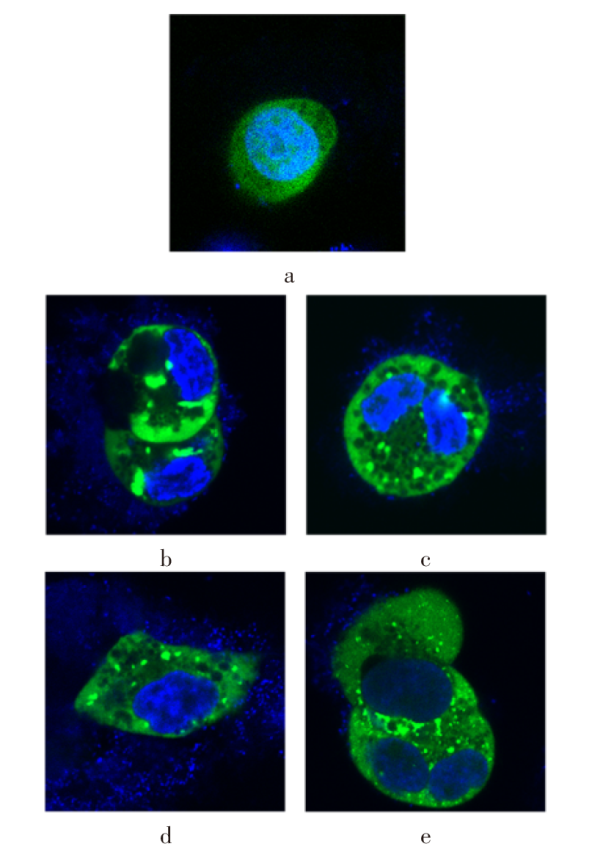
Fig.1 Observation of the liquid-liquid phase separation affected by NM234I and NR203K-G204R-T205I using confocal microscopy
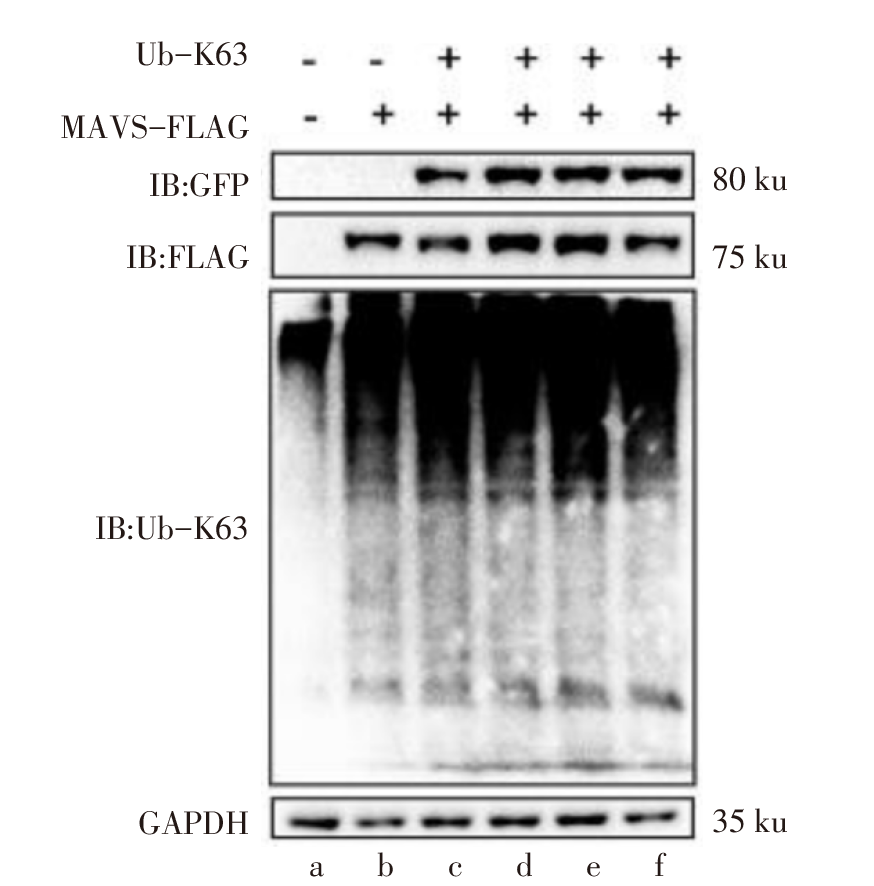
Fig.2 WB analysis of the N mutants on MAVS ubiquitination
| 组别 | GFP | FLAG | Ub-K63 |
|---|---|---|---|
| 对照组 | 0.03±0.01 | 0.04±0.01 | 0.67±0.17 |
| MAVS-Flag组 | 0.07±0.02 | 0.72±0.10a | 9.76±0.12a |
| N-EGFP组 | 0.95±0.12a | 0.56±0.08a | 9.46±0.23a |
| ND3L-EGFP组 | 1.26±0.12a | 0.73±0.08a | 8.72±0.38a |
| NM234I-EGFP组 | 1.07±0.11a | 0.75±0.07a | 8.13±0.40a |
| NR203K-G204R-T205I-EGFP组 | 1.30±0.15a | 0.71±0.10a | 9.69±0.34a |
| F | 32.430** | 12.680** | 144.300** |
Tab.4 The effect of different N mutants on ubiquitination signal of MAVS (n=3,$ \bar{x} \pm s$)
| 组别 | GFP | FLAG | Ub-K63 |
|---|---|---|---|
| 对照组 | 0.03±0.01 | 0.04±0.01 | 0.67±0.17 |
| MAVS-Flag组 | 0.07±0.02 | 0.72±0.10a | 9.76±0.12a |
| N-EGFP组 | 0.95±0.12a | 0.56±0.08a | 9.46±0.23a |
| ND3L-EGFP组 | 1.26±0.12a | 0.73±0.08a | 8.72±0.38a |
| NM234I-EGFP组 | 1.07±0.11a | 0.75±0.07a | 8.13±0.40a |
| NR203K-G204R-T205I-EGFP组 | 1.30±0.15a | 0.71±0.10a | 9.69±0.34a |
| F | 32.430** | 12.680** | 144.300** |
| [1] | GALLOWAY S E, PAUL P, MACCANNELL D R, et al. Emergence of SARS-CoV-2 B. 1.1.7 Lineage - United States,December 29,2020-January 12,2021[J]. MMWR Morb Mortal Wkly Rep, 2021, 70(3):95-99. doi:10.15585/mmwr.mm7003e2. |
| [2] | FRAMPTON D, RAMPLING T, CROSS A, et al. Genomic characteristics and clinical effect of the emergent SARS-CoV-2 B.1.1.7 lineage in London,UK:a whole-genome sequencing and hospital-based cohort study[J]. Lancet Infect Dis, 2021, 21(9):1246-1256. doi:10.1016/S1473-3099(21)00170-5. |
| [3] | RAMÍREZ J D, MUÑOZ M, PATIÑO L H, et al. Will the emergent SARS-CoV2 B.1.1.7 lineage affect molecular diagnosis of COVID-19?[J]. J Med Virol, 2021, 93(5):2566-2568. doi:10.1002/jmv.26823. |
| [4] | JIAN M J, CHUNG H Y, CHANG C K, et al. SARS-CoV-2 variants with T135I nucleocapsid mutations may affect antigen test performance[J]. Int J Infect Dis, 2022, 114:112-114. doi:10.1016/j.ijid.2021.11.006. |
| [5] | C CASERTA L, MITCHELL P K, PLOCHARCZYK E, et al. Identification of a SARS-CoV-2 Lineage B1.1.7 Virus in New York following return travel from the United Kingdom[J]. Microbiol Resour Announc, 2021, 10(9):e00097-00021. doi:10.1128/MRA.00097-21. |
| [6] | WU H, XING N, MENG K, et al. Nucleocapsid mutations R203K/G204R increase the infectivity,fitness,and virulence of SARS-CoV-2[J]. Cell Host Microbe, 2021, 29(12):1788-1801.e6. doi:10.1016/j.chom.2021.11.005. |
| [7] | LOKUGAMAGE K G, ZHOU Y, ALVARADO R E, et al. Convergent evolution in nucleocapsid facilitated SARS-CoV-2 adaptation for human infection[J]. J Virol, 2025, 99(7):e0209124. doi:10.1128/jvi.02091-24. |
| [8] | World Health Organization. Clinical management of COVID-19:Living guideline[EB/OL]. (2023-08-18)[2025-05-10]. https://iris.who.int/bitstream/handle/10665/372288/WHO-2019-nCoV-clinical-2023.2-eng.pdf?sequence=1. |
| [9] | CHAN J F, YUAN S, CHU H, et al. COVID-19 drug discovery and treatment options[J]. Nat Rev Microbiol, 2024, 22(7):391-407. doi:10.1038/s41579-024-01036-y. |
| [10] | WANG Y T, LONG X Y, DING X, et al. Novel nucleocapsid protein-targeting phenanthridine inhibitors of SARS-CoV-2[J]. Eur J Med Chem, 2022, 227:113966. doi:10.1016/j.ejmech.2021.113966. |
| [11] | GONZALEZ-REICHE A S, ALSHAMMARY H, SCHAEFER S, et al. Sequential intrahost evolution and onward transmission of SARS-CoV-2 variants[J]. Nat Commun, 2023, 14(1):3235. doi:10.1038/s41467-023-38867-x. |
| [12] | DERONDE S, DEULING H, PARKER J, et al. Identification of a Novel SARS-CoV-2 Strain with Truncated Protein in ORF8 Gene by Next Generation Sequencing[J]. Sci Rep, 2022, 12(1):4631. doi: 10.1038/s41598-022-08780-2. |
| [13] | PERCHETTI G A, ZHU H, MILLS M G, et al. Specific allelic discrimination of N501Y and other SARS-CoV-2 mutations by ddPCR detects B.1.1.7 lineage in Washington State[J]. J Med Virol, 2021, 93(10):5931-41. doi:10.1002/jmv.27155. |
| [14] | SCHOEFBAENKER M, GÜNTHER T, LORENTZEN E U, et al. Characterisation of the antibody-mediated selective pressure driving intra-host evolution of SARS-CoV-2 in prolonged infection[J]. PLoS Pathog, 2024, 20(10):e1012624. doi:10.1371/journal.ppat.1012624. |
| [15] | MARTYNOVA E, HAMZA S, MARKELOVA M, et al. Immunogenic SARS-CoV-2 S and N protein peptide and cytokine combinations as biomarkers for early prediction of fatal COVID-19[J]. Front Immunol, 2022,13:830715. doi:10.3389/fimmu.2022.830715. |
| [16] | LÓPEZ-MUÑOZ A D, KOSIK I, HOLLY J, et al. Cell surface SARS-CoV-2 nucleocapsid protein modulates innate and adaptive immunity[J]. Sci Adv, 2022, 8(31):eabp9770. doi:10.1126/sciadv.abp9770. |
| [17] | NOVICK D, COHEN B, RUBINSTEIN M. The human interferon alpha/beta receptor: characterization and molecular cloning[J]. Cell, 1994, 77(3):391-400. doi:10.1016/0092-8674(94)90154-6. |
| [18] | WANG S, DAI T, QIN Z, et al. Targeting liquid-liquid phase separation of SARS-CoV-2 nucleocapsid protein promotes innate antiviral immunity by elevating MAVS activity[J]. Nat Cell Biol, 2021, 23(7):718-32. doi:10.1038/s41556-021-00710-0. |
| [19] | MU J, FANG Y, YANG Q, et al. SARS-CoV-2 N protein antagonizes type I interferon signaling by suppressing phosphorylation and nuclear translocation of STAT1 and STAT2[J]. Cell Discov, 2020,6:65. doi:10.1038/s41421-020-00208-3. |
| [20] | WU W, CHENG Y, ZHOU H, et al. The SARS-CoV-2 nucleocapsid protein:its role in the viral life cycle, structure and functions, and use as a potential target in the development of vaccines and diagnostics[J]. Virol J, 2023, 20(1):6. doi:10.1186/s12985-023-01968-6. |
| [21] | QUAGLIA F, SALLADINI E, CARRARO M, et al. SARS-CoV-2 variants preferentially emerge at intrinsically disordered protein sites helping immune evasion[J]. FEBS J, 2022, 289(14):4240-4250. doi:10.1111/febs.16379. |
| [22] | SYED A M, CILING A, CHEN I P, et al. SARS-CoV-2 evolution balances conflicting roles of N protein phosphorylation[J]. PLoS Pathog, 2024, 20(11):e1012741. doi:10.1371/journal.ppat.1012741. |
| [23] | STUWE H, REARDON P N, YU Z, et al. Phosphorylation in the Ser/Arg-rich region of the nucleocapsid of SARS-CoV-2 regulates phase separation by inhibiting self-association of a distant helix[J]. J Biol Chem, 2024, 300(6):107354. doi:10.1016/j.jbc.2024.107354. |
| [24] | CARLSON C R, ASFAHA J B, GHENT C M, et al. Phosphoregulation of phase separation by the SARS-CoV-2 N protein suggests a biophysical basis for its dual functions[J]. Mol Cell, 2020, 80(6):1092-103 e4. doi:10.1016/j.molcel.2020.11.025. |
| [1] | GU Songtao, JIA Wei, LI Yuechuan, ZHANG Dongrui, ZHANG Yating, GAO Shulian, LI Na. Clinical characteristics of COVID-19 complicated with pulmonary thromboembolism [J]. Tianjin Medical Journal, 2023, 51(8): 873-877. |
| [2] | FU Ya'nan, ZENG Feng, RAO Jingjing, HUANG Yanping, LIU Zhixin, LIU Long. The research progress and function of SARS-CoV-2 accessory protein ORF8 [J]. Tianjin Medical Journal, 2022, 50(10): 1110-1114. |
| [3] | WANG Yuliang, LONG Yiyin, CHEN Xiaobo. Genetic and pathogenic characteristics of SARS-CoV-2 variants [J]. Tianjin Medical Journal, 2022, 50(10): 1103-1109. |
| [4] | GUO Jing, LI Li, WU Qian, LI Hong-wei, SHI Li-xia, WU Qi. The effect of the systemic immune-inflammation index on conversion time of virus nucleic acid turning negative in COVID-19 patients [J]. Tianjin Medical Journal, 2021, 49(11): 1188-1192. |
| [5] | YU Hong-zhi , SHAO Hong-xia , XING Zhi-heng , QIN Zhong-hua , FU Sha-sha , HU Song , WU Qi△. Analysis of clinical characteristics of patients with COVID-19 in Tianjin [J]. Tianjin Medical Journal, 2020, 48(7): 577-582. |
| [6] | ZHU Yi-lang , XU Yuan-hong , WANG Xiao-wu , LI Mei , GAO Yong△. Changes of blood routine examination and lymphocyte subsets in patients with COVID-19 [J]. Tianjin Medical Journal, 2020, 48(7): 596-598. |
| [7] | WANG Xiao-wu, ZHU Yi-lang, LI Tuan-tuan, GAO Yong△. Evaluation of SARS-COV-2 nucleic acid in convalescent anal swabs of patients with coronavirus disease 2019 [J]. Tianjin Medical Journal, 2020, 48(7): 592-595. |
| [8] |
ZHAO Lei , XUE Jian , WANG Yu-ling△, DAI Er-hei , XU Zun-gui , LI Ya-nan , DUN Zi-qian , GAO Hui-xia , RONG Yan-xiao , CHEN Can.
The clinical feature and imaging analysis of patients with new coronavirus infection in Shijiazhuang
[J]. Tianjin Medical Journal, 2020, 48(7): 588-591.
|
| [9] | WANG Yu-liang△, WANG Feng, GENG Jie. Cytokine and cytokine storm #br# [J]. Tianjin Medical Journal, 2020, 48(6): 494-499. |
| [10] | DU Xiao-yan, MA Hui△. A case report of a patient highly suspected novel coronavirus pneumonia with six times of negative nucleic acid test [J]. Tianjin Medical Journal, 2020, 48(6): 490-493. |
| [11] | YU Hong-zhi, XU Lei, CONG Hong-liang, WU Qi△. Discussion on the treatment of COVID-19 in Tianjin [J]. Tianjin Medical Journal, 2020, 48(6): 479-482. |
| [12] | YU Yong-jun1, ZHANG Shi-wu2, LI Yu-wei1, XU Chen1, ZHANG Pei-da1, ZHANG Xi-peng1△. Clinicopathological features and risk factors of neuroendocrine tumors in 256 patients [J]. Tianjin Med J, 2018, 46(1): 65-69. |
| [13] | WANG Ling1, 2. Analysis of Clinical Features in 41 Cases with Late-Onset Systemic Lupus Erythematosus [J]. , 2010, 38(12): 1094-1095 . |
| Viewed | ||||||
|
Full text |
|
|||||
|
Abstract |
|
|||||
