
Tianjin Medical Journal ›› 2026, Vol. 54 ›› Issue (4): 402-406.doi: 10.11958/20252959
• Clinical Research • Previous Articles Next Articles
FENG Xiaoyan1( ), ZHANG Wenqian1, FANG Zihong1, ZHANG Guanghui2△()
Received:2025-09-19
Revised:2025-12-09
Published:2026-04-15
Online:2026-04-14
Contact:
△E-mail:FENG Xiaoyan, ZHANG Wenqian, FANG Zihong, ZHANG Guanghui. Predictive value of NRP-1 and CXCR4 for pregnancy outcomes in patients with ovarian endometriotic cysts[J]. Tianjin Medical Journal, 2026, 54(4): 402-406.
CLC Number:
| 组别 | 年龄 | 月经周期/d | VEGF/(ng/L) | |
|---|---|---|---|---|
| <35岁 | ≥35岁 | |||
| 对照组 | 78(57.35) | 58(42.65) | 29.28±2.49 | 296.35±91.07 |
| 研究组 | 72(52.94) | 64(47.06) | 29.56±2.41 | 416.49±98.52 |
| t或χ2 | 0.535 | 0.940 | 10.443** | |
Tab.1 Comparison of general data between the control group and the study group
| 组别 | 年龄 | 月经周期/d | VEGF/(ng/L) | |
|---|---|---|---|---|
| <35岁 | ≥35岁 | |||
| 对照组 | 78(57.35) | 58(42.65) | 29.28±2.49 | 296.35±91.07 |
| 研究组 | 72(52.94) | 64(47.06) | 29.56±2.41 | 416.49±98.52 |
| t或χ2 | 0.535 | 0.940 | 10.443** | |
| 组别 | NRP-1/(μg/L) | CXCR4/(pg/L) |
|---|---|---|
| 对照组 | 18.09±3.93 | 22.42±5.09 |
| 研究组 | 25.60±6.05 | 31.37±7.14 |
| t | 12.142** | 11.915** |
Tab.2 Comparison of serum NRP-1 and CXCR4 levels between the control group and the study group
| 组别 | NRP-1/(μg/L) | CXCR4/(pg/L) |
|---|---|---|
| 对照组 | 18.09±3.93 | 22.42±5.09 |
| 研究组 | 25.60±6.05 | 31.37±7.14 |
| t | 12.142** | 11.915** |
| 组别 | n | 年龄 | 月经周期/d | ||||||||
|---|---|---|---|---|---|---|---|---|---|---|---|
| <35岁 | ≥35岁 | ||||||||||
| 妊娠组 | 84 | 52(61.90) | 32(38.10) | 29.52±2.39 | |||||||
| 未妊娠组 | 52 | 20(38.46) | 32(61.54) | 29.62±2.43 | |||||||
| t或χ2 | 7.085** | 0.216 | |||||||||
| 组别 | 囊肿侧别 | 囊肿直径/cm | VEGF/(ng/L) | ||||||||
| 左侧 | 右侧 | ||||||||||
| 妊娠组 | 41(48.81) | 43(51.19) | 3.77±1.20 | 359.44±91.76 | |||||||
| 未妊娠组 | 27(51.92) | 25(48.08) | 3.92±1.20 | 508.65±102.39 | |||||||
| t或χ2 | 0.125 | 0.706 | 8.813** | ||||||||
| 组别 | R-AFS分期 | 剧烈痛经 | |||||||||
| Ⅰ—Ⅱ | Ⅲ—Ⅳ | ||||||||||
| 妊娠组 | 59(70.24) | 25(29.76) | 20(23.81) | ||||||||
| 未妊娠组 | 29(55.77) | 23(44.23) | 14(26.92) | ||||||||
| t或χ2 | 2.944 | 0.166 | |||||||||
Tab.3 Comparison of general information between different pregnancy outcome groups
| 组别 | n | 年龄 | 月经周期/d | ||||||||
|---|---|---|---|---|---|---|---|---|---|---|---|
| <35岁 | ≥35岁 | ||||||||||
| 妊娠组 | 84 | 52(61.90) | 32(38.10) | 29.52±2.39 | |||||||
| 未妊娠组 | 52 | 20(38.46) | 32(61.54) | 29.62±2.43 | |||||||
| t或χ2 | 7.085** | 0.216 | |||||||||
| 组别 | 囊肿侧别 | 囊肿直径/cm | VEGF/(ng/L) | ||||||||
| 左侧 | 右侧 | ||||||||||
| 妊娠组 | 41(48.81) | 43(51.19) | 3.77±1.20 | 359.44±91.76 | |||||||
| 未妊娠组 | 27(51.92) | 25(48.08) | 3.92±1.20 | 508.65±102.39 | |||||||
| t或χ2 | 0.125 | 0.706 | 8.813** | ||||||||
| 组别 | R-AFS分期 | 剧烈痛经 | |||||||||
| Ⅰ—Ⅱ | Ⅲ—Ⅳ | ||||||||||
| 妊娠组 | 59(70.24) | 25(29.76) | 20(23.81) | ||||||||
| 未妊娠组 | 29(55.77) | 23(44.23) | 14(26.92) | ||||||||
| t或χ2 | 2.944 | 0.166 | |||||||||
| 组别 | n | NRP-1/(μg/L) | CXCR4/(pg/L) |
|---|---|---|---|
| 妊娠组 | 84 | 22.64±5.37 | 27.69±5.74 |
| 未妊娠组 | 52 | 30.38±7.15 | 37.31±9.39 |
| t | 6.722** | 6.659** |
Tab.4 Comparison of serum NRP-1 and CXCR4 levels between different pregnancy outcome groups
| 组别 | n | NRP-1/(μg/L) | CXCR4/(pg/L) |
|---|---|---|---|
| 妊娠组 | 84 | 22.64±5.37 | 27.69±5.74 |
| 未妊娠组 | 52 | 30.38±7.15 | 37.31±9.39 |
| t | 6.722** | 6.659** |
| 变量 | β | SE | Wald χ2 | P | OR | OR 95%CI |
|---|---|---|---|---|---|---|
| NRP-1 | 0.917 | 0.349 | 6.899 | 0.009 | 2.501 | 1.262~4.957 |
| CXCR4 | 1.056 | 0.395 | 7.143 | 0.007 | 2.874 | 1.325~6.233 |
| 年龄 | 0.701 | 0.278 | 6.360 | 0.012 | 2.016 | 1.169~3.476 |
| VEGF | 1.071 | 0.407 | 6.919 | 0.008 | 2.917 | 1.314~6.477 |
| 常数项 | -9.210 | 2.631 | 12.255 | <0.001 | <0.001 | - |
Tab.5 Multifactorial analysis of factors affecting non-pregnancy in OEC patients
| 变量 | β | SE | Wald χ2 | P | OR | OR 95%CI |
|---|---|---|---|---|---|---|
| NRP-1 | 0.917 | 0.349 | 6.899 | 0.009 | 2.501 | 1.262~4.957 |
| CXCR4 | 1.056 | 0.395 | 7.143 | 0.007 | 2.874 | 1.325~6.233 |
| 年龄 | 0.701 | 0.278 | 6.360 | 0.012 | 2.016 | 1.169~3.476 |
| VEGF | 1.071 | 0.407 | 6.919 | 0.008 | 2.917 | 1.314~6.477 |
| 常数项 | -9.210 | 2.631 | 12.255 | <0.001 | <0.001 | - |
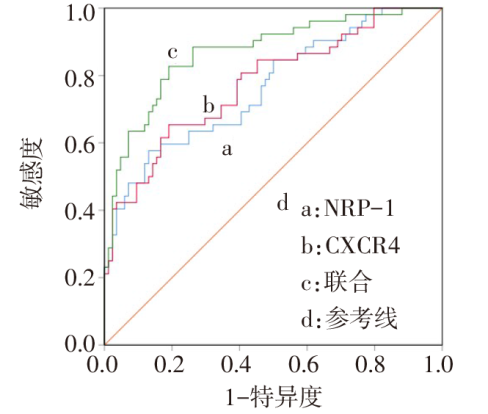
Fig.1 ROC curves of serum NRP-1 and CXCR4 in predicting pregnancy outcome
| 变量 | AUC | 95%CI | 敏感度/% | 特异度/% | 截断值 |
|---|---|---|---|---|---|
| NRP-1 | 0.764 | 0.680~0.847 | 83.43 | 77.62 | 27.49 μg/L |
| CXCR4 | 0.776 | 0.695~0.858 | 86.02 | 75.88 | 33.86 pg/L |
| 二者联合 | 0.870 | 0.807~0.933 | 91.29 | 73.56 | - |
Tab.6 Predictive values of serum NRP-1 and CXCR4 for pregnancy outcome
| 变量 | AUC | 95%CI | 敏感度/% | 特异度/% | 截断值 |
|---|---|---|---|---|---|
| NRP-1 | 0.764 | 0.680~0.847 | 83.43 | 77.62 | 27.49 μg/L |
| CXCR4 | 0.776 | 0.695~0.858 | 86.02 | 75.88 | 33.86 pg/L |
| 二者联合 | 0.870 | 0.807~0.933 | 91.29 | 73.56 | - |
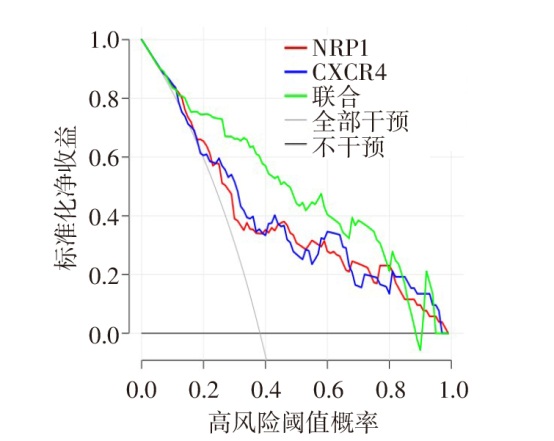
Fig.2 Decision curve analysis of serum NRP-1 and CXCR4 for predicting pregnancy outcome
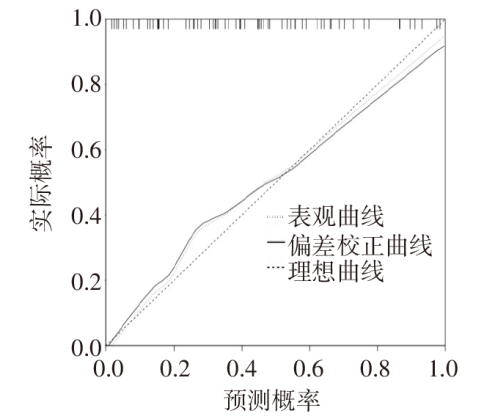
Fig.3 Calibration curve for internal validation of the predictive model
| [1] | ADILBAYEVA A, KUNZ J. Pathogenesis of endometriosis and endometriosis-associated cancers[J]. Int J Mol Sci, 2024, 25(14):7624. doi:10.3390/ijms25147624. |
| [2] | BONAVINA G, TAYLOR H S. Endometriosis-associated infertility:from pathophysiology to tailored treatment[J]. Front Endocrinol (Lausanne), 2022, 13:1020827. doi:10.3389/fendo.2022.1020827. |
| [3] | MAK K S, HUANG Y T, HSUAN WENG C, et al. Factors affected the ovarian reserve after laparoscopic cystectomy for ovarian endometriomas[J]. Eur J Obstet Gynecol Reprod Biol, 2024, 303:244-249. doi:10.1016/j.ejogrb.2024.10.045. |
| [4] | WANG L, ZHANG L, ZHAO L, et al. VEGFA/NRP-1/GAPVD1 axis promotes progression and cancer stemness of triple-negative breast cancer by enhancing tumor cell-macrophage crosstalk[J]. Int J Biol Sci, 2024, 20(2):446-463. doi:10.7150/ijbs.86085. |
| [5] | WANG Y, ZHANG L, SUN X L, et al. NRP1 contributes to stemness and potentiates radioresistance via WTAP-mediated m6A methylation of Bcl-2 mRNA in breast cancer[J]. Apoptosis, 2023, 28(1/2):233-246. doi:10.1007/s10495-022-01784-3. |
| [6] | WANG Y, LI Y, JIA D, et al. Correlation between single nucleotide polymorphisms in CXCR4 microRNA binding site and the susceptibility to knee osteoarthritis in Han Chinese population[J]. J Clin Lab Anal, 2021, 35(2):e23600. doi:10.1002/jcla.23600. |
| [7] | 中国医师协会妇产科医师分会, 中华医学会妇产科学分会子宫内膜异位症协作组. 子宫内膜异位症诊治指南(第三版)[J]. 中华妇产科杂志, 2021, 56(12):812-824. |
| Chinese Medical Doctor Association Obstetrics and Gynecology Physicians Branch, Chinese Medical Association Obstetrics and Gynecology Branch Endometriosis Collaborative Group. Guideline for the diagnosis and treatment of endometriosis(Third edition)[J]. Chinese Journal of Obstetrics and Gynecology, 2021, 56(12):812-824. doi:10.3760/cma.j.cn112141-20211018-00603. | |
| [8] | MAOWULIETI G, SUN L, WANG J, et al. Applicability of ultrasound-guided puncture and laparoscopic cystectomy for ovarian endometriosis cyst:a non-randomized trial[J]. Eur J Med Res, 2025, 30(1):348. doi:10.1186/s40001-025-02612-5. |
| [9] | XU X, CHEN Y, YU Q, et al. The presence of living endometrial cells in ovarian endometriotic cyst fluid may contribute to the recurrence of endometriosis after surgical excision of endometriomas[J]. J Ovarian Res, 2022, 15(1):89. doi:10.1186/s13048-022-01018-9. |
| [10] | 张巧虹, 杨惠芬, 周璐. 子宫内膜异位症伴不孕症患者临床特征及术后妊娠结局的影响因素分析[J]. 中国妇幼保健, 2023, 38(23):4625-4628. |
| ZHANG Q H, YANG H F, ZHOU L. Analysis of clinical characteristics and factors affecting postoperative pregnancy outcomes in patients with endometriosis and infertility[J]. Chinese Maternal and Child Health Care, 2023, 38(23):4625-4628. doi:10.19829/j.zgfybj.issn.1001-4411.2023.23.026. | |
| [11] | WU Q, PAN C, ZHOU Y, et al. Targeting neuropilin-1 abolishes anti-PD-1-upregulated regulatory T cells and synergizes with 4-1BB agonist for liver cancer treatment[J]. Hepatology, 2023, 78(5):1402-1417. doi:10.1097/HEP.0000000000000320. |
| [12] | 郭艳, 樊素珍, 林雁, 等. 子宫内膜异位症患者血清neuropilin-1、neuropilin-2与病情及不孕关系[J]. 中国计划生育学杂志, 2022, 30(1):135-138. |
| GUO Y, FAN S Z, LIN Y, et al. Relationship between the levels of serum neuropilin-1 and neuropilin-2 of patients with endometriosis and their severity of endometriosis and infertility[J]. Chinese Journal of Family Planning, 2022, 30(1):135-138. doi:10.3969/j.issn.1004-8189.2022.01.031. | |
| [13] | HUANG N, XU L, QIU Y, et al. Down-regulated miR-124-3p enhanced the migration and epithelial-stromal transformation of endometrial stromal cells extracted from eutopic endometrium in subjects with adenomyosis by up-regulating Neuropilin 1[J]. Tissue Cell, 2021, 69:101474. doi:10.1016/j.tice.2020.101474. |
| [14] | 吕国栋, 张果果, 张静. 血清NRP-1、PDGF与子宫内膜异位症患者体外受精-胚胎移植妊娠结局的相关性[J]. 临床和实验医学杂志, 2023, 22(18):1976-1980. |
| LYU G D, ZHANG G G, ZHANG J. Correlation between serum NRP-1,PDGF and in vitro fertilization embryo transfer pregnancy outcomes in patients with endometriosis[J]. Journal of Clinical and Experimental Medicine, 2023, 22(18):1976-1980. doi:10.3969/j.issn.1671-4695.2023.18.020. | |
| [15] | HEIDEGGER I, FOTAKIS G, OFFERMANN A, et al. Comprehensive characterization of the prostate tumor microenvironment identifies CXCR4/CXCL12 crosstalk as a novel antiangiogenic therapeutic target in prostate cancer[J]. Mol Cancer, 2022, 21(1):132. doi:10.1186/s12943-022-01597-7. |
| [16] | 司媛, 王丽阳, 刘欢, 等. 支气管哮喘患儿血清CXCR4、BDNF水平及其与气道炎症反应和糖皮质激素疗效的关系[J]. 检验医学与临床, 2025, 22(5):619-624. |
| SI Y, WANG L Y, LIU H, et al. Serum levels of CXCR4 and BDNF in children with bronchial asthma and their relationship with airway inflammatory response and efficacy of glucocorticoids[J]. Laboratory Medicine and Clinical, 2025, 22(5):619-624. doi:10.3969/j.issn.1672-9455.2025.05.010. | |
| [17] | 王跃, 宋航, 吕品. 子宫内膜息肉患者术前血清CXCL12、CXCR4水平与切除术后宫腔粘连的关系[J]. 中国计划生育学杂志, 2024, 32(10):2372-2376. |
| WANG Y, SONG H, LYU P. Correlation between the levels of the preoperative serum CXC-class chemokine ligand 12 and CXC class chemokine receptor 4 of patients with endometrial polyps and their intrauterine adhesions after the endometrial polypectomy[J]. Chinese Journal of Family Planning, 2024, 32(10):2372-2376. doi:10.3969/j.issn.1004-8189.2024.10.031. | |
| [18] | 刘俊容. 术前系统免疫炎症指数水平对卵巢子宫内膜异位囊肿合并不孕病人术后自然妊娠结局的影响[J]. 安徽医药, 2023, 27(11):2224-2228. |
| LIU J R. Correlation of preoperative systemic immune-inflammation index with natural pregnancy outcome of infertile patients with endometriosis[J]. Anhui Medicine, 2023, 27(11):2224-2228. doi:10.3969/j.issn.1009-6469.2023.11.023. | |
| [19] | 李娟, 顾笑梅, 赵金珩. 卵巢子宫内膜异位囊肿患者血清VEGF、BDNF水平变化及预测妊娠结局价值[J]. 中国计划生育学杂志, 2023, 31(3):609-613. |
| LI J, GU X M, ZHAO J H. Changes of serum vascular endothelial growth factor and brain derived neurocytotrophic factor levels of women with ovari-an endometriosis cyst and their predictive values for the pregnancy outcomes[J]. Chinese Journal of Family Planning, 2023, 31(3):609-613. doi:10.3969/j.issn.1004-8189.2023.03.026. |
| Viewed | ||||||
|
Full text |
|
|||||
|
Abstract |
|
|||||
