
Tianjin Medical Journal ›› 2026, Vol. 54 ›› Issue (5): 473-477.doi: 10.11958/20253058
• Clinical Research • Previous Articles Next Articles
WANG Xueyan1( ), SHANG Gechu2△(), WANG Guan1, WANG Huile2, ZHANG Qiyang1
Received:2025-09-29
Revised:2026-02-05
Published:2026-05-15
Online:2026-05-13
Contact:
△E-mail:WANG Xueyan, SHANG Gechu, WANG Guan, WANG Huile, ZHANG Qiyang. Comparison of the clinical efficacy between limited craniotomy and standard decompressive craniectomy in the treatment of middle-aged and elderly patients with spontaneous cerebral hemorrhage[J]. Tianjin Medical Journal, 2026, 54(5): 473-477.
CLC Number:
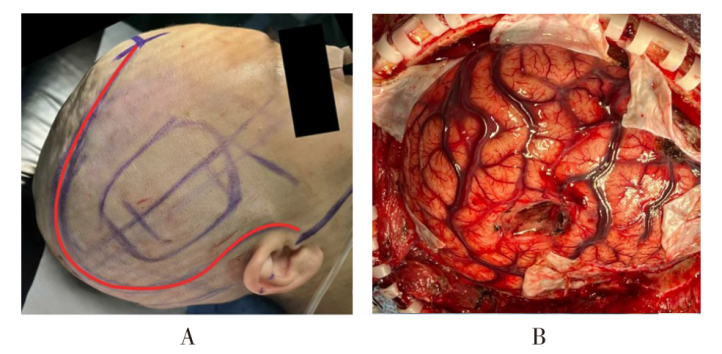
Fig.1 Schematic diagram of bone window design and key steps of hematoma evacuation in large decompressive craniectomy
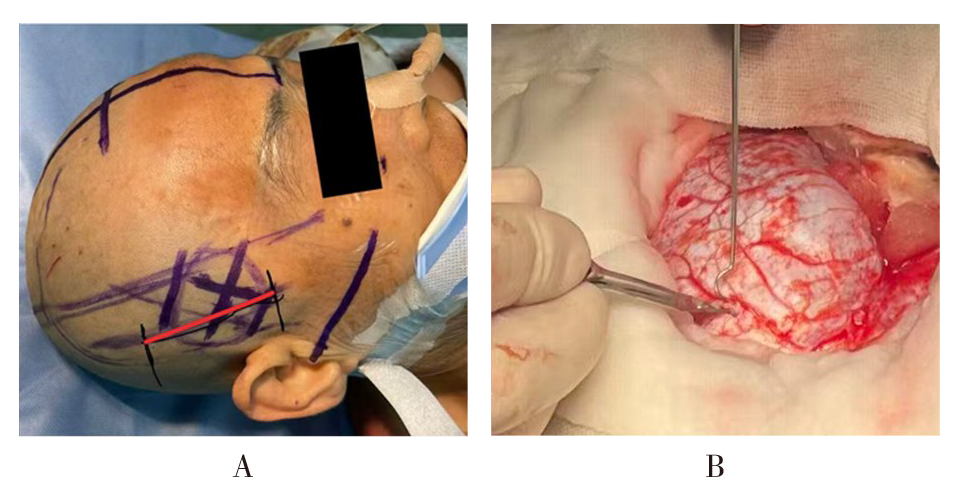
Fig.2 Schematic diagram of bone window design and key steps of hematoma evacuation in limited craniotomy
| 组别 | n | 年龄/岁 | 男性 | 吸烟史 | 饮酒史 | ||||
|---|---|---|---|---|---|---|---|---|---|
| 大骨瓣组 | 47 | 63.68±8.78 | 33(70.21) | 36(76.60) | 37(78.72) | ||||
| 小骨窗组 | 47 | 63.91±13.32 | 35(74.47) | 36(76.60) | 34(72.34) | ||||
| t或χ2 | 0.101 | 0.213 | 0.000 | 0.518 | |||||
| 组别 | 高血压史 | 糖尿病史 | 脑血管病史 | 冠心病史 | |||||
| 大骨瓣组 | 15(31.91) | 40(85.11) | 33(70.21) | 5(10.64) | |||||
| 小骨窗组 | 14(29.79) | 39(82.98) | 32(68.09) | 5(10.64) | |||||
| t或χ2 | 0.050 | 0.079 | 0.050 | 0.000 | |||||
Tab.1 Comparison of the baseline characteristics before and after PSM between the two groups of patients
| 组别 | n | 年龄/岁 | 男性 | 吸烟史 | 饮酒史 | ||||
|---|---|---|---|---|---|---|---|---|---|
| 大骨瓣组 | 47 | 63.68±8.78 | 33(70.21) | 36(76.60) | 37(78.72) | ||||
| 小骨窗组 | 47 | 63.91±13.32 | 35(74.47) | 36(76.60) | 34(72.34) | ||||
| t或χ2 | 0.101 | 0.213 | 0.000 | 0.518 | |||||
| 组别 | 高血压史 | 糖尿病史 | 脑血管病史 | 冠心病史 | |||||
| 大骨瓣组 | 15(31.91) | 40(85.11) | 33(70.21) | 5(10.64) | |||||
| 小骨窗组 | 14(29.79) | 39(82.98) | 32(68.09) | 5(10.64) | |||||
| t或χ2 | 0.050 | 0.079 | 0.050 | 0.000 | |||||
| 组别 | 手术时间/h | 住院天数/d | 术后发热天数/d |
|---|---|---|---|
| 大骨瓣组 | 5.8±1.4 | 18.0(13.50,28.00) | 10.00(2.25,14.00) |
| 小骨窗组 | 4.4±1.2 | 23.0(17.00,31.00) | 9.50(3.00,15.00) |
| t或Z | 5.408** | 0.484 | 0.438 |
Tab.2 Comparison of postoperative characteristics between the two groups of patients
| 组别 | 手术时间/h | 住院天数/d | 术后发热天数/d |
|---|---|---|---|
| 大骨瓣组 | 5.8±1.4 | 18.0(13.50,28.00) | 10.00(2.25,14.00) |
| 小骨窗组 | 4.4±1.2 | 23.0(17.00,31.00) | 9.50(3.00,15.00) |
| t或Z | 5.408** | 0.484 | 0.438 |
| 组别 | CRP/(mg/L) | |||||||||
|---|---|---|---|---|---|---|---|---|---|---|
| 术后1 d | 术后3 d | 术后7 d | ||||||||
| 大骨瓣组 | 32.8(4.7,68.6) | 136.0(74.9,177.0) | 77.6(47.0,105.0) | |||||||
| 小骨窗组 | 29.8(9.0,99.0) | 82.2(45.3,95.5) | 52.9(29.4,93.1) | |||||||
| Z | 0.507 | 3.580** | 1.258 | |||||||
| 组别 | PCT/(μg/L) | |||||||||
| 术后1 d | 术后3 d | 术后7 d | ||||||||
| 大骨瓣组 | 0.39(0.14,1.24) | 0.21(0.18,0.64) | 0.10(0.06,0.21) | |||||||
| 小骨窗组 | 0.17(0.08,0.42) | 0.16(0.08,0.29) | 0.10(0.05,0.23) | |||||||
| Z | 2.251 | 3.199** | 0.330 | |||||||
| 组别 | WBC/(×10?/L) | |||||||||
| 术后1 d | 术后3 d | 术后7 d | ||||||||
| 大骨瓣组 | 11.47(8.99,14.96) | 10.44(7.62,12.99) | 9.81(7.92,12.12) | |||||||
| 小骨窗组 | 11.70(9.61,15.30) | 9.20(8.06,12.02) | 10.37(8.30,12.58) | |||||||
| Z | 0.492 | 0.547 | 0.894 | |||||||
Tab.3 Comparison of changes in postoperative inflammatory markers between the two groups
| 组别 | CRP/(mg/L) | |||||||||
|---|---|---|---|---|---|---|---|---|---|---|
| 术后1 d | 术后3 d | 术后7 d | ||||||||
| 大骨瓣组 | 32.8(4.7,68.6) | 136.0(74.9,177.0) | 77.6(47.0,105.0) | |||||||
| 小骨窗组 | 29.8(9.0,99.0) | 82.2(45.3,95.5) | 52.9(29.4,93.1) | |||||||
| Z | 0.507 | 3.580** | 1.258 | |||||||
| 组别 | PCT/(μg/L) | |||||||||
| 术后1 d | 术后3 d | 术后7 d | ||||||||
| 大骨瓣组 | 0.39(0.14,1.24) | 0.21(0.18,0.64) | 0.10(0.06,0.21) | |||||||
| 小骨窗组 | 0.17(0.08,0.42) | 0.16(0.08,0.29) | 0.10(0.05,0.23) | |||||||
| Z | 2.251 | 3.199** | 0.330 | |||||||
| 组别 | WBC/(×10?/L) | |||||||||
| 术后1 d | 术后3 d | 术后7 d | ||||||||
| 大骨瓣组 | 11.47(8.99,14.96) | 10.44(7.62,12.99) | 9.81(7.92,12.12) | |||||||
| 小骨窗组 | 11.70(9.61,15.30) | 9.20(8.06,12.02) | 10.37(8.30,12.58) | |||||||
| Z | 0.492 | 0.547 | 0.894 | |||||||
| 组别 | 术前血肿量/mL | 术后血肿量/mL | 血肿清除率/% |
|---|---|---|---|
| 大骨瓣组 | 90.00(61.50,113.50) | 3.00(2.00,5.00) | 96.7(95.8,97.6) |
| 小骨窗组 | 87.00(68.00,107.00) | 3.00(2.00,5.00) | 96.2(95.0,97.1) |
| Z | 0.935 | 0.208 | 1.862 |
Tab.4 Comparison of hematoma clearance efficacy between the two groups
| 组别 | 术前血肿量/mL | 术后血肿量/mL | 血肿清除率/% |
|---|---|---|---|
| 大骨瓣组 | 90.00(61.50,113.50) | 3.00(2.00,5.00) | 96.7(95.8,97.6) |
| 小骨窗组 | 87.00(68.00,107.00) | 3.00(2.00,5.00) | 96.2(95.0,97.1) |
| Z | 0.935 | 0.208 | 1.862 |
| 组别 | 入院 | 术后1 d | |||
|---|---|---|---|---|---|
| 大骨瓣组 | 5.0(4.0,6.0) | 4.0(3.0,5.5) | |||
| 小骨窗组 | 5.0(4.0,6.5) | 4.0(3.0,7.0) | |||
| Z | 0.443 | 0.788 | |||
| 组别 | 术后3 d | 术后7 d | 术后14 d | ||
| 大骨瓣组 | 4.0(3.0,8.5) | 5.5(4.0,9.8) | 7.5(5.0,12.8) | ||
| 小骨窗组 | 5.0(4.0,8.0) | 8.0(4.0,10.5) | 9.0(7.0,14.0) | ||
| Z | 1.473 | 0.817 | 1.073 | ||
Tab.5 Comparison of GCS scores between the two groups
| 组别 | 入院 | 术后1 d | |||
|---|---|---|---|---|---|
| 大骨瓣组 | 5.0(4.0,6.0) | 4.0(3.0,5.5) | |||
| 小骨窗组 | 5.0(4.0,6.5) | 4.0(3.0,7.0) | |||
| Z | 0.443 | 0.788 | |||
| 组别 | 术后3 d | 术后7 d | 术后14 d | ||
| 大骨瓣组 | 4.0(3.0,8.5) | 5.5(4.0,9.8) | 7.5(5.0,12.8) | ||
| 小骨窗组 | 5.0(4.0,8.0) | 8.0(4.0,10.5) | 9.0(7.0,14.0) | ||
| Z | 1.473 | 0.817 | 1.073 | ||
| 组别 | 良好预后(0~2分) | 不良预后(3~5分) | 死亡(6分) |
|---|---|---|---|
| 大骨瓣组 | 11(23.40) | 27(55.32) | 10(21.28) |
| 小骨窗组 | 15(31.91) | 23(48.94) | 9(19.15) |
| Z | 0.764 | ||
Tab.6 Comparison of 90-day mRS distribution between the two groups
| 组别 | 良好预后(0~2分) | 不良预后(3~5分) | 死亡(6分) |
|---|---|---|---|
| 大骨瓣组 | 11(23.40) | 27(55.32) | 10(21.28) |
| 小骨窗组 | 15(31.91) | 23(48.94) | 9(19.15) |
| Z | 0.764 | ||
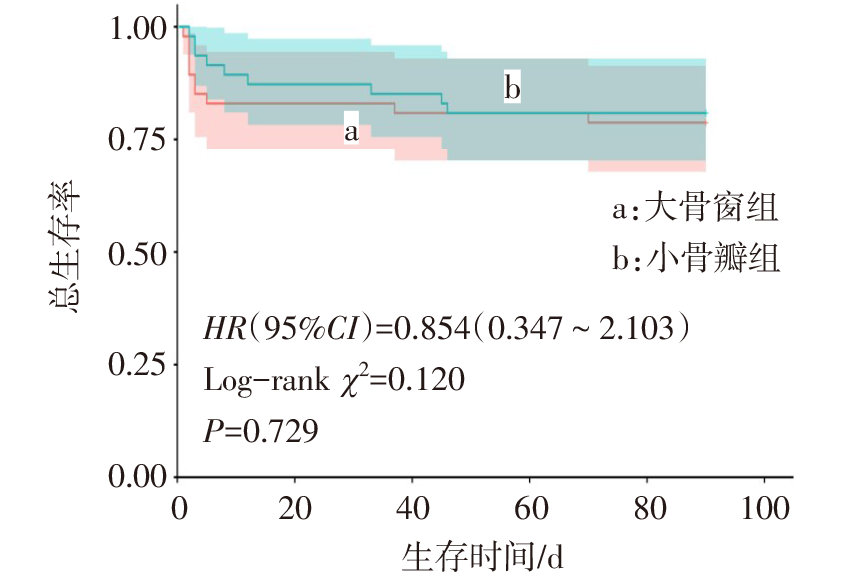
Fig.3 Postoperative 90-day survival curves of middle-aged and elderly patients with spontaneous intracerebral hemorrhage treated with large decompressive craniectomy versus limited craniotomy
| [1] | SHI J, LIU Y, WEI L, et al. Admission neutrophil-to-lymphocyte ratio to predict 30-day mortality in severe spontaneous basal ganglia hemorrhage[J]. Front Neurol, 2022, 13:1062692. doi:10.3389/fneur.2022.1062692. |
| [2] | GBD 2019 Stroke Collaborators. Global,regional,and national burden of stroke and its risk factors,1990-2019:a systematic analysis for the Global Burden of Disease Study 2019[J]. Lancet Neurol,2021, 20(10):795-820. doi:10.1016/S1474-4422(21)00252-0. |
| [3] | 刘昭, 陈敏霞, 申斗, 等. 医防融合背景下卒中高危人群防治策略优化与体系建设[J]. 中国卒中杂志, 2025, 20(3):270-276. |
| LIU Z, CHEN M X, SHEN D, et al. Optimization and system construction of prevention and treatment strategies for high-risk populations of stroke under the background of integration of medical care and prevention[J]. Chin J Stroke, 2025, 20(3):270-276. doi:10.3969/j.issn.1673-5765.2025.03.002. | |
| [4] | DING L, TAO X, ZHOU J. Effect of a comprehensive geriatric assessment-based individualized intervention on postoperative patients with cerebral hemorrhage:a randomized controlled study[J]. Technol Health Care, 2024, 32(3):1555-1567. doi:10.3233/THC-230611. |
| [5] | HOPP M J, ZACH R V, PINKHASOVA D V, et al. Aging unnoticed:a snapshot review of recent neurocritical care research and guidelines highlighting geriatric underrepresentation[J]. Brain Inj, 2025, 39(13):1077-1083. doi:10.1080/02699052.2025.2528133. |
| [6] | GREENBERG S M, ZIAI W C, CORDONNIER C, et al. 2022 guideline for the management of patients with spontaneous intracerebral hemorrhage:a guideline from the American Heart Association/American Stroke Association[J]. Stroke,2022, 53(7):e282-e361. doi:10.1161/STR.0000000000000407. |
| [7] | HANLEY D F, THOMPSON R E, ROSENBLUM M, et al. Efficacy and safety of minimally invasive surgery with thrombolysis in intracerebral haemorrhage evacuation (MISTIE Ⅲ):a randomised,controlled,open-label, blinded endpoint phase 3 trial[J]. Lancet, 2019, 393(10175):1021-1032. doi:10.1016/S0140-6736(19)30195-3. |
| [8] | ABECASSIS I J, YOUNG C C, CALDWELL D J, et al. The Kempe incision for decompressive craniectomy,craniotomy,and cranioplasty in traumatic brain injury and stroke[J]. J Neurosurg, 2021, 135(6):1807-1816. doi:10.3171/2020.11.JNS203567. |
| [9] | WILTING F N, SONDAG L, SCHREUDER F H, et al. Surgery for spontaneous supratentorial intracerebral haemorrhage[J]. Cochrane Database Syst Rev, 2025, 7(7):CD015387. doi:10.1002/14651858.CD015387.pub2. |
| [10] | HEGDE A, PRASAD G L, MENON G. Decompressive craniectomy in spontaneous intracerebral hemorrhage:a comparison with standard craniotomy using propensity-matched analysis[J]. World Neurosurg, 2020, 144:e622-e630. doi:10.1016/j.wneu.2020.09.016. |
| [11] | LEI C, LI C, CHEN X, et al. Comparison of neurofactor changes and prognosis in elderly patients with spontaneous intracerebral hemorrhage treated with endoscopic versus conventional craniotomy surgery[J]. Ther Clin Risk Manag, 2025, 21:1509-1519. doi:10.2147/TCRM.S521299. |
| [12] | RYNKOWSKI C B, ROBBA C, LORETO M, et al. Effects of cranioplasty after decompressive craniectomy on neurological function and cerebral hemodynamics in traumatic versus nontraumatic brain Injury[J]. Acta Neurochir Suppl, 2021, 131:79-82. doi:10.1007/978-3-030-59436-7_17. |
| [13] | YU N, LI X, WANG B, et al. Unraveling the role of α2δ-1 in cerebral hemorrhage:calcium overload,endoplasmic reticulum stress,and microglial apoptosis[J]. Brain Behav, 2025, 15(5):e70499. doi:10.1002/brb3.70499. |
| [14] | BERRA L V, RUBIANO A, CEDRONE G, et al. Comparison of brain volume increase in patients with intracranial hypertension after decompressive craniectomy and expansion craniotomy[J]. Neurosurg Rev, 2025, 48(1):311. doi:10.1007/s10143-025-03440-1. |
| [15] | YANG P H, WULFEKAMMER N, JENSON A V, et al. Safety and accuracy of stereoelectroencephalography for pediatric and young adult patients with prior craniotomy[J]. J Neurosurg Pediatr, 2024, 34(5):526-536. doi:10.3171/2024.6.PEDS24198. |
| [16] | GUO Y, WU L, LIU J, et al. Correlation between glymphatic dysfunction and cranial defect in severe traumatic brain injury:a retrospective case-control study based on a diffusion tensor image analysis along the perivascular space(DTI-ALPS)investigation[J]. Quant Imaging Med Surg, 2024, 14(9):6756-6766. doi:10.21037/qims-24-348. |
| [17] | WANG G, CHEN X, MENG L, et al. The application effect of craniotomy through transsylvian rolandic point-insular approach on hypertensive intracerebral hemorrhage in posterior basal ganglia[J]. Behav Neurol, 2023, 2023:2266691. doi:10.1155/2023/2266691. |
| [18] | AKIRA M, YUICHI T, TOMOTAKA U, et al. The outcome of neurorehabilitation efficacy and management of traumatic brain injury[J]. Front Hum Neurosci, 2022, 16:870190. doi:10.3389/fnhum.2022.870190. |
| Viewed | ||||||
|
Full text |
|
|||||
|
Abstract |
|
|||||
