
Tianjin Medical Journal ›› 2025, Vol. 53 ›› Issue (12): 1250-1257.doi: 10.11958/20252445
• Clinical Research • Previous Articles Next Articles
ZHENG Jianhu( ), GUO Ziyan, SUN Xudong, PAN Yaxin, WANG Anyu, SUN Weidong()
Received:2025-07-08
Revised:2025-08-19
Published:2025-12-15
Online:2025-12-08
Contact:
△E-mail:ZHENG Jianhu, GUO Ziyan, SUN Xudong, PAN Yaxin, WANG Anyu, SUN Weidong. Analysis of the trends of gout disease burden in China from 1990 to 2021 and age-period-cohort model[J]. Tianjin Medical Journal, 2025, 53(12): 1250-1257.
CLC Number:
| 时间 | 发病数 | ASIR/(1/10万) | 患病数 | |||
|---|---|---|---|---|---|---|
| 1990年 | ||||||
| 总人数 | 1 182 497.95 | 122.52 | 5 971 855.45 | |||
| 男性 | 899 778.75 | 183.71 | 4 534 505.34 | |||
| 女性 | 282 719.20 | 61.63 | 1 437 350.12 | |||
| 2021年 | ||||||
| 总人数 | 3 079 835.57 | 151.61 | 16 788 146.82 | |||
| 男性 | 2 301 318.17 | 230.89 | 12 484 533.51 | |||
| 女性 | 778 517.40 | 74.09 | 4 303 613.30 | |||
| 时间 | ASPR/(1/10万) | DALYs | ASDR/(1/10万) | |||
| 1990年 | ||||||
| 总人数 | 640.68 | 190 614.20 | 20.20 | |||
| 男性 | 963.57 | 145 586.69 | 30.48 | |||
| 女性 | 322.72 | 45 027.50 | 9.99 | |||
| 2021年 | ||||||
| 总人数 | 810.36 | 525 967.21 | 25.43 | |||
| 男性 | 1 232.34 | 393 758.52 | 38.83 | |||
| 女性 | 401.98 | 132 208.69 | 12.40 | |||
Tab.1 The disease burden of gout patients in China in 1990 and 2021
| 时间 | 发病数 | ASIR/(1/10万) | 患病数 | |||
|---|---|---|---|---|---|---|
| 1990年 | ||||||
| 总人数 | 1 182 497.95 | 122.52 | 5 971 855.45 | |||
| 男性 | 899 778.75 | 183.71 | 4 534 505.34 | |||
| 女性 | 282 719.20 | 61.63 | 1 437 350.12 | |||
| 2021年 | ||||||
| 总人数 | 3 079 835.57 | 151.61 | 16 788 146.82 | |||
| 男性 | 2 301 318.17 | 230.89 | 12 484 533.51 | |||
| 女性 | 778 517.40 | 74.09 | 4 303 613.30 | |||
| 时间 | ASPR/(1/10万) | DALYs | ASDR/(1/10万) | |||
| 1990年 | ||||||
| 总人数 | 640.68 | 190 614.20 | 20.20 | |||
| 男性 | 963.57 | 145 586.69 | 30.48 | |||
| 女性 | 322.72 | 45 027.50 | 9.99 | |||
| 2021年 | ||||||
| 总人数 | 810.36 | 525 967.21 | 25.43 | |||
| 男性 | 1 232.34 | 393 758.52 | 38.83 | |||
| 女性 | 401.98 | 132 208.69 | 12.40 | |||
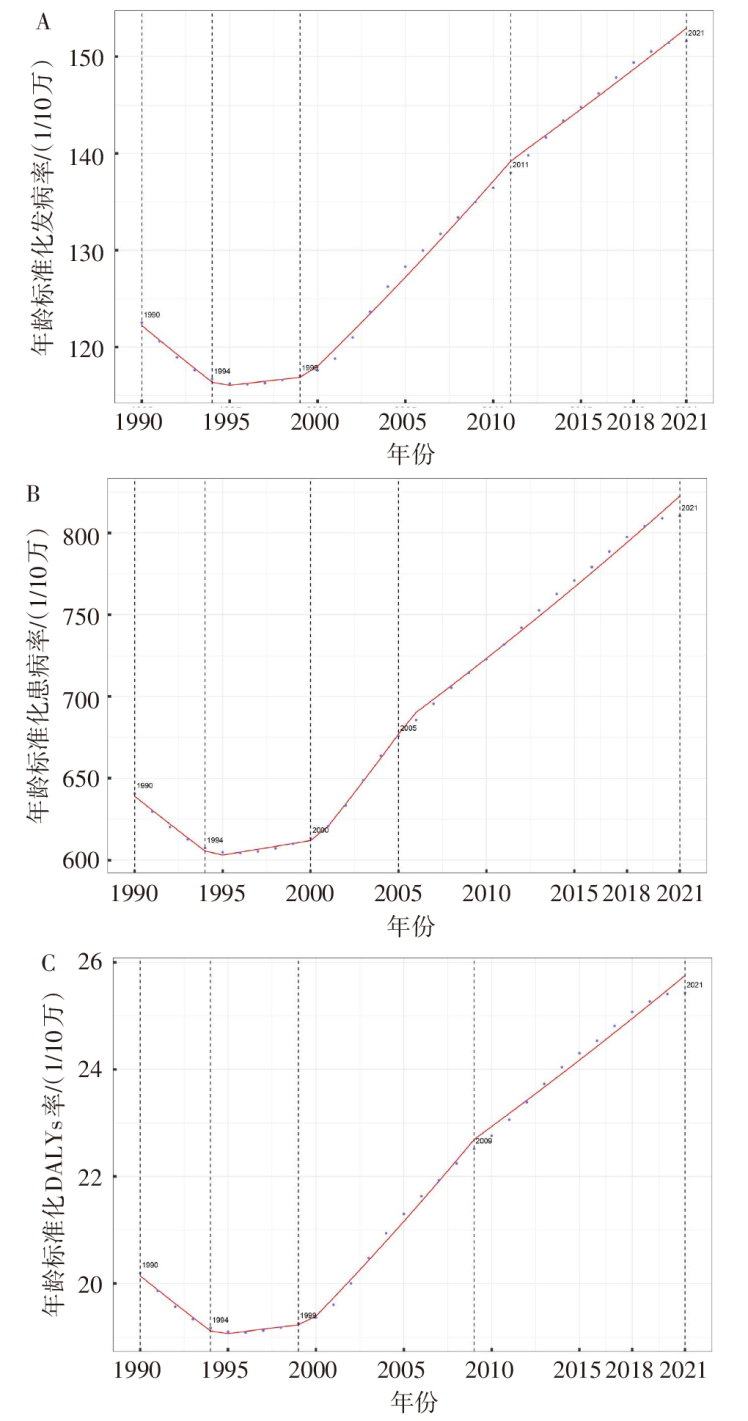
Fig.1 The changing trends in ASIR, ASPR and ASDR of gout patients in China from 1990 to 2021
| 分类 | 指标 | 趋势 | 年份 | APC(95%CI)/% | AAPC(95%CI)/% |
|---|---|---|---|---|---|
| 总人群 | ASIR | 1 | 1990—1994 | -1.22(-1.52~-0.91)* | 0.73(0.65~0.81)* |
| 2 | 1994—1999 | 0.18(-0.13~0.47) | |||
| 3 | 1999—2011 | 1.51(1.423~1.60)* | |||
| 4 | 2011—2021 | 0.94(0.83~1.05)* | |||
| ASPR | 1 | 1990—1994 | -1.36(-1.62~-1.05)* | 0.82(0.74~0.91)* | |
| 2 | 1994—2000 | 0.29(0.07~0.51)* | |||
| 3 | 2000—2005 | 2.19(1.90~2.49)* | |||
| 4 | 2005—2021 | 1.18(1.13~1.23)* | |||
| ASDR | 1 | 1990—1994 | -1.30(-1.63~-0.98)* | 0.80(0.71~0.89)* | |
| 2 | 1994—1999 | 0.22(-0.11~0.54) | |||
| 3 | 1999—2009 | 1.76(1.65~1.88)* | |||
| 4 | 2009—2021 | 1.06(0.97~1.15)* | |||
| 男性 | ASIR | 1 | 1990—1994 | -1.46(-1.74~-1.18)* | 0.76(0.68~0.85)* |
| 2 | 1994—1999 | 0.51(0.23~0.80)* | |||
| 3 | 1999—2017 | 1.45(1.41~1.50)* | |||
| 4 | 2017—2021 | 0.42(0.02~0.82)* | |||
| ASPR | 1 | 1990—1994 | -1.60(-1.91~-1.28)* | 0.82(0.73~0.91)* | |
| 2 | 1994—1999 | 0.57(0.25~0.90)* | |||
| 3 | 1999—2017 | 1.56(1.51~1.62)* | |||
| 4 | 2017—2021 | 0.45(-0.01~0.91) | |||
| ASDR | 1 | 1990—1994 | -1.58(-1.90~-1.27)* | 0.81(0.73~0.90)* | |
| 2 | 1994—1999 | 0.58(0.26~0.90)* | |||
| 3 | 1999—2016 | 1.55(1.50~1.60)* | |||
| 4 | 2016—2021 | 0.51(0.19~0.84)* | |||
| 女性 | ASIR | 1 | 1990—2000 | -0.67(-0.78~-0.57)* | 0.62(0.53~0.71)* |
| 2 | 2000—2009 | 2.39(2.25~2.53)* | |||
| 3 | 2009—2014 | -0.47(-0.81~-0.13)* | |||
| 4 | 2014—2021 | 1.12(0.92~1.33)* | |||
| ASPR | 1 | 1990—2000 | -0.74(-0.83~-0.64)* | 0.74(0.66~0.82)* | |
| 2 | 2000—2008 | 2.88(2.72~3.04)* | |||
| 3 | 2008—2014 | -0.24(-0.48~0.01) | |||
| 4 | 2014—2021 | 1.34(1.15~1.54)* | |||
| ASDR | 1 | 1990—2000 | -0.71(-0.81~-0.62)* | 0.72(0.64~0.80)* | |
| 2 | 2000—2008 | 2.83(2.67~2.99)* | |||
| 3 | 2008—2014 | -0.17(-0.41~0.06) | |||
| 4 | 2014—2021 | 1.24(1.05~1.42)* |
Tab.2 Analysis of joinpoint trend of ASIR, ASPR and ASDR for gout desease burden in China from 1990 to 2021
| 分类 | 指标 | 趋势 | 年份 | APC(95%CI)/% | AAPC(95%CI)/% |
|---|---|---|---|---|---|
| 总人群 | ASIR | 1 | 1990—1994 | -1.22(-1.52~-0.91)* | 0.73(0.65~0.81)* |
| 2 | 1994—1999 | 0.18(-0.13~0.47) | |||
| 3 | 1999—2011 | 1.51(1.423~1.60)* | |||
| 4 | 2011—2021 | 0.94(0.83~1.05)* | |||
| ASPR | 1 | 1990—1994 | -1.36(-1.62~-1.05)* | 0.82(0.74~0.91)* | |
| 2 | 1994—2000 | 0.29(0.07~0.51)* | |||
| 3 | 2000—2005 | 2.19(1.90~2.49)* | |||
| 4 | 2005—2021 | 1.18(1.13~1.23)* | |||
| ASDR | 1 | 1990—1994 | -1.30(-1.63~-0.98)* | 0.80(0.71~0.89)* | |
| 2 | 1994—1999 | 0.22(-0.11~0.54) | |||
| 3 | 1999—2009 | 1.76(1.65~1.88)* | |||
| 4 | 2009—2021 | 1.06(0.97~1.15)* | |||
| 男性 | ASIR | 1 | 1990—1994 | -1.46(-1.74~-1.18)* | 0.76(0.68~0.85)* |
| 2 | 1994—1999 | 0.51(0.23~0.80)* | |||
| 3 | 1999—2017 | 1.45(1.41~1.50)* | |||
| 4 | 2017—2021 | 0.42(0.02~0.82)* | |||
| ASPR | 1 | 1990—1994 | -1.60(-1.91~-1.28)* | 0.82(0.73~0.91)* | |
| 2 | 1994—1999 | 0.57(0.25~0.90)* | |||
| 3 | 1999—2017 | 1.56(1.51~1.62)* | |||
| 4 | 2017—2021 | 0.45(-0.01~0.91) | |||
| ASDR | 1 | 1990—1994 | -1.58(-1.90~-1.27)* | 0.81(0.73~0.90)* | |
| 2 | 1994—1999 | 0.58(0.26~0.90)* | |||
| 3 | 1999—2016 | 1.55(1.50~1.60)* | |||
| 4 | 2016—2021 | 0.51(0.19~0.84)* | |||
| 女性 | ASIR | 1 | 1990—2000 | -0.67(-0.78~-0.57)* | 0.62(0.53~0.71)* |
| 2 | 2000—2009 | 2.39(2.25~2.53)* | |||
| 3 | 2009—2014 | -0.47(-0.81~-0.13)* | |||
| 4 | 2014—2021 | 1.12(0.92~1.33)* | |||
| ASPR | 1 | 1990—2000 | -0.74(-0.83~-0.64)* | 0.74(0.66~0.82)* | |
| 2 | 2000—2008 | 2.88(2.72~3.04)* | |||
| 3 | 2008—2014 | -0.24(-0.48~0.01) | |||
| 4 | 2014—2021 | 1.34(1.15~1.54)* | |||
| ASDR | 1 | 1990—2000 | -0.71(-0.81~-0.62)* | 0.72(0.64~0.80)* | |
| 2 | 2000—2008 | 2.83(2.67~2.99)* | |||
| 3 | 2008—2014 | -0.17(-0.41~0.06) | |||
| 4 | 2014—2021 | 1.24(1.05~1.42)* |
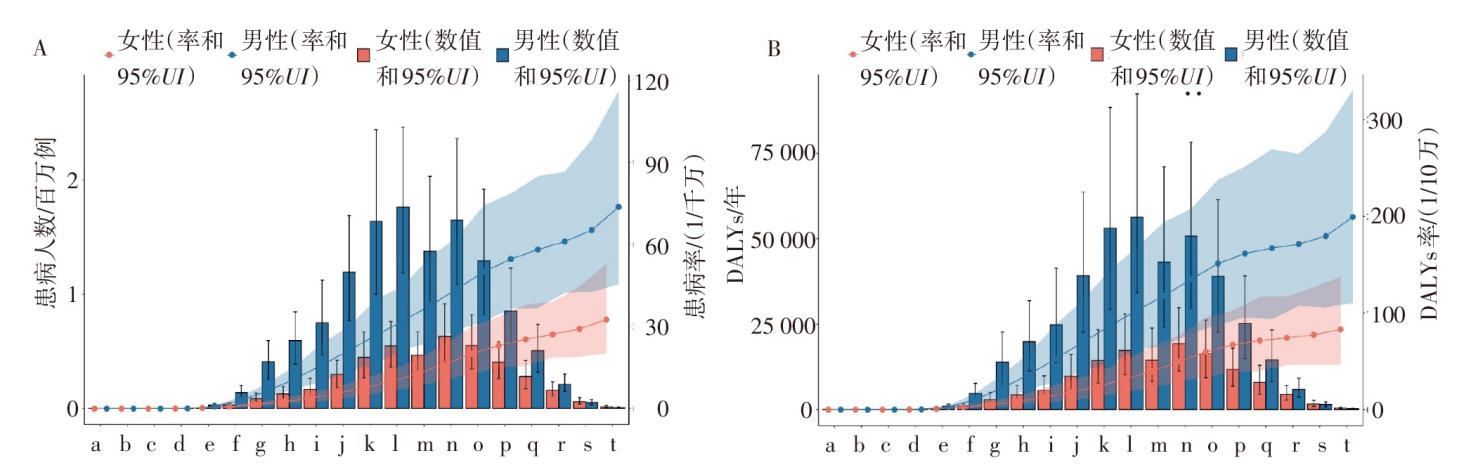
Fig.2 Number of prevalent cases, prevalence, DALYs and DALY rates in gout patients of different genders and ages in China in 2021

Fig.3 Age-period-cohort model fitting results for gout prevalence rates in China from 1990 to 2021
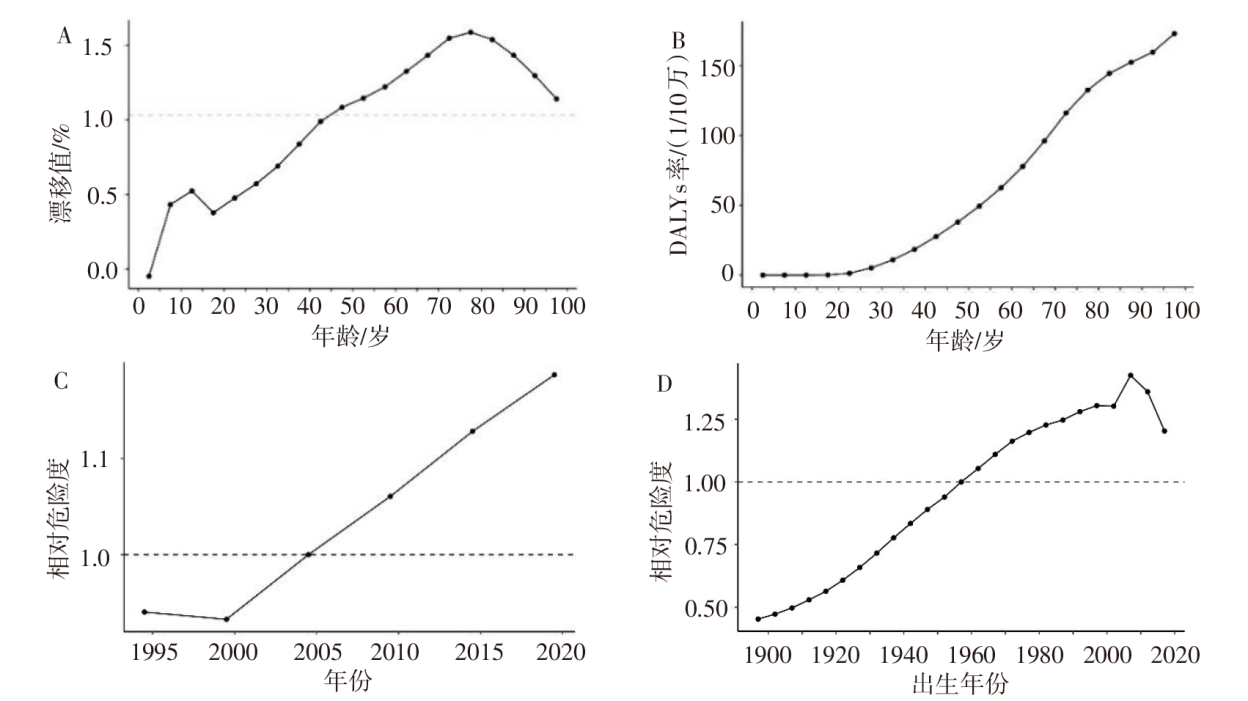
Fig.4 Age-period-cohort model fitting results for gout DALYs rates in China from 1990 to 2021
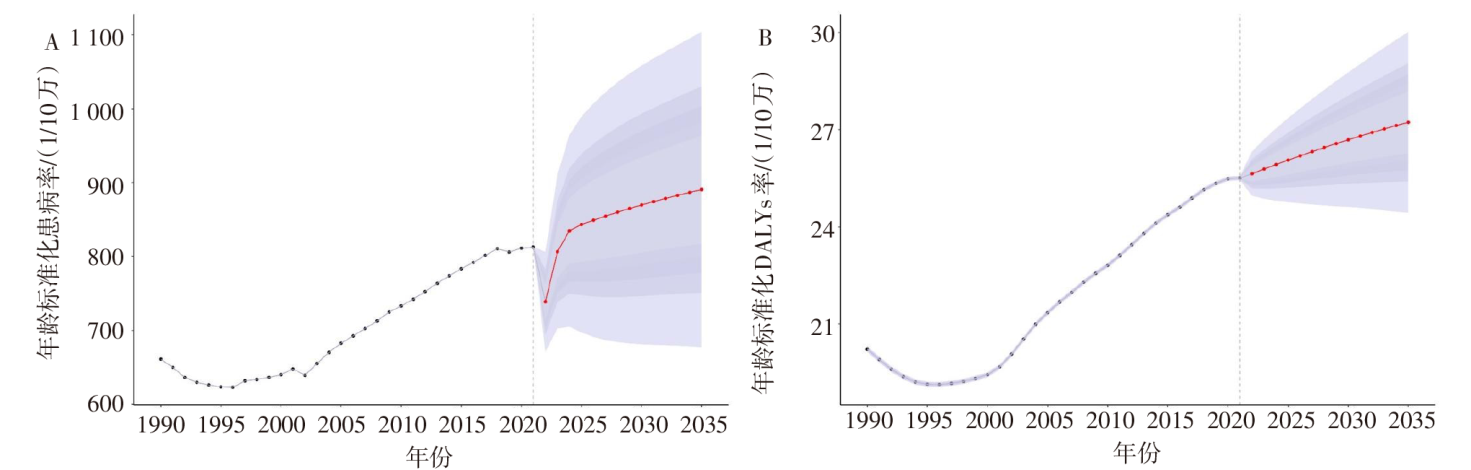
Fig.5 Projection of ASPR and ASDR of gout in China from 2022 to 2035
| [1] | FITZGERALD J D. Gout[J]. Ann Intern Med, 2025, 178(3):ITC33-ITC48. doi:10.7326/ANNALS-24-03951. |
| [2] | 初吉燕, 田竞, 付笛语, 等. AIM2炎症小体在急性痛风性关节炎中的表达及意义[J]. 天津医药, 2024, 52(5):518-522. |
| CHU J Y, TIAN J, FU D Y, et al. Expression and significance of AIM2 inflammasome in patients with acute gouty arthritis[J]. Tianjin Med J, 2024, 52(5):518-522. doi:10.11958/20231205. | |
| [3] | TIMSANS J, PALOMÄKI A, KAUPPI M. Gout and hyperuricemia:A narrative review of their comorbidities and clinical implications[J]. J Clin Med, 2024, 13(24):7616. doi:10.3390/jcm13247616. |
| [4] | JIN S, WANG Y, YAN S, et al. Global burden of gout and its changing trends and predictions in China:An analysis based on Global Burden of Disease Study 2021[J]. Chin Med J(Engl), 2025. doi:10.1097/CM9.0000000000003631. [Online ahead of print]. |
| [5] | XIE S, XIAO H, XU L, et al. A comprehensive analysis of trends in the burden of gout in China and globally from 1990 to 2021[J]. Sci Rep, 2025, 15(1):3310. doi:10.1038/s41598-025-86090-z. |
| [6] | MA L, WANG J, MA L, et al. The link between hyperuricemia and diabetes:insights from a quantitative analysis of scientific literature[J]. Front Endocrinol(Lausanne), 2024,15:1441503. doi:10.3389/fendo.2024.1441503. |
| [7] | CLEGG L X, HANKEY B F, TIWARI R, et al. Estimating average annual per cent change in trend analysis[J]. Stat Med, 2009, 28(29):3670-3682. doi:10.1002/sim.3733. |
| [8] | LUO Z, HE Y, MA G, et al. Years of life lost due to premature death and their trends in people with malignant neoplasm of female genital organs in Shanghai, China during 1995-2018: a population based study[J]. BMC Public Health, 2020, 20(1):1489. doi:10.1186/s12889-020-09593-6. |
| [9] | BU T, TANG D, LIU Y, et al. Trends in dietary patterns and diet-related behaviors in China[J]. Am J Health Behav, 2021, 45(2):371-383. doi:10.5993/AJHB.45.2.15. |
| [10] | LIU Y, DENG W, WEI F, et al. Recent advances in the application of foodborne substances in hyperuricemia[J]. J Agric Food Chem, 2024, 72(50):27639-27653. doi:10.1021/acs.jafc.4c07267. |
| [11] | KIM H, DO H, SON C N, et al. Effects of genetic risk and lifestyle habits on gout:A Korean cohort study[J]. J Korean Med Sci, 2025, 40(2):e1. doi:10.3346/jkms.2025.40.e1. |
| [12] | YANG Y, XIAN W, WU D, et al. The role of obesity,type 2 diabetes,and metabolic factors in gout:A Mendelian randomization study[J]. Front Endocrinol (Lausanne), 2022,13:917056. doi:10.3389/fendo.2022.917056. |
| [13] | CHANG Y, PARK J Y, SONG T J. Association between the triglyceride/high-density lipoprotein(TG/HDL)ratio and incidence of gout:A nationwide cohort study[J]. Front Endocrinol(Lausanne), 2024,15:1453458. doi:10.3389/fendo.2024.1453458. |
| [14] | LAI S W, HWANG B F, KUO Y H, et al. Risk of gout flare after medication: prescription symmetry sequence analysis[J]. Clin Rheumatol, 2024, 43(3):1183-1188. doi:10.1007/s10067-024-06891-x. |
| [15] | FUJII W, YAMAZAKI O, HIROHAMA D, et al. Gene-environment interaction modifies the association between hyperinsulinemia and serum urate levels through SLC22A12[J]. J Clin Invest, 2025, 135(10):e186633. doi:10.1172/JCI186633. |
| [16] | IM P K, KARTSONAKI C, KAKKOURA M G, et al. Hyperuricemia,gout and the associated comorbidities in China:findings from a prospective study of 0.5 million adults[J]. Lancet Reg Health West Pac, 2025,58:101572. doi:10.1016/j.lanwpc.2025.101572. |
| [17] | ZHU M, WANG X, PENG Z, et al. The role of the estimated glomerular filtration rate and body roundness index in the risk assessment of uric acid-lowering therapy-resistant gout in U.S. adults: evidence from the National Health and Nutrition Examination Survey(2007-2018)[J]. Ren Fail, 2025, 47(1):2441398. doi:10.1080/0886022X.2024.2441398. |
| [18] | HAO X, WANG A. The status quo and influencing factors of self-management behavior in patients with recurrent gout in China:A cross-sectional study[J]. Patient Prefer Adherence, 2025, 19:1793-1806. doi:10.2147/PPA.S528000. |
| [19] | CHUNG M K, KIM S S, CHEON Y H, et al. Patient perspectives and preferences regarding gout and gout management:Impact on adherence[J]. J Korean Med Sci, 2021, 36(32):e208. doi:10.3346/jkms.2021.36.e208. |
| [20] | 方珈文, 冯天元, 周志衡, 等. 1990—2019年中国痛风疾病负担趋势及未来十年预测研究[J]. 中国全科医学, 2024, 27(2):245-252. |
| FANG J W, FENG T Y, ZHOU Z H, et al. Trend analysis of gout burden in China from 1990 to 2019 and prediction for the next ten years[J]. Chinese General Practice, 2024, 27(2):245-252. doi:10.12114/j.issn.1007-9572.2023.0505. | |
| [21] | MA W, YE G, LIU Y, et al. Impact of alcohol consumption on hyperuricemia and gout:a systematic review and meta-analysis[J]. Front Nutr, 2025,12:1588980. doi:10.3389/fnut.2025.1588980. |
| [22] | TE KARU L, DALBETH N, STAMP L K. Inequities in people with gout:a focus on Māori(Indigenous People)of Aotearoa New Zealand[J]. Ther Adv Musculoskelet Dis, 2021,13:1759720X211028007. doi:10.1177/1759720X211028007. |
| [23] | EUN Y, KIM I Y, HAN K, et al. Association between female reproductive factors and gout:a nationwide population-based cohort study of 1 million postmenopausal women[J]. Arthritis Res Ther, 2021, 23(1):304. doi:10.1186/s13075-021-02701-w. |
| [24] | PANG Y, YUAN Y, ZHOU W, et al. Trends and burden of gout among adolescents aged 10-24 years:insights from the global burden of disease study 2021[J]. Front Public Health, 2025,13:1526141. doi:10.3389/fpubh.2025.1526141. |
| [25] | CHENG Z, XU X, QI H, et al. Obesity reduces the urate-lowering efficacy among patients with primary gout: a prospective cohort study[J]. Rheumatology(Oxford), 2025, 64(6):3500-3508. doi:10.1093/rheumatology/keaf076. |
| [26] | GWINNUTT J M, WIECZOREK M, BALANESCU A, et al. 2021 EULAR recommendations regarding lifestyle behaviours and work participation to prevent progression of rheumatic and musculoskeletal diseases[J]. Ann Rheum Dis,2023, 82(1):48-56. doi:10.1136/annrheumdis-2021-222020. |
| [27] | WU Z, HU Y, HE H, et al. Association of walking volume and intensity with incident gout:a population-based cohort study[J]. Am J Epidemiol,2025:kwaf109. doi:10.1093/aje/kwaf109. |
| [28] | SELVADURAI D, COLESHILL M J, DAY R O, et al. Patient factors and health outcomes associated with illness perceptions in people with gout[J]. Rheumatology(Oxford), 2024, 63(7):1927-1937. doi:10.1093/rheumatology/kead501. |
| [29] | 张汀, 贾化平, 王丁一, 等. 肌骨高频超声在痛风性关节炎临床诊疗中的应用进展[J]. 武警医学, 2025, 36(4):353-356. |
| ZHANG T, JIA H P, WANG D Y, et al. Application progress of high-frequency musculoskeletal ultrasound in the clinical diagnosis and treatment of gouty arthritis[J]. Med J Chin PAP, 2025, 36(4):353-356. doi:10.14010/j.cnki.wjyx.2025.04.010. | |
| [30] | DROSOS G C, VEDDER D, HOUBEN E, et al. EULAR recommendations for cardiovascular risk management in rheumatic and musculoskeletal diseases, including systemic lupus erythematosus and antiphospholipid syndrome[J]. Ann Rheum Dis, 2022, 81(6):768-779. doi:10.1136/annrheumdis-2021-221733. |
| Viewed | ||||||
|
Full text |
|
|||||
|
Abstract |
|
|||||
