
Tianjin Medical Journal ›› 2026, Vol. 54 ›› Issue (10): 1055-1060.doi: 10.11958/20253350
• Clinical Research • Previous Articles Next Articles
ZHANG Weiye( ), ZHU Ping, GAO Hang, BAO Fengyuan, XI Yue, YANG Jing
Received:2025-11-17
Revised:2026-05-25
Published:2026-10-15
Online:2026-10-10
ZHANG Weiye, ZHU Ping, GAO Hang, BAO Fengyuan, XI Yue, YANG Jing. Clinical characteristics and risk factors of ureaplasma urealyticum infection in preterm infants in the neonatal intensive care unit[J]. Tianjin Medical Journal, 2026, 54(10): 1055-1060.
CLC Number:
| 组别 | n | 男性 | 胎龄/周 | |||||||
|---|---|---|---|---|---|---|---|---|---|---|
| UU阴性组 | 332 | 180(54.22) | 32.86±2.91 | |||||||
| UU阳性组 | 130 | 68(52.31) | 30.15±2.47 | |||||||
| t或χ2 | 0.137 | 6.921** | ||||||||
| 组别 | 出生 体质量/g | Apgar评分/分 | ||||||||
| 1 min | 5 min | |||||||||
| UU阴性组 | 1 895.45±412.36 | 7.68±1.55 | 8.85±1.07 | |||||||
| UU阳性组 | 1 456.38±345.72 | 6.45±1.82 | 8.12±1.34 | |||||||
| t | 6.715** | 8.377** | 9.124** | |||||||
| 组别 | 并发症 | |||||||||
| 急性呼吸窘迫综合征 | BPD | 败血症 | 颅内出血 | |||||||
| UU阴性组 | 128(38.55) | 55(16.57) | 30(9.04) | 45(13.55) | ||||||
| UU阳性组 | 85(65.38) | 42(32.31) | 25(19.23) | 30(23.08) | ||||||
| χ2 | 27.064** | 13.956** | 9.258** | 6.230* | ||||||
Tab.1 Comparison of baseline characteristics between the two groups of preterm infants
| 组别 | n | 男性 | 胎龄/周 | |||||||
|---|---|---|---|---|---|---|---|---|---|---|
| UU阴性组 | 332 | 180(54.22) | 32.86±2.91 | |||||||
| UU阳性组 | 130 | 68(52.31) | 30.15±2.47 | |||||||
| t或χ2 | 0.137 | 6.921** | ||||||||
| 组别 | 出生 体质量/g | Apgar评分/分 | ||||||||
| 1 min | 5 min | |||||||||
| UU阴性组 | 1 895.45±412.36 | 7.68±1.55 | 8.85±1.07 | |||||||
| UU阳性组 | 1 456.38±345.72 | 6.45±1.82 | 8.12±1.34 | |||||||
| t | 6.715** | 8.377** | 9.124** | |||||||
| 组别 | 并发症 | |||||||||
| 急性呼吸窘迫综合征 | BPD | 败血症 | 颅内出血 | |||||||
| UU阴性组 | 128(38.55) | 55(16.57) | 30(9.04) | 45(13.55) | ||||||
| UU阳性组 | 85(65.38) | 42(32.31) | 25(19.23) | 30(23.08) | ||||||
| χ2 | 27.064** | 13.956** | 9.258** | 6.230* | ||||||
| 组别 | n | WBC/ (×109/L) | NEUT/ (×109/L) | PLT/ (×109/L) | CRP/ (mg/L) | ||||
|---|---|---|---|---|---|---|---|---|---|
| UU阴性组 | 332 | 10.23±2.85 | 5.32±1.86 | 220.45±50.12 | 3.2(1.5,6.8) | ||||
| UU阳性组 | 130 | 12.85±3.62 | 7.58±2.15 | 185.62±45.38 | 8.5(4.2,15.3) | ||||
| t或Z | 8.208** | 11.227** | 5.103** | 10.325** | |||||
| 组别 | 抗生素使用时间/d | 机械通气时间/d | 氧疗时间/d | ||||||
| UU阴性组 | 7.8(4.5,12.6) | 2.5(1.0,5.8) | 9.6(5.3,16.8) | ||||||
| UU阳性组 | 14.5(8.2,22.3) | 6.8(3.2,12.5) | 18.5(10.2,28.3) | ||||||
| Z | 9.876** | 11.234** | 10.567** | ||||||
Tab.2 Comparison of laboratory test indicators and treatment profiles between the two groups
| 组别 | n | WBC/ (×109/L) | NEUT/ (×109/L) | PLT/ (×109/L) | CRP/ (mg/L) | ||||
|---|---|---|---|---|---|---|---|---|---|
| UU阴性组 | 332 | 10.23±2.85 | 5.32±1.86 | 220.45±50.12 | 3.2(1.5,6.8) | ||||
| UU阳性组 | 130 | 12.85±3.62 | 7.58±2.15 | 185.62±45.38 | 8.5(4.2,15.3) | ||||
| t或Z | 8.208** | 11.227** | 5.103** | 10.325** | |||||
| 组别 | 抗生素使用时间/d | 机械通气时间/d | 氧疗时间/d | ||||||
| UU阴性组 | 7.8(4.5,12.6) | 2.5(1.0,5.8) | 9.6(5.3,16.8) | ||||||
| UU阳性组 | 14.5(8.2,22.3) | 6.8(3.2,12.5) | 18.5(10.2,28.3) | ||||||
| Z | 9.876** | 11.234** | 10.567** | ||||||
| 组别 | n | 母亲 年龄/岁 | 孕次/次 | 产次/次 | 受孕方式 | |||||||||||
|---|---|---|---|---|---|---|---|---|---|---|---|---|---|---|---|---|
| 自然受孕 | 辅助生殖 | |||||||||||||||
| UU阴性组 | 332 | 29.12±3.85 | 2(1,3) | 1(1,2) | 305(91.87) | 27(8.13) | ||||||||||
| UU阳性组 | 130 | 28.65±4.32 | 2(1,3) | 1(1,2) | 118(90.77) | 12(9.23) | ||||||||||
| Z或χ2 | 1.083 | 0.587 | 0.325 | 0.146 | ||||||||||||
| 组别 | UU 感染史 | 孕期并发症 | ||||||||||||||
| 妊娠期高血压 | 妊娠期糖尿病 | 绒毛膜羊膜炎 | ||||||||||||||
| UU阴性组 | 65(19.58) | 68(20.48) | 62(18.67) | 45(13.55) | ||||||||||||
| UU阳性组 | 98(75.38) | 32(24.62) | 28(21.54) | 38(29.23) | ||||||||||||
| χ2 | 127.418** | 0.941 | 0.488 | 15.578** | ||||||||||||
| 组别 | 胎膜早破 | 产前发热 | 分娩方式 | |||||||||||||
| 阴道分娩 | 剖宫产 | |||||||||||||||
| UU阴性组 | 85(25.60) | 25(7.53) | 120(36.14) | 212(63.86) | ||||||||||||
| UU阳性组 | 72(55.38) | 22(16.92) | 95(73.08) | 35(26.92) | ||||||||||||
| χ2 | 36.935** | 9.019** | 51.216** | |||||||||||||
| 组别 | 产程/h | 羊水Ⅲ度污染 | ||||||||||||||
| UU阴性组 | 8.2(5.5,12.8) | 42(12.65) | ||||||||||||||
| UU阳性组 | 12.5(8.3,18.6) | 38(29.23) | ||||||||||||||
| Z或χ2 | 8.976** | 17.937** | ||||||||||||||
Tab.3 Comparison of maternal perinatal clinical characteristics between the two groups
| 组别 | n | 母亲 年龄/岁 | 孕次/次 | 产次/次 | 受孕方式 | |||||||||||
|---|---|---|---|---|---|---|---|---|---|---|---|---|---|---|---|---|
| 自然受孕 | 辅助生殖 | |||||||||||||||
| UU阴性组 | 332 | 29.12±3.85 | 2(1,3) | 1(1,2) | 305(91.87) | 27(8.13) | ||||||||||
| UU阳性组 | 130 | 28.65±4.32 | 2(1,3) | 1(1,2) | 118(90.77) | 12(9.23) | ||||||||||
| Z或χ2 | 1.083 | 0.587 | 0.325 | 0.146 | ||||||||||||
| 组别 | UU 感染史 | 孕期并发症 | ||||||||||||||
| 妊娠期高血压 | 妊娠期糖尿病 | 绒毛膜羊膜炎 | ||||||||||||||
| UU阴性组 | 65(19.58) | 68(20.48) | 62(18.67) | 45(13.55) | ||||||||||||
| UU阳性组 | 98(75.38) | 32(24.62) | 28(21.54) | 38(29.23) | ||||||||||||
| χ2 | 127.418** | 0.941 | 0.488 | 15.578** | ||||||||||||
| 组别 | 胎膜早破 | 产前发热 | 分娩方式 | |||||||||||||
| 阴道分娩 | 剖宫产 | |||||||||||||||
| UU阴性组 | 85(25.60) | 25(7.53) | 120(36.14) | 212(63.86) | ||||||||||||
| UU阳性组 | 72(55.38) | 22(16.92) | 95(73.08) | 35(26.92) | ||||||||||||
| χ2 | 36.935** | 9.019** | 51.216** | |||||||||||||
| 组别 | 产程/h | 羊水Ⅲ度污染 | ||||||||||||||
| UU阴性组 | 8.2(5.5,12.8) | 42(12.65) | ||||||||||||||
| UU阳性组 | 12.5(8.3,18.6) | 38(29.23) | ||||||||||||||
| Z或χ2 | 8.976** | 17.937** | ||||||||||||||
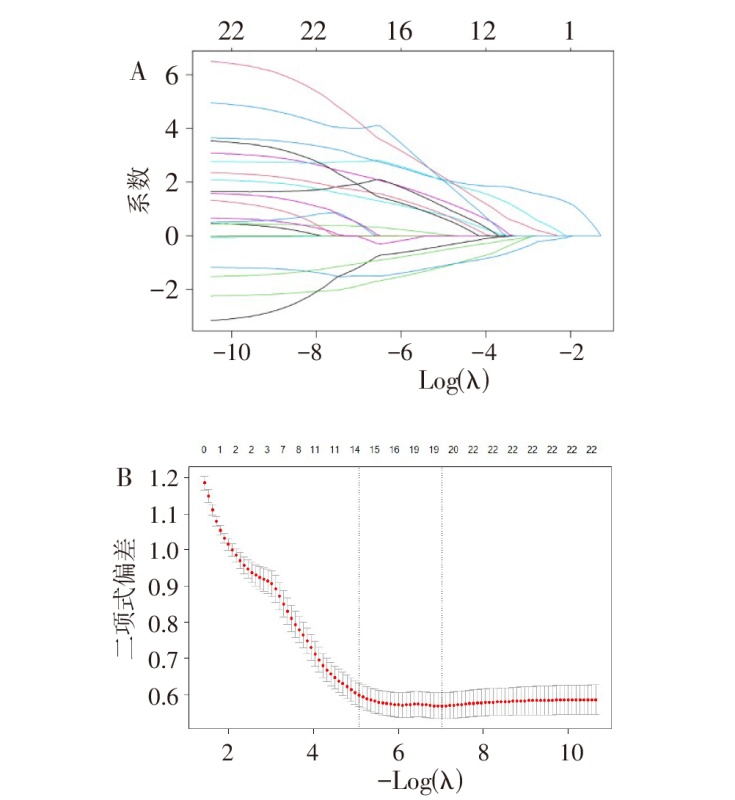
Fig.1 LASSO regression for screening influencing factors of UU positivity
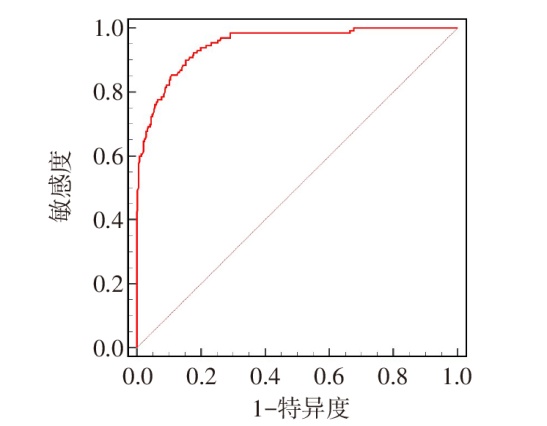
Fig.2 Receiver operating characteristic curve of the combined diagnostic model for neonatal UU positivity
| 变量 | β | SE | Wald χ2 | P | OR | OR(95%CI) |
|---|---|---|---|---|---|---|
| 出生体质量 | -0.017 | 0.005 | 11.560 | 0.001 | 0.983 | 0.974~0.993 |
| 1 min Apgar 评分 | -0.936 | 0.503 | 3.463 | 0.063 | 0.392 | 0.146~1.051 |
| 5 min Apgar 评分 | -2.187 | 0.518 | 17.825 | <0.001 | 0.112 | 0.041~0.310 |
| 败血症 | 2.517 | 0.962 | 6.846 | 0.009 | 12.391 | 1.880~81.656 |
| 颅内出血 | 1.686 | 0.670 | 6.332 | 0.012 | 5.398 | 1.452~20.069 |
| WBC | 0.711 | 0.385 | 3.410 | 0.065 | 2.036 | 0.957~4.330 |
| 抗生素使用时间 | -1.240 | 0.230 | 29.066 | <0.001 | 0.289 | 0.184~0.454 |
| 母亲UU感染史 | 1.854 | 0.496 | 13.972 | <0.001 | 6.385 | 2.415~16.881 |
| 孕期并发绒毛 膜羊膜炎 | 1.834 | 0.496 | 13.672 | <0.001 | 6.259 | 2.368~16.546 |
| 胎膜早破 | -0.942 | 0.521 | 3.269 | 0.071 | 0.390 | 0.140~1.082 |
| 产前发热 | 1.317 | 0.999 | 1.738 | 0.187 | 3.732 | 0.527~1.399 |
| 产程 | -0.005 | 0.174 | 0.001 | 0.977 | 0.995 | 0.707~1.399 |
| 分娩方式 | 1.843 | 0.664 | 7.704 | 0.006 | 6.315 | 1.719~23.207 |
| 羊水Ⅲ度污染 | 1.228 | 0.975 | 1.586 | 0.208 | 3.414 | 0.505~23.081 |
| 常数项 | -3.215 | 1.023 | 9.877 | 0.002 | 0.040 | - |
Tab.4 Multivariate Logistic regression analysis of factors associated with UU positivity in preterm infants
| 变量 | β | SE | Wald χ2 | P | OR | OR(95%CI) |
|---|---|---|---|---|---|---|
| 出生体质量 | -0.017 | 0.005 | 11.560 | 0.001 | 0.983 | 0.974~0.993 |
| 1 min Apgar 评分 | -0.936 | 0.503 | 3.463 | 0.063 | 0.392 | 0.146~1.051 |
| 5 min Apgar 评分 | -2.187 | 0.518 | 17.825 | <0.001 | 0.112 | 0.041~0.310 |
| 败血症 | 2.517 | 0.962 | 6.846 | 0.009 | 12.391 | 1.880~81.656 |
| 颅内出血 | 1.686 | 0.670 | 6.332 | 0.012 | 5.398 | 1.452~20.069 |
| WBC | 0.711 | 0.385 | 3.410 | 0.065 | 2.036 | 0.957~4.330 |
| 抗生素使用时间 | -1.240 | 0.230 | 29.066 | <0.001 | 0.289 | 0.184~0.454 |
| 母亲UU感染史 | 1.854 | 0.496 | 13.972 | <0.001 | 6.385 | 2.415~16.881 |
| 孕期并发绒毛 膜羊膜炎 | 1.834 | 0.496 | 13.672 | <0.001 | 6.259 | 2.368~16.546 |
| 胎膜早破 | -0.942 | 0.521 | 3.269 | 0.071 | 0.390 | 0.140~1.082 |
| 产前发热 | 1.317 | 0.999 | 1.738 | 0.187 | 3.732 | 0.527~1.399 |
| 产程 | -0.005 | 0.174 | 0.001 | 0.977 | 0.995 | 0.707~1.399 |
| 分娩方式 | 1.843 | 0.664 | 7.704 | 0.006 | 6.315 | 1.719~23.207 |
| 羊水Ⅲ度污染 | 1.228 | 0.975 | 1.586 | 0.208 | 3.414 | 0.505~23.081 |
| 常数项 | -3.215 | 1.023 | 9.877 | 0.002 | 0.040 | - |
| [1] | Sprong K E, Mabenge M, Wright C A, et al. Ureaplasma species and preterm birth:current perspectives[J]. Crit Rev Microbiol, 2020, 46(2):169-181. doi:10.1080/1040841X.2020.1736986. |
| [2] | Cai J J, Ying J J, Li J H. Effects of Ureaplasma urealyticum infection on neonates:a meta-analysis[J]. Am J Transl Res, 2024, 16(12):7222-7237. doi:10.62347/YQIQ1947. |
| [3] | Silwedel C, Laube M, Speer C P, et al. The role of ureaplasma species in prenatal and postnatal morbidity of preterm infants:current concepts[J]. Neonatology, 2024, 121(5):627-635. doi:10.1159/000539613. |
| [4] | Zhang Z, Wang J, Chen W, et al. Clinical characteristics and current treatment modality of preterm infants with ureaplasma spp. infection[J]. Children (Basel), 2024, 11(10):1202. doi:10.3390/children11101202. |
| [5] | Yin Y, Ren H, Li J, et al. Integrated placental and neonatal urinary detection of ureaplasma urealyticum:a translational approach to predicting adverse neonatal outcomes[J]. Placenta, 2025, 172:83-88. doi:10.1016/j.placenta.2025.10.018. |
| [6] | Sarwar H, Hao Q, Zhang J, et al. Clinical significance of Ureaplasma species in bronchopulmonary dysplasia development in preterm infants[J]. Sci Rep, 2025, 15(1):33683. doi:10.1038/s41598-025-18692-6. |
| [7] | 国家卫生健康委员会科技教育司. 涉及人的生命科学和医学研究伦理审查办法(总则)[J]. 护理与康复, 2024, 23(11):80. |
| NHC Department of Science,Technology and Education. Measures for ethical review of life science and medical research involving human subjects(general provisions)[J]. Journal of Nursing and Rehabilitation, 2024, 23(11):80. | |
| [8] | 陈亿仙, 李秋玲, 蒋永江, 等. 解脲支原体感染新生儿的临床特征分析[J]. 中国妇幼健康研究, 2024, 35(7):73-78. |
| Chen Y X, Li Q L, Jiang Y J, et al. Clinical characteristics analysis of newborns with ureaplasma urealyticum[J]. Chin J Woman Child Health Res, 2024, 35(7):73-78. doi:10.3969/j.issn.1673-5293.2024.07.012. | |
| [9] | 魏红玲, 邢燕, 周颖, 等. 胎龄小于32周早产儿解脲脲原体肺炎的临床特征分析[J]. 中华预防医学杂志, 2021, 55(2):239-244. |
| Wei H L, Xing Y, Zhou Y, et al. Clinical characteristics of Ureaplasma urealyticum pneumonia in preterm infants with gestational age less than 32 weeks[J]. Chinese Journal of Preventive Medicine, 2021, 55(2):239-244. doi:10.3760/cma.j.cn112150-20201208-01432. | |
| [10] | Silwedel C, Speer C P, Glaser K. Ureaplasma-associated prenatal,perinatal,and neonatal morbidities[J]. Expert Rev Clin Immunol, 2017, 13(11):1073-1087. doi:10.1080/1744666X.2017.1381559. |
| [11] | 陈先睿, 钟美珍, 吴夏萍, 等. 早产儿解脲脲原体感染的临床特点分析[J]. 中国妇幼保健, 2021, 36(2):328-332. |
| Chen X R, Zhong M Z, Wu X P, et al. Analysis of clinical characteristics of Ureaplasma urealyticum infection in preterm infants[J]. Maternal and Child Health Care of China, 2021, 36(2):328-332. doi:10.19829/j.zgfybj.issn.1001-4411.2021.02.027. | |
| [12] | 李洋丽, 袁天明. 围产期解脲脲原体感染的诊治进展[J]. 中国医药科学, 2024, 14(15):52-56. |
| Li Y L, Yuan T M. Advances in the diagnosis and treatment of ureaplasma urealyticum infection during perinatal period[J]. China Medicine and Pharmacy, 2024, 14(15):52-56. doi:10.20116/j.issn2095-0616.2024.15.13. | |
| [13] | Ye G Y, Wang K, Gui Q, et al. Ureaplasma urealyticum-derived lipid-associated membrane proteins introduce IL-6,IL-8,and TNF-α cytokines into human amniotic epithelial cells via Toll-like receptor 2[J]. J Zhejiang Univ Sci B, 2018, 19(8):654-661. doi:10.1631/jzus.B1800005. |
| [14] | Triantafilou M, De G B, Aboklaish A F, et al. Synergic activation of toll-like receptor(TLR) 2/6 and 9 in response to Ureaplasma parvum & urealyticum in human amniotic epithelial cells[J]. PLoS One, 2013, 8(4):e61199. doi:10.1371/journal.pone.0061199. |
| [15] | 毕敬磊, 田茂瑾, 赵培庆, 等. 解脲脲原体LAMPs通过正向调控巨噬细胞M1极化抑制铁死亡机制研究[J]. 中国免疫学杂志, 2025, 41(11):2573-2577. |
| Bi J L, Tian M J, Zhao P Q, et al. Ureaplasma spp. LAMPs inhibits ferroptosis by positively regulation of macrophage M1 polarization[J]. Chinese Journal of Immunology, 2025, 41(11):2573-2577. doi:10.3969/j.issn.1000-484X.2025.11.003. | |
| [16] | 王燕琼, 曾雅丽, 陈雪雨, 等. 超早产儿解脲脲原体感染及定植状态的临床特征分析[J]. 中国当代儿科杂志, 2024, 26(8):811-816. |
| Wang Y Q, Zeng Y L, Chen X Y, et al. Clinical characteristics of Ureaplasma urealyticum infection and colonization in extremely preterm infants[J]. Chinese Journal of Contemporary Pediatrics, 2024, 26(8):811-816. doi:10.7499/j.issn.1008-8830.2403002. | |
| [17] | Sun T, Fu J. Analysis of the clinical features of intrauterine ureaplasma urealyticum infection in preterm infants:a case-control study[J]. Front Pediatr, 2021, 12(9):774150. doi:10.3389/fped.2021.774150. |
| [18] | Pavlidis I, SpilleR O B, Sammut D G, et al. Cervical epithelial damage promotes Ureaplasma parvum ascending infection,intrauterine inflammation and preterm birth induction in mice[J]. Nat Commun, 2020, 11(1):199. doi:10.1038/s41467-019-14089-y. |
| [19] | Waites K B, Rudd P T, Crouse D T, et al. Chronic ureaplasma urealyticum and mycoplasma hominis infections of central nervous system in preterm infants[J]. Lancet, 1988, 1(8575/8576):17-21. doi:10.1016/s0140-6736(88)91002-1. |
| [20] | Jónsson B, Rylander M, Faxelius G. Ureaplasma urealyticum,erythromycin and respiratory morbidity in high-risk preterm neonates[J]. Acta Paediatr, 1998, 87(10):1079-1084. doi:10.1080/080352598750031428. |
| [21] | 中华医学会围产医学分会新生儿复苏学组. 新生儿窒息诊断的专家共识[J]. 中华围产医学杂志, 2016, 19(1):3-6. |
| Neonatal Resuscitation Group,Perinatal Medicine Branch of Chinese Medical Association. Expert consensus on diagnosis of neonatal asphyxia[J]. Chinese Journal of Perinatal Medicine, 2016, 19(1):3-6. doi:10.3760/cma.j.issn.1007-9408.2016.01.002. | |
| [22] | Chen X, Huang X, Zhou Q, et al. Association between Ureaplasma urealyticum colonization and bronchopulmonary dysplasia in preterm infants:a systematic review and meta-analysis[J]. Front Pediatr, 2024, 12:1436568. doi:10.3389/fped.2024.1436568. |
| [23] | 陈静. 早产儿解脲脲原体感染与支气管肺发育不良相关性研究[D]. 郑州: 郑州大学, 2021. |
| Chen J. The relationship between ureaplasma urealyticum infection and bronchopulmonary dysplasia in premature infants[D]. Zhengzhou: Zhengzhou University, 2021. | |
| [24] | 文艺, 张君, 王英俊, 等. 肺部超声评分及血清SP-A、IL-6水平与新生儿呼吸窘迫综合征病情及预后的相关性[J]. 天津医药, 2026, 54(2):173-178. |
| Wen Y, Zhang J, Wang Y J, et al. Correlation analysis of lung ultrasound score,serum pulmonary surfactant protein A and IL-6 levels with disease severity and prognosis in neonatal respiratory distress syndrome[J]. Tianjin Med J, 2026, 54(2):173-178. doi:10.11958/20252398. | |
| [25] | Viscardi R M, Magder L S, Terrin M L, et al. Predicting the likelihood of lower respiratory tract Ureaplasma infection in preterms[J]. Arch Dis Child Fetal Neonatal Ed, 2023, 108(3):250-255. doi:10.1136/archdischild-2022-324192. |
| Viewed | ||||||
|
Full text |
|
|||||
|
Abstract |
|
|||||
