
Tianjin Medical Journal ›› 2025, Vol. 53 ›› Issue (9): 976-980.doi: 10.11958/20251021
• Clinical Research • Previous Articles Next Articles
CAI Miao1( ), LIANG Shuang1, LIU Yang2,△()
Received:2025-03-12
Revised:2025-06-18
Published:2025-09-15
Online:2025-09-16
Contact:
△E-mail: CAI Miao, LIANG Shuang, LIU Yang. Construction of a prediction model for prolonged hospital stay in children with pneumonia and its clinical application value[J]. Tianjin Medical Journal, 2025, 53(9): 976-980.
CLC Number:
| 组别 | n | 年龄/月 | 男性 | 体质量/kg | 身高/cm | 出生史 | 肺炎病史 | 过敏史 | 完成疫苗 接种 | ||||||||||
|---|---|---|---|---|---|---|---|---|---|---|---|---|---|---|---|---|---|---|---|
| 早产 | 足月产 | ||||||||||||||||||
| ≤7 d组 | 628 | 40.6±23.5 | 395(62.9) | 15.8±4.8 | 98.5±15.3 | 72(11.5) | 556(88.5) | 148(23.6) | 85(13.5) | 580(92.4) | |||||||||
| >7 d组 | 627 | 37.2±22.1 | 393(62.7) | 16.2±5.1 | 101.2±16.1 | 98(15.6) | 529(84.4) | 189(30.1) | 102(16.3) | 565(89.5) | |||||||||
| t或χ2 | 2.640* | 0.004 | 1.431 | 3.041** | 4.644* | 6.903** | 1.847 | 1.976 | |||||||||||
| 组别 | 入院体温/ ℃ | 呼吸频率/ (次/min) | 精神状态 | 感染类型 | |||||||||||||||
| 清醒 | 嗜睡 | 昏迷 | 细菌感染 | 病毒感染 | 支原体感染 | 混合感染 | |||||||||||||
| ≤7 d组 | 38.8±0.8 | 42.3±9.6 | 610(97.1) | 15(2.4) | 3(0.5) | 187(29.8) | 228(36.2) | 131(20.9) | 82(13.1) | ||||||||||
| >7 d组 | 39.1±0.9 | 42.7±10.5 | 598(95.4) | 25(4.0) | 4(0.6) | 193(30.7) | 243(38.7) | 123(19.6) | 68(11.0) | ||||||||||
| t或χ2 | 6.226** | 0.704 | 2.761 | 2.130 | |||||||||||||||
Tab.1 Comparison of clinical characteristics between the two groups of children
| 组别 | n | 年龄/月 | 男性 | 体质量/kg | 身高/cm | 出生史 | 肺炎病史 | 过敏史 | 完成疫苗 接种 | ||||||||||
|---|---|---|---|---|---|---|---|---|---|---|---|---|---|---|---|---|---|---|---|
| 早产 | 足月产 | ||||||||||||||||||
| ≤7 d组 | 628 | 40.6±23.5 | 395(62.9) | 15.8±4.8 | 98.5±15.3 | 72(11.5) | 556(88.5) | 148(23.6) | 85(13.5) | 580(92.4) | |||||||||
| >7 d组 | 627 | 37.2±22.1 | 393(62.7) | 16.2±5.1 | 101.2±16.1 | 98(15.6) | 529(84.4) | 189(30.1) | 102(16.3) | 565(89.5) | |||||||||
| t或χ2 | 2.640* | 0.004 | 1.431 | 3.041** | 4.644* | 6.903** | 1.847 | 1.976 | |||||||||||
| 组别 | 入院体温/ ℃ | 呼吸频率/ (次/min) | 精神状态 | 感染类型 | |||||||||||||||
| 清醒 | 嗜睡 | 昏迷 | 细菌感染 | 病毒感染 | 支原体感染 | 混合感染 | |||||||||||||
| ≤7 d组 | 38.8±0.8 | 42.3±9.6 | 610(97.1) | 15(2.4) | 3(0.5) | 187(29.8) | 228(36.2) | 131(20.9) | 82(13.1) | ||||||||||
| >7 d组 | 39.1±0.9 | 42.7±10.5 | 598(95.4) | 25(4.0) | 4(0.6) | 193(30.7) | 243(38.7) | 123(19.6) | 68(11.0) | ||||||||||
| t或χ2 | 6.226** | 0.704 | 2.761 | 2.130 | |||||||||||||||
| 组别 | n | WBC/(×109/L) | NEU/(×109/L) | LYM/(×109/L) | Hb/(g/L) | PLT/(×109/L) | CRP/(mg/L) | PCT/(μg/L) | 病变范围 | |||||||||
|---|---|---|---|---|---|---|---|---|---|---|---|---|---|---|---|---|---|---|
| 单侧 | 双侧 | |||||||||||||||||
| ≤7 d组 | 628 | 12.5±4.8 | 8.2±3.9 | 3.5±1.8 | 115.3±15.2 | 285.4±92.5 | 45.6±28.3 | 0.85±0.62 | 482(76.8) | 146(23.2) | ||||||||
| >7 d组 | 627 | 14.8±5.5 | 10.5±4.6 | 3.1±1.6 | 112.7±16.1 | 298.6±98.7 | 68.9±35.4 | 1.53±0.88 | 415(66.2) | 212(33.8) | ||||||||
| t或χ2 | 7.872** | 9.525** | 4.166** | 2.942* | 2.445* | 12.879** | 11.230** | 17.158** | ||||||||||
| 组别 | 胸腔积液 | 抗生素使用 | 氧疗 | 呼吸支持 | ||||||||||||||
| 头孢类 | 青霉素类 | 大环内酯类 | 是 | 否 | 是 | 否 | ||||||||||||
| ≤7 d组 | 43(6.8) | 450(71.7) | 128(20.4) | 50(8.0) | 155(24.7) | 473(75.3) | 32(5.1) | 596(94.9) | ||||||||||
| >7 d组 | 79(12.6) | 452(72.1) | 115(18.3) | 60(9.6) | 288(45.9) | 339(54.1) | 88(14.0) | 539(86.0) | ||||||||||
| χ2 | 11.830** | 1.608 | 62.403** | 28.995** | ||||||||||||||
Tab.2 Comparison of laboratory test results and treatment processes between the two groups
| 组别 | n | WBC/(×109/L) | NEU/(×109/L) | LYM/(×109/L) | Hb/(g/L) | PLT/(×109/L) | CRP/(mg/L) | PCT/(μg/L) | 病变范围 | |||||||||
|---|---|---|---|---|---|---|---|---|---|---|---|---|---|---|---|---|---|---|
| 单侧 | 双侧 | |||||||||||||||||
| ≤7 d组 | 628 | 12.5±4.8 | 8.2±3.9 | 3.5±1.8 | 115.3±15.2 | 285.4±92.5 | 45.6±28.3 | 0.85±0.62 | 482(76.8) | 146(23.2) | ||||||||
| >7 d组 | 627 | 14.8±5.5 | 10.5±4.6 | 3.1±1.6 | 112.7±16.1 | 298.6±98.7 | 68.9±35.4 | 1.53±0.88 | 415(66.2) | 212(33.8) | ||||||||
| t或χ2 | 7.872** | 9.525** | 4.166** | 2.942* | 2.445* | 12.879** | 11.230** | 17.158** | ||||||||||
| 组别 | 胸腔积液 | 抗生素使用 | 氧疗 | 呼吸支持 | ||||||||||||||
| 头孢类 | 青霉素类 | 大环内酯类 | 是 | 否 | 是 | 否 | ||||||||||||
| ≤7 d组 | 43(6.8) | 450(71.7) | 128(20.4) | 50(8.0) | 155(24.7) | 473(75.3) | 32(5.1) | 596(94.9) | ||||||||||
| >7 d组 | 79(12.6) | 452(72.1) | 115(18.3) | 60(9.6) | 288(45.9) | 339(54.1) | 88(14.0) | 539(86.0) | ||||||||||
| χ2 | 11.830** | 1.608 | 62.403** | 28.995** | ||||||||||||||
| 变量 | β | SE | Wald χ2 | P | OR(95%CI) |
|---|---|---|---|---|---|
| 月龄 | -0.021 | 0.004 | 27.563 | <0.001 | 0.979(0.972~0.987) |
| 早产史 | 0.560 | 0.186 | 9.065 | 0.003 | 1.751(1.216~2.521) |
| 既往肺炎史 | 0.419 | 0.195 | 4.617 | 0.032 | 1.520(1.037~2.228) |
| 入院体温 | 0.255 | 0.083 | 9.439 | 0.002 | 1.290(1.097~1.518) |
| 血清CRP | 0.019 | 0.003 | 40.111 | <0.001 | 1.019(1.013~1.025) |
| 胸腔积液 | 0.683 | 0.211 | 10.478 | 0.001 | 1.980(1.309~2.994) |
| 氧疗 | 1.047 | 0.220 | 22.649 | <0.001 | 2.849(1.851~4.385) |
| 常数项 | -2.657 | 1.689 | 2.475 | 0.116 | 0.070 |
Tab.3 Analysis of influencing factors on hospital stay in children with pneumonia
| 变量 | β | SE | Wald χ2 | P | OR(95%CI) |
|---|---|---|---|---|---|
| 月龄 | -0.021 | 0.004 | 27.563 | <0.001 | 0.979(0.972~0.987) |
| 早产史 | 0.560 | 0.186 | 9.065 | 0.003 | 1.751(1.216~2.521) |
| 既往肺炎史 | 0.419 | 0.195 | 4.617 | 0.032 | 1.520(1.037~2.228) |
| 入院体温 | 0.255 | 0.083 | 9.439 | 0.002 | 1.290(1.097~1.518) |
| 血清CRP | 0.019 | 0.003 | 40.111 | <0.001 | 1.019(1.013~1.025) |
| 胸腔积液 | 0.683 | 0.211 | 10.478 | 0.001 | 1.980(1.309~2.994) |
| 氧疗 | 1.047 | 0.220 | 22.649 | <0.001 | 2.849(1.851~4.385) |
| 常数项 | -2.657 | 1.689 | 2.475 | 0.116 | 0.070 |
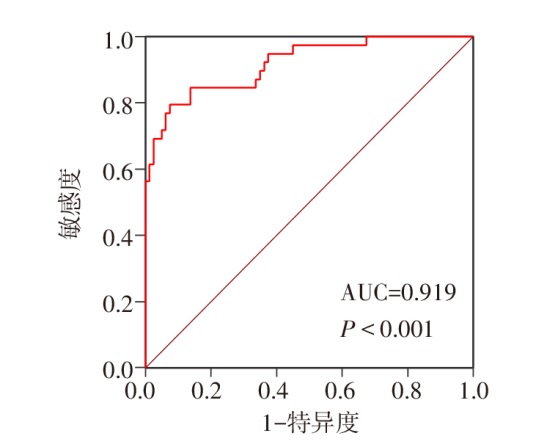
Fig.1 The ROC curve of the nomogram model for predicting prolonged hospital stay>7 d
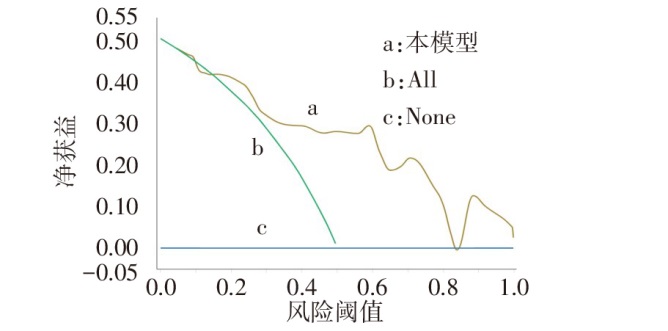
Fig.2 Clinical decision curve analysis of the prediction model
| [1] | DINKU H, AMARE D, MULATU S, et al. Predictors of prolonged hospitalization among children aged 2-59 months with severe community-acquired pneumonia in public hospitals of Benishangul-Gumuz Region, Ethiopia: a multicenter retrospective follow-up study[J]. Front Pediatr, 2023, 11:1189155. doi:10.3389/fped.2023.1189155. |
| [2] | BIAN C, LI S, HUO S, et al. Association of atopy with disease severity in children with Mycoplasma pneumoniae pneumonia[J]. Front Pediatr, 2023, 11:1281479. doi:10.3389/fped.2023.1281479. |
| [3] | 陈玲, 胡荆江, 覃军. 儿童支气管哮喘合并呼吸道感染病原学及其危险因素[J]. 中华医院感染学杂志, 2023, 33(18):2855-2859. |
| CHEN L, HU J J, QIN J. Etiological characteristics and risk factors for respiratory tract infections in children with bronchial asthma[J]. Chinese Journal of Nosocomiology, 2023, 33(18):2855-2859. doi:10.11816/cn.ni.2023-230175. | |
| [4] | 何倩倩, 黄晗, 梁利红, 等. 难治性肺炎支原体肺炎患儿外周血Galectin-3、IL-1β、IL-9表达水平及临床意义[J]. 天津医药, 2025, 53(4):393-397. |
| HE Q Q, HUANG H, LIANG L H, et al. Expression levels and clinical significance of Galectin-3,IL-1β and IL-9 in peripheral blood of children with refractory mycoplasma pneumoniae pneumonia[J]. Tianjin Med J, 2025, 53(4):393-397. doi:10.11958/20250076. | |
| [5] | CHEN Q, HU T, WU L, et al. Clinical features and biomarkers for early prediction of refractory mycoplasma pneumoniae pneumonia in children[J]. Emerg Med Int, 2024, 2024:9328177. doi:10.1155/2024/9328177. |
| [6] | 陈聪水, 陈淑芳, 李园. 儿童社区获得性肺炎肺泡灌洗液病原体检测分析及多重病原体感染的临床特点[J]. 中国基层医药, 2023, 30(12):1847-1850. |
| CHEN C S, CHEN S F, LI Y. Detection and analysis of pathogens in alveolar lavage fluid of children with community-acquired pneumonia and clinical characteristics of multiple pathogen infection[J]. Chin J Prim Med Pharm, 2023, 30(12):1847-1850. doi:10.3760/cma.j.cn341190-20220726-00611. | |
| [7] | ZHONG H, DONG X. Analysis of clinical characteristics and risk factors of severe adenovirus pneumonia in children[J]. Front Pediatr, 2021, 9:566797. doi:10.3389/fped.2021.566797. |
| [8] | ZHANG J, WANG T, LI R, et al. Prediction of risk factors of bronchial mucus plugs in children with Mycoplasma pneumoniae pneumonia[J]. BMC Infect Dis, 2021, 21(1):67. doi:10.1186/s12879-021-05765-w. |
| [9] | LI L, GUO R, ZOU Y, et al. Construction and validation of a nomogram model to predict the severity of mycoplasma pneumoniae pneumonia in children[J]. J Inflamm Res, 2024, 17:1183-1191. doi:10.2147/JIR.S447569. |
| [10] | LUO Y, WANG Y, GONG K. Risk prediction model for long-term atelectasis in children with pneumonia[J]. BMC Pulm Med, 2023, 23(1):169. doi:10.1186/s12890-023-02464-x. |
| [11] | 穆世茵, 邹映雪, 郭永盛, 等. 儿童重症肺炎支原体肺炎发生塑形性支气管炎的预测因素[J]. 中华儿科杂志, 2024, 62(9):861-866. |
| MU S Y, ZOU Y X, GUO Y S, et al. Clinical characteristics and predictive factors for plastic bronchitis in children with severe Mycoplasma pneumoniae pneumonia[J]. Chinese Journal of Pediatrics, 2024, 62(9):861-866. doi:10.3760/cma.j.cn112140-20240417-00272. | |
| [12] | GUAN X, GAO S, ZHAO H, et al. Clinical characteristics of hospitalized term and preterm infants with community-acquired viral pneumonia[J]. BMC Pediatr, 2022, 22(1):452. doi:10.1186/s12887-022-03508-7. |
| [13] | 曹园园, 赵丽, 缪红军. 急诊肺炎患儿进展为重症肺炎的危险因素分析[J]. 中华危重病急救医学, 2023, 35(5):528-532. |
| CAO Y Y, ZHAO L, MIAO H J. Risk factors for progression to severe pneumonia in children visiting the emergency department with pneumonia[J]. Chin Crit Care Med, 2023, 35(5):528-532. doi:10.3760/cma.j.cn121430-20220315-00248. | |
| [14] | WANG T, XU Q, DAI G, et al. Clinical characteristics of children with airway malacia complicated by pneumonia[J]. BMC Infect Dis, 2021, 21(1):902. doi:10.1186/s12879-021-06603-9. |
| [15] | ZHANG J, ZHU Y, ZHOU Y, et al. Pediatric adenovirus pneumonia:clinical practice and current treatment[J]. Front Med (Lausanne), 2023, 10:1207568. doi:10.3389/fmed.2023.1207568. |
| [16] | YANG L, ZHANG Y, SHEN C, et al. Clinical features and risk factors of plastic bronchitis caused by Mycoplasma pneumoniae pneumonia in children[J]. BMC Pulm Med, 2023, 23(1):468. doi:10.1186/s12890-023-02766-0. |
| [17] | ZHANG H, YANG J, ZHAO W, et al. Clinical features and risk factors of plastic bronchitis caused by refractory Mycoplasma pneumoniae pneumonia in children: a practical nomogram prediction model[J]. Eur J Pediatr, 2023, 182(3):1239-1249. doi:10.1007/s00431-022-04761-9. |
| [18] | SAME R G, AMOAH J, HSU A J, et al. The association of antibiotic duration with successful treatment of community-acquired pneumonia in children[J]. J Pediatric Infect Dis Soc, 2021, 10(3):267-273. doi:10.1093/jpids/piaa055. |
| [19] | BIANCHINI S, SILVESTRI E, ARGENTIERO A, et al. Role of respiratory syncytial virus in pediatric pneumonia[J]. Microorganisms, 2020, 8(12):2048. doi:10.3390/microorganisms8122048. |
| [20] | ZHU Z, ZHANG T, GUO W, et al. Clinical characteristics of refractory mycoplasma pneumoniae pneumonia in children treated with glucocorticoid pulse therapy[J]. BMC Infect Dis, 2021, 21(1):126. doi:10.1186/s12879-021-05830-4. |
| Viewed | ||||||
|
Full text |
|
|||||
|
Abstract |
|
|||||
