
Tianjin Medical Journal ›› 2026, Vol. 54 ›› Issue (2): 127-131.doi: 10.11958/20252544
• Monograph·Reproductive System Diseases • Previous Articles Next Articles
DONG Yunshu( ), PAN Heng, NIU Hongjuan()
Received:2025-08-01
Revised:2025-10-21
Published:2026-02-15
Online:2026-02-12
Contact:
△E-mail:DONG Yunshu, PAN Heng, NIU Hongjuan. Research progress on the interaction between endometrial diseases and the microbiota of reproductive and gastrointestinal tracts[J]. Tianjin Medical Journal, 2026, 54(2): 127-131.
CLC Number:
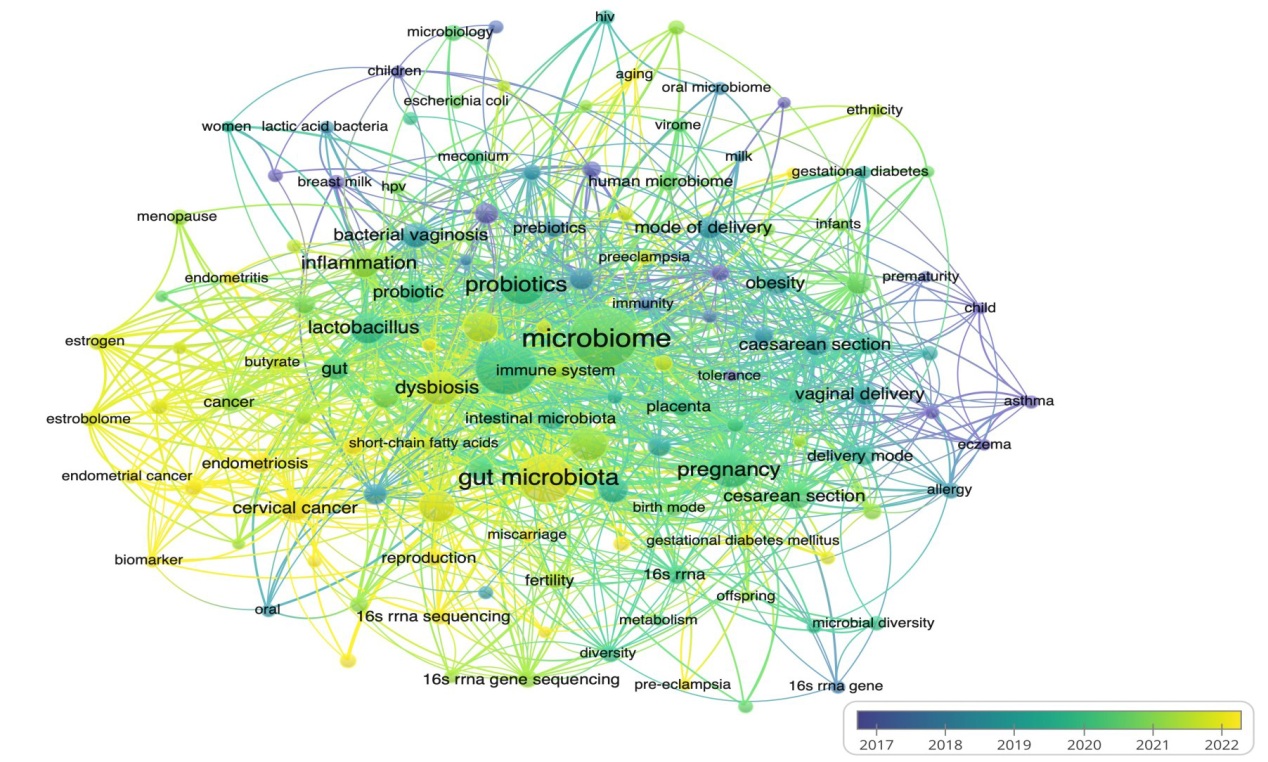
Fig.1 Co-occurrence keyword overlay map in endometrial diseases and gut-reproductive tract microbiota research
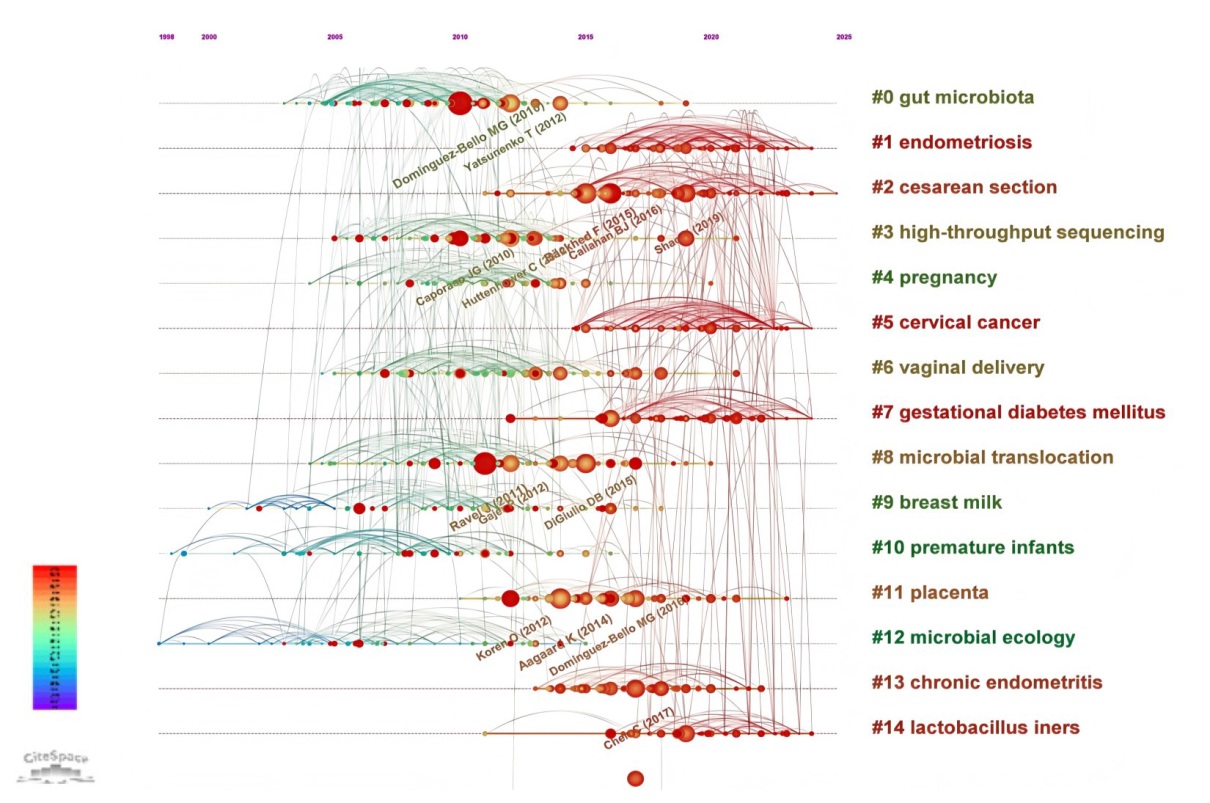
Fig.2 Timeline visualization of co-cited reference clusters in gut-reproductive tract microbiota research (2022-2025)
| [1] | HARDER C, VOLTOLINI VELHO R, BRANDES I, et al. Assessing the true prevalence of endometriosis:a narrative review of literature data[J]. Int J Gynaecol Obstet, 2024, 167(3):883-900. doi:10.1002/ijgo.15756. |
| [2] | GIUDICE L C, KRISTOF A S, GOTTSCHALK M, et al. Time for global health policy and research leaders to prioritize endometriosis[J]. Nat Commun, 2023, 14:8028. doi:10.1038/s41467-023-43913-9. |
| [3] | 王鑫瑶, 杨惠, 李冰冰. 间充质干细胞在子宫内膜异位症中的研究进展[J]. 天津医药, 2024, 52(2):215-219. |
| WANG X Y, YANG H, LI B B. Research progress of mesenchymal stem cells in endometriosis[J]. Tianjin Med J, 2024, 52(2):215-219. doi:10.11958/20231271. | |
| [4] | 诸静, 冒丽静. 子宫内膜异位症患者血清中Gal-1和CRH水平变化及临床意义[J]. 天津医药, 2022, 50(9):965-969. |
| ZHU J, MAO L J. The clinical significance of serum levels of Gal-1 and CRH in patients with endometriosis[J]. Tianjin Med J, 2022, 50(9):965-969. doi:10.11958/20220180. | |
| [5] | YANG S Y, HAN S M, LEE J Y, et al. Advancing gut microbiome research:the shift from metagenomics to multi-omics and future perspectives[J]. J Microbiol Biotechnol, 2025, 35:e2412001. doi:10.4014/jmb.2412.12001. |
| [6] | SHEN Y, FAN N, MA S X, et al. Gut microbiota dysbiosis:pathogenesis,diseases,prevention,and therapy[J]. Med Comm, 2025, 6(5):e70168. doi:10.1002/mco2.70168. |
| [7] | RAVEL J, GAJER P, ABDO Z, et al. Vaginal microbiome of reproductive-age women[J]. Proc Natl Acad Sci U S A, 2011, 108(Suppl 1):4680-4687. doi:10.1073/pnas.1002611107. |
| [8] | DUBÉ‑ZINATELLI E, CAPPELLETTI L, ISMAIL N. Vaginal microbiome:environmental,biological,and racial influences on gynecological health across the lifespan[J]. Am J Reprod Immunol, 2024, 92(6):e70026. doi:10.1111/aji.70026. |
| [9] | ESCORCIA P, VALBUENA D, DIEZ-JUAN A. The role of the gut microbiota in female reproductive and gynecological health:insights into endometrial signaling pathways[J]. Life(Basel), 2025, 15(5):762. doi:10.3390/life15050762. |
| [10] | SUN W, ZHOU T, DING P, et al. Bibliometric analysis of intestinal microbiota and lung diseases[J]. Front Cell Infect Microbiol, 2024, 14:1347110. doi:10.3389/fcimb.2024.1347110. |
| [11] | LAI Y, JIANG J, ZHANG H, et al. Bibliometric analysis of curcumin based on CiteSpace:landscapes,hotspots,and frontiers[J]. Drug Des Devel Ther, 2024, 18:5743-5758. doi:10.2147/DDDT.S494758. |
| [12] | DOMINGUEZ-BELLO M G, COSTELLO E K, CONTRERAS M, et al. Delivery mode shapes the acquisition and structure of the initial microbiota across multiple body habitats in newborns[J]. Proc Natl Acad Sci U S A, 2010, 107(26):11971-11975. doi:10.1073/pnas.1002601107. |
| [13] | RASTOGI S, SINGH A. Gut microbiome and human health:exploring how the probiotic genus Lactobacillus modulate immune responses[J]. Front Pharmacol, 2022, 13:1042189. doi:10.3389/fphar.2022.1042189. |
| [14] | NAVARRO S, ABLA H, DELGADO B, et al. Glycogen availability and pH variation in a medium simulating vaginal fluid influence the growth of vaginal Lactobacillus species and Gardnerella vaginalis[J]. BMC Microbiol, 2023, 23(1):186. doi:10.1186/s12866-023-02916-8. |
| [15] | DECOUT A, KRASIAS I, ROBERTS L, et al. Lactobacillus crispatus S-layer proteins modulate innate immune response and inflammation in the lower female reproductive tract[J]. Nat Commun, 2024, 15(1):10879. doi:10.1038/s41467-024-55233-7. |
| [16] | MADAAN A, NADEAU-VALLÉE M, RIVERA J C, et al. Lactate produced during labor modulates uterine inflammation via GPR81(HCA1)[J]. Am J Obstet Gynecol, 2017, 216(1):60.e1-60.e17. doi:10.1016/j.ajog.2016.09.072. |
| [17] | LOPEZ KROL A, NEHRING H P, KRAUSE F F, et al. Lactate induces metabolic and epigenetic reprogramming of pro-inflammatory Th17 cells[J]. EMBO Rep, 2022, 23(12):e54685. doi:10.15252/embr.202254685. |
| [18] | LIU M, PENG R, TIAN C, et al. Effects of the gut microbiota and its metabolite short-chain fatty acids on endometriosis[J]. Front Cell Infect Microbiol, 2024, 14:1373004. doi:10.3389/fcimb.2024.1373004. |
| [19] | ACHARYA A, SHETTY S S, KUMARI S N. Role of gut microbiota derived short chain fatty acid metabolites in modulating female reproductive health[J]. Hum Nutr Metab, 2024, 36:200256. doi:10.1016/j.hnm.2024.200256. |
| [20] | GUO C, ZHANG C. Role of the gut microbiota in the pathogenesis of endometriosis:a review[J]. Front Microbiol, 2024, 15:1363455. doi:10.3389/fmicb.2024.1363455. |
| [21] | PAI A H, WANG Y W, LU P C, et al. Gut microbiome-estrobolome profile in reproductive-age women with endometriosis[J]. Int J Mol Sci, 2023, 24(22):16301. doi:10.3390/ijms242216301. |
| [22] | FUHRMAN B J, FEIGELSON H S, FLORES R, et al. Associations of the fecal microbiome with urinary estrogens and estrogen metabolites in postmenopausal women[J]. J Clin Endocrinol Metab, 2014, 99(12):4632-4640. doi:10.1210/jc.2014-2222. |
| [23] | ERVIN S M, LI H, LIM L, et al. Gut microbial β-glucuronidases reactivate estrogens as components of the estrobolome that reactivate estrogens[J]. J Biol Chem, 2019, 294(49):18586-18599. doi:10.1074/jbc.RA119.010950. |
| [24] | BAUȘIC A I G, SCURTU F, MANU A, et al. Gut microbiota dysbiosis in endometriosis:a potential link to inflammation and disease progression[J]. Int J Mol Sci, 2025, 26(11):5144. doi:10.3390/ijms26115144. |
| [25] | DATKHAYEVA Z, ISKAKOVA A, MIREEVA A, et al. The multifactorial pathogenesis of endometriosis:a narrative review integrating hormonal,immune,and microbiome aspects[J]. Medicina(Kaunas), 2025, 61(5):811. doi:10.3390/medicina61050811. |
| [26] | MURAOKA A, YOKOI A, KAJIYAMA H. Emerging bacterial factors for understanding pathogenesis of endometriosis[J]. iScience, 2023, 27(1):108739. doi:10.1016/j.isci.2023.108739. |
| [27] | CHADCHAN S B, NAIK S K, POPLI P, et al. Gut microbiota and microbiota-derived metabolites promotes endometriosis[J]. Cell Death Discov, 2023, 9(1):28. doi:10.1038/s41420-023-01309-0. |
| [28] | KELLY C J, ZHENG L, CAMPBELL E L, et al. Crosstalk between microbiota-derived short-chain fatty acids and intestinal epithelial HIF augments tissue barrier function[J]. Cell Host Microbe, 2015, 17(5):662-671. doi:10.1016/j.chom.2015.03.005. |
| [29] | NI Z, SUN S, BI Y, et al. Correlation of fecal metabolomics and gut microbiota in mice with endometriosis[J]. Am J Reprod Immunol, 2020, 84(6):e13307. doi:10.1111/aji.13307. |
| [30] | LU J, LING X, LIU L, et al. Emerging hallmarks of endometriosis metabolism:a promising target for the treatment of endometriosis[J]. Biochim Biophys Acta Mol Cell Res, 2023, 1870(1):119381. doi:10.1016/j.bbamcr.2022.119381. |
| [31] | LIU J, TANG X, CHEN L, et al. Microbiome dysbiosis in patients with chronic endometritis and Clostridium tyrobutyricum ameliorates chronic endometritis in mice[J]. Sci Rep, 2024, 14(1):12455. doi:10.1038/s41598-024-63382-4. |
| [32] | TAS G G, SATI L. Probiotic Lactobacillus rhamnosus species:considerations for female reproduction and offspring health[J]. J Assist Reprod Genet, 2024, 41(10):2585-2605. doi:10.1007/s10815-024-03230-6. |
| [33] | MINAMI M, TSUJI S, AKAGAWA S, et al. Effect of a Bifidobacterium-containing acid-resistant microcapsule formulation on gut microbiota:a pilot study[J]. Nutrients, 2022, 14(22):4829. doi:10.3390/nu14224829. |
| [34] | ABELTINO A, HATEM D, SERANTONI C, et al. Unraveling the gut microbiota:implications for precision nutrition and personalized medicine[J]. Nutrients, 2024, 16(22):3806. doi:10.3390/nu16223806. |
| [35] | WAN J, AN L, REN Z, et al. Effects of galactooligosaccharides on maternal gut microbiota,glucose metabolism,lipid metabolism and inflammation in pregnancy:a randomized controlled pilot study[J]. Front Endocrinol(Lausanne), 2023, 14:1034266. doi:10.3389/fendo.2023.1034266. |
| [36] | KIM N, YANG C. Butyrate as a potential modulator in gynecological disease progression[J]. Nutrients, 2024, 16(23):4196. doi:10.3390/nu16234196. |
| [37] | SUBRAMANIAN A. Emerging roles of bacteriophage-based therapeutics in combating antibiotic resistance[J]. Front Microbiol, 2024, 15:1384164. doi:10.3389/fmicb.2024.1384164. |
| Viewed | ||||||
|
Full text |
|
|||||
|
Abstract |
|
|||||
