
Tianjin Medical Journal ›› 2026, Vol. 54 ›› Issue (7): 721-726.doi: 10.11958/20252732
• Clinical Research • Previous Articles Next Articles
NIU Xiaoxia1( ), NIU Xudong2,△()
Received:2025-08-19
Revised:2025-12-12
Published:2026-07-15
Online:2026-07-13
Contact:
△E-mail:3328413293@qq.com
NIU Xiaoxia, NIU Xudong. Analysis of perinatal thyroid disease characteristics and risk factors for neonatal thyroid dysfunction[J]. Tianjin Medical Journal, 2026, 54(7): 721-726.
CLC Number:
| 组别 | n | 年龄/岁 | BMI/(kg/m2) | 孕次 | 产次(≥2次) | 汉族 | 居住城市 | 教育程度(大专及以上) | ||||||||||||||
|---|---|---|---|---|---|---|---|---|---|---|---|---|---|---|---|---|---|---|---|---|---|---|
| 对照组 | 879 | 28.7±5.3 | 27.8±4.6 | 1.7±0.8 | 112(12.74) | 812(92.4) | 613(69.8) | 514(58.5) | ||||||||||||||
| 观察组 | 358 | 31.2±6.1 | 31.8±5.1 | 2.1±1.1 | 63(17.60) | 330(91.9) | 235(65.6) | 188(52.5) | ||||||||||||||
| t或χ2 | 5.672* | 13.477* | 4.256* | 4.939* | 0.127 | 2.354 | 3.684 | |||||||||||||||
| 组别 | 职业(脑力劳动) | 吸烟史 | 饮酒史 | 甲状腺疾病家族史 | 建档时BMI/(kg/m2) | 妊娠期增重/kg | GDM | HDP | ||||||||||||||
| 对照组 | 389(44.2) | 27(3.0) | 15(1.7) | 65(7.3) | 24.3±3.4 | 12.1±3.0 | 71(8.1) | 53(6.0) | ||||||||||||||
| 观察组 | 145(40.5) | 19(5.3) | 11(3.1) | 101(28.2) | 25.9±3.8 | 13.8±3.5 | 65(18.2) | 54(15.1) | ||||||||||||||
| t或χ2 | 1.347 | 3.551 | 2.356 | 76.841* | 4.782* | 5.126* | 28.947* | 31.258* | ||||||||||||||
| 组别 | 贫血 | 碘补充剂使用 | 分娩孕周/周 | 顺产 | 新生儿出生体质量/g | 1 min Apgar 评分/分 | 5 min Apgar 评分/分 | |||||||||||||||
| 对照组 | 117(13.3) | 310(35.27) | 38.8±1.3 | 599(67.6) | 3 398±405 | 9.0±0.9 | 9.8±0.2 | |||||||||||||||
| 观察组 | 79(22.1) | 91(25.42) | 37.9±1.8 | 208(58.1) | 3 215±432 | 8.6±1.3 | 9.7±0.5 | |||||||||||||||
| t或χ2 | 18.924* | 111.262* | 6.241* | 10.256* | 7.381* | 3.872* | 2.147* | |||||||||||||||
Tab.1 Comparison of baseline data between the two groups
| 组别 | n | 年龄/岁 | BMI/(kg/m2) | 孕次 | 产次(≥2次) | 汉族 | 居住城市 | 教育程度(大专及以上) | ||||||||||||||
|---|---|---|---|---|---|---|---|---|---|---|---|---|---|---|---|---|---|---|---|---|---|---|
| 对照组 | 879 | 28.7±5.3 | 27.8±4.6 | 1.7±0.8 | 112(12.74) | 812(92.4) | 613(69.8) | 514(58.5) | ||||||||||||||
| 观察组 | 358 | 31.2±6.1 | 31.8±5.1 | 2.1±1.1 | 63(17.60) | 330(91.9) | 235(65.6) | 188(52.5) | ||||||||||||||
| t或χ2 | 5.672* | 13.477* | 4.256* | 4.939* | 0.127 | 2.354 | 3.684 | |||||||||||||||
| 组别 | 职业(脑力劳动) | 吸烟史 | 饮酒史 | 甲状腺疾病家族史 | 建档时BMI/(kg/m2) | 妊娠期增重/kg | GDM | HDP | ||||||||||||||
| 对照组 | 389(44.2) | 27(3.0) | 15(1.7) | 65(7.3) | 24.3±3.4 | 12.1±3.0 | 71(8.1) | 53(6.0) | ||||||||||||||
| 观察组 | 145(40.5) | 19(5.3) | 11(3.1) | 101(28.2) | 25.9±3.8 | 13.8±3.5 | 65(18.2) | 54(15.1) | ||||||||||||||
| t或χ2 | 1.347 | 3.551 | 2.356 | 76.841* | 4.782* | 5.126* | 28.947* | 31.258* | ||||||||||||||
| 组别 | 贫血 | 碘补充剂使用 | 分娩孕周/周 | 顺产 | 新生儿出生体质量/g | 1 min Apgar 评分/分 | 5 min Apgar 评分/分 | |||||||||||||||
| 对照组 | 117(13.3) | 310(35.27) | 38.8±1.3 | 599(67.6) | 3 398±405 | 9.0±0.9 | 9.8±0.2 | |||||||||||||||
| 观察组 | 79(22.1) | 91(25.42) | 37.9±1.8 | 208(58.1) | 3 215±432 | 8.6±1.3 | 9.7±0.5 | |||||||||||||||
| t或χ2 | 18.924* | 111.262* | 6.241* | 10.256* | 7.381* | 3.872* | 2.147* | |||||||||||||||
| 指标 | β | SE | Wald χ2 | P | OR(95%CI) |
|---|---|---|---|---|---|
| 妊娠早期TSH | 0.871 | 0.325 | 7.182 | <0.001 | 2.387(1.593~3.572) |
| TPOAb | 0.650 | 0.287 | 5.072 | 0.005 | 1.915(1.232~2.998) |
| 碘补充剂使用 | 0.763 | 0.312 | 5.938 | <0.001 | 2.145(1.378~3.352) |
| 年龄 | 0.583 | 0.268 | 4.716 | 0.016 | 1.792(1.121~2.885) |
| 常数项 | -15.320 | 2.362 | 42.069 | <0.001 | <0.001 |
Tab.2 Multivariate Logistic regression analysis of neonatal thyroid dysfunction
| 指标 | β | SE | Wald χ2 | P | OR(95%CI) |
|---|---|---|---|---|---|
| 妊娠早期TSH | 0.871 | 0.325 | 7.182 | <0.001 | 2.387(1.593~3.572) |
| TPOAb | 0.650 | 0.287 | 5.072 | 0.005 | 1.915(1.232~2.998) |
| 碘补充剂使用 | 0.763 | 0.312 | 5.938 | <0.001 | 2.145(1.378~3.352) |
| 年龄 | 0.583 | 0.268 | 4.716 | 0.016 | 1.792(1.121~2.885) |
| 常数项 | -15.320 | 2.362 | 42.069 | <0.001 | <0.001 |
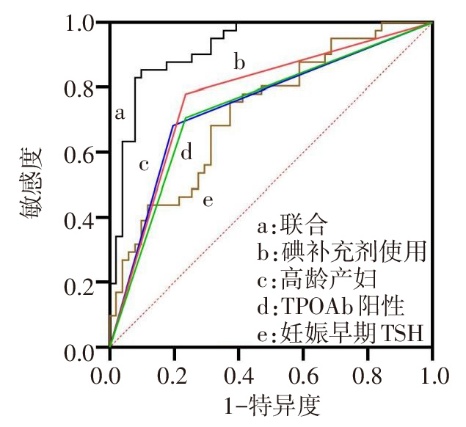
Fig.1 ROC curve for predicting neonatal thyroid dysfunction
| 指标 | AUC | 95%CI | 截断值 | 敏感度/% | ||||
|---|---|---|---|---|---|---|---|---|
| 妊娠早期TSH | 0.726 | 0.623~0.814 | 3.85 mIU/L | 75.61 | ||||
| TPOAb阳性 | 0.743 | 0.642~0.829 | 是 | 68.29 | ||||
| 碘补充剂使用 | 0.773 | 0.673~0.854 | 是 | 78.05 | ||||
| 高龄产妇 | 0.736 | 0.634~0.822 | 是 | 70.73 | ||||
| 联合 | 0.924 | 0.850~0.969 | 85.37 | |||||
| 指标 | 特异度/% | 阳性预测值/% | 阴性预测值/% | 约登指数 | ||||
| 妊娠早期TSH | 62.75 | 19.12 | 95.70 | 0.383 | ||||
| TPOAb阳性 | 80.39 | 18.86 | 87.43 | 0.487 | ||||
| 碘补充剂使用 | 76.47 | 24.22 | 97.31 | 0.545 | ||||
| 高龄产妇 | 76.47 | 19.33 | 97.04 | 0.472 | ||||
| 联合 | 90.20 | 36.15 | 98.96 | 0.756 | ||||
Tab.3 The predictive value of each index for abnormal thyroid function in newborns
| 指标 | AUC | 95%CI | 截断值 | 敏感度/% | ||||
|---|---|---|---|---|---|---|---|---|
| 妊娠早期TSH | 0.726 | 0.623~0.814 | 3.85 mIU/L | 75.61 | ||||
| TPOAb阳性 | 0.743 | 0.642~0.829 | 是 | 68.29 | ||||
| 碘补充剂使用 | 0.773 | 0.673~0.854 | 是 | 78.05 | ||||
| 高龄产妇 | 0.736 | 0.634~0.822 | 是 | 70.73 | ||||
| 联合 | 0.924 | 0.850~0.969 | 85.37 | |||||
| 指标 | 特异度/% | 阳性预测值/% | 阴性预测值/% | 约登指数 | ||||
| 妊娠早期TSH | 62.75 | 19.12 | 95.70 | 0.383 | ||||
| TPOAb阳性 | 80.39 | 18.86 | 87.43 | 0.487 | ||||
| 碘补充剂使用 | 76.47 | 24.22 | 97.31 | 0.545 | ||||
| 高龄产妇 | 76.47 | 19.33 | 97.04 | 0.472 | ||||
| 联合 | 90.20 | 36.15 | 98.96 | 0.756 | ||||
| [1] | Yap Y W, Onyekwelu E, Alam U. Thyroid disease in pregnancy[J]. Clin Med (Lond), 2023, 23(2):125-128. doi:10.7861/clinmed.2023-0018. |
| [2] | 田勍, 王海宁, 洪天配. 2022年中国《孕产期甲状腺疾病防治管理指南》解读[J]. 中国实用内科杂志, 2023, 43(11):893-897. |
| Tian Q, Wang H N, Hong T P. Interpretation of the 2022 Chinese guidelines for the prevention and treatment thyroid diseases during pregnancy and delivery in China[J]. Chin J Pract Int Med, 2023, 43(11):893-897. doi:10.19538/j.nk2023110104. | |
| [3] | Taylor P N, Medici M M, Hubalewska-Dydejczyk A, et al. Hypothyroidism[J]. Lancet, 2024, 404(10460):1347-1364. doi:10.1016/S0140-6736(24)01614-3. |
| [4] | Bogović CrnčIć T, Ćurko-Cofek B, BatičIć L, et al. Autoimmune thyroid disease and pregnancy:the interaction between genetics,epigenetics and environmental factors[J]. J Clin Med, 2025, 14(1):190. doi:10.3390/jcm14010190. |
| [5] | 李君, 张杰, 周怡. 新生儿先天性甲状腺功能减低症危险因素分析[J]. 实用预防医学, 2022, 29(6):735-737. |
| Li J, Zhang J, Zhou Y. Analysis of risk factors for congenital hypothyroidism in neonates[J]. Prac Prevent Med, 2022, 29(6):735-737. | |
| [6] | Alves J M Jr, Bernardo W M, Ward L S, et al. Effect of hyperthyroidism control during pregnancy on maternal and fetal outcome:a systematic review and meta-analysis[J]. Front Endocrinol(Lausanne), 2022, 13:800257. doi:10.3389/fendo.2022.800257. |
| [7] | 李政秀, 曾卫强. 新生儿早期甲状腺功能异常减退的研究进展[J]. 中国当代医药, 2023, 30(24):42-46. |
| Li Z X, Zeng W Q. Research progress on early hypothyroidism in newborns[J]. Chin J Contemp Med, 2023, 30(24):42-46. | |
| [8] | 陈荣. 新生儿生后甲状腺功能检查异常的影响因素分析[J]. 妇儿健康导刊, 2023, 2(3):50-52. |
| Chen R. Analysis of the influencing factors of abnormal thyroid function examination in neonates[J]. J Women Children's Health, 2023, 2(3):50-52. doi:10.3969/j.issn.2097-115X.2023.3.whbb202303016. | |
| [9] | 宋群英. 妊娠合并甲状腺疾病对新生儿生长发育情况及甲状腺功能指标的影响[J]. 河北医药, 2017, 39(16):2493-2495,2498. |
| SONG Q Y. The influence of pregnancy-associated thyroid diseases on the growth and development of newborns and thyroid function indicators[J]. Hebei Medical Journal, 2017, 39(16):2493-2495,2498. doi:10.3969/j.issn.1002-7386.2017.16.025. | |
| [10] | 《孕产期甲状腺疾病防治管理指南》编撰委员会, 中华医学会内分泌学分会, 中华预防医学会妇女保健分会. 孕产期甲状腺疾病防治管理指南[J]. 中国妇幼卫生杂志, 2022, 13(4):1-15. |
| Editorial Committee for the Guidelines for the Prevention, Treatment and Management of Thyroid Disorders during Pregnancy and the Postpartum Period, Endocrinology Branch of the Chinese Medical Association, Women’s Health Branch of the Chinese Preventive Medicine Association. Guidelines for prevention and management of thyroid diseases during pregnancy and perinatal period[J]. Chinese Journal of Maternal and Child Health, 2022, 13(4):1-15. doi:10.19757/j.cnki.issn1674-7763.2022.04.001. | |
| [11] | 中华预防医学会出生缺陷预防与控制专业委员会新生儿筛查学组. 新生儿筛查遗传代谢病诊治规范专家共识[J]. 中华新生儿科杂志(中英文), 2023, 38(7):385-394. |
| The Neonatal Screening Group of the Birth Defects Prevention and Control Professional Committee of the Chinese Preventive Medicine Association. Consensus on diagnosis and treatment of inherited metabolic diseases by newborn screeming[J]. Chinese Journal of Neonatology, 2023, 38(7):385-394. doi:10.3760/cma.j.issn.2096-2932.2023.07.001. | |
| [12] | 王爱红, 翟红飞. 妊娠期甲状腺功能异常对妊娠结局及新生儿的影响[J]. 妇儿健康导刊, 2023, 2(6):82-84. |
| Wang A H, Zhai H F. The impact of thyroid dysfunction during pregnancy on pregnancy outcomes and neonates[J]. J Women Children's Health, 2023, 2(6):82-84. doi:10.3969/j.issn.2097-115X.2023.6.whbb202306028. | |
| [13] | 杨艳霞. 妊娠期甲状腺功能异常对妊娠结局的影响分析[J]. 中国城乡企业卫生, 2023, 38(8):63-66. |
| Yang Y X. Analysis of the impact of thyroid dysfunction during pregnancy on pregnancy outcomes[J]. Chin J Urban Rural Enterp Health, 2023, 38(8):63-66. | |
| [14] | 赵俊梅, 徐忠娴, 乔建萍. 妊娠期甲状腺功能异常筛查及护理研究进展[J]. 辽宁医学杂志, 2023, 37(4):92-94. |
| Zhao J M, Xu Z X, Qiao J P. Research progress on screening and related nursing care of abnormal maternal thyroid function during pregnancy[J]. J Liaoning Med, 2023, 37(4):92-94. doi:10.16286/j.1003-5052.2023.08.023. | |
| [15] | 黄敏, 洪艳, 曹玲雅, 等. 妊娠期甲状腺功能异常对新生儿甲状腺激素水平的影响[J]. 中国妇幼保健, 2024, 39(8):1442-1445. |
| Huang M, Hong Y, Cao L Y, et al. The influence of thyroid dysfunction during pregnancy on thyroid hormone levels in neonates[J]. Chin J Mater Child Health, 2024, 39(8):1442-1445. doi:10.19829/j.zgfybj.issn.1001-4411.2024.08.022. | |
| [16] | 郑洁燕, 张庆英. 孕期甲状腺功能与新生儿早产的相关性研究[J]. 汕头大学医学院学报, 2024, 37(1):30-34. |
| Zheng J Y, Zhang Q Y. The correlation between thyroid function during pregnancy and premature delivery[J]. J Shantou Univer Med College, 2024, 37(1):30-34. doi:10.13401/j.cnki.jsumc.2024.01.007. | |
| [17] | Joshi J S, Shanoo A, Patel N, et al. From conception to delivery:a comprehensive review of thyroid disorders and their far-reaching impact on feto-maternal health[J]. Cureus, 2024, 16(2):62-73. doi:10.7759/cureus.53362. |
| [18] | 田磊, 王启龙, 刘亚飞. 妊娠期甲状腺功能异常研究进展[J]. 中国初级卫生保健, 2022, 36(8):63-65. |
| Tian L, Wang Q L, Liu Y F. Progress in abnormal thyroid function during pregnancy[J]. Chin J Primary Health Care, 2022, 36(8):63-65. doi:10.3969/j.issn.1001-568X.2022.08.0018. | |
| [19] | Sert U Y, Celik H K, Karakaya B K, et al. The impact of first trimester TSH level on fetal growth and post-term pregnancy[J]. Fetal Pediatr Pathol, 2022, 41(4):584-591. doi:10.1080/15513815.2021.1933280. |
| [20] | Chen L, Lin D, Lin Z, et al. Maternal thyroid peroxidase antibody positivity and its association with incidence of low birth weight in infants[J]. Front Endocrinol(Lausanne), 2023, 14:1285504. doi:10.3389/fendo.2023.1285504. |
| [21] | Farha S, Urooj A. The role of iodine during pregnancy and its consequences on neonatal thyroid hormones-a review[J]. J Pharm Biol Sci, 2020, 10(1):103-110. doi:10.21276/ijpbs.2019.10.1.15. |
| [22] | 费美蓉, 干建慧, 丁秀琴, 等. 妊娠合并甲状腺功能减退治疗时机的选择对妊娠结局和新生儿甲状腺功能影响的临床研究[J]. 中国妇幼保健, 2024, 39(23):4678-4681. |
| Fei M R, Gan J H, Ding X Q, et al. Clinical study on the impact of the selection of treatment timing for pregnancy complicated with hypothyroidism on pregnancy outcomes and neonatal thyroid function[J]. Maternal and Child Health Care of China, 2024, 39(23):4678-4681. doi:10.19829/j.zgfybj.issn.1001-4411.2024.23.023. |
| Viewed | ||||||
|
Full text |
|
|||||
|
Abstract |
|
|||||
