
Tianjin Medical Journal ›› 2026, Vol. 54 ›› Issue (5): 478-483.doi: 10.11958/20252907
• Clinical Research • Previous Articles Next Articles
HUANG Fei1,2( ), WANG Lihang1,2, SUN Guanwen2△(), BAO Huhe2, YANG Pengbo3, ZHANG Yaxing3
Received:2025-09-18
Revised:2026-01-15
Published:2026-05-15
Online:2026-05-13
Contact:
△E-mail:HUANG Fei, WANG Lihang, SUN Guanwen, BAO Huhe, YANG Pengbo, ZHANG Yaxing. Construction and validation of a prediction model for minor amputation in patients with diabetic foot ulcers during hospitalization[J]. Tianjin Medical Journal, 2026, 54(5): 478-483.
CLC Number:
| 组别 | n | 年龄/岁 | 男性 | BMI/(kg/m2) | DM持续时间/年 | 高血压持续时间/年 | ||||||
|---|---|---|---|---|---|---|---|---|---|---|---|---|
| 非截肢组 | 106 | 66.00(57.00,73.00) | 62(58.5) | 24.36±3.36 | 15.00(10.00,20.00) | 2.00(0.00,12.25) | ||||||
| 小截肢组 | 48 | 66.00(60.00,76.00) | 40(83.3) | 23.53±3.49 | 15.00(10.00,20.00) | 8.00(1.00,10.00) | ||||||
| Z、χ2或t | 1.183 | 8.040* | 1.380 | 0.067 | 1.671 | |||||||
| 组别 | 冠心病史 | 吸烟史 | 饮酒史 | 溃疡持续时间/月 | 深溃疡 | 下肢动脉闭塞 | 院前治疗 | |||||
| 非截肢组 | 7(6.6) | 40(37.7) | 15(14.2) | 1.00(0.33,2.00) | 19(17.9) | 16(15.1) | 31(29.2) | |||||
| 小截肢组 | 4(8.3) | 22(45.8) | 5(10.4) | 2.00(1.00,3.04) | 23(47.9) | 25(52.1) | 6(12.5) | |||||
| Z或χ2 | 0.002 | 0.596 | 0.144 | 4.528* | 13.510* | 21.285* | 4.199* | |||||
Tab.1 Comparison of general clinical data between the two groups
| 组别 | n | 年龄/岁 | 男性 | BMI/(kg/m2) | DM持续时间/年 | 高血压持续时间/年 | ||||||
|---|---|---|---|---|---|---|---|---|---|---|---|---|
| 非截肢组 | 106 | 66.00(57.00,73.00) | 62(58.5) | 24.36±3.36 | 15.00(10.00,20.00) | 2.00(0.00,12.25) | ||||||
| 小截肢组 | 48 | 66.00(60.00,76.00) | 40(83.3) | 23.53±3.49 | 15.00(10.00,20.00) | 8.00(1.00,10.00) | ||||||
| Z、χ2或t | 1.183 | 8.040* | 1.380 | 0.067 | 1.671 | |||||||
| 组别 | 冠心病史 | 吸烟史 | 饮酒史 | 溃疡持续时间/月 | 深溃疡 | 下肢动脉闭塞 | 院前治疗 | |||||
| 非截肢组 | 7(6.6) | 40(37.7) | 15(14.2) | 1.00(0.33,2.00) | 19(17.9) | 16(15.1) | 31(29.2) | |||||
| 小截肢组 | 4(8.3) | 22(45.8) | 5(10.4) | 2.00(1.00,3.04) | 23(47.9) | 25(52.1) | 6(12.5) | |||||
| Z或χ2 | 0.002 | 0.596 | 0.144 | 4.528* | 13.510* | 21.285* | 4.199* | |||||
| 组别 | n | WBC/(10×109/L) | Hb/(g/L) | PLT/(10×109/L) | CRP/(mg/L) | Alb/(g/L) | |||||||||||
|---|---|---|---|---|---|---|---|---|---|---|---|---|---|---|---|---|---|
| 非截肢组 | 106 | 8.57(7.00,12.63) | 126.69±27.17 | 245.50(197.50,326.50) | 16.00(2.66,85.93) | 38.35(33.48,42.00) | |||||||||||
| 小截肢组 | 48 | 8.34(6.63,12.00) | 119.75±25.78 | 257.00(220.00,338.50) | 22.50(2.94,63.84) | 38.65(35.17,41.02) | |||||||||||
| Z或t | 0.837 | 1.521 | 1.198 | 0.016 | 0.117 | ||||||||||||
| 组别 | AST/(U/L) | ALT/(U/L) | LDH/(IU/L) | Ur/(mmol/L) | FPG/(mmol/L) | ||||||||||||
| 非截肢组 | 21.85(17.05,33.25) | 18.20(13.20,27.60) | 209.32(176.46,246.00) | 6.82(5.05,9.65) | 8.07(5.95,12.37) | ||||||||||||
| 小截肢组 | 22.15(17.90,28.09) | 16.05(12.38,23.14) | 214.00(182.45,247.93) | 6.76(5.46,9.50) | 9.72(6.96,14.13) | ||||||||||||
| Z | 0.291 | 1.590 | 0.745 | 0.298 | 2.009* | ||||||||||||
| 组别 | CK/(U/L) | ALP/(U/L) | Scr/(μmol/L) | TC/(mmol/L) | TG/(mmol/L) | D-Dimer/(mg/L) | |||||||||||
| 非截肢组 | 70.00(43.25,108.70) | 90.45(69.78,117.09) | 71.55(59.19,100.70) | 3.81(3.14,4.34) | 1.39(1.11,1.85) | 0.49(0.35,0.98) | |||||||||||
| 小截肢组 | 140.26(78.59,241.57) | 85.00(67.50,118.76) | 116.70(75.88,179.79) | 3.90(3.37,4.64) | 1.93(1.42,2.53) | 1.33(0.53,2.00) | |||||||||||
| Z | 4.435* | 0.472 | 4.178* | 1.243 | 3.273* | 4.172* | |||||||||||
Tab.2 Comparison of laboratory indicators between the two groups
| 组别 | n | WBC/(10×109/L) | Hb/(g/L) | PLT/(10×109/L) | CRP/(mg/L) | Alb/(g/L) | |||||||||||
|---|---|---|---|---|---|---|---|---|---|---|---|---|---|---|---|---|---|
| 非截肢组 | 106 | 8.57(7.00,12.63) | 126.69±27.17 | 245.50(197.50,326.50) | 16.00(2.66,85.93) | 38.35(33.48,42.00) | |||||||||||
| 小截肢组 | 48 | 8.34(6.63,12.00) | 119.75±25.78 | 257.00(220.00,338.50) | 22.50(2.94,63.84) | 38.65(35.17,41.02) | |||||||||||
| Z或t | 0.837 | 1.521 | 1.198 | 0.016 | 0.117 | ||||||||||||
| 组别 | AST/(U/L) | ALT/(U/L) | LDH/(IU/L) | Ur/(mmol/L) | FPG/(mmol/L) | ||||||||||||
| 非截肢组 | 21.85(17.05,33.25) | 18.20(13.20,27.60) | 209.32(176.46,246.00) | 6.82(5.05,9.65) | 8.07(5.95,12.37) | ||||||||||||
| 小截肢组 | 22.15(17.90,28.09) | 16.05(12.38,23.14) | 214.00(182.45,247.93) | 6.76(5.46,9.50) | 9.72(6.96,14.13) | ||||||||||||
| Z | 0.291 | 1.590 | 0.745 | 0.298 | 2.009* | ||||||||||||
| 组别 | CK/(U/L) | ALP/(U/L) | Scr/(μmol/L) | TC/(mmol/L) | TG/(mmol/L) | D-Dimer/(mg/L) | |||||||||||
| 非截肢组 | 70.00(43.25,108.70) | 90.45(69.78,117.09) | 71.55(59.19,100.70) | 3.81(3.14,4.34) | 1.39(1.11,1.85) | 0.49(0.35,0.98) | |||||||||||
| 小截肢组 | 140.26(78.59,241.57) | 85.00(67.50,118.76) | 116.70(75.88,179.79) | 3.90(3.37,4.64) | 1.93(1.42,2.53) | 1.33(0.53,2.00) | |||||||||||
| Z | 4.435* | 0.472 | 4.178* | 1.243 | 3.273* | 4.172* | |||||||||||
| 变量 | β | SE | Wald χ2 | P | OR(95%CI) |
|---|---|---|---|---|---|
| FPG | 0.004 | 0.019 | 0.034 | 0.853 | 1.004(0.966~1.042) |
| 性别 | 1.464 | 0.671 | 4.763 | 0.029 | 4.323(1.161~16.101) |
| 院前治疗 | -2.581 | 0.795 | 10.552 | 0.001 | 0.076(0.016~0.359) |
| 溃疡持续时间 | 0.422 | 0.208 | 4.116 | 0.042 | 1.526(1.014~2.294) |
| Scr | 0.004 | 0.002 | 5.153 | 0.023 | 1.004(1.001~1.008) |
| TG | 0.422 | 0.280 | 2.273 | 0.132 | 1.525(0.881~2.638) |
| D-Dimer | 1.319 | 0.365 | 13.083 | <0.001 | 3.738(1.830~7.638) |
| CK | 0.003 | 0.002 | 2.742 | 0.098 | 1.003(1.000~1.006) |
| 下肢动脉闭塞 | 1.512 | 0.576 | 6.902 | 0.009 | 4.538(1.468~14.024) |
| 溃疡深度 | 2.101 | 0.612 | 11.791 | <0.001 | 8.175(2.465~27.114) |
| 常数项 | -6.176 | 1.176 | 27.592 | <0.001 | 0.002 |
Tab.3 Multivariate Logistic regression analysis of risk factors of minor amputation in DFU
| 变量 | β | SE | Wald χ2 | P | OR(95%CI) |
|---|---|---|---|---|---|
| FPG | 0.004 | 0.019 | 0.034 | 0.853 | 1.004(0.966~1.042) |
| 性别 | 1.464 | 0.671 | 4.763 | 0.029 | 4.323(1.161~16.101) |
| 院前治疗 | -2.581 | 0.795 | 10.552 | 0.001 | 0.076(0.016~0.359) |
| 溃疡持续时间 | 0.422 | 0.208 | 4.116 | 0.042 | 1.526(1.014~2.294) |
| Scr | 0.004 | 0.002 | 5.153 | 0.023 | 1.004(1.001~1.008) |
| TG | 0.422 | 0.280 | 2.273 | 0.132 | 1.525(0.881~2.638) |
| D-Dimer | 1.319 | 0.365 | 13.083 | <0.001 | 3.738(1.830~7.638) |
| CK | 0.003 | 0.002 | 2.742 | 0.098 | 1.003(1.000~1.006) |
| 下肢动脉闭塞 | 1.512 | 0.576 | 6.902 | 0.009 | 4.538(1.468~14.024) |
| 溃疡深度 | 2.101 | 0.612 | 11.791 | <0.001 | 8.175(2.465~27.114) |
| 常数项 | -6.176 | 1.176 | 27.592 | <0.001 | 0.002 |
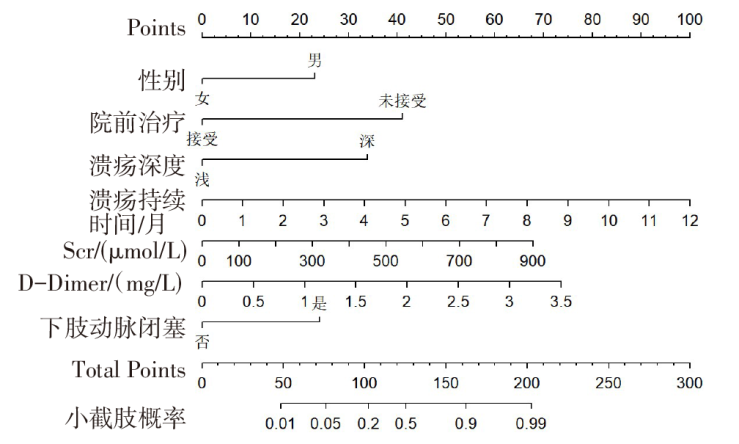
Fig.1 Nomogram prediction model for minor amputation in DFU patients during hospitalization
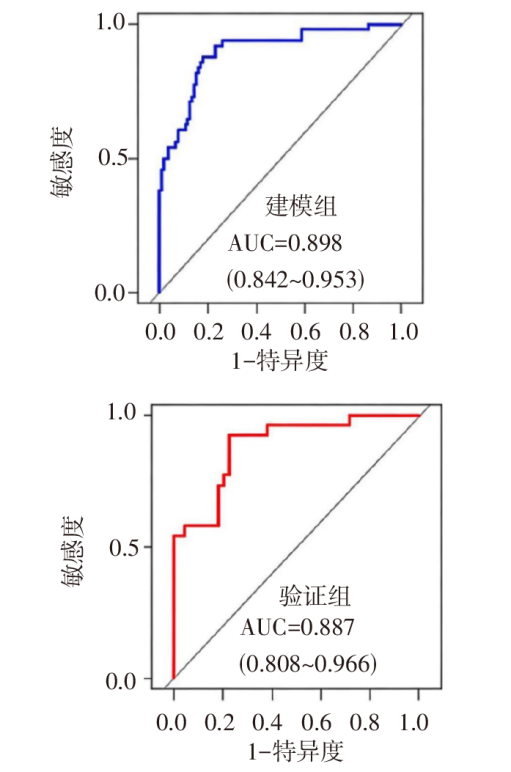
Fig.2 ROC curve of minor amputation in DFU patients during hospitalization
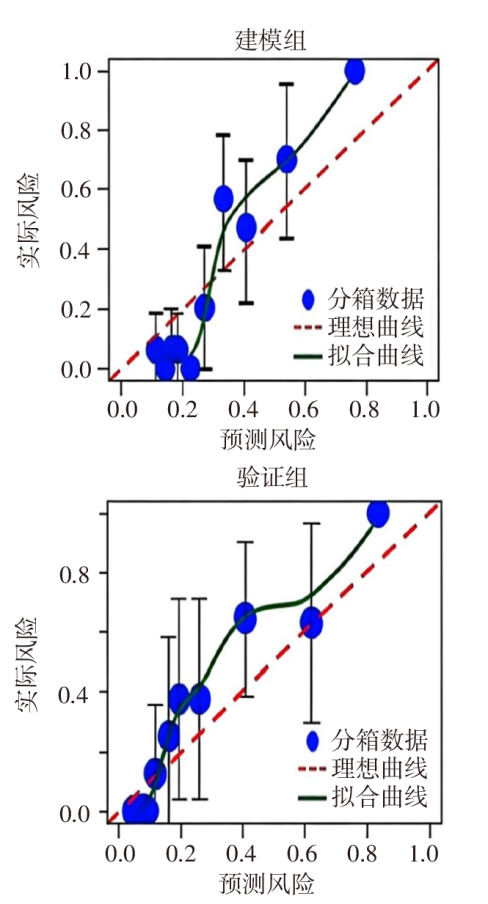
Fig.3 Calibration curves for minor amputation in DFU patients during hospitalization
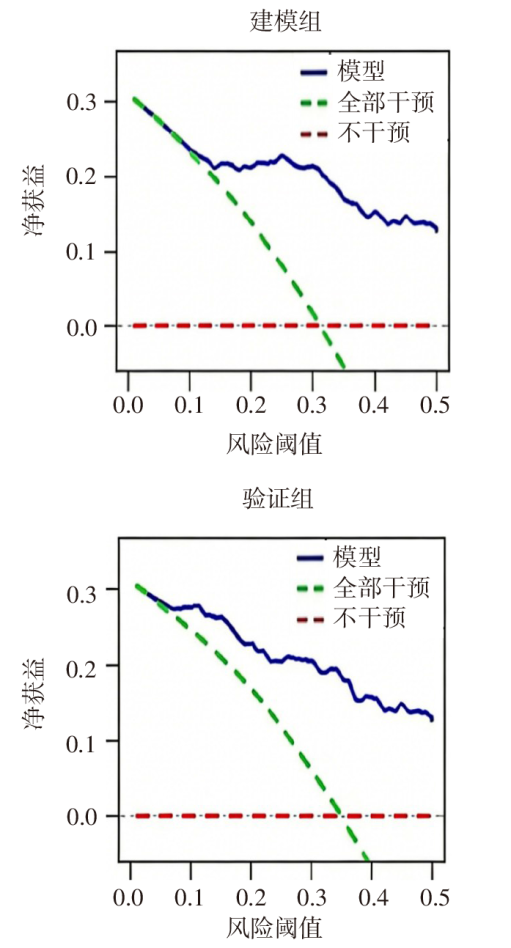
Fig.4 Decision curve analysis for minor amputation in DFU patients during hospitalization
| [1] | YAN C, WANG S, YANG Y, et al. The efficacy of diabetic foot treatment in a "TOSF" pattern:a five-year retrospective study[J]. Diabetes Metab Syndr Obes, 2024, 17:1923-1939. doi:10.2147/DMSO.S461112. |
| [2] | CHEN Y, ZHAO J, SUN Y, et al. Association of the triglyceride glucose index with sudden cardiac death in the patients with diabetic foot ulcer[J]. Diabetes Res Clin Pract, 2025, 223:112143. doi:10.1016/j.diabres.2025.112143. |
| [3] | 中华医学会糖尿病学分会,中华医学会感染病学分会,中华医学会组织修复与再生分会. 中国糖尿病足防治指南(2019版)(Ⅰ)[J]. 中华糖尿病杂志, 2019, 11(2):92-108. |
| Chinese Diabetes Society,Chinese Society of Infectious Diseases,Chinese Society of Tissue Repair and Regeneration. Guidelines for the prevention and treatment of diabetic foot in China (2019 edition) (I)[J]. Chin J Diabetes Mellitus, 2019, 11(2):92-108. doi:10.3760/cma.j.issn.1674-5809.2019.02.004. | |
| [4] | JIANG Y, RAN X, JIA L, et al. Epidemiology of type 2 diabetic foot problems and predictive factors for amputation in China[J]. Int J Low Extrem Wounds, 2015, 14(1):19-27. doi:10.1177/1534734614564867. |
| [5] | ARMSTRONG D G, TAN T W, BOULTON A J M, et al. Diabetic foot ulcers:a review[J]. JAMA, 2023, 330(1):62-75. doi:10.1001/jama.2023.10578. |
| [6] | 张学军, 杜娟. 糖尿病足坏疽行小截肢术治疗的临床分析[J]. 吉林医学, 2022, 43(11):2923-5. |
| ZHANG X J, DU J. Clinical analysis of minor amputation for diabetic foot gangrene[J]. Jilin Med J, 2022, 43(11):2923-2925. doi:10.3969/j.issn.1004-0412.2022.11.012. | |
| [7] | 徐旭英. 《中国糖尿病足防治指南2019》解读[J]. 中国临床医生杂志, 2023, 51(4):394-397. |
| XU X Y. Interpretation of "Chinese guidelines for the prevention and treatment of diabetic foot (2019)"[J]. Chin J Clinicians,2023, 51(4):394-397. doi:10.3969/j.issn.2095-8552.2023.04.006. | |
| [8] | BUS S A, VAN NETTEN J J, HINCHLIFFE R J, et al. Standards for the development and methodology of the 2019 International Working Group on the Diabetic Foot guidelines[J]. Diabetes Metab Res Rev, 2020,36 Suppl 1:e3267. doi:10.1002/dmrr.3267. |
| [9] | 中华医学会糖尿病学分会,中华医学会感染病学分会,中华医学会组织修复与再生分会. 中国糖尿病足防治指南(2019版)(Ⅱ)[J]. 中华糖尿病杂志, 2023, 11(3):161-189. |
| Chinese Diabetes Society,Chinese Society of Infectious Diseases,Chinese Society of Tissue Repair and Regeneration. Guidelines for the prevention and treatment of diabetic foot in China (2019 edition) (II)[J]. Chin J Diabetes Mellitus, 2019, 11(3):161-189. doi:10.3760/cma.j.issn.1674-5809.2019.03.005. | |
| [10] | CORTES-PENFIELD N W, ARMSTRONG D G, BRENNAN M B, et al. Evaluation and management of diabetes-related foot infections[J]. Clin Infect Dis, 2023, 77(3):e1-e13. doi:10.1093/cid/ciad255. |
| [11] | 祝红娟, 王倩, 王淑君, 等. 老年糖尿病足小截肢患者生活质量影响因素的混合研究[J]. 中华护理杂志, 2025, 60(1):83-89. |
| ZHU H J, WANG Q, WANG S J, et al. Factors influencing the quality of life in elderly diabetic foot patients with minor amputation:a mixed-methods study[J]. Chin J Nurs, 2025, 60(1):83-89. doi:10.3761/j.issn.0254-1769.2025.01.012. | |
| [12] | 梁国女, 赵娜. 糖尿病足截肢患者生活质量的影响因素探究[J]. 中国医学前沿杂志(电子版), 2019, 11(9):77-80. |
| LIANG G N, ZHAO N. Study on influencing factors of quality of life in diabetic foot amputation patients[J]. Chin J Front Med Sci (Electronic Edition), 2019, 11(9):77-80. doi:10.12037/YXQY.2019.09-11. | |
| [13] | 余明珠, 周昕睿, 李亚. 糖尿病足溃疡的治疗与相关信号通路的研究进展[J]. 右江医学, 2024, 52(3):193-197. |
| YU M Z, ZHOU X R, LI Y. Research progress on treatment of diabetic foot ulcers and related signaling pathways[J]. Youjiang Med J, 2024, 52(3):193-197. doi:10.3969/j.issn.1003-1383.2024.03.001. | |
| [14] | 张秩, 陈超, 吴平平, 等. 糖尿病足溃疡伤口延迟愈合的病理机制研究[J]. 临床皮肤科杂志, 2025, 54(1):48-51. |
| ZHANG Z, CHEN C, WU P P, et al. Pathological mechanism of delayed wound healing in diabetic foot ulcers[J]. J Clin Dermatol, 2025, 54(1):48-51. doi:10.16761/j.cnki.1000-4963.2025.01.015. | |
| [15] | AMADOU C, DENIS P, COSKER K, et al. Less amputations for diabetic foot ulcer from 2008 to 2014,hospital management improved but substantial progress is still possible:a french nationwide study[J]. PLoS One, 2020, 15(11):e0242524. doi:10.1371/journal.pone.0242524. |
| [16] | SAHAKYAN K, KLEIN B E, LEE K E, et al. The 25-year cumulative incidence of lower extremity amputations in people with type 1 diabetes[J]. Diabetes Care, 2011, 34(3):649-651. doi:10.2337/dc10-1712. |
| [17] | 孟广喆, 杨少玲, 胡丽叶, 等. 糖尿病足创面耐甲氧西林金黄色葡萄球菌感染危险因素Meta分析[J]. 临床误诊误治, 2025, 38(3):54-60. |
| MENG G Z, YANG S L, HU L Y, et al. Risk factors for methicillin-resistant Staphylococcus aureus infection in diabetic foot wounds:a Meta-analysis[J]. Clin Misdiagn Misther, 2025, 38(3):54-60. doi:10.3969/j.issn.1002-3429.2025.03.010. | |
| [18] | BONNET J B, SULTAN A. Narrative review of the relationship between CKD and diabetic foot ulcer[J]. Kidney Int Rep, 2022, 7(3):381-388. doi:10.1016/j.ekir.2021.12.018. |
| [19] | SCHROIJEN M A, VAN DIEPEN M, HAMMING J F, et al. Mortality after amputation in dialysis patients is high but not modified by diabetes status[J]. Clin Kidney J, 2020, 13(6):1077-1082. doi:10.1093/ckj/sfz116. |
| [20] | 黄泳清, 沈洁, 袁思捷, 等. 红细胞分布宽度、纤维蛋白原与D-二聚体预测糖尿病足发生发展风险的价值[J]. 中国组织工程研究, 2019, 23(23):3716-3721. |
| HUANG Y Q, SHEN J, YUAN S J, et al. Value of red blood cell distribution width,fibrinogen and D-dimer in predicting the risk of development of diabetic foot[J]. Chin J Tissue Eng Res, 2019, 23(23):3716-3721. doi:10.3969/j.issn.2095-4344.1319. | |
| [21] | 邵琳琳. 血清胆红素、纤维蛋白原、D-二聚体在2型糖尿病患者发生糖尿病足中的预测价值[J]. 中国烧伤创疡杂志, 2021, 33(2):95-98. |
| SHAO L L. Predictive value of serum bilirubin,fibrinogen and D-dimer in type 2 diabetes patients with diabetic foot[J]. Chin J Burns Wounds Ulcers, 2021, 33(2):95-98. doi:10.3969/j.issn.1001-0726.2021.02.005. | |
| [22] | 鲍亚玲, 雷慧, 马君, 等. 黄芪阳和汤调控PI3K/AKT/NF-κB信号通路促进糖尿病足溃疡大鼠创面愈合[J]. 天津医药, 2024, 52(3):266-72. |
| BAO Y L, LEI H, MA J, et al. Huangqi Yanghe Decoction regulates PI3K/AKT/NF-κB signaling pathway to promote wound healing in diabetes foot ulcer rats[J]. Tianjin Med J, 2024, 52(3):266-272. doi:10.11958/20230561. | |
| [23] | DINOTO E, FERLITO F, LA MARCA M A, et al. The role of early revascularization and biomarkers in the management of diabetic foot ulcers:a single center experience[J]. Diagnostics(Basel), 2022, 12(2):12020538. doi:10.3390/diagnostics12020538. |
| [24] | FU X L, DING H, MIAO W W, et al. Global recurrence rates in diabetic foot ulcers:a systematic review and meta-analysis[J]. Diabetes Metab Res Rev, 2019, 35(6):e3160. doi:10.1002/dmrr.3160. |
| [25] | 夏磊, 庄若, 吴玲, 等. 复发性糖尿病足溃疡相关危险因素的Meta分析[J]. 中华现代护理杂志, 2022, 28(9):1143-1148. |
| XIA L, ZHUANG R, WU L, et al. Risk factors for recurrent diabetic foot ulcers:a Meta-analysis[J]. Chin J Mod Nurs, 2022, 28(9):1143-1148. doi:10.3760/cma.j.cn115682-20210802-03422. |
| Viewed | ||||||
|
Full text |
|
|||||
|
Abstract |
|
|||||
