
Tianjin Medical Journal ›› 2025, Vol. 53 ›› Issue (11): 1170-1175.doi: 10.11958/20252239
• Clinical Research • Previous Articles Next Articles
XU Shuguang1,2( ), GUAN Shuhong1, ZHANG Yunfeng2△()
Received:2025-06-11
Revised:2025-07-11
Published:2025-11-15
Online:2025-11-19
Contact:
△E-mail:XU Shuguang, GUAN Shuhong, ZHANG Yunfeng. Application effect of cluster management in peri-discharge period of patients with acute exacerbation of chronic obstructive pulmonary disease[J]. Tianjin Medical Journal, 2025, 53(11): 1170-1175.
CLC Number:
| 组别 | 男性 | 年龄/岁 | COPD病程/年 | 吸烟 | ||
|---|---|---|---|---|---|---|
| 对照组 | 38(75.11) | 72.36±5.76 | 10.00(6.00,10.00) | 41(91.11) | ||
| 观察组 | 40(88.89) | 70.13±5.37 | 10.00(5.00,14.00) | 40(88.89) | ||
| χ2、t或Z | 0.385 | 1.238 | 0.713 | 0.123 | ||
| 组别 | BMI/(kg/m2) | 文化程度 | ||||
| 初中及以下 | 中专/高中 | 大专及以上 | ||||
| 对照组 | 25.16±4.46 | 24(53.33) | 13(28.89) | 8(17.78) | ||
| 观察组 | 24.52±5.15 | 20(44.44) | 17(37.78) | 8(17.78) | ||
| χ2或t | 0.630 | 0.897 | ||||
Tab.1 Comparison of general information between the 2 groups
| 组别 | 男性 | 年龄/岁 | COPD病程/年 | 吸烟 | ||
|---|---|---|---|---|---|---|
| 对照组 | 38(75.11) | 72.36±5.76 | 10.00(6.00,10.00) | 41(91.11) | ||
| 观察组 | 40(88.89) | 70.13±5.37 | 10.00(5.00,14.00) | 40(88.89) | ||
| χ2、t或Z | 0.385 | 1.238 | 0.713 | 0.123 | ||
| 组别 | BMI/(kg/m2) | 文化程度 | ||||
| 初中及以下 | 中专/高中 | 大专及以上 | ||||
| 对照组 | 25.16±4.46 | 24(53.33) | 13(28.89) | 8(17.78) | ||
| 观察组 | 24.52±5.15 | 20(44.44) | 17(37.78) | 8(17.78) | ||
| χ2或t | 0.630 | 0.897 | ||||
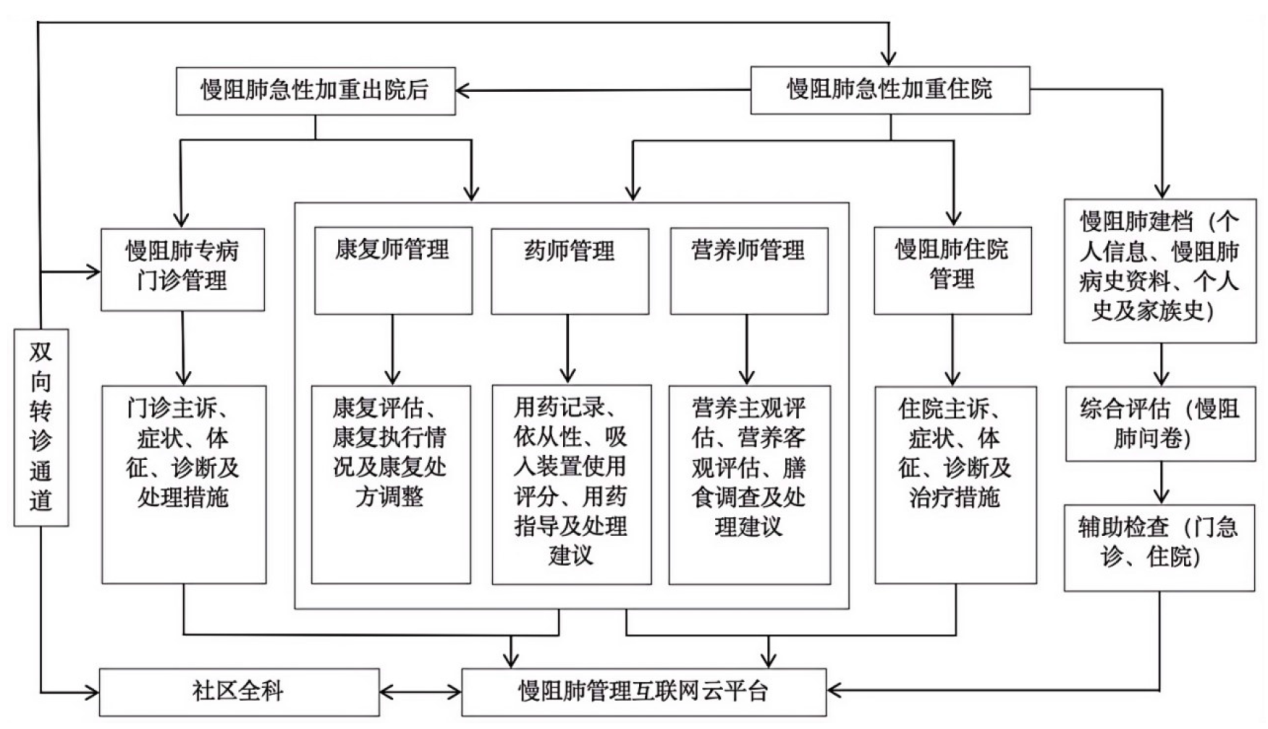
Fig.1 Flow chart of cluster management on the internet COPD management platform
| 组别 | n | 干预前 | 干预后 | Z |
|---|---|---|---|---|
| 对照组 | 45 | 2.00(1.00,3.00) | 2.00(1.00,3.00) | 1.366 |
| 观察组 | 45 | 2.00(2.00,3.00) | 2.00(1.00,2.00) | 4.959** |
| Z | 1.670 | 2.339* |
Tab.2 Comparison of the degree of dyspnea before and after treatment between the 2 groups
| 组别 | n | 干预前 | 干预后 | Z |
|---|---|---|---|---|
| 对照组 | 45 | 2.00(1.00,3.00) | 2.00(1.00,3.00) | 1.366 |
| 观察组 | 45 | 2.00(2.00,3.00) | 2.00(1.00,2.00) | 4.959** |
| Z | 1.670 | 2.339* |
| 组别 | n | FEV1%pred/% | ||
|---|---|---|---|---|
| 干预前 | 干预后 | t | ||
| 对照组 | 45 | 53.13±13.24 | 59.35±15.25 | 2.652* |
| 观察组 | 45 | 52.43±20.85 | 66.44±17.03 | 4.898** |
| t | 0.189 | 2.080* | ||
| 组别 | 6 MWT/m | |||
| 干预前 | 干预后 | t | ||
| 对照组 | 283.73±142.88 | 295.51±121.53 | 1.097 | |
| 观察组 | 282.67±142.27 | 362.78±158.27 | 11.277** | |
| t | 0.460 | 2.487* | ||
Tab.3 Comparison of pulmonary function and exercise endurance before and after treatment between the 2 groups
| 组别 | n | FEV1%pred/% | ||
|---|---|---|---|---|
| 干预前 | 干预后 | t | ||
| 对照组 | 45 | 53.13±13.24 | 59.35±15.25 | 2.652* |
| 观察组 | 45 | 52.43±20.85 | 66.44±17.03 | 4.898** |
| t | 0.189 | 2.080* | ||
| 组别 | 6 MWT/m | |||
| 干预前 | 干预后 | t | ||
| 对照组 | 283.73±142.88 | 295.51±121.53 | 1.097 | |
| 观察组 | 282.67±142.27 | 362.78±158.27 | 11.277** | |
| t | 0.460 | 2.487* | ||
| 组别 | 干预后 仍吸烟 | 规律居家 肺康复 | 中重度急性加重 需急诊或住院 诊疗次数/次 | 多学科门诊 随访次数/次 |
|---|---|---|---|---|
| 对照组 | 38(84.44) | 15(33.33) | 1.00(0.50,3.00) | 0.00(0.00,1.00) |
| 观察组 | 11(24.44) | 38(84.44) | 0.00(0.00,1.00) | 4.00(3.50,4.00) |
| χ2或Z | 32.658** | 24.278** | 3.919** | 8.568** |
Tab.4 Comparison of evaluation indicators of management effect before and after treatment between the 2 groups
| 组别 | 干预后 仍吸烟 | 规律居家 肺康复 | 中重度急性加重 需急诊或住院 诊疗次数/次 | 多学科门诊 随访次数/次 |
|---|---|---|---|---|
| 对照组 | 38(84.44) | 15(33.33) | 1.00(0.50,3.00) | 0.00(0.00,1.00) |
| 观察组 | 11(24.44) | 38(84.44) | 0.00(0.00,1.00) | 4.00(3.50,4.00) |
| χ2或Z | 32.658** | 24.278** | 3.919** | 8.568** |
| 组别 | n | Hb | ||
|---|---|---|---|---|
| 干预前 | 干预后 | t | ||
| 对照组 | 45 | 127.89±17.51 | 119.64±20.69 | 4.849** |
| 观察组 | 45 | 124.80±16.48 | 128.53±16.82 | 2.105* |
| t | 0.862 | 2.237* | ||
| 组别 | Alb | |||
| 干预前 | 干预后 | t | ||
| 对照组 | 36.58±4.16 | 35.20±3.75 | 1.729 | |
| 观察组 | 36.72±3.30 | 38.42±3.57 | 3.224** | |
| t | 0.183 | 4.180** | ||
Tab.5 Comparison of Hb and Alb levels before and after treatment between the 2 groups
| 组别 | n | Hb | ||
|---|---|---|---|---|
| 干预前 | 干预后 | t | ||
| 对照组 | 45 | 127.89±17.51 | 119.64±20.69 | 4.849** |
| 观察组 | 45 | 124.80±16.48 | 128.53±16.82 | 2.105* |
| t | 0.862 | 2.237* | ||
| 组别 | Alb | |||
| 干预前 | 干预后 | t | ||
| 对照组 | 36.58±4.16 | 35.20±3.75 | 1.729 | |
| 观察组 | 36.72±3.30 | 38.42±3.57 | 3.224** | |
| t | 0.183 | 4.180** | ||
| [1] | LI Y, YAN F, JIANG L, et al. Epidemiological trends and risk factors of chronic obstructive pulmonary disease in young individuals based on the 2021 global burden of disease data(1990-2021)[J]. BMC Pulm Med, 2025, 25(1):174. doi:10.1186/s12890-025-03630-z. |
| [2] | 中华医学会, 中华医学会杂志社, 中华医学会全科医学分会, 等. 中国慢性阻塞性肺疾病基层诊疗与管理指南(2024年)[J]. 中华全科医师杂志, 2024, 23(6):578-602. |
| Chinese Medical Association, Chinese Medical Association Publishing House, Chinese Society of General Practice, et al. Chinese guideline for management of chronic obstructive pulmonary disease in primary care(2024)[J]. Chin J Gen Pract, 2024, 23(6):578-602. doi:10.3760/cma.j.cn114798-20240326-00174. | |
| [3] | CHEN D, LONG H Y, ZHANG C X, et al. Interpretation of global strategy for the diagnosis, treatment, management and prevention of chronic obstructive pulmonary disease 2025 report[J]. Chin Gen Prac, 2025, 28(16):1937-1949. doi:10.12114/j.issn.1007-9572.2024.0588. |
| [4] | BARAT E, DUBEC E, RAYMOND J, et al. Management of asthma and COPD:Analysis of clinical profiles,post-hospitalization trajectories,and therapeutic interventions[J]. Ann Pharm Fr, 2025, 83(4):707-713. doi:10.1016/j.pharma.2025.02.003. |
| [5] | 彭峰. 研究慢病管理改善稳定期慢阻肺患者生存质量与肺功能的效果[J]. 按摩与康复医学, 2020, 11(11):28-29. |
| PENG F. Effect of chronic disease management on improving the quality of life and lung function of stable COPD patients[J]. Chin Man Rehabil Med, 2020, 11(11):28-29. doi:10.19787/j.issn.1008-1879.2020.11.012. | |
| [6] | MAHLER D A, WELLS C K. Evaluation of clinical methods for rating dyspnea[J]. Chest, 1988, 93(3):580-586. doi:10.1378/chest.93.3.580. |
| [7] | MENG N, TAN C, YUAN L, et al. The U-shaped relationship between admission peripheral oxygen saturation and all-cause hospital mortality in acute exacerbation of chronic obstructive pulmonary disease:a retrospective analysis using the MIMIC Ⅲ database[J]. J Thorac Dis, 2025, 17(1):60-69. doi:10.21037/jtd-24-1404. |
| [8] | 刘燕, 许靖, 马蕾, 等. AECOPD患者外周血EOS、D-D和NLR与肺通气功能的关系[J]. 天津医药, 2024, 52(12):1261-1265. |
| LIU Y, XU J, MA L, et al. The relationship between EOS,D-D and NLR in peripheral blood and pulmonary ventilation in patients with AECOPD[J]. Tianjin Med J, 2024, 52(12):1261-1265. doi:10.11958/20240704. | |
| [9] | 王涛, 裴复阳, 宋晓萍, 等. 集束化肺康复对稳定期慢性阻塞性肺疾病患者肺功能及相关炎性因子的影响[J]. 中国医师进修杂志, 2020, 43(5):452-457. |
| WANG T, PEI F Y, SONG X P, et al. Effects of bundled pulmonary rehabilitation on pulmonary function and inflammatory factors in patients with moderate or severe stable chronic obstructive pulmonary disease[J]. Chin J Postgrad Med, 2020, 43(5):452-457. doi:10.3760/cma.j.cn115455-20190926-00732. | |
| [10] | EKSTRÖM M, ANDERSSON A, PAPADOPOULOS S, et al. Long-term oxygen therapy for 24 or 15 hours per day in severe hypoxemia[J]. N Engl J Med, 2024, 391(11):977-988. doi:10.1056/NEJMoa2402638. |
| [11] | 郝海琴, 张清清, 刘忠祥, 等. 慢性阻塞性肺疾病病人吸入用药依从性的Meta分析[J]. 全科护理, 2023, 21(31):4330-4334. |
| HAO H Q, ZHANG Q Q, LIU Z X, et al. Inhaled medication compliance in patients with chronic obstructive pulmonary disease:a Meta-analysis[J]. Chin Gen Pract Nurs, 2023, 21(31):4330-4334. doi:10.12104/j.issn.1674-4748.2023.31.003. | |
| [12] | CEYHAN Y, TEKINSOY KARTIN P. The effects of breathing exercises and inhaler training in patients with COPD on the severity of dyspnea and life quality:a randomized controlled trial[J]. Trials, 2022, 23(1):707. doi:10.1186/s13063-022-06603-3. |
| [13] | BONNEVIE T, CLET A, BEAUMONT M, et al. Estimating endurance training intensity prescription from the 6-minute stepper test in people with chronic obstructive pulmonary disease - a multicenter cross-sectional study with external validation[J]. Pulmonology, 2025, 31(1):2486875. doi:10.1080/25310429.2025.2486875. |
| [14] | SIMON P, TÖRÖK É, SZALONTAI K, et al. Nutritional support of chronic obstructive pulmonary disease[J]. Nutrients, 2025, 17(7):1149. doi:10.3390/nu17071149. |
| [15] | 王坤, 曹晓梅. 慢性阻塞性肺疾病合并骨质疏松的研究进展[J]. 实用医学杂志, 2024, 40(19):2796-2800. |
| WANG K, CAO X M. A review of studies on chronic obstructive pulmonary disease complicated with osteoporosis[J]. J Pract Med, 2024, 40(19):2796-2800. doi:10.3969/j.issn.1006-5725.2024.19.022. | |
| [16] | HUIMIN T, ZHENG T, JINGCHUN H, et al. A scoping review of factors influencing smoking cessation in patients with chronic obstructive pulmonary disease[J]. COPD, 2024, 21(1):2390988. doi:10.1080/15412555.2024.2390988. |
| [17] | WANG Z, YU L, YANG T, et al. Core characteristics,and effectiveness of mobile health interventions on dyspnoea and quality of life in older persons with chronic obstructive pulmonary disease:A systematic review and meta-analysis of randomised controlled trials[J]. Geriatr Nurs, 2025, 63:336-352. doi:10.1016/j.gerinurse.2025.03.041. |
| [18] | 冯玉琦, 彭连军, 王红嫚. “互联网+”慢性阻塞性肺疾病全程管理模式的研究进展[J]. 中国医药导报, 2023, 20(10):50-54. |
| FENG Y Q, PENG L J, WANG H M. Research progress of “internet+” whole-course management mode of chronic obstructive pulmonary disease[J]. China Med Her, 2023, 20(10):50-54. doi:10.20047/j.issn1673-7210.2023.10.10. |
| Viewed | ||||||
|
Full text |
|
|||||
|
Abstract |
|
|||||
