
Tianjin Medical Journal ›› 2026, Vol. 54 ›› Issue (4): 374-378.doi: 10.11958/20252777
• Clinical Research • Previous Articles Next Articles
ZHAO Zhengwei1( ), XU Wenyan1, GUO Xiaomin1, WANG Min2, LI Jianli1, LI Zhihai3△(), SHEN Dongqiong4, TU Yungui1
Received:2025-08-22
Revised:2025-09-25
Published:2026-04-15
Online:2026-04-14
Contact:
△E-mail:ZHAO Zhengwei, XU Wenyan, GUO Xiaomin, WANG Min, LI Jianli, LI Zhihai, SHEN Dongqiong, TU Yungui. Predictive value of serum LRG1 and suPAR levels in sepsis patients with concurrent acute kidney injury[J]. Tianjin Medical Journal, 2026, 54(4): 374-378.
CLC Number:
| 组别 | 性别(男/女) | 年龄/岁 | BMI/(kg/m2) |
|---|---|---|---|
| 健康组 | 63/57 | 61.25±6.23 | 21.55±1.93 |
| 疾病组 | 69/51 | 60.80±5.93 | 21.63±2.11 |
| t或χ2 | 0.606 | 0.573 | 0.306 |
Tab.1 Comparison of general data between the disease group and the healthy group
| 组别 | 性别(男/女) | 年龄/岁 | BMI/(kg/m2) |
|---|---|---|---|
| 健康组 | 63/57 | 61.25±6.23 | 21.55±1.93 |
| 疾病组 | 69/51 | 60.80±5.93 | 21.63±2.11 |
| t或χ2 | 0.606 | 0.573 | 0.306 |
| 组别 | LRG1 | suPAR |
|---|---|---|
| 健康组 | 179.23±24.33 | 8.93±2.13 |
| 疾病组 | 249.20±35.47 | 14.82±2.77 |
| t | 17.817** | 18.399** |
Tab.2 Comparison of serum LRG1 and suPAR levels between the disease group and the healthy group
| 组别 | LRG1 | suPAR |
|---|---|---|
| 健康组 | 179.23±24.33 | 8.93±2.13 |
| 疾病组 | 249.20±35.47 | 14.82±2.77 |
| t | 17.817** | 18.399** |
| 组别 | n | 性别 | 年龄/岁 | BMI/(kg/m2) | 糖尿病 | 高血压 | 冠心病 | 高脂血症 | 感染部位 | ||||||||||||||
|---|---|---|---|---|---|---|---|---|---|---|---|---|---|---|---|---|---|---|---|---|---|---|---|
| 男 | 女 | 肺部 | 泌尿系统 | 腹腔 | 其他 | ||||||||||||||||||
| 非AKI组 | 67 | 39(56.52) | 28(54.90) | 60.75±5.92 | 21.65±1.88 | 14(58.33) | 20(60.61) | 10(58.82) | 15(62.50) | 25(36.23) | 19(67.86) | 22(73.33) | 1(2.50) | ||||||||||
| AKI组 | 53 | 30(43.48) | 23(45.10) | 60.87±5.63 | 21.60±1.94 | 10(41.67) | 13(39.39) | 7(41.18) | 9(37.50) | 21(30.43) | 16(57.14) | 10(33.33) | 6(15.00) | ||||||||||
| t或χ2 | 0.031 | 0.114 | 0.115 | 0.076 | 0.420 | 0.072 | 0.541 | 7.140 | |||||||||||||||
| 组别 | 机械通气 | 血管 活性药物 | APACHEⅡ评分/分 | SOFA评分/分 | PCT/ (μg/L) | 血肌酐/(μmol/L) | Lac/ (mmol/L) | LRG1/ (μg/L) | suPAR/(μg/L) | ||||||||||||||
| 非AKI组 | 31(62.00) | 26(44.07) | 15.48±3.24 | 6.92±1.95 | 8.49±1.25 | 115.44±15.37 | 1.46±0.28 | 235.52±30.42 | 13.62±2.65 | ||||||||||||||
| AKI组 | 19(38.00) | 33(55.93) | 17.22±3.13 | 8.93±2.15 | 13.52±2.35 | 117.65±16.33 | 1.92±0.43 | 266.49±32.15 | 16.34±3.29 | ||||||||||||||
| t或χ2 | 1.322 | 6.515* | 2.965** | 5.384** | 14.044** | 0.761 | 6.885** | 5.402** | 5.015** | ||||||||||||||
Tab.3 Comparison of clinical data between the AKI group and the non-AKI group
| 组别 | n | 性别 | 年龄/岁 | BMI/(kg/m2) | 糖尿病 | 高血压 | 冠心病 | 高脂血症 | 感染部位 | ||||||||||||||
|---|---|---|---|---|---|---|---|---|---|---|---|---|---|---|---|---|---|---|---|---|---|---|---|
| 男 | 女 | 肺部 | 泌尿系统 | 腹腔 | 其他 | ||||||||||||||||||
| 非AKI组 | 67 | 39(56.52) | 28(54.90) | 60.75±5.92 | 21.65±1.88 | 14(58.33) | 20(60.61) | 10(58.82) | 15(62.50) | 25(36.23) | 19(67.86) | 22(73.33) | 1(2.50) | ||||||||||
| AKI组 | 53 | 30(43.48) | 23(45.10) | 60.87±5.63 | 21.60±1.94 | 10(41.67) | 13(39.39) | 7(41.18) | 9(37.50) | 21(30.43) | 16(57.14) | 10(33.33) | 6(15.00) | ||||||||||
| t或χ2 | 0.031 | 0.114 | 0.115 | 0.076 | 0.420 | 0.072 | 0.541 | 7.140 | |||||||||||||||
| 组别 | 机械通气 | 血管 活性药物 | APACHEⅡ评分/分 | SOFA评分/分 | PCT/ (μg/L) | 血肌酐/(μmol/L) | Lac/ (mmol/L) | LRG1/ (μg/L) | suPAR/(μg/L) | ||||||||||||||
| 非AKI组 | 31(62.00) | 26(44.07) | 15.48±3.24 | 6.92±1.95 | 8.49±1.25 | 115.44±15.37 | 1.46±0.28 | 235.52±30.42 | 13.62±2.65 | ||||||||||||||
| AKI组 | 19(38.00) | 33(55.93) | 17.22±3.13 | 8.93±2.15 | 13.52±2.35 | 117.65±16.33 | 1.92±0.43 | 266.49±32.15 | 16.34±3.29 | ||||||||||||||
| t或χ2 | 1.322 | 6.515* | 2.965** | 5.384** | 14.044** | 0.761 | 6.885** | 5.402** | 5.015** | ||||||||||||||
| 变量 | 最佳 截断值 | AUC | 95%CI | 敏感度/% | 特异度/% | 约登 指数 |
|---|---|---|---|---|---|---|
| LRG1 | 256.96 μg/L | 0.778 | 0.693~0.849 | 75.47 | 85.07 | 0.606 |
| suPAR | 14.69 μg/L | 0.772 | 0.686~0.843 | 73.58 | 83.58 | 0.572 |
| 联合检测 | - | 0.850 | 0.773~0.909 | 86.79 | 71.64 | 0.584 |
Tab.4 ROC curve parameters of serum LRG1 and suPAR for predicting AKI in patients with sepsis
| 变量 | 最佳 截断值 | AUC | 95%CI | 敏感度/% | 特异度/% | 约登 指数 |
|---|---|---|---|---|---|---|
| LRG1 | 256.96 μg/L | 0.778 | 0.693~0.849 | 75.47 | 85.07 | 0.606 |
| suPAR | 14.69 μg/L | 0.772 | 0.686~0.843 | 73.58 | 83.58 | 0.572 |
| 联合检测 | - | 0.850 | 0.773~0.909 | 86.79 | 71.64 | 0.584 |
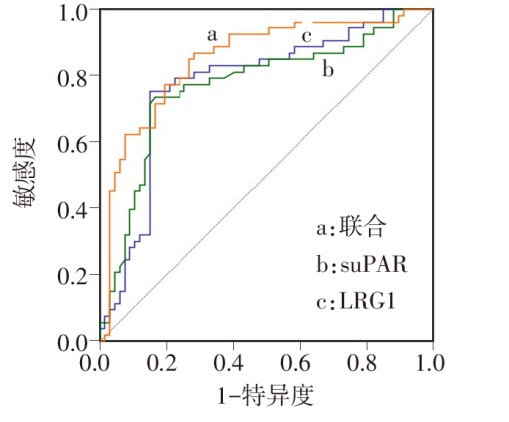
Fig.1 ROC curves of serum LRG1 and suPAR for predicting sepsis complicated with AKI
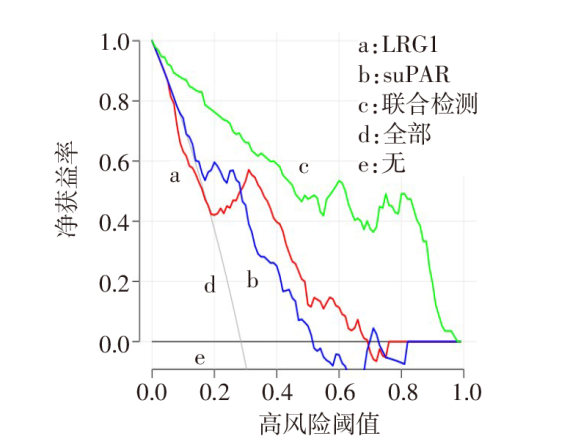
Fig.2 DCA curves of serum LRG1 and suPAR for predicting sepsis complicated with AKI
| 变量 | β | SE | Wald χ2 | P | OR | OR 95%CI |
|---|---|---|---|---|---|---|
| LRG1 | 1.540 | 0.429 | 12.888 | <0.001 | 4.665 | 2.012~10.815 |
| suPAR | 1.439 | 0.372 | 14.956 | <0.001 | 4.215 | 2.033~8.739 |
| Lac | 1.351 | 0.354 | 14.574 | <0.001 | 3.863 | 1.930~7.731 |
| 血管活性药物 | 1.117 | 0.288 | 10.054 | <0.001 | 3.057 | 1.738~5.376 |
| 常数项 | -9.287 | 2.349 | 10.576 | <0.001 | 0.000 | - |
Tab.5 Logistic regression analysis of the influencing factors of sepsis complicated with AKI
| 变量 | β | SE | Wald χ2 | P | OR | OR 95%CI |
|---|---|---|---|---|---|---|
| LRG1 | 1.540 | 0.429 | 12.888 | <0.001 | 4.665 | 2.012~10.815 |
| suPAR | 1.439 | 0.372 | 14.956 | <0.001 | 4.215 | 2.033~8.739 |
| Lac | 1.351 | 0.354 | 14.574 | <0.001 | 3.863 | 1.930~7.731 |
| 血管活性药物 | 1.117 | 0.288 | 10.054 | <0.001 | 3.057 | 1.738~5.376 |
| 常数项 | -9.287 | 2.349 | 10.576 | <0.001 | 0.000 | - |
| [1] | 黎金国, 何书典, 邢柏. 脓毒症患者血浆晚期糖基化终末产物和可溶性糖基化终末产物受体水平变化及其与并发急性肾损伤的相关性[J]. 中国医药, 2023, 18(3):395-399. |
| LI J G, HE S D, XING B. Changes of plasma levels of advanced glycation end products and soluble receptor for advanced glycation end products in patients with sepsis and their correlation with acute kidney injury[J]. Chin J Med, 2023, 18(3):395-399. doi:10.3760/j.issn.1673-4777.2023.03.016. | |
| [2] | PEERAPORNRATANA S, MANRIQUE-CABALLERO C L, GÓMEZ H, et al. Acute kidney injury from sepsis:current concepts epidemiology,pathophysiology,prevention and treatment[J]. Kidney Int, 2019, 96(5):1083-1099. doi:10.1016/j.kint.2019.05.026. |
| [3] | POPOVA A, VASIĻVOLFA A, RĀCENIS K, et al. Leucine-rich alpha-2-glycoprotein (LRG-1) as a potential kidney injury marker in kidney transplant recipients[J]. Ann Transplant, 2022, 27:e936751. doi:10.12659/AOT.936751. |
| [4] | IVERSEN E, HOULIND M B, KALLEMOSE T, et al. Elevated suPAR is an independent risk marker for incident kidney disease in acute medical patients[J]. Front Cell Dev Biol, 2020, 8:339. doi:10.3389/fcell.2020.00339. |
| [5] | 中国医师协会急诊医师分会, 中国研究型医院学会休克与脓毒症专业委员会. 中国脓毒症/脓毒性休克急诊治疗指南(2018)[J]. 感染、炎症、修复, 2019, 20(1):3-22. |
| Emergency Physicians Branch of Chinese Medical Doctor Association,Shock and Sepsis Professional Committee of Chinese Research Hospital Association. Chinese guidelines for the emergency treatment of sepsis/septic shock (2018)[J]. Infection,Inflammation and Repair, 2019, 20(1):3-22. doi:10.13201/j.issn.1009-5918.2018.09.001. | |
| [6] | KELLUM J A, LAMEIRE N, KDIGO AKI Guideline Work Group. Diagnosis,evaluation,and management of acute kidney injury:a KDIGO summary (Part 1)[J]. Crit Care, 2013, 17(1):204. doi:10.1186/cc11454. |
| [7] | LUND A W, DE PALMA M. Targeting LRG1 boosts immunotherapy[J]. Med, 2021, 2(11):1195-1197. doi:10.1016/j.medj.2021.10.006. |
| [8] | HASHIDA T, NAKADA T A, SATOH M, et al. Proteome analysis of hemofilter adsorbates to identify novel substances of sepsis:a pilot study[J]. J Artif Organs, 2017, 20(2):132-137. doi:10.1007/s10047-016-0936-3. |
| [9] | CHEN J, ZHANG Z, FENG L, et al. Lrg1 silencing attenuates ischemia-reperfusion renal injury by regulating autophagy and apoptosis through the TGFβ1- Smad1/5 signaling pathway[J]. Arch Biochem Biophys, 2024, 753:109892. doi:10.1016/j.abb.2024.109892. |
| [10] | MUK T, JIANG P P, STENSBALLE A, et al. Prenatal endotoxin exposure induces fetal and neonatal renal inflammation via innate and Th1 immune activation in preterm pigs[J]. Front Immunol, 2020, 11:565484. doi:10.3389/fimmu.2020.565484. |
| [11] | 陈敏, 臧志云, 李艳萍, 等. LRG1、miR-155表达水平在脓毒症治疗前后的变化及其对预后的评估价值[J]. 东南大学学报(医学版), 2023, 42(4):506-511. |
| CHEN M, ZANG Z Y, LI Y P, et al. Changes in the expression levels of LRG1 and miR-155 before and after treatment in sepsis and their prognostic value[J]. Journal of Southeast University (Medical Edition), 2023, 42(4):506-511. doi:10.3969/j.issn.1671-6264.2023.04.003. | |
| [12] | 常俊佩, 王艳莉. 血清LRG1水平与2型糖尿病早期肾脏损伤的关系[J]. 中国中西医结合肾病杂志, 2022, 23(2):127-129. |
| CHANG J P, WANG Y L. Relationship between serum LRG1 level and early renal injury in type 2 diabetes mellitus[J]. Chin J Nephrology of Integrated Traditional and Western Medicine, 2022, 23(2):127-129. doi:10.3969/j.issn.1009-587X.2022.02.008. | |
| [13] | 黄秀芳, 黎晓强, 彭燕, 等. 血清EGFR、Lrg1水平是肺结核患者发生支气管狭窄的独立危险因素[J]. 内科急危重症杂志, 2022, 28(5):383-386. |
| HUANG X F, LI X Q, PENG Y, et al. Serum EGFR and Lrg1 levels are independent risk factors for bronchial stenosis in patients with pulmonary tuberculosis[J]. Chin J Med Critical Care Medicine, 2022, 28(5):383-386. doi:10.11768/nkjwzzzz20220507. | |
| [14] | CHENG Y, HALL T R, XU X, et al. Targeting uPA-uPAR interaction to improve intestinal epithelial barrier integrity in inflammatory bowel disease[J]. EBioMedicine, 2022, 75:103758. doi:10.1016/j.ebiom.2021.103758. |
| [15] | HUANG Q, XIONG H, YAN P, et al. The diagnostic and prognostic value of suPAR in patients with sepsis:a systematic review and meta-analysis[J]. Shock, 2020, 53(4):416-425. doi:10.1097/SHK.0000000000001434. |
| [16] | HAYEK S S, KOH K H, GRAMS M E, et al. A tripartite complex of suPAR,APOL1 risk variants and αvβ3 integrin on podocytes mediates chronic kidney disease[J]. Nat Med, 2017, 23(8):945-953. doi:10.1038/nm.4362. |
| [17] | HAYEK S S, LEAF D E, SAMMAN TAHHAN A, et al. Soluble urokinase receptor and acute kidney injury[J]. N Engl J Med, 2020, 382(5):416-426. doi:10.1056/NEJMoa1911481. |
| [18] | ZHANG W, GU Y, ZHOU J, et al. Clinical value of soluble urokinase-type plasminogen activator receptor in predicting sepsis-associated acute kidney injury[J]. Ren Fail, 2024, 46(1):2307959. doi:10.1080/0886022X.2024.2307959. |
| [19] | SUDHINI Y R, WEI C, REISER J. suPAR:an inflammatory mediator for kidneys[J]. Kidney Dis (Basel), 2022, 8(4):265-274. doi:10.1159/000524965. |
| [20] | AN S, YAO Y, HU H, et al. PDHA1 hyperacetylation-mediated lactate overproduction promotes sepsis-induced acute kidney injury via Fis1 lactylation[J]. Cell Death Dis, 2023, 14(7):457. doi:10.1038/s41419-023-05952-4. |
| [21] | 侯克龙, 沈骁, 李静, 等. 血管活性药物评分与心血管外科术后急性肾损伤的相关性研究[J]. 中国心血管杂志, 2021, 26(5):457-462. |
| HOU K L, SHEN X, LI J, et al. Correlation between vasoactive drug score and acute kidney injury after cardiovascular surgery[J]. Chin J Cardiovascular, 2021, 26(5):457-462. doi:10.3969/j.issn.1007-5410.2021.05.011. |
| Viewed | ||||||
|
Full text |
|
|||||
|
Abstract |
|
|||||
