
Tianjin Medical Journal ›› 2026, Vol. 54 ›› Issue (5): 528-532.doi: 10.11958/20253253
• Drug Clinical Evaluations • Previous Articles Next Articles
CHEN Man( ), ZHENG Nuo, ZHANG Dongli, CHEN Jiao, LIU Xiaoming△()
Received:2025-10-29
Revised:2026-01-21
Published:2026-05-15
Online:2026-05-13
Contact:
△E-mail:CHEN Man, ZHENG Nuo, ZHANG Dongli, CHEN Jiao, LIU Xiaoming. Observation on the therapeutic efficacy of ketogenic diet combined with perampanel in children with epileptic encephalopathy accompanied by sharp-slow wave activation during sleep period[J]. Tianjin Medical Journal, 2026, 54(5): 528-532.
CLC Number:
| 组别 | n | 年龄/岁 | 性别 | 体质量/kg | 病程/月 | ASMs种类 | ||||||||||
|---|---|---|---|---|---|---|---|---|---|---|---|---|---|---|---|---|
| 女 | 男 | 2种 | ≥3种 | |||||||||||||
| 对照组 | 49 | 8.14±0.93 | 23(46.94) | 26(53.06) | 21.79±3.52 | 6.21±0.75 | 32(65.31) | 17(34.69) | ||||||||
| 试验组 | 50 | 8.29±1.05 | 21(42.00) | 29(58.00) | 22.03±3.78 | 5.93±0.66 | 33(66.00) | 17(34.00) | ||||||||
| χ2或t | 0.752 | 0.244 | 0.372 | 1.973 | 0.005 | |||||||||||
| 组别 | 非自限性病因分类 | 自限性病因 | 亚型 | |||||||||||||
| 结构性 | 遗传性 | 免疫性 | 不明 | CSWS | LKS | SeL-ECTS | SeL-EAS | |||||||||
| 对照组 | 18(36.73) | 10(20.41) | 5(10.20) | 2(4.08) | 14(28.57) | 26(53.06) | 15(30.61) | 3(6.12) | 5(10.20) | |||||||
| 试验组 | 17(34.00) | 11(22.00) | 4(8.00) | 3(6.00) | 15(30.00) | 26(52.00) | 16(32.00) | 4(8.00) | 4(8.00) | |||||||
| χ2 | 0.387 | 0.024 | 0.276 | |||||||||||||
Tab.1 Comparison of general data between the two groups
| 组别 | n | 年龄/岁 | 性别 | 体质量/kg | 病程/月 | ASMs种类 | ||||||||||
|---|---|---|---|---|---|---|---|---|---|---|---|---|---|---|---|---|
| 女 | 男 | 2种 | ≥3种 | |||||||||||||
| 对照组 | 49 | 8.14±0.93 | 23(46.94) | 26(53.06) | 21.79±3.52 | 6.21±0.75 | 32(65.31) | 17(34.69) | ||||||||
| 试验组 | 50 | 8.29±1.05 | 21(42.00) | 29(58.00) | 22.03±3.78 | 5.93±0.66 | 33(66.00) | 17(34.00) | ||||||||
| χ2或t | 0.752 | 0.244 | 0.372 | 1.973 | 0.005 | |||||||||||
| 组别 | 非自限性病因分类 | 自限性病因 | 亚型 | |||||||||||||
| 结构性 | 遗传性 | 免疫性 | 不明 | CSWS | LKS | SeL-ECTS | SeL-EAS | |||||||||
| 对照组 | 18(36.73) | 10(20.41) | 5(10.20) | 2(4.08) | 14(28.57) | 26(53.06) | 15(30.61) | 3(6.12) | 5(10.20) | |||||||
| 试验组 | 17(34.00) | 11(22.00) | 4(8.00) | 3(6.00) | 15(30.00) | 26(52.00) | 16(32.00) | 4(8.00) | 4(8.00) | |||||||
| χ2 | 0.387 | 0.024 | 0.276 | |||||||||||||
| 组别 | n | SWI | S-100β/(μg/L) | |||||||||||||
|---|---|---|---|---|---|---|---|---|---|---|---|---|---|---|---|---|
| 治疗前 | 治疗后 | t | 治疗前 | 治疗后 | t | |||||||||||
| 对照组 | 49 | 87.49±9.52 | 15.47±2.34 | 88.156** | 1.03±0.23 | 0.62±0.09 | 22.625** | |||||||||
| 试验组 | 50 | 88.26±10.14 | 6.21±0.79 | 85.038** | 0.99±0.16 | 0.47±0.07 | 42.630** | |||||||||
| t | 0.389 | 26.487** | 1.006 | 9.267** | ||||||||||||
| 组别 | BDNF/(μg/L) | NSE/(μg/L) | WISC-V评分/分 | |||||||||||||
| 治疗前 | 治疗后 | t | 治疗前 | 治疗后 | t | 治疗前 | 治疗后 | t | ||||||||
| 对照组 | 5.97±0.71 | 7.52±0.94 | 22.808** | 25.81±3.56 | 16.39±2.65 | 36.636** | 79.36±9.28 | 90.77±9.51 | 15.539** | |||||||
| 试验组 | 5.83±0.64 | 8.09±1.22 | 25.162** | 26.19±3.77 | 14.15±2.29 | 44.335** | 80.57±9.13 | 96.47±10.07 | 21.272** | |||||||
| t | 1.031 | 2.600* | 0.515 | 4.503** | 0.654 | 2.894** | ||||||||||
Tab.2 Comparison of SWI, serum neurofactor levels and intellectual development before and after treatment between the two groups
| 组别 | n | SWI | S-100β/(μg/L) | |||||||||||||
|---|---|---|---|---|---|---|---|---|---|---|---|---|---|---|---|---|
| 治疗前 | 治疗后 | t | 治疗前 | 治疗后 | t | |||||||||||
| 对照组 | 49 | 87.49±9.52 | 15.47±2.34 | 88.156** | 1.03±0.23 | 0.62±0.09 | 22.625** | |||||||||
| 试验组 | 50 | 88.26±10.14 | 6.21±0.79 | 85.038** | 0.99±0.16 | 0.47±0.07 | 42.630** | |||||||||
| t | 0.389 | 26.487** | 1.006 | 9.267** | ||||||||||||
| 组别 | BDNF/(μg/L) | NSE/(μg/L) | WISC-V评分/分 | |||||||||||||
| 治疗前 | 治疗后 | t | 治疗前 | 治疗后 | t | 治疗前 | 治疗后 | t | ||||||||
| 对照组 | 5.97±0.71 | 7.52±0.94 | 22.808** | 25.81±3.56 | 16.39±2.65 | 36.636** | 79.36±9.28 | 90.77±9.51 | 15.539** | |||||||
| 试验组 | 5.83±0.64 | 8.09±1.22 | 25.162** | 26.19±3.77 | 14.15±2.29 | 44.335** | 80.57±9.13 | 96.47±10.07 | 21.272** | |||||||
| t | 1.031 | 2.600* | 0.515 | 4.503** | 0.654 | 2.894** | ||||||||||
| 组别 | n | 显效 | 有效 | 无效 | 总有效 |
|---|---|---|---|---|---|
| 对照组 | 49 | 23(46.94) | 16(32.65) | 10(20.41) | 39(79.59) |
| 试验组 | 50 | 28(56.00) | 20(40.00) | 2(4.00) | 48(96.00) |
| χ2 | 6.255* |
Tab.3 Comparison of clinical efficacy between the two groups
| 组别 | n | 显效 | 有效 | 无效 | 总有效 |
|---|---|---|---|---|---|
| 对照组 | 49 | 23(46.94) | 16(32.65) | 10(20.41) | 39(79.59) |
| 试验组 | 50 | 28(56.00) | 20(40.00) | 2(4.00) | 48(96.00) |
| χ2 | 6.255* |
| 组别 | n | 嗜睡 | 易怒 | 消化道反应 | 体质量增加 | 总发生 |
|---|---|---|---|---|---|---|
| 对照组 | 49 | 1(2.04) | 3(6.12) | 2(4.08) | 2(4.08) | 8(16.32) |
| 试验组 | 50 | 0(0.00) | 1(2.00) | 5(10.00) | 0(0.00) | 6(12.00) |
| χ2 | 0.382 |
Tab.4 Comparison of adverse reactions between the two groups
| 组别 | n | 嗜睡 | 易怒 | 消化道反应 | 体质量增加 | 总发生 |
|---|---|---|---|---|---|---|
| 对照组 | 49 | 1(2.04) | 3(6.12) | 2(4.08) | 2(4.08) | 8(16.32) |
| 试验组 | 50 | 0(0.00) | 1(2.00) | 5(10.00) | 0(0.00) | 6(12.00) |
| χ2 | 0.382 |
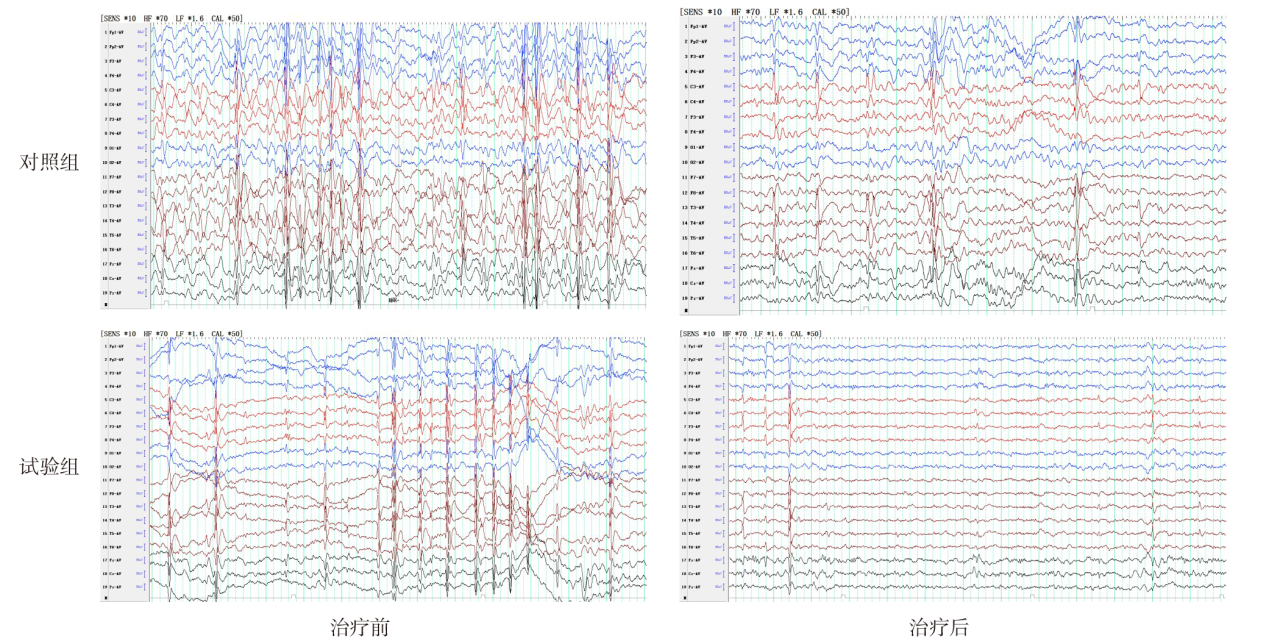
Fig.1 Electroencephalograms of two typical cases
| [1] | HE Z, ZHU L, GAO Z, et al. Early prediction of the evolution of self-limited epilepsy with centrotemporal spikes to epileptic encephalopathy with spike-and-wave activation in sleep:a prediction model construction based on quantitative electroencephalography characteristics[J]. CNS Neurosci Ther, 2025, 31(3):e70268. doi:10.1111/cns.70268. |
| [2] | ERGUN-LONGMIRE B, NGUYEN M, COM G. Electrical status epilepticus during sleep in a child with Prader-Willi syndrome:a case report[J]. AME Case Rep, 2022, 6:7. doi:10.21037/acr-21-34. |
| [3] | 陆琳, 渠蕊, 戴园园. 拉莫三嗪联合大剂量地西泮治疗儿童良性癫痫伴中央颞区棘波合并睡眠中癫痫性电持续状态的临床效果[J]. 湖南师范大学学报(医学版), 2024, 21(4):93-96,105. |
| LU L, QU R, DAI Y Y. The clinical effect of lamotrigine combined with high-dose diazepam in the treatment of benign epilepsy in children with central temporal spikes and epileptic electrical persistence during sleep[J]. J Hunan Norma Univ(Med Sci), 2024, 21(4):93-96,105. doi:10.3969/j.issn.1673-016X.2024.04.018. | |
| [4] | 闫婷, 杜丽君, 李晓媛, 等. 吡仑帕奈单药和添加治疗儿童癫痫伴睡眠中癫痫性电持续状态的疗效及安全性研究[J]. 实用药物与临床, 2024, 27(9):668-672. |
| YAN T, DU L J, LI X Y, et al. Study on efficacy and safety of perampanel as monotherapy and as addition in the treatment of electrical status epilepticus during sleep in children with epilepsy[J]. Practical Pharmacy And Clinical Remedies, 2024, 27(9):668-672. doi:10.14053/j.cnki.ppcr.202409005. | |
| [5] | 陈曼, 岳璇, 刘娜, 等. 生酮饮食治疗睡眠中癫痫性电持续状态相关癫痫综合征的疗效及脑电图变化[J]. 癫痫杂志, 2023, 9(6):455-460. |
| CHEN M, YUE X, LIU N, et al. The duration of epilepsy in sleep effect of progesterone diet on epilepsy syndrome in sleep and recurrent epilepsy syndrome and EEG changes[J]. Journal of Epilepsy, 2023, 9(6):455-460. doi:10.7507/2096-0247.202308004. | |
| [6] | 王君, 罗琼, 张美. 改良aEEG评分联合S-100β和GFAP对儿童癫痫性脑病早期诊断价值的分析[J]. 中国妇幼健康研究, 2023, 34(5):25-29. |
| WANG J, LUO Q, ZHANG M. Early diagnostic value of modified aEEG score combined with detection of S-100β and GFAP in serum for epileptic encephalopathy in children[J]. Chinese Journal of Woman and Child Health Research, 2023, 34(5):25-29. doi:10.3969/j.issn.1673-5293.2023.05.004. | |
| [7] | SPECCHIO N, WIRRELL E C, SCHEFFER I E, et al. International league against epilepsy classification and definition of epilepsy syndromes with onset in childhood:position paper by the ilae task force on nosology and definitions[J]. Epilepsia, 2022, 63(6):1398-1442. doi:10.1111/epi.17241. |
| [8] | ADAMS H R, AUGUSTINE E F, BONIFACIO K, et al. The Wechsler intelligence scale for children,fourth and fifth editions perform comparably in children with Batten disease[J]. Orphanet J Rare Dis, 2025, 20(1):413. doi:10.1186/s13023-025-03923-w. |
| [9] | 王佳, 王晓丽, 王萌, 等. 癫痫性电持续状态相关概念解读[J]. 中风与神经疾病杂志, 2023, 40(11):1051-1053. |
| WANG J, WANG X L, WANG M, et al. Interpretation of concepts related to electrical status epilepticus[J]. J Apoplexy and Nervous Diseases, 2023, 40(11):1051-1053. doi:10.19845/j.cnki.zfysjjbzz.2023.0227. | |
| [10] | 张芳, 王建忠, 刘金. 良性癫痫伴中央颞区棘波患儿蛋白延长因子4基因多态性及其并发睡眠中癫痫性电持续状态的影响因素[J]. 广西医学, 2023, 45(8):891-894. |
| ZHANG F, WANG J Z, LIU J. Polymorphism of protein elongation factor 4 gene in children with benign epilepsy with centrotemporal spike and its influencing factors for concurrent electrical status epilepticus during sleep[J]. Guangxi Medical Journal, 2023, 45(8):891-894. doi:10.11675/j.issn.0253-4304.2023.08.03. | |
| [11] | YU T, TENG Z T, LIU X Y, et al. Effectiveness of perampanel in the treatment of pediatric patients with focal epilepsy and ESES:a single-center retrospective study[J]. Front Pharmacol, 2022, 13:1026836. doi:10.3389/fphar.2022.1026836. |
| [12] | SAMUEL LÓPEZ-MAZA, GIFREU A, FONSECA E, et al. Efficacy of perampanel in nocturnal seizures in adult patients with epilepsy[J]. Acta Neurologica Scandinavica, 2024, 12(1):8-16. doi:10.1155/2024/5534808. |
| [13] | 胡笑月, 井淼, 王艳萍, 等. 生酮饮食对基因变异相关癫痫疗效分析[J]. 临床儿科杂志, 2022, 40(12):934-938. |
| HU X Y, JING M, WANG Y P. Effect of ketogenic diet on epilepsy with genetic etiology[J]. J Clin Pediatr, 2022, 40(12):934-938. doi:10.12372/jcp.2022.21e1415. | |
| [14] | LANGEH U, SINGH S. Targeting S100B protein as a surrogate biomarker and its role in various neurological disorders[J]. Curr Neuropharmacol, 2021, 19(2):265-277. doi:10.2174/1570159X18666200729100427. |
| [15] | 谢晓辉, 朱燕, 赵婷, 等. 拉考沙胺联合左乙拉西坦治疗癫痫患儿临床疗效及对神经功能相关指标的影响[J]. 疑难病杂志, 2024, 23(5):548-551,562. |
| XIE X H, ZHU Y, ZHAO T, et al. Effects of lacosamide combined with levetiracetam on neurological function and clinical efficacy in children with epilepsy[J]. Chin J Diffic and Compl Cas, 2024, 23(5):548-551,562. doi:10.3969/j.issn.1671-6450.2024.05.008. | |
| [16] | JAVAID S, ALQAHTANI F, ASHRAF W, et al. Tiagabine suppresses pentylenetetrazole-induced seizures in mice and improves behavioral and cognitive parameters by modulating BDNF/TrkB expression and neuroinflammatory markers[J]. Biomed Pharmacother, 2023, 160:114406. doi:10.1016/j.biopha.2023.114406. |
| [17] | ALLAN N P, YAMAMOTO B Y, KUNIHIRO B P, et al. Ketogenic diet induced shifts in the gut microbiome associate with changes to inflammatory cytokines and brain-related miRNAs in Children with autism spectrum disorder[J]. Nutrients, 2024, 16(10):1401. doi:10.3390/nu16101401. |
| [18] | 张凯月, 郑昭时, 王涵, 等. 吡仑帕奈临床应用研究进展[J]. 癫痫杂志, 2023, 9(3):210-217. |
| ZHANG K Y, ZHENG Z S, WANG H, et al. Research progress of clinical application of perampanel[J]. Journal of Epilepsy, 2023, 9(3):210-217. doi:10.7507/2096-0247.202303008. |
| [1] | CHENG Yun, XIA Mingnong, ZHANG Fan, LI Feng. Risk factors for the development of febrile convulsions in children into epilepsy and the construction of the predictive model [J]. Tianjin Medical Journal, 2026, 54(1): 52-57. |
| [2] | WU Meina, DAI Weizheng, PAN Yudun, FU Maolin, CHEN Xiaoyu. Clinical value of routine electroencephalogram combined with serum miR-146a and miR-129-5p levels in diagnosis of drug-resistant epilepsy patients [J]. Tianjin Medical Journal, 2024, 52(11): 1207-1210. |
| [3] | WANG Jinxiang, XU Guowu, WANG Tailan, WANG Le, JIN Heng, CHAI Yanfen. Effects of mild hypothermia treatment on the immune and neurological function in a swine model of extracorporeal cardiopulmonary resuscitation after cardiac arrest [J]. Tianjin Medical Journal, 2023, 51(10): 1076-1079. |
| [4] | WANG Yan-ping, HUA Ying, JING Miao, TANG Hong-wei. A case report of glucose transporter 1 deficiency syndrome [J]. Tianjin Medical Journal, 2020, 48(8): 777-779. |
| [5] | LIU Hui-ling, WANG Yi-yi△, ZHANG Xue-lan. A case of coronavirus disease 2019 combined with temporal lobe epilepsy [J]. Tianjin Medical Journal, 2020, 48(6): 487-490. |
| [6] | XU Li, ZHANG Yu-kun, WU Jiang, CHEN Jun△, JI Fu-hai. The effect of dexmedetomidine-esmolol combination therapy on metabolism and outcome in patients with severe traumatic brain injury undergoing decompression craniectomy [J]. Tianjin Medical Journal, 2020, 48(11): 1069-1073. |
| [7] | WEI Ying-sheng, JIA Ying, AN Shuo, TIAN Ye, SUN Jian, JIANG Rong-cai. Chronic subdural hematoma complicated with hepatic encephalopathy: a case report [J]. Tianjin Medical Journal, 2018, 46(7): 758-760. |
| [8] | ZHANG Yang, ZHOU Meng-ling. Effects of sodium valproate on epilepsy and cognitive function in the treatment of epilepsy in school-age children [J]. Tianjin Medical Journal, 2018, 46(7): 733-737. |
| [9] | DU Xue-yun, PAN Li-ping, REN Yan-ping, SONG Yi-jun△. Patterns of theta oscillation underlying working memory deficits in temporal lobe epilepsy with depression [J]. Tianjin Med J, 2018, 46(4): 386-390. |
| [10] | HE Li-bing, WU Jiang, ZHAO Huan-ping, GUO Tao, ZHAO Lei, WANG Ya-nan, ZHANG Pei-sheng, LIANG Hai-feng. Analysis of the value of memory predominant hemisphere in patients undergoing temporal lobe epilepsy surgery by using propofol as an alternative Wada test [J]. Tianjin Medical Journal, 2018, 46(12): 1300-1303. |
| [11] | MAO Shan1, PAN Li-ping1, REN Yan-ping1, CAO Juan1, WU Dan2, SONG Yi-jun1△. Study of sleep features in patients with temporal lobe epilepsy [J]. Tianjin Med J, 2018, 46(1): 70-73. |
| [12] | HOU Yu-ying, SONG Yi-jun△. The study of the sleep disorders characteristics in frontal lobe epilepsy [J]. Tianjin Med J, 2017, 45(9): 931-934. |
| [13] | ZHU Jing, LI Hua-juan, SONG Yi-jun△. The study of the theta oscillation characteristic for working memory in frontal lobe epilepsy [J]. Tianjin Med J, 2017, 45(4): 393-397. |
| [14] | ZHANG Pei-yuan, XU Hai-quan, WU Bo, ZHANG Yu-qin. epilepsy; adrenocorticotropic hormone; epileptic spasms; hyperarrhythmia [J]. Tianjin Med J, 2017, 45(1): 58-63. |
| [15] | LI Yan△, LIU Yongling, GUO Jun, LIANG Le, FU Jing, XING Wei, LENG Hui. Brain tumors in patients with intractable epilepsy: a clinicopathologic study of thirty-six cases [J]. Tianjin Med J, 2016, 44(5): 620-624. |
| Viewed | ||||||
|
Full text |
|
|||||
|
Abstract |
|
|||||
