
Tianjin Medical Journal ›› 2026, Vol. 54 ›› Issue (2): 189-195.doi: 10.11958/20252555
• Clinical Research • Previous Articles Next Articles
CHEN Li1( ), CHEN Nan2
Received:2025-07-21
Revised:2025-10-13
Published:2026-02-15
Online:2026-02-12
CHEN Li, CHEN Nan. Establishment and verification of the early warning model for COPD progressing to type II respiratory failure[J]. Tianjin Medical Journal, 2026, 54(2): 189-195.
CLC Number:
| 组别 | n | 年龄/岁 | 性别 | BMI/ (kg/m2) | 合并症 | 吸烟 | 饮酒 | ||||||||||||||||||||||||
|---|---|---|---|---|---|---|---|---|---|---|---|---|---|---|---|---|---|---|---|---|---|---|---|---|---|---|---|---|---|---|---|
| 男 | 女 | 糖尿病 | 高血压 | 冠心病 | |||||||||||||||||||||||||||
| 建模集 | 208 | 66.49±9.30 | 149(71.63) | 59(28.37) | 22.90±0.74 | 42(20.19) | 52(25.00) | 23(11.06) | 81(38.94) | 19(9.13) | |||||||||||||||||||||
| 验证集 | 89 | 66.53±8.11 | 69(77.53) | 20(22.47) | 22.85±0.68 | 21(23.60) | 18(20.22) | 6(6.74) | 29(32.58) | 11(12.36) | |||||||||||||||||||||
| t或χ2 | 0.035 | 1.109 | 0.546 | 0.432 | 0.789 | 1.318 | 1.080 | 0.714 | |||||||||||||||||||||||
| 组别 | 稳定期治疗方案 | 病程/ 年 | GOLD肺功能分级 | 过去1年急性加重次数 | |||||||||||||||||||||||||||
| 吸入糖皮质激素 | 支气管扩张剂 | 无创通气 | 祛痰药 | 面罩长期氧疗 | Ⅱ | Ⅲ | Ⅳ | <2次 | ≥2次 | ||||||||||||||||||||||
| 建模集 | 201(96.63) | 89(42.79) | 54(25.96) | 59(28.37) | 51(24.52) | 6.20±2.05 | 110(52.88) | 66(31.73) | 32(15.38) | 47(22.60) | 161(77.40) | ||||||||||||||||||||
| 验证集 | 82(92.13) | 41(46.07) | 20(22.47) | 29(32.58) | 16(17.98) | 6.31±1.94 | 50(56.18) | 24(26.97) | 15(16.85) | 25(28.09) | 64(71.91) | ||||||||||||||||||||
| t、χ2或u | 2.810 | 0.272 | 0.406 | 0.532 | 1.527 | 0.430 | 0.678 | 1.024 | |||||||||||||||||||||||
| 组别 | 肌少症 | 实验室检查 | |||||||||||||||||||||||||||||
| 白细胞/(×109/L) | 血红蛋白/(g/L) | 血小板/(×109/L) | 中性粒细胞 | EOS | 白蛋白/(g/L) | SP-D/(μg/L) | |||||||||||||||||||||||||
| 建模集 | 19(9.13) | 6.27±0.83 | 109.56±11.32 | 202.55±26.17 | 0.54±0.17 | 0.02±0.01 | 36.15±2.79 | 50.78±16.90 | |||||||||||||||||||||||
| 验证集 | 13(14.61) | 6.18±0.75 | 110.42±13.08 | 198.43±27.65 | 0.53±0.16 | 0.02±0.01 | 36.20±2.48 | 51.20±14.37 | |||||||||||||||||||||||
| t或χ2 | 1.941 | 0.881 | 0.572 | 1.222 | 0.473 | 0.000 | 0.146 | 0.205 | |||||||||||||||||||||||
Tab.1 Comparison of clinical data of patients between the modeling set and the validation set
| 组别 | n | 年龄/岁 | 性别 | BMI/ (kg/m2) | 合并症 | 吸烟 | 饮酒 | ||||||||||||||||||||||||
|---|---|---|---|---|---|---|---|---|---|---|---|---|---|---|---|---|---|---|---|---|---|---|---|---|---|---|---|---|---|---|---|
| 男 | 女 | 糖尿病 | 高血压 | 冠心病 | |||||||||||||||||||||||||||
| 建模集 | 208 | 66.49±9.30 | 149(71.63) | 59(28.37) | 22.90±0.74 | 42(20.19) | 52(25.00) | 23(11.06) | 81(38.94) | 19(9.13) | |||||||||||||||||||||
| 验证集 | 89 | 66.53±8.11 | 69(77.53) | 20(22.47) | 22.85±0.68 | 21(23.60) | 18(20.22) | 6(6.74) | 29(32.58) | 11(12.36) | |||||||||||||||||||||
| t或χ2 | 0.035 | 1.109 | 0.546 | 0.432 | 0.789 | 1.318 | 1.080 | 0.714 | |||||||||||||||||||||||
| 组别 | 稳定期治疗方案 | 病程/ 年 | GOLD肺功能分级 | 过去1年急性加重次数 | |||||||||||||||||||||||||||
| 吸入糖皮质激素 | 支气管扩张剂 | 无创通气 | 祛痰药 | 面罩长期氧疗 | Ⅱ | Ⅲ | Ⅳ | <2次 | ≥2次 | ||||||||||||||||||||||
| 建模集 | 201(96.63) | 89(42.79) | 54(25.96) | 59(28.37) | 51(24.52) | 6.20±2.05 | 110(52.88) | 66(31.73) | 32(15.38) | 47(22.60) | 161(77.40) | ||||||||||||||||||||
| 验证集 | 82(92.13) | 41(46.07) | 20(22.47) | 29(32.58) | 16(17.98) | 6.31±1.94 | 50(56.18) | 24(26.97) | 15(16.85) | 25(28.09) | 64(71.91) | ||||||||||||||||||||
| t、χ2或u | 2.810 | 0.272 | 0.406 | 0.532 | 1.527 | 0.430 | 0.678 | 1.024 | |||||||||||||||||||||||
| 组别 | 肌少症 | 实验室检查 | |||||||||||||||||||||||||||||
| 白细胞/(×109/L) | 血红蛋白/(g/L) | 血小板/(×109/L) | 中性粒细胞 | EOS | 白蛋白/(g/L) | SP-D/(μg/L) | |||||||||||||||||||||||||
| 建模集 | 19(9.13) | 6.27±0.83 | 109.56±11.32 | 202.55±26.17 | 0.54±0.17 | 0.02±0.01 | 36.15±2.79 | 50.78±16.90 | |||||||||||||||||||||||
| 验证集 | 13(14.61) | 6.18±0.75 | 110.42±13.08 | 198.43±27.65 | 0.53±0.16 | 0.02±0.01 | 36.20±2.48 | 51.20±14.37 | |||||||||||||||||||||||
| t或χ2 | 1.941 | 0.881 | 0.572 | 1.222 | 0.473 | 0.000 | 0.146 | 0.205 | |||||||||||||||||||||||
| 组别 | n | 年龄/岁 | 性别 | BMI/ (kg/m2) | 病程/ 年 | 合并症 | 吸烟 | 饮酒 | ||||||||||||||||||||||
|---|---|---|---|---|---|---|---|---|---|---|---|---|---|---|---|---|---|---|---|---|---|---|---|---|---|---|---|---|---|---|
| 男 | 女 | 糖尿病 | 高血压 | 冠心病 | ||||||||||||||||||||||||||
| 非进展组 | 127 | 65.20±8.13 | 89(70.08) | 38(29.92) | 22.95±0.57 | 5.56±1.80 | 23(18.11) | 30(23.62) | 11(8.66) | 46(36.22) | 13(10.24) | |||||||||||||||||||
| 进展组 | 81 | 68.51±6.40 | 60(74.07) | 21(25.93) | 22.82±0.63 | 7.20±1.95 | 19(23.46) | 22(27.16) | 12(14.81) | 35(43.21) | 6(7.41) | |||||||||||||||||||
| t或χ2 | 3.101** | 0.389 | 1.539 | 6.202** | 0.877 | 0.330 | 1.904 | 1.016 | 0.477 | |||||||||||||||||||||
| 组别 | 稳定期治疗方案 | GOLD肺功能分级 | 过去1年急性加重次数 | |||||||||||||||||||||||||||
| 吸入糖皮质激素 | 支气管扩张剂 | 无创通气 | 祛痰药 | 面罩长期氧疗 | Ⅱ | Ⅲ | Ⅳ | <2次 | ≥2次 | |||||||||||||||||||||
| 非进展组 | 124(97.64) | 53(41.73) | 34(26.77) | 36(28.35) | 33(25.98) | 86(67.72) | 31(24.41) | 10(7.87) | 41(32.28) | 86(67.72) | ||||||||||||||||||||
| 进展组 | 77(95.06) | 36(44.44) | 20(24.69) | 23(28.40) | 18(22.22) | 24(29.63) | 35(43.21) | 22(27.16) | 6(7.41) | 75(92.59) | ||||||||||||||||||||
| t、χ2或u | 1.009 | 0.149 | 0.111 | 0.000 | 0.378 | 31.033** | 17.498** | |||||||||||||||||||||||
| 组别 | 肌少症 | 实验室检查 | ||||||||||||||||||||||||||||
| 白细胞/(×109/L) | 血红蛋白/(g/L) | 血小板/(×109/L) | 中性粒细胞 | EOS | 白蛋白/(g/L) | SP-D/(μg/L) | ||||||||||||||||||||||||
| 非进展组 | 3(2.36) | 6.16±0.55 | 110.02±11.26 | 203.11±24.58 | 0.54±0.15 | 0.02±0.01 | 37.13±2.52 | 45.20±14.83 | ||||||||||||||||||||||
| 进展组 | 16(19.75) | 6.20±0.78 | 108.85±9.43 | 201.66±19.75 | 0.53±0.14 | 0.03±0.01 | 34.62±2.00 | 59.53±15.18 | ||||||||||||||||||||||
| t或χ2 | 18.021** | 0.433 | 0.777 | 0.447 | 0.481 | 7.033** | 7.570** | 6.733** | ||||||||||||||||||||||
Tab.2 Comparison of clinical data between the progressive group and the non-progressive group in the modeling set
| 组别 | n | 年龄/岁 | 性别 | BMI/ (kg/m2) | 病程/ 年 | 合并症 | 吸烟 | 饮酒 | ||||||||||||||||||||||
|---|---|---|---|---|---|---|---|---|---|---|---|---|---|---|---|---|---|---|---|---|---|---|---|---|---|---|---|---|---|---|
| 男 | 女 | 糖尿病 | 高血压 | 冠心病 | ||||||||||||||||||||||||||
| 非进展组 | 127 | 65.20±8.13 | 89(70.08) | 38(29.92) | 22.95±0.57 | 5.56±1.80 | 23(18.11) | 30(23.62) | 11(8.66) | 46(36.22) | 13(10.24) | |||||||||||||||||||
| 进展组 | 81 | 68.51±6.40 | 60(74.07) | 21(25.93) | 22.82±0.63 | 7.20±1.95 | 19(23.46) | 22(27.16) | 12(14.81) | 35(43.21) | 6(7.41) | |||||||||||||||||||
| t或χ2 | 3.101** | 0.389 | 1.539 | 6.202** | 0.877 | 0.330 | 1.904 | 1.016 | 0.477 | |||||||||||||||||||||
| 组别 | 稳定期治疗方案 | GOLD肺功能分级 | 过去1年急性加重次数 | |||||||||||||||||||||||||||
| 吸入糖皮质激素 | 支气管扩张剂 | 无创通气 | 祛痰药 | 面罩长期氧疗 | Ⅱ | Ⅲ | Ⅳ | <2次 | ≥2次 | |||||||||||||||||||||
| 非进展组 | 124(97.64) | 53(41.73) | 34(26.77) | 36(28.35) | 33(25.98) | 86(67.72) | 31(24.41) | 10(7.87) | 41(32.28) | 86(67.72) | ||||||||||||||||||||
| 进展组 | 77(95.06) | 36(44.44) | 20(24.69) | 23(28.40) | 18(22.22) | 24(29.63) | 35(43.21) | 22(27.16) | 6(7.41) | 75(92.59) | ||||||||||||||||||||
| t、χ2或u | 1.009 | 0.149 | 0.111 | 0.000 | 0.378 | 31.033** | 17.498** | |||||||||||||||||||||||
| 组别 | 肌少症 | 实验室检查 | ||||||||||||||||||||||||||||
| 白细胞/(×109/L) | 血红蛋白/(g/L) | 血小板/(×109/L) | 中性粒细胞 | EOS | 白蛋白/(g/L) | SP-D/(μg/L) | ||||||||||||||||||||||||
| 非进展组 | 3(2.36) | 6.16±0.55 | 110.02±11.26 | 203.11±24.58 | 0.54±0.15 | 0.02±0.01 | 37.13±2.52 | 45.20±14.83 | ||||||||||||||||||||||
| 进展组 | 16(19.75) | 6.20±0.78 | 108.85±9.43 | 201.66±19.75 | 0.53±0.14 | 0.03±0.01 | 34.62±2.00 | 59.53±15.18 | ||||||||||||||||||||||
| t或χ2 | 18.021** | 0.433 | 0.777 | 0.447 | 0.481 | 7.033** | 7.570** | 6.733** | ||||||||||||||||||||||
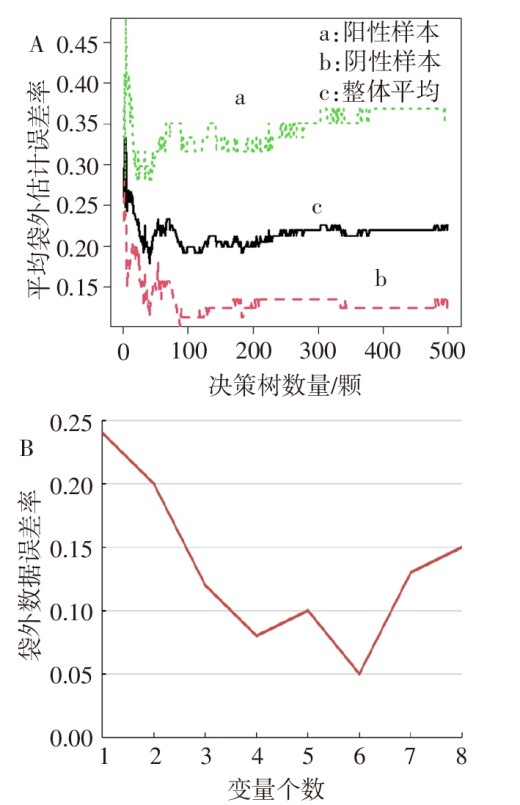
Fig.1 The results of random forest analysis of predictors of COPD progression to type Ⅱ respiratory failure
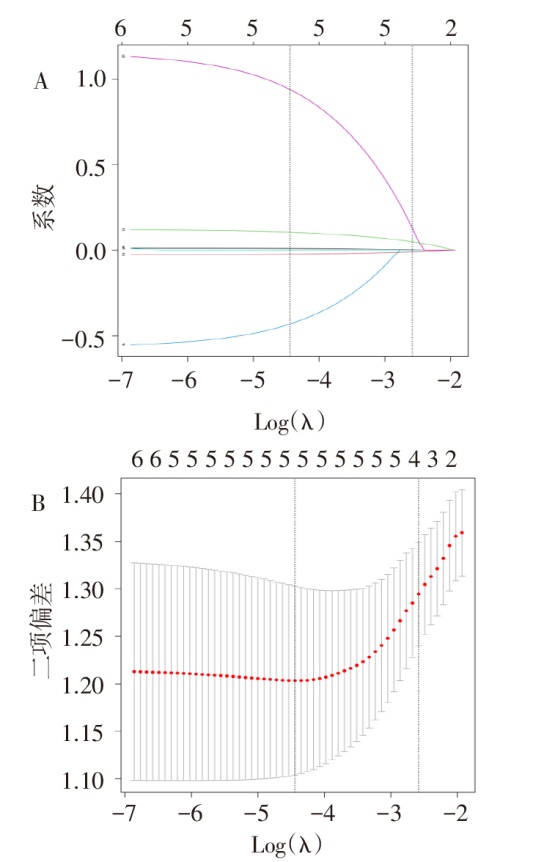
Fig. 2 LASSO regression analysis of predictive variables for COPD progression to type Ⅱ respiratory failure
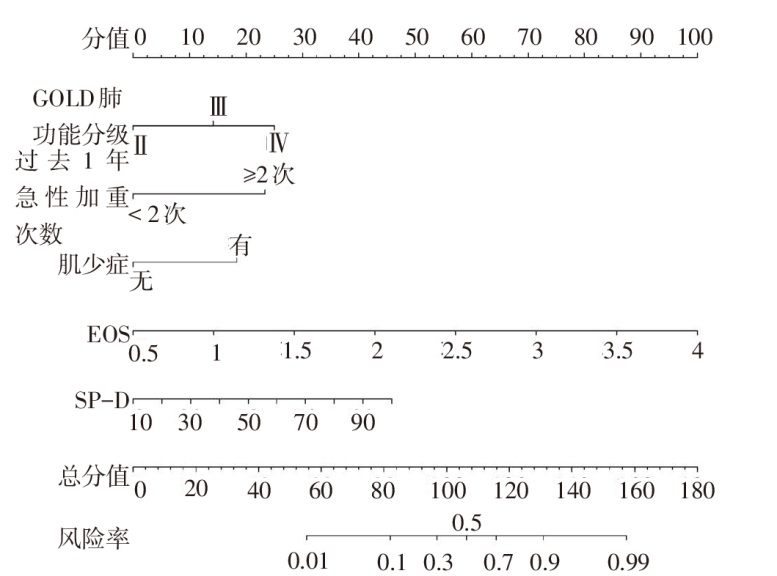
Fig.3 Establishment of early warning and identification model for potential high-risk population of COPD progression to type Ⅱ respiratory failure
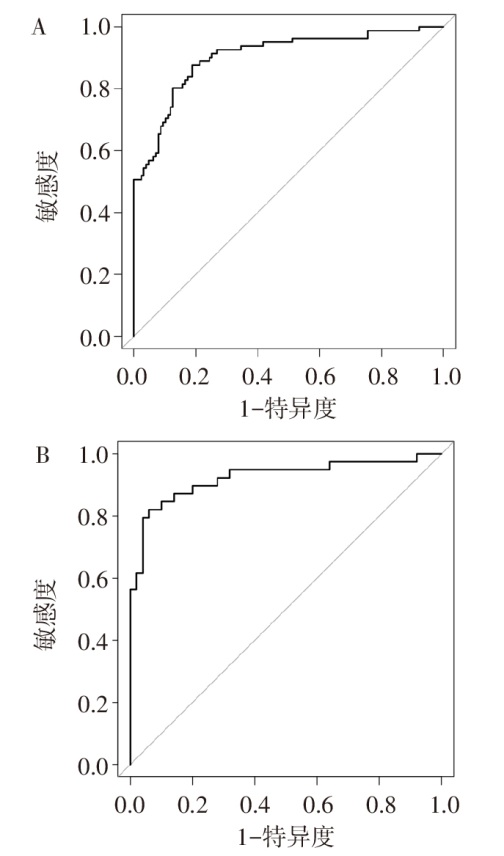
Fig.4 ROC curve of COPD progression to type Ⅱ respiratory failure prediction model
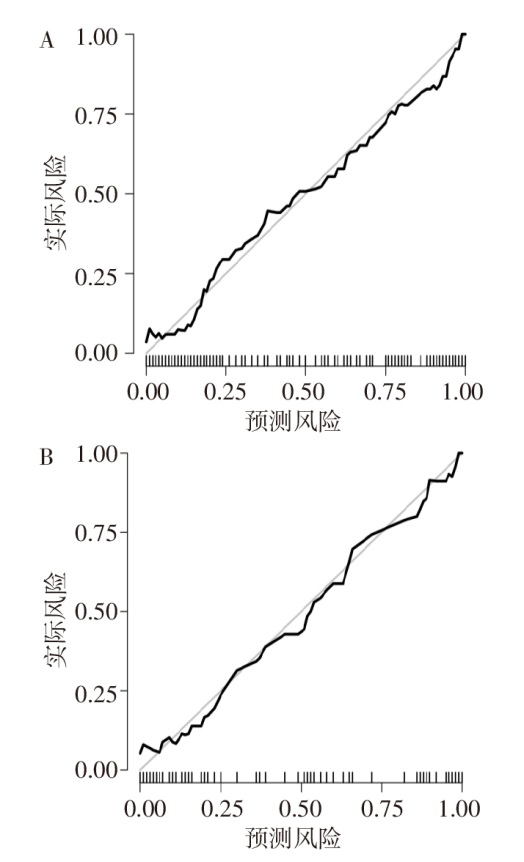
Fig.5 Calibration curve of COPD progression to type Ⅱ respiratory failure prediction model
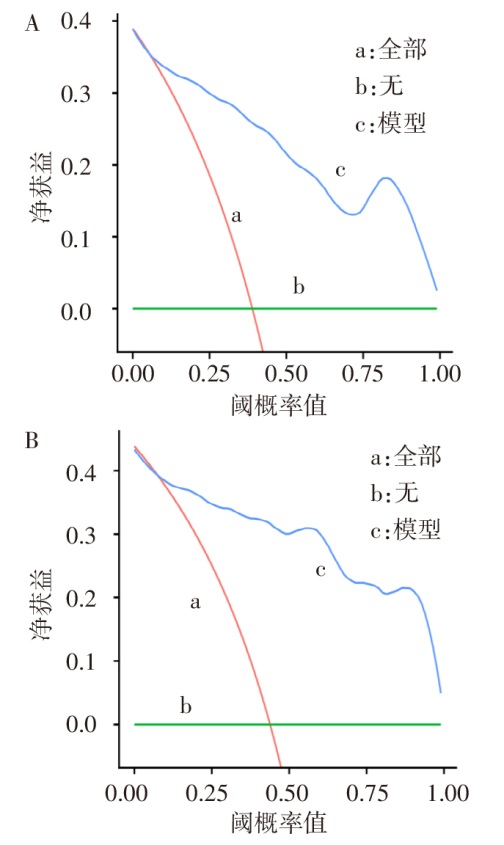
Fig.6 DCA curve of COPD progression to type Ⅱ respiratory failure prediction model
| [1] | HE J, LUO W, MEI Y, et al. Nalmefene combined noninvasive positive-pressure ventilation in Chinese patients with chronic obstructive pulmonary disease coupled with type II respiratory failure:a meta-analysis[J]. Medicine(Baltimore), 2023, 102(31):e34624. doi:10.1097/MD.0000000000034624. |
| [2] | 屠昌明, 田园, 汪鹏程, 等. SII、RAR与AECOPD患者病情严重程度及并发呼吸衰竭的关系[J]. 天津医药, 2024, 52(12):1317-1321. |
| TU C M, TIAN Y, WANG P C, et al. Relationship between SII,RAR and severity of disease and respiratory failure in patients with AECOPD[J]. Tianjin Med J, 2024, 52(12):1317-1321. doi:10.11958/20241172. | |
| [3] | 周丹, 陈灵敏, 陈钢强, 等. 构建Nomogram预测模型探讨慢性阻塞性肺疾病患者并发呼吸衰竭的危险因素[J]. 中国急救医学, 2023, 43(5):383-387. |
| ZHOU D, CHEN L M, CHEN G Q, et al. Constructing a nomogram prediction model to explore the risk factors of respiratory failure in patients with chronic obstructive pulmonary disease[J]. Chin J Emerg Med, 2023, 43(5):383-387. doi:10.3969/j.issn.1002-1949.2023.05.009. | |
| [4] | 顾馨雨, 於江泉, 杨艳霞, 等. 慢性阻塞性肺疾病急性加重期并发呼吸衰竭危险因素的Meta分析[J]. 实用心脑肺血管病杂志, 2023, 31(5):82-88,95. |
| GU X Y, YU J Q, YANG Y X, et al. Meta analysis of risk factors for respiratory failure in acute exacerbation of chronic obstructive pulmonary disease[J]. J Pract Cardiovasc Cerebrovasc Dis, 2023, 31(5):82-88,95. doi:10.12114/j.issn.1008-5971.2023.00.080. | |
| [5] | CHEN L, LU L, FANG Y, et al. Glasgow Coma Scale on admission as predictor of neurological sequelae at discharge and acute respiratory failure in patients with heatstroke[J]. Postgrad Med J, 2023, 99(1178):1237-1245. doi:10.1093/postmj/qgad071. |
| [6] | WU Z, CHEN H, KE S, et al. Identifying potential biomarkers of idiopathic pulmonary fibrosis through machine learning analysis[J]. Sci Rep, 2023, 13(1):16559. doi:10.1038/s41598-023-43834-z. |
| [7] | VESTBO J, HURD S S, AGUSTÍ A G, et al. Global strategy for the diagnosis,management,and prevention of chronic obstructive pulmonary disease:GOLD executive summary[J]. Am J Respir Crit Care Med, 2013, 187(4):347-365. doi:10.1164/rccm.201204-0596PP. |
| [8] | BARUA R S, RIGOTTI N A, BENOWITZ N L, et al. 2018 ACC Expert Consensus Decision Pathway on Tobacco Cessation Treatment:a report of the American College of Cardiology Task Force on Clinical Expert Consensus Documents[J]. J Am Coll Cardiol, 2018, 72(25):3332-3365. doi:10.1016/j.jacc.2018.10.027. |
| [9] | 中华预防医学会, 中华预防医学会心脏病预防与控制专业委员会, 中华医学会糖尿病学分会, 等. 中国健康生活方式预防心血管代谢疾病指南[J]. 中国循环杂志, 2020, 35(3):209-230. |
| Chinese Preventive Medicine Association, Chinese Preventive Medicine Association Heart Disease Prevention and Control Professional Committee, Chinese Medical Association Diabetes Branch, et al. Guidelines for preventing cardiovascular metabolic diseases through healthy lifestyle in China[J]. Chin J Circulat, 2020, 35(3):209-230. doi:10.3969/j.issn.1000-3614.2020.03.001. | |
| [10] | LAMBA T S, SHARARA R S, SINGH A C, et al. Pathophysiology and classification of respiratory failure[J]. Crit Care Nurs Q, 2016, 39(2):85-93. doi:10.1097/CNQ.0000000000000102. |
| [11] | HUR K Y, MOON M K, PARK J S, et al. 2021 Clinical Practice Guidelines for Diabetes Mellitus of the Korean Diabetes Association[J]. Diabetes Metab J, 2021, 45(4):461-481. doi:10.4093/dmj.2021.0156. |
| [12] | WHELTON P K, CAREY R M, ARONOW W S, et al. 2017 ACC/AHA/AAPA/ABC/ACPM/AGS/APhA/ASH/ASPC/NMA/PCNA Guideline for the Prevention,Detection,Evaluation,and Management of High Blood Pressure in Adults:a report of the American College of Cardiology/American Heart Association Task Force on Clinical Practice Guidelines[J]. Hypertension, 2018, 71(6):e13-e115. doi:10.1161/HYP.0000000000000065. |
| [13] | YAMAGISHI M, TAMAKI N, AKASAKA T, et al. Jcs 2018 guideline on diagnosis of chronic coronary heart diseases[J]. Circ J, 2021, 85(4):402-572. doi:10.1253/circj.CJ-19-1131. |
| [14] | CRUZ-JENTOFT A J, BAHAT G, BAUER J, et al. Sarcopenia:revised European consensus on definition and diagnosis[J]. Age Ageing, 2019, 48(4):601. doi:10.1093/ageing/afz046. |
| [15] | MONTES DE OCA M, LÓPEZ VARELA M V, LAUCHO-CONTRERAS M E, et al. Classification of patients with chronic obstructive pulmonary disease according to the Latin American Thoracic Association (ALAT) staging systems and the global initiative for chronic obstructive pulmonary disease (GOLD)[J]. Arch Bronconeumol, 2017, 53(3):98-106. doi:10.1016/j.arbres.2016.08.015. |
| [16] | XU X, MA D, ZHOU F. Efficacy of naloxone combined with noninvasive ventilator in the treatment of COPD complicated with type II respiratory failure[J]. Minerva Surg, 2022, 77(6):634-636. doi:10.23736/S2724-5691.21.09291-1. |
| [17] | 姜锐, 李雪娇, 贺银虹, 等. HI-NPPV治疗AECOPD合并严重II型呼吸衰竭的临床疗效[J]. 中南大学学报(医学版), 2024, 49(2):266-272. |
| JIANG R, LI X J, HE Y L, et al. Clinical efficacy of HI-NPPV in the treatment of AECOPD combined with severe type II respiratory failure[J]. J Centr South Univ Med Sci, 2024, 49(2):266-272. doi:10.11817/j.issn.1672-7347.230329. | |
| [18] | 王霞, 侯嘉. 外周血ADAM19 DNA甲基化生物标记物对慢性阻塞性肺疾病的诊断价值[J]. 宁夏医科大学学报, 2022, 44(8):823-828. |
| WANG X, HOU J. Diagnostic value of peripheral blood ADAM19 DNA methylation biomarkers for chronic obstructive pulmonary disease[J]. J Ningxia Med Univ, 2022, 44(8):823-828. doi:10.16050/j.cnki.issn1674-6309.2022.08.014. | |
| [19] | 卢新卫, 李海天, 王晶, 等. 慢性阻塞性肺疾病患者的肌肉量水平对病情进展的影响[J]. 公共卫生与预防医学, 2024, 35(1):96-99. |
| LU X W, LI H T, WANG J, et al. The impact of muscle mass level on disease progression in patients with chronic obstructive pulmonary disease[J]. Public Health Prevent Med, 2024, 35(1):96-99. doi:10.3969/j.issn.1006-2483.2024.01.022. | |
| [20] | 焦维克, 张文, 张灿辉, 等. 影响AECOPD合并CO2潴留患者应用全身糖皮质激素的相关因素分析[J]. 中华危重病急救医学, 2020, 32(9):1061-1066. |
| JIAO W K, ZHANG W, ZHANG C H, et al. Clinical investigation on the related factors for the application of systemic glucocorticoids in patients with acute exacerbation of chronic obstructive pulmonary disease with carbon dioxide retention[J]. Chin Crit Care Med, 2020, 32(9):1061-1066. doi:10.3760/cma.j.cn121430-20200302-00203. | |
| [21] | LV M Y, QIANG L X, LI Z H, et al. The lower the eosinophils,the stronger the inflammatory response? The relationship of different levels of eosinophils with the degree of inflammation in acute exacerbation chronic obstructive pulmonary disease (AECOPD)[J]. J Thorac Dis, 2021, 13(1):232-243. doi:10.21037/jtd-20-2178. |
| [22] | GÜNAYDIN F E, GÜNLÜOĞLU G, KALKAN N, et al. The relationship between serum levels of surfactant protein D in COPD exacerbation severity and mortality[J]. Turk J Med Sci, 2019, 49(3):888-893. doi:10.3906/sag-1809-6. |
| [23] | HRISTOVA V A, WATSON A, CHAERKADY R, et al. Multiomics links global surfactant dysregulation with airflow obstruction and emphysema in COPD[J]. ERJ Open Res, 2023, 9(3):00378-2022. doi:10.1183/23120541.00378-2022. |
| Viewed | ||||||
|
Full text |
|
|||||
|
Abstract |
|
|||||
