
Tianjin Medical Journal ›› 2026, Vol. 54 ›› Issue (7): 705-710.doi: 10.11958/20253126
• Clinical Research • Previous Articles Next Articles
ZHANG Yiyi1( ), LIU Diliang2, CHEN Fei3, GONG Yuanyuan2, WANG Guisheng1
Received:2025-12-15
Revised:2026-03-16
Published:2026-07-15
Online:2026-07-13
ZHANG Yiyi, LIU Diliang, CHEN Fei, GONG Yuanyuan, WANG Guisheng. The expression of MTA1, ARL2 and VEGF-C in non-small cell lung cancer tissue[J]. Tianjin Medical Journal, 2026, 54(7): 705-710.
CLC Number:
| 组别 | MTA1 | ARL2 | VEGF-C |
|---|---|---|---|
| 癌组织 | 116(71.60) | 111(68.52) | 108(66.67) |
| 癌旁组织 | 41(25.31) | 37(22.84) | 51(31.48) |
| χ2 | 69.511* | 68.114* | 40.125* |
Tab.1 Comparison of positive rate of MTA1,ARL2 and VEGF-C proteins between cancer tissue and adjacent tissue [n=162,例(%)]
| 组别 | MTA1 | ARL2 | VEGF-C |
|---|---|---|---|
| 癌组织 | 116(71.60) | 111(68.52) | 108(66.67) |
| 癌旁组织 | 41(25.31) | 37(22.84) | 51(31.48) |
| χ2 | 69.511* | 68.114* | 40.125* |
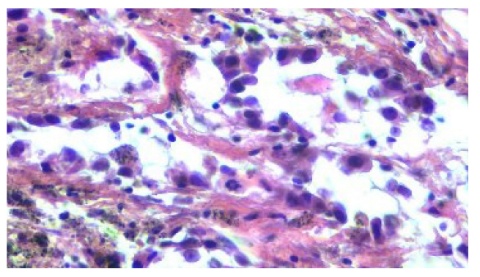
Fig.1 Results of HE staining of cancer tissue (×400)
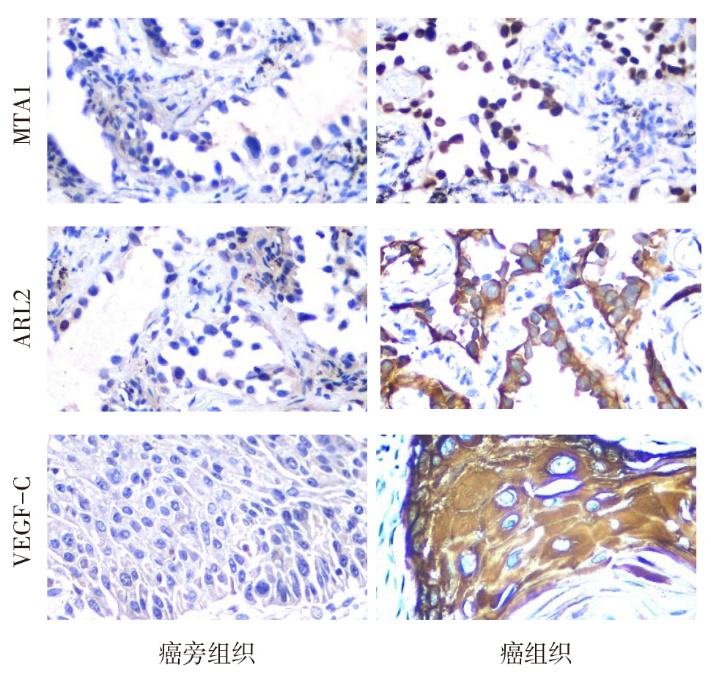
Fig.2 Results of protein expression levels of MTA1, ARL2 and VEGF-C in cancer tissue and adjacent tissue (immunohistochemical staining, ×400)
| 临床特征 | n | MTA1 | χ2 | ARL2 | χ2 | VEGF-C | χ2 |
|---|---|---|---|---|---|---|---|
| 年龄 | 0.021 | 0.054 | 0.266 | ||||
| <65岁 | 40 | 29(72.5) | 28(70.0) | 28(70.0) | |||
| ≥65岁 | 122 | 87(71.3) | 83(68.0) | 80(65.6) | |||
| 性别 | 0.162 | 0.050 | 0.014 | ||||
| 女 | 56 | 39(69.6) | 39(69.6) | 37(66.1) | |||
| 男 | 106 | 77(72.6) | 72(67.9) | 71(67.0) | |||
| 肿瘤最大直径 | 27.325* | 16.442* | 29.455* | ||||
| <3 cm | 96 | 54(56.3) | 54(56.3) | 48(50.0) | |||
| ≥3 cm | 66 | 62(93.9) | 57(86.4) | 60(90.9) | |||
| 浸润深度 | 18.976* | 26.447* | 4.331* | ||||
| <1 cm | 115 | 71(61.7) | 65(56.5) | 71(61.7) | |||
| ≥1 cm | 47 | 45(95.7) | 46(97.9) | 37(78.7) | |||
| TNM分期 | 20.418* | 18.983* | 21.961* | ||||
| Ⅰ/Ⅱ期 | 100 | 59(59.0) | 56(56.0) | 53(53.0) | |||
| Ⅲ/Ⅳ期 | 62 | 57(91.9) | 55(88.7) | 55(88.7) | |||
| 淋巴结转移 | 16.348* | 29.144* | 19.829* | ||||
| 有 | 76 | 66(86.8) | 68(89.0) | 64(84.2) | |||
| 无 | 86 | 50(58.1) | 43(50.0) | 44(51.2) | |||
| 分化程度 | 38.544* | 33.334* | 26.381* | ||||
| 中高 | 89 | 46(51.7) | 44(49.4) | 44(49.4) | |||
| 低 | 73 | 70(95.9) | 67(91.8) | 64(87.7) | |||
| 组织学类型 | 11.300* | 7.714* | 8.322* | ||||
| 鳞癌 | 80 | 48(60.0) | 46(57.5) | 44(55.0) | |||
| 腺癌 | 67 | 57(85.1) | 57(85.1) | 53(79.1) | |||
| 其他 | 15 | 11(73.3) | 8(53.3) | 11(73.3) |
Tab.2 Comparison of positive rate of MTA1,ARL2 and VEGF-C proteins in cancer tissue between NSCLC patients with different clinicopathological characteristics
| 临床特征 | n | MTA1 | χ2 | ARL2 | χ2 | VEGF-C | χ2 |
|---|---|---|---|---|---|---|---|
| 年龄 | 0.021 | 0.054 | 0.266 | ||||
| <65岁 | 40 | 29(72.5) | 28(70.0) | 28(70.0) | |||
| ≥65岁 | 122 | 87(71.3) | 83(68.0) | 80(65.6) | |||
| 性别 | 0.162 | 0.050 | 0.014 | ||||
| 女 | 56 | 39(69.6) | 39(69.6) | 37(66.1) | |||
| 男 | 106 | 77(72.6) | 72(67.9) | 71(67.0) | |||
| 肿瘤最大直径 | 27.325* | 16.442* | 29.455* | ||||
| <3 cm | 96 | 54(56.3) | 54(56.3) | 48(50.0) | |||
| ≥3 cm | 66 | 62(93.9) | 57(86.4) | 60(90.9) | |||
| 浸润深度 | 18.976* | 26.447* | 4.331* | ||||
| <1 cm | 115 | 71(61.7) | 65(56.5) | 71(61.7) | |||
| ≥1 cm | 47 | 45(95.7) | 46(97.9) | 37(78.7) | |||
| TNM分期 | 20.418* | 18.983* | 21.961* | ||||
| Ⅰ/Ⅱ期 | 100 | 59(59.0) | 56(56.0) | 53(53.0) | |||
| Ⅲ/Ⅳ期 | 62 | 57(91.9) | 55(88.7) | 55(88.7) | |||
| 淋巴结转移 | 16.348* | 29.144* | 19.829* | ||||
| 有 | 76 | 66(86.8) | 68(89.0) | 64(84.2) | |||
| 无 | 86 | 50(58.1) | 43(50.0) | 44(51.2) | |||
| 分化程度 | 38.544* | 33.334* | 26.381* | ||||
| 中高 | 89 | 46(51.7) | 44(49.4) | 44(49.4) | |||
| 低 | 73 | 70(95.9) | 67(91.8) | 64(87.7) | |||
| 组织学类型 | 11.300* | 7.714* | 8.322* | ||||
| 鳞癌 | 80 | 48(60.0) | 46(57.5) | 44(55.0) | |||
| 腺癌 | 67 | 57(85.1) | 57(85.1) | 53(79.1) | |||
| 其他 | 15 | 11(73.3) | 8(53.3) | 11(73.3) |
| 组别 | n | 年龄(<65岁/≥65岁) | 性别(男/女) | 肿瘤最大直径(<3 cm/≥3 cm) | 浸润深度(深度<1 cm/深度≥1 cm) | TNM分期(Ⅰ~Ⅱ期/Ⅲ~Ⅳ期) | ||||||
|---|---|---|---|---|---|---|---|---|---|---|---|---|
| 未复发转移组 | 118 | 30/88 | 78/40 | 75/43 | 90/28 | 82/36 | ||||||
| 复发转移组 | 44 | 10/34 | 28/16 | 21/23 | 25/19 | 18/26 | ||||||
| χ2 | 0.125 | 0.086 | 3.327 | 5.889* | 11.083* | |||||||
| 组别 | 淋巴结转移(有/无) | 分化程度(中高/低) | 组织学类型(鳞癌/腺癌/其他) | MTA1阳性 | ARL2阳性 | VEGF-C阳性 | ||||||
| 未复发转移组 | 48/70 | 73/45 | 63/42/13 | 76(64.41) | 72(61.02) | 71(60.17) | ||||||
| 复发转移组 | 28/16 | 16/28 | 17/25/2 | 40(90.91) | 39(88.64) | 37(84.09) | ||||||
| χ2 | 6.783* | 8.419* | 6.353* | 11.071* | 11.334* | 8.253* | ||||||
Tab.3 Comparison of clinical characteristics between th recurrence/metastasis group and the non-recurrence metastasis group
| 组别 | n | 年龄(<65岁/≥65岁) | 性别(男/女) | 肿瘤最大直径(<3 cm/≥3 cm) | 浸润深度(深度<1 cm/深度≥1 cm) | TNM分期(Ⅰ~Ⅱ期/Ⅲ~Ⅳ期) | ||||||
|---|---|---|---|---|---|---|---|---|---|---|---|---|
| 未复发转移组 | 118 | 30/88 | 78/40 | 75/43 | 90/28 | 82/36 | ||||||
| 复发转移组 | 44 | 10/34 | 28/16 | 21/23 | 25/19 | 18/26 | ||||||
| χ2 | 0.125 | 0.086 | 3.327 | 5.889* | 11.083* | |||||||
| 组别 | 淋巴结转移(有/无) | 分化程度(中高/低) | 组织学类型(鳞癌/腺癌/其他) | MTA1阳性 | ARL2阳性 | VEGF-C阳性 | ||||||
| 未复发转移组 | 48/70 | 73/45 | 63/42/13 | 76(64.41) | 72(61.02) | 71(60.17) | ||||||
| 复发转移组 | 28/16 | 16/28 | 17/25/2 | 40(90.91) | 39(88.64) | 37(84.09) | ||||||
| χ2 | 6.783* | 8.419* | 6.353* | 11.071* | 11.334* | 8.253* | ||||||
| 变量 | β | SE | Wald χ2 | P | HR | HR 95%CI |
|---|---|---|---|---|---|---|
| TNM分期 | 0.929 | 0.383 | 5.872 | 0.015 | 2.532 | 1.194~5.366 |
| 淋巴结转移 | 1.663 | 0.482 | 11.918 | 0.001 | 5.273 | 2.051~13.551 |
| 分化程度 | 1.367 | 0.464 | 8.673 | 0.003 | 3.923 | 1.580~9.744 |
| MTA1 | 1.803 | 0.621 | 8.431 | 0.004 | 6.065 | 1.797~20.478 |
| ARL2 | 1.591 | 0.546 | 8.490 | 0.004 | 4.907 | 1.683~14.303 |
| VEGF-C | 1.029 | 0.450 | 5.238 | 0.022 | 2.798 | 1.159~6.755 |
Tab.4 Multivariate Cox regression analysis of the influencing factors of prognosis in patients with NSCLC
| 变量 | β | SE | Wald χ2 | P | HR | HR 95%CI |
|---|---|---|---|---|---|---|
| TNM分期 | 0.929 | 0.383 | 5.872 | 0.015 | 2.532 | 1.194~5.366 |
| 淋巴结转移 | 1.663 | 0.482 | 11.918 | 0.001 | 5.273 | 2.051~13.551 |
| 分化程度 | 1.367 | 0.464 | 8.673 | 0.003 | 3.923 | 1.580~9.744 |
| MTA1 | 1.803 | 0.621 | 8.431 | 0.004 | 6.065 | 1.797~20.478 |
| ARL2 | 1.591 | 0.546 | 8.490 | 0.004 | 4.907 | 1.683~14.303 |
| VEGF-C | 1.029 | 0.450 | 5.238 | 0.022 | 2.798 | 1.159~6.755 |
| [1] | 黄诗洋, 石磊. 影像组学及深度学习预测非小细胞肺癌新辅助免疫治疗疗效的研究进展[J]. 国际医学放射学杂志, 2025, 48(3): 312-318. |
| Huang S Y, Shi L. Research progress on radiomics and deep learning in predicting the efficacy of neoadjuvant immunotherapy for non-small cell lung cancer[J]. Int J Med Radiol, 2025, 48(3): 312-318. doi:10.19300/j.2025.Z21857. | |
| [2] | Deng Y R, Wu Q Z, Zhang W, et al. Apoptotic cell-derived extracellular vesicles-MTA1 confer radioresistance in cervical cancer by inducing cellular dormancy[J]. J Transl Med, 2025, 23:328. doi:10.1186/s12967-025-05739-9. |
| [3] | Guo N, Zhang J. Interleukin-17 promotes the development of ovarian cancer through upregulation of MTA1 expression[J]. Am J Cancer Res, 2022, 12(2):5646-5656. |
| [4] | 庄翔, 吴和刚, 郭宇, 等. ARL家族在胃腺癌中的表达谱及预后的系统分析[J]. 西部医学, 2025, 37(1):39-47. |
| Zhuang X, Wu H G, Guo Y, et al. Systematic analysis of ARL family expression profile and prognosis in gastric adenocarcinoma[J]. Western Med J, 2025, 37(1):39-47. doi:10.3969/j.issn.1672-3511.2025.01.008. | |
| [5] | 陈丽, 陈俊涛, 荣刘涛. 循环Hcy、NLR、VEGF-C、CYFRA21-1联合检测对非小细胞肺癌淋巴结转移的预测价值[J]. 临床和实验医学杂志, 2024, 23(17):1861-1864. |
| Chen L, Chen J T, Rong L T. Predictive value of combined detection of circulating Hcy,NLR,VEGF-C,and CYFRA21-1 for lymph node metastasis in non-small cell lung cancer[J]. J Clin Exp Med, 2024, 23(17):1861-1864. doi:10.3969/j.issn.1671-4695.2024.17.013. | |
| [6] | 中华医学会, 中华医学会肿瘤学分会, 中华医学会杂志社. 中华医学会肺癌临床诊疗指南(2018版)[J]. 中华肿瘤杂志, 2018, 40(12):935-964. |
| Chinese Medical Association, Chinese Medical Association Oncology Branch, Chinese Medical Association Journal House. Clinical practice guidelines for lung cancer of Chinese Medical Association(2018 version)[J]. Chin J Oncol, 2018, 40(12):935-964. doi:10.3760/cma.j.cn112152-20181102-00526. | |
| [7] | Brierley J D, Gospodarowicz M K, Wittekind C. TNM Classification of Malignant Tumours[M]. 8th ed. Chichester: Wiley, 2017:11-15. |
| [8] | 张瑜, 李梦侠, 孙建国. Ⅰ期非小细胞肺癌围术期治疗决策专家共识[J]. 重庆医科大学学报, 2025, 50(6):703-713. |
| Zhang Y, Li M X, Sun J G. Expert consensus on perioperative treatment decisions for stage I non-small cell lung cancer[J]. J Chongqing Med Univ, 2025, 50(6):703-713. doi:10.13406/j.cnki.cyxb.2025.06.015. | |
| [9] | 邓万生, 孙振, 王伟, 等. 非小细胞肺癌组织MAGE-A3、HIF-1α、MTA1表达与临床病理参数及复发转移的关系研究[J]. 现代生物医学进展, 2021, 21(5):945-949. |
| Deng W S, Sun Z, Wang W, et al. Relationship between expression of MAGE-A3,HIF-1α,MTA1 and clinicopathological parameters,recurrence and metastasis in non-small cell lung cancer[J]. Prog Mod Biomed, 2021, 21(5):945-949. doi:10.13241/j.cnki.pmb.2021.05.029. | |
| [10] | Bhandari K, Kong J S, Tanaka T, et al. Exosome-associated MTA1 in circulation is elevated during breast cancer progression[J]. FASEB J, 2025, 39(14):70872-70872. doi:10.1096/fj.202402263R. |
| [11] | Zhang Q, Ye L, Wang Y, et al. Associations between MTA1 and the outcome of oral leukoplakia:evidence from cohort studies and functional analyses[J]. Oral Surg Oral Med Oral Pathol Oral Radiol, 2025, 140(4):455-466. doi:10.1016/j.oooo.2025.01.015. |
| [12] | 杜伟鹏, 徐曼, 汪海霞, 等. BTG2、ARL2在非小细胞肺癌组织中的表达及与其临床病理特征和预后的相关性[J]. 实用癌症杂志, 2022, 37(12):1945-1950. |
| Du W P, Xu M, Wang H X, et al. Expression of BTG2 and ARL2 in non-small cell lung cancer tissues and their correlation with clinicopathological features and prognosis[J]. J Pract Cancer, 2022, 37(12):1945-1950. doi:10.3969/j.issn.1001-5930.2022.12.025. | |
| [13] | 魏春清, 沈丽君, 梅军华, 等. ADP核糖基化因子样蛋白2通过下调AXL蛋白抑制宫颈癌的机制研究[J]. 中国性科学, 2022, 31(10):118-121. |
| Wei C Q, Shen L J, Mei J H, et al. Mechanism of ADP-ribosylation factor-like protein 2 inhibiting cervical cancer by down-regulating AXL protein[J]. Chin J Sex Sci, 2022, 31(10):118-121. doi:10.3969/j.issn.1672-1993.2022.10.031. | |
| [14] | 庞训雷. ARL2对结直肠癌细胞增殖、迁移和侵袭作用的影响及机制的初步探讨[D]. 苏州: 苏州大学, 2021. |
| Pang X L. Preliminary study on the effect and mechanism of ARL2 on proliferation,migration and invasion of colorectal cancer cells[D]. Suzhou: Soochow University, 2021. doi:10.27351/d.cnki.gszhu.2021.000053. | |
| [15] | 陈恒三, 郭超, 王虎, 等. 人脑胶质瘤组织中ERCC1、ARL2表达水平与患者病理特征、预后的关系[J]. 中华神经外科疾病研究杂志, 2025, 19(2):45-49. |
| Chen H S, Guo C, Wang H, et al. Relationship between expression levels of ERCC1 and ARL2 in human brain glioma tissues and pathological features and prognosis of patients[J]. Chin J Neurosurg Dis Res, 2025, 19(2):45-49. doi:10.16016/j.cnki.1009-122X.2025.02.009. | |
| [16] | Huang B, Lu Y, Ni Z, et al. Anril promotes the regulation of colorectal cancer on lymphatic endothelial cells via VEGF-C and is the key target for Pien Tze Huang to inhibit cancer metastasis[J]. Cancer Gene Ther, 2023, 30(9):1260-1273. doi:10.1038/s41417-023-00260-3. |
| [17] | Lv J, Yuan J, Xu C J, et al. VEGF-C/VEGFR-3/iNOS signaling in osteosarcoma MG63 cells mediates stimulatory effects on human umbilical vein endothelial cell proliferation[J]. Chin Med Sci J, 2021, 36(1):35-42. doi:10.24920/1001-9294.2021.36.1.35. |
| [18] | Nan P, Wang T, Li C, et al. MTA1 promotes tumorigenesis and development of esophageal squamous cell carcinoma via activating the MEK/ERK/p90RSK signaling pathway[J]. Carcinogenesis, 2020, 41(9):1263-1272. doi:10.1093/carcin/bgaa068. |
| [19] | Liu W, Yao D, Huang B. LncRNA PVT1 promotes cervical cancer progression by sponging miR-503 to upregulate ARL2 expression[J]. Open Life Sci, 2021, 16(1):1-13. doi:10.1515/biol-2021-0051. |
| [20] | Huang C L, Achudhan D, Liu P I, et al. Visfatin upregulates VEGF-C expression and lymphangiogenesis in esophageal cancer by activating MEK1/2-ERK and NF-κB signaling[J]. Aging (Albany NY), 2023, 15(11):4774-4793. doi:10.18632/aging.204794. |
| [21] | 赵丽霞, 任成波, 马峰, 等. 肺癌组织MTA1、VEGF-C表达变化及与患者临床病理特征、预后关系[J]. 广东药科大学学报, 2022, 38(1):103-108. |
| Zhao L X, Ren C B, Ma F, et al. Expression changes of MTA1 and VEGF-C in lung cancer tissues and their relationship with clinicopathological features and prognosis of patients[J]. J Guangdong Pharm Univ, 2022, 38(1):103-108. doi:10.16809/j.cnki.2096-868X.2022.01.022. |
| Viewed | ||||||
|
Full text |
|
|||||
|
Abstract |
|
|||||
