
Tianjin Medical Journal ›› 2026, Vol. 54 ›› Issue (7): 771-778.doi: 10.11958/20253377
• Epidemiological Survey • Previous Articles Next Articles
ZHANG Yueyang1( ), ZHOU Zhen2,△(), ZHAO Zhiheng2, XU Jiachun2, REN Yueqiao1, ZHANG Yintao1
Received:2025-11-19
Revised:2026-01-28
Published:2026-07-15
Online:2026-07-13
Contact:
△E-mail:zhouzhen7681@126.com
ZHANG Yueyang, ZHOU Zhen, ZHAO Zhiheng, XU Jiachun, REN Yueqiao, ZHANG Yintao. Analysis of the disease burden trend of intracerebral hemorrhage caused by high systolic blood pressure in elderly population of China from 1990 to 2023 and the age-period-cohort model[J]. Tianjin Medical Journal, 2026, 54(7): 771-778.
CLC Number:
| 人群 | 死亡例数(95%UI) | ||
|---|---|---|---|
| 1990年 | 2023年 | 变化率/% | |
| 全人群 | 479 296(295 169~706 482) | 518 845(334 669~729 879) | 8.25 |
| 男性 | 225 179(135 066~345 422) | 285 391(174 613~418 336) | 26.74 |
| 女性 | 254 117(153 346~393 952) | 233 454(134 750~348 464) | -8.13 |
| 人群 | ASMR(95%UI)/10万 | ||
| 1990年 | 2023年 | 变化率/% | |
| 全人群 | 881.29(543.39~1 305.28) | 261.75(168.62~368.81) | -70.30 |
| 男性 | 937.58(565.02~1 442.28) | 316.02(192.18~465.33) | -66.29 |
| 女性 | 832.01(502.70~1 297.53) | 215.57(124.50~322.55) | -74.09 |
| 人群 | DALYs数(95%UI) | ||
| 1990年 | 2023年 | 变化率/% | |
| 全人群 | 8 485 512(5 195 942~12 457 591) | 8 197 621(5 313 964~11 457 037) | -3.39 |
| 男性 | 4 158 982(2 475 462~6 371 539) | 4 683 188(2 903 050~6 810 069) | 12.60 |
| 女性 | 4 326 530(2 594 222~6 678 294) | 3 514 434(2 038 156~5 170 851) | -18.77 |
| 人群 | ASDR(95%UI)/10万 | ||
| 1990年 | 2023年 | 变化率/% | |
| 全人群 | 13 898.40(8 545.96~20 474.99) | 3 972.17(2 573.81~5 556.54) | -71.42 |
| 男性 | 15 041.63(9 025.16~23 075.53) | 4 864.71(2 997.27~7 094.18) | -67.66 |
| 女性 | 12 904.07(7 764.09~19 999.18) | 3 182.87(1 848.20~4 692.40) | -75.33 |
Tab.1 Disease burden of ICH caused by high systolic blood pressure in elderly population of different genders in 1990 and 2023
| 人群 | 死亡例数(95%UI) | ||
|---|---|---|---|
| 1990年 | 2023年 | 变化率/% | |
| 全人群 | 479 296(295 169~706 482) | 518 845(334 669~729 879) | 8.25 |
| 男性 | 225 179(135 066~345 422) | 285 391(174 613~418 336) | 26.74 |
| 女性 | 254 117(153 346~393 952) | 233 454(134 750~348 464) | -8.13 |
| 人群 | ASMR(95%UI)/10万 | ||
| 1990年 | 2023年 | 变化率/% | |
| 全人群 | 881.29(543.39~1 305.28) | 261.75(168.62~368.81) | -70.30 |
| 男性 | 937.58(565.02~1 442.28) | 316.02(192.18~465.33) | -66.29 |
| 女性 | 832.01(502.70~1 297.53) | 215.57(124.50~322.55) | -74.09 |
| 人群 | DALYs数(95%UI) | ||
| 1990年 | 2023年 | 变化率/% | |
| 全人群 | 8 485 512(5 195 942~12 457 591) | 8 197 621(5 313 964~11 457 037) | -3.39 |
| 男性 | 4 158 982(2 475 462~6 371 539) | 4 683 188(2 903 050~6 810 069) | 12.60 |
| 女性 | 4 326 530(2 594 222~6 678 294) | 3 514 434(2 038 156~5 170 851) | -18.77 |
| 人群 | ASDR(95%UI)/10万 | ||
| 1990年 | 2023年 | 变化率/% | |
| 全人群 | 13 898.40(8 545.96~20 474.99) | 3 972.17(2 573.81~5 556.54) | -71.42 |
| 男性 | 15 041.63(9 025.16~23 075.53) | 4 864.71(2 997.27~7 094.18) | -67.66 |
| 女性 | 12 904.07(7 764.09~19 999.18) | 3 182.87(1 848.20~4 692.40) | -75.33 |
| 指标 | 趋势 | 年份 | APC(95%CI)/% | AAPC(95%CI)/% |
|---|---|---|---|---|
| ASMR | 1 | 1990—2001 | -2.33(-2.58~-2.08)* | -3.50(-3.94~-3.05)* |
| 2 | 2001—2010 | -5.03(-5.38~-4.67)* | ||
| 3 | 2010—2014 | -7.52(-9.02~-5.99)* | ||
| 4 | 2014—2017 | 0.86(-2.34~4.16) | ||
| 5 | 2017—2020 | -6.66(-9.52~-3.69)* | ||
| 6 | 2020—2023 | 1.42(-0.26~3.12) | ||
| ASDR | 1 | 1990—2001 | -2.36(-2.62~-2.09)* | -3.62(-4.08~-3.16)* |
| 2 | 2001—2010 | -5.03(-5.40~-4.66)* | ||
| 3 | 2010—2014 | -7.52(-9.06~-5.94)* | ||
| 4 | 2014—2017 | 0.14(-3.16~3.55) | ||
| 5 | 2017—2020 | -7.01(-9.97~-3.96)* | ||
| 6 | 2020—2023 | 1.25(-0.47~3.01) |
Tab.2 Joinpoint regression of age-standardized mortality rate and DALY rate of ICH caused by elevated systolic blood pressure in elderly population of China from 1990 to 2023
| 指标 | 趋势 | 年份 | APC(95%CI)/% | AAPC(95%CI)/% |
|---|---|---|---|---|
| ASMR | 1 | 1990—2001 | -2.33(-2.58~-2.08)* | -3.50(-3.94~-3.05)* |
| 2 | 2001—2010 | -5.03(-5.38~-4.67)* | ||
| 3 | 2010—2014 | -7.52(-9.02~-5.99)* | ||
| 4 | 2014—2017 | 0.86(-2.34~4.16) | ||
| 5 | 2017—2020 | -6.66(-9.52~-3.69)* | ||
| 6 | 2020—2023 | 1.42(-0.26~3.12) | ||
| ASDR | 1 | 1990—2001 | -2.36(-2.62~-2.09)* | -3.62(-4.08~-3.16)* |
| 2 | 2001—2010 | -5.03(-5.40~-4.66)* | ||
| 3 | 2010—2014 | -7.52(-9.06~-5.94)* | ||
| 4 | 2014—2017 | 0.14(-3.16~3.55) | ||
| 5 | 2017—2020 | -7.01(-9.97~-3.96)* | ||
| 6 | 2020—2023 | 1.25(-0.47~3.01) |
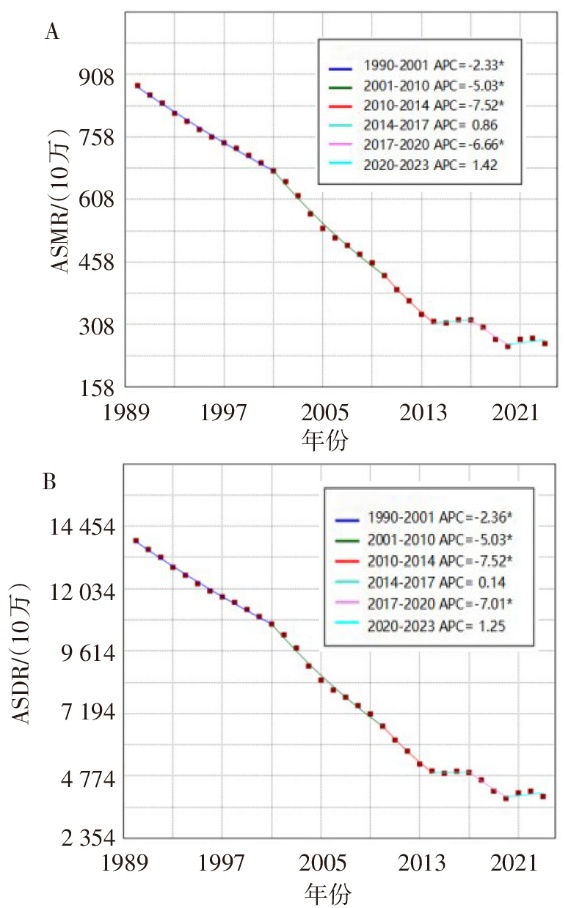
Fig. 1 Joinpoint regression curves of age-standardized mortality rate and DALY rate of ICH caused by elevated systolic blood pressure in elderly population of China from 1990 to 2023
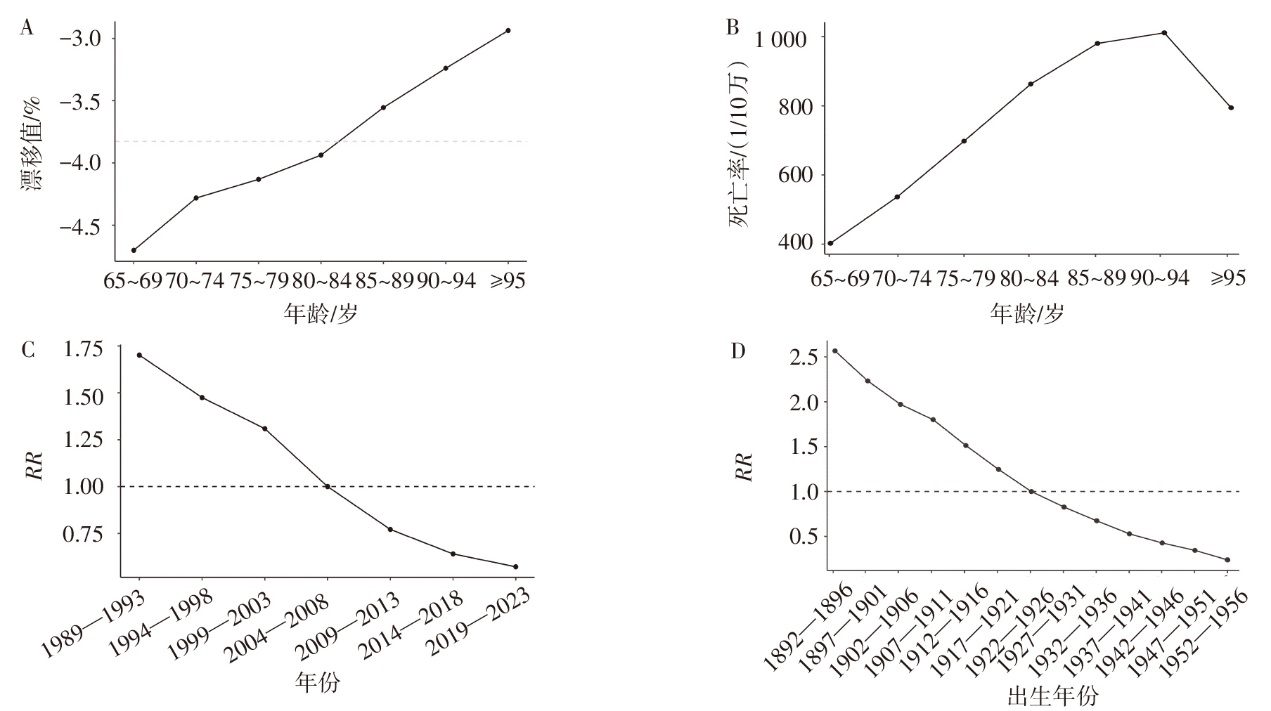
Fig. 2 Age-period-cohort model of mortality rates for ICH attributable to high systolic blood pressure in elderly population in China from 1990 to 2023
| 效应 | 年份 | ASMR[RR(95%CI)] | ASDR[RR(95%CI)] |
|---|---|---|---|
| 时期效应 | 1989—1993 | 1.70(1.59~1.82)* | 1.66(1.54~1.79)* |
| 1994—1998 | 1.47(1.39~1.57)* | 1.45(1.36~1.55)* | |
| 1999—2003 | 1.31(1.24~1.38)* | 1.30(1.23~1.37)* | |
| 2004—2008 | 1.00 | 1.00 | |
| 2009—2013 | 0.77(0.73~0.82)* | 0.77(0.73~0.82)* | |
| 2014—2018 | 0.64(0.60~0.68)* | 0.63(0.59~0.68)* | |
| 2019—2023 | 0.57(0.53~0.62)* | 0.55(0.51~0.60)* | |
| 出生队列效应 | 1892—1896 | 2.50(1.19~5.29)* | 2.57(0.92~7.16) |
| 1897—1901 | 2.20(1.68~2.89)* | 2.23(1.56~3.20)* | |
| 1902—1906 | 1.95(1.71~2.21)* | 1.97(1.68~2.31)* | |
| 1907—1911 | 1.77(1.63~1.93)* | 1.80(1.64~1.98)* | |
| 1912—1916 | 1.50(1.40~1.60)* | 1.51(1.41~1.62)* | |
| 1917—1921 | 1.24(1.17~1.31)* | 1.25(1.18~1.32)* | |
| 1922—1926 | 1.00 | 1.00 | |
| 1927—1931 | 0.83(0.79~0.88)* | 0.83(0.79~0.87)* | |
| 1932—1936 | 0.68(0.64~0.72)* | 0.67(0.64~0.71)* | |
| 1937—1941 | 0.52(0.49~0.56)* | 0.53(0.50~0.56)* | |
| 1942—1946 | 0.42(0.39~0.45)* | 0.43(0.40~0.45)* | |
| 1947—1951 | 0.33(0.31~0.36)* | 0.34(0.32~0.37)* | |
| 1952—1956 | 0.23(0.20~0.26)* | 0.24(0.22~0.26)* |
Tab.3 Period and cohort effects of elevated systolic blood pressure on ICH in elderly population of China
| 效应 | 年份 | ASMR[RR(95%CI)] | ASDR[RR(95%CI)] |
|---|---|---|---|
| 时期效应 | 1989—1993 | 1.70(1.59~1.82)* | 1.66(1.54~1.79)* |
| 1994—1998 | 1.47(1.39~1.57)* | 1.45(1.36~1.55)* | |
| 1999—2003 | 1.31(1.24~1.38)* | 1.30(1.23~1.37)* | |
| 2004—2008 | 1.00 | 1.00 | |
| 2009—2013 | 0.77(0.73~0.82)* | 0.77(0.73~0.82)* | |
| 2014—2018 | 0.64(0.60~0.68)* | 0.63(0.59~0.68)* | |
| 2019—2023 | 0.57(0.53~0.62)* | 0.55(0.51~0.60)* | |
| 出生队列效应 | 1892—1896 | 2.50(1.19~5.29)* | 2.57(0.92~7.16) |
| 1897—1901 | 2.20(1.68~2.89)* | 2.23(1.56~3.20)* | |
| 1902—1906 | 1.95(1.71~2.21)* | 1.97(1.68~2.31)* | |
| 1907—1911 | 1.77(1.63~1.93)* | 1.80(1.64~1.98)* | |
| 1912—1916 | 1.50(1.40~1.60)* | 1.51(1.41~1.62)* | |
| 1917—1921 | 1.24(1.17~1.31)* | 1.25(1.18~1.32)* | |
| 1922—1926 | 1.00 | 1.00 | |
| 1927—1931 | 0.83(0.79~0.88)* | 0.83(0.79~0.87)* | |
| 1932—1936 | 0.68(0.64~0.72)* | 0.67(0.64~0.71)* | |
| 1937—1941 | 0.52(0.49~0.56)* | 0.53(0.50~0.56)* | |
| 1942—1946 | 0.42(0.39~0.45)* | 0.43(0.40~0.45)* | |
| 1947—1951 | 0.33(0.31~0.36)* | 0.34(0.32~0.37)* | |
| 1952—1956 | 0.23(0.20~0.26)* | 0.24(0.22~0.26)* |
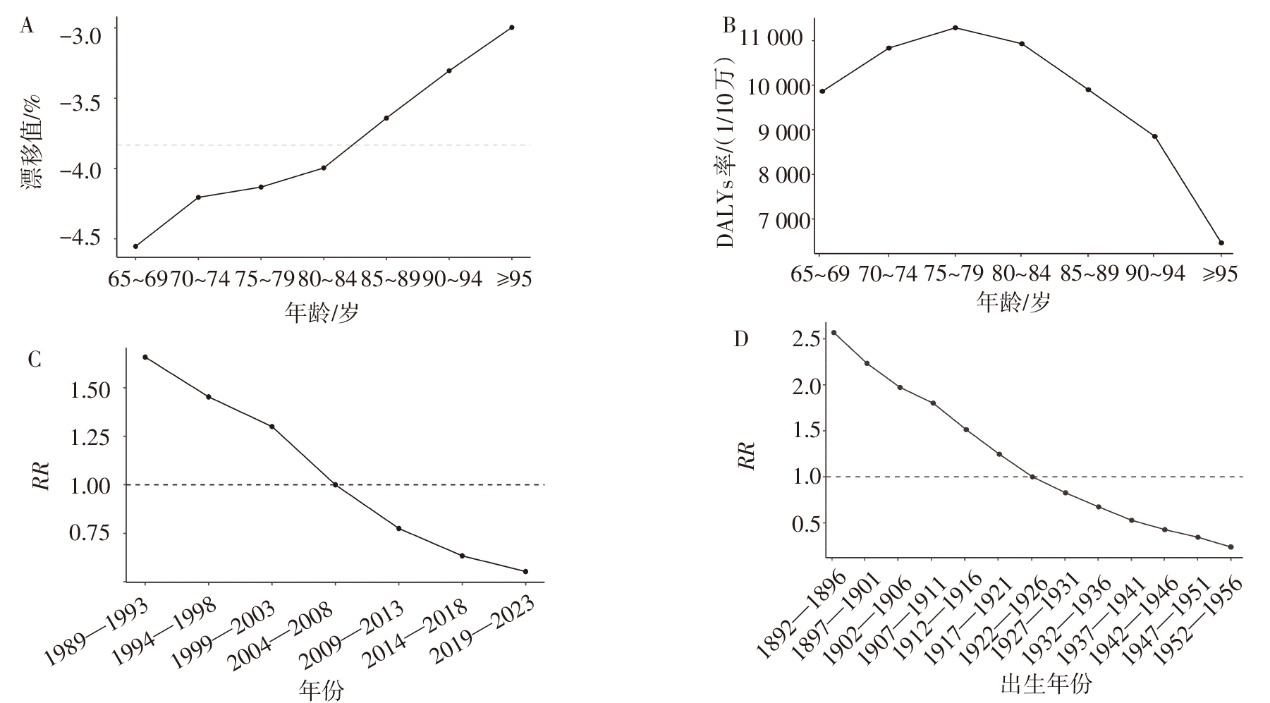
Fig. 3 Age-period-cohort model of DALYs rates for ICH attributable to high systolic blood pressure in elderly population in China from 1990 to 2023
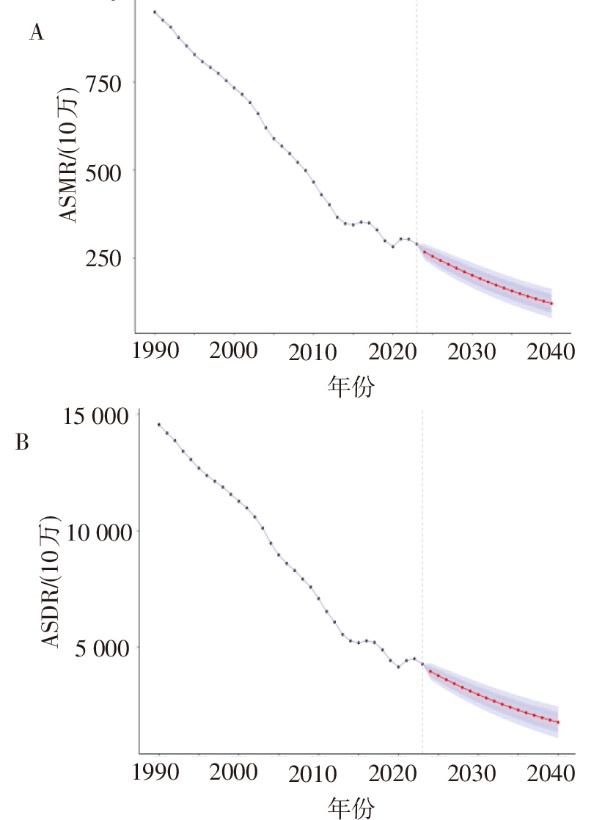
Fig. 4 Projection of ASMR and ASDR of ICH induced by elevated systolic blood pressure in elderly population of China from 2024 to 2040
| [1] | Sacco R L, Kasner S E, Broderick J P, et al. An updated definition of stroke for the 21st century:a statement for healthcare professionals from the American Heart Association/American Stroke Association[J]. Stroke, 2013, 44(7):2064-2089. doi:10.1161/STR.0b013e318296aeca. |
| [2] | Gross B A, Jankowitz B T, Friedlander R M. Cerebral intraparenchymal hemorrhage:a review[J]. JAMA, 2019, 321(13):1295-1303. doi:10.1001/jama.2019.2413. |
| [3] | Zhou M, Wang H, Zeng X, et al. Mortality,morbidity,and risk factors in China and its provinces,1990-2017:a systematic analysis for the Global Burden of Disease Study 2017[J]. Lancet, 2019, 394(10204):1145-1158. doi:10.1016/S0140-6736(19)30427-1. |
| [4] | Wu S, Wu B, Liu M, et al. Stroke in China: advances and challenges in epidemiology,prevention,and management[J]. Lancet Neurol, 2019, 18(4):394-405. doi:10.1016/S1474-4422(18)30500-3. |
| [5] | Han S, Wang Z, Zheng Q, et al. Analysis and comparison of the trends in burden of intracerebral hemorrhage in China from 1990 to 2021: results from the 2021 Global Burden of Disease Study[J]. Front Neurol, 2025, 16:1578975. doi:10.3389/fneur.2025.1578975. |
| [6] | Al-Kawaz M N, Hanley D F, Ziai W. Advances in therapeutic approaches for spontaneous intracerebral hemorrhage[J]. Neurotherapeutics, 2020, 17(4):1757-1767. doi:10.1007/s13311-020-00902-w. |
| [7] | GBD 2023 Disease and Injury and Risk Factor Collaborators. Burden of 375 diseases and injuries,risk-attributable burden of 88 risk factors,and healthy life expectancy in 204 countries and territories,including 660 subnational locations,1990-2023:a systematic analysis for the Global Burden of Disease Study 2023[J]. Lancet, 2025, 406(10513):1873-1922. doi:10.1016/S0140-6736(25)01637-X. |
| [8] | Global Burden of Cardiovascular Diseases and Risks 2023 Collaborators. Global,regional,and national burden of cardiovascular diseases and risk factors in 204 countries and territories,1990-2023[J]. J Am Coll Cardiol, 2025, 86(22):2167-2243. doi:10.1016/j.jacc.2025.08.015. |
| [9] | 中国高血压防治指南修订委员会, 高血压联盟(中国), 中国医疗保健国际交流促进会高血压病学分会, 等. 中国高血压防治指南(2024年修订版)[J]. 中华高血压杂志(中英文), 2024, 32(7):603-700. |
| Revision Committee of China Guidelines for the Prevention and Treatment of Hypertension, Hypertension League of China, Hypertension Branch of China International Promotion Association for Medical and Health Care, et al. China guidelines for the prevention and treatment of hypertension(2024 revised edition)[J]. Chinese Journal of Hypertension(Chinese & English), 2024, 32(7):603-700. doi:10.16439/j.issn.1673-7245.2024.07.002. | |
| [10] | 郑健虎, 郭紫嫣, 孙旭东, 等. 1990—2021年中国痛风疾病负担趋势及年龄-时期-队列模型分析[J]. 天津医药, 2025, 53(12):1250-1257. |
| Zheng J H, Guo Z Y, Sun X D, et al. Trends of disease burden of gout and analysis based on the age-period-cohort model in China from 1990 to 2021[J]. Tianjin Med J, 2025, 53(12):1250-1257. doi:10.11958/20252445. | |
| [11] | Mozaffarian D, Benjamin E J, Go A S, et al. Heart disease and stroke statistics--2015 update: a report from the American Heart Association[J]. Circulation, 2015, 131(4):e29-e322. doi:10.1161/CIR.0000000000000152. |
| [12] | 国家统计局. 第七次全国人口普查公报(第五号)——人口年龄构成情况[EB/OL]. (2021-05-11)[2026-01-28]. |
| National Bureau of Statistics. The seventh national population census bulletin(No.5)- population age structure situation[EB/OL]. (2021-05-11)[2026-01-28]. https://data.stats.gov.cn/files/html/vchart/vchart_002/vchart_002.html. | |
| [13] | Zhang M, Shi Y, Zhou B, et al. Prevalence,awareness,treatment,and control of hypertension in China,2004-18: findings from six rounds of a national survey[J]. BMJ, 2023, 380:e071952. doi:10.1136/bmj-2022-071952. |
| [14] | Glazier J J. Pathophysiology,diagnosis,and management of hypertension in the elderly[J]. Int J Angiol, 2022, 31(4):222-228. doi:10.1055/s-0042-1759486. |
| [15] | 王陇德, 彭斌, 张鸿祺, 等. 《中国脑卒中防治报告2020》概要[J]. 中国脑血管病杂志, 2022, 19(2):136-144. |
| Wang L D, Peng B, Zhang H Q, et al. Summary of China stroke prevention and treatment report 2020[J]. Chinese Journal of Cerebrovascular Diseases, 2022, 19(2):136-144. doi:10.3969/j.issn.1672-5921.2022.02.011. | |
| [16] | GBD 2017 DALYs and HALE Collaborators. Global,regional,and national disability-adjusted life-years(DALYs)for 359 diseases and injuries and healthy life expectancy (HALE) for 195 countries and territories,1990-2017:a systematic analysis for the Global Burden of Disease Study 2017[J]. Lancet, 2018, 392(10159):1859-1922. doi:10.1016/S0140-6736(18)32335-3. |
| [17] | 牟建军. 重视低钠盐在我国高血压防控中的意义[J]. 中华高血压杂志(中英文), 2024, 32(11):1003-1005. |
| Mou J J. Significance of paying attention to low-sodium salt in hypertension prevention and control in China[J]. Chinese Journal of Hypertension(Chinese & English), 2024, 32(11):1003-1005. doi:10.16439/j.issn.1673-7245.2024.11.002. | |
| [18] | 《中国脑卒中防治报告2021》编写组. 《中国脑卒中防治报告2021》概要[J]. 中国脑血管病杂志, 2023, 20(11):783-793. |
| The Writing Group of China Stroke Prevention and Control Report 2021. Summary of China stroke prevention and treatment report 2021[J]. Chinese Journal of Cerebrovascular Diseases, 2023, 20(11):783-793. | |
| [19] | Li Z, Wang C, Zhao X, et al. Substantial progress yet significant opportunity for improvement in stroke care in China[J]. Stroke, 2016, 47(11):2843-2849. doi:10.1161/STROKEAHA.116.014143. |
| [20] | He Q, Wang W, Zhang Y, et al. Global,regional,and national burden of stroke,1990-2021:a systematic analysis for global burden of disease 2021[J]. Stroke, 2024, 55(12):2815-2824. doi:10.1161/STROKEAHA.124.048033. |
| [21] | Nagao T, Nogawa K, Sakata K, et al. Effects of alcohol consumption and smoking on the onset of hypertension in a long-term longitudinal study in a male workers' cohort[J]. Int J Environ Res Public Health, 2021, 18(22):11781. doi:10.3390/ijerph182211781. |
| [22] | Reckelhoff J F. Gender differences in the regulation of blood pressure[J]. Hypertension, 2001, 37(5):1199-1208. doi:10.1161/01.hyp.37.5.1199. |
| [23] | 周红霞, 刘首峰, 李玉旺, 等. 血清LDL-C水平对老年男性高血压性脑出血血肿扩大的预测作用[J]. 天津医药, 2015, 43(2):183-185. |
| Zhou H X, Liu S F, Li Y W, et al. Predictive effect of serum LDL-C level on hematoma expansion in hypertensive intracerebral hemorrhage in elderly males[J]. Tianjin Med J, 2015, 43(2):183-185. doi:10.11958/j.issn.0253-9896.2015.02.018. | |
| [24] | Zhao M, Woodward M, Vaartjes I, et al. Sex differences in cardiovascular medication prescription in primary care:a systematic review and meta-analysis[J]. J Am Heart Assoc, 2020, 9(11):e014742. doi:10.1161/JAHA.119.014742. |
| [1] | XI Rui, GUO Dongxia, FENG Kai, ZHANG Dongfang, ZHANG Qiang, YANG Xueli, LI Tongmin. Study on the disease burden of polycystic ovary syndrome in women worldwide and in China from 1990 to 2021 and ten-year trend forecast [J]. Tianjin Medical Journal, 2026, 54(2): 211-215. |
| [2] | SONG Shanshan, JIANG Min, WANG Liang, HUANG Bozhen, WANG Guoyu, LIU Xinxin, MA Siyi. The global burden of tracheal, bronchial and lung cancer disease from 1990 to 2021 and the forecast to 2040 [J]. Tianjin Medical Journal, 2025, 53(8): 875-883. |
| [3] | YAN Yan, DENG Ziwei, QIU Chengfeng. Predictive value of PCSK9 combined with lactate acid and SOFA score for mortality risk in patients with sepsis [J]. Tianjin Medical Journal, 2025, 53(7): 684-687. |
| [4] | ZHENG Jianhu, GUO Ziyan, SUN Xudong, PAN Yaxin, WANG Anyu, SUN Weidong. Analysis of the trends of gout disease burden in China from 1990 to 2021 and age-period-cohort model [J]. Tianjin Medical Journal, 2025, 53(12): 1250-1257. |
| [5] | LIU Chunwei, YANG Fan, HU Yuecheng, ZHANG Jingxia, CONG Hongliang, LI Ximing. Analysis of electrocardiographic features and in-hospital mortality in acute total left main artery occlusion and subtotal occlusion [J]. Tianjin Medical Journal, 2024, 52(7): 755-761. |
| [6] | ZHANG Yue, NIE Yuan, JIANG Mei-chun, ZHU Xuan△. Progress in the application of prognostic score for acute-on-chronic liver failure [J]. Tianjin Medical Journal, 2020, 48(8): 780-785. |
| [7] | LIU Yin#, LU Peng-ju#, GAO Ming-dong, XIAO Jian-yong, LI Chun-jie, LI Chang-ping, WANG Hui, WANG Ji-xiang, ZHANG Nan, LI Xiao-wei, ZHAO Hai-wang, DOU Jing, BAI Miao-na, SHI Yu-tian, ZHAO Jia, ZAN Chun, GAO Jing△, GUO Zhi-gang△. Clinical study on the treatment status of acute myocardial infarction during the epidemic of coronavirus disease 2019 [J]. Tianjin Medical Journal, 2020, 48(6): 474-478. |
| [8] | ZONG Xiao-long, , HAN Yue, LI Wan-qiu, LI Hao-yu, WEI Dian-jun, LI Zhen-yu, △. Preliminary study on the prognostic value of platelet count dynamic changes in sepsis [J]. Tianjin Medical Journal, 2020, 48(10): 982-986. |
| [9] | PENG Ying, CHEN Ling△, JIANG Lai. Analysis of 45 cases of maternal death from 2006 to 2016 in a hospital [J]. Tianjin Med J, 2017, 45(12): 1279-1282. |
| [10] | BO Li-chao1,2, LI Fen2, JIANG Guang-qi2, SUN Zhong1△. Analysis of the death epidemiology of malignant tumor from 2010 to 2015 in Xiqing District of Tianjin [J]. Tianjin Med J, 2017, 45(10): 1095-1098. |
| [11] | . A meta-analysis of randomized trials for long-term major complications following off-pump versus on-pump coronary artery bypass grafting [J]. Tianjin Med J, 2017, 45(1): 95-99. |
| [12] | XU Zhongliang, ZHANG Hui, WANG Dezheng, SONG Guide, ZHANG Ying, SHEN Chengfeng, ZHANG Shuang, JIANG Guohong. Analysis on causes of death and life expectancy in residents of Tianjin, 2014 [J]. Tianjin Med J, 2016, 44(12): 1510-1513. |
| [13] | . Analysis the predictive value in early mortality and postoperative complications in patients undergoing coronary artery bypass grafting in a single heart center by SinoSCORE [J]. , 2012, 40(8): 1114-1117 . |
| Viewed | ||||||
|
Full text |
|
|||||
|
Abstract |
|
|||||
