
Tianjin Medical Journal ›› 2026, Vol. 54 ›› Issue (7): 736-741.doi: 10.11958/20253394
• Clinical Research • Previous Articles Next Articles
WANG Bin1( ), SU Guohua1,△(), MA Fukun2, LIU Yong3, LIU Tingting3
Received:2025-11-21
Revised:2026-01-15
Published:2026-07-15
Online:2026-07-13
Contact:
△E-mail:suguohua_sgh123@163.com
WANG Bin, SU Guohua, MA Fukun, LIU Yong, LIU Tingting. Predictive value of plasma oxidized low-density lipoprotein and hyperintense signals of magnetic resonance vessel wall imaging for plaque stability in acute cerebral infarction[J]. Tianjin Medical Journal, 2026, 54(7): 736-741.
CLC Number:
| 组别 | n | 年龄/岁 | 性别(男/女) | BMI/(kg/m2) | 吸烟史 | 饮酒史 | 高血压史 | 糖尿病史 | TC/(mmol/L) | TG/(mmol/L) | |||||||||||
|---|---|---|---|---|---|---|---|---|---|---|---|---|---|---|---|---|---|---|---|---|---|
| 稳定组 | 61 | 62.35±8.69 | 36/25 | 24.26±2.68 | 27(44.26) | 22(36.07) | 31(50.82) | 21(34.43) | 4.85±0.93 | 1.86±0.75 | |||||||||||
| 不稳定组 | 86 | 64.84±9.14 | 55/31 | 23.98±2.54 | 36(41.86) | 39(45.35) | 41(47.67) | 34(39.53) | 5.16±1.17 | 2.35±0.92 | |||||||||||
| t或χ2 | 1.608 | 0.369 | 0.638 | 0.084 | 1.267 | 0.141 | 0.398 | 1.787 | 3.549** | ||||||||||||
| 组别 | HDL-C/(mmol/L) | LDL-C/(mmol/L) | FPG/(mmol/L) | HbA1c/% | SBP/(mmHg) | DBP/(mmHg) | LP-PLA2/(U/L) | CRP/(mg/L) | CysC/(mg/L) | HCY/(μmol/L) | ox-LDL/(U/L) | ||||||||||
| 稳定组 | 0.97±0.26 | 2.94±0.63 | 5.63±1.03 | 5.84±0.83 | 135.12±12.34 | 82.35±8.69 | 206.33±22.01 | 4.26±1.06 | 0.92±0.15 | 12.35±3.15 | 65.89±10.63 | ||||||||||
| 不稳定组 | 1.05±0.24 | 3.19±0.75 | 6.25±1.16 | 6.75±1.01 | 142.62±13.48 | 93.65±9.17 | 241.35±29.25 | 6.74±1.59 | 1.15±0.23 | 16.62±3.84 | 82.36±12.87 | ||||||||||
| t或χ2 | 1.897 | 2.189* | 3.411** | 5.980** | 3.493** | 7.591** | 8.280** | 11.341** | 7.332** | 7.387** | 8.473** | ||||||||||
Tab.1 Comparison of baseline data between the two groups of patients
| 组别 | n | 年龄/岁 | 性别(男/女) | BMI/(kg/m2) | 吸烟史 | 饮酒史 | 高血压史 | 糖尿病史 | TC/(mmol/L) | TG/(mmol/L) | |||||||||||
|---|---|---|---|---|---|---|---|---|---|---|---|---|---|---|---|---|---|---|---|---|---|
| 稳定组 | 61 | 62.35±8.69 | 36/25 | 24.26±2.68 | 27(44.26) | 22(36.07) | 31(50.82) | 21(34.43) | 4.85±0.93 | 1.86±0.75 | |||||||||||
| 不稳定组 | 86 | 64.84±9.14 | 55/31 | 23.98±2.54 | 36(41.86) | 39(45.35) | 41(47.67) | 34(39.53) | 5.16±1.17 | 2.35±0.92 | |||||||||||
| t或χ2 | 1.608 | 0.369 | 0.638 | 0.084 | 1.267 | 0.141 | 0.398 | 1.787 | 3.549** | ||||||||||||
| 组别 | HDL-C/(mmol/L) | LDL-C/(mmol/L) | FPG/(mmol/L) | HbA1c/% | SBP/(mmHg) | DBP/(mmHg) | LP-PLA2/(U/L) | CRP/(mg/L) | CysC/(mg/L) | HCY/(μmol/L) | ox-LDL/(U/L) | ||||||||||
| 稳定组 | 0.97±0.26 | 2.94±0.63 | 5.63±1.03 | 5.84±0.83 | 135.12±12.34 | 82.35±8.69 | 206.33±22.01 | 4.26±1.06 | 0.92±0.15 | 12.35±3.15 | 65.89±10.63 | ||||||||||
| 不稳定组 | 1.05±0.24 | 3.19±0.75 | 6.25±1.16 | 6.75±1.01 | 142.62±13.48 | 93.65±9.17 | 241.35±29.25 | 6.74±1.59 | 1.15±0.23 | 16.62±3.84 | 82.36±12.87 | ||||||||||
| t或χ2 | 1.897 | 2.189* | 3.411** | 5.980** | 3.493** | 7.591** | 8.280** | 11.341** | 7.332** | 7.387** | 8.473** | ||||||||||
| 组别 | n | 斑块负荷 | 血管壁最大厚度/mm | 斑块内出血 | ||||
|---|---|---|---|---|---|---|---|---|
| 稳定组 | 61 | 0.62±0.05 | 1.72±0.31 | 18(29.51) | ||||
| 不稳定组 | 86 | 0.68±0.07 | 1.83±0.46 | 50(58.14) | ||||
| t或χ2 | 5.353** | 1.732 | 11.768** | |||||
| 组别 | 血管狭窄程度/% | 纤维帽破损 | RI | 大脂质坏死核心 | ||||
| 稳定组 | 25.76±6.41 | 12(19.67) | 0.98±0.12 | 25(40.98) | ||||
| 不稳定组 | 28.07±8.52 | 26(30.23) | 1.02±0.18 | 54(62.79) | ||||
| t或χ2 | 1.875 | 4.624* | 1.616 | 6.827** | ||||
Tab.2 Comparison of HRMR-VWI characteristics between two groups of patients
| 组别 | n | 斑块负荷 | 血管壁最大厚度/mm | 斑块内出血 | ||||
|---|---|---|---|---|---|---|---|---|
| 稳定组 | 61 | 0.62±0.05 | 1.72±0.31 | 18(29.51) | ||||
| 不稳定组 | 86 | 0.68±0.07 | 1.83±0.46 | 50(58.14) | ||||
| t或χ2 | 5.353** | 1.732 | 11.768** | |||||
| 组别 | 血管狭窄程度/% | 纤维帽破损 | RI | 大脂质坏死核心 | ||||
| 稳定组 | 25.76±6.41 | 12(19.67) | 0.98±0.12 | 25(40.98) | ||||
| 不稳定组 | 28.07±8.52 | 26(30.23) | 1.02±0.18 | 54(62.79) | ||||
| t或χ2 | 1.875 | 4.624* | 1.616 | 6.827** | ||||
| 指标 | 截断值 | AUC | 95%CI | 约登指数 | 特异度/% | 敏感度/% | Z# |
|---|---|---|---|---|---|---|---|
| ox-LDL | 79.77 U/L | 0.802 | 0.728~0.863 | 0.474 | 95.1 | 52.3 | 4.710** |
| 斑块负荷 | 0.65 | 0.798 | 0.723~0.859 | 0.503 | 77.1 | 73.3 | 4.852** |
| 斑块内出血 | - | 0.754 | 0.676~0.821 | 0.507 | 70.5 | 80.2 | 5.917** |
| 纤维帽破损 | - | 0.774 | 0.698~0.839 | 0.548 | 80.3 | 74.4 | 5.869** |
| 联合预测 | - | 0.957 | 0.910~0.983 | 0.792 | 88.5 | 90.7 | - |
Tab.3 Predictive efficacy of plasma ox-LDL, HRMR-VWI and their combination for plaque instability in patients with cerebral infarction
| 指标 | 截断值 | AUC | 95%CI | 约登指数 | 特异度/% | 敏感度/% | Z# |
|---|---|---|---|---|---|---|---|
| ox-LDL | 79.77 U/L | 0.802 | 0.728~0.863 | 0.474 | 95.1 | 52.3 | 4.710** |
| 斑块负荷 | 0.65 | 0.798 | 0.723~0.859 | 0.503 | 77.1 | 73.3 | 4.852** |
| 斑块内出血 | - | 0.754 | 0.676~0.821 | 0.507 | 70.5 | 80.2 | 5.917** |
| 纤维帽破损 | - | 0.774 | 0.698~0.839 | 0.548 | 80.3 | 74.4 | 5.869** |
| 联合预测 | - | 0.957 | 0.910~0.983 | 0.792 | 88.5 | 90.7 | - |
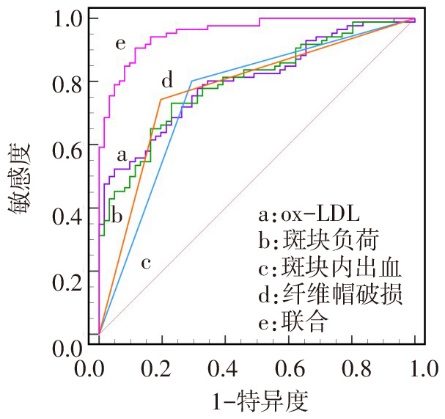
Fig.1 ROC curve analysis of plasma ox-LDL, HRMR-VWI and their combined detection for predicting plaque instability in patients with cerebral infarction
| 模型 | β | SE | Wald χ2 | P | OR(95%CI) |
|---|---|---|---|---|---|
| 模型1 | |||||
| ox-LDL | 0.128 | 0.031 | 17.049 | <0.001 | 1.137(1.070~1.208) |
| 斑块负荷 | 0.256 | 0.059 | 18.827 | <0.001 | 1.292(1.151~1.450) |
| 斑块内出血 | 1.045 | 0.122 | 73.369 | <0.001 | 2.843(2.239~3.611) |
| 纤维帽破损 | 1.163 | 0.127 | 83.859 | <0.001 | 3.200(2.494~4.104) |
| 常数项 | -3.215 | 1.862 | 2.987 | 0.084 | 0.044 |
| 模型2 | |||||
| ox-LDL | 0.124 | 0.032 | 15.016 | <0.001 | 1.132(1.063~1.205) |
| 斑块负荷 | 0.261 | 0.061 | 18.307 | <0.001 | 1.298(1.152~1.463) |
| 斑块内出血 | 1.051 | 0.138 | 58.003 | <0.001 | 2.861(2.183~3.749) |
| 纤维帽破损 | 1.241 | 0.143 | 75.313 | <0.001 | 3.459(2.614~4.578) |
| 常数项 | -3.582 | 1.947 | 3.386 | 0.066 | 0.028 |
| 模型3 | |||||
| ox-LDL | 0.125 | 0.040 | 9.766 | 0.002 | 1.133(1.048~1.226) |
| 斑块负荷 | 0.251 | 0.073 | 11.822 | 0.001 | 1.285(1.114~1.483) |
| 斑块内出血 | 1.404 | 0.157 | 79.971 | <0.001 | 4.071(2.993~5.538) |
| 纤维帽破损 | 1.241 | 0.190 | 42.662 | <0.001 | 3.459(2.384~5.020) |
| 常数项 | -3.874 | 2.105 | 3.387 | 0.062 | 0.021 |
Tab.4 Multivariate Logistic regression analysis of plaque instability in patients with cerebral infarction
| 模型 | β | SE | Wald χ2 | P | OR(95%CI) |
|---|---|---|---|---|---|
| 模型1 | |||||
| ox-LDL | 0.128 | 0.031 | 17.049 | <0.001 | 1.137(1.070~1.208) |
| 斑块负荷 | 0.256 | 0.059 | 18.827 | <0.001 | 1.292(1.151~1.450) |
| 斑块内出血 | 1.045 | 0.122 | 73.369 | <0.001 | 2.843(2.239~3.611) |
| 纤维帽破损 | 1.163 | 0.127 | 83.859 | <0.001 | 3.200(2.494~4.104) |
| 常数项 | -3.215 | 1.862 | 2.987 | 0.084 | 0.044 |
| 模型2 | |||||
| ox-LDL | 0.124 | 0.032 | 15.016 | <0.001 | 1.132(1.063~1.205) |
| 斑块负荷 | 0.261 | 0.061 | 18.307 | <0.001 | 1.298(1.152~1.463) |
| 斑块内出血 | 1.051 | 0.138 | 58.003 | <0.001 | 2.861(2.183~3.749) |
| 纤维帽破损 | 1.241 | 0.143 | 75.313 | <0.001 | 3.459(2.614~4.578) |
| 常数项 | -3.582 | 1.947 | 3.386 | 0.066 | 0.028 |
| 模型3 | |||||
| ox-LDL | 0.125 | 0.040 | 9.766 | 0.002 | 1.133(1.048~1.226) |
| 斑块负荷 | 0.251 | 0.073 | 11.822 | 0.001 | 1.285(1.114~1.483) |
| 斑块内出血 | 1.404 | 0.157 | 79.971 | <0.001 | 4.071(2.993~5.538) |
| 纤维帽破损 | 1.241 | 0.190 | 42.662 | <0.001 | 3.459(2.384~5.020) |
| 常数项 | -3.874 | 2.105 | 3.387 | 0.062 | 0.021 |
| [1] | Zhao Y, Zhang X, Chen X, et al. Neuronal injuries in cerebral infarction and ischemic stroke:From mechanisms to treatment (Review)[J]. Int J Mol Med, 2022, 49(2):15. doi:10.3892/ijmm.2021.5070. |
| [2] | Sarraju A, Nissen S E. Atherosclerotic plaque stabilization and regression:a review of clinical evidence[J]. Nat Rev Cardiol, 2024, 21(7):487-497. doi:10.1038/s41569-023-00979-8. |
| [3] | Liang L, Chen J, Zhang C, et al. Association of lipoprotein-associated phospholipase A2 with carotid intima-media thickness in acute cerebral infarction patients[J]. Angiology, 2025, 76(7):648-655. doi:10.1177/00033197241233774. |
| [4] | Hu Y, Li Y, Luo Y, et al. Lectin-like oxidized low-density lipoprotein receptor-1 (LOX-1):a potential therapeutic target in ischemic stroke[J]. Transl Stroke Res, 2025, 16(4):1412-1423. doi:10.1007/s12975-024-01307-z. |
| [5] | Song J W, Pavlou A, Xiao J, et al. Vessel wall magnetic resonance imaging biomarkers of symptomatic intracranial atherosclerosis:a meta-analysis[J]. Stroke, 2021, 52(1):193-202. doi:10.1161/STROKEAHA.120.031480. |
| [6] | Yan P, Cao J, Zhou Y, et al. Serum levels of sLOX-1 and Lp-PLA2 can predict the prognosis of acute cerebral infarction with a high specificity[J]. Physiol Rep, 2022, 10(1):e15160. doi:10.14814/phy2.15160. |
| [7] | 中华医学会神经病学分会, 中华医学会神经病学分会脑血管病学组. 中国急性缺血性卒中诊治指南2023[J]. 中华神经科杂志, 2024, 57(6):523-559. |
| Chinese Society of Neurology, Chinese Stroke Society. Chinese guidelines for diagnosis and treatment of acute ischemic stroke 2023[J]. Chin J Neurol, 2024, 57(6):523-559. doi:10.3760/cma.j.cn113694-20240410-00221. | |
| [8] | Xu Y, Xu Y, Li Y, et al. Analysis of the relationship between the changes of serum SAA,LP-PLA2,sCD40L and carotid atherosclerosis plaque in patients with acute cerebral infarction[J]. Altern Ther Health Med, 2024, 30(9):47-53. |
| [9] | Xing Y, Lin X. Challenges and advances in the management of inflammation in atherosclerosis[J]. J Adv Res, 2025, 71:317-335. doi:10.1016/j.jare.2024.06.016. |
| [10] | Summerhill V I, Grechko A V, Yet S, et al. The atherogenic role of circulating modified lipids in atherosclerosis[J]. Int J Mol Sci, 2019, 20(14):3561. doi:10.3390/ijms20143561. |
| [11] | Tian Y, Lu L, Zhang Y, et al. The value of Lp(a)and TG/HDLC in peripheral blood to assess the stability of carotid plaque in patients with ischemic stroke[J]. Brain Behav, 2024, 14(1):e3355. doi:10.1002/brb3.3355. |
| [12] | Takaoka M, Zhao X, Lim H Y, et al. Early intermittent hyperlipidaemia alters tissue macrophages to fuel atherosclerosis[J]. Nature, 2024, 634(8033):457-465. doi:10.1038/s41586-024-07993-x. |
| [13] | Raposeiras-Roubin S, Rosselló X, Oliva B, et al. Triglycerides and residual atherosclerotic risk[J]. J Am Coll Cardiol, 2021, 77(24):3031-3041. doi:10.1016/j.jacc.2021.04.059. |
| [14] | Yuan M, Feng L, Zhao D, et al. Diagnostic utility of combining homocysteine,lipoprotein-associated phospholipase A2,and the C-reactive protein-to-albumin ratio for assessing carotid atherosclerosis and plaque stability in patients with essential hypertension[J]. Cardiovasc Toxicol, 2025, 25(1):24-33. doi:10.1007/s12012-024-09939-1. |
| [15] | Huang T, Zhu B. The value of Lp-PLA2 as a biomarker for the diagnosis of plaque stability in atherosclerosis:a meta-analysis[J]. Clin Appl Thromb Hemost, 2025, 31:10760296251360015. doi:10.1177/10760296251360015. |
| [16] | Bakillah A, Soliman A F, Subaiee M A, et al. Adiponectin and TNF-alpha differentially mediate the association between cystatin C and oxidized LDL in type 2 diabetes mellitus patients[J]. Int J Mol Sci, 2025, 26(7):3001. doi:10.3390/ijms26073001. |
| [17] | Zhou P, Wang Y, Sun J, et al. Assessment of therapeutic response to statin therapy in patients with intracranial or extracranial carotid atherosclerosis by vessel wall MRI:a systematic review and updated meta-analysis[J]. Front Cardiovasc Med, 2021, 8:742935. doi:10.3389/fcvm.2021.742935. |
| [18] | 王勤粒, 陈榔波. 高分辨率MR管壁成像评估缺血性脑卒中患者血管斑块稳定性[J]. 中国医学影像技术, 2021, 37(10):1441-1445. |
| Wang Q L, Chen L B. High-resolution MR wall imaging for evaluation on stability of vascular plaque in ischemic stroke patients[J]. Chin J Med Imaging Technol, 2021, 37(10):1441-1445. doi:10.13929/j.issn1003-3289.20. | |
| [19] | Iida K, Hiro T, Fukamachi D, et al. Three-dimensional fluid dynamical features of coronary plaque rupture provoking acute coronary syndrome[J]. J Atheroscler Thromb, 2022, 29(4):464-473. doi:10.5551/jat.60509. |
| [20] | 阮志昆. 急性脑梗死患者血清中Gal-3、MMP-9、RBP4表达水平与颈动脉粥样硬化的关系[J]. 中华养生保健, 2024, 42(24):58-61. |
| Ruan Z K. The relationship between the expression levels of Gal-3, MMP-9 and RBP4 in the serum of patients with acute cerebral infarction and carotid atherosclerosis[J]. Chinese Health Care, 2024, 42(24):58-61. | |
| [21] | Qiao Y, Zou Y, Guo S. Low-density lipoprotein particles in atherosclerosis[J]. Front Physiol, 2022, 13:931931. doi:10.3389/fphys.2022.931931. |
| [22] | 郝显华, 刘永华, 黄伟鹏, 等. 高分辨率磁共振血管壁成像对大动脉粥样硬化型脑梗死患者预后的预测价值[J]. 中国现代医学杂志, 2025, 35(14):6-11. |
| Hao X H, Liu Y H, Huang W P, et al. Predictive value of high-resolution magnetic resonance vessel wall imaging for the prognosis of patients with large artery atherosclerotic stroke[J]. China Journal of Modern Medicine, 2025, 35(14):6-11. doi:10.3969/j.issn.1005-8982.2025.14.002. |
| Viewed | ||||||
|
Full text |
|
|||||
|
Abstract |
|
|||||
