
Tianjin Medical Journal ›› 2026, Vol. 54 ›› Issue (5): 498-503.doi: 10.11958/20253715
• Clinical Research • Previous Articles Next Articles
ZHENG Jianfa( ), YANG Yang, ZHANG Xiaohong△()
Received:2025-12-23
Revised:2026-01-26
Published:2026-05-15
Online:2026-05-13
Contact:
△E-mail:ZHENG Jianfa, YANG Yang, ZHANG Xiaohong. The predictive value of systemic inflammation response index combined with atrial cardiomyopathy markers for new-onset atrial fibrillation after acute myocardial infarction[J]. Tianjin Medical Journal, 2026, 54(5): 498-503.
CLC Number:
| 组别 | n | 性别(男/女) | 年龄/岁 | HR/(次/min) | SBP/mmHg | DBP/mmHg | 吸烟史 | 饮酒史 | 高血压 | 糖尿病 | |||||||||||
|---|---|---|---|---|---|---|---|---|---|---|---|---|---|---|---|---|---|---|---|---|---|
| 非AF组 | 294 | 245/49 | 64.00(52.00,72.00) | 78.00(68.25,90.00) | 130.57±19.68 | 78.50(70.00,88.00) | 137(46.6) | 52(17.7) | 153(52.0) | 104(35.4) | |||||||||||
| AF组 | 62 | 49/13 | 74.00(64.25,81.00) | 82.50(72.25,99.00) | 127.34±22.89 | 75.50(65.00,84.00) | 28(45.2) | 9(14.5) | 32(51.6) | 28(45.2) | |||||||||||
| χ2、Z或t | 0.659 | 5.108** | 2.188* | 1.142 | 2.249* | 0.043 | 0.363 | 0.004 | 2.102 | ||||||||||||
| 组别 | 冠心病 | CHA2DS2-VASc 评分/分 | STEMI | 前壁梗死 | 罪犯血管 | ACEI/ARB | β受体 阻滞剂 | ||||||||||||||
| 前降支 | 右冠状动脉 | 回旋支 | |||||||||||||||||||
| 非AF组 | 18(6.1) | 2.0(1.0,3.0) | 207(70.4) | 152(51.7) | 152(51.7) | 106(36.1) | 43(14.6) | 121(41.2) | 205(69.7) | ||||||||||||
| AF组 | 5(8.1) | 3.5(2.0,4.0) | 45(72.6) | 29(46.8) | 29(46.8) | 22(35.5) | 12(19.4) | 26(41.9) | 43(69.4) | ||||||||||||
| χ2或Z | 0.079 | 4.553** | 0.117 | 0.497 | 0.497 | 0.877 | 0.877 | 0.013 | 0.003 | ||||||||||||
Tab.1 Comparison of baseline characteristics between the two groups of patients
| 组别 | n | 性别(男/女) | 年龄/岁 | HR/(次/min) | SBP/mmHg | DBP/mmHg | 吸烟史 | 饮酒史 | 高血压 | 糖尿病 | |||||||||||
|---|---|---|---|---|---|---|---|---|---|---|---|---|---|---|---|---|---|---|---|---|---|
| 非AF组 | 294 | 245/49 | 64.00(52.00,72.00) | 78.00(68.25,90.00) | 130.57±19.68 | 78.50(70.00,88.00) | 137(46.6) | 52(17.7) | 153(52.0) | 104(35.4) | |||||||||||
| AF组 | 62 | 49/13 | 74.00(64.25,81.00) | 82.50(72.25,99.00) | 127.34±22.89 | 75.50(65.00,84.00) | 28(45.2) | 9(14.5) | 32(51.6) | 28(45.2) | |||||||||||
| χ2、Z或t | 0.659 | 5.108** | 2.188* | 1.142 | 2.249* | 0.043 | 0.363 | 0.004 | 2.102 | ||||||||||||
| 组别 | 冠心病 | CHA2DS2-VASc 评分/分 | STEMI | 前壁梗死 | 罪犯血管 | ACEI/ARB | β受体 阻滞剂 | ||||||||||||||
| 前降支 | 右冠状动脉 | 回旋支 | |||||||||||||||||||
| 非AF组 | 18(6.1) | 2.0(1.0,3.0) | 207(70.4) | 152(51.7) | 152(51.7) | 106(36.1) | 43(14.6) | 121(41.2) | 205(69.7) | ||||||||||||
| AF组 | 5(8.1) | 3.5(2.0,4.0) | 45(72.6) | 29(46.8) | 29(46.8) | 22(35.5) | 12(19.4) | 26(41.9) | 43(69.4) | ||||||||||||
| χ2或Z | 0.079 | 4.553** | 0.117 | 0.497 | 0.497 | 0.877 | 0.877 | 0.013 | 0.003 | ||||||||||||
| 组别 | n | Neu/(×109/L) | Lym/(×109/L) | Mon/(×109/L) | PLT/(×109/L) | NLR | SIRI | |||||||||||||
|---|---|---|---|---|---|---|---|---|---|---|---|---|---|---|---|---|---|---|---|---|
| 非AF组 | 294 | 6.88(5.32,8.94) | 1.34(0.98,1.76) | 0.52(0.36,0.65) | 201.00(170.00,237.50) | 5.49(3.47,7.66) | 2.80(1.60,4.35) | |||||||||||||
| AF组 | 62 | 8.73(7.65,10.27) | 1.24(0.77,1.76) | 0.89(0.53,1.22) | 192.00(173.50,229.75) | 7.52(5.16,11.43) | 6.16(3.12,9.98) | |||||||||||||
| Z | 4.181** | 1.248 | 5.026** | 0.899 | 3.876** | 5.724** | ||||||||||||||
| 组别 | SCr/(μmol/L) | eGFR/[mL/(min·1.73 m2)] | TC/(mmol/L) | TG/(mmol/L) | cTnI/(μg/L) | CK-MB/(U/L) | ||||||||||||||
| 非AF组 | 75.40(66.90,82.30) | 92.20(81.53,100.50) | 4.45(3.82,5.30) | 1.59(1.07,2.35) | 18.05(5.88,56.80) | 62.20(36.55,144.43) | ||||||||||||||
| AF组 | 79.15(70.22,88.92) | 78.40(64.85,92.17) | 4.39(3.64,5.19) | 1.26(0.84,1.74) | 21.50(7.90,59.35) | 79.80(41.42,213.28) | ||||||||||||||
| Z | 2.366* | 4.544** | 0.483 | 3.365** | 0.590 | 1.812 | ||||||||||||||
| 组别 | NT-proBNP/(ng/L) | LAD/mm | LVEDD/mm | LVEDVI/(mL/m2) | LAVI/(mL/m2) | LVEF/% | ||||||||||||||
| 非AF组 | 967(398,2 906) | 37.00(35.00,39.00) | 50.00(48.00,53.00) | 59.80(53.20,68.90) | 23.40(21.10,26.80) | 61.00(55.25,65.75) | ||||||||||||||
| AF组 | 3 987(1 142,6 259) | 39.00(37.00,41.75) | 53.00(48.50,58.00) | 70.40(60.15,80.25) | 28.60(25.15,32.45) | 56.00(47.25,63.00) | ||||||||||||||
| Z | 6.542** | 3.776** | 3.367** | 4.876** | 5.442** | 3.244** | ||||||||||||||
Tab.2 Comparison of laboratory indicators and echocardiographic parameters between the two groups of patients
| 组别 | n | Neu/(×109/L) | Lym/(×109/L) | Mon/(×109/L) | PLT/(×109/L) | NLR | SIRI | |||||||||||||
|---|---|---|---|---|---|---|---|---|---|---|---|---|---|---|---|---|---|---|---|---|
| 非AF组 | 294 | 6.88(5.32,8.94) | 1.34(0.98,1.76) | 0.52(0.36,0.65) | 201.00(170.00,237.50) | 5.49(3.47,7.66) | 2.80(1.60,4.35) | |||||||||||||
| AF组 | 62 | 8.73(7.65,10.27) | 1.24(0.77,1.76) | 0.89(0.53,1.22) | 192.00(173.50,229.75) | 7.52(5.16,11.43) | 6.16(3.12,9.98) | |||||||||||||
| Z | 4.181** | 1.248 | 5.026** | 0.899 | 3.876** | 5.724** | ||||||||||||||
| 组别 | SCr/(μmol/L) | eGFR/[mL/(min·1.73 m2)] | TC/(mmol/L) | TG/(mmol/L) | cTnI/(μg/L) | CK-MB/(U/L) | ||||||||||||||
| 非AF组 | 75.40(66.90,82.30) | 92.20(81.53,100.50) | 4.45(3.82,5.30) | 1.59(1.07,2.35) | 18.05(5.88,56.80) | 62.20(36.55,144.43) | ||||||||||||||
| AF组 | 79.15(70.22,88.92) | 78.40(64.85,92.17) | 4.39(3.64,5.19) | 1.26(0.84,1.74) | 21.50(7.90,59.35) | 79.80(41.42,213.28) | ||||||||||||||
| Z | 2.366* | 4.544** | 0.483 | 3.365** | 0.590 | 1.812 | ||||||||||||||
| 组别 | NT-proBNP/(ng/L) | LAD/mm | LVEDD/mm | LVEDVI/(mL/m2) | LAVI/(mL/m2) | LVEF/% | ||||||||||||||
| 非AF组 | 967(398,2 906) | 37.00(35.00,39.00) | 50.00(48.00,53.00) | 59.80(53.20,68.90) | 23.40(21.10,26.80) | 61.00(55.25,65.75) | ||||||||||||||
| AF组 | 3 987(1 142,6 259) | 39.00(37.00,41.75) | 53.00(48.50,58.00) | 70.40(60.15,80.25) | 28.60(25.15,32.45) | 56.00(47.25,63.00) | ||||||||||||||
| Z | 6.542** | 3.776** | 3.367** | 4.876** | 5.442** | 3.244** | ||||||||||||||
| 变量 | β | SE | Wald χ2 | P | OR (95%CI) |
|---|---|---|---|---|---|
| 年龄 | 0.051 | 0.016 | 10.163 | 0.001 | 1.052(1.020~1.086) |
| SIRI | 0.168 | 0.042 | 16.000 | <0.001 | 1.183(1.090~1.284) |
| LAD | 0.098 | 0.035 | 7.840 | 0.005 | 1.103(1.030~1.181) |
| logNT-proBNP | 0.512 | 0.125 | 16.785 | <0.001 | 1.669(1.307~2.132) |
| 常数项 | -6.215 | 1.200 | 26.842 | <0.001 | 0.002 |
Tab.3 Multivariate Logistic regression analysis for predictors of new-onset atrial fibrillation after acute myocardial infarction
| 变量 | β | SE | Wald χ2 | P | OR (95%CI) |
|---|---|---|---|---|---|
| 年龄 | 0.051 | 0.016 | 10.163 | 0.001 | 1.052(1.020~1.086) |
| SIRI | 0.168 | 0.042 | 16.000 | <0.001 | 1.183(1.090~1.284) |
| LAD | 0.098 | 0.035 | 7.840 | 0.005 | 1.103(1.030~1.181) |
| logNT-proBNP | 0.512 | 0.125 | 16.785 | <0.001 | 1.669(1.307~2.132) |
| 常数项 | -6.215 | 1.200 | 26.842 | <0.001 | 0.002 |
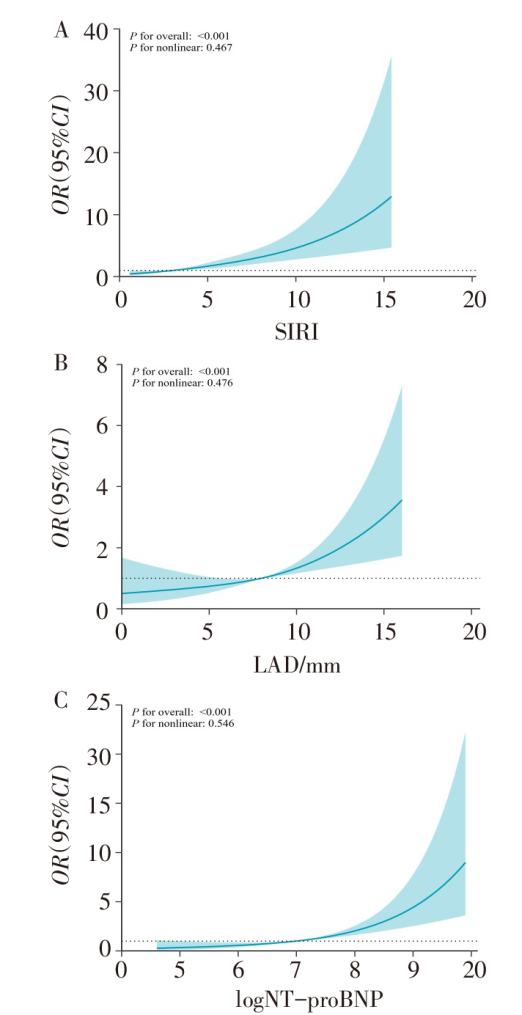
Fig.1 RCS analysis of SIRI, LAD and NT-proBNP in relation to the risk of new-onset AF following AMI
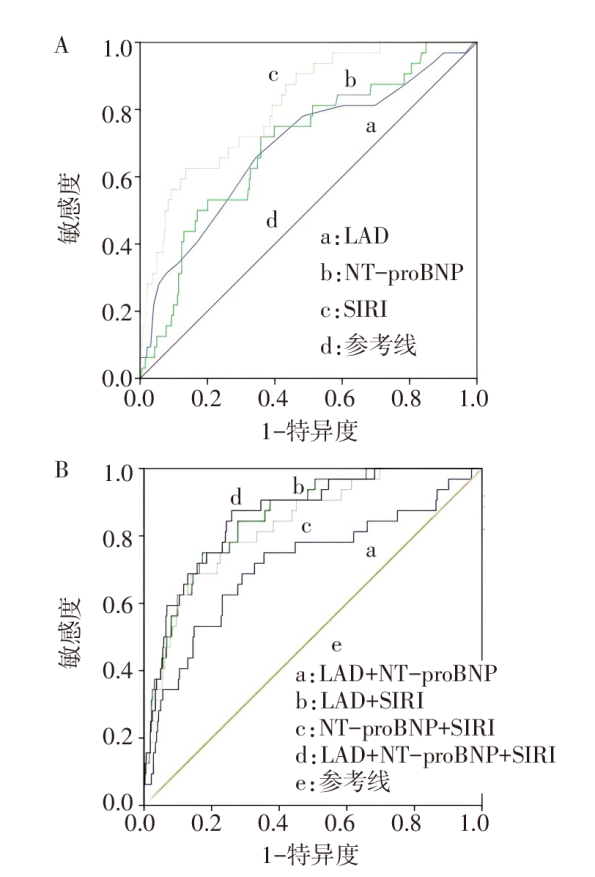
Fig.2 ROC curves of SIRI, LAD, NT-proBNP and the combined model for predicting new-onset AF after AMI
| 指标 | AUC | 95%CI | 截断值 | 敏感 度/% | 特异 度/% |
|---|---|---|---|---|---|
| SIRI | 0.813 | 0.740~0.886 | 6.072 | 62.5 | 86.4 |
| LAD | 0.689 | 0.584~0.793 | 38.500 mm | 65.6 | 65.7 |
| NT-proBNP | 0.695 | 0.602~0.789 | 1 634.500 ng/L | 71.9 | 64.2 |
| LAD+NT-proBNP | 0.715 | 0.608~0.822 | 68.8 | 71.0 | |
| LAD+SIRI | 0.857 | 0.795~0.919 | 75.0 | 82.7 | |
| NT-proBNP+SIRI | 0.833 | 0.762~0.905 | 78.1 | 76.9 | |
| LAD+NT-proBNP+ SIRI | 0.863 | 0.800~0.926 | 87.5 | 74.1 |
Tab.4 Results of ROC analysis for SIRI, LAD, NT-proBNP and the combined model for the predictive efficacy of new-onset AF after AMI
| 指标 | AUC | 95%CI | 截断值 | 敏感 度/% | 特异 度/% |
|---|---|---|---|---|---|
| SIRI | 0.813 | 0.740~0.886 | 6.072 | 62.5 | 86.4 |
| LAD | 0.689 | 0.584~0.793 | 38.500 mm | 65.6 | 65.7 |
| NT-proBNP | 0.695 | 0.602~0.789 | 1 634.500 ng/L | 71.9 | 64.2 |
| LAD+NT-proBNP | 0.715 | 0.608~0.822 | 68.8 | 71.0 | |
| LAD+SIRI | 0.857 | 0.795~0.919 | 75.0 | 82.7 | |
| NT-proBNP+SIRI | 0.833 | 0.762~0.905 | 78.1 | 76.9 | |
| LAD+NT-proBNP+ SIRI | 0.863 | 0.800~0.926 | 87.5 | 74.1 |
| [1] | BAZOUKIS G, HUI J, SAPLAOURAS A, et al. The impact of new-onset atrial fibrillation in the setting of acute coronary syndrome[J]. J Cardiol, 2025, 85(3):186-203. doi:10.1016/j.jjcc.2024.12.007. |
| [2] | YANG W Y, LIP G, SUN Z J, et al. Implications of new-onset atrial fibrillation on in-hospital and long-term prognosis of patients with acute myocardial infarction:a report from the CBD bank study[J]. Front Cardiovasc Med, 2022, 9:979546. doi:10.3389/fcvm.2022.979546. |
| [3] | WU N, LI J, XU X, et al. Prediction model of new onset atrial fibrillation in patients with acute coronary syndrome[J]. Int J Clin Pract, 2023, 2023:3473603. doi:10.1155/2023/3473603. |
| [4] | ZHANG S, CHENG T. Prognostic and clinicopathological value of systemic inflammation response index(SIRI)in patients with breast cancer: a meta-analysis[J]. Ann Med, 2024, 56(1):2337729. doi:10.1080/07853890.2024.2337729. |
| [5] | HAN K, SHI D, YANG L, et al. Prognostic value of systemic inflammatory response index in patients with acute coronary syndrome undergoing percutaneous coronary intervention[J]. Ann Med, 2022, 54(1):1667-1677. doi:10.1080/07853890.2022.2083671. |
| [6] | GOETTE A, KALMAN J M, AGUINAGA L, et al. EHRA/HRS/APHRS/SOLAECE expert consensus on atrial cardiomyopathies:definition,characterization,and clinical implication[J]. Heart Rhythm, 2017, 14(1):e3-e40. doi:10.1016/j.hrthm.2016.05.028. |
| [7] | 张洋. NT-proBNP对房颤射频消融术后复发相关性临床研究[D]. 长春: 长春中医药大学, 2021. |
| ZHANG Y. Clinical study on the correlation between NT-proBNP and recurrence after radiofrequency ablation of atrial fibrillation[D]. Changchun: Changchun University of Chinese Medicine, 2021. doi:10.26980/d.cnki.gcczc.2021.000432. | |
| [8] | THYGESEN K, ALPERT J S, JAFFE A S, et al. Fourth universal definition of myocardial infarction(2018)[J]. Circulation, 2018, 138(20):e618-e651. doi:10.1161/CIR.0000000000000617. |
| [9] | HINDRICKS G, POTPARA T, DAGRES N, et al. 2020 ESC Guidelines for the diagnosis and management of atrial fibrillation developed in collaboration with the European Association for Cardio-Thoracic Surgery(EACTS):The Task Force for the diagnosis and management of atrial fibrillation of the European Society of Cardiology(ESC)Developed with the special contribution of the European Heart Rhythm Association(EHRA)of the ESC[J]. Eur Heart J,2021, 42(5):373-498. doi:10.1093/eurheartj/ehaa612. |
| [10] | 徐俊伟, 王林林, 蔡颖颖, 等. 新型炎性指标对老年重度慢性阻塞性肺疾病并发心房颤动的预测价值[J]. 实用临床医药杂志, 2023, 27(17):66-71,87. |
| XU J W, WANG L L, CAI Y Y, et al. Values of new inflammatory indicators in predicting atrial fibrillation in elderly patients with severe chronic obstructive pulmonary disease[J]. Journal of Clinical Medicine in Practice, 2023, 27(17):66-71,87. doi:10.7619/jcmp.20231787. | |
| [11] | 谢杰麟. CAR、NLR、PLR对冠状动脉旁路移植术后新发房颤预测的相关性研究[D]. 沈阳: 沈阳医学院, 2023. |
| XIE J L.Predictive value of CAR, NLR and PLR for new-onset atrial fibrillation after coronary artery bypass grafting[D]. Shenyang: Shenyang Medical College, 2023. doi:10.27900/d.cnki.gsyyx.2023.000067. | |
| [12] | HUANG W, SUN H, TANG Y, et al. Platelet-to-lymphocyte ratio improves the predictive ability of the risk score for atrial fibrillation recurrence after radiofrequency ablation[J]. J Inflamm Res, 2023, 16:6023-6038. doi:10.2147/JIR.S440722. |
| [13] | LIU M, LI W, WANG H, et al. CTRP9 ameliorates atrial inflammation,fibrosis,and vulnerability to atrial fibrillation in post-myocardial infarction rats[J]. J Am Heart Assoc, 2019, 8(21):e013133. doi:10.1161/JAHA.119.013133. |
| [14] | WU N, XU B, XIANG Y, et al. Association of inflammatory factors with occurrence and recurrence of atrial fibrillation:a meta-analysis[J]. Int J Cardiol, 2013, 169(1):62-72. doi:10.1016/j.ijcard.2013.08.078. |
| [15] | YAO C, VELEVA T, SCOTT L, et al. Enhanced cardiomyocyte NLRP3 inflammasome signaling promotes atrial fibrillation[J]. Circulation, 2018, 138(20):2227-2242. doi:10.1161/CIRCULATIONAHA.118.035202. |
| [16] | TSANG T S, BARNES M E, GERSH B J, et al. Left atrial volume as a morphophysiologic expression of left ventricular diastolic dysfunction and relation to cardiovascular risk burden[J]. Am J Cardiol, 2002, 90(12):1284-1289. doi:10.1016/s0002-9149(02)02864-3. |
| [17] | BRUNDEL B, AI X, HILLS M T, et al. Atrial fibrillation[J]. Nat Rev Dis Primers, 2022, 8(1):21. doi:10.1038/s41572-022-00347-9. |
| [18] | 金富梅, 李好, 李科民. 血浆D-二聚体、纤维蛋白原联合NT-proBNP对稳定型心绞痛并发心房颤动的预测价值[J]. 国际心血管病杂志, 2025, 52(4):265-268. |
| JIN F M, LI H, LI K M. Predictive value of plasma D-dimer and fibrinogen combined with N-terminal pro-brain natriuretic peptide for atrial fibrillation in patients with stable angina pectoris[J]. Int J Cardiovasc Dis, 2025, 52(4):265-268. doi:10.3969/j.issn.1673-6583.2025.04.014. | |
| [19] | 郭志华, 郭雪华. 射血分数保留型心力衰竭的NT-ProBNP表达水平对房颤的预测效能分析[J]. 黑龙江医学, 2024, 48(17):2073-2076. |
| GUO Z H, GUO X H. Predictive efficacy of NT-ProBNP level expression in heart failure with ejection fraction retention on atrial fibrillation[J]. Heilongjiang Medical Journal, 2024, 48(17):2073-2076. doi:10.3969/j.issn.1004-5775.2024.17.007. | |
| [20] | LI Z, LIU Q, LIU F, et al. Atrial cardiomyopathy markers and new-onset atrial fibrillation risk in patients with acute myocardial infarction[J]. Eur J Intern Med, 2022, 102:72-79. doi:10.1016/j.ejim.2022.04.019. |
| Viewed | ||||||
|
Full text |
|
|||||
|
Abstract |
|
|||||
