
Tianjin Medical Journal ›› 2026, Vol. 54 ›› Issue (10): 1009-1017.doi: 10.11958/20261146
• Experimental Research • Next Articles
FENG Lina1( ), YAN Liang2,△(), XUE Shuina3, WANG Shangzeng3
Received:2026-04-30
Revised:2026-05-29
Published:2026-10-15
Online:2026-10-10
Contact:
△E-mail:33946314@qq.com
FENG Lina, YAN Liang, XUE Shuina, WANG Shangzeng. Mechanism of Fuyuan Huoxue decoction in inhibiting chondrocyte ferroptosis of rats with knee osteoarthritis via the STING/ACSL4 pathway[J]. Tianjin Medical Journal, 2026, 54(10): 1009-1017.
CLC Number:
| 组别 | Lequesne MG评分(n=12) | OARSI评分(n=6) | |
|---|---|---|---|
| 给药前 | 给药后 | ||
| Sham组 | 0.08±0.02 | 0.22±0.08 | 1.03±0.52 |
| KOA组 | 8.81±1.34a | 8.67±1.23a | 14.67±2.16a |
| FHD-L组 | 8.69±1.22a | 5.92±0.71b | 10.83±1.94b |
| FHD-H组 | 8.75±1.18a | 2.67±0.59bc | 5.17±1.47bc |
| PC组 | 8.78±1.25a | 2.83±0.44bc | 5.83±1.60bc |
| FHD-H+DMXAA组 | 8.72±1.16a | 7.08±0.86d | 12.50±2.07d |
| F | 118.941** | 220.018** | 54.232** |
Tab.1 Comparison of Lequesne MG score and OARSI score before and after drug administration between six groups of rats
| 组别 | Lequesne MG评分(n=12) | OARSI评分(n=6) | |
|---|---|---|---|
| 给药前 | 给药后 | ||
| Sham组 | 0.08±0.02 | 0.22±0.08 | 1.03±0.52 |
| KOA组 | 8.81±1.34a | 8.67±1.23a | 14.67±2.16a |
| FHD-L组 | 8.69±1.22a | 5.92±0.71b | 10.83±1.94b |
| FHD-H组 | 8.75±1.18a | 2.67±0.59bc | 5.17±1.47bc |
| PC组 | 8.78±1.25a | 2.83±0.44bc | 5.83±1.60bc |
| FHD-H+DMXAA组 | 8.72±1.16a | 7.08±0.86d | 12.50±2.07d |
| F | 118.941** | 220.018** | 54.232** |
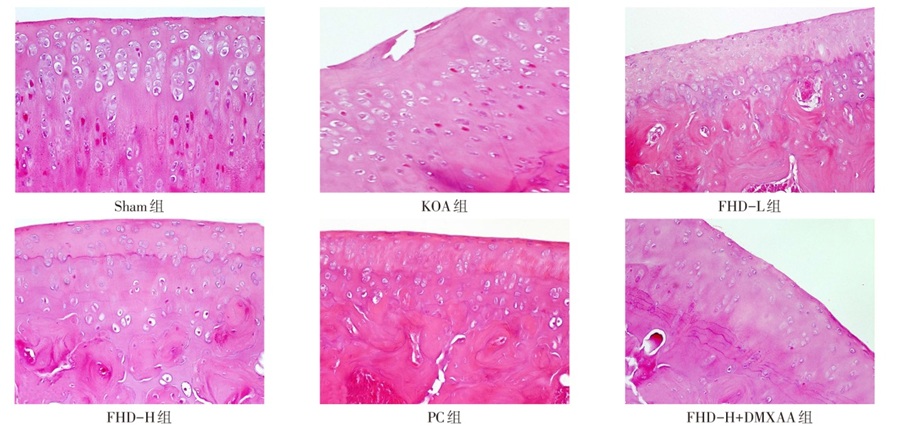
Fig.1 HE staining of knee joint cartilage of each group of rats (×200)
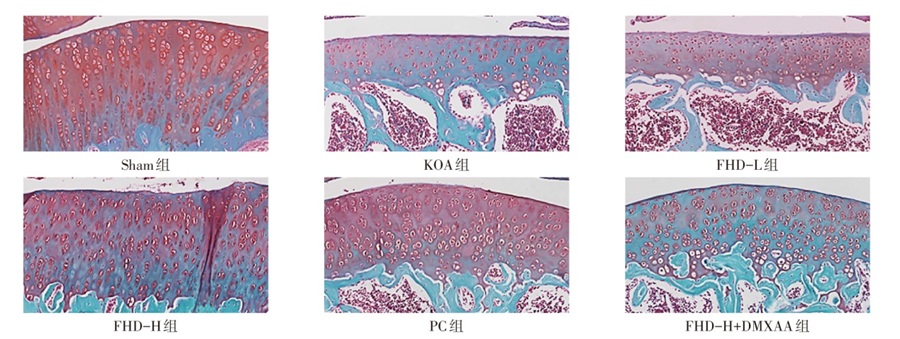
Fig.2 Safranin O-Grimmaux staining of knee joint cartilage in each group of rats (×100)
| 组别 | IL-1β/ (pg/mg) | TNF-α/ (pg/mg) | MMP-13/ (ng/mg) | ADAMTS-5/(ng/mg) |
|---|---|---|---|---|
| Sham组 | 12.47±2.15 | 8.23±1.56 | 3.42±0.58 | 2.15±0.42 |
| KOA组 | 86.34±7.82a | 72.56±6.93a | 28.67±3.14a | 18.93±2.08a |
| FHD-L组 | 58.26±6.14b | 48.37±5.25b | 18.42±2.56b | 12.67±1.85b |
| FHD-H组 | 28.53±3.67bc | 22.18±3.42bc | 8.35±1.27bc | 5.28±0.96bc |
| PC组 | 31.42±4.05bc | 24.56±3.78bc | 9.64±1.48bc | 6.12±1.03bc |
| FHD-H+DMXAA组 | 67.38±6.52d | 56.29±5.84d | 22.53±2.87d | 15.47±1.92d |
| F | 158.243** | 153.825** | 115.575** | 114.235** |
Tab.2 Comparison of IL-1β, TNF-α, MMP-13 and ADAMTS-5 expression in cartilage tissue between six groups of rats
| 组别 | IL-1β/ (pg/mg) | TNF-α/ (pg/mg) | MMP-13/ (ng/mg) | ADAMTS-5/(ng/mg) |
|---|---|---|---|---|
| Sham组 | 12.47±2.15 | 8.23±1.56 | 3.42±0.58 | 2.15±0.42 |
| KOA组 | 86.34±7.82a | 72.56±6.93a | 28.67±3.14a | 18.93±2.08a |
| FHD-L组 | 58.26±6.14b | 48.37±5.25b | 18.42±2.56b | 12.67±1.85b |
| FHD-H组 | 28.53±3.67bc | 22.18±3.42bc | 8.35±1.27bc | 5.28±0.96bc |
| PC组 | 31.42±4.05bc | 24.56±3.78bc | 9.64±1.48bc | 6.12±1.03bc |
| FHD-H+DMXAA组 | 67.38±6.52d | 56.29±5.84d | 22.53±2.87d | 15.47±1.92d |
| F | 158.243** | 153.825** | 115.575** | 114.235** |
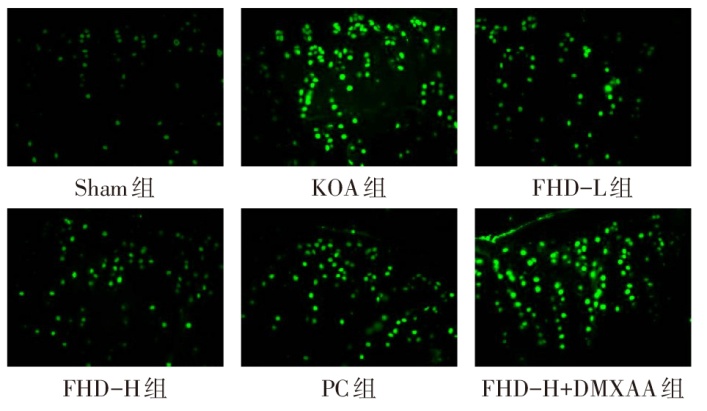
Fig.3 DCFH-DA staining of articular cartilage in each group of rats (×200)
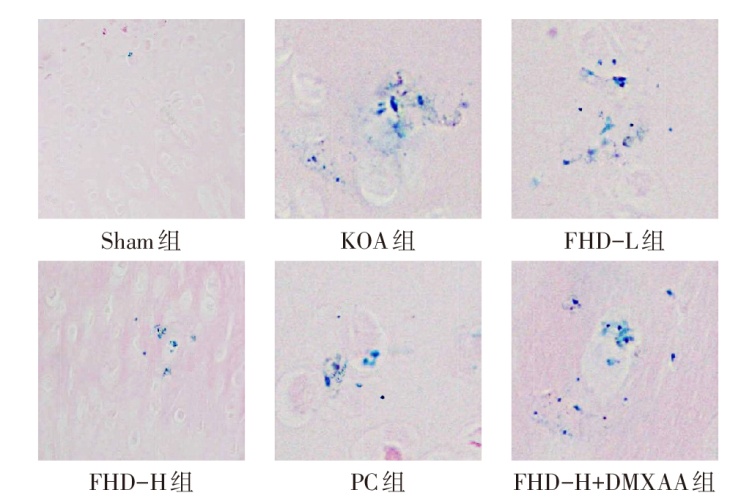
Fig.4 Prussian blue staining of articular cartilage tissue of each group of rats (×200)
| 组别 | Fe2+/(μmol/g) | MDA/(nmol/g) | ROS(荧光强度) | ||
|---|---|---|---|---|---|
| Sham组 | 0.28±0.05 | 1.32±0.21 | 100.00±8.56 | ||
| KOA组 | 1.86±0.17a | 5.78±0.52a | 286.54±18.63a | ||
| FHD-L组 | 1.28±0.14b | 4.12±0.43b | 218.36±15.42b | ||
| FHD-H组 | 0.58±0.08bc | 2.18±0.26bc | 138.27±11.35bc | ||
| PC组 | 0.65±0.09bc | 2.35±0.28bc | 145.38±12.17bc | ||
| FHD-H+DMXAA组 | 1.52±0.15d | 4.86±0.47d | 248.65±16.28d | ||
| F | 155.527** | 126.533** | 157.966** | ||
| 组别 | GSH/ (μmol/g) | SOD/ (U/mg) | 普鲁士蓝染色 阳性面积比/% | ||
| Sham组 | 8.64±0.87 | 42.38±3.86 | 0.42±0.11 | ||
| KOA组 | 2.35±0.31a | 15.28±1.94a | 8.76±0.94a | ||
| FHD-L组 | 3.86±0.42b | 24.63±2.35b | 5.83±0.72b | ||
| FHD-H组 | 6.72±0.58bc | 36.47±2.86bc | 1.85±0.34bc | ||
| PC组 | 6.48±0.62bc | 35.26±2.74bc | 2.12±0.41bc | ||
| FHD-H+DMXAA组 | 3.12±0.38d | 20.18±2.13d | 6.94±0.85d | ||
| F | 114.110** | 90.650** | 163.643** | ||
Tab.3 Comparison of iron death-related indicators in cartilage tissue between six groups of rats
| 组别 | Fe2+/(μmol/g) | MDA/(nmol/g) | ROS(荧光强度) | ||
|---|---|---|---|---|---|
| Sham组 | 0.28±0.05 | 1.32±0.21 | 100.00±8.56 | ||
| KOA组 | 1.86±0.17a | 5.78±0.52a | 286.54±18.63a | ||
| FHD-L组 | 1.28±0.14b | 4.12±0.43b | 218.36±15.42b | ||
| FHD-H组 | 0.58±0.08bc | 2.18±0.26bc | 138.27±11.35bc | ||
| PC组 | 0.65±0.09bc | 2.35±0.28bc | 145.38±12.17bc | ||
| FHD-H+DMXAA组 | 1.52±0.15d | 4.86±0.47d | 248.65±16.28d | ||
| F | 155.527** | 126.533** | 157.966** | ||
| 组别 | GSH/ (μmol/g) | SOD/ (U/mg) | 普鲁士蓝染色 阳性面积比/% | ||
| Sham组 | 8.64±0.87 | 42.38±3.86 | 0.42±0.11 | ||
| KOA组 | 2.35±0.31a | 15.28±1.94a | 8.76±0.94a | ||
| FHD-L组 | 3.86±0.42b | 24.63±2.35b | 5.83±0.72b | ||
| FHD-H组 | 6.72±0.58bc | 36.47±2.86bc | 1.85±0.34bc | ||
| PC组 | 6.48±0.62bc | 35.26±2.74bc | 2.12±0.41bc | ||
| FHD-H+DMXAA组 | 3.12±0.38d | 20.18±2.13d | 6.94±0.85d | ||
| F | 114.110** | 90.650** | 163.643** | ||
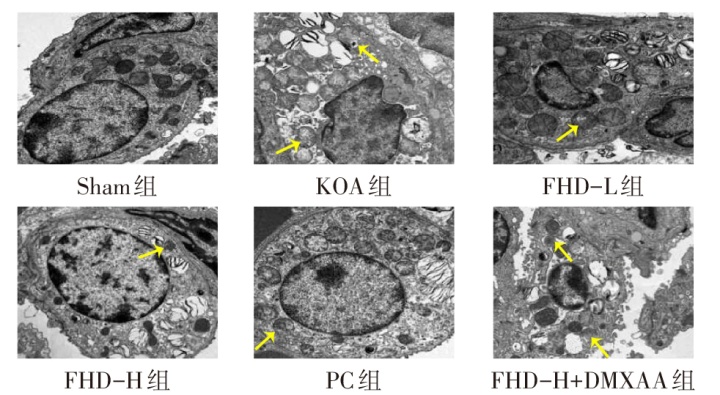
Fig.5 Ultrastructure of mitochondria in articular cartilage cells of each group of rats (transmission electron microscope, ×7 000)
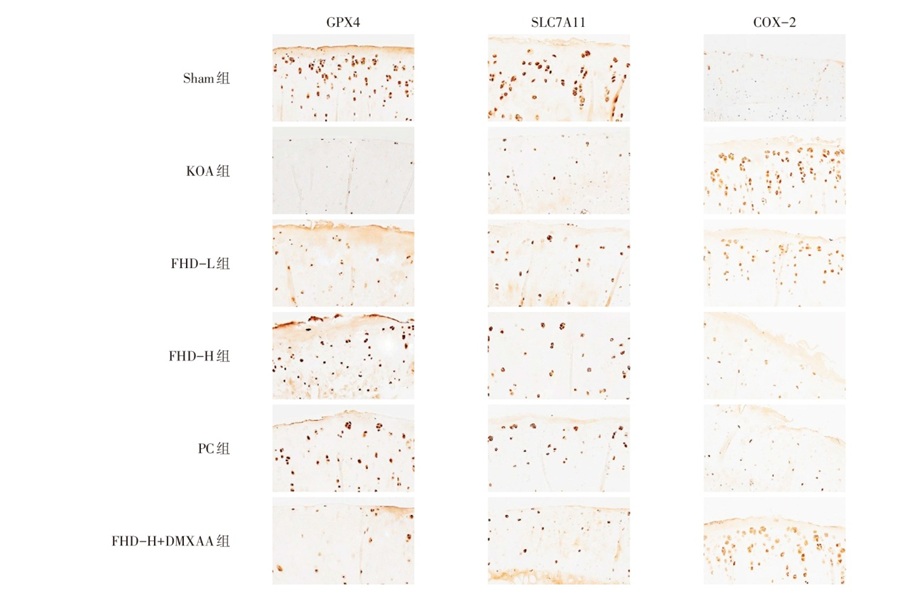
Fig.6 Immunohistochemical staining of GPX4, SLC7A11 and COX-2 in cartilage tissue of each group of rats (×200)
| 组别 | GPX4 阳性面积 | SLC7A11 阳性面积 | COX-2 阳性面积 |
|---|---|---|---|
| Sham组 | 18.64±2.15 | 15.32±1.86 | 2.86±0.52 |
| KOA组 | 3.28±0.64a | 4.15±0.73a | 21.48±2.35a |
| FHD-L组 | 7.56±1.08b | 7.83±1.12b | 14.36±1.87b |
| FHD-H组 | 15.38±1.64bc | 13.26±1.45bc | 5.27±0.94bc |
| PC组 | 14.52±1.58bc | 12.48±1.52bc | 5.86±1.03bc |
| FHD-H+DMXAA组 | 4.86±0.92d | 5.68±0.98d | 17.52±2.08d |
| F | 116.887** | 69.423** | 133.647** |
Tab.4 Comparison of the positive expression areas of GPX4, SLC7A11 and COX-2 in cartilage tissue between six groups of rats
| 组别 | GPX4 阳性面积 | SLC7A11 阳性面积 | COX-2 阳性面积 |
|---|---|---|---|
| Sham组 | 18.64±2.15 | 15.32±1.86 | 2.86±0.52 |
| KOA组 | 3.28±0.64a | 4.15±0.73a | 21.48±2.35a |
| FHD-L组 | 7.56±1.08b | 7.83±1.12b | 14.36±1.87b |
| FHD-H组 | 15.38±1.64bc | 13.26±1.45bc | 5.27±0.94bc |
| PC组 | 14.52±1.58bc | 12.48±1.52bc | 5.86±1.03bc |
| FHD-H+DMXAA组 | 4.86±0.92d | 5.68±0.98d | 17.52±2.08d |
| F | 116.887** | 69.423** | 133.647** |
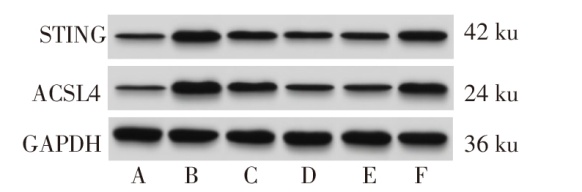
Fig.7 Expression of STING and ACSL4 proteins in cartilage tissue of each group of rats detected by Western blot assay
| 组别 | STING | ACSL4 |
|---|---|---|
| Sham组 | 0.21±0.04 | 0.18±0.03 |
| KOA组 | 0.86±0.09a | 0.92±0.10a |
| FHD-L组 | 0.62±0.07b | 0.67±0.08b |
| FHD-H组 | 0.32±0.05bc | 0.28±0.04bc |
| PC组 | 0.35±0.06bc | 0.31±0.05bc |
| FHD-H+DMXAA组 | 0.73±0.08d | 0.78±0.09d |
| F | 88.884** | 114.061** |
Tab.5 Comparison of relative expression levels of STING and ACSL4 proteins in cartilage tissue between six groups of rats
| 组别 | STING | ACSL4 |
|---|---|---|
| Sham组 | 0.21±0.04 | 0.18±0.03 |
| KOA组 | 0.86±0.09a | 0.92±0.10a |
| FHD-L组 | 0.62±0.07b | 0.67±0.08b |
| FHD-H组 | 0.32±0.05bc | 0.28±0.04bc |
| PC组 | 0.35±0.06bc | 0.31±0.05bc |
| FHD-H+DMXAA组 | 0.73±0.08d | 0.78±0.09d |
| F | 88.884** | 114.061** |
| [1] | Chen L, Huang F L, Tang Q, et al. Targeted therapy for knee osteoarthritis:from basic to clinics[J]. Medicine (Baltimore), 2025, 104(33):e43686. doi:10.1097/MD.0000000000043686. |
| [2] | Hu Z, Chen L, Zhao J, et al. Lipoxin A4 ameliorates knee osteoarthritis progression in rats by antagonizing ferroptosis through activation of the ESR2/LPAR3/Nrf2 axis in synovial fibroblast-like synoviocytes[J]. Redox Biol, 2024, 73:103143. doi:10.1016/j.redox.2024.103143. |
| [3] | Sun K, Shi Y, Yan C, et al. Glycolysis-derived lactate induces ACSL4 expression and lactylation to activate ferroptosis during intervertebral disc degeneration[J]. Adv Sci (Weinh), 2025, 12(21):e2416149. doi:10.1002/advs.202416149. |
| [4] | Lan J, Deng Z, Wang Q, et al. Neuropeptide substance P attenuates colitis by suppressing inflammation and ferroptosis via the cGAS-STING signaling pathway[J]. Int J Biol Sci, 2024, 20(7):2507-2531. doi:10.7150/ijbs.94548. |
| [5] | Gao L, Zhang J, Yang T, et al. STING/ACSL4 axis-dependent ferroptosis and inflammation promote hypertension-associated chronic kidney disease[J]. Mol Ther, 2023, 31(10):3084-3103. doi:10.1016/j.ymthe.2023.07.026. |
| [6] | 哈思远, 张巍. 超声引导下股神经阻滞联合复元活血汤对全膝关节置换术后疼痛及膝关节功能的影响[J]. 河南中医, 2024, 44(3):402-406. |
| Ha S Y, Zhang W. The influence of ultrasound-guided femoral nerve block combined with original qi-restoring and blood-moving decoction on pain and knee function after total knee arthroplasty[J]. Henan Tradit Chin Med, 2024, 44(3):402-406. doi:10.16367/j.issn.1003-5028.2024.03.0077. | |
| [7] | 陈世琳, 陈文恒, 王光辉, 等. 异甘草素对膝关节骨关节炎大鼠软骨细胞铁死亡的影响及其作用机制[J]. 中华骨科杂志, 2025, 45(4):230-240. |
| Chen S L, Chen W H, Wang G H, et al. Effect and mechanism of isoliquiritigenin on ferroptosis of chondrocytes in rats with knee osteoarthritis[J]. Chin J Orthop, 2025, 45(4):230-240. doi:10.3760/cma.j.cn121113-20240910-00496. | |
| [8] | 周欣华, 杨琪琪, 李蔚然, 等. 电针调控PI3K/Akt/mTOR通路对膝关节骨关节炎大鼠膝关节滑膜组织自噬的影响[J]. 针刺研究, 2026, 51(1):59-67. |
| Zhou X H, Yang Q Q, Li W R, et al. Effects of electroacupuncture on autophagy of the synovial tissue in the knee joint of rats with knee osteoarthritis by regulating PI3K/Akt/mTOR pathway[J]. Acupunct Res, 2026, 51(1):59-67. doi:10.13702/j.1000-0607.20241225. | |
| [9] | 张永波, 林伟, 苏冬冬, 等. 复元活血汤对大鼠骨质疏松性椎体骨折愈合和血管化的作用[J]. 中国骨质疏松杂志, 2025, 31(8):1178-1184. |
| Zhang Y B, Lin W, Su D D, et al. Effect of Fuyuan Huoxue Decoction on healing and vascularization of osteoporotic vertebral fracture in rats[J]. Chin J Osteoporosis, 2025, 31(8):1178-1184. doi:10.3969/j.issn.1006-7108.2025.08.013. | |
| [10] | 方红育, 黄涛, 周少怀, 等. 川陈皮素通过抑制STING/NF-κB信号通路促进骨质疏松大鼠的骨折愈合[J]. 免疫学杂志, 2023, 39(10):857-864. |
| Fang H Y, Huang T, Zhou S H, et al. Nobiletin promotes fracture healing in osteoporosis rats by inhibiting STING/NF-κB signal pathway[J]. Immunol J, 2023, 39(10):857-864. doi:10.13431/j.cnki.immunol.j.20230111. | |
| [11] | Yu L, Su Z, Tian D, et al. Piezo1 induces mitochondrial autophagy dysfunction leading to cartilage injury in knee osteoarthritis[J]. Mol Med, 2025, 31(1):272. doi:10.1186/s10020-025-01335-x. |
| [12] | 张健哲, 杨永菊, 张宇, 等. 膝骨关节炎中医辨证存在的问题与对策[J]. 中华中医药学刊, 2023, 41(12):137-141. |
| Zhang J Z, Yang Y J, Zhang Y, et al. Problems and countermeasures in syndrome differentiation of knee-osteoarthritis in Traditional Chinese Medicine[J]. Chin Arch Tradit Chin Med, 2023, 41(12):137-141. doi:10.13193/j.issn.1673-7717.2023.12.026. | |
| [13] | 蒲晓东, 杨艳梅. 膝骨关节炎中医病名再辨识[J]. 时珍国医国药, 2017, 28(12):2972-2973. |
| Pu X D, Yang Y M. Re-identification of the TCM sickness name of knee osteoarthritis[J]. Lishizhen Med Mater Med Res, 2017, 28(12):2972-2973. doi:10.3969/j.issn.1008-0805.2017.12.055. | |
| [14] | 唐海波, 叶贵生, 王旭, 等. 周长征教授基于久病入络理论治疗膝骨关节炎临证经验[J]. 中国民族民间医药, 2024, 33(7):62-65. |
| Tang H B, Ye G S, Wang X, et al. Professor Zhou Changzheng's clinical experience in treating knee osteoarthritis based on the theory of chronic disease entering collaterals[J]. Chin J Ethnomed Ethnopharm, 2024, 33(7):62-65. doi:10.3969/j.issn.1007-8517.2024.07.zgmzmjyyzz202407014. | |
| [15] | 王阶, 董艳, 熊兴江, 等. 活血化瘀治疗冠脉微循环障碍的研究进展[J]. 中国科学基金, 2024, 38(4):677-686. |
| Wang J, Dong Y, Xiong X J, et al. Research progress on promoting blood circulation and removing blood stasis in the treatment of coronary microvascular dysfunction[J]. Bull Natl Nat Sci Found China, 2024, 38(4):677-686. doi:10.16262/j.cnki.1000-8217.2024.04.008. | |
| [16] | 司元龙, 陈志伟, 申建军. 基于OPG/RANKL/RANK信号通路探讨中医“血瘀”与膝骨关节炎[J]. 中医学报, 2026, 41(5):1031-1036. |
| Si Y L, Chen Z W, Shen J J. "Blood Stasis" and knee osteoarthritis Traditional Chinese Medicine based on OPG/RANKL/RANK signaling pathway[J]. Acta Chin Med, 2026, 41(5):1031-1036. doi:10.16368/j.issn.1674-8999.2026.05.153. | |
| [17] | Jin M, Mi L, Li H W, et al. The value of super microvascular imaging and shear wave elastography in evaluating synovial lesions in knee osteoarthritis[J]. J Back Musculoskelet Rehabil, 2025, 38(6):1342-1351. doi:10.1177/10538127251328901. |
| [18] | Zhuang S, Chen Q, Guo X, et al. Mechanism of action of total saponin Achyranthes in treating knee osteoarthritis explored using network pharmacology and animal experimentation[J]. Iran J Basic Med Sci, 2025, 28(6):762-771. doi:10.22038/ijbms.2025.83153.17974. |
| [19] | Duan Z, Gao H, Xiao X, et al. Comparison of passive and active motion:effect of myokine irisin on cartilage in knee osteoarthritis rats[J]. Front Physiol, 2025, 16:1639174. doi:10.3389/fphys.2025.1639174. |
| [20] | Zhang Y, Li J, Liu J, et al. Ferroptosis in osteoarthritis:towards novel therapeutic strategy[J]. Cell Prolif, 2025, 58(3):e13779. doi:10.1111/cpr.13779. |
| [21] | Wang R, Shi D, Pan X, et al. Epigenetic mechanisms of Nsd1-mediated histone methylation modifications in chondrocyte ferroptosis in knee osteoarthritis[J]. Biomol Biomed, 2025, 25(4):894-904. doi:10.17305/bb.2024.10879. |
| [22] | Jin X, He R, Lin Y, et al. Shenshuaifu granule attenuates acute kidney injury by inhibiting ferroptosis mediated by p53/SLC7A11/GPX4 pathway[J]. Drug Des Devel Ther, 2023, 17:3363-3383. doi:10.2147/DDDT.S433994. |
| [23] | Teng X, Sheng S, Pan M, et al. Homoplantaginin protects pancreatic tissue in severe acute pancreatitis mice via inhibiting ferroptosis by modulating the circDNMT3B/miR-20b-5p/SLC7A11 axis[J]. BMC Gastroenterol, 2026, 26(1):120. doi:10.1186/s12876-025-04600-9. |
| [24] | Marques E, Burr S P, Casey A M, et al. An inherited mitochondrial DNA mutation remodels inflammatory cytokine responses in macrophages and in vivo in mice[J]. Nat Commun, 2025, 16(1):10222. doi:10.1038/s41467-025-65023-4. |
| [25] | Zeng L, Yang K, Yu G, et al. Advances in research on immunocyte iron metabolism,ferroptosis,and their regulatory roles in autoimmune and autoinflammatory diseases[J]. Cell Death Dis, 2024, 15(7):481. doi:10.1038/s41419-024-06807-2. |
| [26] | Chen J, Chen P, Song Y, et al. STING upregulation mediates ferroptosis and inflammatory response in lupus nephritis by upregulating TBK1 and activating NF-κB signal pathway[J]. J Biosci, 2024, 49:9. |
| [27] | Cao S, Wei Y, Xiong A, et al. Paeonol inhibits ACSL4 to protect chondrocytes from ferroptosis and ameliorates osteoarthritis progression[J]. J Orthop Translat, 2024, 50:1-13. doi:10.1016/j.jot.2024.10.005. |
| [28] | Xu T, Xie Z, Zhao Y, et al. Melatonin impedes NCOA4/ACSL4-dependent ferroptosis by targeting STING to ameliorate diabetic cognitive dysfunction[J]. Bioorg Chem, 2026, 169:109357. doi:10.1016/j.bioorg.2025.109357. |
| [29] | 闵洁煜, 应流念, 刘美言, 等. STING/ACSL4信号通路在环泊酚减轻OGD/R诱导肾小管上皮细胞铁死亡中的作用[J]. 中华麻醉学杂志, 2025, 45(5):603-610. |
| Min J Y, Ying L N, Liu M Y, et al. Role of STING/ACSL4 signaling pathway in alleviation of oxygen-glucose deprivation and restoration-induced ferroptosis in renal tubular epithelial cells[J]. Chin J Anesthesiol, 2025, 45(5):603-610. doi:10.3760/cma.j.cn131073-20240709-00515. | |
| [30] | Kuang B, Yang K, Zhong X, et al. Celecoxib in oncology:targeting the COX-2/PGE2 axis to reprogram the tumor immune microenvironment and enhance multimodal therapy[J]. Front Pharmacol, 2025, 16:1691392. doi:10.3389/fphar.2025.1691392. |
| [31] | Waseem M, Imtiaz A, Alexander A, et al. Crosstalk between oxidative stress,mitochondrial dysfunction,chromosome instability,and the activation of the cGAS-STING/IFN pathway in systemic sclerosis[J]. Ageing Res Rev, 2025, 110:102812. doi:10.1016/j.arr.2025.102812. |
| [32] | Algieri C, Nesci S, Oppedisano F. Mitochondrial dysfunction acts as a modulator of the immunometabolic route for activating the cytosolic DNA sensor pathway in triggering innate immunosurveillance[J]. J Transl Med, 2025, 23(1):1321. doi:10.1186/s12967-025-07392-4. |
| [1] | LIU Linlin, LIANG Dongxue, LIU Lihua, TIAN Ying, SUN Lili. Huaiqihuang regulating Jun/SLC7A11-mediated airway epithelial cell ferroptosis to inhibit airway remodeling and collagen deposition in asthmatic rats [J]. Tianjin Medical Journal, 2026, 54(9): 902-907. |
| [2] | DENG Xinyi, YANG Chen, CAO Jianlin, YANG Lei, TAN Jian, JIA Qiang, MENG Zhaowei. Auranofin inhibits glucose uptake and induces ferroptosis in anaplastic thyroid cancer [J]. Tianjin Medical Journal, 2026, 54(6): 570-576. |
| [3] | ZHAO Lanjun, LI Lianghui, MA Xin, GONG Jiaojiao, ZHENG Chenhui, SHI Lin. The effect of andrographolide regulating STAT3/GPX4 pathway on proliferation and apoptosis of myeloma cells [J]. Tianjin Medical Journal, 2026, 54(1): 8-13. |
| [4] | SU Hongjian, ZHANG Chunyan, ZHANG Weidong, HAN Li, QIAO Yahong. Irisin affects the proliferation and migration of lung adenocarcinoma cells by regulating the EBF3/ALOX15 pathway [J]. Tianjin Medical Journal, 2025, 53(4): 337-342. |
| [5] | GAO Chen, QIAO Yunyang, JI Jialing, WANG E, HUO Ying, ZHANG Aiqing. The effect of bufalin on extracellular matrix synthesis in renal tubular epithelial cells induced by high glucose [J]. Tianjin Medical Journal, 2025, 53(10): 1009-1015. |
| [6] | LI Bo, LIN Hong, HUANG Lanying, LI Lingyu. The relationship between HMOX1 and MAPK14 with the onset and prognosis of sepsis-induced acute lung injury in children [J]. Tianjin Medical Journal, 2025, 53(10): 1052-1056. |
| [7] | WU Bin, LIU Zhaoxiang, ZHANG Yuehong, WANG Changyao. The mechanism of excessive mechanical stress modulates Piezo1-mediated ferroptosis in chondrocytes [J]. Tianjin Medical Journal, 2025, 53(1): 14-18. |
| [8] | ZHANG Xungong, YANG Guanghui, DU Zengli, XUE Pei, MA Zikun. Correlation between ferroptosis and post operative cognitive dysfunction in elderly patients with fractures [J]. Tianjin Medical Journal, 2025, 53(1): 47-51. |
| [9] | ZHONG Yumei, ZHOU Haiyan, ZHANG Min. Research progress on the mechanism of ASIC1a-mediated chondrocyte injury in rheumatoid arthritis [J]. Tianjin Medical Journal, 2024, 52(9): 1004-1008. |
| [10] | ZHANG Chunhong, HUANG Hongchao, LIU Yue, DU Lilong, XU Haiwei, LI Ning, LI Yongjin. Identification of key ferroptosis genes in paraspinal muscle degeneration based on RNA sequencing and bioinformatics analysis [J]. Tianjin Medical Journal, 2024, 52(9): 991-995. |
| [11] | LIU Bin, YANG Long, LI Wenli, SHAO Ningning, DONG Jinrui. Mechanism of microglia ferroptosis in smoke inhalation-induced brain injury [J]. Tianjin Medical Journal, 2024, 52(8): 791-797. |
| [12] | WANG Xinshuang, AN Yajuan, GUAN Xiuju, LI Jiao, LIU Yue, WEI Liping, QI Xin. Study of magnesium isoglycyrrhizinate in ameliorating cisplatin induced myocardial injury in rats [J]. Tianjin Medical Journal, 2024, 52(8): 809-814. |
| [13] | WANG Ke, YE Hanlu. Impacts of cryptotanshinone on autophagy and apoptosis of chondrocytes in rabbit model of knee osteoarthritis by regulating HIF-1α/BNIP3 signaling pathway [J]. Tianjin Medical Journal, 2024, 52(4): 372-378. |
| [14] | HUANG Xiaolei, GE Tingting, ZHAO Junsong, NI Zhihua. Study on the role of ginsenoside Rg1 in IL-6-induced neuronal ferroptosis in rats [J]. Tianjin Medical Journal, 2024, 52(11): 1137-1140. |
| [15] | LI Yanping, WANG Xietao, SHI Libin, LIU Qiong. Influence of resveratrol on H2O2-induced ferroptosis in alveolar epithelial cells by regulating the Nrf2-GPX4 pathway [J]. Tianjin Medical Journal, 2023, 51(6): 568-572. |
| Viewed | ||||||
|
Full text |
|
|||||
|
Abstract |
|
|||||
