
Tianjin Medical Journal ›› 2026, Vol. 54 ›› Issue (6): 585-590.doi: 10.11958/20253761
• Experimental Research • Previous Articles Next Articles
LIU Jun1( ), LIANG Dongli2, YAN Qiongzhi1,△(), ZHU Yidong1, HAN Tianxiong1, YAN Qianlin1
Revised:2026-04-09
Published:2026-06-15
Online:2026-06-15
Contact:
△E-mail:yan_qiongzhi@163.com
LIU Jun, LIANG Dongli, YAN Qiongzhi, ZHU Yidong, HAN Tianxiong, YAN Qianlin. Study on mechanism of Yunpi Tiaozhi formula in improving lipid metabolism and hepatic steatosis in hyperlipidemic rats[J]. Tianjin Medical Journal, 2026, 54(6): 585-590.
CLC Number:
| 组别 | n | TC | TG | ||||||
|---|---|---|---|---|---|---|---|---|---|
| 治疗前 | 治疗后 | 治疗前 | 治疗后 | ||||||
| 空白组 | 9 | 2.99±0.95 | 3.07±1.04 | 0.43±0.09 | 0.39±0.05 | ||||
| 模型组 | 9 | 12.05±2.77a | 11.47±4.46a | 0.94±0.23a | 0.94±0.17a | ||||
| 低剂量组 | 10 | 12.20±3.35a | 7.62±2.00ab | 0.86±0.31a | 0.78±0.38a | ||||
| 中剂量组 | 10 | 10.59±2.97a | 7.26±1.07ab | 0.91±0.32a | 0.77±0.28a | ||||
| 高剂量组 | 7 | 11.13±4.36a | 7.86±2.78ab | 0.85±0.28a | 0.48±0.18b | ||||
| 阿托伐他汀组 | 10 | 11.36±2.21a | 7.33±1.56ab | 0.71±0.34a | 0.62±0.15ab | ||||
| F | 13.459** | 11.839** | 4.268** | 5.438** | |||||
| 组别 | HDL-C | LDL-C | |||||||
| 治疗前 | 治疗后 | 治疗前 | 治疗后 | ||||||
| 空白组 | 1.90±0.66 | 1.92±0.79 | 0.20±0.06 | 0.31±0.10 | |||||
| 模型组 | 3.29±0.86a | 3.51±0.86a | 10.00±2.94a | 8.85±4.97a | |||||
| 低剂量组 | 3.51±0.72a | 3.23±0.52a | 7.34±3.40a | 4.88±2.41ab | |||||
| 中剂量组 | 2.99±0.47a | 3.26±0.81a | 7.77±3.63a | 4.41±1.21ab | |||||
| 高剂量组 | 3.16±0.67a | 3.07±0.75a | 9.12±5.02a | 5.72±2.99ab | |||||
| 阿托伐他汀组 | 3.29±0.89a | 2.79±0.92ab | 9.26±4.46a | 5.02±1.23ab | |||||
| F | 5.762** | 5.062** | 9.186** | 9.758** | |||||
Tab.1 Comparison of blood lipid levels before and after treatment between different groups of rats
| 组别 | n | TC | TG | ||||||
|---|---|---|---|---|---|---|---|---|---|
| 治疗前 | 治疗后 | 治疗前 | 治疗后 | ||||||
| 空白组 | 9 | 2.99±0.95 | 3.07±1.04 | 0.43±0.09 | 0.39±0.05 | ||||
| 模型组 | 9 | 12.05±2.77a | 11.47±4.46a | 0.94±0.23a | 0.94±0.17a | ||||
| 低剂量组 | 10 | 12.20±3.35a | 7.62±2.00ab | 0.86±0.31a | 0.78±0.38a | ||||
| 中剂量组 | 10 | 10.59±2.97a | 7.26±1.07ab | 0.91±0.32a | 0.77±0.28a | ||||
| 高剂量组 | 7 | 11.13±4.36a | 7.86±2.78ab | 0.85±0.28a | 0.48±0.18b | ||||
| 阿托伐他汀组 | 10 | 11.36±2.21a | 7.33±1.56ab | 0.71±0.34a | 0.62±0.15ab | ||||
| F | 13.459** | 11.839** | 4.268** | 5.438** | |||||
| 组别 | HDL-C | LDL-C | |||||||
| 治疗前 | 治疗后 | 治疗前 | 治疗后 | ||||||
| 空白组 | 1.90±0.66 | 1.92±0.79 | 0.20±0.06 | 0.31±0.10 | |||||
| 模型组 | 3.29±0.86a | 3.51±0.86a | 10.00±2.94a | 8.85±4.97a | |||||
| 低剂量组 | 3.51±0.72a | 3.23±0.52a | 7.34±3.40a | 4.88±2.41ab | |||||
| 中剂量组 | 2.99±0.47a | 3.26±0.81a | 7.77±3.63a | 4.41±1.21ab | |||||
| 高剂量组 | 3.16±0.67a | 3.07±0.75a | 9.12±5.02a | 5.72±2.99ab | |||||
| 阿托伐他汀组 | 3.29±0.89a | 2.79±0.92ab | 9.26±4.46a | 5.02±1.23ab | |||||
| F | 5.762** | 5.062** | 9.186** | 9.758** | |||||
| 组别 | n | 脂肪变性 评分 | 气球样变 评分 | 小叶炎症 评分 | NAS 总分 |
|---|---|---|---|---|---|
| 空白组 | 9 | 0.36±0.27 | 0.05±0.08 | 0.38±0.36 | 0.77±0.37 |
| 模型组 | 9 | 2.46±0.47a | 1.65±0.38a | 1.77±0.60a | 5.88±0.60a |
| 低剂量组 | 10 | 2.10±0.40a | 1.14±0.41a | 1.31±0.39a | 4.54±0.71a |
| 中剂量组 | 10 | 2.23±0.43a | 1.15±0.37a | 1.25±0.15a | 4.64±0.64a |
| 高剂量组 | 7 | 1.49±0.26abcd | 0.73±0.17ab | 1.05±0.37ab | 3.28±0.49abcd |
| 阿托伐他汀组 | 10 | 1.05±0.60abcd | 0.49±0.32abcd | 0.65±0.43abcd | 2.18±0.86abcd |
| F | 35.431** | 37.480** | 12.125** | 70.600** |
Tab.2 Comparison of HE pathological scores of liver tissue between each group of rats
| 组别 | n | 脂肪变性 评分 | 气球样变 评分 | 小叶炎症 评分 | NAS 总分 |
|---|---|---|---|---|---|
| 空白组 | 9 | 0.36±0.27 | 0.05±0.08 | 0.38±0.36 | 0.77±0.37 |
| 模型组 | 9 | 2.46±0.47a | 1.65±0.38a | 1.77±0.60a | 5.88±0.60a |
| 低剂量组 | 10 | 2.10±0.40a | 1.14±0.41a | 1.31±0.39a | 4.54±0.71a |
| 中剂量组 | 10 | 2.23±0.43a | 1.15±0.37a | 1.25±0.15a | 4.64±0.64a |
| 高剂量组 | 7 | 1.49±0.26abcd | 0.73±0.17ab | 1.05±0.37ab | 3.28±0.49abcd |
| 阿托伐他汀组 | 10 | 1.05±0.60abcd | 0.49±0.32abcd | 0.65±0.43abcd | 2.18±0.86abcd |
| F | 35.431** | 37.480** | 12.125** | 70.600** |
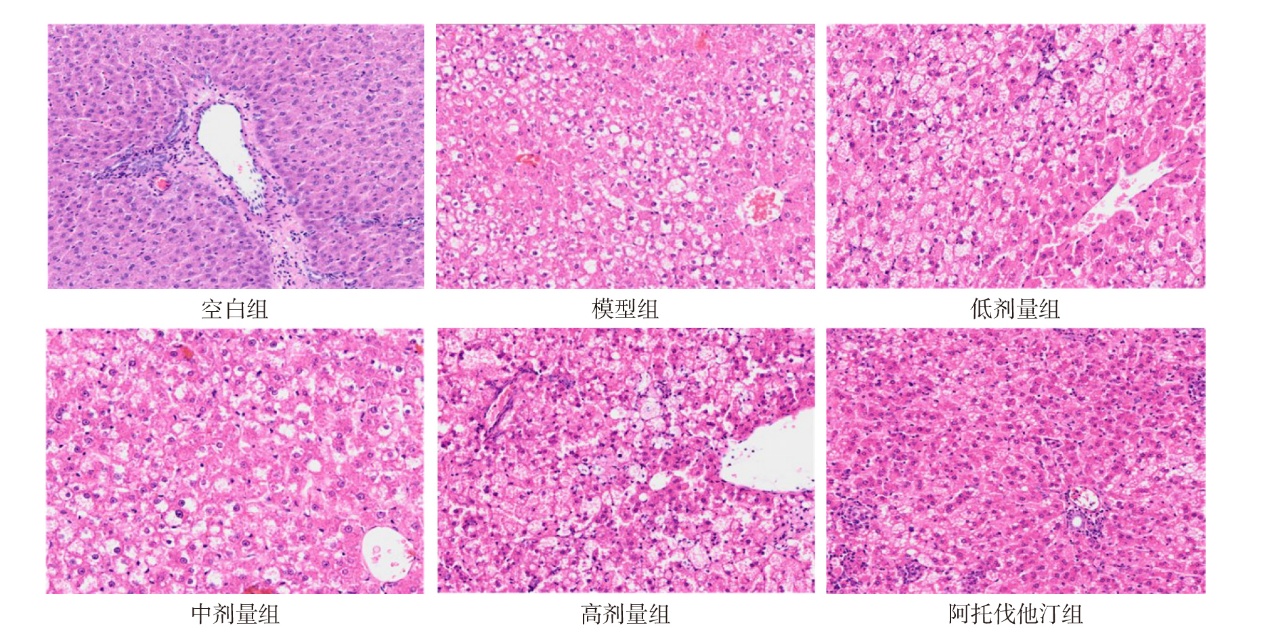
Fig.1 HE staining results of livers of each group of rats (×200)
| 组别 | n | ALT | |||
|---|---|---|---|---|---|
| 治疗前 | 治疗后 | ||||
| 空白组 | 9 | 48.27±11.12 | 60.41±26.94 | ||
| 模型组 | 9 | 127.82±44.05a | 121.17±56.78a | ||
| 低剂量组 | 10 | 94.98±36.08a | 73.12±31.50b | ||
| 中剂量组 | 10 | 96.74±32.39a | 72.08±30.57b | ||
| 高剂量组 | 7 | 97.70±25.58a | 75.83±27.96b | ||
| 阿托伐他汀组 | 10 | 92.22±45.67ab | 110.43±42.87a | ||
| F | 3.479** | 2.436* | |||
| 组别 | AST | ||||
| 治疗前 | 治疗后 | ||||
| 空白组 | 85.61±31.67 | 91.24±30.48 | |||
| 模型组 | 134.18±34.34a | 168.41±49.88a | |||
| 低剂量组 | 116.91±28.95a | 130.55±31.97a | |||
| 中剂量组 | 113.24±21.17a | 133.92±32.16a | |||
| 高剂量组 | 110.17±22.73a | 137.21±45.92a | |||
| 阿托伐他汀组 | 114.14±42.18a | 148.88±56.60a | |||
| F | 2.644* | 3.305* | |||
Tab.3 Comparison of liver functions before and after treatment between different groups of rats
| 组别 | n | ALT | |||
|---|---|---|---|---|---|
| 治疗前 | 治疗后 | ||||
| 空白组 | 9 | 48.27±11.12 | 60.41±26.94 | ||
| 模型组 | 9 | 127.82±44.05a | 121.17±56.78a | ||
| 低剂量组 | 10 | 94.98±36.08a | 73.12±31.50b | ||
| 中剂量组 | 10 | 96.74±32.39a | 72.08±30.57b | ||
| 高剂量组 | 7 | 97.70±25.58a | 75.83±27.96b | ||
| 阿托伐他汀组 | 10 | 92.22±45.67ab | 110.43±42.87a | ||
| F | 3.479** | 2.436* | |||
| 组别 | AST | ||||
| 治疗前 | 治疗后 | ||||
| 空白组 | 85.61±31.67 | 91.24±30.48 | |||
| 模型组 | 134.18±34.34a | 168.41±49.88a | |||
| 低剂量组 | 116.91±28.95a | 130.55±31.97a | |||
| 中剂量组 | 113.24±21.17a | 133.92±32.16a | |||
| 高剂量组 | 110.17±22.73a | 137.21±45.92a | |||
| 阿托伐他汀组 | 114.14±42.18a | 148.88±56.60a | |||
| F | 2.644* | 3.305* | |||
| 组别 | n | Scr/(μmol/L) | BUN/(mmol/L) | ||||||
|---|---|---|---|---|---|---|---|---|---|
| 治疗前 | 治疗后 | 治疗前 | 治疗后 | ||||||
| 空白组 | 9 | 28.56±4.34 | 29.00±3.67 | 6.16±0.68 | 6.42±1.00 | ||||
| 模型组 | 9 | 37.67±4.90 | 55.56±5.73a | 6.87±0.69 | 7.28±1.22 | ||||
| 低剂量组 | 10 | 34.40±5.76 | 33.30±4.71b | 6.34±0.89 | 6.41±0.93 | ||||
| 中剂量组 | 10 | 35.90±2.02 | 33.30±4.47b | 6.25±0.95 | 6.33±0.95 | ||||
| 高剂量组 | 7 | 36.57±4.86 | 32.86±6.04b | 6.21±0.68 | 5.94±2.00b | ||||
| 阿托伐他汀组 | 10 | 37.70±3.80 | 57.62±4.30acde | 6.70±0.82 | 7.11±1.39 | ||||
| F | 0.842 | 6.118** | 1.203 | 2.457* | |||||
| 组别 | UA/(μmol/L) | Glu/(mmol/L) | |||||||
| 治疗前 | 治疗后 | 治疗前 | 治疗后 | ||||||
| 空白组 | 49.37±13.09 | 81.49±44.02 | 7.98±1.38 | 6.13±1.12 | |||||
| 模型组 | 61.26±16.06 | 81.49±20.82 | 7.49±1.18 | 5.36±0.74a | |||||
| 低剂量组 | 58.89±13.68 | 76.73±21.41 | 7.65±0.81 | 6.22±1.11 | |||||
| 中剂量组 | 58.29±8.33 | 63.05±14.87 | 7.52±1.43 | 5.97±1.38 | |||||
| 高剂量组 | 65.43±4.76 | 81.49±19.63 | 7.99±0.84 | 6.36±1.31 | |||||
| 阿托伐他汀组 | 63.05±10.11 | 73.16±19.63 | 7.34±1.01 | 6.65±1.35b | |||||
| F | 1.086 | 0.731 | 0.326 | 3.722** | |||||
Tab.4 Comparison of renal functions and blood glucose levels before and after treatment between the different groups of rats
| 组别 | n | Scr/(μmol/L) | BUN/(mmol/L) | ||||||
|---|---|---|---|---|---|---|---|---|---|
| 治疗前 | 治疗后 | 治疗前 | 治疗后 | ||||||
| 空白组 | 9 | 28.56±4.34 | 29.00±3.67 | 6.16±0.68 | 6.42±1.00 | ||||
| 模型组 | 9 | 37.67±4.90 | 55.56±5.73a | 6.87±0.69 | 7.28±1.22 | ||||
| 低剂量组 | 10 | 34.40±5.76 | 33.30±4.71b | 6.34±0.89 | 6.41±0.93 | ||||
| 中剂量组 | 10 | 35.90±2.02 | 33.30±4.47b | 6.25±0.95 | 6.33±0.95 | ||||
| 高剂量组 | 7 | 36.57±4.86 | 32.86±6.04b | 6.21±0.68 | 5.94±2.00b | ||||
| 阿托伐他汀组 | 10 | 37.70±3.80 | 57.62±4.30acde | 6.70±0.82 | 7.11±1.39 | ||||
| F | 0.842 | 6.118** | 1.203 | 2.457* | |||||
| 组别 | UA/(μmol/L) | Glu/(mmol/L) | |||||||
| 治疗前 | 治疗后 | 治疗前 | 治疗后 | ||||||
| 空白组 | 49.37±13.09 | 81.49±44.02 | 7.98±1.38 | 6.13±1.12 | |||||
| 模型组 | 61.26±16.06 | 81.49±20.82 | 7.49±1.18 | 5.36±0.74a | |||||
| 低剂量组 | 58.89±13.68 | 76.73±21.41 | 7.65±0.81 | 6.22±1.11 | |||||
| 中剂量组 | 58.29±8.33 | 63.05±14.87 | 7.52±1.43 | 5.97±1.38 | |||||
| 高剂量组 | 65.43±4.76 | 81.49±19.63 | 7.99±0.84 | 6.36±1.31 | |||||
| 阿托伐他汀组 | 63.05±10.11 | 73.16±19.63 | 7.34±1.01 | 6.65±1.35b | |||||
| F | 1.086 | 0.731 | 0.326 | 3.722** | |||||
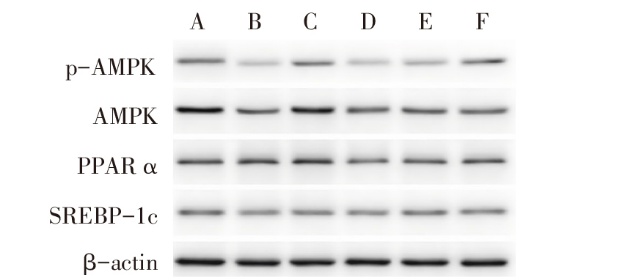
Fig.2 Western blot analysis of lipid metabolism-related proteins in rat liver tissue
| 组别 | n | p-AMPK/AMPK | PPARα | SREBP-1c |
|---|---|---|---|---|
| 空白组 | 9 | 1.00±0.12 | 1.00±0.15 | 1.00±0.14 |
| 模型组 | 9 | 0.58±0.10a | 0.62±0.11a | 1.68±0.22a |
| 低剂量组 | 10 | 0.72±0.11b | 0.76±0.13b | 1.42±0.20ab |
| 中剂量组 | 10 | 0.85±0.13b | 0.88±0.14b | 1.21±0.18b |
| 高剂量组 | 7 | 0.97±0.15b | 0.95±0.12b | 1.05±0.16bc |
| 阿托伐他汀组 | 10 | 1.02±0.14b | 1.01±0.13b | 0.98±0.15bc |
| F | 14.632** | 11.284** | 18.907** |
Tab.5 Comparison of the relative expression levels of lipid metabolism-related proteins in liver tissue between each group of rats
| 组别 | n | p-AMPK/AMPK | PPARα | SREBP-1c |
|---|---|---|---|---|
| 空白组 | 9 | 1.00±0.12 | 1.00±0.15 | 1.00±0.14 |
| 模型组 | 9 | 0.58±0.10a | 0.62±0.11a | 1.68±0.22a |
| 低剂量组 | 10 | 0.72±0.11b | 0.76±0.13b | 1.42±0.20ab |
| 中剂量组 | 10 | 0.85±0.13b | 0.88±0.14b | 1.21±0.18b |
| 高剂量组 | 7 | 0.97±0.15b | 0.95±0.12b | 1.05±0.16bc |
| 阿托伐他汀组 | 10 | 1.02±0.14b | 1.01±0.13b | 0.98±0.15bc |
| F | 14.632** | 11.284** | 18.907** |
| [1] | 田恺, 牛博真. 2022年天津市51-65岁中老年健康体检群体高脂血症状况及危险因素分析[J]. 临床误诊误治, 2025, 38(2):29-33. |
| TIAN K, NIU B Z. Screening and risk factors analysis of hyperlipidemia in healthy middle-aged and elderly population aged 51-65 years undergoing physical examination in Tianjin in 2022[J]. Clinical Misdiagnosis&Mistherapy, 2025, 38(2):29-33. doi:10.3969/j.issn.1002-3429.2025.02.007. | |
| [2] | 国家心血管病中心, 中国心血管健康与疾病报告编写组. 中国心血管健康与疾病报告2024概要[J]. 中国循环杂志, 2025, 40(6):521-559. |
| National Center for Cardiovascular Diseases, The Writing Committee of the Report on Cardiovascular Health and Diseases in China. Report on Cardiovascular Health and Diseases in China 2024: an Updated Summary[J]. Chinese Circulation Journal, 2025, 40(6):521-559. doi:10.3969/j.issn.1000-3614.2025.06.001. | |
| [3] | 刘珺, 王博, 颜琼枝, 等. 颜氏调脂方治疗脾虚痰瘀型血脂异常的临床疗效及对患者颈动脉斑块的影响[J]. 河北中医, 2020, 42(3):341-345,350. |
| LIU J, WANG B, YAN Q Z, et al. The clinical effect of Yan's Jiang Zhi recipe on dyslipidemia of spleen deficiency and phlegm stasis type and its effect on carotid plaque[J]. Hebei J TCM, 2020, 42(3):341-345,350. doi:10.3969/j.issn.1002-2619.2020.03.005. | |
| [4] | 刘珺, 王博, 颜琼枝, 等. 颜氏调脂方治疗高脂血症40例临床观察[J]. 中医杂志, 2017, 58(15):1308-1310,1315. |
| LIU J, WANG B, YAN Q Z, et al. Clinical observation on Yanshi Jiangzhi Formula in treating 40 cases of hyperlipemia[J]. Journal of Traditional Chinese Medicine, 2017, 58(15):1308-1310,1315. doi:10.13288/j.11-2166/r.2017.15.012. | |
| [5] | 刘悦, 赵誉, 徐宁阳, 等. 基于microRNA155-SOCS1信号通路探讨“心受气于脾”理论对高脂血症脾虚痰浊大鼠血管内皮的保护机制[J]. 中华中医药学刊, 2023, 41(3):33-37,267. |
| LIU Y, ZHAO Y, XU N Y, et al. Protective mechanism of theory of “Heart Receiving Qi from Spleen” on vascular endothelium of hyperlipidemia rats with spleen deficiency and phlegm turbidity based on microRNA155-SOCS1 signaling pathway[J]. Chinese Archives of Traditional Chinese Medicine, 2023, 41(3):33-37,267. doi:10.13193/j.issn.1673-7717.2023.03.008. | |
| [6] | 孙鹏帅, 朱峰, 郑丽红, 等. AMP依赖的蛋白激酶调节脂质积累治疗非酒精性脂肪肝病的治疗研究进展[J]. 实用医学杂志, 2024, 40(6):862-866. |
| SUN P S, ZHU F, ZHENG L H, et al. Research progress in the treatment of AMPK regulating lipid accumulation in the treatment of nonalcoholic fatty liver disease[J]. The Journal of Practical Medicine, 2024, 40(6):862-866. doi:10.3969/j.issn.1006-5725.2024.06.022. | |
| [7] | FAN Q, XU F, LIANG B, et al. Research progress in the treatment of AMPK regulating lipid accumulation in the treatment of nonalcoholic fatty liver disease[J]. Front Pharmacol, 2021, 12:696603. doi:10.3389/fphar.2021.696603. |
| [8] | LV M, ZHENG Y, YUAN M, et al. Cassiae semen extract ameliorates hyperlipidemia in rats by modulating lipid metabolism and FcγR-mediated immune regulation[J]. Front Pharmacol, 2025, 16:1546119. doi:10.3389/fphar.2025.1546119. |
| [9] | GAN L, GUO H, YANG Q, et al. Alkaline mineral complex water attenuates transportation-induced hepatic lipid metabolism dysregulation by ampkα-srebp-1c/pparα pathways[J]. Int J Mol Sci, 2024, 25(21):11373. doi:10.3390/ijms252111373. |
| [10] | LIU X, GUAN B, HU Z, et al. Combined traditional Chinese medicine and probiotics(TCMP)alleviates lipid accumulation and improves metabolism in high-fat diet mice via the microbiota-gut-liver axis[J]. Food Res Int, 2025, 207:116064. doi:10.1016/j.foodres.2025.116064. |
| [11] | LI B, CHEN X F, WU H S, et al. The anti-hyperlipidemia effect of Atractylodes macrocephala Rhizome increased HDL via reverse cholesterol transfer[J]. Heliyon, 2024, 10(7):e28019. doi:10.1016/j.heliyon.2024.e28019. |
| [12] | GAO G, ZHAO J, DING J, et al. Alisol B regulates AMPK/mTOR/SREBPs via directly targeting VDAC1 to alleviate hyperlipidemia[J]. Phytomedicine, 2024, 128:155313. doi:10.1016/j.phymed.2023.155313. |
| [13] | YUEN H, HONG YANG A W, HUNG A, et al. How does traditional knowledge of Cassiae semen shed light on weight management? - A classical and modern literature review[J]. J Ethnopharmacol, 2021, 268:113572. doi:10.1016/j.jep.2020.113572. |
| [14] | 吴茂兰, 翁家俊, 崔粲, 等. 基于肠道菌群的中药防治高脂血症及降低其相关危险因素的研究进展[J]. 中成药, 2023, 45(8):2642-2650. |
| WU M L, WEN J J, CUI C, et al. Research progress on the use of Traditional Chinese Medicine based on gut microbiota for the prevention and treatment of hyperlipidemia and the reduction of its associated risk factors[J]. Chinese Traditional Patent Medicine, 2023, 45(8):2642-2650. doi:10.3969/j.issn.1001-1528.2023.08.032. | |
| [15] | ZHU B, ZHAI Y, JI M, et al. Alisma orientalis beverage treats atherosclerosis by regulating gut microbiota in ApoE(-/-)mice[J]. Front Pharmacol, 2020, 11:570555. doi:10.3389/fphar.2020.570555. |
| [16] | HOU M, LENG Y, SHI Y, et al. Astragalus membranaceus as a drug candidate for inflammatory bowel disease:The preclinical evidence[J]. Am J Chin Med, 2023, 51(6):1501-1526. doi:10.1142/S0192415X23500684. |
| [17] | QIU J, CHEN L, ZHANG L, et al. Xie Zhuo Tiao Zhi formula modulates intestinal microbiota and liver purine metabolism to suppress hepatic steatosis and pyroptosis in NAFLD therapy[J]. Phytomedicine, 2023, 121:155111. doi:10.1016/j.phymed.2023.155111. |
| [18] | ZHANG J, FENG Q. Pharmacological effects and molecular protective mechanisms of astragalus polysaccharides on nonalcoholic fatty liver disease[J]. Front Pharmacol, 2022, 13:854674. doi:10.3389/fphar.2022.854674. |
| [19] | YU L, HONG W, LU S, et al. The NLRP3 inflammasome in non-alcoholic fatty liver disease and steatohepatitis:Therapeutic targets and treatment[J]. Front Pharmacol, 2022, 13:780496. doi:10.3389/fphar.2022.780496. |
| [20] | ARROYAVE-OSPINA J C, WU Z, GENG Y, et al. Role of oxidative stress in the pathogenesis of non-alcoholic fatty liver disease:implications for prevention and therapy[J]. Antioxidants(Basel), 2021, 10(2):174. doi:10.3390/antiox10020174. |
| [21] | ZHOU J, YU Y, YANG X, et al. Astragalus polysaccharides and saponins alleviate liver injury induced by alcohol via improving lipid accumulation,oxidative stress,inflammatory response and gut flora disorders in mice[J]. Front Pharmacol, 2021, 10(11):2688. doi:10.3390/foods10112688. |
| [22] | SONG G Y, KIM S M, BACK S, et al. Atractylodes lancea and its constituent,atractylodin,ameliorates metabolic dysfunction-associated steatotic liver disease via AMPK Activation[J]. Biomol Ther(Seoul), 2024, 32(6):778-792. doi:10.4062/biomolther.2024.083. |
| Viewed | ||||||
|
Full text |
|
|||||
|
Abstract |
|
|||||
