
Tianjin Medical Journal ›› 2025, Vol. 53 ›› Issue (11): 1208-1213.doi: 10.11958/20251200
• Clinical Research • Previous Articles Next Articles
LIU Yan( ), SUN Hong, SUN Jingwen△()
Received:2025-04-01
Revised:2025-07-15
Published:2025-11-15
Online:2025-11-19
Contact:
△E-mail: LIU Yan, SUN Hong, SUN Jingwen. Occurrence risk establishment of predictive mode of surgically induced astigmatism in elderly patients with diabetic cataract[J]. Tianjin Medical Journal, 2025, 53(11): 1208-1213.
CLC Number:
| 组别 | n | 年龄/岁 | 性别(男/女) | BMI/(kg/m2) | 糖尿病病程/年 | 高血压史 | 心血管疾病史 | 眼轴长度/mm | ||||
|---|---|---|---|---|---|---|---|---|---|---|---|---|
| 非SIA组 | 151 | 65.56±4.98 | 79/72 | 24.03±3.59 | 10.46±2.58 | 65(43.05) | 17(11.26) | 23.95±4.11 | ||||
| SIA组 | 158 | 68.33±5.19 | 86/72 | 24.67±3.21 | 10.91±2.75 | 76(48.10) | 21(13.29) | 24.61±4.27 | ||||
| t或χ2 | 4.783* | 0.139 | 1.654 | 1.482 | 0.795 | 0.296 | 1.383 | |||||
| 组别 | 晶状体核硬度分级 | 糖尿病视网膜病变分级 | 前房 深度/mm | 角膜水平 直径/mm | 中央角膜 厚度/μm | 全角膜 屈光力/D | 散光轴位/° | |||||
| Ⅰ—Ⅱ级 | Ⅲ—Ⅳ级 | Ⅰ—Ⅱ级 | Ⅲ—Ⅳ级 | |||||||||
| 非SIA组 | 78(51.66) | 73(48.34) | 78(51.66) | 73(48.34) | 3.02±0.43 | 10.87±0.48 | 541.63±40.51 | 42.81±3.17 | 93.16±10.93 | |||
| SIA组 | 49(31.01) | 109(68.99) | 67(42.41) | 91(57.59) | 2.94±0.39 | 11.26±0.54 | 539.81±39.64 | 42.19±3.14 | 91.07±11.29 | |||
| t或χ2 | 13.591* | 2.653 | 1.714 | 6.699* | 0.399 | 1.727 | 1.652 | |||||
| 组别 | 切口大小 | 切口形状 | 角膜切口长度 | 超声乳化时间 | ||||||||
| <3.00 mm | ≥3.00 mm | 梯形透明 角膜切口 | 单平面透明 角膜切口 | <1.75 mm | ≥1.75 mm | <10 min | ≥10 min | |||||
| 非SIA组 | 96(63.58) | 55(36.42) | 103(65.19) | 55(34.81) | 101(66.89) | 50(33.11) | 92(60.93) | 59(39.07) | ||||
| SIA组 | 63(39.87) | 95(60.13) | 39(25.83) | 112(74.17) | 59(37.34) | 99(62.66) | 87(55.06) | 71(44.94) | ||||
| χ2 | 17.366* | 48.166* | 26.994* | 1.089 | ||||||||
Tab.1 Comparison of general data between the two groups of patients
| 组别 | n | 年龄/岁 | 性别(男/女) | BMI/(kg/m2) | 糖尿病病程/年 | 高血压史 | 心血管疾病史 | 眼轴长度/mm | ||||
|---|---|---|---|---|---|---|---|---|---|---|---|---|
| 非SIA组 | 151 | 65.56±4.98 | 79/72 | 24.03±3.59 | 10.46±2.58 | 65(43.05) | 17(11.26) | 23.95±4.11 | ||||
| SIA组 | 158 | 68.33±5.19 | 86/72 | 24.67±3.21 | 10.91±2.75 | 76(48.10) | 21(13.29) | 24.61±4.27 | ||||
| t或χ2 | 4.783* | 0.139 | 1.654 | 1.482 | 0.795 | 0.296 | 1.383 | |||||
| 组别 | 晶状体核硬度分级 | 糖尿病视网膜病变分级 | 前房 深度/mm | 角膜水平 直径/mm | 中央角膜 厚度/μm | 全角膜 屈光力/D | 散光轴位/° | |||||
| Ⅰ—Ⅱ级 | Ⅲ—Ⅳ级 | Ⅰ—Ⅱ级 | Ⅲ—Ⅳ级 | |||||||||
| 非SIA组 | 78(51.66) | 73(48.34) | 78(51.66) | 73(48.34) | 3.02±0.43 | 10.87±0.48 | 541.63±40.51 | 42.81±3.17 | 93.16±10.93 | |||
| SIA组 | 49(31.01) | 109(68.99) | 67(42.41) | 91(57.59) | 2.94±0.39 | 11.26±0.54 | 539.81±39.64 | 42.19±3.14 | 91.07±11.29 | |||
| t或χ2 | 13.591* | 2.653 | 1.714 | 6.699* | 0.399 | 1.727 | 1.652 | |||||
| 组别 | 切口大小 | 切口形状 | 角膜切口长度 | 超声乳化时间 | ||||||||
| <3.00 mm | ≥3.00 mm | 梯形透明 角膜切口 | 单平面透明 角膜切口 | <1.75 mm | ≥1.75 mm | <10 min | ≥10 min | |||||
| 非SIA组 | 96(63.58) | 55(36.42) | 103(65.19) | 55(34.81) | 101(66.89) | 50(33.11) | 92(60.93) | 59(39.07) | ||||
| SIA组 | 63(39.87) | 95(60.13) | 39(25.83) | 112(74.17) | 59(37.34) | 99(62.66) | 87(55.06) | 71(44.94) | ||||
| χ2 | 17.366* | 48.166* | 26.994* | 1.089 | ||||||||
| 变量 | β | SE | Wald χ2 | P | OR(95%CI) |
|---|---|---|---|---|---|
| 年龄 | 0.416 | 0.273 | 2.573 | 0.129 | 1.516(0.887~2.588) |
| 晶状体核 硬度分级 | 0.839 | 0.526 | 2.604 | 0.112 | 2.314(0.825~6.488) |
| 切口大小 | 2.178 | 0.373 | 8.293 | <0.001 | 8.829(4.250~18.33) |
| 切口形状 | -1.342 | 0.296 | 6.988 | <0.001 | 0.261(0.146~0.466) |
| 角膜切口长度 | 1.764 | 0.621 | 5.295 | 0.005 | 5.836(1.727~19.710) |
| 角膜水平直径 | 1.452 | 0.243 | 5.979 | <0.001 | 4.272(2.653~6.877) |
| 常数项 | -4.796 | 1.417 | 5.174 | 0.002 | 0.008 |
Tab.2 Logistic regression analysis of factors affecting the occurrence of SIA in elderly diabetic cataract patients
| 变量 | β | SE | Wald χ2 | P | OR(95%CI) |
|---|---|---|---|---|---|
| 年龄 | 0.416 | 0.273 | 2.573 | 0.129 | 1.516(0.887~2.588) |
| 晶状体核 硬度分级 | 0.839 | 0.526 | 2.604 | 0.112 | 2.314(0.825~6.488) |
| 切口大小 | 2.178 | 0.373 | 8.293 | <0.001 | 8.829(4.250~18.33) |
| 切口形状 | -1.342 | 0.296 | 6.988 | <0.001 | 0.261(0.146~0.466) |
| 角膜切口长度 | 1.764 | 0.621 | 5.295 | 0.005 | 5.836(1.727~19.710) |
| 角膜水平直径 | 1.452 | 0.243 | 5.979 | <0.001 | 4.272(2.653~6.877) |
| 常数项 | -4.796 | 1.417 | 5.174 | 0.002 | 0.008 |
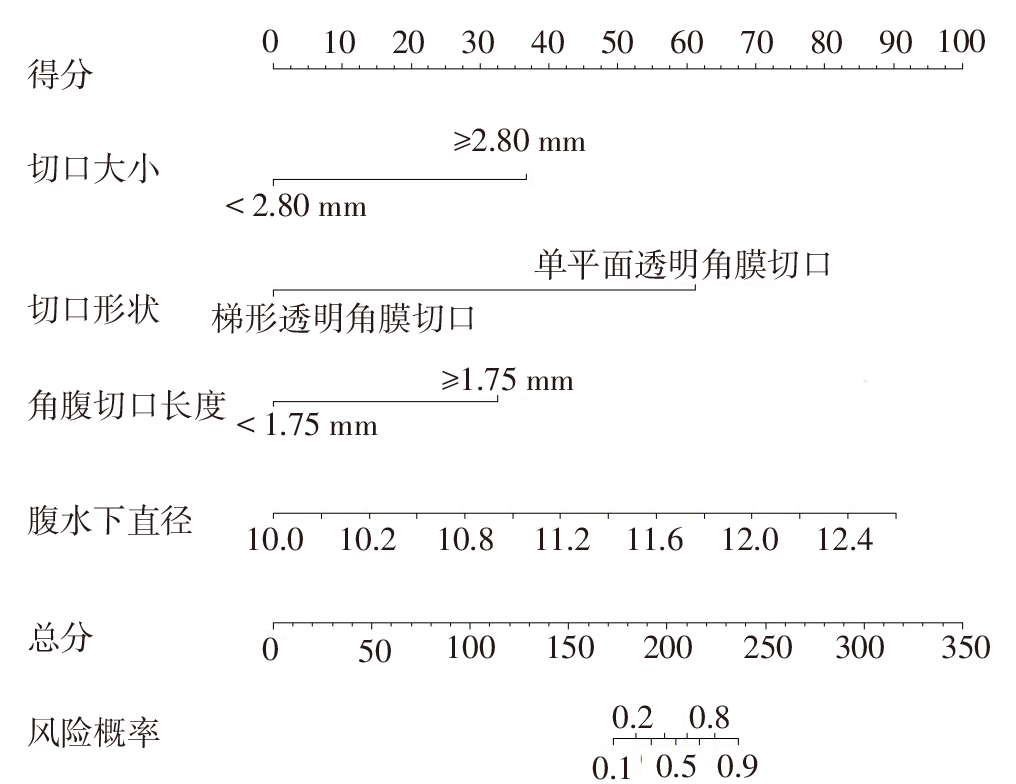
Fig.1 Risk prediction nomogram for the occurrence of SIA in elderly diabetic cataract patients
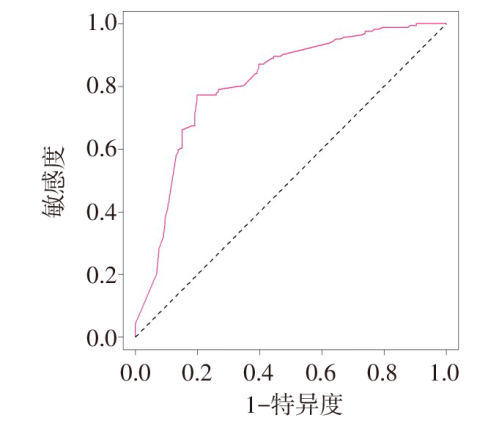
Fig.2 The ROC curve of the line chart model predicting SIA in elderly diabetic cataract patients
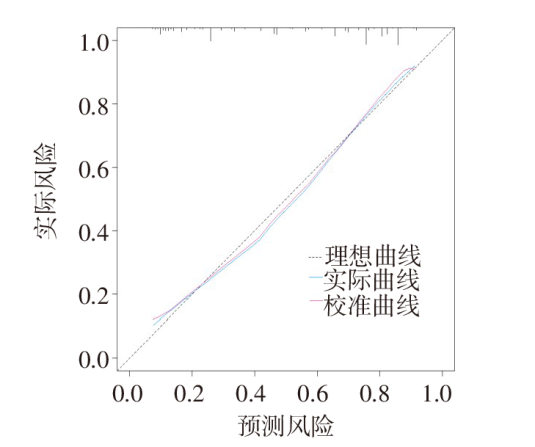
Fig.3 Calibration curve of the model predicting SIA in elderly diabetic cataract patients
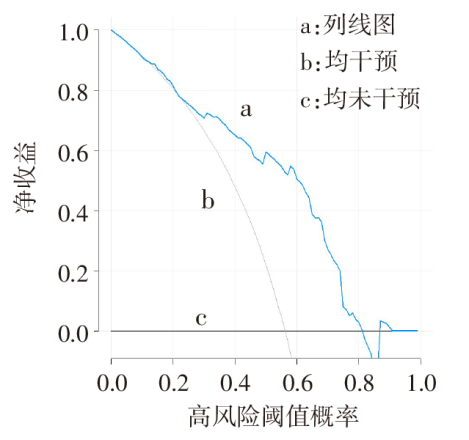
Fig.4 Decision curve for predicting SIA in elderly diabetic cataract patients using the line chart model
| [1] | 张新桥, 李幸, 张慧芹, 等. 老年糖尿病性白内障患者血清Spexin和Pannexin1表达水平及临床意义[J]. 天津医药, 2025, 53(1):80-84. |
| ZHANG X Q, LI X, ZHANG H Q, et al. Clinical significance of expression levels of serum Spexin and Pannexin 1 in elderly patients with diabetic cataract[J]. Tianjin Med J, 2025, 53(1):80-84. doi:10.11958/20240821. | |
| [2] | 刘晓芳. 糖尿病性白内障患者术后发生低视力的影响因素[J]. 保健医学研究与实践, 2023, 20(5):97-100. |
| LIU X F. Influencing factors of postoperative low vision in patients with diabetic cataract[J]. Health Medicine Research and Practice, 2023, 20(5):97-100. doi:10.11986/j.issn.1673-873X.2023.05.022. | |
| [3] | SHEORAN K, ARYA S K, BANSAL R K, et al. Surgically induced astigmatism and posterior corneal curvature changes following phacoemulsification[J]. Indian J Ophthalmol, 2022, 70(2):406-412. doi:10.4103/ijo.IJO_882_21. |
| [4] | ZOU H, ZHAO X, ZHANG J, et al. The effects of programmed optical zones on achieved corneal refractive power with myopic astigmatism after small incision lenticule extraction(SMILE):a vector analysis[J]. Int ophthalmol, 2023, 3(7):2493-2501. doi:10.1007/s10792-023-02649-7. |
| [5] | 黄飞, 刘利娟, 胡敏芝, 等. 白内障术后不同时期不同眼别术源性散光的临床观察[J]. 临床眼科杂志, 2020, 28(1):35-38. |
| HUANG F, LIU L J, HU M Z, et al. Clinical observation of surgically induced astigmatism at different timepoints and in different eyes after cata-ract surgery[J]. Journal of Clinical Ophthalmology, 2020, 28(1):35-38. doi:10.3969/j.issn.1006-8422.2020.01.009. | |
| [6] | LIN Q H, SHEN Z W. Effect of white-to-white corneal diameter on biomechanical indices assessed by Pentacam Scheimpflug corneal tomography and corneal visualization Scheimpflug technology[J]. Int Ophthalmol, 2022, 42(5):1537-1543. doi:10.1007/s10792-021-02144-x. |
| [7] | 中华医学会糖尿病学分会. 中国2型糖尿病防治指南(2020年版)[J]. 中华糖尿病杂志, 2021, 13(4):315-409. |
| Chinese Diabetes Society. Guidelines for the prevention and treatment of type 2 diabetes in China(2020 edition)[J]. Chinese Journal of Diabetes, 2021, 13(4):315-409. doi:10.3760/cma.j.cn115791-20210221-00095. | |
| [8] | 曹贺, 阎启昌. 白内障诊疗指南——第42届日本白内障学会制定[J]. 日本医学介绍, 2004, 25(10):3. |
| CAO H, YAN Q C. Guidelines for the diagnosis and treatment of cataracts-formulated by the 42nd Japanese cataract society[J]. Japanese Medical Introduction, 2004, 25(10):3. | |
| [9] | ELSAYED N A, ALEPPO G, ARODA V R, et al. Classification and diagnosis of diabetes:standards of care in diabetes-2023[J]. Diabetes Care, 2023, 46(Suppl 1):S19-S40. doi:10.2337/dc23-S002. |
| [10] | 肇莉莉, 徐曼. 糖尿病性白内障患者超声乳化白内障吸除术后视力及黄斑变化观察[J]. 检验医学与临床, 2020, 17(1):110-112. |
| ZHAO L L, XU M. Observation of visual acuity and macular changes after phacoemulsification in patients with diabetic cataract[J]. Laboratory Medicine and Clinical Practice, 2020, 17(1):110-112. doi:10.3969/j.issn.1672-9455.2020.01.033. | |
| [11] | SEGERS M H M, ABULAFIA A, WEBERS V S C, et al. Accuracy of toric intraocular lens calculations using estimated versus measured posterior corneal astigmatism[J]. Am J Ophthalmol, 2024, 262(17):107-113. doi:10.1016/j.ajo.2023.11.016. |
| [12] | QIU X, SHI Y, HAN X, et al. Toric intraocular lens implantation in the correction of moderate-to-high corneal astigmatism in cataract patients:clinical efficacy and safety[J]. J Ophthalmol, 2021, 2021(3):1-6. doi:10.1155/2021/5960328. |
| [13] | LIN J. The contribution of ocular residual astigmatism to anterior corneal astigmatism in refractive astigmatism eyes[J]. Sci Rep, 2021, 11(1):1018. doi:10.1038/s41598-020-80106-6. |
| [14] | GUPTA S N, GOEL R, KUMAR S. Factors affecting surgically induced astigmatism in manual small-incision cataract surgery[J]. Indian J Ophthalmol, 2022, 70(11):3779-3784. doi:10.4103/ijo.IJO_1034_22. |
| [15] | 林菁, 林云志, 姚勇, 等. 同轴2.2 mm微切口超声乳化白内障摘除术治疗2型糖尿病性白内障的效果分析[J]. 临床眼科杂志, 2021, 29(6):511-514. |
| LIN J, LIN Y Z, YAO Y, et al. Analysis of effect of coaxial 2.2 mm microincision phacoemulsification in the treatment of type 2 diabetic cata-ract[J]. Journal of Clinical Ophthalmology, 2021, 29(6):511-514. doi:10.3969/j.issn.1006-8422.2021.06.007. | |
| [16] | 李维娜, 李学喜, 李超, 等. 白内障手术术源性散光测量及其影响因素分析[J]. 中国实用眼科杂志, 2016, 34(8):810-812. |
| LI W N, LI X X, LI C, et al. Measurement of surgically induced astigmatism in cataract surgery and analysis of its influencing factors[J]. Chinese Journal of Practical Ophthalmology, 2016, 34(8):810-812. doi:10.3760/cma.j.issn.1006-4443.2016.08.009. | |
| [17] | WALLERSTEIN A, GAUVIN M. Letter regarding:corneal and whole-eye higher order aberrations do not correlate with ocular residual astigmatism in prepresbyopic refractive surgery candidates[J]. Cornea, 2023, 42(7):e12. doi:10.1097/ICO.0000000000003265. |
| [18] | ZHONG Y, LI M, HAN T, et al. Four-year outcomes of small incision lenticule extraction (SMILE) to correct high myopic astigmatism[J]. Br J Ophthalmol, 2021, 105(1):27-31. doi:10.1136/bjophthalmol-2019-315619. |
| [19] | CHEN X, JIANG Y, GAO N, et al. Effectiveness of toric intraocular lens implantation for correcting irregular corneal astigmatism in cataract eyes[J]. Sci Rep, 2024, 14(1):8868. doi:10.1038/s41598-024-59303-0. |
| [20] | HE Q, HUANG J, HE X, et al. Effect of corneal incision features on anterior and posterior corneal astigmatism and higher,rder aberrations after cataract surgery[J]. Acta Ophthalmol, 2021, 99(7):e1027-e1040. doi:10.1111/aos.14778. |
| [21] | DU Y, DI Y, YANG S, et al. Association of myopia and astigmatism with postoperative ocular high order aberration after small incision lenticule extraction[J]. BMC Ophthalmol, 2024, 24(1):211. doi:10.1186/s12886-024-03475-w. |
| [22] | ZHANG F, LI S, HUO D, et al. Predictors of femtosecond laser-assisted arcuate keratotomy efficacy for astigmatism correction in cataract surgery[J]. J Refract Surg, 2022, 38(8):480-486. doi:10.3928/1081597X-20220609-01. |
| [23] | 黄瑶瑶, 胡宝琪, 王欣, 等. 白内障超声乳化术源性散光影响因素分析[J]. 西安交通大学学报(医学版), 2023, 44(2):263-270. |
| HUANG Y Y, HU B Q, WANG X, et al. The influencing factors of surgically induced astigmatism in phacoemulsification[J]. Journal of Xi'an Jiaotong University (Medical Edition), 2023, 44(2):263-270. doi:10.7652/jdyxb202302017. | |
| [24] | HU Z X, SIMA J, CAO J G, et al. Symmetrical femtosecond laser arc incision in correcting corneal astigmatism in cataract patients[J]. Int J Ophthalmol, 2023, 16(12):1996-2003. doi:10.18240/ijo.2023.12.11. |
| [25] | SONMEZ S, KARACA C. The effect of tunnel length and position on postoperative corneal astigmatism:An optical coherence tomographic study[J]. Eur J Ophthalmol, 2020, 30(1):104-111. doi:10.1177/1120672118805875. |
| Viewed | ||||||
|
Full text |
|
|||||
|
Abstract |
|
|||||
