
Tianjin Medical Journal ›› 2025, Vol. 53 ›› Issue (9): 897-902.doi: 10.11958/20250238
• Cell and Molecular Biology • Next Articles
HUANG Huiqi1( ), WU Qiuyuan1,2, ZHANG Kun1, LI Peixian3, XIONG Yaming3, YE Guolin1, ZHOU Dan1,2,△()
Received:2025-01-15
Revised:2025-05-18
Published:2025-09-15
Online:2025-09-16
Contact:
△E-mail: HUANG Huiqi, WU Qiuyuan, ZHANG Kun, LI Peixian, XIONG Yaming, YE Guolin, ZHOU Dan. Research on the anti-tumor mechanism of toosendanin combined with olaparib in triple negative breast cancer[J]. Tianjin Medical Journal, 2025, 53(9): 897-902.
CLC Number:
| 编号 | 年龄/岁 | 性别 | 病理类型 | TNM分期 | BRCA突变 |
|---|---|---|---|---|---|
| BC-1 | 48 | 女 | 左乳浸润性癌 | pT2N1M0 | 无异常突变 |
| BC-2 | 52 | 女 | 右乳浸润性癌 | pT3N1M0 | 无异常突变 |
| BC-3 | 56 | 女 | 左乳浸润性癌 | pT4N1M0 | BRCA-2突变 |
| BC-4 | 43 | 女 | 右乳浸润性癌 | pT2N1M0 | BRCA-1突变 |
Tab.1 The clinical information of four patients with TNBC
| 编号 | 年龄/岁 | 性别 | 病理类型 | TNM分期 | BRCA突变 |
|---|---|---|---|---|---|
| BC-1 | 48 | 女 | 左乳浸润性癌 | pT2N1M0 | 无异常突变 |
| BC-2 | 52 | 女 | 右乳浸润性癌 | pT3N1M0 | 无异常突变 |
| BC-3 | 56 | 女 | 左乳浸润性癌 | pT4N1M0 | BRCA-2突变 |
| BC-4 | 43 | 女 | 右乳浸润性癌 | pT2N1M0 | BRCA-1突变 |
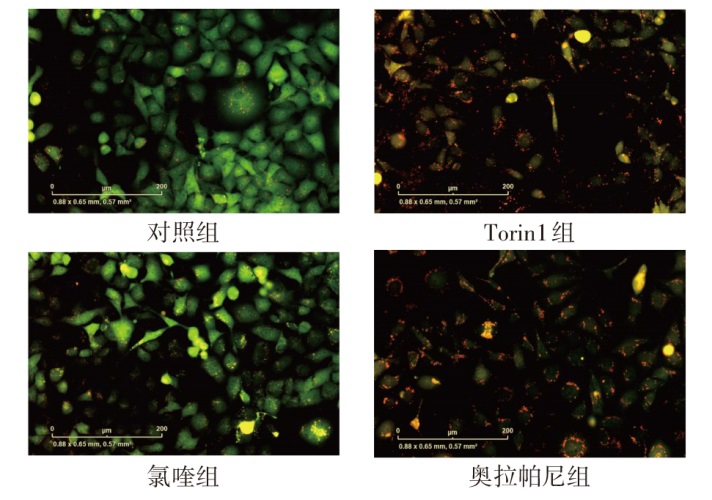
Fig.1 Effect of olaparib on autophagic flux in TNBC cells
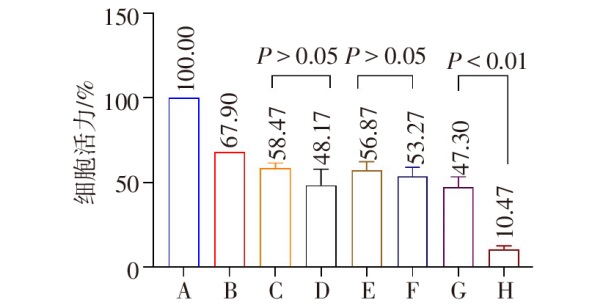
Fig.2 The effect of olaparib combined with TSN on the viability of MDA-MB-231 cells
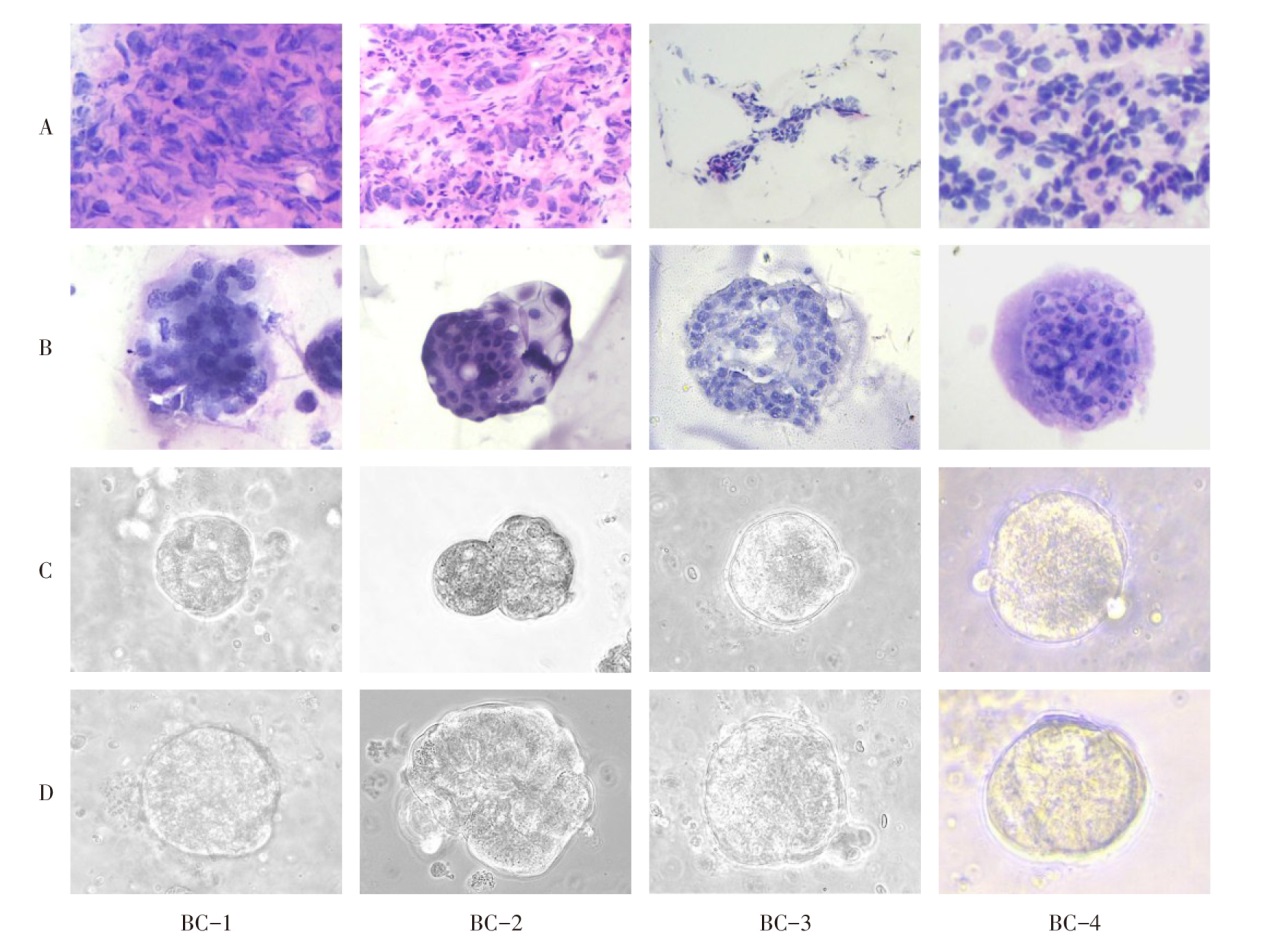
Fig.3 Formation and histological evaluation of PDOs
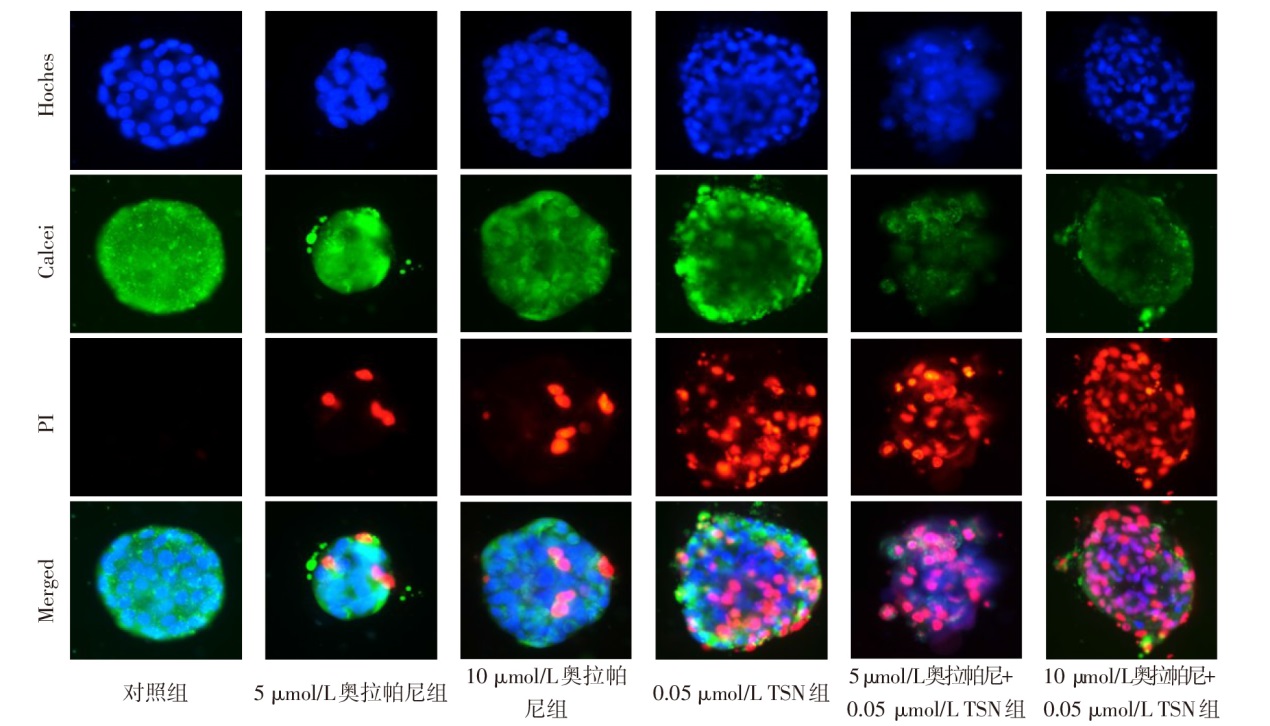
Fig.4 Changes in cell viability of PDOs after treatment with TSN combined with different concentrations of olaparib (×40)
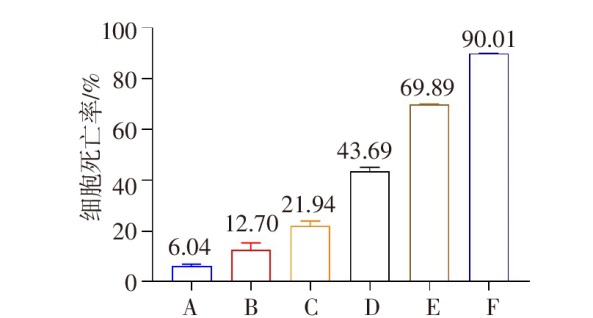
Fig.5 Comparison of cell mortality rates of PDOs after treatment with different concentrations of olaparib combined with TSN
| [1] | SIEGEL R L, GIAQUINTO A N, JEMAL A. Cancer statistics,2024[J]. CA Cancer J Clin, 2024, 74(1):12-49. doi:10.3322/caac.21820. |
| [2] | RIZZO A, SCHIPILLITI F M, DI COSTANZO F, et al. Discontinuation rate and serious adverse events of chemoimmunotherapy as neoadjuvant treatment for triple-negative breast cancer:a systematic review and meta-analysis[J]. ESMO Open, 2023, 8(6):102198. doi:10.1016/j.esmoop.2023.102198. |
| [3] | HU M, XU M, CHEN Y, et al. Therapeutic potential of toosendanin:novel applications of an old ascaris repellent as a drug candidate[J]. Biomed Pharmacother, 2023, 167:115541. doi:10.1016/j.biopha.2023.115541. |
| [4] | LI S, XIONG Q, SHEN Y, et al. Toosendanin:upgrade of an old agent in cancer treatment[J]. Chin J Nat Med, 2024, 22(10):887-899. doi:10.1016/S1875-5364(24)60693-X. |
| [5] | JIANG Y Z, MA D, SUO C, et al. Genomic and transcriptomic landscape of triple-negative breast cancers:subtypes and treatment strategies[J]. Cancer Cell, 2019, 35(3):428-440.e5. doi:10.1016/j.ccell.2019.02.001. |
| [6] | TUTT A, GARBER J E, KAUFMAN B, et al. Adjuvant olaparib for patients with BRCA1- or BRCA2-mutated breast cancer[J]. N Engl J Med, 2021, 384(25):2394-2405. doi:10.1056/NEJMoa2105215. |
| [7] | WU S, YAO X, SUN W, et al. Exploration of poly(ADP-ribose)polymerase inhibitor resistance in the treatment of BRCA1/2-mutated cancer[J]. Genes Chromosomes Cancer, 2024, 63(5):e23243. doi:10.1002/gcc.23243. |
| [8] | WOOTEN J, MAVINGIRE N, DAMAR K, et al. Triumphs and challenges in exploiting poly(ADP-ribose) polymerase inhibition to combat triple-negative breast cancer[J]. J Cell Physiol, 2023, 238(8):1625-1640. doi:10.1002/jcp.31015. |
| [9] | LI H, LIU Z Y, WU N, et al. PARP inhibitor resistance:the underlying mechanisms and clinical implications[J]. Mol Cancer, 2020, 19(1):107. doi:10.1186/s12943-020-01227-0. |
| [10] | KOCAK M, EZAZI ERDI S, JORBA G, et al. Targeting autophagy in disease:established and new strategies[J]. Autophagy, 2022, 18(3):473-495. doi:10.1080/15548627.2021.1936359. |
| [11] | 中国抗癌协会乳腺癌专业委员会,中华医学会肿瘤学分会乳腺肿瘤学组. 中国抗癌协会乳腺癌诊治指南与规范(2024年版)[J]. 中国癌症杂志, 2023, 33(12):1092-1187. |
| The Society of Breast Cancer China Anti-Cancer Association, Breast Oncology Group of the Oncology Branch of the Chinese Medical Association. Guidelines for breast cancer diagnosis and treatment by China Anti-cancer Association(2024 edition)[J]. China Oncology, 2023, 33(12):1092-1187. doi:10.19401/j.cnki.1007-3639.2023.12.004. | |
| [12] | QARI A S, MOWAIS A H, ALHARBI S M, et al. Adjuvant and neoadjuvant therapy for breast cancer:a systematic review[J]. Eur J Breast Health, 2024, 20(3):156-166. doi:10.4274/ejbh.galenos.2024.2023-12-16. |
| [13] | SHI J, LIU F, SONG Y. Progress:targeted therapy,immunotherapy,and new chemotherapy strategies in advanced triple-negative breast cancer[J]. Cancer Manag Res, 2020, 12:9375-9387. doi:10.2147/CMAR.S272685. |
| [14] | MAO C, GONG L, KANG W. Effect and mechanism of resveratrol on ferroptosis mediated by p53/SLC7A11 in oral squamous cell carcinoma[J]. BMC Oral Health, 2024, 24(1):773. doi:10.1186/s12903-024-04395-3. |
| [15] | SUI X, HAN X, CHEN P, et al. Baicalin induces apoptosis and suppresses the cell cycle progression of lung cancer cells through downregulating Akt/mTOR signaling pathway[J]. Front Mol Biosci, 2020, 7:602282. doi:10.3389/fmolb.2020.602282. |
| [16] | GUO Z, ZHANG Y, GONG Y, et al. Antibody functionalized curcuma-derived extracellular vesicles loaded with doxorubicin overcome therapy-induced senescence and enhance chemotherapy[J]. J Control Release, 2025, 379:377-389. doi:10.1016/j.jconrel.2025.01.029. |
| [17] | IRITI M, KUBINA R, COCHIS A, et al. Rutin,a quercetin glycoside,restores chemosensitivity in human breast cancer cells[J]. Phytother Res, 2017, 31(10):1529-1538. doi:10.1002/ptr.5878. |
| [18] | ZHANG J, YANG F, MEI X, et al. Toosendanin and isotoosendanin suppress triple-negative breast cancer growth via inducing necrosis,apoptosis and autophagy[J]. Chem Biol Interact, 2022, 351:109739. doi:10.1016/j.cbi.2021.109739. |
| [19] | WANG G, FAN X Q, LI L, et al. Toosendanin shows potent efficacy against human ovarian cancer through caspase-dependent mitochondrial apoptotic pathway[J]. Am J Chin Med, 2021, 49(7):1757-1772. doi:10.1142/S0192415X2150083X. |
| [20] | WU Q, SHARMA D. Autophagy and breast cancer:connected in growth,progression,and therapy[J]. Cells, 2023, 12(8):1156. doi:10.3390/cells12081156. |
| [21] | ZHANG S, DONG Y, CHEN X, et al. Toosendanin,a late-stage autophagy inhibitor,sensitizes triple-negative breast cancer to irinotecan chemotherapy[J]. Chin Med, 2022, 17(1):55. doi:10.1186/s13020-022-00605-8. |
| [22] | 陈芷彦, 伍秋苑, 邓裕华, 等. 类器官技术在乳腺癌研究中的现状及应用[J]. 天津医药, 2024, 52(6):668-672. |
| CHEN Z Y, WU Q Y, DENG Y H, et al. Status and application of organoid technology in breast cancer research[J]. Tianjin Med J, 2024, 52(6):668-672. doi:10.11958/20231745. | |
| [23] | JAIN V, SINGH M P, AMARAVADI R K. Recent advances in targeting autophagy in cancer[J]. Trends Pharmacol Sci, 2023, 44(5):290-302. doi:10.1016/j.tips.2023.02.003. |
| [24] | VISWANATH P, RADOUL M, IZQUIERDO-GARCIA J L, et al. 2-hydroxyglutarate-mediated autophagy of the endoplasmic reticulum leads to an unusual downregulation of phospholipid biosynthesis in mutant IDH1 gliomas[J]. Cancer Res, 2018, 78(9):2290-2304. doi:10.1158/0008-5472.CAN-17-2926. |
| [25] | BOONE B A, BAHARY N, ZUREIKAT A H, et al. Safety and biologic response of pre-operative autophagy inhibition in combination with gemcitabine in patients with pancreatic adenocarcinoma[J]. Ann Surg Oncol, 2015, 22(13):4402-4410. doi:10.1245/s10434-015-4566-4. |
| [26] | ZEH H J, BAHARY N, BOONE B A, et al. A randomized phase ii preoperative study of autophagy inhibition with high-dose hydroxychloroquine and gemcitabine/nab-paclitaxel in pancreatic cancer patients[J]. Clin Cancer Res, 2020, 26(13):3126-3134. doi:10.1158/1078-0432.CCR-19-4042. |
| [27] | KINSEY C G, CAMOLOTTO S A, BOESPFLUG A M, et al. Protective autophagy elicited by RAF→MEK→ERK inhibition suggests a treatment strategy for RAS-driven cancers[J]. Nat Med, 2019, 25(4):620-627. doi:10.1038/s41591-019-0367-9. |
| [28] | HOU W, XIAO C, ZHOU R, et al. Inhibiting autophagy selectively prunes dysfunctional tumor vessels and optimizes the tumor immune microenvironment[J]. Theranostics, 2025, 15(1):258-276. doi:10.7150/thno.98285. |
| [29] | MORAND S, STANBERY L, WALTER A, et al. BRCA1/2 Mutation status impact on autophagy and immune response:unheralded target[J]. JNCI Cancer Spectr, 2020, 4(6):pkaa077. doi:10.1093/jncics/pkaa077. |
| [30] | CAHUZAC M, LANGLOIS P, PÉANT B, et al. Pre-activation of autophagy impacts response to olaparib in prostate cancer cells[J]. Commun Biol, 2022, 5(1):251. doi:10.1038/s42003-022-03210-5. |
| [31] | XIAO M, YANG J, DONG M, et al. NLRP4 renders pancreatic cancer resistant to olaparib through promotion of the DNA damage response and ROS-induced autophagy[J]. Cell Death Dis, 2024, ,l15(8):620. doi:10.1038/s41419-024-06984-0. |
| [32] | WANG L H, WEI S, YUAN Y, et al. KPT330 promotes the sensitivity of glioblastoma to olaparib by retaining SQSTM1 in the nucleus and disrupting lysosomal function[J]. Autophagy, 2024, 20(2):295-310. doi:10.1080/15548627.2023.2252301. |
| [1] | AMANGULI Sulitang, TIE Ling, MA Jing, MA Li. Wentong Huoxue Cream alleviating diabetic peripheral neuropathy by inhibiting the mTOR/4E-BP1 pathway [J]. Tianjin Medical Journal, 2026, 54(8): 796-801. |
| [2] | HE Yu, SUN Yu, ZHANG Yiqiong, XU Yongjie, WANG Shuang, PAN Wei, REN Zhijing. Research on emodin improving high glucose-induced mitophagy impairment in hippocampal neurons [J]. Tianjin Medical Journal, 2026, 54(5): 449-454. |
| [3] | LIU Rong, XIANG Yanzeng, MA Lijuan, ZHANG Peng. The effect of adenovirus-mediated SPRY1 overexpression on apoptosis and autophagy in hepatocellular carcinoma [J]. Tianjin Medical Journal, 2026, 54(4): 337-343. |
| [4] | LIN Yiwei, WEI Tanjun, CHEN Fei, XIAO Cheng, YUAN Lie, WANG Yi. The in vivo and in vitro effects of Eriodictyol on metabolic dysfunction-associated steatotic liver disease by regulating UBA52 expression [J]. Tianjin Medical Journal, 2025, 53(9): 916-922. |
| [5] | MA Chunmei, YU Peng, ZHANG Qicheng, YANG Lei, LI Dihua, TAN Jian, MENG Zhaowei. Mechanism study of benzyl isothiocyanate combined with sorafenib in the treatment of anaplastic thyroid cancer [J]. Tianjin Medical Journal, 2025, 53(5): 449-455. |
| [6] | LI Bingxin, XU Junying, ZHANG Yaru, ZHOU Xiaobing. Effect of Cordyceps sinensis on podocyte damage induced by high glucose by regulating the AMPK/mTOR pathway [J]. Tianjin Medical Journal, 2025, 53(3): 225-229. |
| [7] | FANG Jie, HUANG Rui, ZHENG Honghui, JIA Qianqian, BAO Jing. miR-9-5p-induced autophagy and apoptosis in multiple myeloma cells by targeting TIMP2 [J]. Tianjin Medical Journal, 2024, 52(8): 785-790. |
| [8] | LI Daqiang, LI Jian, LU Zheming, CAO Yang. Effects of calycosin on neuronal autophagy and apoptosis in rats with spinal cord injury [J]. Tianjin Medical Journal, 2024, 52(8): 798-803. |
| [9] | MAN Yi, XU Ya, HE Xiancheng, SONG Shaofeng, LIU Aiguo. Relationship between expression levels of EGFR, Ki-67, P53 and CTC and the prognosis of triple negative breast cancer [J]. Tianjin Medical Journal, 2024, 52(8): 862-867. |
| [10] | CHEN Zhiyan, WU Qiuyuan, DENG Yuhua, ZHOU Dan. Status and application of organoid technology in breast cancer research [J]. Tianjin Medical Journal, 2024, 52(6): 668-672. |
| [11] | WANG Ke, YE Hanlu. Impacts of cryptotanshinone on autophagy and apoptosis of chondrocytes in rabbit model of knee osteoarthritis by regulating HIF-1α/BNIP3 signaling pathway [J]. Tianjin Medical Journal, 2024, 52(4): 372-378. |
| [12] | HE Ying, ZHANG Guanghua, TIAN Lidong, YU Yonghao. Hydrogen-rich saline treated neuropathic pain in rats by increasing autophagy [J]. Tianjin Medical Journal, 2024, 52(3): 261-265. |
| [13] | WANG Aihua, ZHANG Feizhong, WANG Hongying. Impacts of muscone on malignant progression of ovarian cancer cells by regulating SHH mediated autophagy [J]. Tianjin Medical Journal, 2024, 52(2): 142-147. |
| [14] | LU Xinyi, DU Weipo, LI Jinggang, GUO Fangfang, ZHANG Xiaolei, LIU Jing. Correlation between serum miR-193a-3p, ATF5 levels and chemotherapy efficacy in patients with triple negative breast cancer [J]. Tianjin Medical Journal, 2024, 52(12): 1313-1316. |
| [15] | ZHAO Yuanyuan, WU Xiaohua. The effect of LINC00173 regulating autophagy of PCOS granulosa cells based on PI3K/Akt/mTOR signaling pathway [J]. Tianjin Medical Journal, 2024, 52(11): 1121-1126. |
| Viewed | ||||||
|
Full text |
|
|||||
|
Abstract |
|
|||||
