
Tianjin Medical Journal ›› 2025, Vol. 53 ›› Issue (9): 903-909.doi: 10.11958/20251830
• Cell and Molecular Biology • Previous Articles Next Articles
KONG Cuiwen( ), LU Yanshuang, SUN Liping, YU Fenfen△()
Received:2025-05-01
Revised:2025-07-01
Published:2025-09-15
Online:2025-09-16
Contact:
△E-mail: KONG Cuiwen, LU Yanshuang, SUN Liping, YU Fenfen. The effect of LncRNA SNHG14 on high glucose induced podocyte injury by targeting miR-30a-5p[J]. Tianjin Medical Journal, 2025, 53(9): 903-909.
CLC Number:
| 基因名称 | 引物序列(5′→3′) | 产物 大小/bp |
|---|---|---|
| miR-30a-5p | 上游:AAAGTGGAATTTGTAGAGA 下游:CAGGTACAGACGGATATCTTGC | 83 |
| U6 | 上游:GGTCGGGCAGGAAAGAGGGC 下游:GCTAATCTTCTCTGTATCGTTCC | 95 |
| LncRNA SNHG14 | 上游:AGCTAGAGCTATAGCTAGC 下游:TCGAGATACCGATAGCTAA | 245 |
| GAPDH | 上游:CGCGATATAGATAGATCGTA 下游:CGCGATAGGCTATAGCTAGA | 218 |
Tab.1 Primer sequence
| 基因名称 | 引物序列(5′→3′) | 产物 大小/bp |
|---|---|---|
| miR-30a-5p | 上游:AAAGTGGAATTTGTAGAGA 下游:CAGGTACAGACGGATATCTTGC | 83 |
| U6 | 上游:GGTCGGGCAGGAAAGAGGGC 下游:GCTAATCTTCTCTGTATCGTTCC | 95 |
| LncRNA SNHG14 | 上游:AGCTAGAGCTATAGCTAGC 下游:TCGAGATACCGATAGCTAA | 245 |
| GAPDH | 上游:CGCGATATAGATAGATCGTA 下游:CGCGATAGGCTATAGCTAGA | 218 |
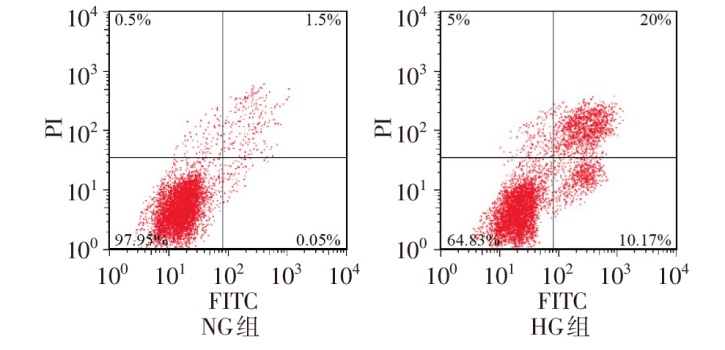
Fig.1 Effects of high-glucose treatment on cell apoptosis in the two groups
| 组别 | LncRNA SNHG14 | miR-30a-5p | 细胞凋亡率/% | ||||||
|---|---|---|---|---|---|---|---|---|---|
| NG组 | 1.02±0.12 | 1.01±0.11 | 2.05±0.23 | ||||||
| HG组 | 2.56±0.29 | 0.34±0.04 | 35.17±3.91 | ||||||
| t | 12.019** | 14.021** | 20.713** | ||||||
| 组别 | TNF-α/(ng/L) | IL-6/(ng/L) | IL-1β/(ng/L) | ||||||
| NG组 | 39.25±4.12 | 21.37±2.26 | 13.59±1.58 | ||||||
| HG组 | 106.15±11.23 | 90.20±9.35 | 59.83±6.22 | ||||||
| t | 13.699** | 17.527** | 17.649** | ||||||
| 组别 | SOD/(U/mL) | CAT/(U/mL) | MDA/(mol/L) | ||||||
| NG组 | 36.52±3.98 | 27.36±2.98 | 5.22±0.58 | ||||||
| HG组 | 7.13±0.81 | 8.01±0.85 | 28.76±3.07a | ||||||
| t | 17.725** | 15.295** | 18.456** | ||||||
Tab.2 Comparison of LncRNA SNHG14 and miR-30a-5p expression, apoptosis rate and related indicators of inflammation/oxidative stress between the two groups of podocytes
| 组别 | LncRNA SNHG14 | miR-30a-5p | 细胞凋亡率/% | ||||||
|---|---|---|---|---|---|---|---|---|---|
| NG组 | 1.02±0.12 | 1.01±0.11 | 2.05±0.23 | ||||||
| HG组 | 2.56±0.29 | 0.34±0.04 | 35.17±3.91 | ||||||
| t | 12.019** | 14.021** | 20.713** | ||||||
| 组别 | TNF-α/(ng/L) | IL-6/(ng/L) | IL-1β/(ng/L) | ||||||
| NG组 | 39.25±4.12 | 21.37±2.26 | 13.59±1.58 | ||||||
| HG组 | 106.15±11.23 | 90.20±9.35 | 59.83±6.22 | ||||||
| t | 13.699** | 17.527** | 17.649** | ||||||
| 组别 | SOD/(U/mL) | CAT/(U/mL) | MDA/(mol/L) | ||||||
| NG组 | 36.52±3.98 | 27.36±2.98 | 5.22±0.58 | ||||||
| HG组 | 7.13±0.81 | 8.01±0.85 | 28.76±3.07a | ||||||
| t | 17.725** | 15.295** | 18.456** | ||||||
| 组别 | LncRNA SNHG14 | miR-30a-5p | 细胞 凋亡率/% |
|---|---|---|---|
| HG组 | 2.56±0.29 | 0.34±0.04 | 35.17±3.91 |
| si-NC+HG组 | 2.49±0.26 | 0.35±0.04 | 35.33±4.02 |
| si-SNHG14+HG组 | 1.23±0.14ab | 0.89±0.11ab | 12.08±1.37ab |
| miR-NC+HG组 | 2.53±0.27 | 0.33±0.04 | 35.78±4.11 |
| miR-30a-5p mimics+ HG组 | 2.52±0.26 | 0.78±0.08ac | 14.23±1.56ac |
| si-SNHG14+ inhibitor NC+HG组 | 1.26±0.15 | 0.87±0.10 | 12.35±1.42 |
| si-SNHG14+miR-30a-5p inhibitor+HG组 | 1.21±0.14 | 0.56±0.10de | 15.31±1.63de |
| F | 56.647** | 63.547** | 101.610** |
Tab.3 Comparison of LncRNA SNHG14 expression, miR-30a-5p expression and apoptosis rate between the seven groups
| 组别 | LncRNA SNHG14 | miR-30a-5p | 细胞 凋亡率/% |
|---|---|---|---|
| HG组 | 2.56±0.29 | 0.34±0.04 | 35.17±3.91 |
| si-NC+HG组 | 2.49±0.26 | 0.35±0.04 | 35.33±4.02 |
| si-SNHG14+HG组 | 1.23±0.14ab | 0.89±0.11ab | 12.08±1.37ab |
| miR-NC+HG组 | 2.53±0.27 | 0.33±0.04 | 35.78±4.11 |
| miR-30a-5p mimics+ HG组 | 2.52±0.26 | 0.78±0.08ac | 14.23±1.56ac |
| si-SNHG14+ inhibitor NC+HG组 | 1.26±0.15 | 0.87±0.10 | 12.35±1.42 |
| si-SNHG14+miR-30a-5p inhibitor+HG组 | 1.21±0.14 | 0.56±0.10de | 15.31±1.63de |
| F | 56.647** | 63.547** | 101.610** |
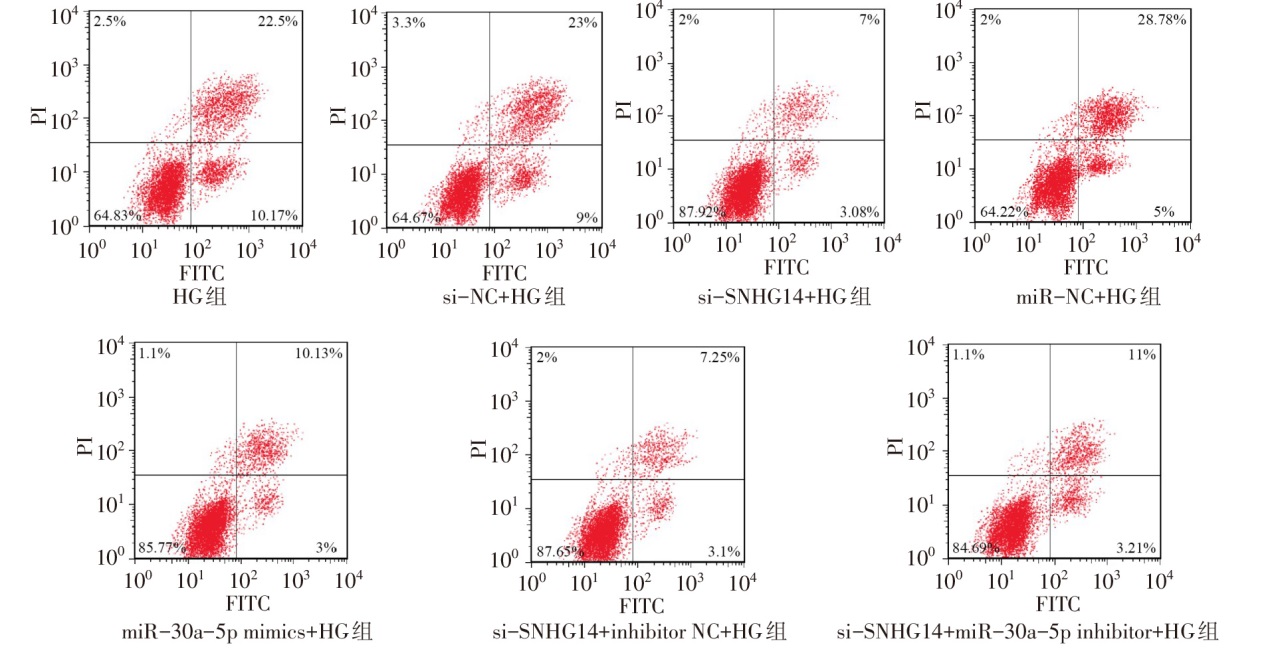
Fig.2 Comparison of apoptosis between different groups
| 组别 | TNF-α | IL-6 | IL-1β |
|---|---|---|---|
| HG组 | 106.15±11.23 | 90.20±9.35 | 59.83±6.22 |
| si-NC+HG组 | 105.97±11.07 | 90.51±9.46 | 60.01±6.37 |
| si-SNHG14+HG组 | 86.59±8.91ab | 52.16±5.37ab | 30.67±3.21ab |
| miR-NC+HG组 | 106.26±11.31 | 90.13±9.21 | 59.72±6.14 |
| miR-30a-5p mimics+ HG组 | 76.81±8.03ac | 43.75±4.58ac | 25.14±2.73ac |
| si-SNHG14+ inhibitor NC+HG组 | 86.32±8.76 | 51.39±5.46 | 31.02±3.35 |
| si-SNHG14+miR-30a-5p inhibitor+HG组 | 93.57±9.46de | 66.34±6.78de | 38.43±4.12de |
| F | 8.653** | 46.946** | 63.825** |
Tab.4 Comparison of TNF-α, IL-6 and IL-1β levels between the seven groups
| 组别 | TNF-α | IL-6 | IL-1β |
|---|---|---|---|
| HG组 | 106.15±11.23 | 90.20±9.35 | 59.83±6.22 |
| si-NC+HG组 | 105.97±11.07 | 90.51±9.46 | 60.01±6.37 |
| si-SNHG14+HG组 | 86.59±8.91ab | 52.16±5.37ab | 30.67±3.21ab |
| miR-NC+HG组 | 106.26±11.31 | 90.13±9.21 | 59.72±6.14 |
| miR-30a-5p mimics+ HG组 | 76.81±8.03ac | 43.75±4.58ac | 25.14±2.73ac |
| si-SNHG14+ inhibitor NC+HG组 | 86.32±8.76 | 51.39±5.46 | 31.02±3.35 |
| si-SNHG14+miR-30a-5p inhibitor+HG组 | 93.57±9.46de | 66.34±6.78de | 38.43±4.12de |
| F | 8.653** | 46.946** | 63.825** |
| 组别 | SOD/(U/mL) | CAT/(U/mL) | MDA/(mol/L) |
|---|---|---|---|
| HG组 | 7.13±0.81 | 8.01±0.85 | 28.76±3.07 |
| si-NC+HG组 | 7.25±0.86 | 7.96±0.82 | 28.91±3.12 |
| si-SNHG14+HG组 | 23.95±2.57ab | 19.56±1.98ab | 16.03±1.74ab |
| miR-NC+HG组 | 7.21±0.83 | 8.06±0.87 | 28.87±3.10 |
| miR-30a-5p mimics+ HG组 | 28.06±3.08ac | 21.03±2.25ac | 12.15±1.32ac |
| si-SNHG14+ inhibitor NC+HG组 | 23.55±2.61 | 18.92±1.93 | 15.88±1.69 |
| si-SNHG14+miR-30a-5p inhibitor+HG组 | 15.12±1.63de | 12.36±1.42de | 21.05±2.33de |
| F | 126.331** | 88.867** | 52.030** |
Tab.5 Comparison of SOD, CAT and MDA levels between the seven groups
| 组别 | SOD/(U/mL) | CAT/(U/mL) | MDA/(mol/L) |
|---|---|---|---|
| HG组 | 7.13±0.81 | 8.01±0.85 | 28.76±3.07 |
| si-NC+HG组 | 7.25±0.86 | 7.96±0.82 | 28.91±3.12 |
| si-SNHG14+HG组 | 23.95±2.57ab | 19.56±1.98ab | 16.03±1.74ab |
| miR-NC+HG组 | 7.21±0.83 | 8.06±0.87 | 28.87±3.10 |
| miR-30a-5p mimics+ HG组 | 28.06±3.08ac | 21.03±2.25ac | 12.15±1.32ac |
| si-SNHG14+ inhibitor NC+HG组 | 23.55±2.61 | 18.92±1.93 | 15.88±1.69 |
| si-SNHG14+miR-30a-5p inhibitor+HG组 | 15.12±1.63de | 12.36±1.42de | 21.05±2.33de |
| F | 126.331** | 88.867** | 52.030** |
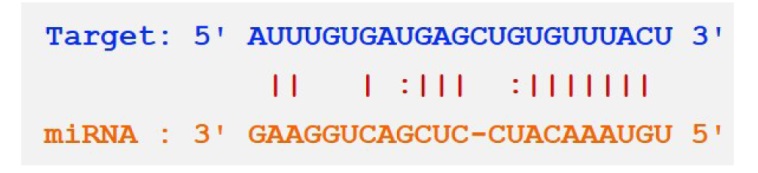
Fig.3 Prediction of binding sites between LncRNA SNHG14 and miR-30a-5p
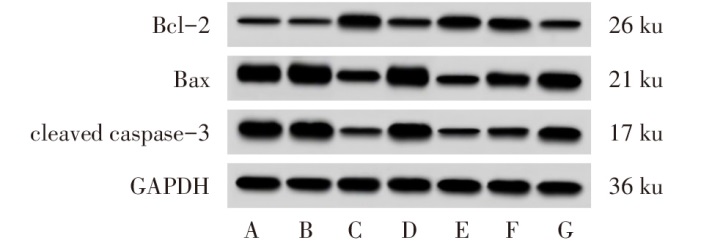
Fig.4 Protein expressions of Bcl-2, Bax and cleaved caspase-3 detected by Western blot assay
| 组别 | Bcl-2 | Bax | cleaved caspase-3 |
|---|---|---|---|
| HG组 | 0.36±0.04 | 1.58±0.16 | 1.35±0.14 |
| si-NC+HG组 | 0.35±0.04 | 1.60±0.17 | 1.37±0.15 |
| si-SNHG14+HG组 | 0.87±0.09ab | 0.82±0.09ab | 0.56±0.06ab |
| miR-NC+HG组 | 0.39±0.05 | 1.59±0.17 | 1.34±0.14 |
| miR-30a-5p mimics+ HG组 | 0.93±0.10ac | 0.71±0.08ac | 0.50±0.05ac |
| si-SNHG14+ inhibitor NC+HG组 | 0.86±0.09 | 0.83±0.09 | 0.57±0.06 |
| si-SNHG14+miR-30a-5p inhibitor+HG组 | 0.65±0.07de | 1.07±0.12de | 0.82±0.09de |
| F | 77.951** | 57.505** | 88.191** |
Tab.6 Comparison of protein expression levels of Bcl-2, Bax and cleaved caspase-3 between the seven groups
| 组别 | Bcl-2 | Bax | cleaved caspase-3 |
|---|---|---|---|
| HG组 | 0.36±0.04 | 1.58±0.16 | 1.35±0.14 |
| si-NC+HG组 | 0.35±0.04 | 1.60±0.17 | 1.37±0.15 |
| si-SNHG14+HG组 | 0.87±0.09ab | 0.82±0.09ab | 0.56±0.06ab |
| miR-NC+HG组 | 0.39±0.05 | 1.59±0.17 | 1.34±0.14 |
| miR-30a-5p mimics+ HG组 | 0.93±0.10ac | 0.71±0.08ac | 0.50±0.05ac |
| si-SNHG14+ inhibitor NC+HG组 | 0.86±0.09 | 0.83±0.09 | 0.57±0.06 |
| si-SNHG14+miR-30a-5p inhibitor+HG组 | 0.65±0.07de | 1.07±0.12de | 0.82±0.09de |
| F | 77.951** | 57.505** | 88.191** |
| [1] | ZHANG L, LONG J, JIANG W, et al. Trends in chronic kidney disease in China[J]. N Engl J Med, 2016, 375(9):905-906. doi:10.1056/NEJMc1602469. |
| [2] | WANG M, HU J, YAN L L, et al. High glucose-induced ubiquitination of G6PD leads to the injury of podocytes[J]. FASEB J, 2019, 33(1):6296-6310. doi:10.1096/fj.201801921R. |
| [3] | DENG Q X, WEN R W, LIU S R, et al. Increased long noncoding RNA maternally expressed gene 3 contributes to podocyte injury induced by high glucose through regulation of mitochondrial fission[J]. Cell Death Dis, 2020, 11(1):814-827. doi:10.1038/s41419-020-03022-7. |
| [4] | LI M X, ZHAO Y F, QIAO H X, et al. CXCR3 knockdown protects against high glucose-induced podocyte apoptosis and inflammatory cytokine production at the onset of diabetic nephropathy[J]. Int J Clin Exp Pathol, 2017, 10(8):8829-8838. |
| [5] | 朱凯, 陈星华, 丁国华, 等. 长链非编码RNA在肾脏疾病中的研究进展[J]. 中华肾脏病杂志, 2019, 35(3):225-230. |
| ZHU K, CHEN X H, DING G H, et al. Research progress of long non-coding RNAs in kidney diseases[J]. Chin J Nephrol, 2019, 35(3):225-230. doi:10.3760/cma.j.issn.1001-7097.2019.03.013. | |
| [6] | WANG Y, YANG J, WU C, et al. LncRNA SNHG14 silencing attenuates the progression of diabetic nephropathy via the miR-30e-5p/SOX4 axis[J]. J Diabetes, 2024, 16(4):e13565-e13569. doi:10.1111/1753-0407.13565. |
| [7] | YARAHMADI A, SHAHROKHI S Z, MOSTAFAVI-POUR Z, et al. MicroRNAs in diabetic nephropathy:from molecular mechanisms to new therapeutic targets of treatment[J]. Biochem Pharmacol, 2021, 189(1):114301-114312. doi:10.1016/j.bcp.2020.114301. |
| [8] | YANG X, YANG M, CHEN Y, et al. miR-30a-5p targets Becn1 to ameliorate high-glucose-induced glomerular podocyte injury in immortalized rat podocyte cell line[J]. Am J Transl Res, 2021, 13(3):1516-1525. |
| [9] | 刘文秀, 吴彩斌, 冯朵, 等. 抑制LncRNA DLX6-AS1通过靶向miR-200a减轻高糖诱导的足细胞损伤[J]. 中国老年学杂志, 2022, 42(23):5848-5853. |
| LIU W X, WU C B, FENG D, et al. Inhibition of LncRNA DLX6-AS1 alleviates high-glucose-induced podocyte injury by targeting miR-200a[J]. Chinese Journal of Gerontology, 2022, 42(23):5848-5853. doi:10.3969/j.issn.1005-9202.2022.23.046. | |
| [10] | HUANG L Y, SHAO M H, ZHU Y. Gastrodin inhibits high glucose-induced inflammation,oxidative stress and apoptosis in podocytes by activating the AMPK/Nrf2 signaling pathway[J]. Exp Ther Med, 2022, 23(2):168-177. doi:10.3892/etm.2021.11091. |
| [11] | SHI W X, HUANG Y, ZHAO X C, et al. Histone deacetylase 4 mediates high glucose-induced podocyte apoptosis via upregulation of calcineurin[J]. Biochem Biophys Res Commun, 2020, 533(1):1061-1068. doi:10.1016/j.bbrc.2020.09.121. |
| [12] | 乔娜, 田英, 陈杨, 等. LncRNA MALAT1对PCOS颗粒细胞凋亡、自噬和PI3K/Akt/mTOR通路的影响[J]. 天津医药, 2024, 52(10):1020-1024. |
| QIAO N, TIAN Y, CHEN Y, et al. Impacts of LncRNA MALAT1 on apoptosis,autophagy of granulosa cells and PI3K/Akt/mTOR pathway in polycystic ovary syndrome[J]. Tianjin Med J, 2024, 52(10):1020-1024. doi:10.11958/20240332. | |
| [13] | ZHANG D, DING X, PENG M. LncRNA SNHG14 accelerates breast cancer progression through sponging miR-543 and regulating KLF7 expression[J]. Arch Gynecol Obstet, 2022, 305(6):1507-1516. doi:10.1007/s00404-021-06300-7. |
| [14] | XU L, XU Y, YANG M, et al. LncRNA SNHG14 regulates the DDP-resistance of non-small cell lung cancer cell through miR-133a/HOXB13 pathway[J]. BMC Pulm Med, 2020, 20(1):266-271. doi:10.1186/s12890-020-01276-7. |
| [15] | SHI C, ZHAO Y, LI Q, et al. LncRNA SNHG14 plays a role in sepsis-induced acute kidney injury by regulating miR-93[J]. Mediators Inflamm, 2021, 6(1):5318369-5318373. doi:10.1155/2021/5318369. |
| [16] | 高慧祯, 李凤丽, 李蕾, 等. LncRNA SNHG14通过靶向miR-16-5p对高糖诱导的小鼠肾脏足细胞损伤的影响[J]. 中国老年学杂志, 2021, 41(24):5694-5698. |
| GAO H Z, LI F L, LI L, et al. Effect of LncRNA SNHG14 on high-glucose - induced injury of mouse renal podocytes by targeting miR-16-5p[J]. Chinese Journal of Gerontology, 2021, 41(24):5694-5698. doi:10.3969/j.issn.1005-9202.2021.24.057. | |
| [17] | 董海芸, 韩芳, 齐一舟, 等. circ-WBSCR17通过调节miR-30a-5p/JAK1轴减轻高糖诱导的人肾小球系膜细胞纤维化和炎症反应[J]. 安徽医科大学学报, 2023, 58(10):1756-1762,1768. |
| DONG H Y, HAN F, QI Y Z, et al. Circ-WBSCR17 attenuates high glucose-induced fibrosis and inflammation in human mesangial cells by regulating the miR-30a-5p/JAK1 axis[J]. Acta Universitatis Medicinalis Anhui, 2023, 58(10):1756-1762,1768. doi:10.19405/j.cnki.issn1000-1492.2023.10.025. | |
| [18] | DING N, XIE L, MA F, et al. miR-30a-5p promotes glomerular podocyte apoptosis via DNMT1-mediated hypermethylation under hyperhomocysteinemia[J]. Acta Biochim Biophys Sin (Shanghai), 2022, 54(1):126-136. doi:10.3724/abbs.2021005. |
| [19] | NING Y, ZHOU X, WANG G, et al. Exosome miR-30a-5p regulates glomerular endothelial cells' EndMT and angiogenesis by modulating Notch1/VEGF signaling pathway[J]. Curr Gene Ther, 2024, 24(2):159-177. doi:10.2174/0115665232258527230919071328. |
| [20] | TAO Y, LIN Y, AN L, et al. Knockdown of GPRC5B alleviates the high glucose-induced inflammation and extracellular matrix deposition of podocyte through inhibiting NF-κB pathway[J]. Allergol Immunopathol(Madr), 2022, 50(2):142-146. doi:10.15586/aei.v50i2.566. |
| [21] | ZHOU J, WANG T Y, WANG H Z, et al. Obacunone attenuates high glucose-induced oxidative damage in NRK-52E cells by inhibiting the activity of GSK-3β[J]. Biochem Biophys Res Commun, 2019, 513(1):226-233. doi:10.1016/j.bbrc.2019.03.201. |
| [22] | XU Y X, ZHANG J Z, FAN L, et al. miR-423-5p suppresses high-glucose-induced podocyte injury by targeting Nox4[J]. Biochem Biophys Res Commun, 2018, 505(1):339-345. doi:10.1016/j.bbrc.2018.09.067. |
| [23] | ZHAO W, LI H X, HOU Y, et al. Combined administration of poly-ADP-ribose polymerase-1 and caspase-3 inhibitors alleviates neuronal apoptosis after spinal coed injury in rats[J]. World Neurosurg, 2019, 127(1):e346-e349. doi:10.1016/j.wneu.2019.03.116. |
| Viewed | ||||||
|
Full text |
|
|||||
|
Abstract |
|
|||||
