
Tianjin Medical Journal ›› 2025, Vol. 53 ›› Issue (10): 1043-1047.doi: 10.11958/20251059
• Clinical Research • Previous Articles Next Articles
LYU Jing( ), ZHU Fangying, ZHU Kai, LI Yun, YANG Na, WEN Shuyun, ZHONG Miqian△()
Received:2025-03-16
Revised:2025-07-10
Published:2025-10-15
Online:2025-10-12
Contact:
△E-mail:LYU Jing, ZHU Fangying, ZHU Kai, LI Yun, YANG Na, WEN Shuyun, ZHONG Miqian. Construction and verification of atherosclerosis risk prediction model for rheumatoid arthritis patients[J]. Tianjin Medical Journal, 2025, 53(10): 1043-1047.
CLC Number:
| 组别 | n | 年龄/岁 | 男性 | BMI/(kg/m2) | 吸烟史 | 饮酒史 | RA病程/年 | ||||||
|---|---|---|---|---|---|---|---|---|---|---|---|---|---|
| RA组 | 258 | 50.12±12.43 | 62(24.0) | 23.12±3.52 | 53(20.5) | 36(13.9) | 8(4,12) | ||||||
| RA+AS组 | 86 | 52.37±11.85 | 21(24.4) | 23.54±3.87 | 18(20.9) | 12(14.0) | 10(7,15) | ||||||
| t、Z或χ2 | 1.653 | 0.021 | 0.886 | 0.082 | 0.001 | 2.875** | |||||||
| 组别 | DAS28评分/分 | 高血压 | 糖尿病 | 血脂异常家族史 | 高血压家族史 | 糖尿病家族史 | |||||||
| RA组 | 3.87±1.12 | 125(48.5) | 38(14.7) | 78(30.2) | 128(49.6) | 72(27.9) | |||||||
| RA+AS组 | 4.53±1.27 | 53(61.6) | 18(20.9) | 25(29.1) | 38(44.2) | 29(33.7) | |||||||
| t或χ2 | 4.125** | 4.857* | 2.201 | 0.043 | 0.412 | 1.086 | |||||||
Tab.1 Comparison of baseline characteristics between the two groups of patients
| 组别 | n | 年龄/岁 | 男性 | BMI/(kg/m2) | 吸烟史 | 饮酒史 | RA病程/年 | ||||||
|---|---|---|---|---|---|---|---|---|---|---|---|---|---|
| RA组 | 258 | 50.12±12.43 | 62(24.0) | 23.12±3.52 | 53(20.5) | 36(13.9) | 8(4,12) | ||||||
| RA+AS组 | 86 | 52.37±11.85 | 21(24.4) | 23.54±3.87 | 18(20.9) | 12(14.0) | 10(7,15) | ||||||
| t、Z或χ2 | 1.653 | 0.021 | 0.886 | 0.082 | 0.001 | 2.875** | |||||||
| 组别 | DAS28评分/分 | 高血压 | 糖尿病 | 血脂异常家族史 | 高血压家族史 | 糖尿病家族史 | |||||||
| RA组 | 3.87±1.12 | 125(48.5) | 38(14.7) | 78(30.2) | 128(49.6) | 72(27.9) | |||||||
| RA+AS组 | 4.53±1.27 | 53(61.6) | 18(20.9) | 25(29.1) | 38(44.2) | 29(33.7) | |||||||
| t或χ2 | 4.125** | 4.857* | 2.201 | 0.043 | 0.412 | 1.086 | |||||||
| 组别 | ALT/(U/L) | AST/(U/L) | Cr/(μmol/L) | BUN/(mmol/L) | ESR/(mm/1h) | CRP/(mg/L) | TC/(mmol/L) | TG/(mmol/L) | |||||||
|---|---|---|---|---|---|---|---|---|---|---|---|---|---|---|---|
| RA组 | 19(14,27) | 21(16,29) | 65(55,75) | 4.30(3.60,5.23) | 22(15,35) | 11(5,19) | 4.87±0.95 | 1.56(1.10,2.15) | |||||||
| RA+AS组 | 21(15,30) | 23(17,32) | 68(58,78) | 4.50(3.80,5.51) | 29(18,42) | 15(8,28) | 5.23±1.08 | 1.85(1.32,2.68) | |||||||
| Z或t | 1.897 | 1.581 | 1.190 | 1.000 | 2.786** | 3.354** | 2.241* | 2.400* | |||||||
| 组别 | LDL-C/ (mmol/L) | HDL-C/ (mmol/L) | FBG/ (mmol/L) | HbA1c/ % | 治疗方案 | ||||||||||
| 传统DMARDs | 生物制剂DMARDs | 靶向合成DMARDs | |||||||||||||
| RA组 | 2.85±0.76 | 1.32(1.18,1.47) | 5.25±1.09 | 5.8(5.4,6.0) | 105(40.7) | 98(38.0) | 55(21.3) | ||||||||
| RA+AS组 | 3.21±0.89 | 1.20(1.05,1.38) | 5.68±1.23 | 6.1(5.6,6.9) | 35(40.7) | 32(37.2) | 19(22.1) | ||||||||
| t、Z或χ2 | 3.162* | 3.291** | 2.449* | 3.000** | 0.015 | ||||||||||
Tab.2 Comparison of initial laboratory test results between the groups of patients
| 组别 | ALT/(U/L) | AST/(U/L) | Cr/(μmol/L) | BUN/(mmol/L) | ESR/(mm/1h) | CRP/(mg/L) | TC/(mmol/L) | TG/(mmol/L) | |||||||
|---|---|---|---|---|---|---|---|---|---|---|---|---|---|---|---|
| RA组 | 19(14,27) | 21(16,29) | 65(55,75) | 4.30(3.60,5.23) | 22(15,35) | 11(5,19) | 4.87±0.95 | 1.56(1.10,2.15) | |||||||
| RA+AS组 | 21(15,30) | 23(17,32) | 68(58,78) | 4.50(3.80,5.51) | 29(18,42) | 15(8,28) | 5.23±1.08 | 1.85(1.32,2.68) | |||||||
| Z或t | 1.897 | 1.581 | 1.190 | 1.000 | 2.786** | 3.354** | 2.241* | 2.400* | |||||||
| 组别 | LDL-C/ (mmol/L) | HDL-C/ (mmol/L) | FBG/ (mmol/L) | HbA1c/ % | 治疗方案 | ||||||||||
| 传统DMARDs | 生物制剂DMARDs | 靶向合成DMARDs | |||||||||||||
| RA组 | 2.85±0.76 | 1.32(1.18,1.47) | 5.25±1.09 | 5.8(5.4,6.0) | 105(40.7) | 98(38.0) | 55(21.3) | ||||||||
| RA+AS组 | 3.21±0.89 | 1.20(1.05,1.38) | 5.68±1.23 | 6.1(5.6,6.9) | 35(40.7) | 32(37.2) | 19(22.1) | ||||||||
| t、Z或χ2 | 3.162* | 3.291** | 2.449* | 3.000** | 0.015 | ||||||||||
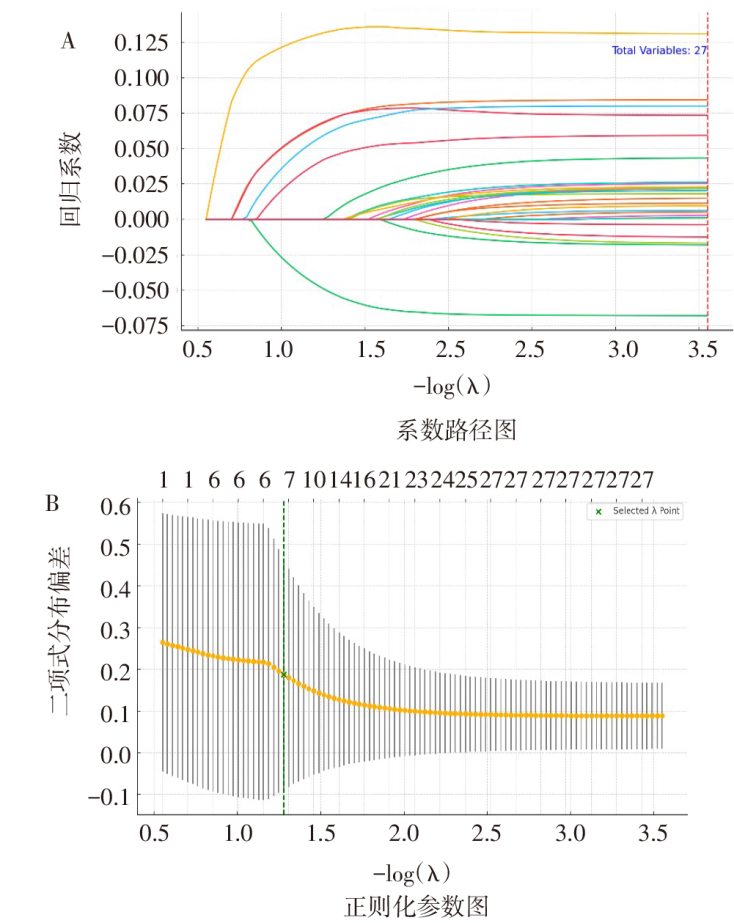
Fig.1 Variable selection process using LASSO regression
| 变量 | β | SE | Wald χ2 | P | OR(95%CI) |
|---|---|---|---|---|---|
| RA病程 | 0.605 | 0.122 | 24.592 | <0.001 | 1.832(1.442~2.326) |
| DAS28评分 | 0.393 | 0.221 | 3.861 | 0.049 | 1.482(1.001~2.194) |
| CRP | 0.310 | 0.063 | 24.213 | <0.001 | 1.363(1.205~1.543) |
| TG | 1.346 | 0.564 | 5.696 | 0.017 | 3.842(1.272~11.605) |
| HDL-C | -2.289 | 0.401 | 32.584 | <0.001 | 0.101(0.046~0.222) |
| FBG | 0.679 | 0.218 | 9.701 | 0.002 | 1.972(1.287~3.022) |
| 高血压 | 0.711 | 0.268 | 7.038 | 0.008 | 2.036(1.204~3.443) |
| 常数项 | -2.647 | 4.379 | 0.365 | 0.546 | 0.071 |
Tab.3 Logistic regression analysis results of the risk prediction model for AS in RA patients
| 变量 | β | SE | Wald χ2 | P | OR(95%CI) |
|---|---|---|---|---|---|
| RA病程 | 0.605 | 0.122 | 24.592 | <0.001 | 1.832(1.442~2.326) |
| DAS28评分 | 0.393 | 0.221 | 3.861 | 0.049 | 1.482(1.001~2.194) |
| CRP | 0.310 | 0.063 | 24.213 | <0.001 | 1.363(1.205~1.543) |
| TG | 1.346 | 0.564 | 5.696 | 0.017 | 3.842(1.272~11.605) |
| HDL-C | -2.289 | 0.401 | 32.584 | <0.001 | 0.101(0.046~0.222) |
| FBG | 0.679 | 0.218 | 9.701 | 0.002 | 1.972(1.287~3.022) |
| 高血压 | 0.711 | 0.268 | 7.038 | 0.008 | 2.036(1.204~3.443) |
| 常数项 | -2.647 | 4.379 | 0.365 | 0.546 | 0.071 |
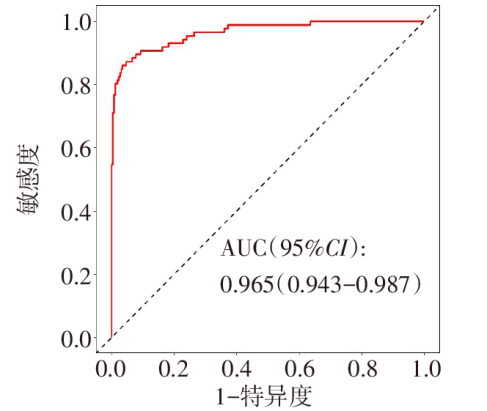
Fig.2 ROC curve of the risk prediction model for AS in RA patients
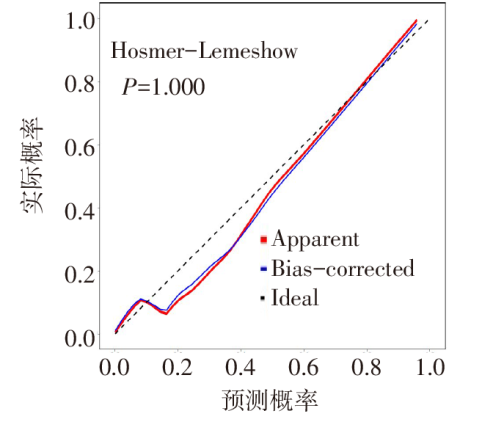
Fig.3 Calibration curve of the AS risk prediction model for RA patients
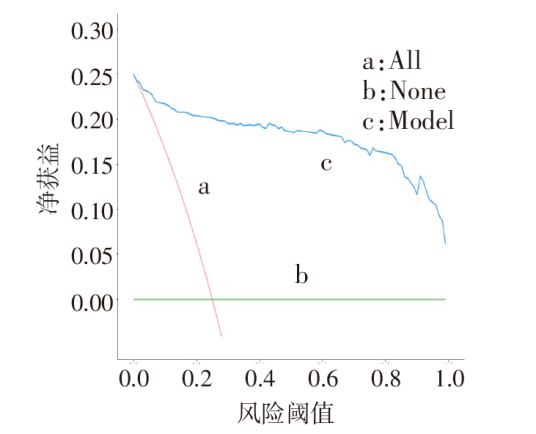
Fig.4 Decision curve analysis of the risk prediction model for AS in RA patients
| [1] | SMOLEN J S, ALETAHA D, MCINNES I B. Rheumatoid arthritis[J]. Lancet, 2016, 388(10055):2023-2038. doi:10.1016/S0140-6736(16)30173-8. |
| [2] | KEROLA A M, ROLLEFSTAD S, SEMB A G. Atherosclerotic cardiovascular disease in rheumatoid arthritis:impact of inflammation and antirheumatic treatment[J]. Eur Cardiol, 2021, 16:e18. doi:10.15420/ecr.2020.44. |
| [3] | 张兰慧. 炎症性关节病合并心血管损害的危险因素分析及相关内皮损伤标志物意义的初步探索[D]. 广州: 南方医科大学, 2022:12. |
| ZHANG L H. Analysis of risk factors for inflammatory arthropathy complicated with cardiovascular damage and preliminary exploration of the significance of related endothelial injury markers[D]. Guangzhou: Southern Medical University, 2022:12. | |
| [4] | MIN H K, KIM H, JEONG H J, et al. Risk of cancer, cardiovascular disease, thromboembolism, and mortality in patients with rheumatoid arthritis receiving Janus kinase inhibitors:a real-world retrospective observational study using Korean health insurance data[J]. Epidemiol Health, 2023, 45:e2023045. doi:10.4178/epih.e2023045. |
| [5] | ROGHANI S A, SHAMSI A, JALILI C, et al. Interleukin-6 positively correlates with cardiovascular disease predictor algorithms and biomarker in rheumatoid arthritis patients[J]. J Cell Mol Med, 2024, 28(16):e70028. doi:10.1111/jcmm.70028. |
| [6] | SIRCANA M C, ERRE G L, CASTAGNA F, et al. Crosstalk between inflammation and atherosclerosis in rheumatoid arthritis and systemic lupus erythematosus:is there a common basis?[J]. Life(Basel), 2024, 14(6):716. doi:10.3390/life14060716. |
| [7] | KAY J, UPCHURCH K S. ACR/EULAR 2010 rheumatoid arthritis classification criteria[J]. Rheumatology (Oxford), 2012, 51 Suppl 6:vi5-9. doi:10.1093/rheumatology/kes279. |
| [8] | HERNÁNDEZ-DÍAZ M, RODRÍGUEZ-GONZÁLEZ D, HERAS-RECUERO E, et al. The Relationship between the complement system and subclinical carotid atherosclerosis in patients with rheumatoid arthritis[J]. Arthritis Res Ther, 2024, 26(1):127. doi:10.1186/s13075-024-03360-3. |
| [9] | 中国医药教育协会血管医学专业委员会,中华医学会北京心血管病学分会血管专业学组,北京大学医学部血管疾病社区防治中心. 中国血管健康评估系统应用指南(2018第三次报告)[J]. 中华医学杂志, 2018, 98(37):2955-2967. |
| Vascular Medicine Professional Committee of China Medical Education Association,Vascular Professional Group of Beijing Cardiovascular Branch of Chinese Medical Association,Community Prevention and Treatment Center for Vascular Diseases,Peking University Health Science Center. Application guidelines for vascular health assessment system in China (third report 2018)[J]. National Medical Journal of China, 2018, 98(37):2955-2967. doi:10.3760/cma.j.issn.0376-2491.2018.37.002. | |
| [10] | MARDANSHAHI Z, MARDANSHAHI A, HOSSEINIAN AMIRI A, et al. Investigating the relationship between carotid intima-media thickness,flow-mediated dilatation in brachial artery and nuclear heart scan in patients with rheumatoid arthritis for evaluation of asymptomatic cardiac ischemia and atherosclerotic changes[J]. Nucl Med Rev Cent East Eur, 2020, 23(1):25-31. doi:10.5603/NMR.2020.0010. |
| [11] | ARTS E E, FRANSEN J, DEN BROEDER A A, et al. The effect of disease duration and disease activity on the risk of cardiovascular disease in rheumatoid arthritis patients[J]. Ann Rheum Dis, 2015, 74(6):998-1003. doi:10.1136/annrheumdis-2013-204531. |
| [12] | ROJAS-GIMÉNEZ M, LÓPEZ-MEDINA C, LADEHESA-PINEDA M L, et al. Subclinical atherosclerosis measure by carotid ultrasound and inflammatory activity in patients with rheumatoid arthritis and spondylarthritis[J]. J Clin Med, 2022, 11(3):662. doi:10.3390/jcm11030662. |
| [13] | WEBER B N, GILES J T, LIAO K P. Shared inflammatory pathways of rheumatoid arthritis and atherosclerotic cardiovascular disease[J]. Nat Rev Rheumatol, 2023, 19(7):417-428. doi:10.1038/s41584-023-00969-7. |
| [14] | KASHER M, CHERNY S S, et al. CHARGE Inflammation Working Group, Exploring potential shared genetic influences between rheumatoid arthritis and blood lipid levels[J]. Atherosclerosis, 2022, 363:48-56. doi:10.1016/j.atherosclerosis.2022.11.006. |
| [15] | RODRÍGUEZ-CARRIO J, ALPERI-LÓPEZ M, LÓPEZ P, et al. Humoral responses against HDL are linked to lipoprotein traits,atherosclerosis, inflammation and pathogenic pathways during early arthritis stages[J]. Rheumatology(Oxford), 2023, 62(8):2898-2907. doi:10.1093/rheumatology/kead009. |
| [16] | 章懿, 周胜利. ACPA阴性类风湿关节炎生物标志物相关研究进展[J]. 中国基层医药, 2023, 30(7):1116-1120. |
| ZHANG Y, ZHOU S L. Research progress on biomarkers related to ACPA-negative rheumatoid arthritis[J]. Chinese Journal of Primary Medicine and Pharmacy, 2023, 30(7):1116-1120. doi:10.3760/cma.j.cn341190-20221215-01047. | |
| [17] | OSIPOVA I V, STARODUBOVA Y N. Prediction of cardiovascular diseases in women with rheumatoid arthritis[J]. Kardiologiia, 2024, 64(1):67-79. doi:10.18087/cardio.2024.1.n2616. |
| [18] | 雷玲彦, 邵会雨, 刘絮莹. 类风湿关节炎合并心血管病高危风险患者预后不良的影响因素的预测模型[J]. 中国实验诊断学, 2024, 28(6):647-653. |
| LEI L Y, SHAO H Y, LIU X Y. Predictive model of factors affecting the poor prognosis of patients with rheumatoid arthritis and high risk of cardiovascu-lar disease[J]. Chinese Journal of Laboratory Diagnosis, 2024, 28(6):647-653.doi:10.3969/j.issn.1007-4287.2024.06.004. | |
| [19] | 许文静, 高冬梅, 李慧心, 等. 类风湿关节炎患者血清脂肪因子趋化素与疾病活动度和Th17/Treg的关系[J]. 天津医药, 2024, 52(2):193-196. |
| XU W J, GAO D M, LI H X, et al. Correlation analysis of serum Chemerin with disease activity and Th17/Treg in patients with rheumatoid arthritis[J]. Tianjin Med J, 2024, 52(2):193-196. doi:10.11958/20230505. | |
| [20] | DROSOS A A, VENETSANOPOULOU A A, PELECHAS E, et al. Exploring cardiovascular risk factors and atherosclerosis in rheumatoid arthritis[J]. Eur J Intern Med, 2024, 128:1-9. doi:10.1016/j.ejim.2024.07.016. |
| Viewed | ||||||
|
Full text |
|
|||||
|
Abstract |
|
|||||
