
Tianjin Medical Journal ›› 2026, Vol. 54 ›› Issue (2): 145-150.doi: 10.11958/20252768
• Cell and Molecular Biology • Previous Articles Next Articles
WANG Zhe1( ), QIU Lin2, MA Ben1,△()
Received:2025-08-20
Revised:2025-11-08
Published:2026-02-15
Online:2026-02-12
Contact:
△E-mail:WANG Zhe, QIU Lin, MA Ben. Research on the effect of tomato derived nanovesicles on oral squamous cell carcinoma[J]. Tianjin Medical Journal, 2026, 54(2): 145-150.
CLC Number:
| 基因 | 引物序列(5′→3′) | 产物大小/bp |
|---|---|---|
| GAPDH | 上游:TCAGCAATGCCTCCTGCAC | 117 |
| 下游:TCTGGGTGGCAGTGATGGC | ||
| CDK1 | 上游:AGTCTACGGGCTACCCGATT | 706 |
| 下游:CCACTCTGCCCTAGGCTTTC | ||
| Cyclin B1 | 上游:TGGTGAATGGACTGTCAAGAACA | 117 |
| 下游:TACACCTTTGCCACAGCCTT | ||
| Bcl-2 | 上游:AAAAATACAACATCACAGAGGAAGT | 334 |
| 下游:TCCCGGTTATCGTACCCTGT | ||
| Bax | 上游:TGATGGACGGGTCCGGG | 422 |
| 下游:TGTCCAGCCCATGATGGTTC |
Tab.1 Primer sequence
| 基因 | 引物序列(5′→3′) | 产物大小/bp |
|---|---|---|
| GAPDH | 上游:TCAGCAATGCCTCCTGCAC | 117 |
| 下游:TCTGGGTGGCAGTGATGGC | ||
| CDK1 | 上游:AGTCTACGGGCTACCCGATT | 706 |
| 下游:CCACTCTGCCCTAGGCTTTC | ||
| Cyclin B1 | 上游:TGGTGAATGGACTGTCAAGAACA | 117 |
| 下游:TACACCTTTGCCACAGCCTT | ||
| Bcl-2 | 上游:AAAAATACAACATCACAGAGGAAGT | 334 |
| 下游:TCCCGGTTATCGTACCCTGT | ||
| Bax | 上游:TGATGGACGGGTCCGGG | 422 |
| 下游:TGTCCAGCCCATGATGGTTC |
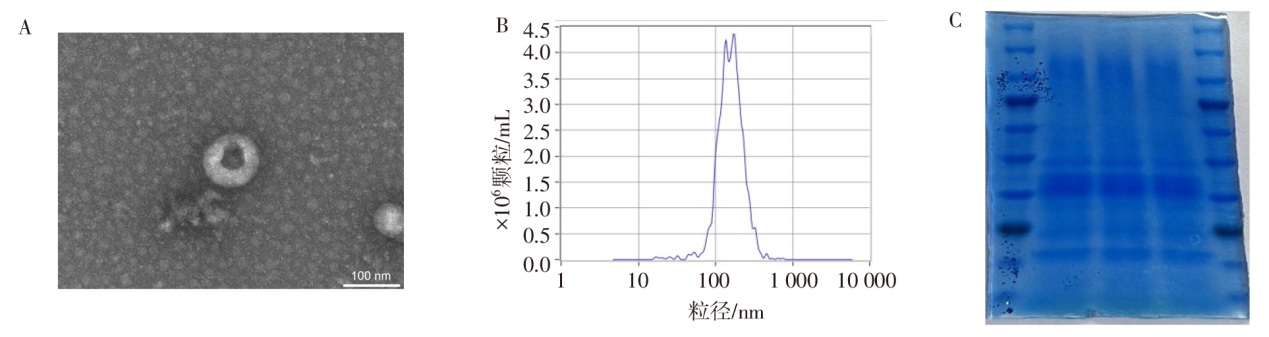
Fig.1 The identification of TDNVs
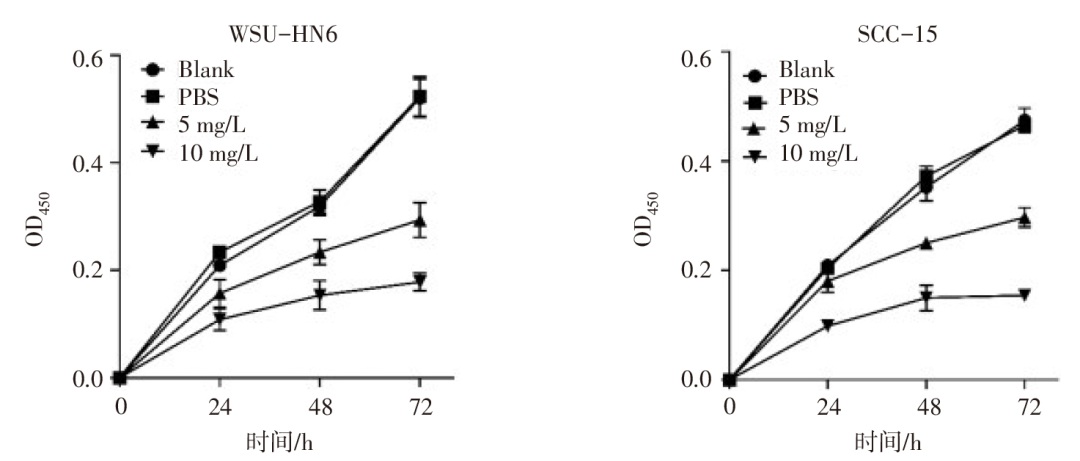
Fig.2 Proliferation curves of WSU-HN6 and SCC-15 cells treated with different concentrations of TDNVs
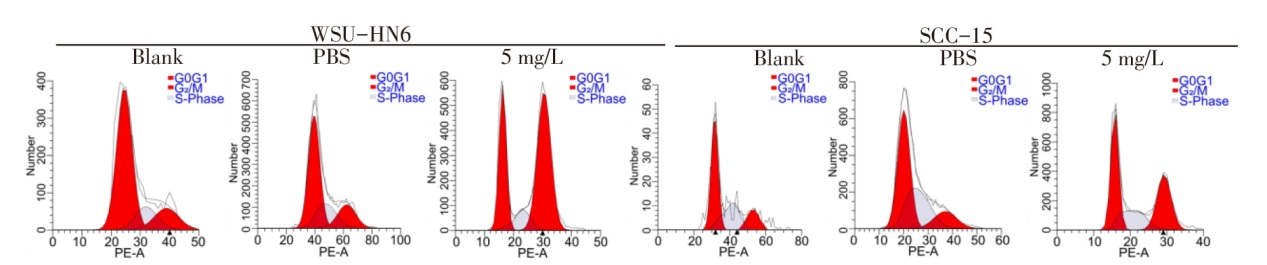
Fig.3 Effects of TDNVs on the cell cycle distribution of WSU-HN6 and SCC-15 cells
| 组别 | WSU-HN6 | SCC-15 | |||||
|---|---|---|---|---|---|---|---|
| G1 | S | G2/M | G1 | S | G2/M | ||
| Blank组 | 65.38±2.98 | 16.45±2.15 | 18.16±1.65 | 56.30±3.49 | 28.10±1.81 | 15.60±2.01 | |
| PBS组 | 63.09±3.97 | 16.09±3.54 | 20.82±1.42 | 55.52±2.99 | 26.80±3.07 | 17.69±2.32 | |
| 5 mg/L组 | 34.64±2.22ab | 9.70±0.66ab | 55.66±2.06ab | 40.17±1.69ab | 25.57±2.20 | 34.26±0.56ab | |
| F | 89.061** | 7.376* | 439.508** | 31.068** | 0.817 | 96.625** | |
Tab.2 Comparison of cell cycle distribution between the three groups
| 组别 | WSU-HN6 | SCC-15 | |||||
|---|---|---|---|---|---|---|---|
| G1 | S | G2/M | G1 | S | G2/M | ||
| Blank组 | 65.38±2.98 | 16.45±2.15 | 18.16±1.65 | 56.30±3.49 | 28.10±1.81 | 15.60±2.01 | |
| PBS组 | 63.09±3.97 | 16.09±3.54 | 20.82±1.42 | 55.52±2.99 | 26.80±3.07 | 17.69±2.32 | |
| 5 mg/L组 | 34.64±2.22ab | 9.70±0.66ab | 55.66±2.06ab | 40.17±1.69ab | 25.57±2.20 | 34.26±0.56ab | |
| F | 89.061** | 7.376* | 439.508** | 31.068** | 0.817 | 96.625** | |
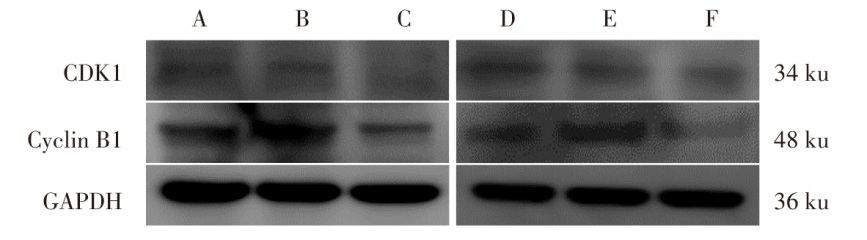
Fig.4 Effect of TDNVs on CDK1 and Cyclin B1 protein expression in WSU-HN6 and SCC-15 cells
| 组别 | WSU-HN6 | SCC-15 | ||
|---|---|---|---|---|
| CDK1 | Cyclin B1 | CDK1 | Cyclin B1 | |
| Blank组 | 1.00±0.06 | 1.00±0.02 | 1.00±0.04 | 1.00±0.01 |
| PBS组 | 0.97±0.08 | 1.02±0.16 | 1.06±0.07 | 1.04±0.23 |
| 5 mg/L组 | 0.61±0.02ab | 0.45±0.04ab | 0.73±0.03ab | 0.64±0.04ab |
| F | 82.974** | 40.112** | 36.553** | 8.088* |
Tab.3 Comparison of CDK1 and Cyclin B1 mRNA levels between the three groups of cells
| 组别 | WSU-HN6 | SCC-15 | ||
|---|---|---|---|---|
| CDK1 | Cyclin B1 | CDK1 | Cyclin B1 | |
| Blank组 | 1.00±0.06 | 1.00±0.02 | 1.00±0.04 | 1.00±0.01 |
| PBS组 | 0.97±0.08 | 1.02±0.16 | 1.06±0.07 | 1.04±0.23 |
| 5 mg/L组 | 0.61±0.02ab | 0.45±0.04ab | 0.73±0.03ab | 0.64±0.04ab |
| F | 82.974** | 40.112** | 36.553** | 8.088* |
| 组别 | WSU-HN6 | SCC-15 | ||
|---|---|---|---|---|
| CDK1 | Cyclin B1 | CDK1 | Cyclin B1 | |
| Blank组 | 1.00±0.02 | 1.00±0.02 | 1.00±0.01 | 1.00±0.06 |
| PBS组 | 1.08±0.09 | 1.12±0.08 | 0.94±0.04 | 1.04±0.06 |
| 5 mg/L组 | 0.29±0.05ab | 0.21±0.06ab | 0.68±0.63ab | 0.29±0.25ab |
| F | 160.195** | 227.726** | 43.739** | 409.108** |
Tab.4 Comparison of CDK1 and Cyclin B1 protein levels between the three groups of cells
| 组别 | WSU-HN6 | SCC-15 | ||
|---|---|---|---|---|
| CDK1 | Cyclin B1 | CDK1 | Cyclin B1 | |
| Blank组 | 1.00±0.02 | 1.00±0.02 | 1.00±0.01 | 1.00±0.06 |
| PBS组 | 1.08±0.09 | 1.12±0.08 | 0.94±0.04 | 1.04±0.06 |
| 5 mg/L组 | 0.29±0.05ab | 0.21±0.06ab | 0.68±0.63ab | 0.29±0.25ab |
| F | 160.195** | 227.726** | 43.739** | 409.108** |
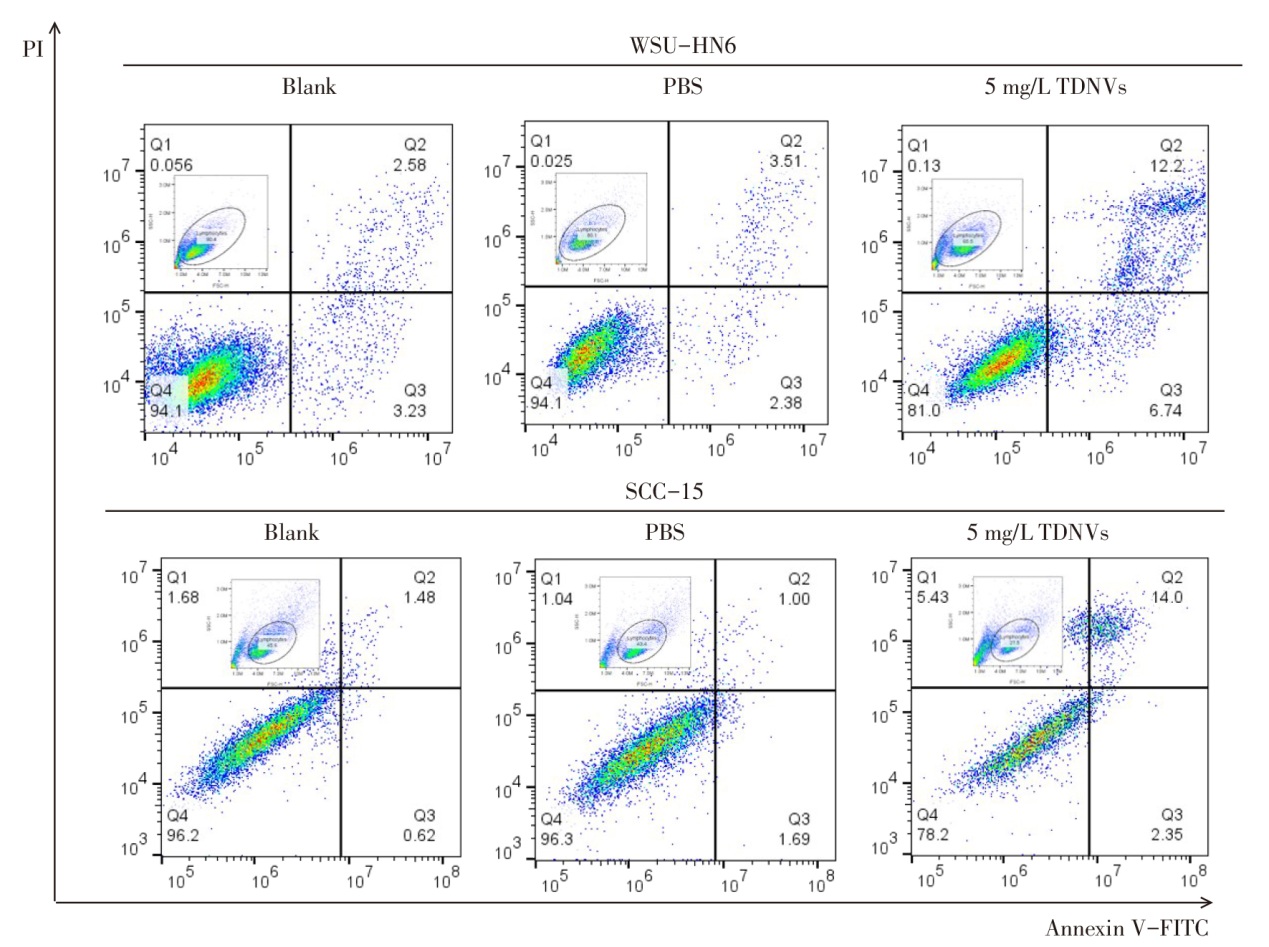
Fig.5 Effects of TDNVs on apoptosis of WSU-HN6 and SCC-15 cells
| 组别 | WSU-HN6 | SCC-15 |
|---|---|---|
| Blank组 | 5.90±0.30 | 3.43±1.27 |
| PBS组 | 6.12±0.28 | 3.50±0.78 |
| 5 mg/L组 | 20.17±1.15ab | 18.38±1.99ab |
| F | 400.604** | 107.332** |
Tab.5 Comparison of apoptosis ratios between the three groups
| 组别 | WSU-HN6 | SCC-15 |
|---|---|---|
| Blank组 | 5.90±0.30 | 3.43±1.27 |
| PBS组 | 6.12±0.28 | 3.50±0.78 |
| 5 mg/L组 | 20.17±1.15ab | 18.38±1.99ab |
| F | 400.604** | 107.332** |
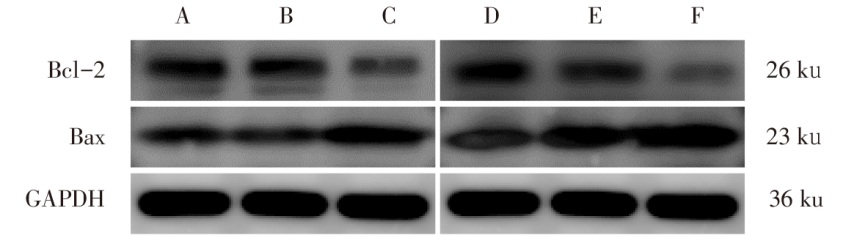
Fig.6 Effect of TDNVs on Bcl-2 and Bax protein expression in WSU-HN6 and SCC-15 cells
| 组别 | WSU-HN6 | SCC-15 | ||
|---|---|---|---|---|
| Bcl-2 | Bax | Bcl-2 | Bax | |
| Blank组 | 1.00±0.08 | 1.00±0.02 | 1.00±0.12 | 1.00±0.03 |
| PBS组 | 1.00±0.14 | 1.02±0.24 | 0.90±0.07 | 1.02±0.20 |
| 5 mg/L组 | 0.58±0.04ab | 1.81±0.02ab | 0.47±0.05ab | 1.56±0.04ab |
| F | 18.776** | 32.658** | 29.482** | 22.367** |
Tab.6 Comparison of Bcl-2 and Bax mRNA levels between the three groups of cells
| 组别 | WSU-HN6 | SCC-15 | ||
|---|---|---|---|---|
| Bcl-2 | Bax | Bcl-2 | Bax | |
| Blank组 | 1.00±0.08 | 1.00±0.02 | 1.00±0.12 | 1.00±0.03 |
| PBS组 | 1.00±0.14 | 1.02±0.24 | 0.90±0.07 | 1.02±0.20 |
| 5 mg/L组 | 0.58±0.04ab | 1.81±0.02ab | 0.47±0.05ab | 1.56±0.04ab |
| F | 18.776** | 32.658** | 29.482** | 22.367** |
| 组别 | WSU-HN6 | SCC-15 | ||
|---|---|---|---|---|
| Bcl-2 | Bax | Bcl-2 | Bax | |
| Blank组 | 1.00±0.02 | 1.00±0.02 | 1.00±0.01 | 1.00±0.01 |
| PBS组 | 1.04±0.04 | 1.09±0.11 | 0.92±0.16 | 1.09±0.30 |
| 5 mg/L组 | 0.54±0.05ab | 2.21±0.53ab | 0.25±0.04ab | 2.74±0.13ab |
| F | 146.687** | 13.852** | 55.052** | 157.001** |
Tab.7 Comparison of Bcl-2 and Bax protein levels between the three groups of cells
| 组别 | WSU-HN6 | SCC-15 | ||
|---|---|---|---|---|
| Bcl-2 | Bax | Bcl-2 | Bax | |
| Blank组 | 1.00±0.02 | 1.00±0.02 | 1.00±0.01 | 1.00±0.01 |
| PBS组 | 1.04±0.04 | 1.09±0.11 | 0.92±0.16 | 1.09±0.30 |
| 5 mg/L组 | 0.54±0.05ab | 2.21±0.53ab | 0.25±0.04ab | 2.74±0.13ab |
| F | 146.687** | 13.852** | 55.052** | 157.001** |
| [1] | TAN Y, WANG Z, XU M, et al. Oral squamous cell carcinomas:state of the field and emerging directions[J]. Int J Oral Sci, 2023, 15(1):44. doi:10.1038/s41368-023-00249-w. |
| [2] | BRAY F, LAVERSANNE M, SUNG H, et al. Global cancer statistics 2022:GLOBOCAN estimates of incidence and mortality worldwide for 36 cancers in 185 countries[J]. CA Cancer J Clin, 2024, 74(3):229-263. doi:10.3322/caac.21834. |
| [3] | 余朝霞, 马贲, 邱林, 等. 基于网络药理学和实验验证探究鲍式层孔菌多酚的抗头颈鳞癌机制[J]. 天津医药, 2025, 53(5):456-461. |
| YU Z X, MA B, QIU L, et al. Elucidation of the anti-head and neck squamous cell carcinoma mechanism of Phellinus baumii polyphenol based on network pharmacology and experimental verification[J]. Tianjin Med J, 2025, 53(5):456-461. doi:10.11958/20250580. | |
| [4] | LI Y, MENG D, CHENG Y, et al. Prospects of engineered exosomes in clinical applications:a review[J]. Drug Dev Ind Pharm, 2025, 51(11):1400-1416. doi:10.1080/03639045.2025.2541789. |
| [5] | SAH N K, ARORA S, SAHU R C, et al. Plant-based exosome-like extracellular vesicles as encapsulation vehicles for enhanced bioavailability and breast cancer therapy:recent advances and challenges[J]. Med Oncol, 2025, 42(6):184. doi:10.1007/s12032-025-02720-6. |
| [6] | HILLMAN T. The application of plant-exosome-like nanovesicles as improved drug delivery systems for cancer vaccines[J]. Discov Oncol, 2024, 15(1):136. doi:10.1007/s12672-024-00974-6. |
| [7] | TAO A, WANG X, LI C. Effect of lycopene on oral squamous cell carcinoma cell growth by inhibiting IGF1 pathway[J]. Cancer Manag Res, 2021, 13:723-732. doi:10.2147/CMAR.S283927. |
| [8] | 吴菊萍, 肖倩, 王建国, 等. 番茄外泌体的分离提取工艺优化及其作为药物载体的可行性分析[J]. 中国现代医学杂志, 2019, 29(24):8-14. |
| WU J P, XIAO Q, WANG J G, et al. Optimization of tomato-derived exosomes isolation and analyzsis of feasibility of it as nano carriers[J]. China Journal of Modern Medicine, 2019, 29(24):8-14. doi:10.3969/j.issn.1005-8982.2019.24.002. | |
| [9] | WANG B, ZHUANG X, DENG Z B, et al. Targeted drug delivery to intestinal macrophages by bioactive nanovesicles released from grapefruit[J]. Mol Ther, 2014, 22(3):522-534. doi:10.1038/mt.2013.190. |
| [10] | LIU Y, REN C, ZHAN R, et al. Exploring the potential of plant-derived exosome-like nanovesicle as functional food components for human health:a review[J]. Foods, 2024, 13(5):712. doi:10.3390/foods13050712. |
| [11] | CAO M, YAN H, HAN X, et al. Ginseng-derived nanoparticles alter macrophage polarization to inhibit melanoma growth[J]. J Immunother Cancer, 2019, 7(1):326. doi:10.1186/s40425-019-0817-4. |
| [12] | YANG M, LUO Q, CHEN X, et al. Bitter melon derived extracellular vesicles enhance the therapeutic effects and reduce the drug resistance of 5-fluorouracil on oral squamous cell carcinoma[J]. J Nanobiotechnology, 2021, 19(1):259. doi:10.1186/s12951-021-00995-1. |
| [13] | WU H, SHI M, MENG L, et al. Plant-derived extracellular vesicles as a novel tumor-targeting delivery system for cancer treatment[J]. Front Cell Dev Biol, 2025, 13:1589550. doi:10.3389/fcell.2025.1589550. |
| [14] | CUI L, PERINI G, MINOPOLI A, et al. Plant-derived extracellular vesicles as a natural drug delivery platform for glioblastoma therapy:a dual role in preserving endothelial integrity while modulating the tumor microenvironment[J]. Int J Pharm X, 2025, 10:100349. doi: 10.1016/j.ijpx.2025.100349. |
| [15] | 包哲. 复合膳食抗氧化指数与结直肠癌的关联性研究[D]. 呼和浩特: 内蒙古医科大学, 2024. |
| BAO Z. A study on the association between composite dietary antioxidant index and colorectal cancer[D]. Hohhot: Inner Mongolia Medical University, 2024. doi:10.27231/d.cnki.gnmyc.2024.000220. | |
| [16] | MATTHEWS H K, BERTOLI C, DE BRUIN R. Cell cycle control in cancer[J]. Nat Rev Mol Cell Biol, 2022, 23(1):74-88. doi:10.1038/s41580-021-00404-3. |
| [17] | ZHANG Y, LIANG Q, ZHANG Y, et al. Olmesartan alleviates bleomycin-mediated vascular smooth muscle cell senescence via the miR-665/SDC1 axis[J]. Am J Transl Res, 2020, 12(9):5205-5220. |
| [18] | D'ARCY M S. Cell death:a review of the major forms of apoptosis,necrosis and autophagy[J]. Cell Biol Int, 2019, 43(6):582-592. doi:10.1002/cbin.11137. |
| [19] | CARNEIRO B A, EL-DEIRY W S. Targeting apoptosis in cancer therapy[J]. Nat Rev Clin Oncol, 2020, 17(7):395-417. doi:10.1038/s41571-020-0341-y. |
| [20] | LANGELLOTTO M D, RASSU G, SERRI C, et al. Plant-derived extracellular vesicles:a synergetic combination of a drug delivery system and a source of natural bioactive compounds[J]. Drug Deliv Transl Res, 2025, 15(3):831-845. doi:10.1007/s13346-024-01698-4. |
| [1] | MA Yuexiang, FENG Zhanwang, WANG Qianyu, PENG Jinwen, WANG Wenying, ZHU Zhenhua, BIN Ji. The effects of daphnetin regulating the Src/FAK pathway on the proliferation, migration and epithelial-mesenchymal transition of nasopharyngeal carcinoma cells [J]. Tianjin Medical Journal, 2026, 54(8): 790-795. |
| [2] | LIANG Dongge, CAO Huan, ZHANG Ting, HE Qianqian, HUANG Han, TONG Ruifang. Effects of ziyuglycoside I on inflammatory injury in lung tissue of juvenile mice with mycoplasma pneumoniae via regulating the RhoA/ROCK signaling pathway [J]. Tianjin Medical Journal, 2026, 54(8): 808-814. |
| [3] | ZHANG Bo, XU Wei, ZHANG Jing, MA Xiao. The effects of GFPT1 on non-small cell lung cancer cells by adjusting the PD-L1 pathway [J]. Tianjin Medical Journal, 2026, 54(7): 687-692. |
| [4] | DONG Qian, CHEN Shuhua, ZHANG Fei. Research on the role of ACE2 in drug resistance of colorectal cancer and its predictive vaule [J]. Tianjin Medical Journal, 2026, 54(6): 561-569. |
| [5] | ZHANG Jing, ZHANG Ming, WEI Wei, NING Haihong, WEI Hongmei, LI Haiyan, WU Bin. Protective effect and mechanism of miR-194-5p inhibitor on myocardial injury in mice with type 2 diabetic cardiomyopathy [J]. Tianjin Medical Journal, 2026, 54(6): 577-584. |
| [6] | LIU Rong, XIANG Yanzeng, MA Lijuan, ZHANG Peng. The effect of adenovirus-mediated SPRY1 overexpression on apoptosis and autophagy in hepatocellular carcinoma [J]. Tianjin Medical Journal, 2026, 54(4): 337-343. |
| [7] | SONG Jinping, CUI Yanjie, WANG Changmin. The effect of miR-493-3p on high glucose-induced myocardial cell injury and apoptosis via the lncRNA CCAT2/TCF7L2 axis [J]. Tianjin Medical Journal, 2026, 54(4): 344-351. |
| [8] | QIAN Yong, CHEN Muxiu, ZHENG Shuang. The role of COX-2 in the proliferation and invasion of oral squamous cell carcinoma [J]. Tianjin Medical Journal, 2026, 54(4): 352-357. |
| [9] | LIU Jiani, SU Shuai, ZHANG Aiting, XU Xin, WANG Bangmao. Advances in the anti-tumor effects of cholera toxin [J]. Tianjin Medical Journal, 2026, 54(4): 438-443. |
| [10] | YANG Xiaofang, JIA Xinyan, FENG Wenjun. MiR-181a-5p regulates the proliferation and apoptosis of glomerular mesangial cells in lupus nephritis mice through HMGB1/NF-κB signaling pathway [J]. Tianjin Medical Journal, 2026, 54(3): 232-237. |
| [11] | ZHANG Jing, WEI Yuying, NING Haihong, WEI Hongmei, WANG Jiawei, CAO Wei, WU Bin. Protective effect and mechanism of dual-specificity phosphatase 9 on myocardial injury in mice with type 2 diabetic cardiomyopathy [J]. Tianjin Medical Journal, 2026, 54(3): 238-244. |
| [12] | LI Zhiwei, ZHANG Huichao, YANG Fengming, ZENG Chuiyi. Exploring the effect of red ginseng total saponins on cardiomyocyte apoptosis in dilated cardiomyopathy mice based on miR-144-3p/MAPK1 pathway [J]. Tianjin Medical Journal, 2026, 54(1): 23-29. |
| [13] | ZHAO Lanjun, LI Lianghui, MA Xin, GONG Jiaojiao, ZHENG Chenhui, SHI Lin. The effect of andrographolide regulating STAT3/GPX4 pathway on proliferation and apoptosis of myeloma cells [J]. Tianjin Medical Journal, 2026, 54(1): 8-13. |
| [14] | KONG Cuiwen, LU Yanshuang, SUN Liping, YU Fenfen. The effect of LncRNA SNHG14 on high glucose induced podocyte injury by targeting miR-30a-5p [J]. Tianjin Medical Journal, 2025, 53(9): 903-909. |
| [15] | LIU Hong, ZHANG Yueyue, WANG Yilin, WANG Caili, WANG Xiaomin, MAO Min, LI Yan. The research on the mechanism of microRNA-34a influencing the progression of chronic lymphocytic leukemia by regulating the Wnt pathway [J]. Tianjin Medical Journal, 2025, 53(8): 785-790. |
| Viewed | ||||||
|
Full text |
|
|||||
|
Abstract |
|
|||||
