
Tianjin Medical Journal ›› 2026, Vol. 54 ›› Issue (1): 46-51.doi: 10.11958/20252869
• Clinical Research • Previous Articles Next Articles
YANG Yi( ), DUO Hong, YANG Ya’nan, LIU Yun, LIANG Fengyi, YANG Xueqin△()
Received:2025-09-09
Revised:2025-10-18
Published:2026-01-15
Online:2026-01-19
Contact:
△ E-mail:YANG Yi, DUO Hong, YANG Ya’nan, LIU Yun, LIANG Fengyi, YANG Xueqin. The value of tumor marker-based RECIST criteria in efficacy evaluation for advanced ovarian cancer[J]. Tianjin Medical Journal, 2026, 54(1): 46-51.
CLC Number:
| 疗效 | 主要标志物 | 次要标志物 | 基线正常的标志物 | 其他需要符合的条件 |
|---|---|---|---|---|
| tmCR | 降至正常 | 降至正常 | 正常 | 全部满足上述条件,至少维持3周以上 |
| tmPR | 下降≥30% | 下降,或上升≤20% | ≤1.5倍临界值 | 全部满足上述条件,至少维持3周以上 |
| tmSD | 既不满足tmPR和tmCR,亦不满足tmPD | |||
| tmPD | 上升≥30% | 上升≥50% | ≥2倍临界值 | 满足任一条件,至少维持3周以上 |
Tab.1 Response evaluation criteria in solid tumors based on tumor markers (RecistTM version 1.2)
| 疗效 | 主要标志物 | 次要标志物 | 基线正常的标志物 | 其他需要符合的条件 |
|---|---|---|---|---|
| tmCR | 降至正常 | 降至正常 | 正常 | 全部满足上述条件,至少维持3周以上 |
| tmPR | 下降≥30% | 下降,或上升≤20% | ≤1.5倍临界值 | 全部满足上述条件,至少维持3周以上 |
| tmSD | 既不满足tmPR和tmCR,亦不满足tmPD | |||
| tmPD | 上升≥30% | 上升≥50% | ≥2倍临界值 | 满足任一条件,至少维持3周以上 |
| RECIST | RecistTM | 总数 | |||
|---|---|---|---|---|---|
| tmCR | tmPR | tmSD | tmPD | ||
| CR | 2 | 0 | 0 | 0 | 2 |
| PR | 39 | 21 | 0 | 0 | 60 |
| SD | 15 | 9 | 1 | 0 | 25 |
| PD | 1 | 0 | 0 | 2 | 3 |
| 总数 | 57 | 30 | 1 | 2 | 90 |
Tab.2 Assessment of tumor response and concordance between the RecistTM and RECIST criteria (例)
| RECIST | RecistTM | 总数 | |||
|---|---|---|---|---|---|
| tmCR | tmPR | tmSD | tmPD | ||
| CR | 2 | 0 | 0 | 0 | 2 |
| PR | 39 | 21 | 0 | 0 | 60 |
| SD | 15 | 9 | 1 | 0 | 25 |
| PD | 1 | 0 | 0 | 2 | 3 |
| 总数 | 57 | 30 | 1 | 2 | 90 |
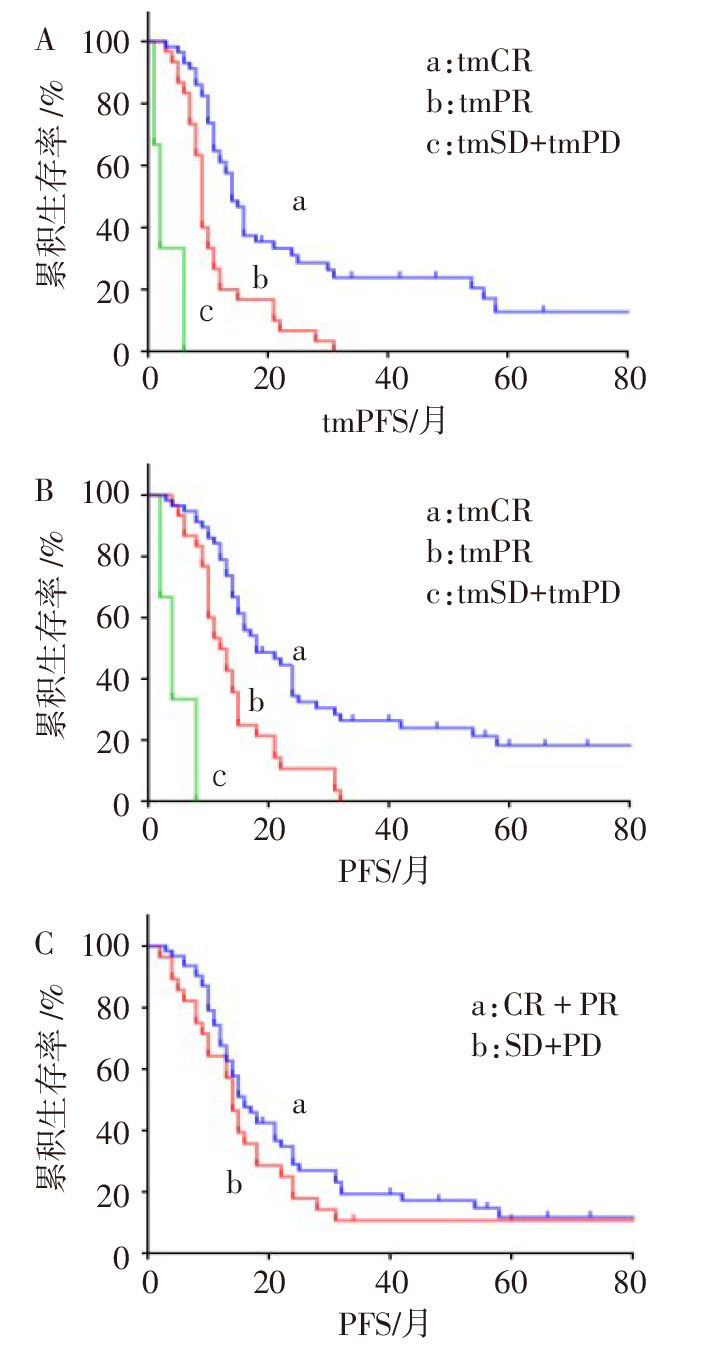
Fig.1 Kaplan-Meier curves analyzing the relationship between the two criteria and disease progression in patients
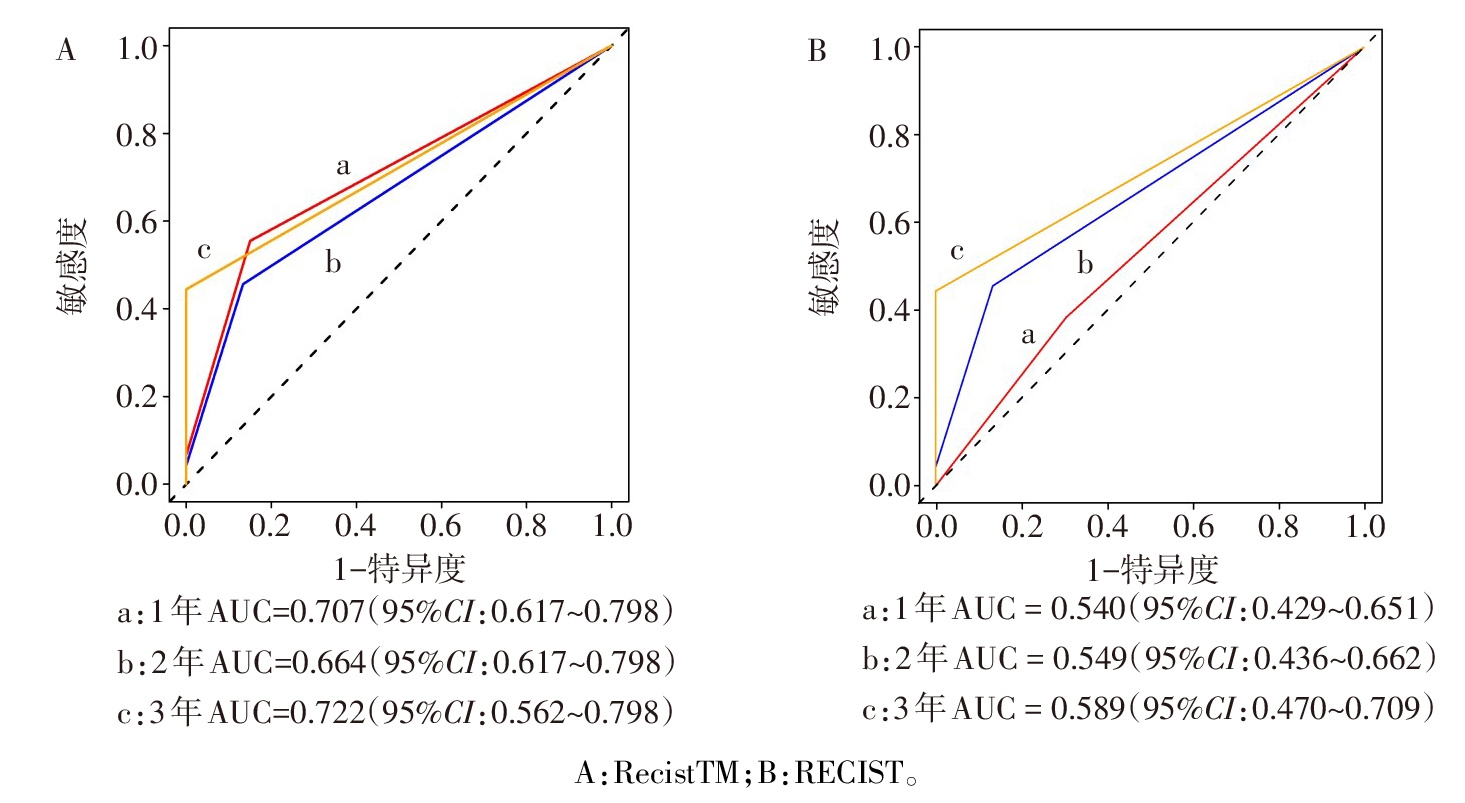
Fig.2 ROC curves of the two criteria for predicting the risk of 1-year, 2-year and 3-year disease progression
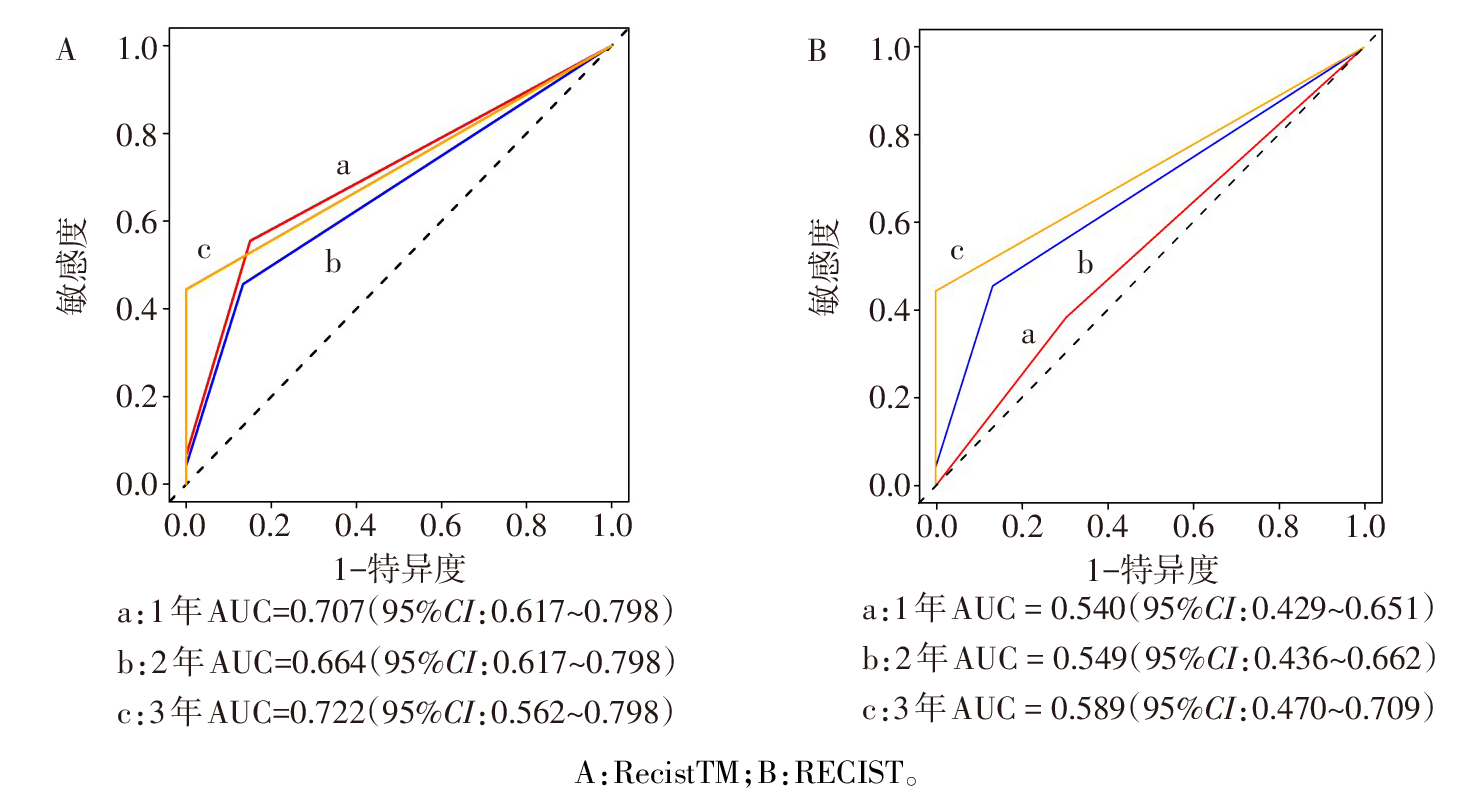
Fig.3 Kaplan-Meier curves analyzing the relationship between the two criteria and patient mortality
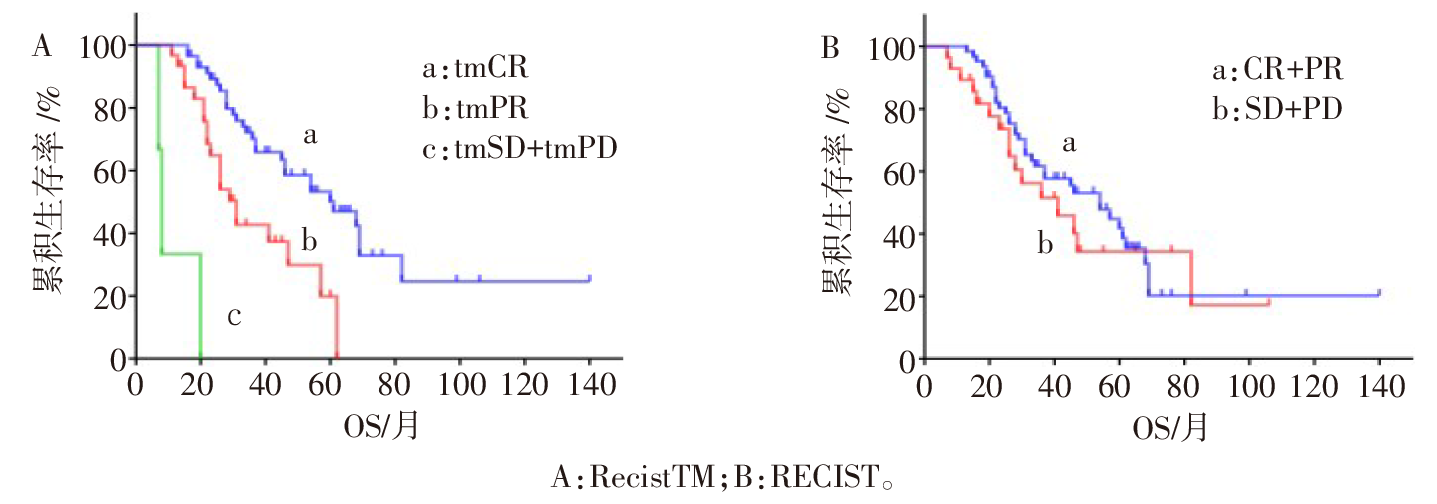
Fig. 4 Comparison of overall survival after RecistTM re-stratification in patients with PR and SD based on RECIST criteria
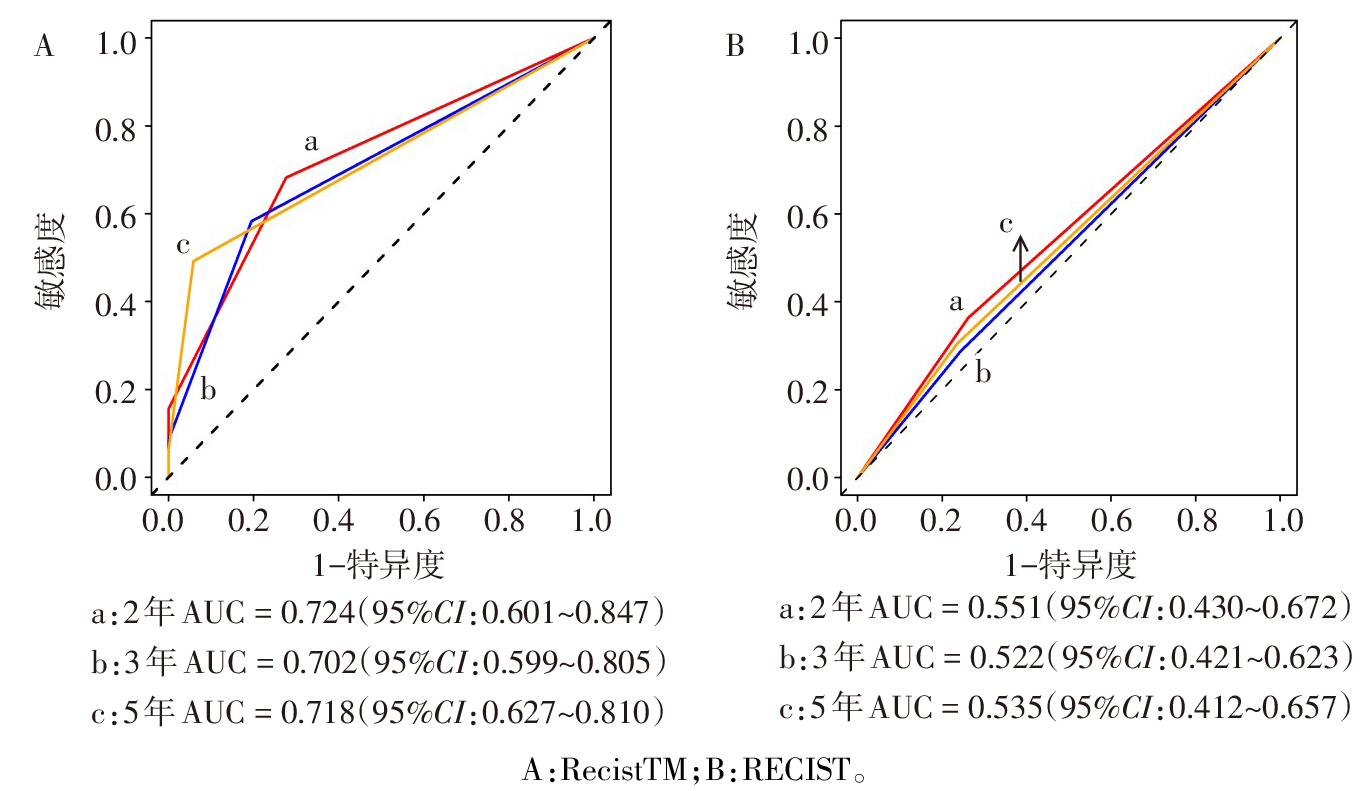
Fig.5 ROC curves of the two criteria for predicting the risk of 2-year, 3-year and 5-year mortality
| 指标 | β | SE | Wald χ2 | P | HR | HR 95%CI |
|---|---|---|---|---|---|---|
| 年龄 | 0.022 | 0.016 | 1.797 | 0.180 | 1.022 | 0.990~1.055 |
| 一线化疗周期数 | -0.498 | 0.282 | 3.130 | 0.077 | 0.608 | 0.350~1.055 |
| FIGO分期 | 0.212 | 0.283 | 0.559 | 0.455 | 1.236 | 0.709~2.153 |
| IDS | -0.937 | 0.301 | 9.693 | 0.002 | 0.392 | 0.217~0.707 |
| RECIST | 0.130 | 0.308 | 0.178 | 0.673 | 1.139 | 0.623~2.081 |
| RecistTM | 1.074 | 0.306 | 12.282 | <0.001 | 2.927 | 1.605~5.336 |
Tab.3 Univariable Cox regression analysis of risk factors for mortality in patients with ovarian cancer
| 指标 | β | SE | Wald χ2 | P | HR | HR 95%CI |
|---|---|---|---|---|---|---|
| 年龄 | 0.022 | 0.016 | 1.797 | 0.180 | 1.022 | 0.990~1.055 |
| 一线化疗周期数 | -0.498 | 0.282 | 3.130 | 0.077 | 0.608 | 0.350~1.055 |
| FIGO分期 | 0.212 | 0.283 | 0.559 | 0.455 | 1.236 | 0.709~2.153 |
| IDS | -0.937 | 0.301 | 9.693 | 0.002 | 0.392 | 0.217~0.707 |
| RECIST | 0.130 | 0.308 | 0.178 | 0.673 | 1.139 | 0.623~2.081 |
| RecistTM | 1.074 | 0.306 | 12.282 | <0.001 | 2.927 | 1.605~5.336 |
| 指标 | β | SE | Wald χ2 | P | HR | HR 95%CI |
|---|---|---|---|---|---|---|
| 年龄 | -0.017 | 0.019 | 0.814 | 0.367 | 0.983 | 0.947~1.020 |
| 一线化疗周期数 | -0.208 | 0.323 | 0.415 | 0.519 | 0.812 | 0.432~1.529 |
| FIGO分期 | 0.006 | 0.313 | 0.000 | 0.985 | 1.006 | 0.545~1.856 |
| IDS | -0.706 | 0.385 | 3.355 | 0.067 | 0.494 | 0.232~1.051 |
| RECIST | -0.012 | 0.336 | 0.001 | 0.971 | 0.988 | 0.511~1.910 |
| RecistTM | 0.916 | 0.343 | 7.127 | 0.008 | 2.499 | 1.276~4.896 |
Tab.4 Multivariable Cox regression analysis of risk factors for mortality in patients with ovarian cancer
| 指标 | β | SE | Wald χ2 | P | HR | HR 95%CI |
|---|---|---|---|---|---|---|
| 年龄 | -0.017 | 0.019 | 0.814 | 0.367 | 0.983 | 0.947~1.020 |
| 一线化疗周期数 | -0.208 | 0.323 | 0.415 | 0.519 | 0.812 | 0.432~1.529 |
| FIGO分期 | 0.006 | 0.313 | 0.000 | 0.985 | 1.006 | 0.545~1.856 |
| IDS | -0.706 | 0.385 | 3.355 | 0.067 | 0.494 | 0.232~1.051 |
| RECIST | -0.012 | 0.336 | 0.001 | 0.971 | 0.988 | 0.511~1.910 |
| RecistTM | 0.916 | 0.343 | 7.127 | 0.008 | 2.499 | 1.276~4.896 |
| [1] | NEESHAM D, RICHARDS A, MCGAURAN M. Advances in epithelial ovarian cancer[J]. Aust J Gen Pract, 2020, 49(10):665-669. doi:10.31128/AJGP-09-19-5098. |
| [2] | 喻萍, 周敏, 苏丹. 卵巢癌化疗耐药预测模型的建立及效果评价[J]. 天津医药, 2024, 52(11):1177-1183. |
| YU P, ZHOU M, SU D. Construction and validation of chemotherapy resistance prediction model for ovarian cancer[J]. Tianjin Med J, 2024, 52(11):1177-1183. doi:10.11958/20240546. | |
| [3] | WEBB P M, JORDAN S J. Global epidemiology of epithelial ovarian cancer[J]. Nat Rev Clin Oncol, 2024, 21(5):389-400. doi:10.1038/s41571-024-00881-3. |
| [4] | ALI A T, AL-ANI O, AL-ANI F. Epidemiology and risk factors for ovarian cancer[J]. Prz Menopauzalny, 2023, 22(2):93-104. doi:10.5114/pm.2023.128661. |
| [5] | IBANEZ K R, DONOHUE D, MALYS T, et al. Gynecologic Cancer InterGroup CA125 response has a high negative predictive value for CHK1 inhibitor RECIST response in recurrent ovarian cancer[J]. Sci Rep, 2024,14:17459. doi:10.1038/s41598-024-68338-2. |
| [6] | CHARKHCHI P, CYBULSKI C, GRONWALD J, et al. CA125 and ovarian cancer:a comprehensive review[J]. Cancers(Basel), 2020,12,3730. doi:10.3390/cancers12123730. |
| [7] | YANG Y, JIANG X, LIU Y, et al. Elevated tumor markers for monitoring tumor response to immunotherapy[J]. EClinicalMedicine, 2022,46:101381. doi:10.1016/j.eclinm.2022.101381. |
| [8] | XIONG K, YANG Y, YANG Y, et al. Tumor marker-based RecistTM is superior to RECIST as criteria to predict the long-term benefits of targeted therapy in advanced non-small-cell lung cancer with driver gene mutations[J]. Neoplasia, 2024,53:101006. doi:10.1016/j.neo.2024.101006. |
| [9] | SCHWARTZ L H, LITIÈRE S, DE VRIES E, et al. RECIST 1.1-Update and clarification:from the RECIST committee[J]. Eur J Cancer, 2016, 62:132-137. doi:10.1016/j.ejca.2016.03.081. |
| [10] | KRASOVITSKY M, LEE Y C, SIM H W, et al. Interobserver and intraobserver variability of RECIST assessment in ovarian cancer[J]. Int J Gynecol Cancer, 2022, 32(5):656-661. doi:10.1136/ijgc-2021-003319. |
| [11] | SHAHNAM A, HITCHEN N, NINDRA U, et al. Objective response rate and progression-free survival as surrogates for overall survival treatment effect:a meta-analysis across diverse tumour groups and contemporary therapies[J]. Eur J Cancer, 2024,198:113503. doi:10.1016/j.ejca.2023.113503. |
| [12] | ZEBIC D S, TJOKROWIDJAJA A, FRANCIS K E, et al. Discordance between GCIG CA-125 progression and RECIST progression in the CALYPSO trial of patients with platinum-sensitive recurrent ovarian cancer[J]. Br J Cancer, 2024, 130(3):425-433. doi:10.1038/s41416-023-02528-z. |
| [13] | MORGAN R D, MCNEISH I A, COOK A D, et al. Objective responses to first-line neoadjuvant carboplatin-paclitaxel regimens for ovarian,fallopian tube,or primary peritoneal carcinoma (ICON8):post-hoc exploratory analysis of a randomised,phase 3 trial[J]. Lancet Oncol, 2021, 22(2):277-288. doi:10.1016/S1470-2045(20)30591-X. |
| [14] | DU K, LI Q, HUANG J, et al. An increase of serum CA-125 to two times of nadir level strongly predicts the image-identified relapse of serous ovarian cancer[J]. Sci Rep, 2024, 14(1):14986. doi:10.1038/s41598-024-65760-4. |
| [15] | YANG L, LI M, LIANG H, et al. Predicting epithelial ovarian cancer prognosis:correlation of posttreatment 18F-fluorodeoxyglucose positron emission tomography-computed tomography metabolic parameters, serum carbohydrate antigen,and human epididymis protein levels with overall survival[J]. Quant Imaging Med Surg, 2024, 14(1):972-985. doi:10.21037/qims-23-859. |
| [16] | JIN X, DU M, WANG Y, et al. Evaluation of serum CA125-Tn glycoform in peritoneal dissemination and surgical completeness of high-grade serous ovarian cancer[J]. J Ovarian Res, 2022, 15(1):134. doi:10.1186/s13048-022-01066-1. |
| [17] | UNO M, MATSUO R, MAEZAWA N, et al. Evaluation of follow-up observation using human epididymis protein 4,a tumor marker,in patients with ovarian cancer[J]. Obstet Gynecol Sci, 2023, 66(4):290-299. doi:10.5468/ogs.23024. |
| [18] | PLOTTI F, TERRANOVA C, GUZZO F, et al. Role of BRCA mutation and HE4 in predicting chemotherapy response in ovarian cancer:a retrospective pilot study[J]. Biomedicines, 2021, 9(1):55. doi:10.3390/biomedicines9010055. |
| [19] | SALANI R, BACKES F J, FUNG F M, et al. Posttreatment surveillance and diagnosis of recurrence in women with gynecologic malignancies:Society of Gynecologic Oncologists recommendations[J]. Am J Obstet Gynecol, 2011, 204(6):466-478. doi:10.1016/j.ajog.2011.03.008. |
| [20] | 廖慧妍, 肖静. 上皮性卵巢癌生化复发的判定、随访及治疗研究进展[J]. 现代肿瘤医学, 2023, 31(14):2714-2719. |
| LIAO H Y, XIAO J. Research progress on determination,follow-up and treatment of biochemical recurrence of epithelial ovarian cancer[J]. Modern Oncology, 2023, 31(14):2714-2719. doi:10.3969/j.issn.1672-4992.2023.14.028. |
| Viewed | ||||||
|
Full text |
|
|||||
|
Abstract |
|
|||||
