
Tianjin Medical Journal ›› 2026, Vol. 54 ›› Issue (9): 928-933.doi: 10.11958/20253193
• Clinical Research • Previous Articles Next Articles
WANG Jing1( ), MA Yuanyuan2,△(), WANG Zhipei1, ZHAO Wenhui1, XU Tingting1
Received:2025-10-20
Revised:2026-04-02
Published:2026-09-15
Online:2026-09-14
Contact:
△E-mail:13582759560@163.com
WANG Jing, MA Yuanyuan, WANG Zhipei, ZHAO Wenhui, XU Tingting. Clinical value of ultrasound and serum S100B combined with glial fibrillary acidic protein in evaluating carotid vulnerable plaque[J]. Tianjin Medical Journal, 2026, 54(9): 928-933.
CLC Number:
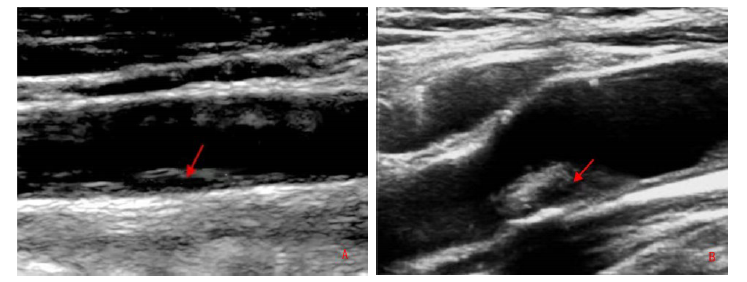
Fig.1 Right common carotid artery contrast-enhanced ultrasound image
| 组别 | n | 性别(男/女) | 年龄/岁 | BMI/(kg/m2) | |||||||
|---|---|---|---|---|---|---|---|---|---|---|---|
| 易损斑块组 | 63 | 41/22 | 63.97±4.02 | 23.94±2.57 | |||||||
| 稳定斑块组 | 37 | 27/10 | 63.06±4.68 | 23.61±2.36 | |||||||
| χ2或t | 0.667 | 1.028 | 0.639 | ||||||||
| 组别 | 吸烟史 | 饮酒史 | 高血压史 | 糖尿病史 | |||||||
| 易损斑块组 | 32(50.8) | 19(30.2) | 26(41.3) | 22(34.9) | |||||||
| 稳定斑块组 | 16(43.2) | 10(27.0) | 12(32.4) | 11(29.7) | |||||||
| χ2 | 0.532 | 0.111 | 0.773 | 0.284 | |||||||
| 组别 | 高血脂史 | SBP/mmHg | DBP/mmHg | ||||||||
| 易损斑块组 | 37(58.7) | 131.28±13.05 | 81.52±7.54 | ||||||||
| 稳定斑块组 | 20(54.1) | 127.39±12.28 | 79.64±9.15 | ||||||||
| χ2或t | 0.208 | 1.470 | 1.111 | ||||||||
Tab.1 Comparison of general data between the two groups of patients
| 组别 | n | 性别(男/女) | 年龄/岁 | BMI/(kg/m2) | |||||||
|---|---|---|---|---|---|---|---|---|---|---|---|
| 易损斑块组 | 63 | 41/22 | 63.97±4.02 | 23.94±2.57 | |||||||
| 稳定斑块组 | 37 | 27/10 | 63.06±4.68 | 23.61±2.36 | |||||||
| χ2或t | 0.667 | 1.028 | 0.639 | ||||||||
| 组别 | 吸烟史 | 饮酒史 | 高血压史 | 糖尿病史 | |||||||
| 易损斑块组 | 32(50.8) | 19(30.2) | 26(41.3) | 22(34.9) | |||||||
| 稳定斑块组 | 16(43.2) | 10(27.0) | 12(32.4) | 11(29.7) | |||||||
| χ2 | 0.532 | 0.111 | 0.773 | 0.284 | |||||||
| 组别 | 高血脂史 | SBP/mmHg | DBP/mmHg | ||||||||
| 易损斑块组 | 37(58.7) | 131.28±13.05 | 81.52±7.54 | ||||||||
| 稳定斑块组 | 20(54.1) | 127.39±12.28 | 79.64±9.15 | ||||||||
| χ2或t | 0.208 | 1.470 | 1.111 | ||||||||
| 组别 | n | TC/(mmol/L) | TG/(mmol/L) | LDL-C/(mmol/L) | |||
|---|---|---|---|---|---|---|---|
| 易损斑块组 | 63 | 4.51±1.05 | 1.64±0.55 | 3.05±0.72 | |||
| 稳定斑块组 | 37 | 4.43±1.13 | 1.57±0.62 | 2.84±0.84 | |||
| t | 0.358 | 0.586 | 1.323 | ||||
| 组别 | HDL-C/(mmol/L) | S100B/(µg/L) | GFAP/(ng/L) | ||||
| 易损斑块组 | 1.48±0.31 | 3.14±0.52 | 75.25±14.69 | ||||
| 稳定斑块组 | 1.39±0.35 | 2.56±0.43 | 56.07±10.08 | ||||
| t | 1.336 | 5.728** | 7.023** | ||||
Tab.2 Comparison of laboratory indicators between the two groups of patients
| 组别 | n | TC/(mmol/L) | TG/(mmol/L) | LDL-C/(mmol/L) | |||
|---|---|---|---|---|---|---|---|
| 易损斑块组 | 63 | 4.51±1.05 | 1.64±0.55 | 3.05±0.72 | |||
| 稳定斑块组 | 37 | 4.43±1.13 | 1.57±0.62 | 2.84±0.84 | |||
| t | 0.358 | 0.586 | 1.323 | ||||
| 组别 | HDL-C/(mmol/L) | S100B/(µg/L) | GFAP/(ng/L) | ||||
| 易损斑块组 | 1.48±0.31 | 3.14±0.52 | 75.25±14.69 | ||||
| 稳定斑块组 | 1.39±0.35 | 2.56±0.43 | 56.07±10.08 | ||||
| t | 1.336 | 5.728** | 7.023** | ||||
| 变量 | β | SE | Wald χ2 | P | OR | OR(95%CI) |
|---|---|---|---|---|---|---|
| S100B | 3.918 | 0.961 | 16.605 | <0.001 | 50.286 | 7.648~330.815 |
| GFAP | 0.153 | 0.036 | 18.338 | <0.001 | 1.165 | 1.086~1.251 |
| 常数项 | -20.139 | 4.447 | 20.513 | <0.001 | 0.000 | - |
Tab.3 Multivariate analysis of factors affecting arterial plaque stability in patients
| 变量 | β | SE | Wald χ2 | P | OR | OR(95%CI) |
|---|---|---|---|---|---|---|
| S100B | 3.918 | 0.961 | 16.605 | <0.001 | 50.286 | 7.648~330.815 |
| GFAP | 0.153 | 0.036 | 18.338 | <0.001 | 1.165 | 1.086~1.251 |
| 常数项 | -20.139 | 4.447 | 20.513 | <0.001 | 0.000 | - |
| 变量 | AUC | 95%CI | 敏感度/ % | 特异度/ % | 截断值 | 约登 指数 |
|---|---|---|---|---|---|---|
| S100B | 0.820 | 0.731~0.890 | 76.19 | 83.78 | 2.94 | 0.600 |
| GFAP | 0.855 | 0.771~0.918 | 73.02 | 86.49 | 66.87 | 0.595 |
| 超声结果 | 0.874 | 0.792~0.932 | 93.65 | 81.08 | - | 0.747 |
| 三者联合 | 0.918 | 0.846~0.964 | 73.02 | 97.30 | - | 0.703 |
Tab.4 Predictive efficiency of ultrasound,serum S100B,GFAP and their combination in predicting carotid vulnerable plaque in patients
| 变量 | AUC | 95%CI | 敏感度/ % | 特异度/ % | 截断值 | 约登 指数 |
|---|---|---|---|---|---|---|
| S100B | 0.820 | 0.731~0.890 | 76.19 | 83.78 | 2.94 | 0.600 |
| GFAP | 0.855 | 0.771~0.918 | 73.02 | 86.49 | 66.87 | 0.595 |
| 超声结果 | 0.874 | 0.792~0.932 | 93.65 | 81.08 | - | 0.747 |
| 三者联合 | 0.918 | 0.846~0.964 | 73.02 | 97.30 | - | 0.703 |
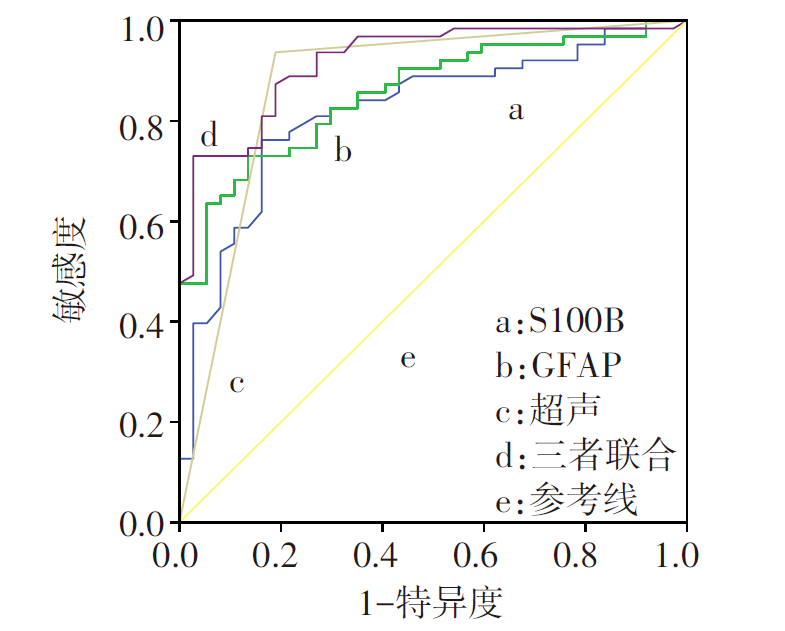
Fig.2 ROC curves of ultrasound, serum S100B and GFAP as well as their combined prediction of carotid vulnerable plaque in patients
| [1] | 包青滢, 张玲玲, 马松华, 等. 急性缺血性脑卒中患者血清可溶性生长刺激表达基因2蛋白、脑钠肽与颈动脉粥样硬化程度的相关性[J]. 实用临床医药杂志, 2024, 28(8):70-74,78. |
| Bao Q Y, Zhang L L, Ma S H, et al. Correlations between serum soluble growth stimulation gene 2 protein,brain natriuretic peptide and the degree of carotid atherosclerosis in patients with acute ischemic stroke[J]. J Clin Med Pract, 2024, 28(8):70-74,78. doi:10.7619/jcmp.20240200. | |
| [2] | 李景植, 华扬, 刘然, 等. 超声造影检测颈动脉斑块内新生血管与症状性缺血性脑血管病的相关性研究[J]. 中国脑血管病杂志, 2023, 20(2):90-95. |
| Li J Z, Hua Y, Liu R, et al. Correlation between intra-plaque neovascularization detected by contrast-enhanced carotid ultrasound and symptomatic ischemic cerebrovascular disease[J]. Chin J Cerebrovasc Dis, 2023, 20(2):90-95. doi:10.3969/j.issn.1672-5921.2023.02.003. | |
| [3] | 傅懋林, 肖雪玲, 唐凯, 等. 经颅多普勒超声微栓子监测评估PAS治疗颈动脉颈段易损斑块疗效的观察[J]. 国际神经病学神经外科学杂志, 2024, 51(3):22-26. |
| Fu M L, Xiao X L, Tang K, et al. Value of transcranial doppler microembolus monitoring in evaluating the efficacy of PAS therapy in treatment of vulnerable carotid plaques[J]. J Int Neurol Neurosurg, 2024, 51(3):22-26. doi:10.16636/j.cnki.jinn.1673-2642.2024.03.004. | |
| [4] | 洪冰, 李琪, 李娜娜. 血管内超声弹性成像技术在老年颈动脉粥样硬化斑块稳定性评估中的应用[J]. 中国老年学杂志, 2023, 43(23):5636-5638. |
| Hong B, Li Q, Li N N. Application of intravascular ultrasound elastography in evaluating the stability of carotid atherosclerotic plaque in the elderly[J]. Chin J Gerontol, 2023, 43(23):5636-5638. doi:10.3969/j.issn.1005-9202.2023.23.002. | |
| [5] | 杨昌建, 韩丽, 赵月, 等. 超声引导下星状神经节阻滞对颈动脉内膜切除术中脑氧代谢和S100B蛋白的影响[J]. 国际脑血管病杂志, 2023, 31(9):664-671. |
| Yang C J, Han L, Zhao Y, et al. Effect of ultrasound-guided stellate ganglion block on cerebral oxygen metabolism and S100B protein during carotid endarterectomy[J]. Int J Cerebrovasc Dis, 2023, 31(9):664-671. doi:10.3760/cma.j.issn.1673-4165.2023.09.005. | |
| [6] | 宗珂. 血清UCH-L1、GFAP水平与老年脑梗死患者颈动脉狭窄的相关性[J]. 医药论坛杂志, 2023, 44(3):30-33. |
| Zong K. Correlation between serum UCH-L1,GFAP levels and carotid stenosis in elderly patients with cerebral infarction[J]. J Med Forum, 2023, 44(3):30-33. | |
| [7] | 葛树勇, 王庆祝, 王相报, 等. CTA评估后循环脑缺血椎基底动脉粥样斑块性质的研究[J]. 神经损伤与功能重建, 2022, 17(3):159-161. |
| Ge S Y, Wang Q Z, Wang X B, et al. Evaluation of vertebrobasilar artery atherosclerotic plaque in posterior circulation cerebral ischemia by CTA[J]. Neural Inj Funct Reconstr, 2022, 17(3):159-161. doi:10.16780/j.cnki.sjssgncj.20200837. | |
| [8] | 中华医学会外科学分会血管外科学组. 颈动脉狭窄诊治指南[J]. 中国血管外科杂志(电子版), 2017, 9(3):169-175. |
| Vascular Surgery Group of Surgery Society of Chinese Medical Association. Guidelines for the diagnosis and treatment of carotid stenosis[J]. Chin J Vasc Surg (Electr Vers), 2017, 9(3):169-175. doi:10.3969/j.issn.1674-7429.2017.03.003. | |
| [9] | 中国医师协会超声医师分会. 超声评价颈动脉易损斑块中国专家共识(2023版)[J]. 中华超声影像学杂志, 2023, 32(8):645-655. |
| Ultrasound Doctor Branch of Chinese Medical Doctor Association. Chinese expert consensus on ultrasound evaluation of vulnerable carotid plaque(2023 edition)[J]. Chin J Ultrasonogr, 2023, 32(8):645-655. doi:10.3760/cma.j.cn131148-20230418-00215. | |
| [10] | Murgia A, Erta M, Suri J S, et al. CT imaging features of carotid artery plaque vulnerability[J]. Ann Transl Med, 2020, 8(19):1261. doi:10.21037/atm-2020-cass-13. |
| [11] | 吴国华, 张晓飞, 王琦, 等. 老年缺血性脑卒中患者颈动脉斑块特征及血液流变学与疾病分型及严重程度的关系[J]. 实用临床医药杂志, 2024, 28(13):58-62. |
| Wu G H, Zhang X F, Wang Q, et al. Relationships of carotid plaque characteristics and hemorheology with disease classification and severity in elderly patients with ischemic stroke[J]. J Clin Med Pract, 2024, 28(13):58-62. doi:10.7619/jcmp.20240835. | |
| [12] | 曾宇琪, 郑进, 霍桂军, 等. 多模态影像学对颈动脉斑块易损性的诊断价值[J]. 血管与腔内血管外科杂志, 2024, 10(3):270-274. |
| Zeng Y Q, Zheng J, Huo G J, et al. Diagnostic value of multimodal imaging for the vulnerability of carotid artery plaque[J]. J Vasc Endovasc Surg, 2024, 10(3):270-274. doi:10.19418/j.cnki.issn2096-0646.2024.03.04. | |
| [13] | Liu Z, Wang J, Guo F, et al. Role of S100β in unstable angina pectoris:insights from quantitative flow ratio[J]. Arch Med Res, 2024, 55(5):103034. doi:10.1016/j.arcmed.2024.103034. |
| [14] | Yun G S, In Y N, Kang C, et al. Development of a strategy for assessing blood-brain barrier disruption using serum S100 calcium-binding protein B and neuron-specific enolase in early stage of neuroemergencies:a preliminary study[J]. Medicine(Baltimore), 2022, 101(28):e29644. doi:10.1097/MD.0000000000029644. |
| [15] | 仇颖, 何淼. 血清S100A4、S100B和S100P水平在预测急性心肌梗死预后中的价值[J]. 检验医学与临床, 2021, 18(17):2517-2520,2524. |
| Qiu Y, He M. Value of serum S100A4,S100B and S100P levels in predicting the prognosis of acute myocardial infarction[J]. Lab Med Clin, 2021, 18(17):2517-2520,2524. doi:10.3969/j.issn.1672-9455.2021.17.016. | |
| [16] | Mahan T E, Wang C, Bao X, et al. Selective reduction of astrocyte apoE3 and apoE4 strongly reduces Aβ accumulation and plaque-related pathology in a mouse model of amyloidosis[J]. Mol Neurodegener, 2022, 17(1):13. doi:10.1186/s13024-022-00516-0. |
| [17] | 张俊湖, 卓军, 巩利, 等. 血清炎性因子和神经细胞因子水平与老年后循环脑梗死患者椎动脉斑块形成及斑块稳定性的关系[J]. 临床和实验医学杂志, 2021, 20(10):1066-1069. |
| Zhang J H, Zhuo J, Gong L, et al. Relationship between the levels of serum inflammatory factors and neurocytokines and the formation and stability of vertebral artery plaque in elderly patients with posterior circulation cerebral infarction[J]. J Clin Exp Med, 2021, 20(10):1066-1069. doi:10.3969/j.issn.1671-4695.2021.10.016. | |
| [18] | 鲍月宁, 武星颖, 曹传宇. 老年急性缺血性脑卒中患者IL-6、Netrin-1、GFAP水平变化及意义[J]. 中国老年学杂志, 2024, 44(20):4893-4896. |
| Bao Y N, Wu X Y, Cao C Y. Changes and significance of IL-6,Netrin-1 and GFAP levels in elderly patients with acute ischemic stroke[J]. Chin J Gerontol, 2024, 44(20):4893-4896. doi:10.3969/j.issn.1005-9202.2024.20.008. | |
| [19] | 刘文涛, 吴锋, 席建平, 等. 后循环脑梗死患者椎基底动脉狭窄与血清生化指标及预后的关系[J]. 检验医学与临床, 2022, 19(3):316-320. |
| Liu W T, Wu F, Xi J P, et al. Relationship between vertebrobasilar artery stenosis and serum biochemical indexes in patients with posterior circulation cerebral infarction[J]. Lab Med Clin, 2022, 19(3):316-320. doi:10.3969/j.issn.1672-9455.2022.03.008. | |
| [20] | 刘月, 伍建林. 多模态超声技术评估颈动脉粥样硬化斑块易损性研究进展[J]. 中国介入影像与治疗学, 2024, 21(6):374-377. |
| Liu Y, Wu J L. Research progresses of multimodal ultrasound technology for evaluating vulnerability of carotid atherosclerotic plaque[J]. Chin J Intervent Imag Ther, 2024, 21(6):374-377. doi:10.13929/j.issn.1672-8475.2024.06.013. | |
| [21] | 张岩, 史楠, 祁研, 等. 颈部血管彩色超声、超声造影技术及两者联合对缺血性脑卒中患者颈动脉斑块的诊断效果[J]. 岭南心血管病杂志, 2024, 30(5):509-514. |
| Zhang Y, Shi N, Qi Y, et al. Diagnostic effects of cervical vascular color doppler ultrasound,contrast enhanced ultrasound and their combination on carotid plaques in patients with ischemic stroke[J]. South China J Cardiovasc Dis, 2024, 30(5):509-514. doi:10.3969/j.issn.1007-9688.2024.05.08. | |
| [22] | 熊虎, 胡金超, 李可可. 颈动脉超声对急性脑梗死患者颈动脉斑块性质与预后评估的价值分析[J]. 血管与腔内血管外科杂志, 2024, 10(11):1381-1385,1403. |
| Xiong H, Hu J C, Li K K. Value analysis of carotid artery ultrasound in evaluating the nature and prognosis of carotid plaques in patients with acute cerebral infarction[J]. J Vasc Endovasc Surg, 2024, 10(11):1381-1385,1403. doi:10.19418/j.cnki.issn2096-0646.2024.11.21. |
| Viewed | ||||||
|
Full text |
|
|||||
|
Abstract |
|
|||||
