
Tianjin Medical Journal ›› 2026, Vol. 54 ›› Issue (7): 710-715.doi: 10.11958/20253309
• Clinical Research • Previous Articles Next Articles
YE Kui1( ), CHU Wenjing2, DU Junyi1
Received:2025-11-11
Revised:2025-12-14
Published:2026-07-15
Online:2026-07-13
YE Kui, CHU Wenjing, DU Junyi. A study on the prediction of TC/HDL-C, TyG, CysC and LAD for ischemic stroke in patients with coronary heart disease[J]. Tianjin Medical Journal, 2026, 54(7): 710-715.
CLC Number:
| 组别 | 年龄≥60岁 | 性别(男/女) | BMI≥24 kg/m2 | 糖尿病 | ||||||||||
|---|---|---|---|---|---|---|---|---|---|---|---|---|---|---|
| 冠心病组 | 70(70.00) | 63/37 | 64(64.00) | 25(25.00) | ||||||||||
| 合并症组 | 73(73.00) | 65/35 | 62(62.00) | 28(28.00) | ||||||||||
| χ2或t | 0.221 | 0.087 | 0.086 | 0.231 | ||||||||||
| 组别 | 高血压 | 病变血管数(单支) | TC/HDL-C | TyG | ||||||||||
| 冠心病组 | 26(26.00) | 45(45.00) | 3.89±0.78 | 8.13±1.01 | ||||||||||
| 合并症组 | 40(40.00) | 43(43.00) | 4.71±0.85 | 8.95±1.06 | ||||||||||
| χ2或t | 4.432* | 0.081 | 6.980* | 5.602* | ||||||||||
| 组别 | CysC/(mg/L) | Hcy/(μmol/L) | LVEDd/mm | |||||||||||
| 冠心病组 | 0.92±0.23 | 20.58±2.54 | 46.96±3.36 | |||||||||||
| 合并症组 | 1.09±0.25 | 21.03±2.55 | 47.32±3.51 | |||||||||||
| χ2或t | 5.218* | 1.269 | 0.740 | |||||||||||
| 组别 | LAD/mm | LVEF/% | ALT/(U/L) | |||||||||||
| 冠心病组 | 37.19±3.52 | 60.54±5.98 | 83.26±6.19 | |||||||||||
| 合并症组 | 39.42±3.48 | 59.75±5.92 | 83.52±6.42 | |||||||||||
| χ2或t | 4.524* | 0.950 | 0.303 | |||||||||||
Tab.1 Comparison of baseline characteristics and laboratory indicators between the two groups
| 组别 | 年龄≥60岁 | 性别(男/女) | BMI≥24 kg/m2 | 糖尿病 | ||||||||||
|---|---|---|---|---|---|---|---|---|---|---|---|---|---|---|
| 冠心病组 | 70(70.00) | 63/37 | 64(64.00) | 25(25.00) | ||||||||||
| 合并症组 | 73(73.00) | 65/35 | 62(62.00) | 28(28.00) | ||||||||||
| χ2或t | 0.221 | 0.087 | 0.086 | 0.231 | ||||||||||
| 组别 | 高血压 | 病变血管数(单支) | TC/HDL-C | TyG | ||||||||||
| 冠心病组 | 26(26.00) | 45(45.00) | 3.89±0.78 | 8.13±1.01 | ||||||||||
| 合并症组 | 40(40.00) | 43(43.00) | 4.71±0.85 | 8.95±1.06 | ||||||||||
| χ2或t | 4.432* | 0.081 | 6.980* | 5.602* | ||||||||||
| 组别 | CysC/(mg/L) | Hcy/(μmol/L) | LVEDd/mm | |||||||||||
| 冠心病组 | 0.92±0.23 | 20.58±2.54 | 46.96±3.36 | |||||||||||
| 合并症组 | 1.09±0.25 | 21.03±2.55 | 47.32±3.51 | |||||||||||
| χ2或t | 5.218* | 1.269 | 0.740 | |||||||||||
| 组别 | LAD/mm | LVEF/% | ALT/(U/L) | |||||||||||
| 冠心病组 | 37.19±3.52 | 60.54±5.98 | 83.26±6.19 | |||||||||||
| 合并症组 | 39.42±3.48 | 59.75±5.92 | 83.52±6.42 | |||||||||||
| χ2或t | 4.524* | 0.950 | 0.303 | |||||||||||
| 变量 | β | SE | Wald χ2 | P | OR | OR 95%CI |
|---|---|---|---|---|---|---|
| 高血压 | -0.336 | 0.440 | 0.584 | 0.445 | 0.714 | 0.302~1.693 |
| TC/HDL-C | 1.309 | 0.257 | 25.963 | <0.001 | 3.701 | 2.237~6.122 |
| TyG | 0.727 | 0.188 | 14.899 | <0.001 | 2.068 | 1.430~2.991 |
| CysC | 4.129 | 0.931 | 19.671 | <0.001 | 62.141 | 10.020~385.382 |
| LAD | 0.212 | 0.058 | 13.538 | <0.001 | 1.236 | 1.104~1.384 |
| 常数项 | -23.874 | 3.534 | 45.631 | <0.001 | 0.000 | - |
Tab.2 Risk factors for ischemic stroke in patients with coronary heart disease
| 变量 | β | SE | Wald χ2 | P | OR | OR 95%CI |
|---|---|---|---|---|---|---|
| 高血压 | -0.336 | 0.440 | 0.584 | 0.445 | 0.714 | 0.302~1.693 |
| TC/HDL-C | 1.309 | 0.257 | 25.963 | <0.001 | 3.701 | 2.237~6.122 |
| TyG | 0.727 | 0.188 | 14.899 | <0.001 | 2.068 | 1.430~2.991 |
| CysC | 4.129 | 0.931 | 19.671 | <0.001 | 62.141 | 10.020~385.382 |
| LAD | 0.212 | 0.058 | 13.538 | <0.001 | 1.236 | 1.104~1.384 |
| 常数项 | -23.874 | 3.534 | 45.631 | <0.001 | 0.000 | - |
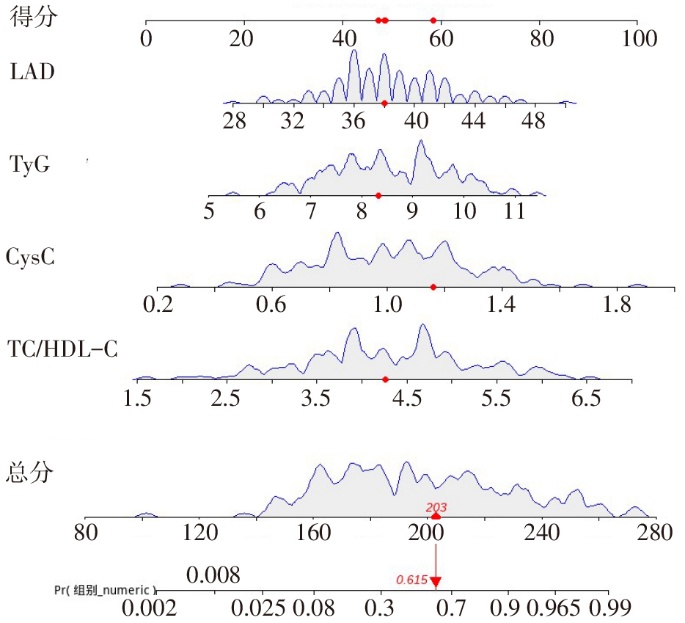
Fig.1 A nomogram for predicting ischemic stroke in patients with coronary heart disease
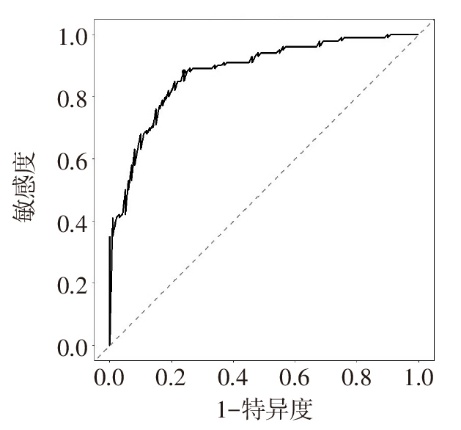
Fig.2 ROC curve of ischemic stroke in patients with coronary heart disease
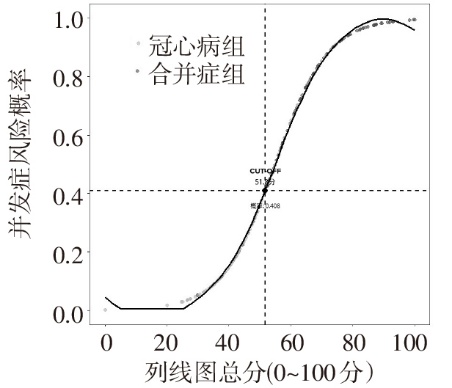
Fig.3 Total points of the nomogram of ischemic stroke in patients with coronary heart disease
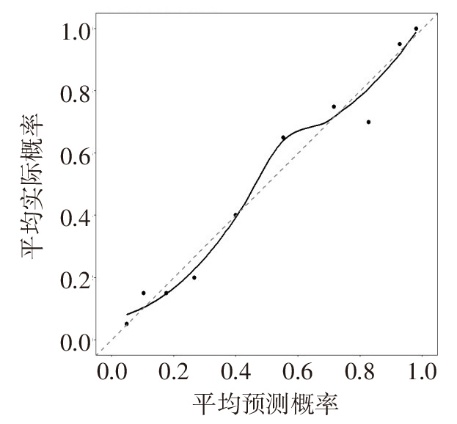
Fig.4 Calibration plot of ischemic stroke in patients with coronary heart disease
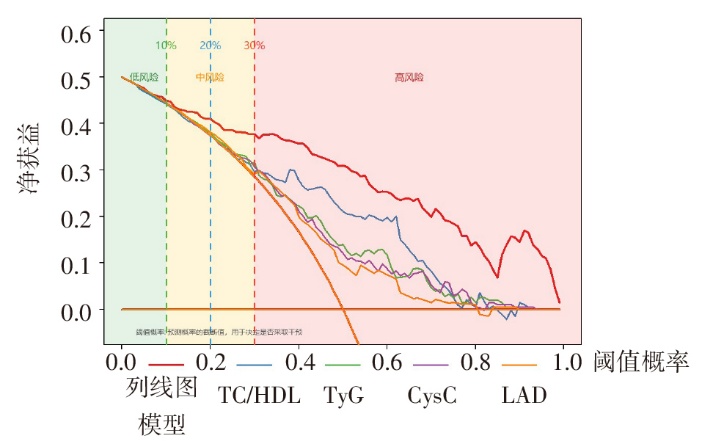
Fig.5 Decision curve of ischemic stroke in patients with coronary heart disease
| [1] | Alpert J S. New coronary heart disease risk factors[J]. Am J Med, 2023, 136(4):331-332. doi:10.1016/j.amjmed.2022.08.002. |
| [2] | Wang R, Wang H, Liu S, et al. Coronary heart disease increases the risk of perioperative ischemic stroke after noncardiac surgery:A retrospective cohort study[J]. CNS Neurosci Ther, 2024, 30(8):e14912. doi:10.1111/cns.14912. |
| [3] | Hurskainen M, Tynkkynen J, Eskola M, et al. Incidence of stroke and mortality due to stroke after acute coronary syndrome[J]. J Stroke Cerebrovasc Dis, 2022, 31(12):106842. doi:10.1016/j.jstrokecerebrovasdis.2022.106842. |
| [4] | 孙亚召, 孟杰杰, 吴英杰, 等. 低密度脂蛋白亚型和其他血脂残余风险指标与老年缺血性心脑血管病终点事件的关系[J]. 中华老年心脑血管病杂志, 2023, 25(5):485-488. |
| Sun Y Z, Meng J J, Wu Y J, et al. Relationship of low-density lipoprotein subtypes and other residual lipid risk indicators with endpoint events of ICCVD in elderly[J]. Chinese Journal of Geriatric Heart Brain and Vessel Diseases, 2023, 25(5):485-488. doi:10.3969/j.issn.1009-0126.2023.05.010. | |
| [5] | Vishnu Chander S, Sarumathy S, Nanda Kumar R, et al. Association of serum cystatin c level with carotid arterial wall elastic resistance as a potential marker for detection of early stage atherosclerosis[J]. Cureus, 2023, 15(5):e38543. doi:10.7759/cureus.38543. |
| [6] | 北京高血压防治协会, 中国脑卒中学会高血压预防与管理分会, 中国老年保健协会养老与健康专业委员会, 等. 基层冠心病与缺血性脑卒中共患管理专家共识2022[J]. 心脑血管病防治, 2022, 22(4):1-19. |
| Beijing Hypertension Association, Hypertension Prevention and Management Branch of Chinese Stroke Association, Elderly Care and Health Professional Committee of China Aging Well Association, et al. 2022 expert consensus on the management of coronary heart disease with ischemic stroke in community[J]. Cardio-cerebrovasc Dis Prev Treat, 2022, 22(4):1-19. doi:10.3969/j.issn.1009-816x.2022.04.001. | |
| [7] | 符雨思, 赵振强. 急性冠状动脉综合征和急性缺血性脑卒中院内连续发生的机制及治疗研究新进展[J]. 中华老年心脑血管病杂志, 2024, 26(4):478-480. |
| Fu Y S, Zhao Z Q. New advances in research on mechanisms and treatment of in-hospital sequential occurrence of acute coronary syndrome and acute ischemic stroke[J]. Chinese Journal of Geriatric Heart Brain and Vessel Diseases, 2024, 26(4):478-480. doi:10.3969/j.issn.1009-0126.2024.04.029. | |
| [8] | Ohlow M A, Winterhalter M. Coronary heart disease-a protracted treatment course[J]. Dtsch Arztebl Int, 2023, 120(6):98. doi:10.3238/arztebl.m2022.0392. |
| [9] | 李琦, 李娇, 陈雅芳, 等. TyG和TyG-BMI与冠心病患者颈动脉粥样硬化的相关性[J]. 心脏杂志, 2024, 36(3):277-282. |
| Li Q, Li J, Chen Y F, et al. Correlation between TyG,TyG-BMI and carotid atherosclerosis in patients with coronary artery disease[J]. Chinese Heart Journal, 2024, 36(3):277-282. doi:10.12125/j.chj.202307037. | |
| [10] | 陈丽娟, 周宇生, 栾颖, 等. TC/HDL-C联合HNP1-3、脂蛋白a检测在冠心病临床诊断中的应用[J]. 分子诊断与治疗杂志, 2023, 15(2):261-264. |
| Chen L J, Zhou Y S, Luan Y, et al. Application analysis of TC/HDL-C combined with HNP1-3 and lipoprotein A detection in clinical diagnosis of coronary heart disease[J]. Journal of Molecular Diagnosis and Therapy, 2023, 15(2):261-264. doi:10.3969/j.issn.1674-6929.2023.02.021. | |
| [11] | 张青云, 孙丹丹, 王芬, 等. 胆固醇与高密度脂蛋白比值对冠心病患者发生缺血性脑卒中的预测价值[J]. 中华现代护理杂志, 2021, 27(19):2596-2599. |
| Zhang Q Y, Sun D D, Wang F, et al. Study on the predictive value of total cholesterol / high density lipoprotein cholesterol ratio for new-onset ischemic stroke in patients with coronary heart disease[J]. Chinese Journal of Modern Nursing, 2021, 27(19):2596-2599. doi:10.3760/cma.j.cn115682-20201127-06426. | |
| [12] | 李友凤, 王春慧, 孙文先, 等. 总胆固醇/高密度脂蛋白胆固醇比值对脑卒中复发的预测价值[J]. 中国实用神经疾病杂志, 2020, 23(9):771-775. |
| Li Y F, Wang C H, Sun W X, et al. Association of total cholesterol/high density lipoprotein cholesterol ratio and stroke recurrence[J]. Chinese Journal of Practical Nervous Diseases, 2020, 23(9):771-775. doi:10.12083/SYSJ.2020.09.121. | |
| [13] | Cui C, Liu L, Qi Y, et al. Joint association of TyG and high sensitivity C-reactive protein with cardiovascular disease:a national cohort study[J]. Cardiovasc Diabetol, 2024, 23(1):156. doi:10.1186/s12933-024-02244-9. |
| [14] | 汪宇, 缪莹, 林强, 等. 甘油三酯葡萄糖指数联合腰围对泸州地区中老年人群10年新发冠心病的前瞻性队列研究[J]. 实用医学杂志, 2024, 40(12):1731-1736. |
| Wang Y, Miao Y, Lin Q, et al. Association between TyG-WC and risk of coronary heart disease in middle-aged and elderly population:a prospective cohort study with 10-year follow-up[J]. The Journal of Practical Medicine, 2024, 40(12):1731-1736. doi:10.3969/j.issn.1006-5725.2024.12.020. | |
| [15] | 李阳, 郝修宏. 三酰甘油葡萄糖指数联合内皮细胞特异分子1对冠心病伴高血压患者术后缺血的预测价值[J]. 中华老年心脑血管病杂志, 2025, 27(9):1158-1163. |
| Li Y, Hao X H. Predictive value of TyG combined with ESM-1 for postoperative ischemia in hypertension patients with concomitant CHD[J]. Chinese Journal of Geriatric Heart Brain and Vessel Diseases, 2025, 27(9):1158-1163. doi:10.3969/j.issn.1009-0126.2025.09.006. | |
| [16] | 赵桂梅, 杨毅, 洪小兰, 等. 甘油三酯葡萄糖乘积指数、红细胞分布宽度、血清尿酸、降钙素原与冠心病患者冠状动脉狭窄程度和短期预后的关系分析[J]. 现代生物医学进展, 2022, 22(22):4341-4346. |
| Zhao G M, Yang Y, Hong X L, et al. Relationship analysis between triglyceride-glucose product index,red blood cell distribution width,serum uric acid,procalcitonin and the degree of coronary artery stenosis and short-term prognosis in patients with coronary heart disease[J]. Progress in Modern Biomedicine, 2022, 22(22):4341-4346. doi:10.13241/j.cnki.pmb.2022.22.027. | |
| [17] | Cai W, Xu J, Wu X, et al. Association between triglyceride-glucose index and all-cause mortality in critically ill patients with ischemic stroke:analysis of the MIMIC-IV database[J]. Cardiovasc Diabetol, 2023, 22(1):138. doi:10.1186/s12933-023-01864-x. |
| [18] | 王玮玮, 刘月荷, 潘慧, 等. 三酰甘油-葡萄糖指数对急性冠脉综合征患者主要心脑血管不良事件的预测效能[J]. 中国临床研究, 2025, 38(2):275-279. |
| Wang W W, Liu Y H, Pan H, et al. Evaluation of the predictive efficacy of triglyceride-glucose index in predicting major adverse cardiovascular and cerebrovascular events in patients with acute coronary syndrome[J]. Chinese Journal of Clinical Research, 2025, 38(2):275-279. doi:10.13429/j.cnki.cjcr.2025.02.023. | |
| [19] | Dang K, Wang X, Hu J, et al. The association between triglyceride-glucose index and its combination with obesity indicators and cardiovascular disease:NHANES 2003-2018[J]. Cardiovasc Diabetol, 2024, 23(1):8. doi:10.1186/s12933-023-02115-9. |
| [20] | Pruc M, Swieczkowski D, Cander B, et al. Diagnostic and prognostic value of cystatin C in acute coronary syndrome:An up-to-date meta-analysis[J]. Cardiol J, 2025, 32(2):142-152. doi:10.5603/cj.102453. |
| [21] | 向乾才, 罗廷福, 张娟, 等. 血清H-FABP、CysC及LVEF联合检测对老年冠心病病人预后评估的临床价值[J]. 中西医结合心脑血管病杂志, 2020, 18(21):3659-3662. |
| Xiang Q C, Luo T F, Zhang J, et al. Value of serum H-FABP,CysC and LVEF on prognosis assessment in elderly patients with coronary heart Disease[J]. Chinese Journal of Integrative Medicine on Cardio-Cerebrovascular Disease, 2020, 18(21):3659-3662. doi:10.12102/j.issn.1672-1349.2020.21.038. | |
| [22] | 张舒贤, 王红雷. 早发冠心病患者发生院外主要不良心血管事件的影响因素分析[J]. 实用心脑肺血管病杂志, 2025, 33(6):6-10,17. |
| Zhang S X, Wang H L. Influencing factors of out-of-hospital major adverse cardiovascular events in patients with premature coronary artery disease[J]. Practical Journal of Cardiac Cerebral Pneumal and Vascular Disease, 2025, 33(6):6-10,17. doi:10.12114/j.issn.1008-5971.2025.00.112. | |
| [23] | 俞江, 郑甲, 陈建州, 等. 血清CysC、CT-1联合FFR值预测冠状动脉中度狭窄冠心病患者PCI术后主要心脏不良事件发生风险的临床研究[J]. 现代生物医学进展, 2024, 24(7):1306-1311. |
| Yu J, Zheng J, Chen J Z, et al. Clinical study on serum CysC,CT-1 combined with FFR value in predicting the risk of major adverse cardiac events after PCI in patients with coronary heart disease with moderate coronary artery stenosis[J]. Progress in Modern Biomedicine, 2024, 24(7):1306-1311. doi:10.13241/j.cnki.pmb.2024.07.020. | |
| [24] | 赵甲彧, 刘雅婷, 张芳, 等. 左心室压力-应变环参数在冠心病经皮冠状动脉介入围手术期心肌做功评估中的价值[J]. 中国急救复苏与灾害医学杂志, 2025, 20(2):150-154. |
| Zhao J Y, Liu Y T, Zhang F, et al. The value of left ventricular pressure-strain loop parameters in perioperative myocardial work assessment of coronary heart disease after percutaneous coronary intervention[J]. China Journal of Emergency Resuscitation and Disaster Medicine, 2025, 20(2):150-154. doi:10.3969/j.issn.1673-6966.2025.02.003. | |
| [25] | Shen Z, Chen D, Cheng H, et al. N-terminal pro-B-type natriuretic peptide and D-dimer combined with left atrial diameter to predict the risk of ischemic stroke in nonvalvular atrial fibrillation[J]. Clin Cardiol, 2023, 46(1):41-48. doi:10.1002/clc.23933. |
| Viewed | ||||||
|
Full text |
|
|||||
|
Abstract |
|
|||||
