
Tianjin Medical Journal ›› 2026, Vol. 54 ›› Issue (8): 834-841.doi: 10.11958/20253429
• Clinical Research • Previous Articles Next Articles
ZHANG Guoshuang1( ), PAIHEIERDING Kaisaier2,3,△(), WANG Conghui1
Received:2025-11-27
Revised:2026-05-21
Published:2026-08-15
Online:2026-08-07
Contact:
△E-mail: ZHANG Guoshuang, PAIHEIERDING Kaisaier, WANG Conghui. Analysis of oral salivation microbiome characteristics in patients with depression complicated with periodontal disease[J]. Tianjin Medical Journal, 2026, 54(8): 834-841.
CLC Number:
| 组别 | n | 年龄/岁 | 男性 | HADS 评分/分 | 牙周炎分期(Ⅰ/Ⅱ/Ⅲ) |
|---|---|---|---|---|---|
| 非抑郁症牙周炎组 | 33 | 37.3±13.1 | 18(54.5) | 4.1±2.1 | 8/15/10 |
| 抑郁症伴牙周炎组 | 32 | 33.0±12.7 | 17(53.1) | 12.8±3.2 | 11/13/8 |
| t或χ2 | 1.340 | 0.013 | 13.260** | 0.824 |
Tab.1 Comparison of baseline data between the two groups
| 组别 | n | 年龄/岁 | 男性 | HADS 评分/分 | 牙周炎分期(Ⅰ/Ⅱ/Ⅲ) |
|---|---|---|---|---|---|
| 非抑郁症牙周炎组 | 33 | 37.3±13.1 | 18(54.5) | 4.1±2.1 | 8/15/10 |
| 抑郁症伴牙周炎组 | 32 | 33.0±12.7 | 17(53.1) | 12.8±3.2 | 11/13/8 |
| t或χ2 | 1.340 | 0.013 | 13.260** | 0.824 |
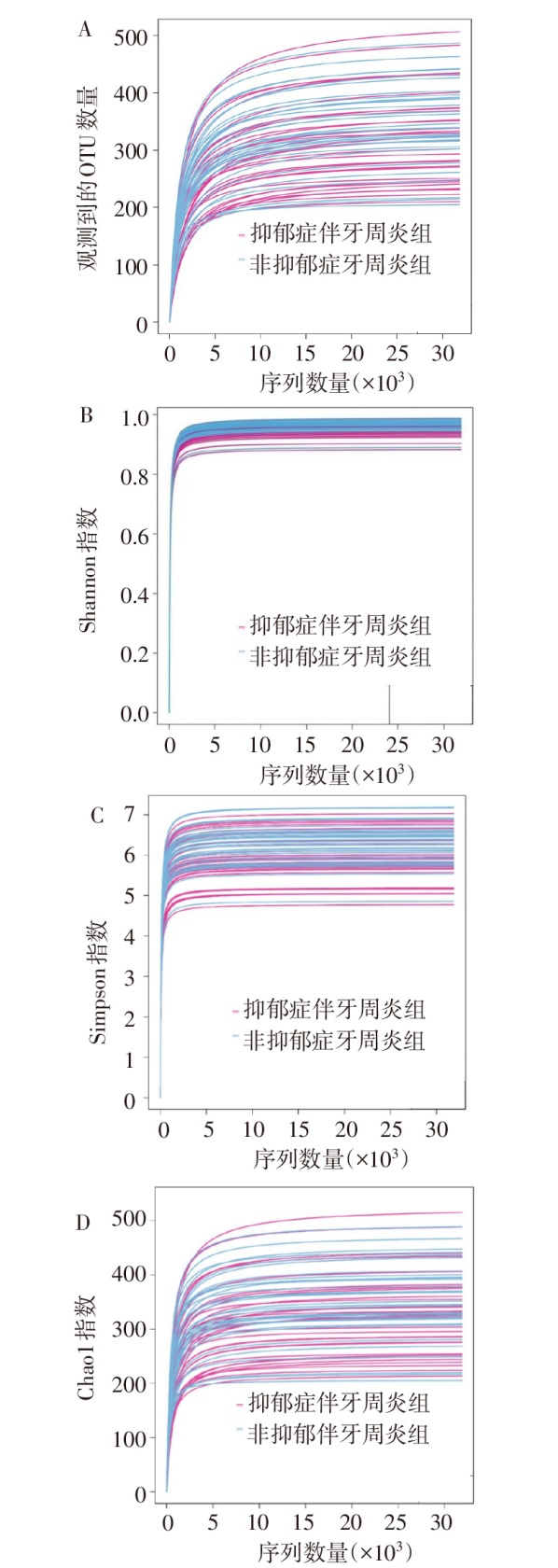
Fig.1 Schematic diagrams of dilution curves for different Alpha diversity indices
| 组别 | n | Observed ASVs | Shannon | |||
|---|---|---|---|---|---|---|
| 非抑郁症牙周炎组 | 33 | 934.8±172.3 | 5.78±0.76 | |||
| 抑郁症伴牙周炎组 | 32 | 987.2±186.4 | 6.12±0.89 | |||
| t | 1.840 | 2.130* | ||||
| 组别 | Simpson | Chao1 | Faith's PD | |||
| 非抑郁症牙周炎组 | 0.92±0.05 | 1 187.2±198.5 | 82.7±13.8 | |||
| 抑郁症伴牙周炎组 | 0.94±0.05 | 1 256.3±234.7 | 89.4±15.6 | |||
| t | 1.980* | 2.050* | 2.110* | |||
Tab.2 Comparison of alpha diversity indicators of salivary microbiota between the two groups of patients ($\bar{x}±s$)
| 组别 | n | Observed ASVs | Shannon | |||
|---|---|---|---|---|---|---|
| 非抑郁症牙周炎组 | 33 | 934.8±172.3 | 5.78±0.76 | |||
| 抑郁症伴牙周炎组 | 32 | 987.2±186.4 | 6.12±0.89 | |||
| t | 1.840 | 2.130* | ||||
| 组别 | Simpson | Chao1 | Faith's PD | |||
| 非抑郁症牙周炎组 | 0.92±0.05 | 1 187.2±198.5 | 82.7±13.8 | |||
| 抑郁症伴牙周炎组 | 0.94±0.05 | 1 256.3±234.7 | 89.4±15.6 | |||
| t | 1.980* | 2.050* | 2.110* | |||
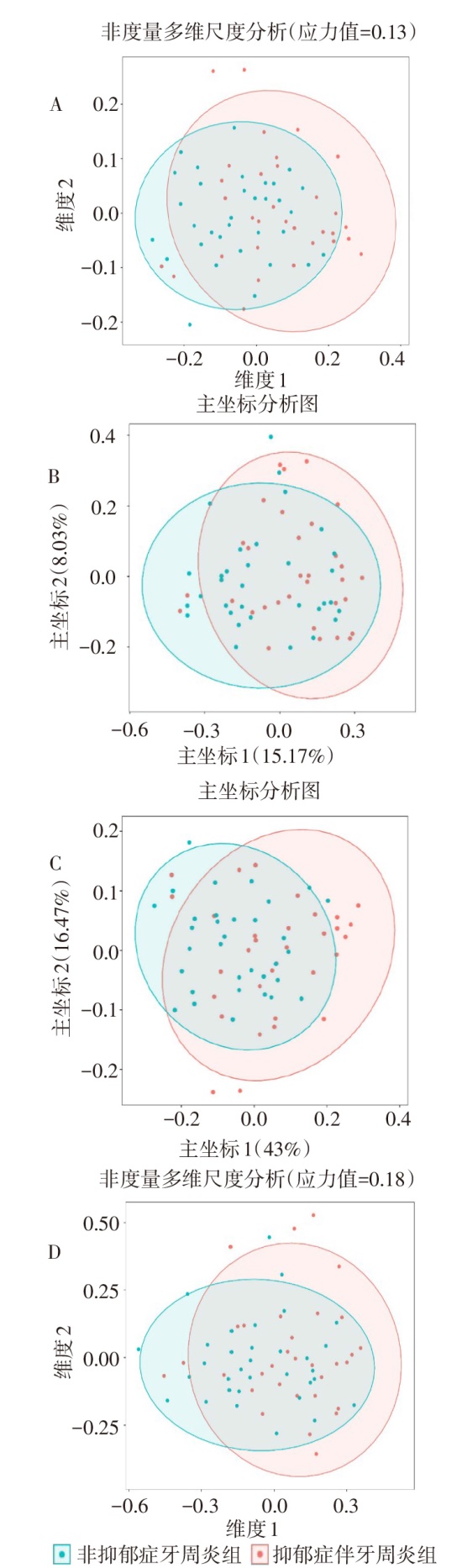
Fig.2 Analysis of beta diversity for two groups of samples
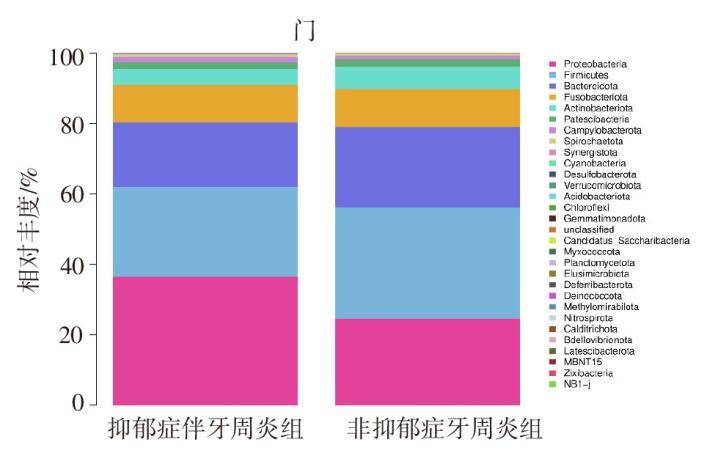
Fig.3 The stacked bar chart of the bacterial community composition at the genus level for the two groups of samples
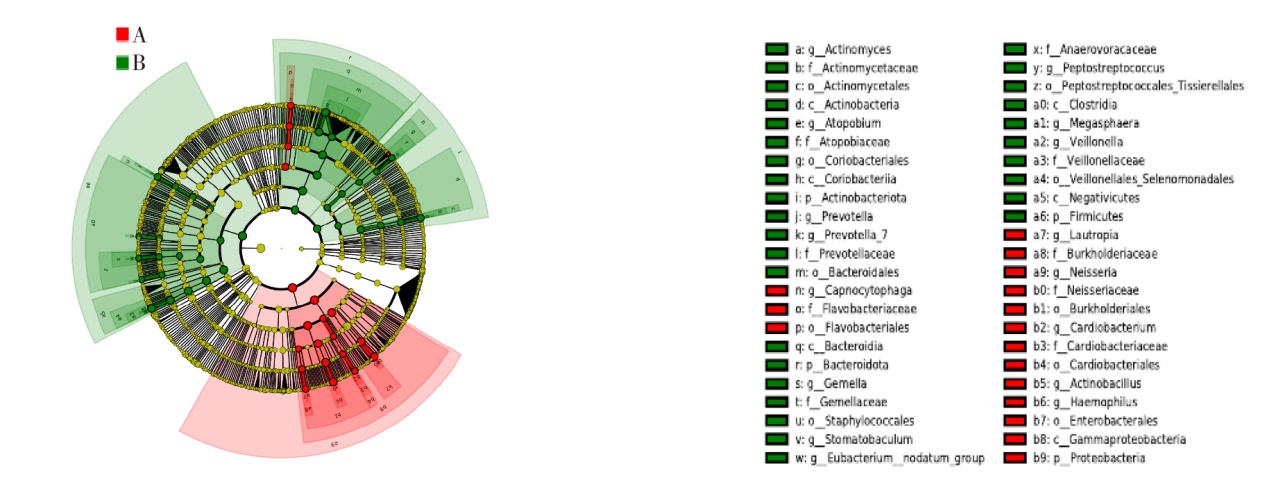
Fig.4 LEfSe analysis of circular dendrogram
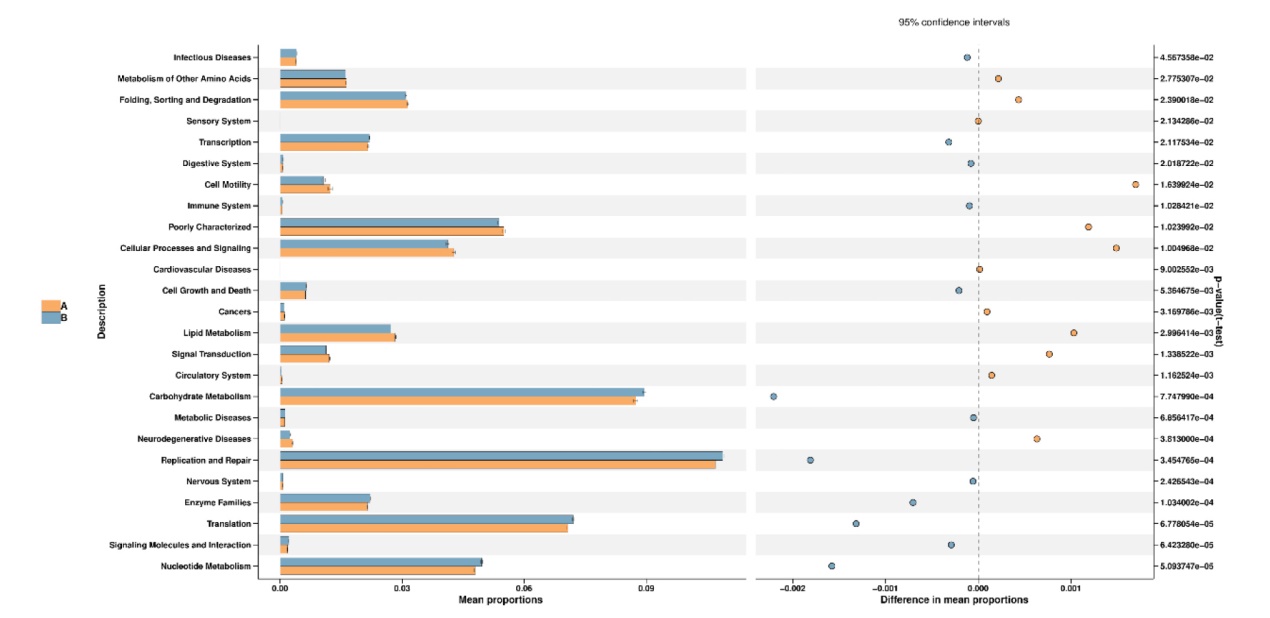
Fig.5 Functional difference analysis diagram of PICRUSt2 based on KEGG classification
| 组别 | n | 好氧菌 | 厌氧菌 | 含移动遗传元素 | |
|---|---|---|---|---|---|
| 非抑郁症牙周炎组 | 32 | 0.26(0.18,0.35) | 0.55±0.13 | 0.27(0.18,0.40) | |
| 抑郁症伴牙周炎组 | 33 | 0.38(0.29,0.46) | 0.43±0.16 | 0.38(0.27,0.50) | |
| t或Z | 2.710** | 3.010** | 2.390* | ||
| 组别 | 兼性厌氧菌 | 生物膜形成 | 革兰阳性菌 | ||
| 非抑郁症牙周炎组 | 0.10(0.07,0.15) | 0.38±0.12 | 0.75±0.09 | ||
| 抑郁症伴牙周炎组 | 0.13(0.10,0.18) | 0.49±0.15 | 0.79±0.08 | ||
| t或Z | 1.821 | 3.010** | 2.030* | ||
| 组别 | 革兰阴性菌 | 潜在致病性 | 应激耐受性 | ||
| 非抑郁症牙周炎组 | 0.25±0.09 | 0.25(0.17,0.38) | 0.26(0.17,0.39) | ||
| 抑郁症伴牙周炎组 | 0.21±0.08 | 0.39(0.27,0.51) | 0.40(0.29,0.52) | ||
| t或Z | 2.030* | 2.710** | 3.030** | ||
Tab.3 BugBase predictions of phenotypes for the two microbial groups
| 组别 | n | 好氧菌 | 厌氧菌 | 含移动遗传元素 | |
|---|---|---|---|---|---|
| 非抑郁症牙周炎组 | 32 | 0.26(0.18,0.35) | 0.55±0.13 | 0.27(0.18,0.40) | |
| 抑郁症伴牙周炎组 | 33 | 0.38(0.29,0.46) | 0.43±0.16 | 0.38(0.27,0.50) | |
| t或Z | 2.710** | 3.010** | 2.390* | ||
| 组别 | 兼性厌氧菌 | 生物膜形成 | 革兰阳性菌 | ||
| 非抑郁症牙周炎组 | 0.10(0.07,0.15) | 0.38±0.12 | 0.75±0.09 | ||
| 抑郁症伴牙周炎组 | 0.13(0.10,0.18) | 0.49±0.15 | 0.79±0.08 | ||
| t或Z | 1.821 | 3.010** | 2.030* | ||
| 组别 | 革兰阴性菌 | 潜在致病性 | 应激耐受性 | ||
| 非抑郁症牙周炎组 | 0.25±0.09 | 0.25(0.17,0.38) | 0.26(0.17,0.39) | ||
| 抑郁症伴牙周炎组 | 0.21±0.08 | 0.39(0.27,0.51) | 0.40(0.29,0.52) | ||
| t或Z | 2.030* | 2.710** | 3.030** | ||
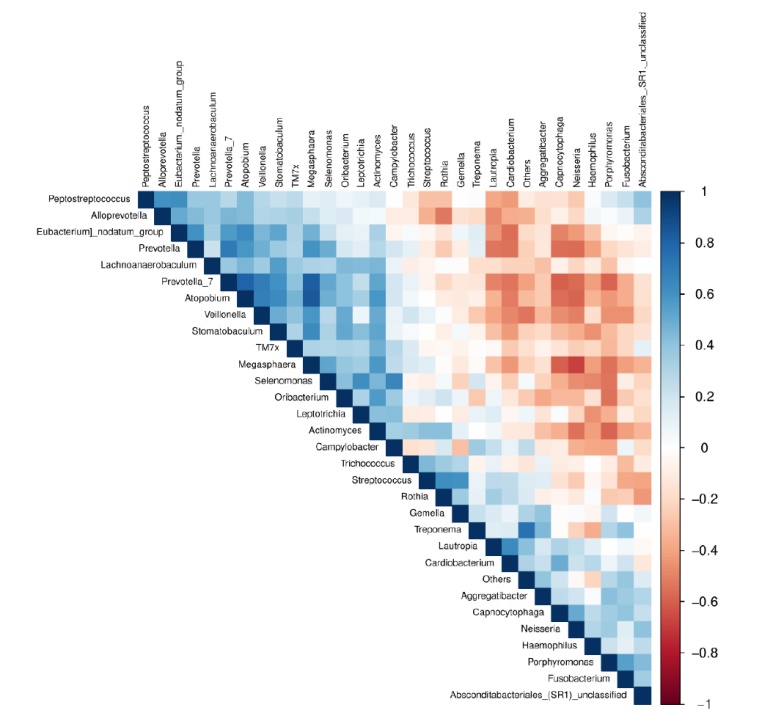
Fig.6 Correlation heatmap of differential genera identified by ISA/LEfSe
| [1] | Elisabeth Groeger S, Zhou Y, Yong J, et al. Systemic,lifestyle and environmental modifying factors in the pathogenesis of periodontitis[J]. Journal of Periodontal Research, 2025. doi:10.1111/jre.70003. [Epub ahead of print]. |
| [2] | Hensel A L J, Nicholson K, Anderson K K, et al. Biopsychosocial factors in oral and systemic diseases:a scoping review[J]. Front Oral Health, 2024, 5:1378467. doi:10.3389/froh.2024.1378467. |
| [3] | Wang J, Wang Y, Li H, et al. Associations between oral health and depression and anxiety:A cross-sectional and prospective cohort study from the UK Biobank[J]. J Clin Periodontol, 2024, 51(11):1466-1477. doi: 10.1111/jcpe.14039. |
| [4] | Charalambous E G, Mériaux S B, Guebels P, et al. The oral microbiome is associated with HPA axis response to a psychosocial stressor[J]. Sci Rep, 2024, 14(1):15841. doi:10.1038/s41598-024-66796-2. |
| [5] | Xu S, Zhang X, Gong R, et al. Exploring the correlation between psychological stress,anxiety,and periodontitis among university students:A cross-sectional investigation[J]. J Inflamm Res, 2025, 18:8317-8329. doi:10.2147/JIR.S530138. |
| [6] | Geng M, Li M, Li Y, et al. A universal oral microbiome-based signature for periodontitis[J]. Imeta, 2024, 3(4):e212. doi:10.1002/imt2.212. |
| [7] | Papapanou P N, Sanz M, Buduneli N, et al. Periodontitis:consensus report of workgroup 2 of the 2017 world workshop on the classification of periodontal and peri-implant diseases and conditions[J]. J Periodontol, 2018,89 Suppl 1:S173-S182. doi:10.1002/JPER.17-0721. |
| [8] | American Psychiatric Association. Diagnostic and statistical manual of mental disorders,5th edition(DSM-5)[M]. Arlington,VA,USA: American Psychiatric Publishing, 2013. |
| [9] | Deng Y, He S, Wang J. Validation of the hospital anxiety and depression scale and the perceived stress scale and psychological features in patients with periodontitis[J]. J Periodontol, 2021, 92(11):1601-1612. doi:10.1002/JPER.20-0756. |
| [10] | Relvas M, Silvestre R, Gonçalves M, et al. Analysis of salivary levels of IL-1β,IL17A,OPG and RANK-L in periodontitis using the 2017 classification of periodontal diseases-an exploratory observational study[J]. Journal of clinical medicine, 2023, 12(3):1003. doi:10.3390/jcm12031003. |
| [11] | Bolyen E, Rideout J R, Dillon M R, et al. Reproducible,interactive,scalable and extensible microbiome data science using QIIME 2[J]. Nat Biotechnol, 2019, 37(8):852-857. doi:10.1038/s41587-019-0209-9. |
| [12] | Adeniyi A A, Ramachandran S, Jevitt C M. Oral health,anxiety,depression,and stress in pregnancy:A rapid review of associations and implications for perinatal care[J]. Int J Environ Res Public Health, 2024, 22(1):32. doi:10.3390/ijerph22010032. |
| [13] | Lee Y H, Suk C, Shin S I, et al. Salivary cortisol,dehydroepiandrosterone,and chromogranin A levels in patients with gingivitis and periodontitis and a novel biomarker for psychological stress[J]. Frontiers in Endocrinology, 2023, 14:1147739. doi:10.3389/fendo.2023.1147739. |
| [14] | Kalaigian A W, Chaffee B W. Mental health and oral health in a nationally representative cohort[J]. Journal of Dental Research, 2023, 102(9):1007-1014. doi:10.1177/00220345231171108. |
| [15] | Lou F, Luo S, Kang N, et al. Oral microbiota dysbiosis alters chronic restraint stress-induced depression-like behaviors by modulating host metabolism[J]. Pharmacol Res, 2024, 204:107214. doi:10.1016/j.phrs.2024.107214. |
| [16] | Stoy S, Mcmillan A, Ericsson A C, et al. The effect of physical and psychological stress on the oral microbiome[J]. Front Psychol, 2023, 14:1166168. doi:10.3389/fpsyg.2023.1166168. |
| [17] | Feng X, Jia M, Cai M, et al. Central-peripheral neuroimmune dynamics in psychological stress and depression:insights from current research[J]. Mol Psychiatry, 2025, 30(10):4881-4898. doi:10.1038/s41380-025-03085-y. |
| [18] | Aljoghaiman E. The relationship between mental health and periodontal disease:Insights from NHANES data[J]. F1000Res, 2024, 13:709. doi:10.12688/f1000research.150837.3. |
| [19] | 杨旭, 杨紫茜, 吕敏敏. 植体后牙周病应用益生菌辅以基础治疗对患者牙周指数及炎性因子影响[J]. 中国微生态学杂志, 2023, 35(5):542-546,553. |
| Yang X, Yang Z Q, Lyu M M. Effects of probiotics supplemented with basic therapy on periodontal index and inflammatory factors in patients with post-implant periodontal disease[J]. Chin J Microecol, 2023, 35(5):542-546,553. doi:10.13381/j.cnki.cjm.202305007. | |
| [20] | Corridore D, Saccucci M, Zumbo G, et al. Impact of stress on periodontal health:Literature revision[J]. Healthcare(Basel), 2023, 11(10):1516. doi:10.3390/healthcare11101516. |
| [21] | Bao S, Fei J, Shen J, et al. Reserpine-induced model of stress suppresses mucosal immunity[J]. Immunol Cell Biol, 2006, 84(6):537-542. doi:10.1111/j.1440-1711.2006.01468.x. |
| [22] | Malan-Müller S, Vidal R, O'Shea E, et al. Probing the oral-brain connection:oral microbiome patterns in a large community cohort with anxiety,depression,and trauma symptoms,and periodontal outcomes[J]. Transl Psychiatry, 2024, 14(1):419. doi:10.1038/s41398-024-03122-4. |
| [23] | Khawam E A, Laurencic G, Malone D A. Side effects of antidepressants:an overview[J]. Cleve Clin J Med, 2006, 73(4):351-353,356-361. doi:10.3949/ccjm.73.4.351. |
| Viewed | ||||||
|
Full text |
|
|||||
|
Abstract |
|
|||||
