
Tianjin Medical Journal ›› 2026, Vol. 54 ›› Issue (8): 842-847.doi: 10.11958/20253397
• Clinical Research • Previous Articles Next Articles
ZHANG Jing1( ), GUI Xiaoling2, LI Jinpeng3, CHEN Xin1,△()
Received:2025-11-23
Revised:2026-04-12
Published:2026-08-15
Online:2026-08-07
Contact:
△E-mail: ZHANG Jing, GUI Xiaoling, LI Jinpeng, CHEN Xin. The clinical value of right bundle branch block combined with serum high-mobility group box 1 for monitoring of cor pulmonale in patients with chronic obstructive pulmonary disease[J]. Tianjin Medical Journal, 2026, 54(8): 842-847.
CLC Number:
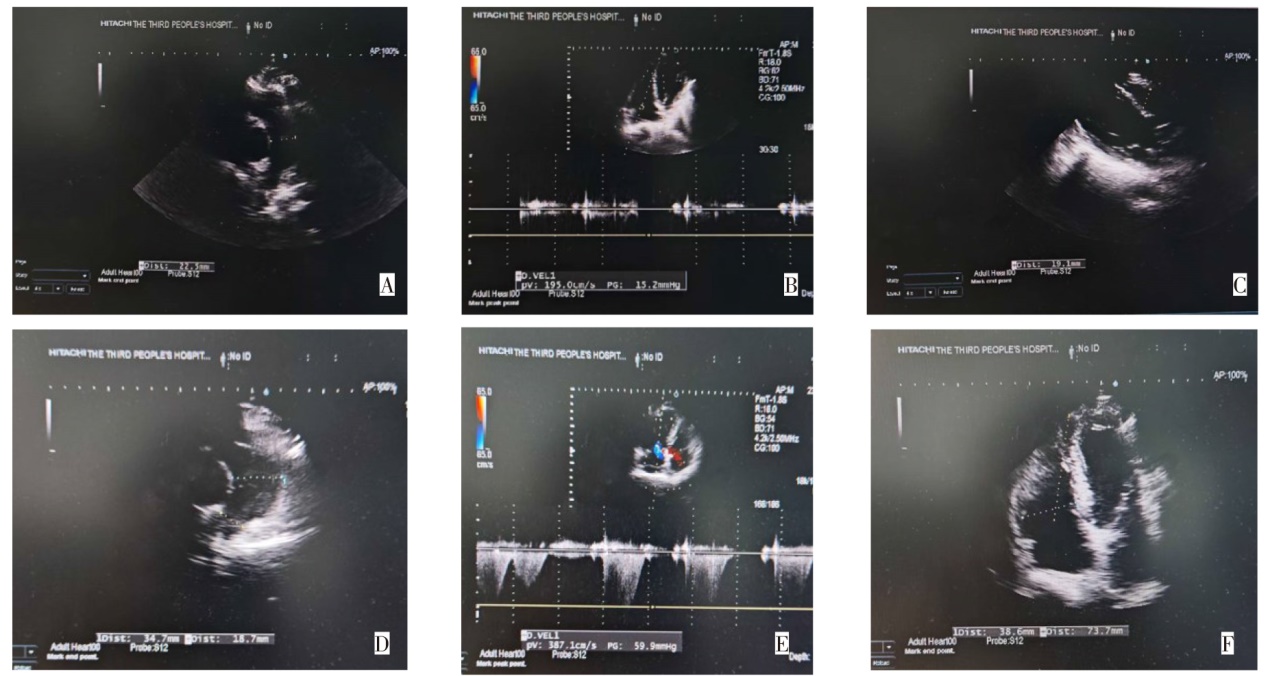
Fig.1 Changes in cardiac ultrasound of the patient at admission and after 12-month follow-up
| 组别 | n | 年龄/岁 | 男性 | BMI/(kg/m2) | |||||||
|---|---|---|---|---|---|---|---|---|---|---|---|
| 无肺心病组 | 96 | 67.1±8.8 | 66(68.8) | 23.8±3.6 | |||||||
| 肺心病组 | 42 | 71.2±7.9 | 32(76.2) | 23.1±3.4 | |||||||
| t或χ2 | 2.789** | 0.786 | 1.052 | ||||||||
| 组别 | GOLD 3—4级 | FEV1%pred/ % | FEV1/FVC/ % | 6MWD/ m | |||||||
| 无肺心病组 | 50(52.1) | 56.4±16.2 | 59.6±10.5 | 362±82 | |||||||
| 肺心病组 | 33(78.6) | 42.6±13.8 | 51.3±9.8 | 298±76 | |||||||
| χ2或t | 8.614** | 4.892** | 4.376** | 4.331** | |||||||
| 组别 | mMRC评分 | 高血压 | 糖尿病 | ||||||||
| 无肺心病组 | 2.1±0.8 | 39(40.6) | 20(20.8) | ||||||||
| 肺心病组 | 2.8±0.9 | 19(45.2) | 11(26.2) | ||||||||
| t或χ2 | 4.512** | 0.249 | 0.482 | ||||||||
Tab.1 Comparison of baseline clinical characteristics between the two groups of patients
| 组别 | n | 年龄/岁 | 男性 | BMI/(kg/m2) | |||||||
|---|---|---|---|---|---|---|---|---|---|---|---|
| 无肺心病组 | 96 | 67.1±8.8 | 66(68.8) | 23.8±3.6 | |||||||
| 肺心病组 | 42 | 71.2±7.9 | 32(76.2) | 23.1±3.4 | |||||||
| t或χ2 | 2.789** | 0.786 | 1.052 | ||||||||
| 组别 | GOLD 3—4级 | FEV1%pred/ % | FEV1/FVC/ % | 6MWD/ m | |||||||
| 无肺心病组 | 50(52.1) | 56.4±16.2 | 59.6±10.5 | 362±82 | |||||||
| 肺心病组 | 33(78.6) | 42.6±13.8 | 51.3±9.8 | 298±76 | |||||||
| χ2或t | 8.614** | 4.892** | 4.376** | 4.331** | |||||||
| 组别 | mMRC评分 | 高血压 | 糖尿病 | ||||||||
| 无肺心病组 | 2.1±0.8 | 39(40.6) | 20(20.8) | ||||||||
| 肺心病组 | 2.8±0.9 | 19(45.2) | 11(26.2) | ||||||||
| t或χ2 | 4.512** | 0.249 | 0.482 | ||||||||
| 组别 | n | RBBB阳性 | HMGB1/(μg/L) | WBC/(×109/L) | |
|---|---|---|---|---|---|
| 无肺心病组 | 96 | 22(22.9) | 5.38±1.77 | 8.1±2.1 | |
| 肺心病组 | 42 | 25(59.5) | 8.92±2.61 | 8.7±2.4 | |
| χ2或t | 17.392** | 9.412** | 1.462 | ||
| 组别 | NLR | hs-CRP/ (mg/L) | NT-proBNP/(ng/L) | D-二聚体/ (mg/L) | |
| 无肺心病组 | 3.7±1.6 | 5.9(2.7,11.6) | 439(187,698) | 0.62(0.31,0.98) | |
| 肺心病组 | 5.9±2.3 | 10.6(4.9,22.1) | 696(398,1 985) | 1.02(0.58,1.39) | |
| t或Z | 6.428** | 6.713** | 8.157** | 5.829** | |
| 组别 | p(O2)/mmHg | p(CO2)/mmHg | 血pH | ||
| 无肺心病组 | 68.7±8.6 | 44.3±6.5 | 7.40±0.04 | ||
| 肺心病组 | 58.4±9.2 | 52.6±8.7 | 7.38±0.05 | ||
| t | 6.314** | 6.108** | 1.892 | ||
Tab.2 Comparison of the positive rate of RBBB and laboratory test results between the two groups
| 组别 | n | RBBB阳性 | HMGB1/(μg/L) | WBC/(×109/L) | |
|---|---|---|---|---|---|
| 无肺心病组 | 96 | 22(22.9) | 5.38±1.77 | 8.1±2.1 | |
| 肺心病组 | 42 | 25(59.5) | 8.92±2.61 | 8.7±2.4 | |
| χ2或t | 17.392** | 9.412** | 1.462 | ||
| 组别 | NLR | hs-CRP/ (mg/L) | NT-proBNP/(ng/L) | D-二聚体/ (mg/L) | |
| 无肺心病组 | 3.7±1.6 | 5.9(2.7,11.6) | 439(187,698) | 0.62(0.31,0.98) | |
| 肺心病组 | 5.9±2.3 | 10.6(4.9,22.1) | 696(398,1 985) | 1.02(0.58,1.39) | |
| t或Z | 6.428** | 6.713** | 8.157** | 5.829** | |
| 组别 | p(O2)/mmHg | p(CO2)/mmHg | 血pH | ||
| 无肺心病组 | 68.7±8.6 | 44.3±6.5 | 7.40±0.04 | ||
| 肺心病组 | 58.4±9.2 | 52.6±8.7 | 7.38±0.05 | ||
| t | 6.314** | 6.108** | 1.892 | ||
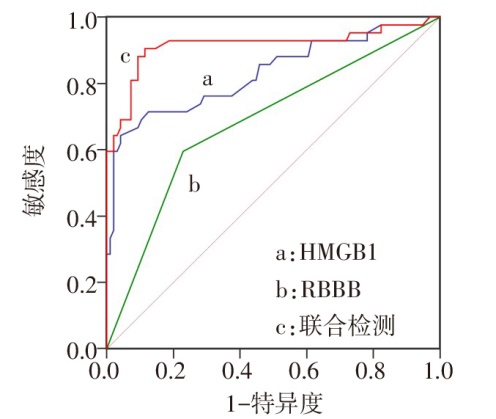
Fig.2 ROC curves of RBBB, serum HMGB1 and their combination for predicting cor pulmonary in patients with COPD
| 变量 | AUC(95%CI) | 截断值 | 敏感度/% | 特异度/ % | 约登 指数 | Z# |
|---|---|---|---|---|---|---|
| RBBB | 0.683(0.598~0.760) | 阳性 | 59.50 | 77.10 | 0.366 | 3.826* |
| HMGB1 | 0.830(0.757~0.889) | 6.85 μg/L | 85.70 | 78.10 | 0.638 | 3.214* |
| RBBB+ HMGB1 | 0.915(0.856~0.962) | - | 90.50 | 87.50 | 0.780 |
Tab.3 Clinical value of each indicator in predicting the incidence of pulmonary heart disease
| 变量 | AUC(95%CI) | 截断值 | 敏感度/% | 特异度/ % | 约登 指数 | Z# |
|---|---|---|---|---|---|---|
| RBBB | 0.683(0.598~0.760) | 阳性 | 59.50 | 77.10 | 0.366 | 3.826* |
| HMGB1 | 0.830(0.757~0.889) | 6.85 μg/L | 85.70 | 78.10 | 0.638 | 3.214* |
| RBBB+ HMGB1 | 0.915(0.856~0.962) | - | 90.50 | 87.50 | 0.780 |
| 变量 | β | SE | Wald χ2 | P | HR | HR 95%CI |
|---|---|---|---|---|---|---|
| 模型1 RBBB阳性 | 0.930 | 0.211 | 19.415 | <0.001 | 2.534 | 1.672~3.840 |
| HMGB1 | 0.221 | 0.047 | 22.068 | <0.001 | 1.248 | 1.138~1.370 |
| 模型2 | ||||||
| RBBB阳性 | 0.909 | 0.213 | 18.196 | <0.001 | 2.481 | 1.634~3.767 |
| HMGB1 | 0.208 | 0.048 | 18.757 | <0.001 | 1.231 | 1.120~1.353 |
| 模型3 | ||||||
| RBBB阳性 | 0.694 | 0.224 | 9.588 | <0.001 | 2.002 | 1.289~3.107 |
| HMGB1 | 0.163 | 0.052 | 9.838 | 0.002 | 1.177 | 1.063~1.303 |
Tab.4 Multivariate Cox regression analysis of the impact of RBBB and HMGB1 on the incidence of cor pulmonale in COPD patients across different models
| 变量 | β | SE | Wald χ2 | P | HR | HR 95%CI |
|---|---|---|---|---|---|---|
| 模型1 RBBB阳性 | 0.930 | 0.211 | 19.415 | <0.001 | 2.534 | 1.672~3.840 |
| HMGB1 | 0.221 | 0.047 | 22.068 | <0.001 | 1.248 | 1.138~1.370 |
| 模型2 | ||||||
| RBBB阳性 | 0.909 | 0.213 | 18.196 | <0.001 | 2.481 | 1.634~3.767 |
| HMGB1 | 0.208 | 0.048 | 18.757 | <0.001 | 1.231 | 1.120~1.353 |
| 模型3 | ||||||
| RBBB阳性 | 0.694 | 0.224 | 9.588 | <0.001 | 2.002 | 1.289~3.107 |
| HMGB1 | 0.163 | 0.052 | 9.838 | 0.002 | 1.177 | 1.063~1.303 |
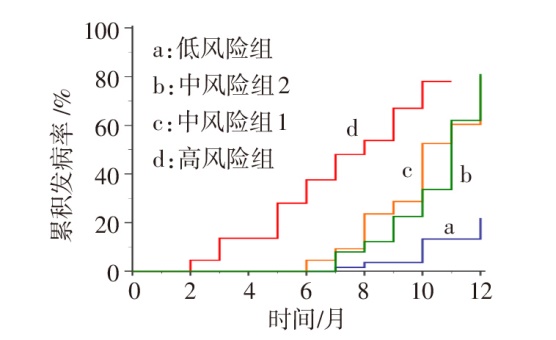
Fig.3 Kaplan-Meier curve of pulmonary heart disease incidence within one year for patients in different risk groups
| [1] | Calverley P, Walker P P. Contemporary concise review 2022:Chronic obstructive pulmonary disease[J]. Respirology, 2023, 28(5):428-436. doi:10.1111/resp.14489. |
| [2] | Rossi R, Coppi F, Sgura F A, et al. Effects of ivabradine on right ventricular systolic function in patients with chronic obstructive pulmonary disease and cor pulmonale[J]. Am J Cardiol, 2023, 207:179-183. doi:10.1016/j.amjcard.2023.08.094. |
| [3] | Gai X, Allwood B, Sun Y. Post-tuberculosis lung disease and chronic obstructive pulmonary disease[J]. Chin Med J(Engl), 2023, 136(16):1923-1928. doi:10.1097/CM9.0000000000002771. |
| [4] | Valente D, Segreti A, Celeski M, et al. Electrocardiographic alterations in chronic obstructive pulmonary disease[J]. J Electrocardiol, 2024, 85:58-65. doi:10.1016/j.jelectrocard.2024.05.083. |
| [5] | Viduljević M, Polovina M, Geavlete O, et al. The right approach:power of biomarkers in the assessment and management of right ventricular dysfunction[J]. Int J Mol Sci, 2025, 26(18):9064. doi:10.3390/ijms26189064. |
| [6] | 伍新诚, 刘雨, 柏正平. 复方葶苈子汤通过调控HMGB1介导的细胞焦亡及免疫失衡治疗COPD相关性肺动脉高压[J]. 中国中药杂志, 2023, 48(11):3055-3065. |
| Wu X C, Liu Y, Bai Z P. Compound Tinglizi Decoction intervenes COPD-associated pulmonary hypertension through regulation of HMGB1-mediated pyroptosis and immune imbalance[J]. China Journal of Chinese Materia Medica, 2023, 48(11):3055-3065. doi:10.19540/j.cnki.cjcmm.20221014.702. | |
| [7] | Furci F, Murdaca G, Pelaia C, et al. TSLP and HMGB1:inflammatory targets and potential biomarkers for precision medicine in asthma and COPD[J]. Biomedicines, 2023, 11(2):437. doi:10.3390/biomedicines11020437. |
| [8] | Quasimi H, Wazib S, Azam Khan G, et al. HMGB1 modulates angiogenic imbalance and cardiovascular complications in preeclampsia through decorin and VEGF regulation[J]. Rep Biochem Mol Biol, 2024, 13(3):385-393. doi:10.61186/rbmb.13.3.385. |
| [9] | Agusti A, Böhm M, Celli B, et al. GOLD COPD document 2023:a brief update for practicing cardiologists[J]. Clin Res Cardiol, 2024, 113(2):195-204. doi:10.1007/s00392-023-02217-0. |
| [10] | Sakao S. Chronic obstructive pulmonary disease and the early stage of cor pulmonale:A perspective in treatment with pulmonary arterial hypertension-approved drugs[J]. Respir Investig, 2019, 57(4):325-329. doi:10.1016/j.resinv.2019.03.013. |
| [11] | Miniati M, Monti S, Basta G, et al. Soluble receptor for advanced glycation end products in COPD:relationship with emphysema and chronic cor pulmonale:a case-control study[J]. Respir Res, 2011, 12:37. doi:10.1186/1465-9921-12-37. |
| [12] | Laredo M, Tovia-Brodie O, Milman A, et al. Electrocardiographic findings in patients with arrhythmogenic cardiomyopathy and right bundle branch block ventricular tachycardia[J]. Europace, 2023, 25(3):1025-1034. doi:10.1093/europace/euac267. |
| [13] | Yogeswaran A, Kuhnert S, Gall H, et al. Relevance of Cor pulmonale in COPD with and without pulmonary hypertension:a retrospective cohort study[J]. Front Cardiovasc Med, 2022, 9:826369. doi:10.3389/fcvm.2022.826369. |
| [14] | 吴好雨, 张西安, 梁浩, 等. MLR、SIRI、NPAR与慢阻肺患者合并肺心病的相关性研究[J]. 临床肺科杂志, 2025, 30(7):989-994. |
| Wu H Y, Zhang X A, Liang H, et al. The correlation between MLR,SIRI,NPAR,and pulmonale in COPD patients[J]. Journal of Clinical Pulmonary Medicine, 2025, 30(7):989-994. | |
| [15] | Xu Q H, Huang S P, Li W L, et al. Expression of CCL-18 and CX3CL1 in serum, and their potential roles as two diagnostic and prognostic markers in chronic obstructive pulmonary disease and chronic cor pulmonale (COPD&CCP):a pilot study[J]. Clin Lab, 2020, 66(10):0244. doi:10.7754/Clin.Lab.2020.200244. |
| [16] | Feng E, Wan R, Yang S, et al. Expression levels of induced sputum IL-8 and IL-10 and drug intervention effects in patients with acute exacerbated COPD complicated with chronic cor pulmonale at high altitude[J]. Exp Ther Med, 2013, 6(3):747-752. doi:10.3892/etm.2013.1192. |
| [17] | Park S Y, Lee C Y, Kim C, et al. One-year prognosis and the role of brain natriuretic peptide levels in patients with chronic cor pulmonale[J]. J Korean Med Sci, 2015, 30(4):442-449. doi:10.3346/jkms.2015.30.4.442. |
| [18] | Zhang M, Lu Y, Liu L, et al. Role and mechanism of miR-181a-5p in mice with chronic obstructive pulmonary disease by regulating HMGB1 and the NF-κB pathway[J]. Cells Tissues Organs, 2023, 212(3):245-257. doi:10.1159/000522155. |
| [19] | 热依拉·牙合甫, 买热木古·阿不都热依木, 王琴, 等. 下调HMGB1表达通过抑制炎性反应与上皮间质转化改善慢性阻塞性肺疾病小鼠疾病进展[J]. 细胞与分子免疫学杂志, 2022, 38(8):685-691. |
| Reyila Y, Maeremugu A, Wang Q, et al. Down-regulation of HMGB1 expression ameliorates the progression of COPD in mice by inhibiting inflammatory response and epithelial mesenchymal transition[J]. Chinese Journal of Cellular and Molecular Immunology, 2022, 38(8):685-691. doi:10.13423/j.cnki.cjcmi.009402. | |
| [20] | 徐紫阳, 贺今. 高迁移率族蛋白B1在矽尘相关慢性阻塞性肺疾病发病中的作用与机制[J]. 中华劳动卫生职业病杂志, 2025, 43(10):781-785. |
| Xu Z Y, He J. The role and mechanism of high-mobility group box 1(HMGB1)in the pathogenesis of silica associated chronic obstructive pulmonary disease[J]. Chinese Journal of Occupational Health and Occupational Diseases, 2025, 43(10):781-785. doi:10.3760/cma.j.cn121094-20240412-00164. | |
| [21] | Mao Y, Patial S, Saini Y. Airway epithelial cell-specific deletion of HMGB1 exaggerates inflammatory responses in mice with muco-obstructive airway disease[J]. Front Immunol, 2022, 13:944772. doi:10.3389/fimmu.2022.944772. |
| [22] | Elesawy S A, El-Serogy H A, Sorour E A, et al. Plasma mid-regional proadrenomedullin level in children with pulmonary hypertension associated with CHD[J]. Cardiol Young, 2023, 33(12):2567-2573. doi:10.1017/S1047951123000471. |
| Viewed | ||||||
|
Full text |
|
|||||
|
Abstract |
|
|||||
