
Tianjin Medical Journal ›› 2025, Vol. 53 ›› Issue (10): 1027-1032.doi: 10.11958/20252146
• Experimental Research • Previous Articles Next Articles
Hudagula 1( ), MA Zhenhua2,△(), LU Yan3, DUAN Chunlan2, LI Kai1
Received:2025-05-27
Revised:2025-07-16
Published:2025-10-15
Online:2025-10-12
Contact:
△E-mail:Hudagula , MA Zhenhua, LU Yan, DUAN Chunlan, LI Kai. The effect of perindopril on the NOX4/NLRP3 signaling pathway in TAA-induced liver fibrosis in rats[J]. Tianjin Medical Journal, 2025, 53(10): 1027-1032.
CLC Number:
| 组别 | ALT | AST |
|---|---|---|
| 空白组 | 53.63±7.33 | 152.88±17.11 |
| 模型组 | 148.63±23.79a | 386.13±35.41a |
| 低剂量组 | 82.25±9.45b | 194.25±23.03b |
| 高剂量组 | 64.75±9.82bc | 168.50±13.65bc |
| F | 71.886** | 166.365** |
Tab.1 Comparison of serum ALT and AST levels between the four groups of rats
| 组别 | ALT | AST |
|---|---|---|
| 空白组 | 53.63±7.33 | 152.88±17.11 |
| 模型组 | 148.63±23.79a | 386.13±35.41a |
| 低剂量组 | 82.25±9.45b | 194.25±23.03b |
| 高剂量组 | 64.75±9.82bc | 168.50±13.65bc |
| F | 71.886** | 166.365** |
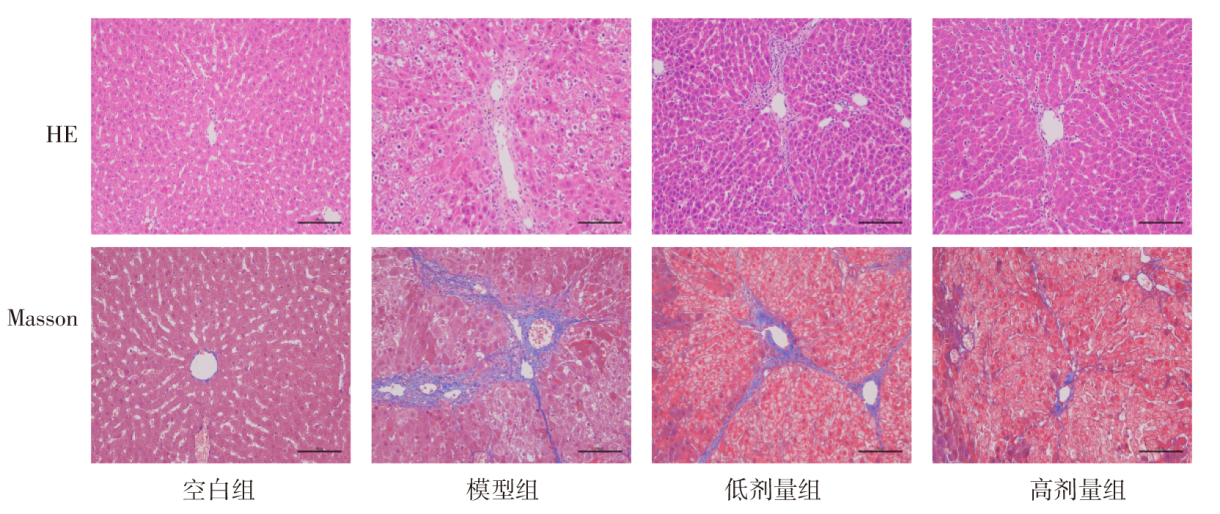
Fig.1 Pathological changes of liver tissue in each group of rats (×200)
| 组别 | NLRP3 | IL-1β |
|---|---|---|
| 空白组 | 3.67±0.36 | 26.59±5.40 |
| 模型组 | 6.52±0.54a | 63.70±10.70a |
| 低剂量组 | 5.74±0.75b | 53.30±8.21b |
| 高剂量组 | 4.27±0.68bc | 35.35±5.00bc |
| F | 38.186** | 38.412** |
Tab.2 Comparison of serum NLRP3 and IL-1β levels between the four groups of rats
| 组别 | NLRP3 | IL-1β |
|---|---|---|
| 空白组 | 3.67±0.36 | 26.59±5.40 |
| 模型组 | 6.52±0.54a | 63.70±10.70a |
| 低剂量组 | 5.74±0.75b | 53.30±8.21b |
| 高剂量组 | 4.27±0.68bc | 35.35±5.00bc |
| F | 38.186** | 38.412** |
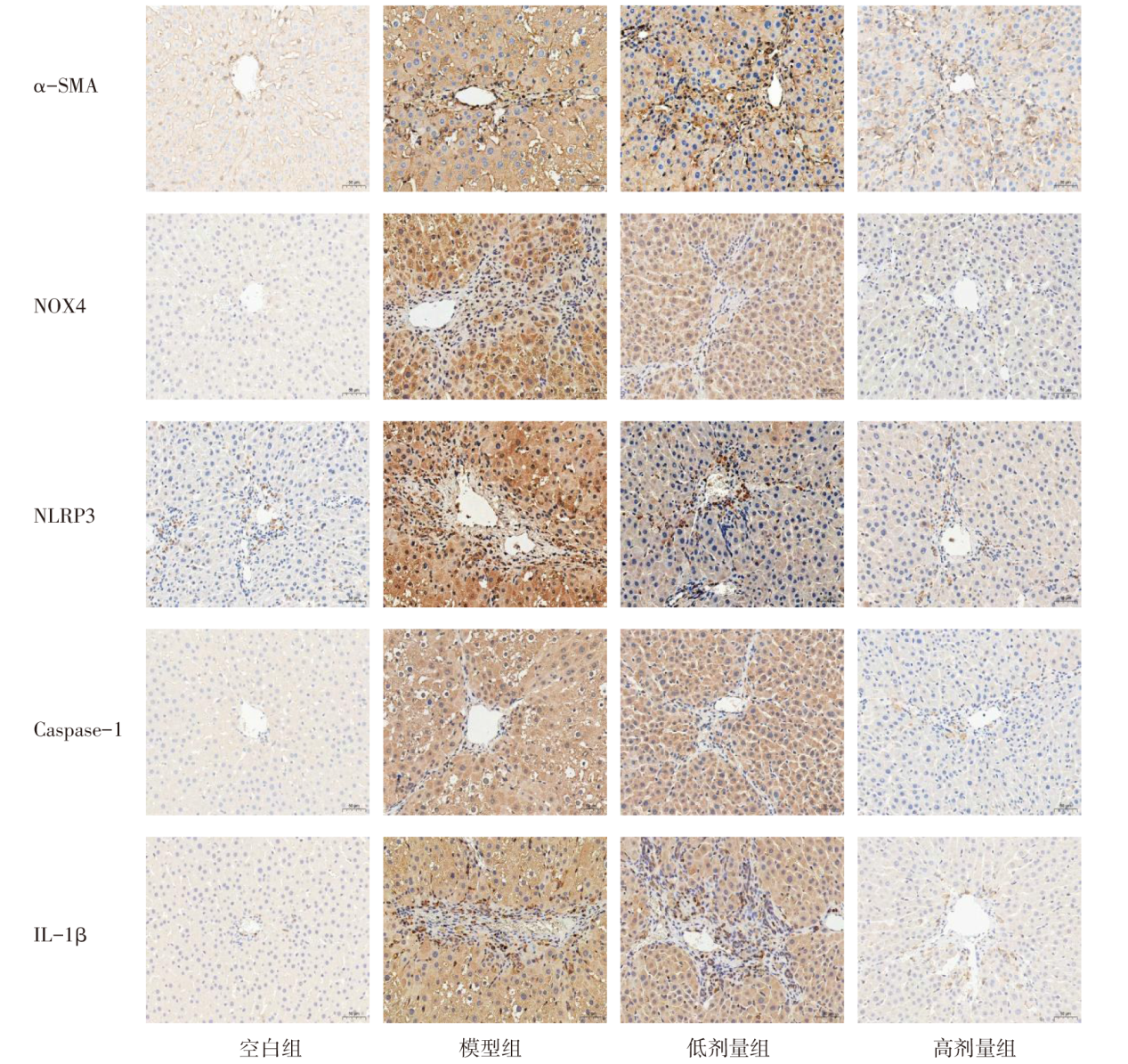
Fig.2 The protein expressions of NOX4, NLRP3, Caspase-1, IL-1β and α-SMA in liver tissue of rats in each group (×400)
| 组别 | α-SMA | NOX4 | NLRP3 | Caspase-1 | IL-1β |
|---|---|---|---|---|---|
| 空白组 | 0.136±0.007 | 0.048(0.044,0.050) | 0.146(0.134,0.147) | 0.000(0.000,0.040) | 0.064(0.059,0.073) |
| 模型组 | 0.308±0.012a | 0.311(0.298,0.321)a | 0.318(0.314,0.339)a | 0.259(0.223,0.315)a | 0.325(0.320,0.333)a |
| 低剂量组 | 0.242±0.008b | 0.179(0.148,0.189)b | 0.276(0.274,0.288)b | 0.176(0.175,0.188)b | 0.286(0.199,0.290)b |
| 高剂量组 | 0.183±0.007bc | 0.081(0.079,0.101)bc | 0.168(0.165,0.179)bc | 0.133(0.125,0.137)bc | 0.123(0.096,0.134)bc |
| F或H | 620.748** | 28.946** | 32.838** | 32.986** | 32.838** |
Tab.3 Comparison of average optical density valus of positive proteins NOX4, NLRP3, Caspase-1, IL-1β and α-SMA in liver tissue of rats between the four groups
| 组别 | α-SMA | NOX4 | NLRP3 | Caspase-1 | IL-1β |
|---|---|---|---|---|---|
| 空白组 | 0.136±0.007 | 0.048(0.044,0.050) | 0.146(0.134,0.147) | 0.000(0.000,0.040) | 0.064(0.059,0.073) |
| 模型组 | 0.308±0.012a | 0.311(0.298,0.321)a | 0.318(0.314,0.339)a | 0.259(0.223,0.315)a | 0.325(0.320,0.333)a |
| 低剂量组 | 0.242±0.008b | 0.179(0.148,0.189)b | 0.276(0.274,0.288)b | 0.176(0.175,0.188)b | 0.286(0.199,0.290)b |
| 高剂量组 | 0.183±0.007bc | 0.081(0.079,0.101)bc | 0.168(0.165,0.179)bc | 0.133(0.125,0.137)bc | 0.123(0.096,0.134)bc |
| F或H | 620.748** | 28.946** | 32.838** | 32.986** | 32.838** |
| [1] | KONG Y, CHEN Z, NIE Z, et al. Targeting endoplasmic reticulum proteostasis in liver fibrosis:from signaling mechanisms to therapeutic opportunities[J]. Pharmacol Res, 2025, 217:107823. doi:10.1016/j.phrs.2025.107823. |
| [2] | CHARAN H V, DWIVEDI D K, KHAN S, et al. Mechanisms of NLRP3 inflammasome-mediated hepatic stellate cell activation:therapeutic potential for liver fibrosis[J]. Genes Dis, 2023, 10(2):480-494. doi:10.1016/j.gendis.2021.12.006. |
| [3] | OSMAN H A, ABUHAMDAH S, HASSAN M H, et al. NLRP3 inflammasome pathway involved in the pathogenesis of metabolic associated fatty liver disease[J]. Sci Rep, 2024, 14(1):19648. doi:10.1038/s41598-024-69764-y. |
| [4] | ZHAI L, PEI H, YANG Y, et al. NOX4 promotes Kupffer cell inflammatory response via ROS-NLRP3 to aggravate liver inflammatory injury in acute liver injury[J]. Aging (Albany NY), 2022, 14(17):6905-6916. doi:10.18632/aging.204173. |
| [5] | NG W H, YEO Y H, KIM H, et al. Renin-angiotensin-aldosterone system inhibitor use improves clinical outcomes in patients with metabolic dysfunction-associated steatotic liver diseases:target trial emulation using real-world data[J]. Hepatology, 2025. doi:10.1097/HEP.0000000000001333. [Epub ahead of print ]. |
| [6] | ZHANG X, WONG G L, YIP T C, et al. Angiotensin-converting enzyme inhibitors prevent liver-related events in nonalcoholic fatty liver disease[J]. Hepatology, 2022, 76(2):469-482. doi:10.1002/hep.32294. |
| [7] | REZA H M, TABASSUM N, SAGOR M A, et al. Angiotensin-converting enzyme inhibitor prevents oxidative stress,inflammation,and fibrosis in carbon tetrachloride-treated rat liver[J]. Toxicol Mech Methods, 2016, 26(1):46-53. doi:10.3109/15376516.2015.1124956. |
| [8] | LIANG H, ZHANG N, ZHAO L, et al. Perindopril improves cardiac fibrosis through targeting the AngII/AT1R pathway[J]. Cell Mol Biol (Noisy-le-grand), 2023, 69(9):234-238. doi:10.14715/cmb/2023.69.9.36. |
| [9] | ABD EL-RAHMAN S S. FAYED H M. Targeting AngII/AT1R signaling pathway by perindopril inhibits ongoing liver fibrosis in rat[J]. J Tissue Eng Regen Med, 2019, 13(12):2131-2141. doi:10.1002/term.2940. |
| [10] | LIU J, BAI Y, YAO W, et al. Using intra-voxel incoherent motion MRI to dynamically evaluate the attenuating effects of donafenib combined with carvedilol in a thioacetamide-induced hepatic fibrosis rat model[J]. MAGMA, 2025. doi:10.1007/s10334-025-01241-7. [Online ahead of print]. |
| [11] | HAO X, XU L, LAN X, et al. Impact of hepatic inflammation and fibrosis on the recurrence and long-term survival of hepatitis B virus-related hepatocellular carcinoma patients after hepatectomy[J]. BMC Cancer, 2024, 24(1):475. doi:10.1186/s12885-024-12187-9. |
| [12] | RAMOS-TOVAR E, MURIEL P. Molecular mechanisms that link oxidative stress,inflammation,and fibrosis in the liver[J]. Antioxidants (Basel), 2020, 9(12):1279. doi:10.3390/antiox9121279. |
| [13] | MEGAHED A, GADALLA H, ABDELHAMID F M, et al. Vitamin D ameliorates the hepatic oxidative damage and fibrotic effect caused by thioacetamide in rats[J]. Biomedicines, 2023, 11(2):424. doi:10.3390/biomedicines11020424. |
| [14] | BIN ATAN N, BIN HADI MF, TEOH V, et al. ARNI versus perindopril for remodeling in HFrEF. A cohort study[J]. J Cardiovasc Pharmacol Ther, 2023,28:10742484231195019. doi:10.1177/10742484231195019. |
| [15] | TOPCU A, KOSTAKOGLU U, MERCANTEPE T, et al. The cardioprotective effects of perindopril in a model of polymicrobial sepsis:the role of radical oxygen species and the inflammation pathway[J]. J Biochem Mol Toxicol, 2022, 36(8):e23080. doi:10.1002/jbt.23080. |
| [16] | FENG J, HUANG X, XU Q, et al. Pharmacological inhibition of the ACE/Ang-2/AT1 axis alleviates mechanical ventilation-induced pulmonary fibrosis[J]. Int Immunopharmacol, 2024, 131:111855. doi:10.1016/j.intimp.2024.111855. |
| [17] | KAMEL E O, HASSANEIN E, AHMED M A, et al. Perindopril ameliorates hepatic ischemia reperfusion injury via regulation of NF-κB-p65/TLR-4,JAK1/STAT-3,Nrf-2,and PI3K/Akt/mTOR signaling pathways[J]. Anat Rec (Hoboken), 2020, 303(7):1935-1949. doi:10.1002/ar.24292. |
| [18] | 李静, 申风俊. 贝那普利对肝纤维化大鼠NOX4和Nrf2的影响[J]. 山西医科大学学报, 2022, 53(5):573-577. |
| LI J, SHEN F J. Effect of benazepril on NOX4 and Nrf2 in rats with hepatic fibrosis[J]. J Shanxi Med Univ, 2022, 53(5):573-577. doi:10.13753/j.issn.1007-6611.2022.05.010. | |
| [19] | 陈晨晨, 宋珂, 丁樱, 等. 雷公藤多苷对IgA肾病大鼠肾脏保护及肾组织CB2R/NOX4/NLRP3表达的影响[J]. 中国药理学通报, 2024, 40(11):2037-2041. |
| CHEN C C, SONG K, DING Y, et al. The effect of Tripterygium glycosides on renal protection and the expression of CB2R/NOX4/NLRP3 in renal tissue of rats with IgA nephropathy[J]. Chinese Journal of Pharmacology, 2024, 40(11):2037-2041. doi:10.12360/CPB202405051. | |
| [20] | ZHU L, TONG H, REN C, et al. Inflammation unleashed:the role of pyroptosis in chronic liver diseases[J]. Int Immunopharmacol, 2024, 141:113006. doi:10.1016/j.intimp.2024.113006. |
| [21] | 冯浩英华, 房广庆, 严玥, 等. 益气活血固肾颗粒通过调节Nox4抑制炎症和氧化应激改善糖尿病肾病肾脏纤维化[J]. 中药新药与临床药理, 2025, 36(6):888-898. |
| FENG H Y H, FANG G Q, YAN Y, et al. Yiqi Huoxue Gushen Granules improve renal fibrosis in diabetic nephropathy by regulating Nox4 to inhibit inflammation and oxidative stress[J]. Clinical Pharmacology and New Drug of Chinese Medicine, 2025, 36(6):888-898. doi:10.19378/j.issn.1003-9783.2025.06.006. | |
| [22] | NIE Y, LIU Q, ZHANG W, et al. Ursolic acid reverses liver fibrosis by inhibiting NOX4/NLRP3 inflammasome pathways and bacterial dysbiosis[J]. Gut Microbes, 2021, 13(1):1972746. doi:10.1080/19490976.2021.1972746. |
| [23] | XU W, SONG S, HUANG Y, et al. Effects of perindopril and valsartan on expression of transforming growth factor-beta-Smads in experimental hepatic fibrosis in rats[J]. J Gastroenterol Hepatol, 2006, 21(8):1250-1256. doi:10.1111/j.1440-1746.2006.04331.x. |
| Viewed | ||||||
|
Full text |
|
|||||
|
Abstract |
|
|||||
