
Tianjin Medical Journal ›› 2026, Vol. 54 ›› Issue (9): 908-912.doi: 10.11958/20260206
• Clinical Research • Previous Articles Next Articles
LI Yue( ), WANG Wei, OUYANG Quping
Received:2026-01-15
Revised:2026-04-08
Published:2026-09-15
Online:2026-09-14
LI Yue, WANG Wei, OUYANG Quping. Establishment of a nomogram prediction model for the occurrence of acute ischemic stroke in patients with obstructive sleep apnea-hypopnea syndrome based on inflammatory indicators and clinical characteristics[J]. Tianjin Medical Journal, 2026, 54(9): 908-912.
CLC Number:
| 组别 | n | 年龄/ 岁 | 性别 (男/女) | BMI/ (kg/m2) | 吸烟史 | 饮酒史 | |||||||||||||
|---|---|---|---|---|---|---|---|---|---|---|---|---|---|---|---|---|---|---|---|
| 非AIS组 | 225 | 58.54±7.59 | 135/90 | 26.19±2.61 | 91(40.44) | 62(27.56) | |||||||||||||
| AIS组 | 53 | 62.26±8.31 | 38/15 | 28.65±2.35 | 28(52.83) | 19(35.85) | |||||||||||||
| t或χ² | 2.979** | 2.497 | 6.708** | 2.688 | 1.429 | ||||||||||||||
| 组别 | 高血压史 | 糖尿病史 | 冠心病史 | 房颤 | AHI/(次/h) | ||||||||||||||
| 非AIS组 | 146(64.89) | 79(35.11) | 81(36.00) | 59(26.22) | 12.09±3.34 | ||||||||||||||
| AIS组 | 41(77.36) | 25(47.17) | 26(49.06) | 13(24.53) | 22.15±4.81 | ||||||||||||||
| χ²或t | 3.029 | 2.664 | 3.089 | 0.064 | 15.949** | ||||||||||||||
| 组别 | 颈围/cm | TC/(mmol/L) | TG/(mmol/L) | HDL-C/(mmol/L) | |||||||||||||||
| 非AIS组 | 39.78±1.99 | 5.23±0.98 | 1.92±0.64 | 3.62±0.84 | |||||||||||||||
| AIS组 | 42.36±2.57 | 5.43±1.12 | 2.11±0.80 | 3.24±0.71 | |||||||||||||||
| t | 6.841** | 1.300 | 1.849 | 3.046** | |||||||||||||||
| 组别 | LDL-C/(mmol/L) | LSpO2/% | WBC/(×10⁹/L) | NLR | |||||||||||||||
| 非AIS组 | 1.09±0.33 | 78.65±5.92 | 6.56±1.82 | 2.34±0.92 | |||||||||||||||
| AIS组 | 1.25±0.24 | 70.26±6.53 | 8.72±2.17 | 3.83±1.28 | |||||||||||||||
| t | 3.327** | 9.098** | 7.482** | 10.558** | |||||||||||||||
Tab.1 Comparison of general data and clinical characteristics between the two groups of patients
| 组别 | n | 年龄/ 岁 | 性别 (男/女) | BMI/ (kg/m2) | 吸烟史 | 饮酒史 | |||||||||||||
|---|---|---|---|---|---|---|---|---|---|---|---|---|---|---|---|---|---|---|---|
| 非AIS组 | 225 | 58.54±7.59 | 135/90 | 26.19±2.61 | 91(40.44) | 62(27.56) | |||||||||||||
| AIS组 | 53 | 62.26±8.31 | 38/15 | 28.65±2.35 | 28(52.83) | 19(35.85) | |||||||||||||
| t或χ² | 2.979** | 2.497 | 6.708** | 2.688 | 1.429 | ||||||||||||||
| 组别 | 高血压史 | 糖尿病史 | 冠心病史 | 房颤 | AHI/(次/h) | ||||||||||||||
| 非AIS组 | 146(64.89) | 79(35.11) | 81(36.00) | 59(26.22) | 12.09±3.34 | ||||||||||||||
| AIS组 | 41(77.36) | 25(47.17) | 26(49.06) | 13(24.53) | 22.15±4.81 | ||||||||||||||
| χ²或t | 3.029 | 2.664 | 3.089 | 0.064 | 15.949** | ||||||||||||||
| 组别 | 颈围/cm | TC/(mmol/L) | TG/(mmol/L) | HDL-C/(mmol/L) | |||||||||||||||
| 非AIS组 | 39.78±1.99 | 5.23±0.98 | 1.92±0.64 | 3.62±0.84 | |||||||||||||||
| AIS组 | 42.36±2.57 | 5.43±1.12 | 2.11±0.80 | 3.24±0.71 | |||||||||||||||
| t | 6.841** | 1.300 | 1.849 | 3.046** | |||||||||||||||
| 组别 | LDL-C/(mmol/L) | LSpO2/% | WBC/(×10⁹/L) | NLR | |||||||||||||||
| 非AIS组 | 1.09±0.33 | 78.65±5.92 | 6.56±1.82 | 2.34±0.92 | |||||||||||||||
| AIS组 | 1.25±0.24 | 70.26±6.53 | 8.72±2.17 | 3.83±1.28 | |||||||||||||||
| t | 3.327** | 9.098** | 7.482** | 10.558** | |||||||||||||||
| 组别 | n | CRP/(mg/L) | IL-6/(ng/L) | TNF-α/(ng/L) |
|---|---|---|---|---|
| 非AIS组 | 225 | 9.35±2.65 | 20.87±6.92 | 14.58±4.82 |
| AIS组 | 53 | 12.74±4.26 | 27.65±8.48 | 18.35±5.37 |
| t | 7.353** | 6.134** | 5.010** |
Tab.2 Comparison of inflammatory indicators between the two groups of patients
| 组别 | n | CRP/(mg/L) | IL-6/(ng/L) | TNF-α/(ng/L) |
|---|---|---|---|---|
| 非AIS组 | 225 | 9.35±2.65 | 20.87±6.92 | 14.58±4.82 |
| AIS组 | 53 | 12.74±4.26 | 27.65±8.48 | 18.35±5.37 |
| t | 7.353** | 6.134** | 5.010** |
| 变量 | β | SE | Wald χ2 | P | OR | OR(95%CI) |
|---|---|---|---|---|---|---|
| 年龄 | 0.019 | 0.046 | 0.171 | 0.680 | 1.019 | 0.931~1.115 |
| BMI | 0.423 | 0.185 | 5.228 | 0.022 | 1.527 | 1.062~2.194 |
| AHI | 0.598 | 0.143 | 17.488 | <0.001 | 1.818 | 1.374~2.407 |
| 颈围 | 0.556 | 0.191 | 8.474 | 0.004 | 1.744 | 1.199~2.535 |
| HDL-C | 0.145 | 0.578 | 0.063 | 0.802 | 1.156 | 0.372~3.589 |
| LDL-C | -2.906 | 1.823 | 2.541 | 0.111 | 0.055 | 0.002~1.949 |
| LSpO2 | -2.141 | 1.214 | 3.110 | 0.078 | 0.118 | 0.011~1.269 |
| WBC | 0.915 | 0.272 | 11.316 | 0.001 | 2.497 | 1.465~4.255 |
| NLR | 0.147 | 0.311 | 0.223 | 0.636 | 1.158 | 0.630~2.131 |
| CRP | 0.299 | 0.124 | 5.814 | 0.016 | 1.349 | 1.058~1.720 |
| IL-6 | 0.125 | 0.063 | 3.937 | 0.047 | 1.133 | 1.002~1.282 |
| TNF-α | 0.173 | 0.072 | 5.773 | 0.016 | 1.189 | 1.032~1.369 |
| 常数项 | -30.654 | 11.541 | 8.201 | 0.004 | <0.001 | - |
Tab.3 Multivariate Logistic regression analysis of AIS occurrence in OSAHS patients
| 变量 | β | SE | Wald χ2 | P | OR | OR(95%CI) |
|---|---|---|---|---|---|---|
| 年龄 | 0.019 | 0.046 | 0.171 | 0.680 | 1.019 | 0.931~1.115 |
| BMI | 0.423 | 0.185 | 5.228 | 0.022 | 1.527 | 1.062~2.194 |
| AHI | 0.598 | 0.143 | 17.488 | <0.001 | 1.818 | 1.374~2.407 |
| 颈围 | 0.556 | 0.191 | 8.474 | 0.004 | 1.744 | 1.199~2.535 |
| HDL-C | 0.145 | 0.578 | 0.063 | 0.802 | 1.156 | 0.372~3.589 |
| LDL-C | -2.906 | 1.823 | 2.541 | 0.111 | 0.055 | 0.002~1.949 |
| LSpO2 | -2.141 | 1.214 | 3.110 | 0.078 | 0.118 | 0.011~1.269 |
| WBC | 0.915 | 0.272 | 11.316 | 0.001 | 2.497 | 1.465~4.255 |
| NLR | 0.147 | 0.311 | 0.223 | 0.636 | 1.158 | 0.630~2.131 |
| CRP | 0.299 | 0.124 | 5.814 | 0.016 | 1.349 | 1.058~1.720 |
| IL-6 | 0.125 | 0.063 | 3.937 | 0.047 | 1.133 | 1.002~1.282 |
| TNF-α | 0.173 | 0.072 | 5.773 | 0.016 | 1.189 | 1.032~1.369 |
| 常数项 | -30.654 | 11.541 | 8.201 | 0.004 | <0.001 | - |
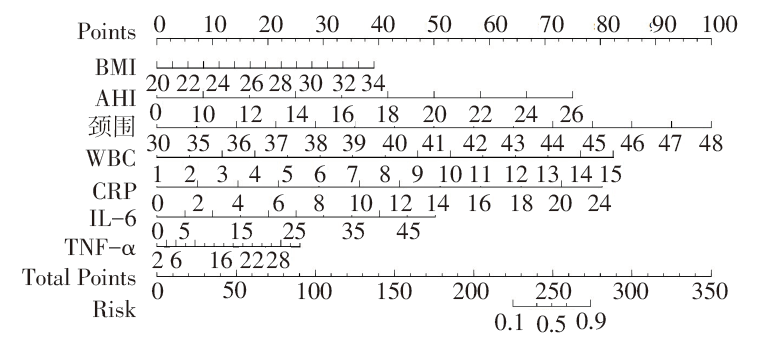
Fig.1 Nomogram prediction model for AIS in OSAHS patients
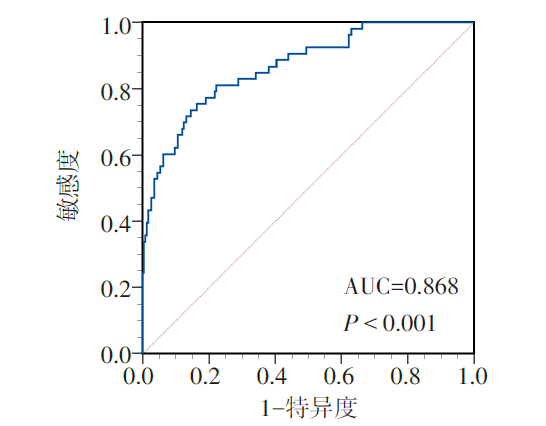
Fig.2 ROC curve of the nomogram prediction model for AIS in OSAHS patients
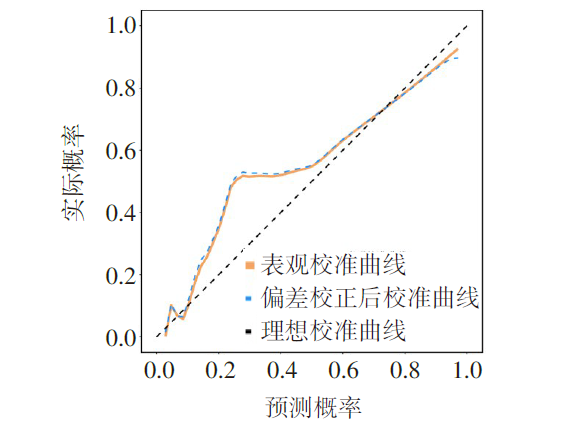
Fig.3 Calibration curve of a nomogram predictive model for OSAHS patients complicated with AIS
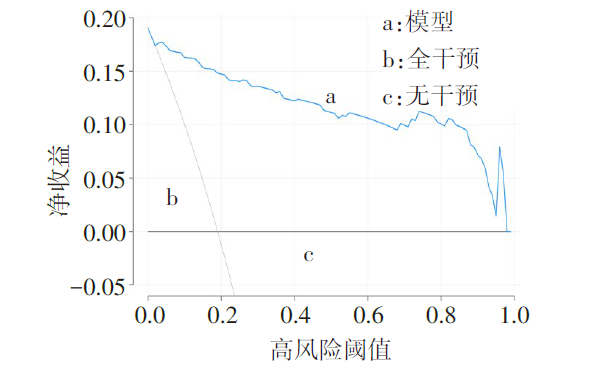
Fig.4 The decision curve of the predictive model for OSAHS patients complicated with AIS
| [1] | Antonaglia C, Passuti G. Obstructive sleep apnea syndrome in non-obese patients[J]. Sleep Breath, 2022, 26(2):513-518. doi:10.1007/s11325-021-02412-1. |
| [2] | Yan Y, Lan J, Zhang H, et al. JWA mediates oxidative stress to promote vascular endothelial repair in obstructive sleep apnea-hypopnea syndrome[J]. Sleep Med, 2025, 134:106686. doi:10.1016/j.sleep.2025.106686. |
| [3] | Akashiba T, Inoue Y, Uchimura N, et al. Sleep apnea syndrome(SAS)clinical practice guidelines 2020[J]. Respir Investig, 2022, 60(1):3-32. doi:10.1016/j.resinv.2021.08.010. |
| [4] | Niu Y, Sun S, Wang Y, et al. Spatiotemporal trends in the prevalence of obstructive sleep apnoea across China:a multilevel meta-analysis incorporating geographic and demographic stratification (2000-2024)[J]. Nat Sci Sleep, 2025, 17:879-903. doi:10.2147/NSS.S525547. |
| [5] | Chen C, Zhang W, Pan Y, et al. An interpretable hybrid machine learning approach for predicting three-month unfavorable outcomes in patients with acute ischemic stroke[J]. Int J Med Inform, 2025, 196:105807. doi:10.1016/j.ijmedinf.2025.105807. |
| [6] | 钱洪春, 张萍淑, 元小冬, 等. 卒中伴阻塞性睡眠呼吸暂停患者认知功能损害与睡眠参数的关系[J]. 天津医药, 2024, 52(6):619-624. |
| Qian H C, Zhang P S, Yuan X D, et al. Relationship between cognitive impairment and sleep parameters in stroke patients with obstructive sleep apnea[J]. Tianjin Med J, 2024, 52(6):619-624. doi:10.11958/20231238. | |
| [7] | Matas A, Pinto N, Conde B, et al. Exploring the insomnia-ischemic stroke nexus:a comprehensive review[J]. J Clin Med, 2024, 13(6):1622. doi:10.3390/jcm13061622. |
| [8] | Hong Y, Mo H, Cho S J, et al. Wake-up ischemic stroke associated with short sleep duration and sleep behavior:a stratified analysis according to risk of obstructive sleep apnea[J]. Sleep Med, 2023, 101:497-504. doi:10.1016/J.SLEEP.2022.11.038. |
| [9] | Dong N, Yue H. Advances in immunology of obstructive sleep apnea:mechanistic insights,clinical impact,and therapeutic perspectives[J]. Front Immunol, 2025, 16:1654450. doi:10.3389/fimmu.2025.1654450. |
| [10] | 林希, 孙婧, 余泽宇, 等. 基于Logistic回归分析和列线图构建过敏性紫癜患儿预后不良的预测模型[J]. 现代生物医学进展, 2025, 25(12):1989-1995. |
| Lin X, Sun J, Yu Z Y, et al. Construct a prediction model of poor prognosis of anaphylactoid purpura children based on logistic regression analysis and nomogram[J]. Progress in Modern Biomedicine, 2025, 25(12):1989-1995. doi:10.13241/j.cnki.pmb.2025.12.010. | |
| [11] | 阻塞性睡眠呼吸暂停低通气综合征诊治指南写作组. 阻塞性睡眠呼吸暂停低通气综合征诊治指南(基层版)[J]. 中华健康管理学杂志, 2015, 9(4):261-267. |
| Working Group on the Obstructive Sleep Apnea Hypopnea Syndrome Diagnosis and Treatment Guidelines (Primary Care Version) Writing Group. Diagnosis and treatment guidelines for obstructive sleep apnea hypopnea syndrome (primary care version)[J]. Chinese Journal of Health Management, 2015, 9(4):261-267. doi:10.7507/1671-6205.2015100. | |
| [12] | 中华医学会神经病学分会,中华医学会神经病学分会脑血管病学组. 中国急性缺血性脑卒中诊治指南2018[J]. 中华神经科杂志, 2018, 51(9):666-682. |
| Chinese Society of Neurology,Cerebrovascular Disease Group of Chinese Society of Neurology. Chinese guidelines for diagnosis and treatment of acute ischemic stroke 2018[J]. Chinese Journal of Neurology, 2018, 51(9):666-682. doi:10.3760/cma.j.issn.1006-7876.2018.09.004. | |
| [13] | 徐玲, 季晓宇, 常焕显, 等. 无创呼吸机对急性缺血性脑卒中伴阻塞性睡眠呼吸暂停低通气综合征患者血清炎性因子及认知功能的影响[J]. 中国现代医药杂志, 2023, 25(11):28-34. |
| Xu L, Ji X Y, Chang H X, et al. Effect of non-invasive ventilator on serum inflammatory factors and cognitive function in patients with acute ischemic stroke complicated with obstructive sleep apnea hypopnea syndrome[J]. Chinese Journal of Modern Medicine, 2023, 25(11):28-34. doi:10.3969/j.issn.1672-9463.2023.11.007. | |
| [14] | Danuaji R, Suroto S, Purwanto B, et al. Association between carotid intima media thickness and acute ischemic stroke at an Indonesian tertiary referral hospital[J]. J Taibah Univ Med Sci, 2023, 18(4):771-777. doi:10.1016/j.jtumed.2022.12.008. |
| [15] | Li X, Li J, Wu G, et al. Relationship of neutrophil-to-lymphocyte ratio with carotid plaque vulnerability and occurrence of vulnerable carotid plaque in patients with acute ischemic stroke[J]. Biomed Res Int, 2021,2021:6894623. doi:10.1155/2021/6894623. |
| [16] | Malhotra A, Heilmann C R, Banerjee K K, et al. Weight reduction and the impact on apnea-hypopnea index:a systematic meta-analysis[J]. Sleep Med, 2024, 121:26-31. doi:10.1016/j.sleep.2024.06.014. |
| [17] | Fadaei R, Azadi S M, Laher I, et al. Increased levels of ANGPTL3 and CTRP9 in patients with obstructive sleep apnea and their relation to insulin resistance and lipid metabolism and markers of endothelial dysfunction[J]. Lab Med, 2023, 54(1):83-89. doi:10.1093/labmed/lmac073. |
| [18] | Liu Y, Zhang X, Lee J, et al. Genome-wide association study of neck circumference identifies sex-specific loci independent of generalized adiposity[J]. Int J Obes (Lond), 2021, 45(7):1532-1541. |
| [19] | D'angelo G F, De Mello A, Schorr F, et al. Muscle and visceral fat infiltration:a potential mechanism to explain the worsening of obstructive sleep apnea with age[J]. Sleep Med, 2023, 104:42-48. doi:10.1016/j.sleep.2023.02.011. |
| [20] | 刘腾雁, 戴丽芬, 彭娅萍, 等. 缺氧诱导因子-1α对OSAHS患者糖代谢的影响研究[J]. 医学信息, 2023, 36(1):189-192. |
| Liu T Y, Dai L F, Peng Y P, et al. Effect of hypoxia-inducible factor-1α on glucose metabolism in patients with OSAHS[J]. Medical Information, 2023, 36(1):189-192. doi:10.3969/j.issn.1006-1959.2023.01.042. | |
| [21] | Armentaro G, Condoleo V, Francica M, et al. Association between nocturnal continuous positive airway pressure and renal function decline in a cohort of elderly patients with obstructive sleep apnoea syndrome-An observational study[J]. Eur J Clin Invest, 2025, 55(12):e70098. doi:10.1111/eci.70098. |
| [22] | Pan Y, Liu Z, Tu R, et al. The value of the CRP-albumin-lymphocyte index(CALLY index)as a prognostic biomarker in acute ischemic stroke[J]. Sci Rep, 2025, 15(1):13672. doi:10.1038/s41598-025-97538-7. |
| [23] | Peng D, Huang Y, Wang Y, et al. Combined prognostic significance of white blood cell count and D-dimer on in-hospital outcomes of acute ischemic stroke[J]. Nutr Metab Cardiovasc Dis, 2023, 33(1):177-184. doi:10.1016/j.numecd.2022.10.008. |
| [24] | 王慧, 尤家平, 闫怀玲, 等. 持续气道正压通气对阻塞性睡眠呼吸暂停低通气综合征患者血液流变学、血脂代谢及炎性因子的影响[J]. 武警后勤学院学报(医学版), 2021, 30(8):148-149. |
| Wang H, You J P, Yan H L, et al. Effect of continuous positive airway pressure on hemorheology,blood lipid metabolism and inflammatory factors in patients with obstructive sleep apnea hypopnea syndrome[J]. Journal of Logistics University of PAP(Medical Sciences), 2021, 30(8):148-149. doi:10.3969/j.issn.2095-3720.2021.08.042. | |
| [25] | 杨丽微, 仇有喜, 杨松. 支气管肺泡灌洗液中细胞分类及炎性因子水平与MPP合并气道黏液栓患儿预后的关联性分析[J]. 中国临床新医学, 2023, 16(10):1065-1070. |
| Yang L W, Qiu Y X, Yang S. Correlation analysis of cell classification and inflammatory factor levels in bronchoalveolar lavage fluid with prognosis in children with MPP complicated with airway mucus plug[J]. Chinese Journal of Clinical New Medicine, 2023, 16(10):1065-1070. doi:10.3969/j.issn.1674-3806.2023.10.011. |
| Viewed | ||||||
|
Full text |
|
|||||
|
Abstract |
|
|||||
