
Tianjin Medical Journal ›› 2026, Vol. 54 ›› Issue (3): 249-253.doi: 10.11958/20252207
• Clinical Research • Previous Articles Next Articles
LI Bin( ), TAN Zhengang△(), ZHANG Huaqing
Received:2025-06-05
Revised:2025-10-09
Published:2026-03-15
Online:2026-03-17
Contact:
E-mail:LI Bin, TAN Zhengang, ZHANG Huaqing. Development of a predictive model for colorectal polyp recurrence risk based on polyp characteristics and serum indicators[J]. Tianjin Medical Journal, 2026, 54(3): 249-253.
CLC Number:
| 组别 | n | 年龄/岁 | 男性 | BMI/(kg/m2) | 吸烟史 | 饮酒史 | 有家族史 | 息肉数量/个 | 息肉大小/cm | 病理高级别 | 伴有不典型增生 | |||||
|---|---|---|---|---|---|---|---|---|---|---|---|---|---|---|---|---|
| 无复发组 | 179 | 57.5±12.8 | 98(54.2) | 23.0±3.3 | 53(29.6) | 58(32.4) | 18(10.1) | 2(2,3) | 1.0±0.5 | 35(19.6) | 38(21.2) | |||||
| 复发组 | 56 | 62.3±11.3 | 41(73.2) | 25.2±3.5 | 16(28.6) | 18(32.1) | 12(21.4) | 2(2,3) | 1.4±0.6 | 21(38.0) | 18(32.1) | |||||
| t或χ2 | 2.516* | 6.019* | 4.291** | 0.022 | 0.001 | 4.954* | 1.865 | 4.973** | 7.569** | 2.799 | ||||||
| 组别 | 息肉位置 | CEA/(μg/L) | CRP/(mg/L) | 血清铁蛋白/(μg/L) | CA19-9/(U/mL) | |||||||||||
| 结肠 | 直肠 | |||||||||||||||
| 无复发组 | 118(65.9) | 61(34.1) | 2.8±1.1 | 7.8±3.0 | 115.3±41.2 | 18.4±7.2 | ||||||||||
| 复发组 | 36(64.3) | 20(35.7) | 4.2±2.0 | 9.5±4.2 | 120.5±38.6 | 20.1±8.5 | ||||||||||
| χ2或t | 0.051 | 6.689** | 3.342** | 0.836 | 1.475 | |||||||||||
Tab.1 Comparison of clinical characteristics and laboratory test results between the two groups of patients
| 组别 | n | 年龄/岁 | 男性 | BMI/(kg/m2) | 吸烟史 | 饮酒史 | 有家族史 | 息肉数量/个 | 息肉大小/cm | 病理高级别 | 伴有不典型增生 | |||||
|---|---|---|---|---|---|---|---|---|---|---|---|---|---|---|---|---|
| 无复发组 | 179 | 57.5±12.8 | 98(54.2) | 23.0±3.3 | 53(29.6) | 58(32.4) | 18(10.1) | 2(2,3) | 1.0±0.5 | 35(19.6) | 38(21.2) | |||||
| 复发组 | 56 | 62.3±11.3 | 41(73.2) | 25.2±3.5 | 16(28.6) | 18(32.1) | 12(21.4) | 2(2,3) | 1.4±0.6 | 21(38.0) | 18(32.1) | |||||
| t或χ2 | 2.516* | 6.019* | 4.291** | 0.022 | 0.001 | 4.954* | 1.865 | 4.973** | 7.569** | 2.799 | ||||||
| 组别 | 息肉位置 | CEA/(μg/L) | CRP/(mg/L) | 血清铁蛋白/(μg/L) | CA19-9/(U/mL) | |||||||||||
| 结肠 | 直肠 | |||||||||||||||
| 无复发组 | 118(65.9) | 61(34.1) | 2.8±1.1 | 7.8±3.0 | 115.3±41.2 | 18.4±7.2 | ||||||||||
| 复发组 | 36(64.3) | 20(35.7) | 4.2±2.0 | 9.5±4.2 | 120.5±38.6 | 20.1±8.5 | ||||||||||
| χ2或t | 0.051 | 6.689** | 3.342** | 0.836 | 1.475 | |||||||||||
| 变量 | β | SE | Wald χ2 | P | OR | OR 95%CI |
|---|---|---|---|---|---|---|
| 年龄 | 0.032 | 0.015 | 4.288 | 0.038 | 1.032 | 1.003~1.062 |
| 性别 | 0.548 | 0.297 | 3.421 | 0.064 | 1.732 | 0.967~3.104 |
| BMI | 0.062 | 0.032 | 3.881 | 0.049 | 1.064 | 1.000~1.131 |
| 吸烟史 | 0.517 | 0.306 | 2.871 | 0.090 | 1.677 | 0.914~3.080 |
| 饮酒史 | 0.245 | 0.296 | 0.690 | 0.406 | 1.278 | 0.711~2.302 |
| 家族史 | 0.851 | 0.415 | 4.338 | 0.037 | 2.340 | 1.039~5.267 |
| 病理学分级 | 1.845 | 0.579 | 10.281 | 0.001 | 6.323 | 2.184~18.430 |
| 息肉大小 | 1.151 | 0.371 | 9.645 | 0.002 | 3.161 | 1.434~6.965 |
| CEA | 0.396 | 0.123 | 9.982 | 0.002 | 1.486 | 1.160~1.904 |
| CRP | 0.124 | 0.052 | 5.733 | 0.017 | 1.132 | 1.022~1.254 |
| 常数项 | 0.839 | 0.438 | 3.669 | 0.055 | 2.314 |
Tab.2 Multivariate Logistic regression analysis of colorectal polyp recurrence
| 变量 | β | SE | Wald χ2 | P | OR | OR 95%CI |
|---|---|---|---|---|---|---|
| 年龄 | 0.032 | 0.015 | 4.288 | 0.038 | 1.032 | 1.003~1.062 |
| 性别 | 0.548 | 0.297 | 3.421 | 0.064 | 1.732 | 0.967~3.104 |
| BMI | 0.062 | 0.032 | 3.881 | 0.049 | 1.064 | 1.000~1.131 |
| 吸烟史 | 0.517 | 0.306 | 2.871 | 0.090 | 1.677 | 0.914~3.080 |
| 饮酒史 | 0.245 | 0.296 | 0.690 | 0.406 | 1.278 | 0.711~2.302 |
| 家族史 | 0.851 | 0.415 | 4.338 | 0.037 | 2.340 | 1.039~5.267 |
| 病理学分级 | 1.845 | 0.579 | 10.281 | 0.001 | 6.323 | 2.184~18.430 |
| 息肉大小 | 1.151 | 0.371 | 9.645 | 0.002 | 3.161 | 1.434~6.965 |
| CEA | 0.396 | 0.123 | 9.982 | 0.002 | 1.486 | 1.160~1.904 |
| CRP | 0.124 | 0.052 | 5.733 | 0.017 | 1.132 | 1.022~1.254 |
| 常数项 | 0.839 | 0.438 | 3.669 | 0.055 | 2.314 |
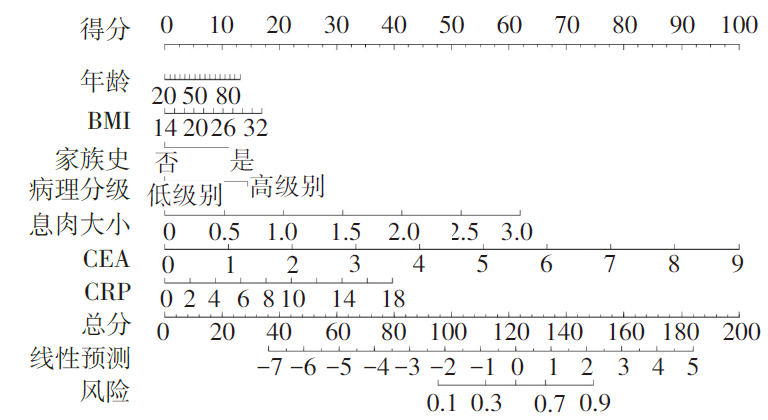
Fig.1 A nomogram model of colorectal polyp recurrence
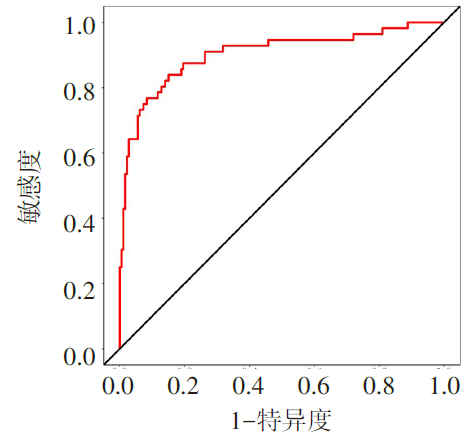
Fig.2 ROC curve of the nomogram model for predicting polyp recurrence
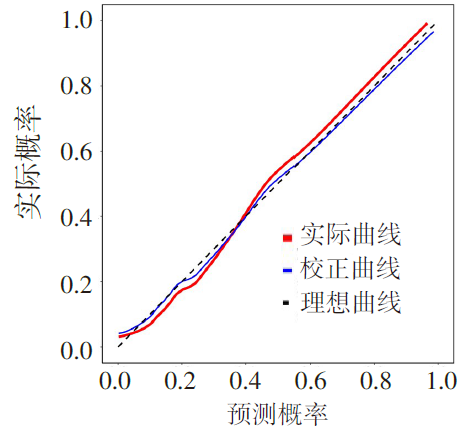
Fig.3 Calibration curve of the nomogram model for predicting polyp recurrence
| [1] | GUPTA S. Screening for colorectal cancer[J]. Hematol Oncol Clin North Am, 2022, 36(3):393-414. doi:10.1016/j.hoc.2022.02.001. |
| [2] | SIEGEL R L, WAGL N S, CERCEK A, et al. Colorectal cancer statistics,2023[J]. CA Cancer J Clin, 2023, 73(3):233-254. |
| [3] | BAILE-MAXÍA S, JOVER R. Surveillance after colorectal polyp resection[J]. Best Pract Res Clin Gastroenterol, 2023, 66:101848. doi:10.1016/j.bpg.2023.101848. |
| [4] | 张鑫慧, 武希润, 安亚楠, 等. 结直肠息肉样病变内镜检查中的常见分型与意义[J]. 中国肿瘤临床, 2024, 51(3):148-152. |
| ZHANG X H, WU X R, AN Y N, et al. Common classification and significance of colorectal polypoid lesions in endoscopic examination[J]. Chinese Journal of Clinical Oncology, 2024, 51(3):148-152. doi:10.12354/j.issn.1000-8179.2024.20231229. | |
| [5] | 麻楚婷, 何海芬, 洪燕玲, 等. SHARE模式病情告知在结肠息肉切除术中的应用效果观察[J]. 中国基层医药, 2025, 32(6):899-903. |
| MA C T, HE H F, HONG Y L, et al. Application of the SHARE model for disease notification in patients undergoing colonic polyp resection[J]. Chin J Prim Med Pharm, 2025, 32(6):899-903. doi:10.3760/cma.j.cn341190-20241017-01337. | |
| [6] | 刘玉杰, 赵志强, 王子琤. 血清乳脂肪球表皮生长因子8、鸢尾素对结直肠息肉病人复发的预测价值[J]. 安徽医药, 2024, 28(3):530-533. |
| LIU Y J, ZHAO Z Q, WANG Z Z. The predictive value of serum lipid fatty acid ball epidermal growth factor 8 and irisin on the recurrence of colorectal polyps[J]. Anhui Medical Journal, 2024, 28(3):530-533. doi:10.3969/j.issn.1009-6469.2024.03.022. | |
| [7] | 辛辽辽, 王一卓. 基质金属蛋白酶-2在不同病理类型的结直肠息肉患者中的表达及意义[J]. 国际消化病杂志, 2022, 42(2):134-137. |
| XIN L L, WANG Y Z. The expression and significance of matrix metalloproteinase-2 in patients with colorectal polyps of different pathological types[J]. International Journal of Digestive Diseases, 2022, 42(2):134-137. doi:10.3969/j.issn.1673-534X.2022.02.013. | |
| [8] | 程芮, 龚芮, 姜维, 等. 中老年结直肠息肉患者的临床病理特征及腺瘤性息肉的危险因素分析[J]. 肿瘤防治研究, 2025, 52(1):19-24. |
| CHENG R, GONG R, JIANG W, et al. Clinical and pathological features of middle-aged and elderly patients with colorectal polyps and analysis of risk factors for adenomatous polyps[J]. Cancer Prevention and Treatment Research, 2025, 52(1):19-24. doi:10.3971/j.issn.1000-8578.2025.24.0746. | |
| [9] | 曹洋辉, 马瑾. 影响结直肠息肉伴高级别瘤变内镜下切除术后复发的因素探讨[J]. 中国肛肠病杂志, 2022, 42(2):33-35. |
| CAO Y H, MA J. Discussion on factors affecting the recurrence after endoscopic resection of colorectal polyps with high-grade dysplasia[J]. Chinese Journal of Proctology, 2022, 42(2):33-35. doi:10.3969/j.issn.1000-1174.2022.02.014. | |
| [10] | 陈杰, 赵倩茹, 董玲, 等. 代谢因素与结直肠息肉发病相关性及风险预测模型建立[J]. 肿瘤基础与临床, 2022, 35(6):478-484. |
| CHEN J, ZHAO Q R, DONG L, et al. The correlation between metabolic factors and the occurrence of colorectal polyps and the establishment of a risk prediction model[J]. Basic and Clinical Oncology, 2022, 35(6):478-484. doi:10.3969/j.issn.1673-5412.2022.06.004. | |
| [11] | 袁姣姣. 结直肠息肉与血脂及CRP相关性研究[D]. 吉首: 吉首大学, 2024. |
| YUAN J J. Study on the Correlation between Colorectal Polyps and Blood Lipids and CRP[D]. Jishou: Jishou University, 2024. | |
| [12] | CHI Z, LIN Y, HUANG J, et al. Risk factors for recurrence of colorectal conventional adenoma and serrated polyp[J]. Gastroenterol Rep(Oxf), 2022,10:goab038. doi:10.1093/gastro/goab038. |
| [13] | YE X, HAN P, WU Z, et al. New management of surveillance in patients with baseline serrated polyps:a large single-center retrospective cohort study in China[J]. Eur J Gastroenterol Hepatol, 2023, 35(2):181-190. doi:10.1097/MEG.0000000000002494. |
| [14] | 胡磊, 唐长凌, 张寅刚. APC蛋白对结直肠癌前病变的检测意义[J]. 当代医学, 2021, 27(9):94-96. |
| HU L, TANG C L, ZHANG Y G. Significance of APC protein in detecting colorectal precancerous lesions[J]. Contemporary Medicine, 2021, 27(9):94-96. doi:10.3969/j.issn.1009-4393.2021.09.036. | |
| [15] | AOYAMA S, INOUE A, KAGAWA Y, et al. Curative resection via right hemicolectomy and regional lymph node dissection for colonic adenomatous polyposis of unknown etiology with adenocarcinomas localized in the right side of the colon:a case report[J]. Surg Case Rep, 2024, 10(1):93. doi:10.1186/s40792-024-01890-1. |
| [16] | GIBSON E, LI H, STAUB J, et al. Colonoscopy and upper endoscopy surveillance in lynch syndrome: a longitudinal study from a large tertiary healthcare system[J]. Gastro Hep Adv, 2024, 3(7):995-1000. doi:10.1016/j.gastha.2024.07.004. |
| [17] | 陶磊, 朱晓蕾. 高危腺瘤切除一年后复发腺瘤性息肉以及结直肠癌的风险因素分析[J]. 空军军医大学学报, 2023, 44(11):1103-1108. |
| TAO L, ZHU X L. Analysis of risk factors for recurrence of adenomatous polyps and colorectal cancer one year after high-risk adenoma resection[J]. Journal of Air Force Medical University, 2023, 44(11):1103-1108. doi:10.13276/j.issn.2097-1656.2023.11.015. | |
| [18] | KIM Y, KANG S, AHN J Y, et al. Risk factors associated with recurrence of gastric hyperplastic polyps: a single-center,long-term,retrospective cohort study[J]. Surg Endosc, 2023, 37(10):7563-7572. doi:10.1007/s00464-023-10194-8. |
| [19] | 高倩, 唐郡, 贺星, 等. 结肠息肉内镜下黏膜切除术前后胃蛋白酶原Ⅰ、Ⅱ及CEA变化与术后复发关系分析[J]. 中国现代医学杂志, 2025, 35(1):79-83. |
| GAO Q, TANG J, HE X, et al. Analysis of the relationship between changes in pepsinogen I,II,and CEA before and after endoscopic mucosal resection of colorectal polyps and postoperative recurrence[J]. Chinese Journal of Modern Medicine, 2025, 35(1):79-83. doi:10.3969/j.issn.1005-8982.2025.01.013. | |
| [20] | ZHANG C, WANG Y, ZHU K, et al. Predictors for colorectal polyps in an asymptomatic population undergoing medical check-ups[J]. Surg Laparosc Endosc Percutan Tech, 2023, 33(2):108-114. doi:10.1097/SLE.0000000000001152. |
| [21] | 叶红, 徐凌宇. 无症状人群结肠镜检查结直肠息肉情况相关因素及预防对策分析[J]. 基层医学论坛, 2022, 26(23):29-31. |
| YE H, XU L Y. Analysis of factors related to colorectal polyps in asymptomatic populations undergoing colonoscopy and preventive strategies[J]. Primary Medical Forum, 2022, 26(23):29-31. doi:10.19435/j.1672-1721.2022.23.010. | |
| [22] | 渠玺, 张子晚, 费素娟. 结直肠息肉内镜下切除后短期复发预测模型的建立[J]. 胃肠病学和肝病学杂志, 2023, 32(9):1001-1005. |
| QU X, ZHANG Z W, FEI S J. Establishment of a short-term recurrence prediction model after endoscopic resection of colorectal polyps[J]. Journal of Gastroenterology and Hepatology, 2023, 32(9):1001-1005. | |
| [23] | DU J Y, HUANG G Y, XIE Y C, et al. High levels of triglycerides,apolipoprotein B,and the number of colorectal polyps are risk factors for colorectal polyp recurrence after endoscopic resection:a retrospective study[J]. J Gastrointest Oncol, 2022, 13(4):1753-1760. doi:10.21037/jgo-22-491. |
| [24] | WANG Q W, WANG X Y, ZHANG Q W, et al. ERBB2 Mutations as potential predictors for recurrence in colorectal serrated polyps by targeted next-generation sequencing[J]. Front Oncol, 2022, 12:769709. doi:10.3389/fonc.2022.769709. |
| Viewed | ||||||
|
Full text |
|
|||||
|
Abstract |
|
|||||
