
Tianjin Medical Journal ›› 2026, Vol. 54 ›› Issue (4): 379-383.doi: 10.11958/20252915
• Clinical Research • Previous Articles Next Articles
CHEN Sumei1( ), ZHOU Quan2△()
Received:2025-09-15
Revised:2025-12-04
Published:2026-04-15
Online:2026-04-14
Contact:
△E-mail:CHEN Sumei, ZHOU Quan. Distribution of pathogenic bacteria in incisional infections of closed lower limb fracture and expression analysis of miR-15b-5p/IKBKB signaling pathway-related molecules[J]. Tianjin Medical Journal, 2026, 54(4): 379-383.
CLC Number:
| 组别 | n | 性别 (男/女) | 年龄/ 岁 | 手术部位/例 | |||
|---|---|---|---|---|---|---|---|
| 股骨 | 胫腓骨 | 踝关节 | 足部 | ||||
| A组 | 44 | 25/19 | 55.05±12.05 | 2 | 20 | 7 | 15 |
| B组 | 40 | 23/17 | 55.73±11.75 | 0 | 22 | 10 | 8 |
| C组 | 17 | 12/5 | 52.65±13.67 | 0 | 8 | 6 | 3 |
| D组 | 19 | 11/8 | 53.32±15.33 | 0 | 9 | 5 | 5 |
| χ2或F | 1.077 | 0.318 | 0.625▲ | ||||
Tab.1 Comparison of baseline data between the four groups
| 组别 | n | 性别 (男/女) | 年龄/ 岁 | 手术部位/例 | |||
|---|---|---|---|---|---|---|---|
| 股骨 | 胫腓骨 | 踝关节 | 足部 | ||||
| A组 | 44 | 25/19 | 55.05±12.05 | 2 | 20 | 7 | 15 |
| B组 | 40 | 23/17 | 55.73±11.75 | 0 | 22 | 10 | 8 |
| C组 | 17 | 12/5 | 52.65±13.67 | 0 | 8 | 6 | 3 |
| D组 | 19 | 11/8 | 53.32±15.33 | 0 | 9 | 5 | 5 |
| χ2或F | 1.077 | 0.318 | 0.625▲ | ||||
| 基因 | 引物序列(5'→3') | 产物 大小/bp |
|---|---|---|
| IKBKB | 上游:GGGAAATAACACCCGAAAG 下游:TGTAACTGAACATAAAC | 165 |
| miR-15b-5p | 上游:AAAGCAAATCATCGGACGACC 下游:GTACAACACATTGTTTCCTCGGA | 181 |
| GAPDH | 上游:TGCACCACCAACTGCTTAGC 下游:GGCATGGACTGTGGTCATGAG | 87 |
Tab.2 Primer sequence
| 基因 | 引物序列(5'→3') | 产物 大小/bp |
|---|---|---|
| IKBKB | 上游:GGGAAATAACACCCGAAAG 下游:TGTAACTGAACATAAAC | 165 |
| miR-15b-5p | 上游:AAAGCAAATCATCGGACGACC 下游:GTACAACACATTGTTTCCTCGGA | 181 |
| GAPDH | 上游:TGCACCACCAACTGCTTAGC 下游:GGCATGGACTGTGGTCATGAG | 87 |
| 组别 | n | 头孢唑林钠 | 头孢呋辛钠 | P | ||
|---|---|---|---|---|---|---|
| 敏感 | 耐药 | 敏感 | 耐药 | |||
| A组 | 44 | 0 | 44 | 0 | 44 | 1.000▲ |
| B组 | 40 | 37 | 3 | 35 | 5 | 0.712▲ |
| C组 | 17 | 4 | 13 | 3 | 14 | 1.000▲ |
| D组 | 19 | 5 | 14 | 9 | 10 | 0.313▲ |
| χ2 | 79.736** | 71.388** | ||||
Tab.3 Sensitivity of various pathogenic bacterial in each group to cefazolin sodium and cefuroxime sodium
| 组别 | n | 头孢唑林钠 | 头孢呋辛钠 | P | ||
|---|---|---|---|---|---|---|
| 敏感 | 耐药 | 敏感 | 耐药 | |||
| A组 | 44 | 0 | 44 | 0 | 44 | 1.000▲ |
| B组 | 40 | 37 | 3 | 35 | 5 | 0.712▲ |
| C组 | 17 | 4 | 13 | 3 | 14 | 1.000▲ |
| D组 | 19 | 5 | 14 | 9 | 10 | 0.313▲ |
| χ2 | 79.736** | 71.388** | ||||
| 组别 | n | miR-15b-5p | IKBKB mRNA | IKBKB蛋白 |
|---|---|---|---|---|
| A组 | 44 | 2.720±0.318 | 0.522±0.038 | 0.402±0.047 |
| B组 | 40 | 2.800±0.305 | 0.529±0.060 | 0.437±0.055 |
| C组 | 17 | 1.110±0.190ab | 1.100±0.116ab | 0.643±0.047ab |
| D组 | 19 | 1.010±0.096ab | 1.040±0.143ab | 0.713±0.030ab |
| F | 324.800** | 370.600** | 262.000** |
Tab.4 Relative expression levels of miR-15b-5p and IKBKB mRNA in each group
| 组别 | n | miR-15b-5p | IKBKB mRNA | IKBKB蛋白 |
|---|---|---|---|---|
| A组 | 44 | 2.720±0.318 | 0.522±0.038 | 0.402±0.047 |
| B组 | 40 | 2.800±0.305 | 0.529±0.060 | 0.437±0.055 |
| C组 | 17 | 1.110±0.190ab | 1.100±0.116ab | 0.643±0.047ab |
| D组 | 19 | 1.010±0.096ab | 1.040±0.143ab | 0.713±0.030ab |
| F | 324.800** | 370.600** | 262.000** |
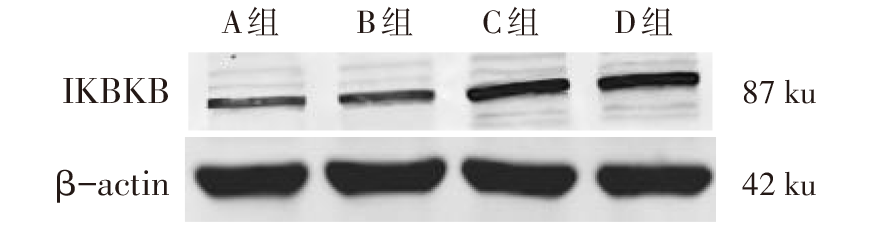
Fig.1 Western blot analysis of IKBKB protein expression in experimental groups
| [1] | WANG X, ZHANG M, ZHU T, et al. Flourishing antibacterial strategies for osteomyelitis therapy[J]. Adv Sci (Weinh), 2023, 10(11):e2206154. doi:10.1002/advs.202206154. |
| [2] | POLMEAR M, HAGEN J E, SCHRANK G M, et al. Deep infections after open and closed fractures[J]. J Bone Joint Surg Am, 2025, 107(Suppl 1):71-79. doi:10.2106/JBJS.24.01249. |
| [3] | WANG Y, LI H, JIANG S, et al. The glycolytic enzyme PFKFB3 drives kidney fibrosis through promoting histone lactylation-mediated NF-κB family activation[J]. Kidney Int, 2024, 106(2):226-240. doi:10.1016/j.kint.2024.04.016. |
| [4] | FISCHER A, KRAMER M M, BAÑOS M, et al. Activation of NF-κB signaling by optogenetic clustering of IKKα and β[J]. Adv Biol (Weinh), 2025, 9(9):e00384. doi:10.1002/adbi.202400384. |
| [5] | JOHANSSON K, GAGNON J D, ZHOU S K, et al. An essential role for miR-15/16 in Treg suppression and restriction of proliferation[J]. Cell Rep, 2023, 42(10):113298. doi:10.1016/j.celrep.2023.113298. |
| [6] | MARTINO E, D'ONOFRIO N, BALESTRIERI A, et al. MiR-15b-5p and PCSK9 inhibition reduces lipopolysaccharide-induced endothelial dysfunction by targeting SIRT4[J]. Cell Mol Biol Lett, 2023, 28:66. doi:10.1186/s11658-023-00482-5. |
| [7] | Major Extremity Trauma Research Consortium (METRC). Effect of supplemental perioperative oxygen on SSI among adults with lower-extremity fractures at increased risk for infection:a randomized clinical trial[J]. J Bone Joint Surg Am, 2022, 104(14):1236-1243. doi:10.2106/JBJS.21.01317. |
| [8] | SLOBOGEAN G P, SPRAGUE S, WELLS J, et al. Effectiveness of iodophor vs chlorhexidine solutions for surgical site infections and unplanned reoperations for patients who underwent fracture repair:the PREP-IT master protocol[J]. JAMA Netw Open, 2020, 3(4):e202215. doi:10.1001/jamanetworkopen.2020.2215. |
| [9] | COSTA M L, ACHTEN J, KNIGHT R, et al. Effect of incisional negative pressure wound therapy vs standard wound dressing on deep surgical site infection after surgery for lower limb fractures associated with major trauma:the WHIST randomized clinical trial[J]. JAMA, 2020, 323(6):519-526. doi:10.1001/jama.2020.0059. |
| [10] | SHEN J, SUN D, FU J, et al. Management of surgical site infection post-open reduction and internal fixation for tibial plateau fractures[J]. Bone Joint Res, 2021, 10(7):380-387. doi:10.1302/2046-3758.107.BJR-2020-0175.R2. |
| [11] | 吴晖, 方真华, 潘娜, 等. 开放性与闭合性下肢骨折术后切口感染及血清炎症因子变化[J]. 中华医院感染学杂志, 2020, 30(5):721-724. |
| WU H, FANG Z H, PAN N, et al. Study of postoperative incision infection and variation levels of serum inflammatory factor in patient with open and closed lower limb fractures[J]. Chin J nosocomiol, 2020, 30(5):721-724. doi:10.11816/cn.ni.2020-183310. | |
| [12] | MEHDI M, MEHDI T, KIANA S, et al. Prevalence of Bacterial surgical site infection in traumatic patients undergoing orthopedic surgeries:a cross-sectional study[J]. Int J Burns Trauma, 2021, 11(3):191-196. |
| [13] | MELLINGHOFF S C, BRUNS C, ALBERTSMEIER M, et al. Staphylococcus aureus surgical site infection rates in 5 European countries[J]. Antimicrob Resist Infect Control, 2023, 12(1):104. doi:10.1186/s13756-023-01309-w. |
| [14] | 吴昊, 石展英, 李兵, 等. 头孢呋辛与他类抗菌药物在骨科手术感染患者中的应用效果与效价评估[J]. 中华医院感染学杂志, 2017, 27(23):5399-5402,5410. |
| WU H, SHI Z Y, LI B, et al. Application effect observation and titer evaluation of cefuroxime and other antimicrobial agents in patients with orthopedic surgery[J]. Chin J nosocomiol, 2017, 27(23):5399-5402,5410. doi:10.11816/cn.ni.2017-171045. | |
| [15] | 邝俊健, 黄献京, 叶义平, 等. 骨科择期清洁切口手术3种头孢菌素预防性应用临床随机研究[J]. 中国医院药学杂志, 2017, 37(2):172-176. |
| KUANG J J, HUANG X J, YE Y P, et al. Antibiotic prophylaxis of three cephalosporins in elective clean incision orthopedic surgery: a randomized clinical study[J]. Chin Hosp Pharm J, 2017, 37(2):172-176. doi:10.13286/j.cnki.chinhosppharmacyj.2017.02.17. | |
| [16] | POLADIAN N, ORUJYAN D, NARINYAN W, et al. Role of NF-κB during Mycobacterium tuberculosis infection[J]. Int J Mol Sci, 2023, 24(2):1772. doi:10.3390/ijms24021772. |
| [17] | ZHANG Z, GUAN X, SUN L. A novel teleost microRNA regulates autophagy and NF-κB activation during bacterial infection[J]. Fish Shellfish Immunol, 2023, 137:108778. doi:10.1016/j.fsi.2023.108778. |
| [18] | CAO Y, TANG S, NIE X, et al. Decreased miR-214-3p activates NF-κB pathway and aggravates osteoarthritis progression[J]. EBioMedicine, 2021, 65:103283. doi:10.1016/j.ebiom.2021.103283. |
| [19] | GONZÁLEZ-LÓPEZ P, ÁLVAREZ-VILLARREAL M, RUIZ-SIMÓN R, et al. Role of miR-15a-5p and miR-199a-3p in the inflammatory pathway regulated by NF-κB in experimental and human atherosclerosis[J]. Clin Transl Med, 2023, 13(8):e1363. doi:10.1002/ctm2.1363. |
| [20] | RAMIREZ H A, PASTAR I, JOZIC I, et al. Staphylococcus aureus triggers induction of miR-15B-5P to diminish DNA repair and deregulate inflammatory response in diabetic foot ulcers[J]. J Invest Dermatol, 2018, 138(5):1187-1196. doi:10.1016/j.jid.2017.11.038. |
| Viewed | ||||||
|
Full text |
|
|||||
|
Abstract |
|
|||||
