
Tianjin Medical Journal ›› 2026, Vol. 54 ›› Issue (4): 352-357.doi: 10.11958/20253464
• Cell and Molecular Biology • Previous Articles Next Articles
QIAN Yong1( ), CHEN Muxiu2, ZHENG Shuang2
Received:2025-12-01
Revised:2026-01-26
Published:2026-04-15
Online:2026-04-14
QIAN Yong, CHEN Muxiu, ZHENG Shuang. The role of COX-2 in the proliferation and invasion of oral squamous cell carcinoma[J]. Tianjin Medical Journal, 2026, 54(4): 352-357.
CLC Number:
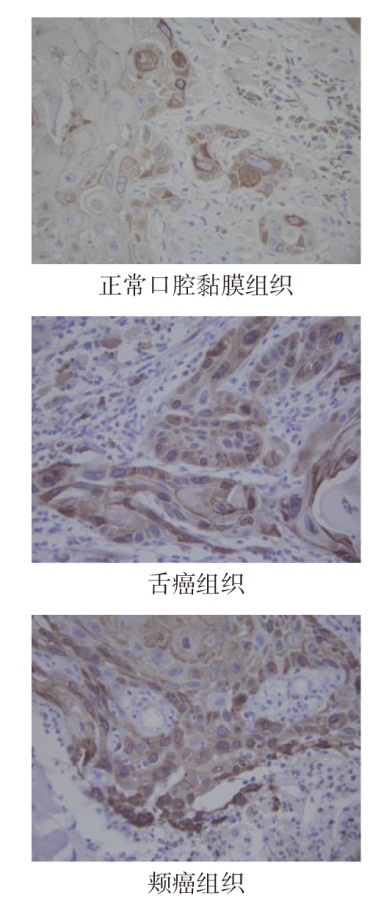
Fig.1 Expression of COX-2 in normal oral mucosa and oral squamous cell carcinoma tissue (IHC, ×200)
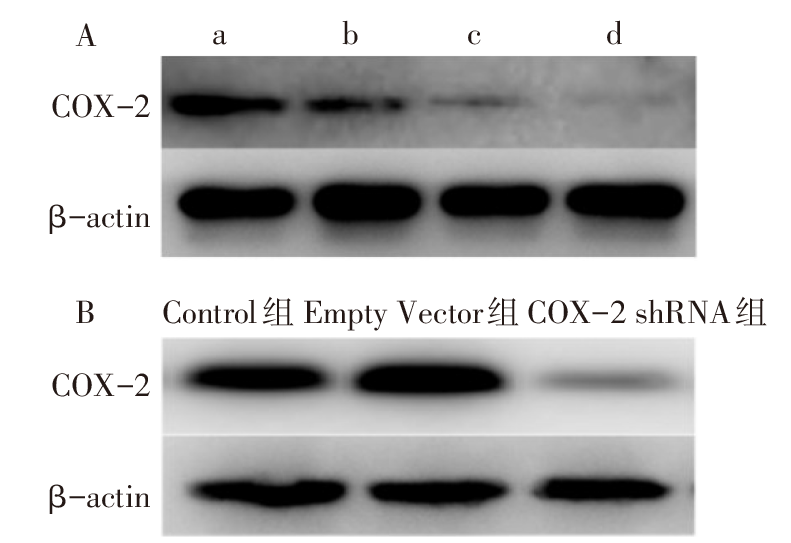
Fig.2 The expression of COX-2 in each group
| 组别 | 24 h | 48 h | 72 h | 96 h |
|---|---|---|---|---|
| Control组 | 0.35±0.01 | 0.59±0.07 | 0.84±0.02 | 1.08±0.03 |
| Empty Vector组 | 0.34±0.02 | 0.57±0.02 | 0.82±0.03 | 1.07±0.00 |
| Celecoxib 20 μg/L组 | 0.35±0.05 | 0.45±0.00ab | 0.70±0.02ab | 0.83±0.01ab |
| Celecoxib 50 μg/L组 | 0.31±0.03 | 0.46±0.03ab | 0.56±0.01abc | 0.72±0.03abc |
| COX-2 shRNA组 | 0.32±0.05 | 0.46±0.04ab | 0.64±0.04abcd | 0.73±0.02abc |
| F | 0.732 | 8.903** | 7.301** | 14.554** |
Tab.1 Comparison of OD450 value of cells between the five groups
| 组别 | 24 h | 48 h | 72 h | 96 h |
|---|---|---|---|---|
| Control组 | 0.35±0.01 | 0.59±0.07 | 0.84±0.02 | 1.08±0.03 |
| Empty Vector组 | 0.34±0.02 | 0.57±0.02 | 0.82±0.03 | 1.07±0.00 |
| Celecoxib 20 μg/L组 | 0.35±0.05 | 0.45±0.00ab | 0.70±0.02ab | 0.83±0.01ab |
| Celecoxib 50 μg/L组 | 0.31±0.03 | 0.46±0.03ab | 0.56±0.01abc | 0.72±0.03abc |
| COX-2 shRNA组 | 0.32±0.05 | 0.46±0.04ab | 0.64±0.04abcd | 0.73±0.02abc |
| F | 0.732 | 8.903** | 7.301** | 14.554** |
| 组别 | 克隆数/个 | 划痕愈合率/% | 穿膜细胞数/个 |
|---|---|---|---|
| Control组 | 223.09±10.94 | 64.51±13.09 | 126.33±11.28 |
| Celecoxib 20 μg/L组 | 145.04±5.06a | 46.24±6.13a | 82.64±6.15a |
| Celecoxib 50 μg/L组 | 26.99±13.66ab | 27.41±3.19ab | 54.18±5.02ab |
| Empty Vector组 | 197.43±2.17 | 66.55±3.90 | 121.47±9.36 |
| COX-2 shRNA组 | 45.55±5.55ac | 33.96±2.77ac | 49.37±4.88ac |
| F | 318.073** | 19.218** | 65.220** |
Tab.2 Comparison of colony formation, wound healing and Transwell invasion ability between the five groups
| 组别 | 克隆数/个 | 划痕愈合率/% | 穿膜细胞数/个 |
|---|---|---|---|
| Control组 | 223.09±10.94 | 64.51±13.09 | 126.33±11.28 |
| Celecoxib 20 μg/L组 | 145.04±5.06a | 46.24±6.13a | 82.64±6.15a |
| Celecoxib 50 μg/L组 | 26.99±13.66ab | 27.41±3.19ab | 54.18±5.02ab |
| Empty Vector组 | 197.43±2.17 | 66.55±3.90 | 121.47±9.36 |
| COX-2 shRNA组 | 45.55±5.55ac | 33.96±2.77ac | 49.37±4.88ac |
| F | 318.073** | 19.218** | 65.220** |
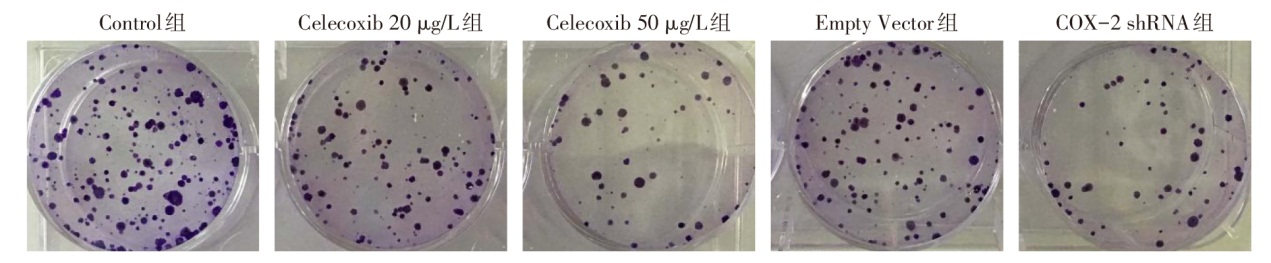
Fig.3 Comparison of clone formation ability of SCC9 cells between the five groups
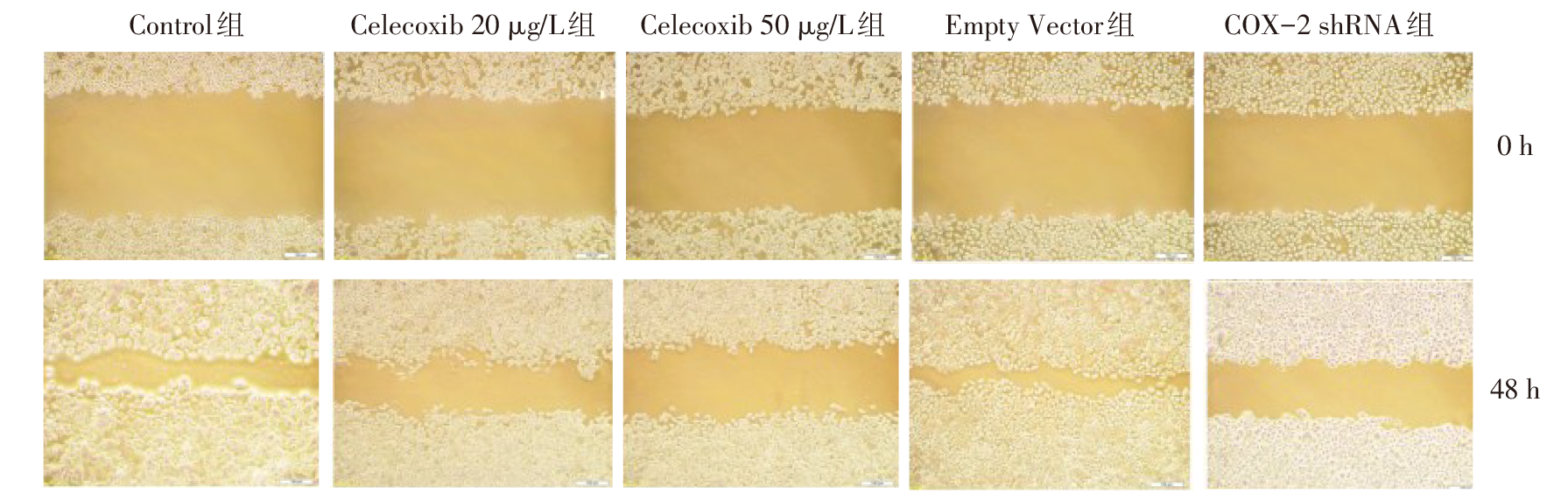
Fig.4 Comparison of migration ability of SCC9 cells between the five groups

Fig.5 Comparison of the invasion ability of SCC9 cells between the five groups
| 组别 | 0周 | 1周 | 2周 | 3周 | 4周 | 5周 | 6周 |
|---|---|---|---|---|---|---|---|
| Empty Vector组 | 52.18±9.24 | 130.46±18.59 | 289.74±35.42 | 559.87±62.28 | 919.65±85.73 | 1 270.52±110.36 | 1 519.74±135.82 |
| COX-2shRNA组 | 48.92±8.26 | 95.38±15.63 | 184.56±28.19 | 329.42±40.74 | 520.28±55.42 | 689.84±70.58 | 610.29±58.46 |
| t | 0.588 | 3.230* | 5.195** | 12.401** | 16.230** | 17.816** | 31.632** |
Tab.3 Comparison of tumor volumes in nude mice at different time points between the two groups
| 组别 | 0周 | 1周 | 2周 | 3周 | 4周 | 5周 | 6周 |
|---|---|---|---|---|---|---|---|
| Empty Vector组 | 52.18±9.24 | 130.46±18.59 | 289.74±35.42 | 559.87±62.28 | 919.65±85.73 | 1 270.52±110.36 | 1 519.74±135.82 |
| COX-2shRNA组 | 48.92±8.26 | 95.38±15.63 | 184.56±28.19 | 329.42±40.74 | 520.28±55.42 | 689.84±70.58 | 610.29±58.46 |
| t | 0.588 | 3.230* | 5.195** | 12.401** | 16.230** | 17.816** | 31.632** |
| [1] | TAN Y, WANG Z, XU M, et al. Oral squamous cell carcinomas:state of the field and emerging directions[J]. Int J Oral Sci, 2023, 15(1):44. doi:10.1038/s41368-023-00249-w. |
| [2] | SUNG H, FERLAY J, SIEGEL R L, et al. Global cancer statistics 2020:GLOBOCAN estimates of incidence and mortality worldwide for 36 cancers in 185 countries[J]. CA Cancer J Clin, 2021, 71(3):209-249. doi:10.3322/caac.21660. |
| [3] | CHEN X, OUYANG Q, FAN R, et al. Cyclooxygenase-2 expression in advanced oral squamous cell carcinoma:a biomarker of poor prognosis[J]. BMC Oral Health, 2025, 25(1):1971. doi:10.1186/s12903-025-07310-6. |
| [4] | 张旭, 刘佳文. MMP-9、COX-2、NF-κB在口腔鳞状细胞癌组织中的表达及意义[J]. 口腔医学研究, 2021, 37(4):360-365. |
| ZHANG X, LIU J W. Expression and significance of MMP-9,COX-2,and NF-κB in oral squamous cell carcinoma[J]. Oral Medicine Research, 2021, 37(4):360-365. doi:10.13701/j.cnki.kqyxyj.2021.04.018. | |
| [5] | 王喆, 邱林, 马贲. 番茄来源胞外囊泡样颗粒对口腔鳞状细胞癌的作用效果研究[J]. 天津医药, 2026, 54(2):145-150. |
| WANG Z, QIU L, MA B. Research on the effect of tomato derived nanovesicles on oral squamous cell carcinoma[J]. Tianjin Med J, 2026, 54(2):145-150. doi:10.11958/20252768. | |
| [6] | HOU J, KARIN M, SUN B. Targeting cancer-promoting inflammation-have anti-inflammatory therapies come of age?[J]. Nat Rev Clin Oncol, 2021, 18(5):261-279. doi:10.1038/s41571-020-00459-9. |
| [7] | ZHU Y, SHI C, ZENG L, et al. High COX-2 expression in cancer-associated fibroblasts contributes to poor survival and promotes migration and invasiveness in nasopharyngeal carcinoma[J]. Mol Carcinog, 2020, 59(3):265-280. doi:10.1002/mc.23150. |
| [8] | CABRAL L G S, MARTINS I M, PAULO E P A, et al. Molecular mechanisms in the carcinogenesis of oral squamous cell carcinoma:a literature review[J]. Biomolecules, 2025, 15(5):621. doi:10.3390/biom15050621. |
| [9] | YOSHIDA H, YOSHIMURA H, MATSUDA S, et al. Celecoxib suppresses lipopolysaccharide-stimulated oral squamous cell carcinoma proliferation in vitro and in vivo[J]. Oncol Lett, 2019, 18(6):5793-5800. doi:10.3892/ol.2019.10975. |
| [10] | GÓMEZ-VALENZUELA F, ESCOBAR E, PÉREZ-TOMÁS R, et al. The inflammatory profile of the tumor microenvironment,orchestrated by cyclooxygenase-2,promotes epithelial-mesenchymal transition[J]. Front Oncol, 2021, 11:686792. doi:10.3389/fonc.2021.686792. |
| [11] | PUNYAWATHANANUKOOL S, MATSUURA R, WONGCHANG T, et al. Prostaglandin E2-EP2/EP4 signaling induces immunosuppression in human cancer by impairing bioenergetics and ribosome biogenesis in immune cells[J]. Nat Commun, 2024, 15(1):9464. doi:10.1038/s41467-024-53706-3. |
| [12] | SHAO J, JUNG C, LIU C, et al. Prostaglandin E2 Stimulates the beta-catenin/T cell factor-dependent transcription in colon cancer[J]. J Biol Chem, 2005, 280(28):26565-26572. doi:10.1074/jbc.M413056200. |
| [13] | ZANG W, GENG F, LIU J, et al. Porphyromonas gingivalis potentiates stem-like properties of oral squamous cell carcinoma by modulating SCD1-dependent lipid synthesis via NOD1/KLF5 axis[J]. Int J Oral Sci, 2025, 17(1):15. doi:10.1038/s41368-024-00342-8. |
| [14] | KUANG B, YANG K, ZHONG X, et al. Celecoxib in oncology:targeting the COX-2/PGE2 axis to reprogram the tumor immune microenvironment and enhance multimodal therapy[J]. Front Pharmacol, 2025, 16:1691392. doi:10.3389/fphar.2025.1691392. |
| [15] | BANSAL K, KAPOOR N, NARAYANA Y, et al. PIM2 induced COX-2 and MMP-9 expression in macrophages requires PI3K and Notch1 signaling[J]. PLoS One, 2009, 4(3):e4911. doi:10.1371/journal.pone.0004911. |
| [16] | SANTORO A, BUFO P, RUSSO G, et al. Expression and clinical implication of cyclooxygenase-2 and E-cadherin in oral squamous cell carcinomas[J]. Cancer Biol Ther, 2020, 21(8):667-674. doi:10.1080/15384047.2015.1071741. |
| [17] | ADHIM Z, MATSUOKA T, BITO T, et al. In vitro and in vivo inhibitory effect of three Cox-2 inhibitors and epithelial-to-mesenchymal transition in human bladder cancer cell lines[J]. Br J Cancer, 2011, 105(3):393-402. doi:10.1038/bjc.2011.262. |
| [18] | MAO H, ZHAO X, SUN S C. NF-κB in inflammation and cancer[J]. Cellular & Molecular Immunology, 2025, 22:811-839. doi:10.1038/s41423-025-01310-w. |
| [19] | ZELENAY S, VAN DER VLIET H J, REIS E S, et al. Cyclooxygenase-dependent tumor growth through evasion of immunity[J]. Cell, 2015, 162(6):1257-1270. doi:10.1016/j.cell.2015.08.015. |
| [20] | XU L, STEVENS J, HILTON M B, et al. COX-2 inhibition potentiates antiangiogenic cancer therapy and prevents metastasis in preclinical models[J]. Sci Transl Med, 2014, 6(242):242ra84. doi:10.1126/scitranslmed.3008455. |
| Viewed | ||||||
|
Full text |
|
|||||
|
Abstract |
|
|||||
