
Tianjin Medical Journal ›› 2026, Vol. 54 ›› Issue (1): 64-69.doi: 10.11958/20252352
• Clinical Research • Previous Articles Next Articles
LI He( ), MA Shengshan, SUN Yang, WU Dongze, LI Xiaofei△()
Received:2025-06-25
Revised:2025-08-12
Published:2026-01-15
Online:2026-01-19
Contact:
△ E-mail:LI He, MA Shengshan, SUN Yang, WU Dongze, LI Xiaofei. Influencing factors and prediction model construction of re-tearing risk after arthroscopic rotator cuff repair[J]. Tianjin Medical Journal, 2026, 54(1): 64-69.
CLC Number:
| 组别 | n | 女性 | 年龄≥60岁 | BMI/(kg/m2) | 吸烟 | 饮酒 | 高血压 | 糖尿病 | 高脂血症 | 伴骨质疏松 | 病程/月 |
|---|---|---|---|---|---|---|---|---|---|---|---|
| 愈合组 | 373 | 250(67.02) | 153(41.02) | 22.62±1.33 | 35(9.38) | 16(4.29) | 138(37.00) | 95(25.47) | 91(24.40) | 104(27.88) | 5.23±1.32 |
| 再撕裂组 | 97 | 71(73.20) | 62(63.92) | 22.85±1.34 | 12(12.37) | 7(7.22) | 40(41.24) | 40(41.24) | 30(30.93) | 50(51.55) | 5.37±1.32 |
| χ2或t | 1.354 | 16.264** | 1.567 | 0.764 | 1.417 | 0.588 | 9.349** | 1.718 | 19.569** | 0.936 | |
| 组别 | 撕裂长度 | 疼痛VAS评分/分 | 肌腱回缩 | 脂肪浸润分级 | 手术方式 | 应用皮质类固醇 | |||||
| >3 cm | ≤3 cm | ≥2级 | <2级 | 单排 | 双排 | ||||||
| 愈合组 | 150(40.21) | 223(59.79) | 6.48±1.35 | 112(30.03) | 49(13.14) | 324(86.86) | 142(38.07) | 231(61.93) | 86(23.06) | ||
| 再撕裂组 | 70(72.16) | 27(27.84) | 6.30±1.28 | 49(50.52) | 35(36.08) | 62(63.92) | 47(48.45) | 50(51.55) | 33(34.02) | ||
| χ2 | 31.562** | 1.252 | 14.349** | 27.613** | 3.452 | 4.894* | |||||
Tab.1 Comparison of clinical data between the re-tearing group and the healing group
| 组别 | n | 女性 | 年龄≥60岁 | BMI/(kg/m2) | 吸烟 | 饮酒 | 高血压 | 糖尿病 | 高脂血症 | 伴骨质疏松 | 病程/月 |
|---|---|---|---|---|---|---|---|---|---|---|---|
| 愈合组 | 373 | 250(67.02) | 153(41.02) | 22.62±1.33 | 35(9.38) | 16(4.29) | 138(37.00) | 95(25.47) | 91(24.40) | 104(27.88) | 5.23±1.32 |
| 再撕裂组 | 97 | 71(73.20) | 62(63.92) | 22.85±1.34 | 12(12.37) | 7(7.22) | 40(41.24) | 40(41.24) | 30(30.93) | 50(51.55) | 5.37±1.32 |
| χ2或t | 1.354 | 16.264** | 1.567 | 0.764 | 1.417 | 0.588 | 9.349** | 1.718 | 19.569** | 0.936 | |
| 组别 | 撕裂长度 | 疼痛VAS评分/分 | 肌腱回缩 | 脂肪浸润分级 | 手术方式 | 应用皮质类固醇 | |||||
| >3 cm | ≤3 cm | ≥2级 | <2级 | 单排 | 双排 | ||||||
| 愈合组 | 150(40.21) | 223(59.79) | 6.48±1.35 | 112(30.03) | 49(13.14) | 324(86.86) | 142(38.07) | 231(61.93) | 86(23.06) | ||
| 再撕裂组 | 70(72.16) | 27(27.84) | 6.30±1.28 | 49(50.52) | 35(36.08) | 62(63.92) | 47(48.45) | 50(51.55) | 33(34.02) | ||
| χ2 | 31.562** | 1.252 | 14.349** | 27.613** | 3.452 | 4.894* | |||||
| 变量 | β | SE | Wald χ2 | P | OR | 95% CI |
|---|---|---|---|---|---|---|
| 年龄 | 0.980 | 0.268 | 13.406 | <0.001 | 2.664 | 1.577~4.502 |
| 合并糖尿病 | 0.519 | 0.272 | 3.647 | 0.056 | 1.680 | 0.986~2.862 |
| 伴骨质疏松 | 0.905 | 0.265 | 11.641 | <0.001 | 2.473 | 1.470~4.159 |
| 撕裂长度 | 1.230 | 0.274 | 20.171 | <0.001 | 3.422 | 2.001~5.854 |
| 肌腱回缩 | 0.835 | 0.265 | 9.912 | 0.002 | 2.304 | 1.370~3.874 |
| 脂肪浸润分级 | 1.461 | 0.299 | 23.864 | <0.001 | 4.311 | 2.399~7.748 |
| 应用皮质类固醇 | 0.606 | 0.283 | 4.592 | 0.032 | 1.832 | 1.053~3.188 |
| 常数项 | -3.943 | 0.371 | 112.746 | <0.001 | 0.019 | - |
Tab.2 Multivariate Logistic regression analysis of factors affecting postoperative re-tearing
| 变量 | β | SE | Wald χ2 | P | OR | 95% CI |
|---|---|---|---|---|---|---|
| 年龄 | 0.980 | 0.268 | 13.406 | <0.001 | 2.664 | 1.577~4.502 |
| 合并糖尿病 | 0.519 | 0.272 | 3.647 | 0.056 | 1.680 | 0.986~2.862 |
| 伴骨质疏松 | 0.905 | 0.265 | 11.641 | <0.001 | 2.473 | 1.470~4.159 |
| 撕裂长度 | 1.230 | 0.274 | 20.171 | <0.001 | 3.422 | 2.001~5.854 |
| 肌腱回缩 | 0.835 | 0.265 | 9.912 | 0.002 | 2.304 | 1.370~3.874 |
| 脂肪浸润分级 | 1.461 | 0.299 | 23.864 | <0.001 | 4.311 | 2.399~7.748 |
| 应用皮质类固醇 | 0.606 | 0.283 | 4.592 | 0.032 | 1.832 | 1.053~3.188 |
| 常数项 | -3.943 | 0.371 | 112.746 | <0.001 | 0.019 | - |
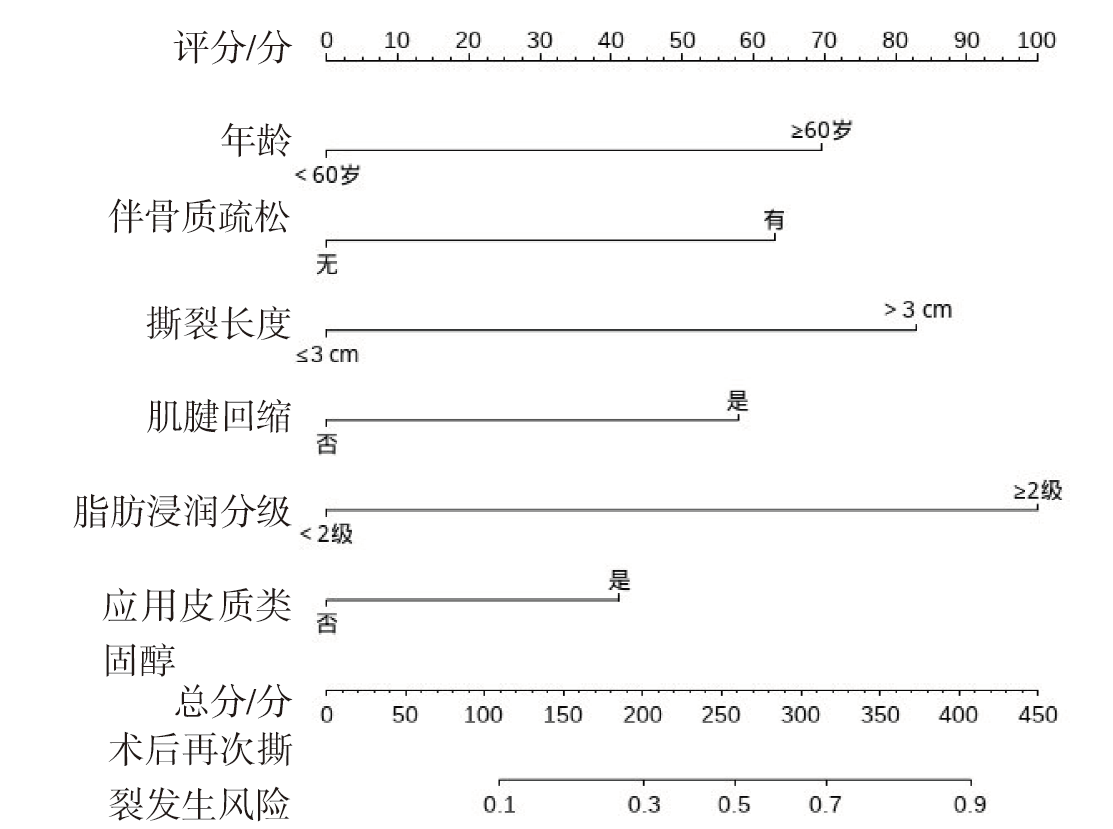
Fig.1 The nomogram model for the risk of postoperative re-tearing
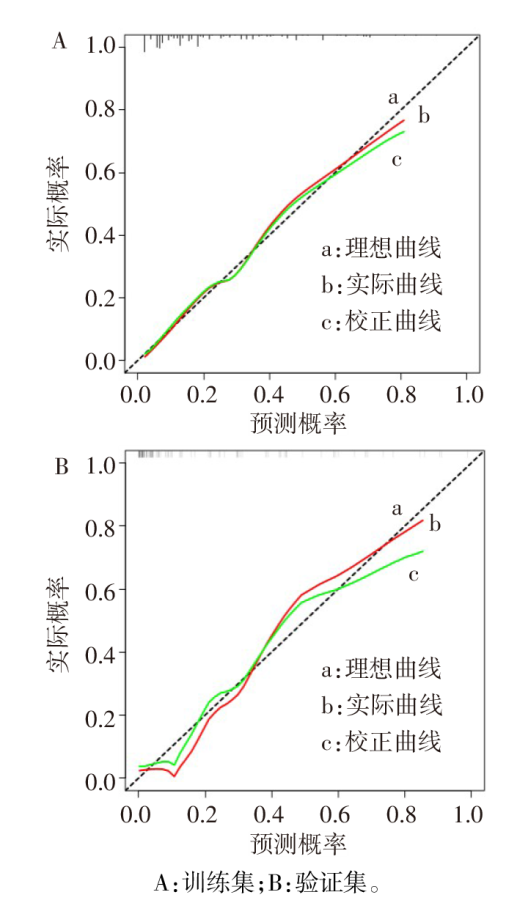
Fig.2 Calibration curves of the prediction model for predicting postoperative re-tearing in patients
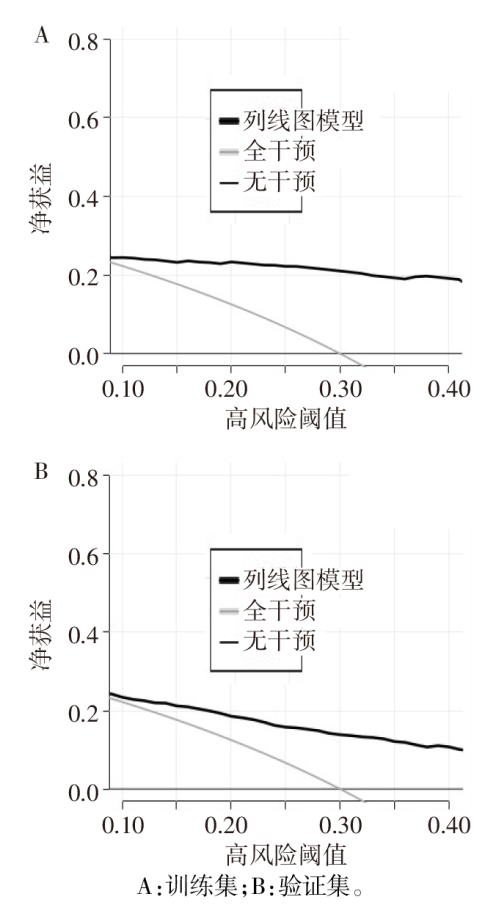
Fig.3 Clinical decision curves of the prediction model for predicting postoperative re-tearing in patients
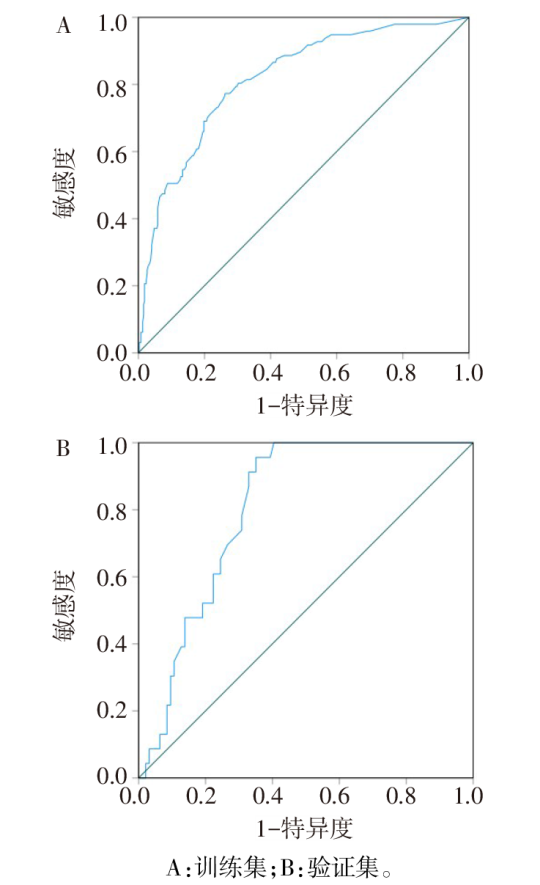
Fig.4 ROC curves of the prediction model for predicting postoperative re-tearing in patients
| [1] | 谢尚能, 赖剑萍, 李征, 等. 电针联合神经肌肉电刺激对老年肩袖修补术患者疼痛和功能的影响[J]. 中国老年学杂志, 2023, 43(18):4403-4406. |
| XIE S N, LAI J P, LI Z, et al. The influence of electroacupuncture combined with neuromuscular electrical stimulation on pain and function in elderly patients undergoing rotator cuff repair[J]. Chin J Gerontol, 2023, 43(18):4403-4406. doi:10.3969/j.issn.1005-9202.2023.18.017. | |
| [2] | 许莹莹, 白玥, 杨硕, 等. 关节镜肩袖修补术后48小时内需要阿片类药物镇痛的影响因素的初步分析[J]. 中国微创外科杂志, 2023, 23(12):898-901. |
| XU Y Y, BAI Y, YANG S, et al. Preliminary analysis of influencing factors of opioid analgesics need within 48 hours after arthroscopic rotator cuff repair[J]. Chin J Minim Inva Surg, 2023, 23(12):898-901. doi:10.3969/j.issn.1009-6604.2023.12.004. | |
| [3] | BANDARA U, AN V, IMANI S, et al. Rehabilitation protocols following rotator cuff repair:a meta-analysis of current evidence[J]. ANZ J Surg, 2021, 91(12):2773-2779. doi:10.1111/ans.17213. |
| [4] | 郑军, 费文勇, 朱长仁, 等. 全流程优化日间手术方案在关节镜下肩袖修补术中的应用效果评价[J]. 实用临床医药杂志, 2023, 27(12):63-68. |
| ZHENG J, FEI W Y, ZHU C R, et al. Effect of whole-process optimization of day surgery in rotator cuff repair under arthroscopy[J]. J Clin Med Pract, 2023, 27(12):63-68. doi:10.7619/jcmp.20231405. | |
| [5] | BERTHOLD D P, GARVIN P, MANCINI M R, et al. Arthroscopic rotator cuff repair with biologically enhanced patch augmentation[J]. Oper Orthop Traumatol, 2022, 34(1):4-12. doi:10.1007/s00064-021-00754-3. |
| [6] | DARBANDI A, CREDILLE K, DARBANDI A, et al. Fatty infiltration,tear size,and retraction size are significant risk factors for retear after arthroscopic rotator cuff repair:a systematic review[J]. Arthroscopy, 2025, 41(5):1649-1666.e3. doi:10.1016/j.arthro.2024.06.040. |
| [7] | 陈宇琦, 张磊, 石慧生, 等. 肩袖损伤关节镜下缝合修复术后再撕裂的风险因素分析[J]. 中华肩肘外科电子杂志, 2022, 10(1):7-13. |
| CHEN Y Q, ZHANG L, SHI H S, et al. Risk factors analysis of retear after arthroscopic suture repair of rotator cuff injury[J]. Chin J Shoulder Elb (Electronic Edition), 2022, 10(1):7-13. doi:10.3877/cma.j.issn.2095-5790.2022.01.003. | |
| [8] | 张玉龙, 焦成, 荣林. 全关节镜下肩袖修补术对老年肩袖损伤患者术后72 h内疼痛程度和并发症的影响[J]. 中国骨伤, 2022, 35(10):971-976. |
| ZHANG Y L, JIAO C, RONG L. Effect of total arthroscopic rotator cuff repair on pain degree and complications of elderly patients with rotator cuff injury within 72 hours after operation[J]. Chin J Orthopa Trauma, 2022, 35(10):971-976. doi:10.12200/j.issn.1003-0034.2022.10.012. | |
| [9] | 黄子帅, 王健. 关节镜下肩袖撕裂修补后再撕裂的非手术性影响因素[J]. 中国组织工程研究, 2025, 29(27):5914-5923. |
| HUANG Z S, WANG J. Non-surgical influencing factors of rotator cuff retear after arthroscopic rotator cuff repair[J]. J Clin Rehabil Tis Eng Res, 2025, 29(27):5914-5923. doi:10.12307/2025.842. | |
| [10] | 赵加全, 向飞帆, 曾维君, 等. 肩袖修复术后再次撕裂的危险因素分析[J]. 解放军医学院学报, 2022, 43(11):1156-1159,1169. |
| ZHAO J Q, XIANG F F, ZENG W J, et al. Factors associated with retear after rotator cuff repair[J]. Acad J Chin PLA Med Sch, 2022, 43(11):1156-1159,1169. doi:10.3969/j.issn.2095-5227.2022.11.010. | |
| [11] | 庄鳌, 黄长明, 董辉详, 等. 影响肩袖术后再撕裂相关因素及研究进展[J]. 中国矫形外科杂志, 2023, 31(2):140-144. |
| ZHUANG A, HUANG C M, DONG H X, et al. Research progress on factors related to rotator cuff retear secondary to arthroscopic rotator cuff repair[J]. Orthop J China, 2023, 31(2):140-144. doi:10.3977/j.issn.1005-8478.2023.02.10. | |
| [12] | 谢彬, 费文勇, 刘颖, 等. 糖尿病对关节镜肩袖修补术后患者肩关节功能恢复的影响[J]. 中国运动医学杂志, 2021, 40(3):193-199. |
| XIE B, FEI W Y, LIU Y, et al. Effect of diabetes mellitus on shoulder function recovery after arthroscopic rotator cuff repair[J]. Chin J Sport Med, 2021, 40(3):193-199. doi:10.3969/j.issn.1000-6710.2021.03.005. | |
| [13] | 汪青, 黄昊强, 钱平康, 等. 抗骨质疏松药物对肩袖修补术后腱骨愈合及再撕裂的影响[J]. 中国骨与关节杂志, 2023, 12(6):471-475. |
| WANG Q, HUANG H Q, QIAN P K, et al. Effect of anti-osteoporosis drugs on tendon-bone healing and re-tear after rotator cuff repair[J]. Chin J Bone Joint, 2023, 12(6):471-475. doi:10.3969/j.issn.2095-252X.2023.06.012. | |
| [14] | ZHAO J, LUO M, PAN J, et al. Risk factors affecting rotator cuff retear after arthroscopic repair:a meta-analysis and systematic review[J]. J Shoulder Elbow Surg, 2021, 30(11):2660-2670. doi:10.1016/j.jse.2021.05.010. |
| [15] | HARADA N, GOTOH M, ISHITANI E, et al. Combination of risk factors affecting retear after arthroscopic rotator cuff repair:a decision tree analysis[J]. J Shoulder Elbow Surg, 2021, 30(1):9-15. doi:10.1016/j.jse.2020.05.006. |
| [16] | MIYAZAKI A N, SILVA L, CHECCHIA C S, et al. Reassessment of fatty infiltration by magnetic resonance ten years after rotator cuff injury repair[J]. Acta Ortop Bras, 2023, 31(3):e262497. doi:10.1590/1413-785220233103e262497. |
| [17] | CIMINO A M, VEAZEY G C, MCMURTRIE J T, et al. Corticosteroid injections may increase retear and revision rates of rotator cuff repair:a systematic review[J]. Arthroscopy, 2020, 36(8):2334-2341. doi:10.1016/j.arthro.2020.04.044. |
| [18] | 谭宇, 张俊, 王力, 等. 关节镜下双排缝合桥固定与单排固定治疗肩袖全层撕裂的疗效对比及术后早期再撕裂的危险因素分析[J]. 现代生物医学进展, 2023, 23(17):3321-3325. |
| TAN Y, ZHANG J, WANG L, et al. Comparison of the efficacy of double-row suture bridge fixation and single row fixation under arthroscope in the treatment of full-thickness rotator cuff tear and analysis of the risk factors of early postoperative retear[J]. Prog Mod Biomed, 2023, 23(17):3321-3325.doi:10.13241/j.cnki.pmb.2023.17.023. | |
| [19] | ZOU M, DONG S, LIU S, et al. Influencing factors of prognosis in children with pulmonary atresia with intact ventricle septum after transthoracic balloon dilation of pulmonary valve and construction of a nomograph prediction model[J]. Biotechnol Genet Eng Rev, 2024, 40(4):4328-4340. doi:10.1080/02648725.2023.2210448. |
| [20] | CHO M S, KIM M K, SHIN M S, et al. Changes in shoulder function and muscle strength following rehabilitation exercise program in male patients with forward shoulder posture undergoing rotator cuff repair[J]. BMC Musculoskelet Disord, 2024, 25(1):776. doi:10.1186/s12891-024-07905-0. |
| Viewed | ||||||
|
Full text |
|
|||||
|
Abstract |
|
|||||
