
Tianjin Medical Journal ›› 2026, Vol. 54 ›› Issue (8): 802-807.doi: 10.11958/20260964
• Experimental Research • Previous Articles Next Articles
LIU Bingyan1,2( ), HUANG Dongxue1,2, ZHANG Yue1, LIU Haiying1, XIE Keliang1, ZHUANG Shumei2, SHEN Yuehao1,△()
Received:2026-04-14
Revised:2026-04-27
Published:2026-08-15
Online:2026-08-07
Contact:
△E-mail: LIU Bingyan, HUANG Dongxue, ZHANG Yue, LIU Haiying, XIE Keliang, ZHUANG Shumei, SHEN Yuehao. Effect of hydrogen-rich normal saline on wound repair in rats with stage 3 pressure injury[J]. Tianjin Medical Journal, 2026, 54(8): 802-807.
CLC Number:
| 组别 | 第3天 | 第7天 | 第10天 | 第14天 |
|---|---|---|---|---|
| 对照组 | 23.85±3.87 | 40.13±6.17 | 65.07±5.31 | 81.54±1.70 |
| 干预组 | 36.98±3.29 | 67.28±6.97 | 78.15±3.67 | 90.69±3.73 |
| t | 5.205** | 5.893** | 3.992** | 4.654** |
Tab.1 Comparison of wound healing rates at different time points between two groups of rats (n=4,%,$\bar{x}±s$)
| 组别 | 第3天 | 第7天 | 第10天 | 第14天 |
|---|---|---|---|---|
| 对照组 | 23.85±3.87 | 40.13±6.17 | 65.07±5.31 | 81.54±1.70 |
| 干预组 | 36.98±3.29 | 67.28±6.97 | 78.15±3.67 | 90.69±3.73 |
| t | 5.205** | 5.893** | 3.992** | 4.654** |
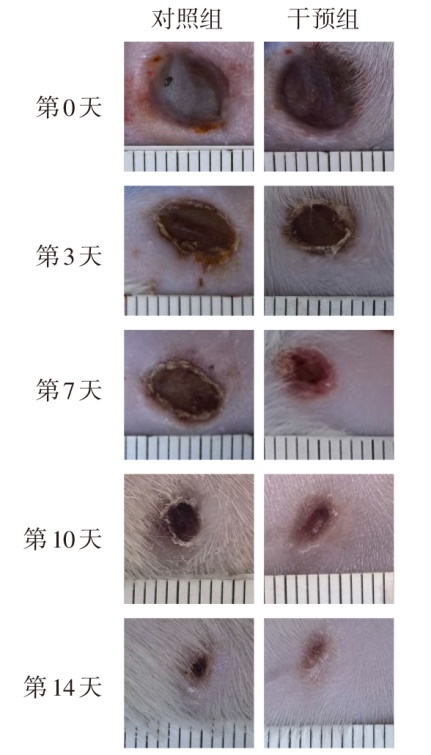
Fig.1 Wound healing status at different time points in two groups of rats
| 组别 | TNF-α | IL-6 | VEGF |
|---|---|---|---|
| 对照组 | 20.33±2.23 | 48.70±8.74 | 41.43±2.06 |
| 干预组 | 13.76±0.69 | 23.94±5.50 | 61.60±3.87 |
| t | 5.405** | 4.925** | 8.960** |
Tab.2 Comparison of systemic inflammatory factors TNF-α,IL-6 and VEGF between two groups of rats (n=4,ng/L,$\bar{x}±s$)
| 组别 | TNF-α | IL-6 | VEGF |
|---|---|---|---|
| 对照组 | 20.33±2.23 | 48.70±8.74 | 41.43±2.06 |
| 干预组 | 13.76±0.69 | 23.94±5.50 | 61.60±3.87 |
| t | 5.405** | 4.925** | 8.960** |
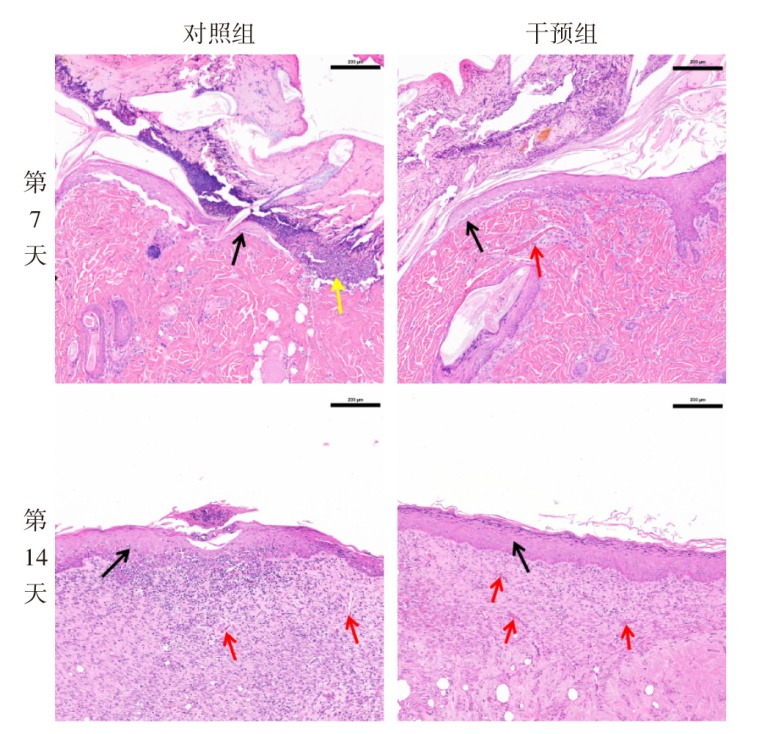
Fig.2 HE staining of wound tissue at different time points in two groups of rats (×100)
| 组别 | 第7天 | 第14天 |
|---|---|---|
| 对照组 | 33.92±2.65 | 54.92±9.24 |
| 干预组 | 48.84±6.66 | 75.31±8.19 |
| t | 4.009* | 3.206* |
Tab.3 Comparison of CVF in wound tissue at different time points between two groups of rats (n=4,%,$\bar{x}±s$)
| 组别 | 第7天 | 第14天 |
|---|---|---|
| 对照组 | 33.92±2.65 | 54.92±9.24 |
| 干预组 | 48.84±6.66 | 75.31±8.19 |
| t | 4.009* | 3.206* |
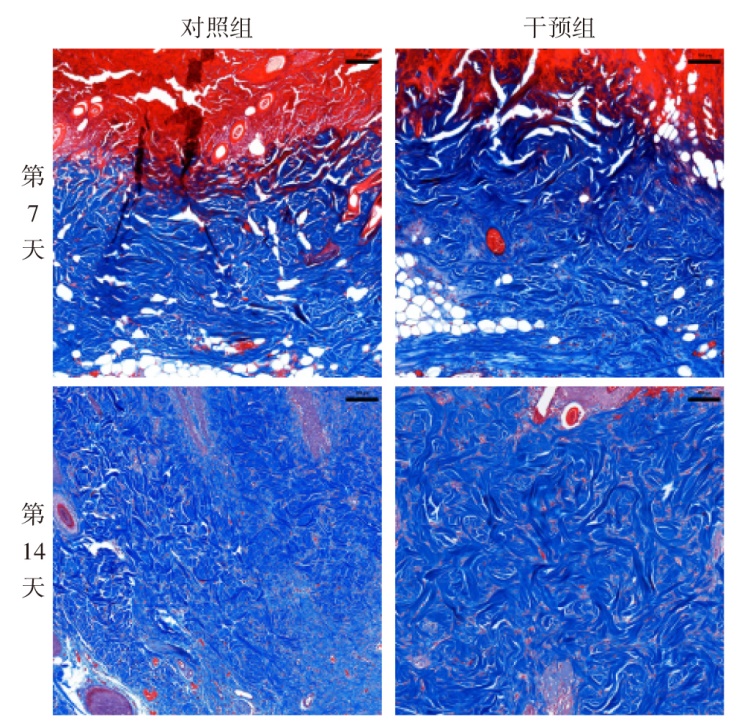
Fig.3 Masson staining of wound tissue at different time points in two groups of rats (×100)
| 组别 | 第7天 | 第14天 |
|---|---|---|
| 对照组 | 28.16±1.70 | 22.72±2.84 |
| 干预组 | 34.57±3.88 | 25.87±4.02 |
| t | 2.966* | 1.241 |
Tab.4 Comparison of Ki-67 positive cell ratio in wound tissue at different time points between two groups of rats (n=4,%,$\bar{x}±s$)
| 组别 | 第7天 | 第14天 |
|---|---|---|
| 对照组 | 28.16±1.70 | 22.72±2.84 |
| 干预组 | 34.57±3.88 | 25.87±4.02 |
| t | 2.966* | 1.241 |
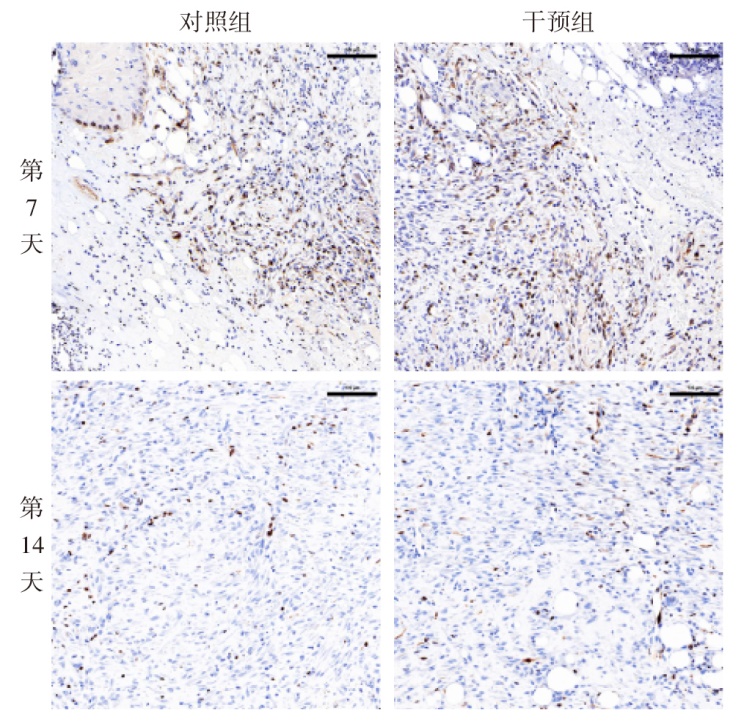
Fig.4 Immunohistochemical Ki-67 staining of wound tissue at different time points in two groups of rats (×200)
| [1] | Li Z, Lin F, Thalib L, et al. Global prevalence and incidence of pressure injuries in hospitalised adult patients:A systematic review and meta-analysis[J]. Int J Nurs Stud, 2020, 105:103546. doi:10.1016/j.ijnurstu.2020.103546. |
| [2] | Padula W V, Black J M, Davidson P M, et al. Adverse effects of the medicare PSI-90 hospital penalty system on revenue-neutral hospital-acquired conditions[J]. J Patient Saf, 2020, 16(2):e97-e102. doi:10.1097/PTS.0000000000000517. |
| [3] | Labeau S O, Afonso E, Benbenishty J, et al. Prevalence,associated factors and outcomes of pressure injuries in adult intensive care unit patients:the DecubICUs study[J]. Intensive Care Medicine, 2021, 47(2):160-169. doi:10.1007/s00134-020-06234-9. |
| [4] | Wang Z, Fan J, Chen L, et al. Strategies to preventing pressure injuries among intensive care unit patients mechanically ventilated in prone position:a systematic review and a Delphi study[J]. Front Med(Lausanne), 2023, 10:1131270. doi:10.3389/fmed.2023.1131270. |
| [5] | Gould L J, Alderden J, Aslam R, et al. WHS guidelines for the treatment of pressure ulcers-2023 update[J]. Wound Repair Regen, 2024, 32(1):6-33. doi:10.1111/wrr.13130. |
| [6] | Niemiec S M, Louiselle A E, Liechty K W, et al. Role of microRNAs in pressure ulcer immune response,pathogenesis,and treatment[J]. Int J Mol Sci, 2020, 22(1):64. doi:10.3390/ijms22010064. |
| [7] | Kottner J, Cuddigan J, Carville K, et al. Prevention and treatment of pressure ulcers/injuries:The protocol for the second update of the international Clinical Practice Guideline 2019[J]. J Tissue Viability, 2019, 28(2):51-58. doi:10.1016/j.jtv.2019.01.001. |
| [8] | Ohsawa I, Ishikawa M, Takahashi K, et al. Hydrogen acts as a therapeutic antioxidant by selectively reducing cytotoxic oxygen radicals[J]. Nat Med, 2007, 13(6):688-694. doi:10.1038/nm1577. |
| [9] | Zhang A, Jiang X, Xiong B, et al. Sustained-release photothermal microneedles for postoperative incisional analgesia and wound healing via hydrogen therapy[J]. Adv Sci(Weinh), 2025, 12(35):e03698. doi:10.1002/advs.202503698. |
| [10] | Bu Y, Liu Y, Liu M, et al. TRIM55 aggravates cardiomyocyte apoptosis after myocardial infarction via modulation of the Nrf2/HO-1 pathway[J]. JACC Basic Transl Sci, 2024, 9(9):1104-1122. doi:10.1016/j.jacbts.2024.05.006. |
| [11] | 张亚楠, 李贤, 严德云, 等. 构建各期大鼠压疮模型方法的实验研究[J]. 护理研究, 2017, 31(31):3945-3948. |
| Zhang Y N, Li X, Yan D Y, et al. Experimental study on establishing method of pressure ulcer model of rats[J]. Chinese Nursing Research, 2017, 31(31):3945-3948. doi:10.3969/j.issn.1009-6493.2017.31.013. | |
| [12] | Van Damme N, Van Hecke A, Remue E, et al. Physiological processes of inflammation and edema initiated by sustained mechanical loading in subcutaneous tissues:A scoping review[J]. Wound Repair Regen, 2020, 28(2):242-265. doi:10.1111/wrr.12777. |
| [13] | Krzyszczyk P, Schloss R, Palmer A, et al. The role of macrophages in acute and chronic wound healing and interventions to promote pro-wound healing phenotypes[J]. Front Physiol, 2018, 9:419. doi:10.3389/fphys.2018.00419. |
| [14] | 蔡灯塔, 常静宜, 贾姗姗, 等. 罗沙司他通过抑制凋亡和炎症反应改善小鼠心肌缺血再灌注损伤[J]. 天津医药, 2024, 52(11):1146-1151. |
| Cai D T, Chang J Y, Jia S S, et al. Roxadustat ameliorates myocardial ischemia-reperfusion injury in mice by inhibiting apoptosis and inflammatory response[J]. Tianjin Med J, 2024, 52(11):1146-1151. doi:10.11958/20240445. | |
| [15] | Jin L, Tan S, Fan K, et al. Research progress of hydrogen on chronic nasal inflammation[J]. J Inflamm Res, 2023, 16:2149-2157. doi:10.2147/JIR.S413179. |
| [16] | Qiu X, Dong K, Guan J, et al. Hydrogen attenuates radiation-induced intestinal damage by reducing oxidative stress and inflammatory response[J]. Int Immunopharmacol, 2020, 84:106517. doi:10.1016/j.intimp.2020.106517. |
| [17] | Sin T K, Yung B Y, Yip S P, et al. SIRT1-dependent myoprotective effects of resveratrol on muscle injury induced by compression[J]. Front Physiol, 2015, 6:293. doi:10.3389/fphys.2015.00293. |
| [18] | 韦佳琪, 王甜, 穆昕, 等. 石斛碱激活Akt/mTOR信号通路缓解高糖诱导的HTR8细胞铁死亡[J]. 南开大学学报(自然科学版), 2025, 58(5):6-10. |
| Wei J Q, Wang T, Mu X, et al. Dendrobium activates Akt/mTOR signaling pathway to alleviate ferroptosis in HTR8 cells induced by high glucose[J]. Journal of Nankai University(Natural Science), 2025, 58(5):6-10. doi:10.3969/j.issn.0465-7942.2025.05.002. | |
| [19] | Li H, Chen O, Ye Z, et al. Inhalation of high concentrations of hydrogen ameliorates liver ischemia/reperfusion injury through A(2A)receptor mediated PI3K-Akt pathway[J]. Biochem Pharmacol, 2017, 130:83-92. doi:10.1016/j.bcp.2017.02.003. |
| [20] | Song Y, Cui X, Zhao R, et al. Emodin protects against lipopolysaccharide-induced inflammatory injury in HaCaT cells through upregulation of miR-21[J]. Artif Cells Nanomed Biotechnol, 2019, 47(1):2654-2661. doi:10.1080/21691401.2019.1629951. |
| [21] | Cui Y, Meng S, Zhang N, et al. High-concentration hydrogen inhalation mitigates sepsis-associated encephalopathy in mice by improving mitochondrial dynamics[J]. CNS Neurosci Ther, 2024, 30(9):e70021. doi:10.1111/cns.70021. |
| [22] | Wigner-Jeziorska P, Janik-Karpińska E, Niwald M, et al. Effect of SARS-CoV-2 infection and BNT162b2 vaccination on the mRNA expression of genes associated with angiogenesis[J]. Int J Mol Sci, 2023, 24(22):16094. doi:10.3390/ijms242216094. |
| [23] | Endo-Takahashi Y, Negishi Y, Nakamura A, et al. Systemic delivery of miR-126 by miRNA-loaded Bubble liposomes for the treatment of hindlimb ischemia[J]. Sci Rep, 2014, 4:3883. doi:10.1038/srep03883. |
| [24] | Luo Y L, Luo S F, Luo L, et al. Effect of hydrocolloid dressing on pressure ulcer in patients with non-invasive positive pressure ventilation:A meta-analysis[J]. Int Wound J, 2023, 21(2):e14442. doi:10.1111/iwj.14442. |
| [25] | Rodríguez D, Morrison C J, Overall C M. Matrix metalloproteinases:what do they not do? New substrates and biological roles identified by murine models and proteomics[J]. Biochim Biophys Acta, 2010, 1803(1):39-54. doi:10.1016/j.bbamcr.2009.09.015. |
| [26] | Cui Y, Liu J, Song Y, et al. High concentration hydrogen protects sepsis-associated encephalopathy by enhancing Pink1/Parkin-mediated mitophagy and inhibiting cGAS-STING-IRF3 pathway[J]. CNS Neurosci Ther, 2025, 31(2):e70305. doi:10.1111/cns.70305. |
| [27] | Peng Y, He D, Ge X, et al. Construction of heparin-based hydrogel incorporated with Cu5.4O ultrasmall nanozymes for wound healing and inflammation inhibition[J]. Bioact Mater, 2021, 6(10):3109-3124. doi:10.1016/j.bioactmat.2021.02.006. |
| [28] | Jiang X, Xia C, Zhao R, et al. Recent progress in hydrogen-mediated neuroprotection via modulation of mitochondrial quality control mechanisms in brain injury[J]. Curr Neurovasc Res, 2025, 22(5):347-364. doi:10.2174/0115672026430179251224095358. |
| [29] | Li J, Hong Z, Liu H, et al. Hydrogen-rich saline promotes the recovery of renal function after ischemia/reperfusion injury in rats via anti-apoptosis and anti-inflammation[J]. Front Pharmacol, 2016, 7:106. doi:10.3389/fphar.2016.00106. |
| [30] | Ge Y S, Zhang Q Z, Li H, et al. Hydrogen-rich saline protects against hepatic injury induced by ischemia-reperfusion and laparoscopic hepatectomy in swine[J]. Hepatobiliary Pancreat Dis Int, 2019, 18(1):48-61. doi:10.1016/j.hbpd.2018.12.001. |
| [31] | Yu P, Hong N, Wang G, et al. Hydrogen gas therapy:A promising approach for sepsis management post-burn injury by modulating inflammation, oxidative stress, and wound healing[J]. Cytojournal, 2025, 22:46. doi:10.25259/Cytojournal_253_2024. |
| [32] | Yu L, Wang Q, Liu N, et al. Circular RNA circ-Ttc3 protects HaCaT cells from hypoxic injury by downregulation of miR-449a[J]. IUBMB Life, 2020, 72(3):505-514. doi:10.1002/iub.2236. |
| Viewed | ||||||
|
Full text |
|
|||||
|
Abstract |
|
|||||
