
Tianjin Medical Journal ›› 2026, Vol. 54 ›› Issue (9): 934-940.doi: 10.11958/20253483
• Clinical Research • Previous Articles Next Articles
ZHANG Jiaming1( ), BAN Zhichao1,△(), CHANG Liming1, ZHOU Yizhai2
Received:2025-12-10
Revised:2026-03-10
Published:2026-09-15
Online:2026-09-14
Contact:
△E-mail:bzczyz@163.com
ZHANG Jiaming, BAN Zhichao, CHANG Liming, ZHOU Yizhai. Development and validation of a nomogram model based on NFE2L1 and TRIM26 expression for predicting survival in metastatic gastric cancer patients receiving immunotherapy[J]. Tianjin Medical Journal, 2026, 54(9): 934-940.
CLC Number:
| 组别 | n | 性别 (男/女) | 年龄/ 岁 | BMI/(kg/m2) | 基础疾病(高血压/糖尿病/冠心病) | |||||||||
|---|---|---|---|---|---|---|---|---|---|---|---|---|---|---|
| 建模组 | 252 | 168/84 | 62.54±8.36 | 22.18±2.34 | 92/68/92 | |||||||||
| 内部验证组 | 108 | 70/38 | 61.98±7.92 | 21.95±2.19 | 38/29/41 | |||||||||
| χ²或t | 0.116 | 0.572 | 0.874 | 0.080 | ||||||||||
| 组别 | 病理类型 (腺癌/印戒 细胞癌/其他) | 肿瘤浸润 深度(T1—2/T3—4) | 肿瘤最大径 (≥5 cm/< 5 cm) | 转移部位 (淋巴结/肝) | ||||||||||
| 建模组 | 162/76/14 | 98/154 | 156/96 | 142/110 | ||||||||||
| 内部验证组 | 68/32/8 | 40/68 | 58/50 | 62/46 | ||||||||||
| χ² | 0.452 | 0.110 | 2.109 | 0.035 | ||||||||||
| 组别 | 分化程度 (低中分化/ 高分化) | ECOG评分 (1分/2分) | NFE2L1 (高表达/ 低表达) | TRIM26 (高表达/ 低表达) | ||||||||||
| 建模组 | 178/74 | 168/84 | 148/104 | 154/98 | ||||||||||
| 内部验证组 | 75/33 | 70/38 | 62/46 | 65/43 | ||||||||||
| χ² | 0.051 | 0.116 | 0.054 | 0.027 | ||||||||||
Tab.1 Comparison of baseline data between the modeling group and the internal validation group
| 组别 | n | 性别 (男/女) | 年龄/ 岁 | BMI/(kg/m2) | 基础疾病(高血压/糖尿病/冠心病) | |||||||||
|---|---|---|---|---|---|---|---|---|---|---|---|---|---|---|
| 建模组 | 252 | 168/84 | 62.54±8.36 | 22.18±2.34 | 92/68/92 | |||||||||
| 内部验证组 | 108 | 70/38 | 61.98±7.92 | 21.95±2.19 | 38/29/41 | |||||||||
| χ²或t | 0.116 | 0.572 | 0.874 | 0.080 | ||||||||||
| 组别 | 病理类型 (腺癌/印戒 细胞癌/其他) | 肿瘤浸润 深度(T1—2/T3—4) | 肿瘤最大径 (≥5 cm/< 5 cm) | 转移部位 (淋巴结/肝) | ||||||||||
| 建模组 | 162/76/14 | 98/154 | 156/96 | 142/110 | ||||||||||
| 内部验证组 | 68/32/8 | 40/68 | 58/50 | 62/46 | ||||||||||
| χ² | 0.452 | 0.110 | 2.109 | 0.035 | ||||||||||
| 组别 | 分化程度 (低中分化/ 高分化) | ECOG评分 (1分/2分) | NFE2L1 (高表达/ 低表达) | TRIM26 (高表达/ 低表达) | ||||||||||
| 建模组 | 178/74 | 168/84 | 148/104 | 154/98 | ||||||||||
| 内部验证组 | 75/33 | 70/38 | 62/46 | 65/43 | ||||||||||
| χ² | 0.051 | 0.116 | 0.054 | 0.027 | ||||||||||
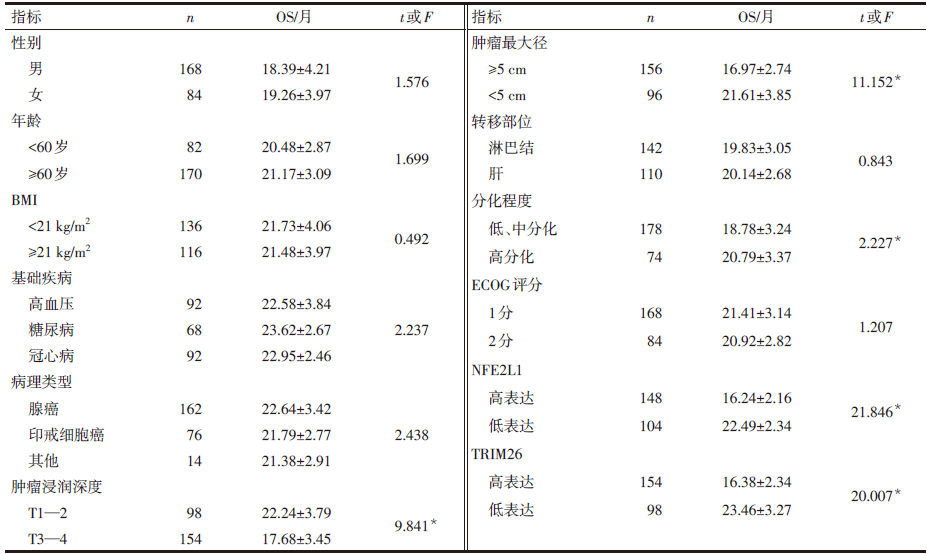 |
Tab.2 Survival period of patients with different clinical characteristics in the modeling group
| |
| 变量 | β | SE | Wald χ² | P | HR | HR 95%CI |
|---|---|---|---|---|---|---|
| 肿瘤浸润深度 | 0.448 | 0.163 | 7.562 | 0.007 | 1.565 | 1.132~2.164 |
| 肿瘤最大径 | 0.356 | 0.132 | 7.391 | 0.010 | 1.428 | 1.088~1.871 |
| 分化程度 | 0.289 | 0.216 | 1.795 | 0.180 | 1.335 | 0.874~2.041 |
| NFE2L1 | 1.025 | 0.215 | 22.873 | <0.001 | 2.788 | 1.926~3.995 |
| TRIM26 | 0.896 | 0.205 | 18.964 | <0.001 | 2.451 | 1.759~3.412 |
Tab.3 Multivariate Cox analysis of survival period after immunotherapy in patients with metastatic gastric cancer in the modeling group
| 变量 | β | SE | Wald χ² | P | HR | HR 95%CI |
|---|---|---|---|---|---|---|
| 肿瘤浸润深度 | 0.448 | 0.163 | 7.562 | 0.007 | 1.565 | 1.132~2.164 |
| 肿瘤最大径 | 0.356 | 0.132 | 7.391 | 0.010 | 1.428 | 1.088~1.871 |
| 分化程度 | 0.289 | 0.216 | 1.795 | 0.180 | 1.335 | 0.874~2.041 |
| NFE2L1 | 1.025 | 0.215 | 22.873 | <0.001 | 2.788 | 1.926~3.995 |
| TRIM26 | 0.896 | 0.205 | 18.964 | <0.001 | 2.451 | 1.759~3.412 |
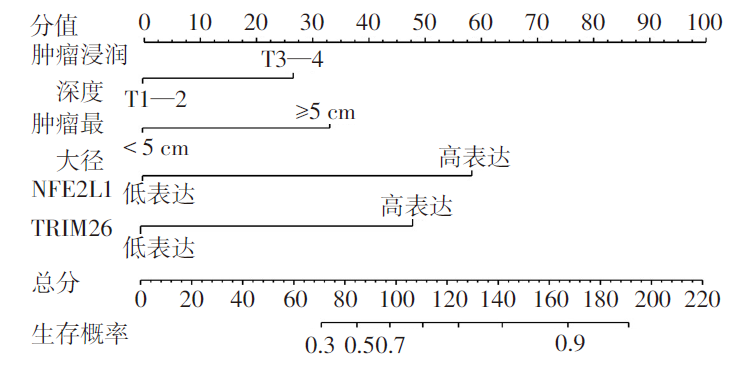
Fig.1 Prediction model of survival risk column chart for patients with metastatic gastric cancer after immunotherapy
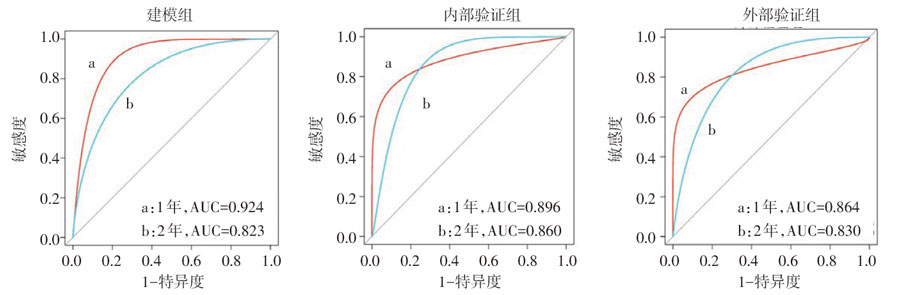
Fig.2 ROC curves of 1-year and 2-year survival prediction models for patients with metastatic gastric cancer after immunotherapy
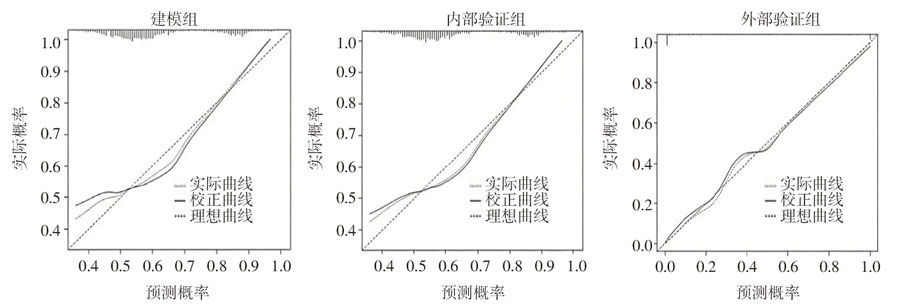
Fig.3 Calibration curves of survival prediction model for metastatic gastric cancer patients after immunotherapy
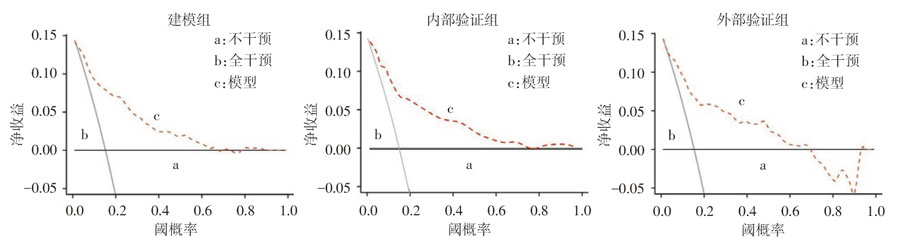
Fig.4 DCA curves of survival prediction model for patients with metastatic gastric cancer after immunotherapy
| [1] | 徐泽宽, 陈晓锋, 田一童. 胃癌综合治疗策略与思考[J]. 中华消化外科杂志, 2025, 24(3):317-325. |
| Xu Z K, Chen X F, Tian Y T. Strategies and reflections on comprehensive treatment of gastric cancer[J]. Chinese Journal of Digestive Surgery, 2025, 24(3):317-325. doi:10.3760/cma.j.cn115610-20250205-00044. | |
| [2] | 关文龙, 王风华. 2023年CSCO胃癌诊疗指南更新解读:转移性胃癌靶向治疗[J]. 实用肿瘤杂志, 2023, 38(4):301-304. |
| Guan W L, Wang F H. Interpretation of the 2023 CSCO guideline update for gastric cancer:targeted therapy for metastatic gastric cancer[J]. Journal of Practical Oncology, 2023, 38(4):301-304. doi:10.13267/j.cnki.syzlzz.2023.048. | |
| [3] | Zhao W, Zhao N, Zhang M, et al. 2-Year survival benefit from immunotherapy for squamous cell cancer with cancer of unknown primary in mediastinum:a case report[J]. Front Oncol, 2023, 13:1242460. doi:10.3389/fonc.2023.1242460. |
| [4] | Xia L, Ma W, Afrashteh A, et al. The nuclear factor erythroid 2-related factor 2/p53 axis in breast cancer[J]. Biochem Med(Zagreb), 2023, 33(3):030504. doi:10.11613/BM.2023.030504. |
| [5] | Kotschi S, Jung A, Willemsen N, et al. NFE2L1-mediated proteasome function protects from ferroptosis[J]. Mol Metab, 2022, 57:101436. doi:10.1016/j.molmet.2022.101436. |
| [6] | Dou R, Wang X, Zhang J. Prognostic value and immune infiltration analysis of nuclear factor erythroid-2 family members in ovarian cancer[J]. BioMed Res Int, 2022,2022:8672258. doi:10.1155/2022/8672258. |
| [7] | Sun L, Wang D, Chen Z, et al. TRIM29 knockdown prevented the colon cancer progression through decreasing the ubiquitination levels of KRT5[J]. Open Life Sci, 2023, 18(1):20220711. doi:10.1515/biol-2022-0711. |
| [8] | Lin J X, Desiderio J, Lin J P, et al. Multicenter validation study of the American Joint Commission on Cancer (8th edition) for gastric cancer:proposal for a simplified and improved TNM staging system[J]. J Cancer, 2020, 11(12):3483-3491. doi:10.7150/jca.36891. |
| [9] | Young J, Badgery-parker T, Dobbins T, et al. Comparison of ECOG/WHO performance status and ASA score as a measure of functional status[J]. J Pain Symptom Manag, 2015, 49(2):258-264. doi:10.1016/j.jpainsymman.2014.06.006. |
| [10] | Collins G S, Reitsma J B, Altman D G, et al. Transparent reporting of a multivariable prediction model for individual prognosis or diagnosis (TRIPOD): the TRIPOD statement[J]. BMJ, 2015,350:g7594. doi:10.1136/bmj.g7594. |
| [11] | Riley R D, Ensor J, Snell K I E, et al. Calculating the sample size required for developing a clinical prediction model[J]. BMJ, 2020,368:m441. doi:10.1136/bmj.m441. |
| [12] | Melssen M M, Sheybani N D, Leick K M, et al. Barriers to immune cell infiltration in tumors[J]. J Immunother Cancer, 2023, 11(4):e006401. doi:10.1136/jitc-2022-006401. |
| [13] | 盛凤, 国书雅, 鲍京京, 等. 白藜芦醇降低缺氧诱导因子1α蛋白SUMO化抑制皮肤鳞状细胞癌新生血管形成[J]. 中华皮肤科杂志, 2023, 56(11):1035-1042. |
| Sheng F, Guo S Y, Bao J J, et al. Resveratrol inhibits angiogenesis in cutaneous squamous cell carcinoma by reducing SUMOylation of hypoxia-inducible factor-1α protein[J]. Chinese Journal of Dermatology, 2023, 56(11):1035-1042. doi:10.35541/cjd.20220680. | |
| [14] | 廖凤翔, 张文燕, 李晓芬, 等. 肾透明细胞癌18F-FDG PET/CT代谢参数及代谢异质性与WHO/ISUP病理分级的相关性研究[J]. 中华肿瘤防治杂志, 2023, 30(12):753-757. |
| Liao F X, Zhang W Y, Li X F, et al. Correlation between metabolic parameters,metabolic heterogeneity on 18F-FDG PET/CT and WHO/ISUP pathological grade in clear cell renal cell carcinoma[J]. Chinese Journal of Cancer Prevention and Treatment, 2023, 30(12):753-757. doi:10.16073/j.cnki.cjcpt.2023.12.07. | |
| [15] | Ren J, Dai Y, Chao F, et al. A nomogram for predicting the cancer-specific survival of patients with initially diagnosed metastatic gastric cancer[J]. Clin Med Insights Oncol, 2022,16:11795549221142095. doi:10.1177/11795549221142095. |
| [16] | Tomasik B, Bieńkowski M, Braun M, et al. Effectiveness and safety of immunotherapy in NSCLC patients with ECOG PS score ≥2-Systematic review and meta-analysis[J]. Lung Cancer, 2021, 158:97-106. doi:10.1016/j.lungcan.2021.06.004. |
| [17] | 魏禹焘, 汪越, 杨菊, 等. 接受抗PD-1免疫治疗的胃癌腹膜转移患者疗效的生物标志物探索[J]. 中华肿瘤杂志, 2025, 47(6):525-532. |
| Wei Y T, Wang Y, Yang J, et al. Exploration of biomarkers for efficacy of anti-PD-1 immunotherapy in gastric cancer patients with peritoneal metastasis[J]. Chinese Journal of Oncology, 2025, 47(6):525-532. doi:10.3760/cma.j.cn112152-20240826-00368. | |
| [18] | Majewska O, Pach R, Brzewski P, et al. Body mass index (BMI) as a prognostic factor influencing outcomes of gastric cancer resection including curative gastrectomy[J]. In Vivo, 2025, 39(2):1122-1133. doi:10.21873/invivo.13917. |
| [19] | Zhang M, Wang Z, Yang G, et al. NFE2L1 restrains ferroptosis by transcriptionally regulating HJURP and participates in the progress of oral squamous cell carcinoma[J]. J Bioenerg Biomembr, 2023, 55(6):467-478. doi:10.1007/s10863-023-09987-2. |
| [20] | Liu X, Xu C, Xiao W, et al. Unravelling the role of NFE2L1 in stress responses and related diseases[J]. Redox Biol, 2023, 65:102819. doi:10.1016/j.redox.2023.102819. |
| [21] | Ishii K, Hido M, Sakamura M, et al. α-tocotrienol and redox-silent analogs of vitamin E enhances bortezomib sensitivity in solid cancer cells through modulation of NFE2L1[J]. Int J Mol Sci, 2023, 24(11):9382. doi:10.3390/ijms24119382. |
| [22] | 柴菲, 陈振文, 刘宏艳, 等. 子宫内膜癌患者血清泛素耦联酶2C、三基序蛋白27表达水平及其与病理参数的相关性[J]. 实用医学杂志, 2024, 40(17):1808-1813. |
| Chai F, Chen Z W, Liu H Y, et al. Expression levels of ubiquitin-conjugating enzyme 2C and tripartite motif-containing protein 27 in serum of patients with endometrial carcinoma and their correlation with pathological parameters[J]. The Journal of Practical Medicine, 2024, 40(17):1808-1813. doi:10.3969/j.issn.1006-5725.2024.13.008. | |
| [23] | Zhang M, Tan H, Gong Y, et al. TRIM26 restricts Epstein-Barr virus infection in nasopharyngeal epithelial cells through K48-linked ubiquitination of HSP-90β[J]. FASEB J, 2024, 38(1):e23345. doi:10.1096/fj.202300929RR. |
| [24] | Zheng D, Ning J, Deng H, et al. TRIM26 inhibits clear cell renal cell carcinoma progression through destabilizing ETK and thus inactivation of AKT/mTOR signaling[J]. J Transl Med, 2024, 22(1):481. doi:10.1186/s12967-024-05273-w. |
| [25] | Wang Z, Xia Y, Wang Y, et al. The E3 ligase TRIM26 suppresses ferroptosis through catalyzing K63-linked ubiquitination of GPX4 in glioma[J]. Cell Death Dis, 2023, 14(10):695. doi:10.1038/s41419-023-06222-z. |
| [26] | Zhao X, Xu C, Ding Y, et al. The multifaceted functions of NFE2L1 in metabolism and associated disorders[J]. Life Sci, 2024, 352:122906. doi:10.1016/j.lfs.2024.122906. |
| Viewed | ||||||
|
Full text |
|
|||||
|
Abstract |
|
|||||
