
Tianjin Medical Journal ›› 2026, Vol. 54 ›› Issue (4): 337-343.doi: 10.11958/20252541
• Cell and Molecular Biology • Next Articles
LIU Rong( ), XIANG Yanzeng, MA Lijuan, ZHANG Peng△()
Received:2025-07-23
Revised:2025-11-20
Published:2026-04-15
Online:2026-04-14
Contact:
△E-mail:LIU Rong, XIANG Yanzeng, MA Lijuan, ZHANG Peng. The effect of adenovirus-mediated SPRY1 overexpression on apoptosis and autophagy in hepatocellular carcinoma[J]. Tianjin Medical Journal, 2026, 54(4): 337-343.
CLC Number:
| 基因名称 | 引物序列(5′→3′) | 产物大小/bp |
|---|---|---|
| SPRY1 | 上游:TCCCTGGTCATAGGTCTGAAAG | 187 |
| 下游:TGCCGGTTACAGGCCAAAC | ||
| GAPDH | 上游:GGAGCGAGATCCCTCCAAAAT | 197 |
| 下游:GGCTGTTGTCATACTTCTCATGG |
Tab.1 Sequences of SPRY1 for PCR
| 基因名称 | 引物序列(5′→3′) | 产物大小/bp |
|---|---|---|
| SPRY1 | 上游:TCCCTGGTCATAGGTCTGAAAG | 187 |
| 下游:TGCCGGTTACAGGCCAAAC | ||
| GAPDH | 上游:GGAGCGAGATCCCTCCAAAAT | 197 |
| 下游:GGCTGTTGTCATACTTCTCATGG |
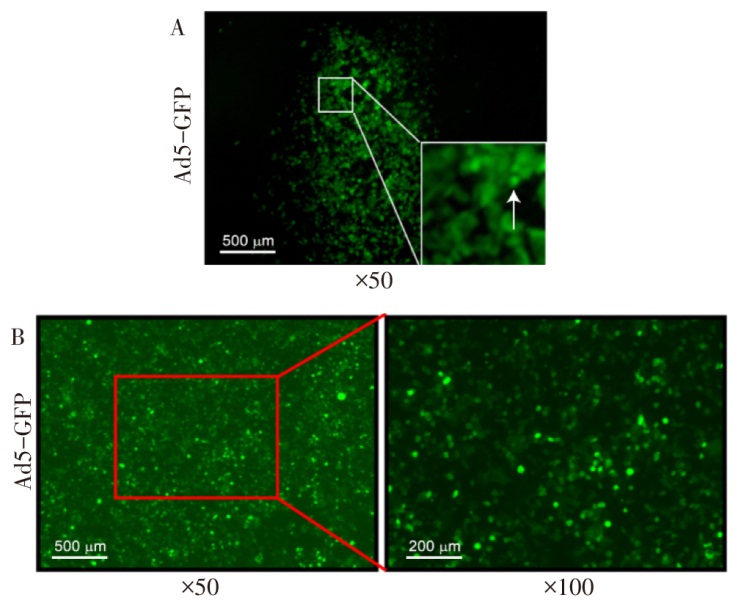
Fig.1 Detection of adenovirus production and infection efficiency in Huh7 cells
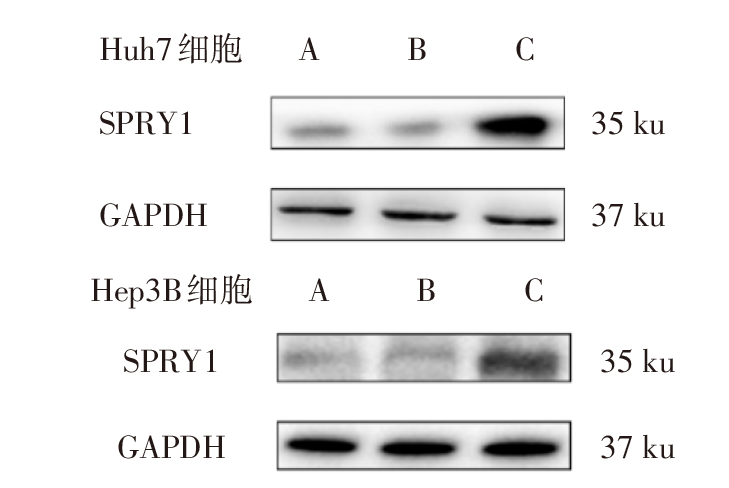
Fig.2 Detection of SPRY1 protein expression in Huh7 and Hep3B cells by Western blot assay
| 组别 | Huh7细胞 | Hep3B细胞 | ||
|---|---|---|---|---|
| mRNA | 蛋白 | mRNA | 蛋白 | |
| 对照组 | 1.00±0.12 | 1.00±0.08 | 1.00±0.03 | 1.00±0.03 |
| Ad5-GFP组 | 1.00±0.07 | 1.00±0.07 | 1.00±0.06 | 1.00±0.04 |
| Ad5-SPRY1组 | 81.89±4.07ab | 3.31±0.19ab | 69.19±3.07ab | 2.61±0.11ab |
| F | 1 180.719* | 320.415* | 1 477.800* | 541.412* |
Tab.2 Comparison of SPRY1 mRNA and protein expression levels between Huh7 cells and Hep3B cells of each group
| 组别 | Huh7细胞 | Hep3B细胞 | ||
|---|---|---|---|---|
| mRNA | 蛋白 | mRNA | 蛋白 | |
| 对照组 | 1.00±0.12 | 1.00±0.08 | 1.00±0.03 | 1.00±0.03 |
| Ad5-GFP组 | 1.00±0.07 | 1.00±0.07 | 1.00±0.06 | 1.00±0.04 |
| Ad5-SPRY1组 | 81.89±4.07ab | 3.31±0.19ab | 69.19±3.07ab | 2.61±0.11ab |
| F | 1 180.719* | 320.415* | 1 477.800* | 541.412* |
| 组别 | Huh7细胞 | |||||
|---|---|---|---|---|---|---|
| 细胞凋亡率/% | c-MYC蛋白 | BCL2蛋白 | ||||
| 对照组 | 32.14±0.78 | 1.00±0.03 | 1.00±0.13 | |||
| Ad5-GFP组 | 33.14±1.05 | 1.00±0.07 | 1.00±0.04 | |||
| Ad5-SPRY1组 | 17.02±1.58ab | 2.30±0.14ab | 1.94±0.11ab | |||
| F | 181.832* | 216.545* | 85.748* | |||
| 组别 | Hep3B细胞 | |||||
| 细胞凋亡率/% | c-MYC蛋白 | BCL2蛋白 | ||||
| 对照组 | 27.51±2.90 | 1.00±0.07 | 1.00±0.02 | |||
| Ad5-GFP组 | 28.84±2.35 | 1.00±0.10 | 1.00±0.10 | |||
| Ad5-SPRY1组 | 3.53±0.63ab | 2.94±0.07ab | 1.74±0.10ab | |||
| F | 127.296* | 638.889* | 115.649* | |||
Tab.3 Comparison of apoptosis status between two groups of Huh7 cells and Hep3B cells
| 组别 | Huh7细胞 | |||||
|---|---|---|---|---|---|---|
| 细胞凋亡率/% | c-MYC蛋白 | BCL2蛋白 | ||||
| 对照组 | 32.14±0.78 | 1.00±0.03 | 1.00±0.13 | |||
| Ad5-GFP组 | 33.14±1.05 | 1.00±0.07 | 1.00±0.04 | |||
| Ad5-SPRY1组 | 17.02±1.58ab | 2.30±0.14ab | 1.94±0.11ab | |||
| F | 181.832* | 216.545* | 85.748* | |||
| 组别 | Hep3B细胞 | |||||
| 细胞凋亡率/% | c-MYC蛋白 | BCL2蛋白 | ||||
| 对照组 | 27.51±2.90 | 1.00±0.07 | 1.00±0.02 | |||
| Ad5-GFP组 | 28.84±2.35 | 1.00±0.10 | 1.00±0.10 | |||
| Ad5-SPRY1组 | 3.53±0.63ab | 2.94±0.07ab | 1.74±0.10ab | |||
| F | 127.296* | 638.889* | 115.649* | |||
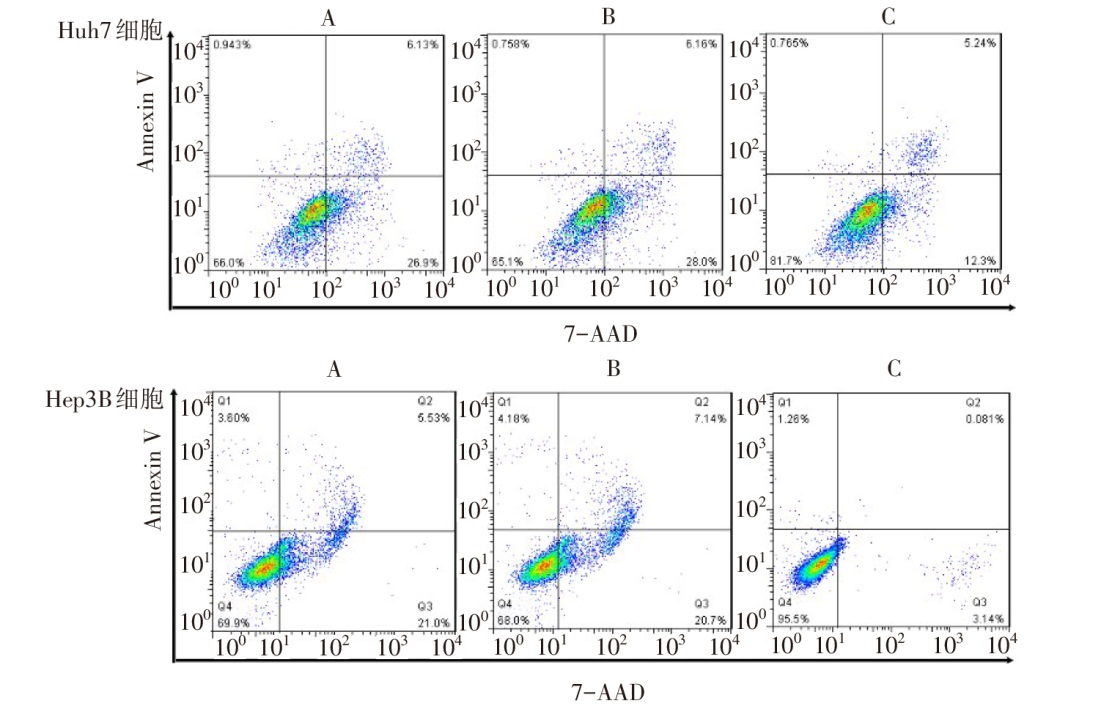
Fig.3 Effect of Ad5-SPRY1 on apoptosis of hepatocellular carcinoma cells detected by flow cytometry
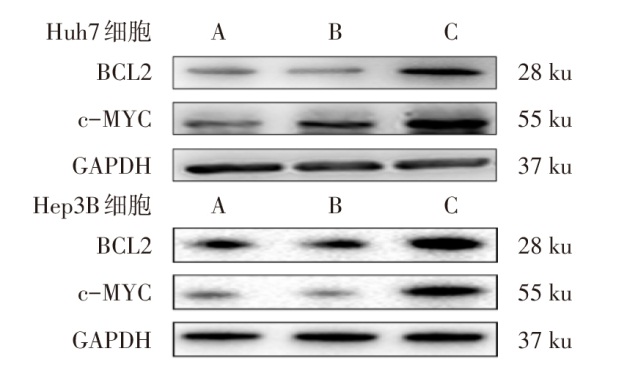
Fig.4 Effect of Ad5-SPRY1 on apoptosis of hepatocellular carcinoma cells detected by Western blot assay
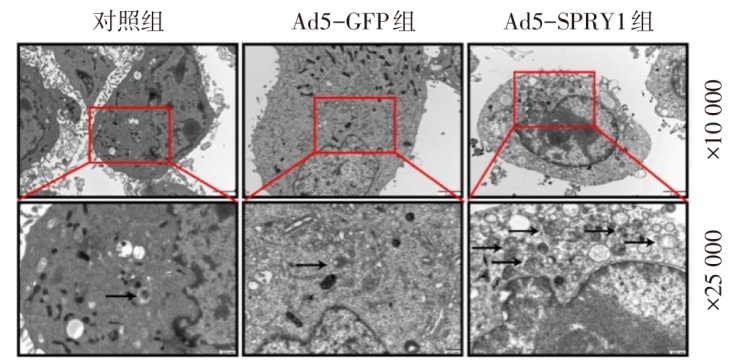
Fig.5 Effect of Ad5-SPRY1 on autophagy in hepatocellular carcinoma cells detected by transmission electron microscope
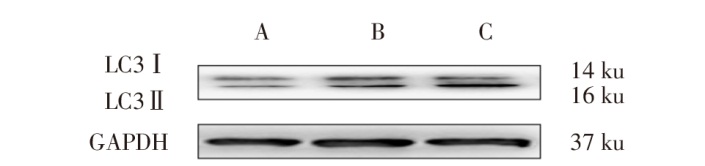
Fig.6 Effect of Ad5-SPRY1 on autophagy related protein expression in hepatocellular carcinoma cells detected by Western blot assay
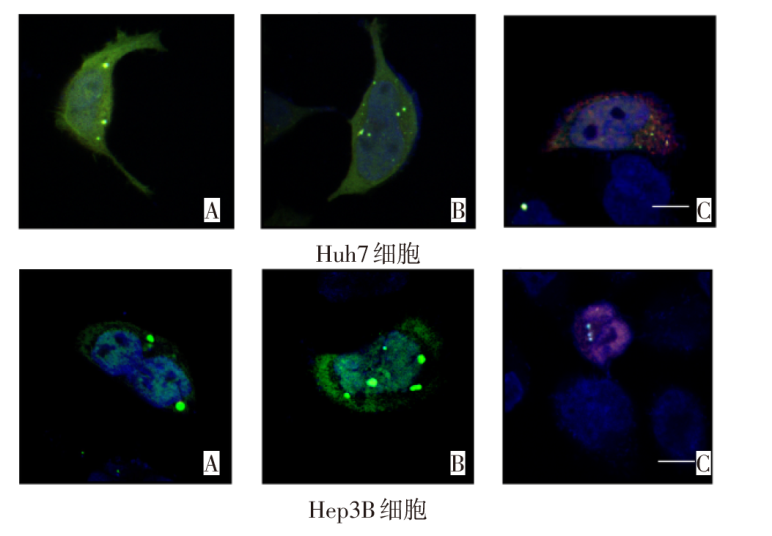
Fig.7 Effect of Ad5-SPRY1 on autophagy in hepatocellular carcinoma cells detected by laser scanning confocal microscope
| 组别 | Huh7细胞 | Hep3B细胞 | |
|---|---|---|---|
| LC3Ⅰ/Ⅱ蛋白 | 黄色斑点/个 | 黄色斑点/个 | |
| 对照组 | 1.00±0.06 | 8.67±2.52 | 8.33±2.52 |
| pcDNA3.1组 | 1.00±0.07 | 8.33±1.53 | 7.67±4.04 |
| pcDNA3.1-SPRY1组 | 1.78±0.10ab | 25.33±3.21ab | 16.67±3.21ab |
| F | 110.120* | 44.754* | 6.859* |
Tab.4 Comparison of LC3Ⅱ protein expression levels and autophagic granules between Huh7 cells and Hep3B cells of each group
| 组别 | Huh7细胞 | Hep3B细胞 | |
|---|---|---|---|
| LC3Ⅰ/Ⅱ蛋白 | 黄色斑点/个 | 黄色斑点/个 | |
| 对照组 | 1.00±0.06 | 8.67±2.52 | 8.33±2.52 |
| pcDNA3.1组 | 1.00±0.07 | 8.33±1.53 | 7.67±4.04 |
| pcDNA3.1-SPRY1组 | 1.78±0.10ab | 25.33±3.21ab | 16.67±3.21ab |
| F | 110.120* | 44.754* | 6.859* |
| [1] | SIEGEL R L, KRATZER T B, GIAQUINTO A N, et al. Cancer statistics,2025[J]. CA Cancer J Clin, 2025, 75(1):10-45. doi:10.3322/caac.21871. |
| [2] | SUN L, HE M, LIU D, et al. Deacetylation of ANXA2 by SIRT2 desensitizes hepatocellular carcinoma cells to donafenib via promoting protective autophagy[J]. Cell Death Differ, 2025, 32(9):1630-1647. doi:10.1038/s41418-025-01499-3. |
| [3] | ZHANG G P, SONG Z B, CHEN D H, et al. Syntaxin-6 mediated autophagy confers lenvatinib resistance in hepatocellular carcinoma[J]. Oncogene, 2025, 44(25):2025-2039. doi:10.1038/s41388-025-03371-7. |
| [4] | MONTICO B, GIURATO G, GUERRIERI R, et al. Suppression of Spry1 reduces HIF1α-dependent glycolysis and impairs angiogenesis in BRAF-mutant cutaneous melanoma[J]. J Exp Clin Cancer Res, 2025, 44:53. doi:10.1186/s13046-025-03289-8. |
| [5] | SHI T, LI X, ZHENG J, et al. Increased SPRY1 expression activates NF-κB signaling and promotes pancreatic cancer progression by recruiting neutrophils and macrophages through CXCL12-CXCR4 axis[J]. Cell Oncol, 2023, 46(4):969-985. doi:10.1007/s13402-023-00791-z. |
| [6] | LIU Z, ZHANG Y, MA N, et al. Progenitor-like exhausted SPRY1(+)CD8(+) T cells potentiate responsiveness to neoadjuvant PD-1 blockade in esophageal squamous cell carcinoma[J]. Cancer Cell, 2023, 41(11):1852-1870.e9. doi:10.1016/j.ccell.2023.09.011. |
| [7] | CHAKRABORTY S, NANDI P, MISHRA J, et al. Molecular mechanisms in regulation of autophagy and apoptosis in view of epigenetic regulation of genes and involvement of liquid-liquid phase separation[J]. Cancer Lett, 2024, 587:216779. doi:10.1016/j.canlet.2024.216779. |
| [8] | YU Y S, KIM I S, BAEK S H. Decoding the dual role of autophagy in cancer through transcriptional and epigenetic regulation[J]. FEBS Lett, 2025, 599(16):2237-2249. doi:10.1002/1873-3468.70060. |
| [9] | JIA H, WEI J, ZHENG W, et al. The dual role of autophagy in cancer stem cells:implications for tumor progression and therapy resistance[J]. J Transl Med, 2025, 23:583. doi:10.1002/1873-3468.14999. |
| [10] | DEBNATH J, GAMMOH N, RYAN K M. Autophagy and autophagy-related pathways in cancer[J]. Nat Rev Mol Cell Biol, 2023, 24(8):560-575. doi:10.1038/s41580-023-00585-z. |
| [11] | HUANG X, ZHANG J, YAO J, et al. Phase separation of p62:roles and regulations in autophagy[J]. Trends Cell Biol, 2025, 35(10):992-1006. doi:10.1016/j.tcb.2025.03.003. |
| [12] | YANG S, HU C, CHEN X, et al. Crosstalk between metabolism and cell death in tumorigenesis[J]. Mol Cancer, 2024, 23:71. doi:10.1186/s12943-024-02018-5. |
| [13] | LI J, MA R, WANG X, et al. Sprouty genes regulate activated fibroblasts in mammary epithelial development and breast cancer[J]. Cell Death Dis, 2024, 15(4):256. doi:10.1038/s41419-024-06573-9. |
| [14] | NIU Z, WANG L, QIN X, et al. Macrophage derived miR-7219-3p-containing exosomes mediate fibroblast trans-differentiation by targeting SPRY1 in silicosis[J]. Toxicology, 2022, 479:153310. doi:10.1016/j.tox.2022.153310. |
| [15] | ZHAO G, PAN A Y, FENG Y, et al. Sprouty and Spred temporally regulate ERK1/2-signaling to suppress TGFβ-induced lens EMT[J]. Exp Eye Res, 2022, 219:109070. doi:10.1016/j.exer.2022.109070. |
| [16] | ZHANG M F, WAN S C, CHEN W B, et al. Transcription factor Dmrt1 triggers the SPRY1-NF-κB pathway to maintain testicular immune homeostasis and male fertility[J]. Zool Res, 2023, 44(3):505-521. doi:10.24272/j.issn.2095-8137.2023.202219. |
| [17] | FANG X, LU X, MA Y, et al. Possible involvement of a MEG3-miR-21-SPRY1-NF-κB feedback loop in spermatogenic cells proliferation,autophagy,and apoptosis[J]. iScience, 2024, 27(10):110904. doi:10.1016/j.isci.2024.110904. |
| [18] | LIU X, LAN Y, ZHANG D, et al. SPRY1 promotes the degradation of uPAR and inhibits uPAR-mediated cell adhesion and proliferation[J]. Am J Cancer Res, 2014, 4(6):683-697. |
| [19] | CROCE C M, VAUX D, STRASSER A, et al. The BCL-2 protein family:from discovery to drug development[J]. Cell Death Differ, 2025, 32(8):1369-1381. doi:10.1038/s41418-025-01454-2. |
| [20] | LU Y, JIANG X, LI Y, et al. NL101 synergizes with the BCL-2 inhibitor venetoclax through PI3K-dependent suppression of c-Myc in acute myeloid leukaemia[J]. J Transl Med, 2024, 22:867. doi:10.1186/s12967-024-05377-3. |
| [21] | RUIZ-FERNÁNDEZ DE CÓRDOBA B, VALENCIA K, WELCH C, et al. Dual ENPP1/ATM depletion blunts DNA damage repair boosting radioimmune efficacy to abrogate triple-negative breast cancer[J]. Signal Transduct Target Ther, 2025, 10:185. doi:10.1038/s41392-025-02114-0. |
| [22] | RINNERTHALER G, EGLE D, BARTSCH R, et al. Neoadjuvant atezolizumab in combination with dual HER2 blockade plus epirubicin in women with early HER2-positive breast cancer:the randomized phase 2 ABCSG-52/ATHENE trial[J]. Nat Cancer, 2025, 6(1):41-50. doi:10.1038/s43018-024-00809-7. |
| Viewed | ||||||
|
Full text |
|
|||||
|
Abstract |
|
|||||
